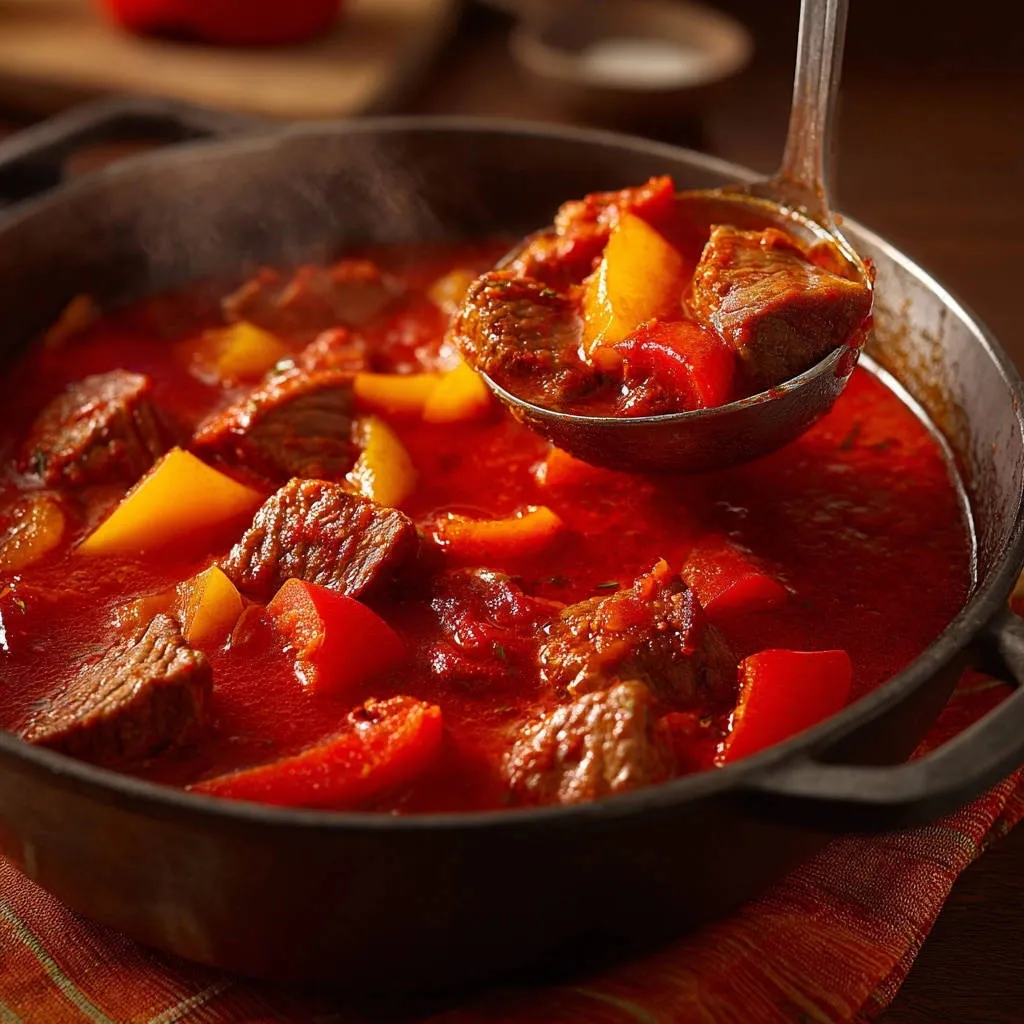
I spent years battling tough stew meat until I discovered the simple two-step technique that guarantees fall-apart tenderness in any braise. This recipe for Hearty Beef and Pepper Goulash doesn’t just promise deep, complex flavor; it ensures a luxurious, melt-in-your-mouth texture that will impress every single time.
Beyond Basic Stew: Why This Goulash Recipe Guarantees Success
The reliability of this recipe hinges on mastering two straightforward, yet critical, steps that transform inexpensive cuts of meat into rich, succulent meals.
We focus on maximizing flavor extraction early and employing patience during the low-and-slow cooking phase to deliver guaranteed results.
For even more tender results, explore this guide on achieving truly tender meat in hearty beef goulash.
The Simple Two-Step Secret to Fall-Apart Beef
Achieving truly tender beef requires understanding the science behind breaking down tough connective tissues.
By executing these two steps precisely, you ensure that the collagen within the stew meat converts completely into savory gelatin.
Step 1: The Intense, Uncrowded Sear. Pat the meat completely dry and sear it in small batches until a deep, dark brown crust forms on all sides. This locks in flavor and structure without steaming the meat, which would lead to toughness.
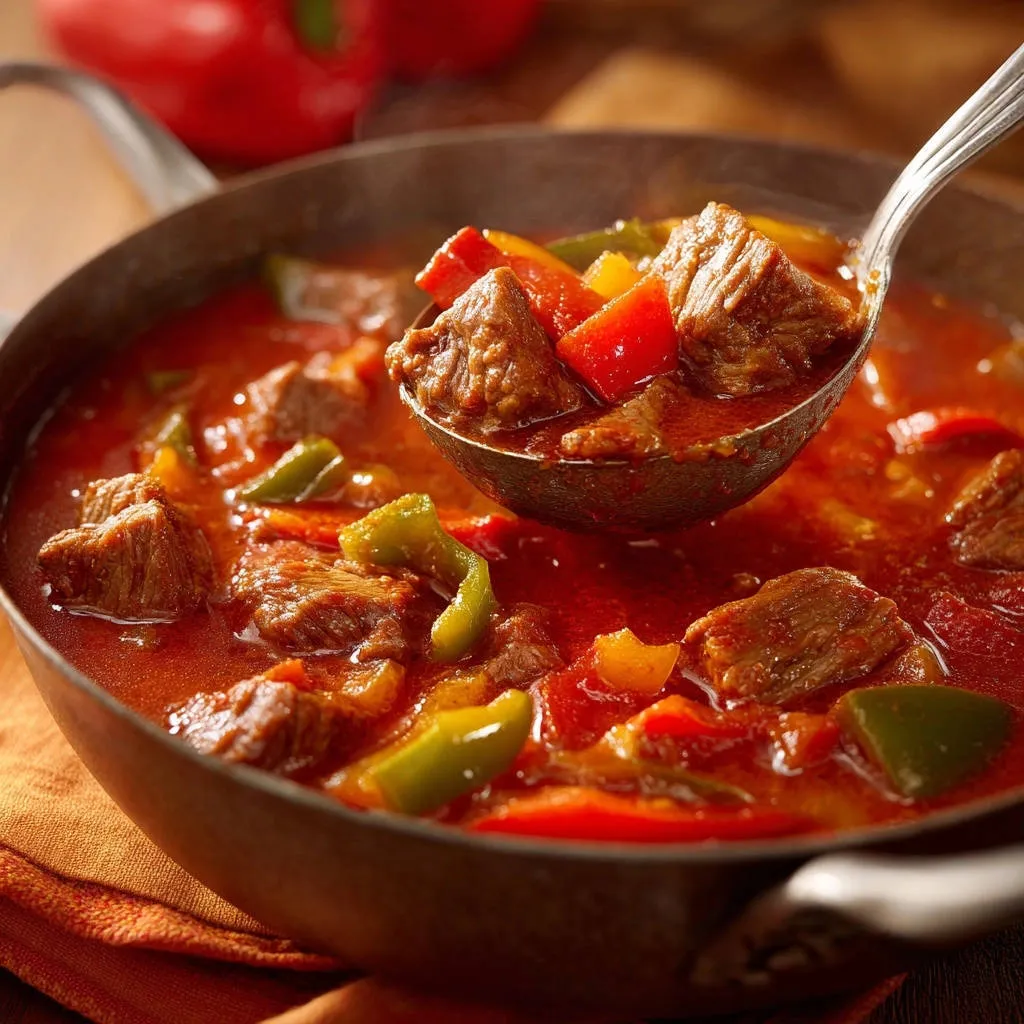
Step 2: The Long, Slow, Covered Braise. Once the flavor base is built, the stew must simmer at the barest whisper of a bubble for a minimum of 2 1/2 hours. This extended time at low temperatures is the only way to melt the tough fibers.
Goulash vs. Traditional Beef Stew: What’s the Difference?
While many stews share the low-and-slow cooking method, true goulash is distinctly characterized by its primary flavor profile.
Traditional beef stews often rely on root vegetables, dark stocks, and deep herbs like thyme and bay leaf for flavor.
Authentic goulash, stemming from Hungary, is defined by its substantial use of sweet paprika, a base of concentrated tomato, and the late addition of fresh, bright bell peppers for color and structure.
Is This Recipe Family-Friendly?
Absolutely. The rich, smoky depth of this recipe comes from quality sweet paprika, not heat, ensuring the dish is robust yet mild.
The flavor profile is naturally savory and slightly sweet from the braised onions and peppers, making it widely acceptable and appealing for all ages.
The Essential Building Blocks of Flavor: Ingredients and Preparation
Quality ingredients are important, but how you select and treat them is what truly elevates this slow-cooked dish.
The Core Ingredients Checklist
- 2 pounds beef stew meat, cut into 1 1/2 inch cubes (like chuck or round)
- 2 tablespoons olive oil, divided
- 1 large yellow onion, diced
- 3 cloves garlic, minced
- 1/4 cup tomato paste
- 1 tablespoon sweet paprika
- 1 teaspoon dried oregano
- 1 (28 ounce) can crushed tomatoes
- 2 cups beef broth (low sodium)
- 1 large red bell pepper, roughly chopped
- 1 large yellow bell pepper, roughly chopped
- Salt and black pepper to taste
Selecting the Perfect Cut of Beef for Hearty Beef and Pepper Goulash
Choosing the right cut of beef is vital for achieving the perfect consistency in your Hearty Beef and Pepper Goulash.
The ideal cuts are tough, working muscles like beef chuck (shoulder) or beef round because they contain high amounts of connective tissue, or collagen.
When braised for hours, this collagen dissolves into gelatin, which not only tenderizes the beef but also naturally enriches and thickens the entire sauce.
For similar tender results with beef, explore slow-braised beef in this hearty stew.
The Power of Paprika: Choosing the Right Type
We specifically use sweet paprika in this recipe, which delivers deep red color and savory flavor without adding any unwanted spiciness.
The most important technique is “blooming”: cooking the tomato paste and paprika in oil for two minutes. This brief toasting activates the flavor compounds in the spices before they are diluted by liquid, ensuring maximum depth.
Essential Kitchen Tools for Braising Success
A few key pieces of equipment ensure the necessary even heat distribution for long braising times.
- Dutch Oven: A heavy, enameled Dutch oven or other thick-bottomed pot maintains incredibly stable low temperatures, preventing scorching and promoting an even, gentle simmer.
- Slotted Spoon: Necessary for cleanly removing the seared meat from the pot while leaving the rendered fat and flavorful browned bits (fond) behind.
- Paper Towels: Essential for patting the beef thoroughly dry before searing to guarantee a superior crust.
Mastering the Melt-in-Your-Mouth Hearty Beef and Pepper Goulash: Step-by-Step Instructions
-
The Critical Preparation and Searing Technique (Steps 1 & 2):
Patting the beef completely dry with paper towels is non-negotiable; moisture is the enemy of a proper crust. Season the dry beef heavily with salt and pepper, which is necessary for good browning.
Heat 1 tablespoon of olive oil over medium-high heat until shimmering. Sear only a few pieces at a time over medium-high heat for 3 to 4 minutes per side until they develop a deep brown color. If you crowd the pan, the meat will steam instead of sear, resulting in a tough final texture. Remove the seared meat with a slotted spoon and reserve it.
-
Building the Deep Flavor Base (Steps 3 & 4):
Reduce the heat to medium-low and add the remaining tablespoon of oil. Cook the diced yellow onion gently until softened, about 5-7 minutes, scraping up any stray browned bits left from the beef. Add the minced garlic and cook quickly for just 60 seconds until you can smell its perfume.
Blooming the Spices: Stir in the tomato paste, sweet paprika, and oregano. Cook this mixture, stirring constantly, for exactly two minutes. This crucial “blooming” step toasts the spices and slightly caramelizes the tomato paste, developing deep, concentrated flavor complexity that cannot be achieved otherwise.
-
The Integration and Braise Setup (Steps 5 & 6):
Return all the seared beef to the pot, then pour in the crushed tomatoes and beef broth. Vigorously stir and scrape up all the browned bits (called the fond) adhering to the bottom of the pot; these bits are crucial for the goulash’s depth of flavor and color.
The Slow Simmer Finish: Bring the stew to a full boil, then immediately reduce the heat to the absolute lowest setting possible-it should be barely bubbling. Cover the pot tightly and simmer gently for 2 1/2 hours. This long, slow, undisturbed cooking time guarantees the required fall-apart tenderness.
-
Finishing Touches and Pepper Integration (Step 7):
After 2 1/2 hours, the meat should be yielding and very tender. Stir in the roughly chopped red and yellow bell peppers. Continue simmering, now uncovered, for an additional 30 minutes.
The bell peppers are added last to maintain their vibrant color, slight structure, and fresh flavor (aim for tender-crisp). The uncovered simmering time allows the sauce to thicken slightly. Taste the finished goulash and adjust the seasoning with salt and pepper as needed before serving hot.
Troubleshooting and Chef’s Secrets for the Perfect Goulash
Even expert cooks occasionally face texture issues with braised dishes. These tips ensure your goulash is perfect every time.
Why Is My Beef Still Tough After Simmering?
If your beef remains chewy after the initial 2 1/2 hours, the most common culprit is either not enough cooking time or heat that was too high during the low simmer.
Tough cuts require patience. If the beef isn’t yet tender, simply return the pot to the low burner, ensure it is tightly covered, and continue cooking for 30-minute intervals until it yields easily when poked with a fork.
Texture Fixes: Adjusting the Sauce Thickness
If the sauce is thinner than you prefer, you have two simple options for adjustment.
You can let the goulash simmer uncovered for a longer period (up to 45 minutes) during the final stages to allow excess moisture to evaporate and the sauce to concentrate naturally.
Alternatively, mix 1 tablespoon of cornstarch with 2 tablespoons of cold water to create a slurry. Stir this slurry into the simmering goulash and allow it to bubble gently for 2 minutes until the sauce thickens noticeably.
Can I Substitute the Meat or Vegetables?
The versatility of goulash allows for easy substitutions without sacrificing the essential flavor profile.
- Meat Swaps: Boneless beef chuck roast (beef chuck roast) is an excellent substitute that requires a similar braising time and results in equally fall-apart texture.
- Vegetable Swaps: You can add cubed carrots, celery, or mushrooms to the flavor base alongside the onion, or swap the bell peppers for sweet potato chunks or diced zucchini during the last hour.
The Freezer Factor: Optimizing Goulash for Make-Ahead Meals
This Hearty Beef and Pepper Goulash is a phenomenal make-ahead meal, as the flavors deepen significantly overnight.
To freeze, first cool the goulash quickly in the refrigerator, then transfer it into freezer-safe, airtight containers, ensuring all meat is submerged in the sauce to prevent drying out.
Thaw the frozen goulash overnight in the refrigerator and reheat gently on the stovetop over low heat until warmed through, adjusting the seasoning if necessary.
Serving Suggestions and Sides for Your Hearty Beef and Pepper Goulash
The intensely rich and flavorful sauce demands a neutral, absorbent side dish to catch every drop.
Classic Pairings to Soak Up the Sauce
The traditional Hungarian pairing is wide, flat egg noodles, which are perfect for carrying the thick sauce.
Creamy mashed potatoes, crusty bread for dipping, or simple white rice also serve as excellent canvases for the deep paprika flavor of the stew.
Round Out Your Meal
To complement your hearty beef goulash, consider these dishes that offer contrasting textures and flavors.
- For a satisfying crunch alongside your tender goulash, try these crispy golden potato pancakes, which offer a lovely potato-forward pairing.
- If you’re looking for a sweet counterpoint to the savory goulash, these sweet poppy seed swirls provide a delightful, soft baked treat.
Freshness and Contrast: Green Sides
A simple, bright side dish cuts through the richness of the beef and tomato base, offering a necessary contrast.
Try serving a light, peppery arugula salad dressed with a sharp lemon vinaigrette.
Blanched green beans tossed with olive oil and a sprinkle of flaked sea salt also provide a welcome fresh texture.
Garnish is Golden: Finishing the Dish
Garnish is essential for elevating the dish visually and adding a final layer of freshness.
Sprinkle generously with fresh, chopped Italian parsley just before serving to add color and herbaceous notes.
For an authentic, creamy finish, add a dollop of cooling sour cream or plain Greek yogurt, along with a final, beautiful dusting of sweet paprika.
FAQs About Making Homemade Goulash
Can I make this Hearty Beef and Pepper Goulash in a slow cooker?
Yes, you can absolutely use a slow cooker, but you must complete the critical searing and spice-blooming steps on the stovetop first.
Transfer the seared beef and flavor base to the slow cooker and cook on low for 6 to 8 hours, adding the bell peppers during the last 30 minutes of cooking.
Does the type of crushed tomato matter?
Yes, the quality of your crushed tomatoes significantly impacts the flavor of the final sauce. High-quality, imported crushed tomatoes-such as San Marzano-are typically sweeter and less acidic.
If using standard supermarket crushed tomatoes, you may find the sauce benefits from a small pinch of sugar added toward the end of the cooking process to balance any acidity.
How long does the goulash last in the refrigerator?
When stored promptly in an airtight container after cooling, this delicious goulash will maintain peak quality and safety for 3 to 4 days in the refrigerator.
Ready to Impress? Share Your Hearty Beef and Pepper Goulash Masterpiece!
Now that you possess the simple, time-tested secrets to fall-apart beef-the intensive sear and the gentle, long braise-you are guaranteed success with this recipe.
The resulting texture and the complex, savory flavor of this Hearty Beef and Pepper Goulash will surely make this dish a new favorite in your cold-weather rotation.
Get your Dutch oven ready, embrace the long simmer, and prepare to share this melt-in-your-mouth masterpiece with your family and friends!
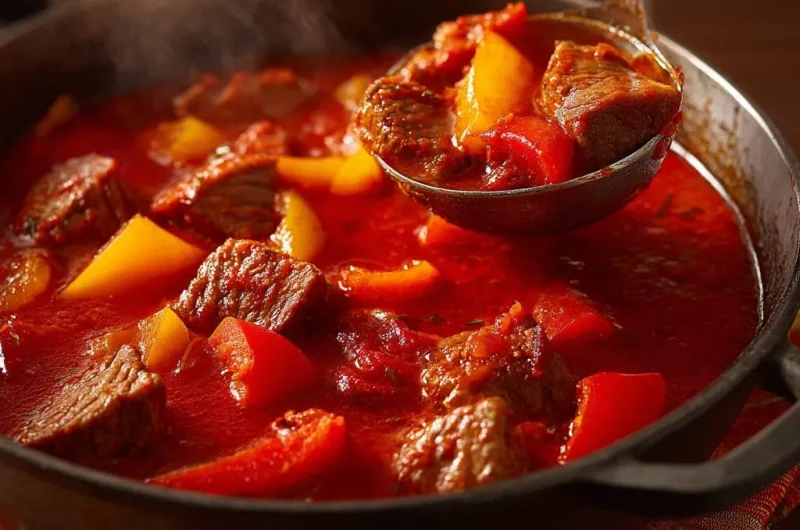
Beef Goulash
Course: Soups-StewsCuisine: Eastern EuropeanDifficulty: medium6
servings20
minutes3
hours380
kcal200
minutesAchieve legendary results with this simple two-step process that guarantees melt-in-your-mouth beef stew every time. By properly searing and slowly braising the meat, you develop deep, rich flavors while ensuring a fall-apart texture. Finish this hearty dish with sweet bell peppers for a classic goulash profile.
Ingredients
2 pounds beef stew meat, cut into 1 1/2 inch cubes (like chuck or round)
2 tablespoons olive oil, divided
1 large yellow onion, diced
3 cloves garlic, minced
1/4 cup tomato paste
1 tablespoon sweet paprika
1 teaspoon dried oregano
1 (28 ounce) can crushed tomatoes
2 cups beef broth (low sodium)
1 large red bell pepper, roughly chopped
1 large yellow bell pepper, roughly chopped
Salt and black pepper to taste
Directions
- Prepare and Sear the Beef: Pat the beef cubes completely dry with paper towels and season heavily with salt and pepper. This is critical for good browning. Heat 1 tablespoon of olive oil in a large, heavy-bottomed pot or Dutch oven over medium-high heat until shimmering.
- Execute the Sear (The Tenderizing Secret): Working in small batches, add the beef cubes to the pot, ensuring you do not crowd the pieces. If you crowd the pot, the meat will steam instead of sear, which results in tough meat. Sear each batch for 3 to 4 minutes per side until deeply browned on all surfaces. Remove the seared beef with a slotted spoon and set aside. Repeat until all beef is seared.
- Build the Flavor Base: Reduce the heat to medium-low. Add the remaining 1 tablespoon of oil to the pot, then add the diced onion and cook until softened, about 5 to 7 minutes. Add the minced garlic and cook for 1 minute until fragrant.
- Bloom the Spices: Stir in the tomato paste, paprika, and oregano. Cook this mixture, stirring constantly, for 2 minutes. This step, called blooming, develops the deep flavor of the spices and tomato paste.
- Combine and Braise: Return all the seared beef to the pot. Pour in the crushed tomatoes and beef broth. Stir well, scraping up any browned bits from the bottom of the pot. Bring the stew to a boil, then immediately reduce the heat to the lowest setting (just barely bubbling).
- Slow Simmer (The Tenderizing Finish): Cover the pot tightly and let the stew gently simmer for 2 1/2 hours. Check occasionally to ensure the liquid is still simmering very gently. Do not rush this step. The long, slow, covered cooking time is what breaks down the tough connective tissues, guaranteeing the fall-apart texture.
- Finish the Stew: After 2 1/2 hours, the meat should be very tender. Add the chopped red and yellow bell peppers. Continue to simmer, uncovered, for another 30 minutes, or until the peppers are tender-crisp and the sauce has thickened slightly. Taste and adjust salt and pepper as needed before serving hot.
Notes
- Ensure the beef is patted dry and seared in small batches to guarantee deep browning, which is key to tenderizing the meat. Do not rush the 2.5 hour slow simmer.