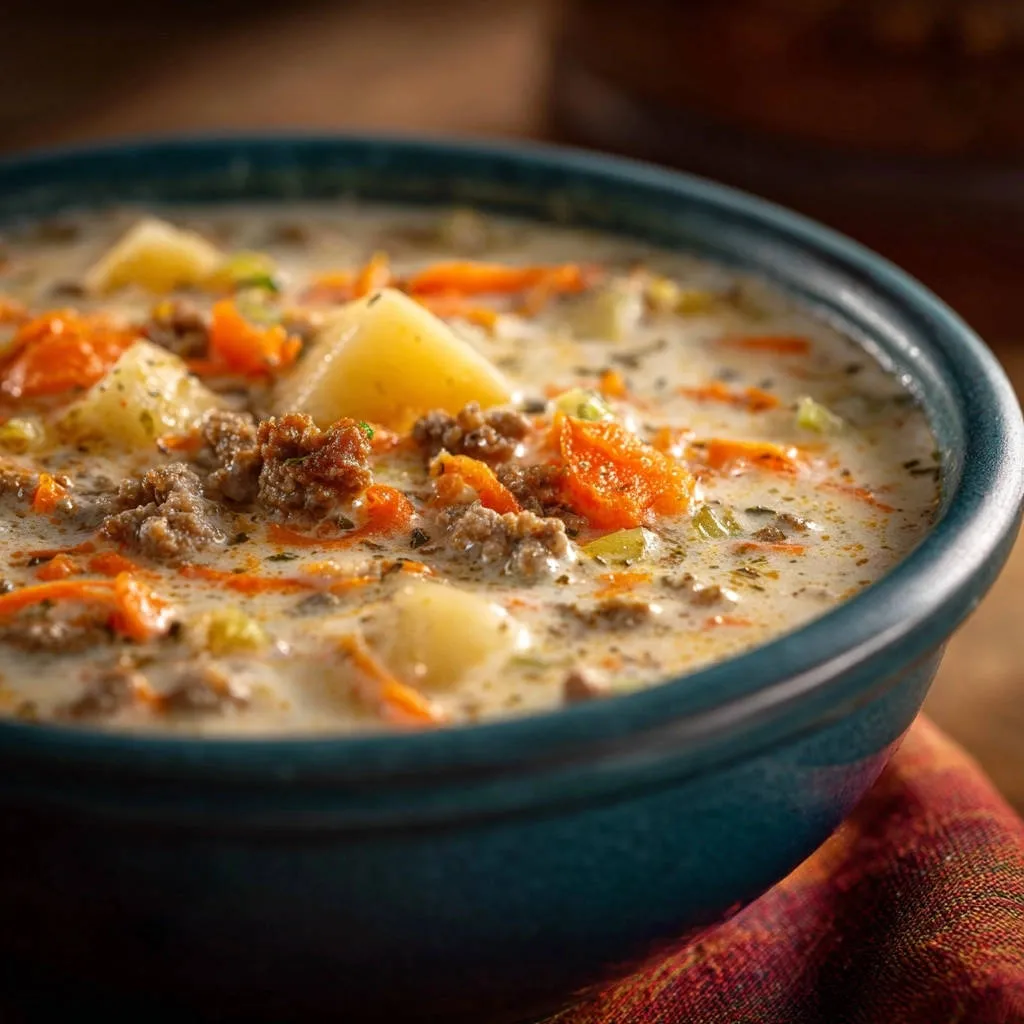
The biggest hurdle when making ground beef chowder is the stubborn oil slick that separates from the meat, ruining the velvety texture of the broth. I finally cracked the code, discovering one small, counter-intuitive preliminary step that completely eliminates that problem, guaranteeing a rich, smooth, and genuinely luxurious Hearty Beef and Potato Chowder every single time.
This recipe transforms a notoriously tricky dish into a simple, deeply satisfying meal that locks in the creamy comfort you crave, establishing a new gold standard for this classic winter warmer.
The Secret to Velvety Smooth Chowder: Say Goodbye to Grease!
The Common Challenge: Why Ground Beef Chowder Turns Oily
Even when you use lean beef and carefully drain the rendered fat, an invisible layer of residue clings to the cooked meat fibers. When that meat is reintroduced to the liquid, this microscopic fat melts into the broth, leading to a cloudy appearance and separation from the dairy.
If you appreciate the deep flavor locked in this chowder, you’ll want to try creamy meatball orzo soup for your next cozy meal.
Simple draining is insufficient because the fat adheres physically to the protein. This residual grease is the primary culprit behind the oily film that settles on the surface of your chowder.
The Game-Changing Preliminary Step That Guarantees Creaminess
The secret lies in mechanically stripping that residual fat after browning. Once your ground beef is cooked and fully drained, transfer it to a fine mesh colander immediately.
Briefly running hot tap water over the meat while gently stirring ensures that the remaining fat residue is washed away. Shake the meat vigorously to dry it completely before incorporating it into the chowder base later on.
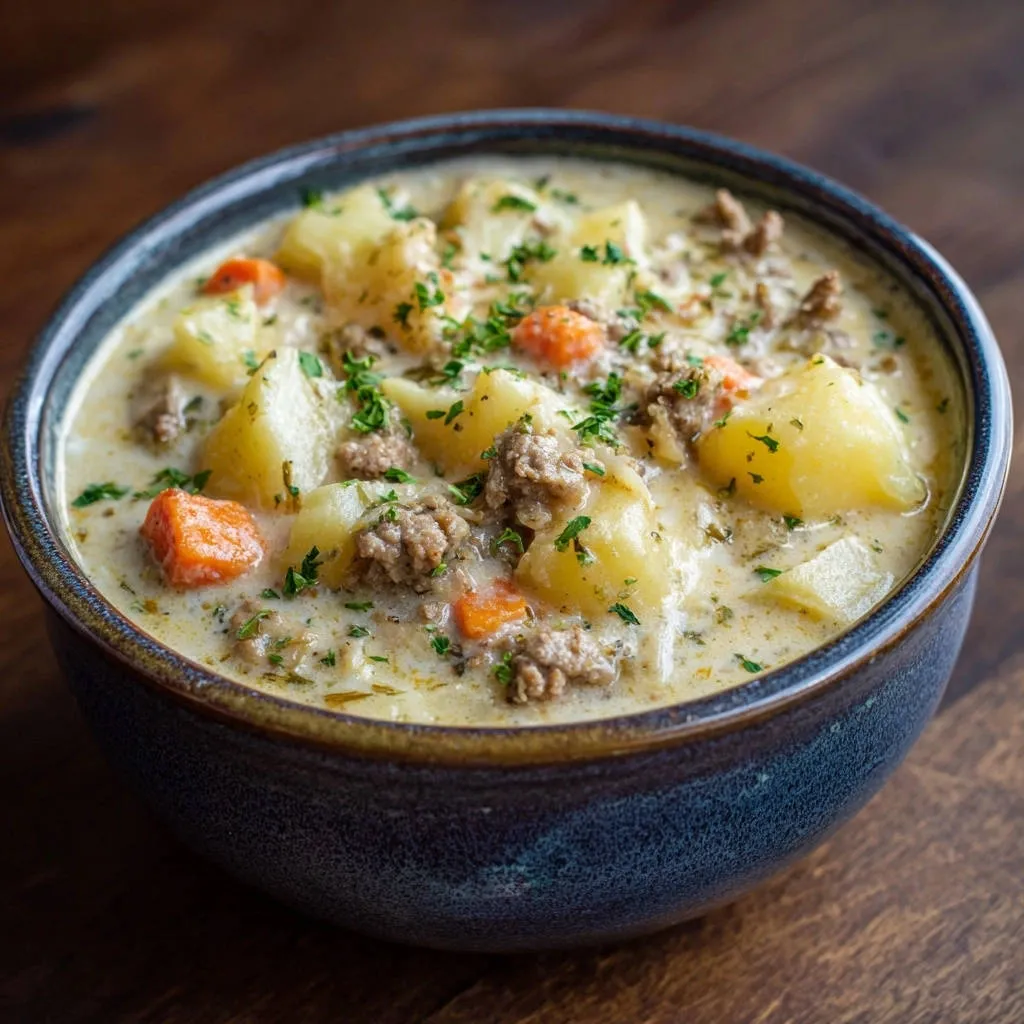
This critical rinsing step leaves you with clean, flavorful meat that will not introduce stray grease, guaranteeing your final chowder broth remains perfectly creamy, thick, and non-greasy.
The Essential Building Blocks of Flavor and Texture
Choosing the Right Beef and Broth Combination
While lean ground beef is naturally preferred for less initial grease, the rinsing technique means you can use moderately fattier cuts if needed, as the fat will be washed away. Focus on flavor-use fresh, quality meat.
Using a high-quality beef broth will deliver the deepest umami profile essential for a true Hearty Beef and Potato Chowder. However, chicken broth is a fantastic substitute if you prefer a slightly lighter, less intense backdrop flavor.
The Critical Role of the Aromatic Base (Mirepoix and Flour)
Sautéing the diced onions, celery, and carrots (often referred to as mirepoix) first creates the depth of savory flavor that distinguishes a complex chowder from a simple soup.
The all-purpose flour is sprinkled directly over these softened vegetables to form a roux, which acts as the primary, stable thickening agent. Cooking the flour for a full minute eliminates the raw starch taste before any liquid is introduced.
Selecting the Best Potato Variety for Chowder
Yukon Gold potatoes are specified because their moderate starch content holds its shape well during simmering while still breaking down enough to contribute to the chowder’s inherent creaminess.
They are waxy enough to prevent the dish from turning into mashed potatoes, which is a common issue when using high-starch Russets. If Yukon Golds are unavailable, thin-skinned red potatoes make an excellent second choice.
Essential Equipment for Chowder Mastery
The right tools streamline the cooking process, especially the non-greasy solution step.
Heavy-Bottomed Pot: A Dutch oven or heavy soup pot ensures even heat distribution, preventing scorching and allowing the roux to cook properly without burning.
Fine Mesh Colander: Absolutely essential for the critical rinsing and straining of the ground beef, ensuring no fat residue or water is left behind.
Sturdy Wooden Spoon or Spatula: Necessary for breaking up the ground beef efficiently and for stirring the roux constantly to prevent lump formation.
From Prep to Pot: Your Step-by-Step Cooking Guide
- Brown the Beef and Drain Thoroughly:
Ensure the beef is completely browned and broken up evenly. Drain off all visible rendered fat into a disposable container. This is Step 1 of the fat removal process.
- Rinse the Cooked Meat:
Transfer the drained ground beef to a fine mesh colander. Briefly run hot tap water over the meat while stirring gently to wash away residual fat. Shake vigorously to remove excess water before setting aside. This guarantees a clean, neutral flavor base.
- Sauté the Vegetables:
Return the empty, clean pot to medium heat and add fresh oil. Cook the onion, carrots, and celery until soft, developing the foundation of your flavor.
- Incorporate the Flour (Making the Roux):
Sprinkle the measured flour over the softened vegetables. Stir continuously for 60 seconds until the flour is fully incorporated and takes on a slightly nutty aroma. This prevents a raw flour taste.
- Deglaze and Add Potatoes:
Slowly whisk in the broth, ensuring no lumps form as the roux dissolves. Add the diced potatoes and seasonings (thyme and parsley). Bring to a boil, then cover and simmer until the potatoes are almost fork-tender (about 10 minutes).
The potatoes should still offer a slight resistance when pierced; they will finish cooking during the final cream stage.
- Combine Meat and Cream:
Stir the rinsed ground beef back into the pot. Add the milk and heavy cream. Continue to simmer gently for an additional 5-10 minutes, stirring occasionally, until the chowder reaches your desired thickness.
CRITICAL TIP: Do not allow the chowder to return to a hard boil once the cream is added, as this can cause separation. Keep the heat low and gentle until it’s hot and velvety.
- Final Seasoning and Serving:
Taste the finished chowder and adjust salt and pepper. Chowders require a surprising amount of salt to balance the richness, so season confidently. Serve immediately while hot.
Preparation and Initial Browning
Executing the Non-Greasy Solution (The Key Step)
Building the Aromatic Roux Base
Simmering and Developing the Chowder
The Finishing Cream Step
Customizing Your Comfort: Substitutions and Flavor Variations
Adapting the Texture: Dairy Alternatives for Richness
To slightly reduce the calorie count without losing too much richness, you can substitute whole milk and heavy cream with half-and-half or evaporated milk.
For non-dairy alternatives, full-fat oat milk or soy milk can be used, though they may require a slightly stronger roux base to achieve the necessary thickness.
Making it Gluten-Free: Thickening without Wheat Flour
To make this Hearty Beef and Potato Chowder gluten-free, omit the wheat flour during the roux stage.
Instead, at the end of cooking, whisk together a simple cornstarch slurry (1 part cornstarch to 2 parts cold water) and stir it slowly into the simmering chowder until it reaches the desired consistency. Ensure you simmer for at least 2 minutes to cook out the starch taste.
Boosting the Vegetable Profile
Chowder is highly adaptable to additions, making it excellent for incorporating more vegetables.
Stir in a cup of frozen corn, peas, or diced bell peppers during the final 5 minutes of simmering. Fresh spinach or chopped kale can be added right before the final rest to wilt slightly.
Chef’s Corner: Troubleshooting and Recipe Perfection Tips
“Why Did My Chowder Separate or Become Grainy?”
The most common cause of separation is boiling the chowder too hard after the dairy has been added. High heat causes the milk solids and fat in the cream to break apart.
Always keep the chowder at a very gentle simmer once the milk and cream are incorporated, and use high-quality, fresh dairy which tends to be more stable.
Adjusting Consistency: When the Chowder is Too Thin or Too Thick
If the chowder is too thick, simply whisk in additional broth or milk a quarter cup at a time until the ideal spoon-coating consistency is achieved.
If it is too thin, create another small cornstarch slurry and stir it into the simmering liquid, ensuring you simmer gently for a few minutes until it thickens without boiling vigorously.
Enhancing Umami: Deeper Flavor Notes
For a richer, more complex flavor profile, add a dash of Worcestershire sauce during the broth simmering stage-the fermented ingredients deepen the umami.
For a different hearty beef option, check out this hearty beef split pea soup.
Alternatively, a spoonful of rich tomato paste sautéed with the aromatic vegetables slightly before adding the flour will introduce a deeper, savory tang.
Serving, Storage, and Reheating Best Practices
Perfect Serving Suggestions and Garnishes
Serve this chowder alongside a warm, crusty sourdough loaf or flaky biscuits for dipping. The carbohydrate helps balance the richness.
What to Serve Alongside
Round out your hearty chowder with these complementary dishes.
- For a comforting bake, consider this golden cornbread and herb stuffing, offering a savory counterpoint.
- If you’re seeking a fresh contrast, try the grilled chicken kale and cabbage power salad, bringing lighter elements to the meal.
Garnish the bowls with fresh chopped chives or parsley, a sprinkle of sharp shredded cheddar cheese, or a light drizzle of your favorite mild hot sauce for a hint of heat.
Refrigerating and Freezing Leftovers
Leftovers should be stored in an airtight container in the refrigerator for up to 3-4 days. Cream-based chowders are safe to freeze, but they may slightly change texture upon thawing.
To mitigate potential graininess after freezing, thaw overnight in the refrigerator and whisk vigorously while reheating to recombine the dairy solids.
Reheating Without Separation
Avoid reheating cream-based soups quickly or at high power in the microwave, as this encourages separation.
The best method is to reheat gently on the stovetop over low heat, stirring frequently until the chowder is heated through and smooth. Add a splash of milk or cream if the consistency seems too thick after storage.
Frequently Asked Questions About Beef Chowder
Can I Use Different Types of Ground Meat?
Yes, you can substitute the ground beef with ground turkey or a beef and sausage blend. The fundamental flavor will change, but the technique holds.
For fattier options like ground pork or chuck, the rinsing step becomes even more crucial to achieve a perfectly smooth, velvety base for this comfort food.
How Long Does It Take for the Chowder to Thicken?
Initial thickening occurs immediately when the broth hits the roux, but the chowder needs 10-15 minutes of gentle simmering to fully activate the starch and allow the potatoes to release their own starch.
The final, rich consistency develops during the last 5-10 minutes of gentle simmering after the cold milk and cream are incorporated and heated.
Why Do I Need to Rinse the Beef if I’m Using Lean Ground Beef?
While lean beef reduces the initial volume of fat, it still renders oil during cooking, and that oil residue clings stubbornly to the meat fibers.
Rinsing is the definitive step to ensure every trace of fat that could potentially cloud the broth or cause the delicate dairy to separate is eliminated, guaranteeing that signature velvety texture in your Hearty Beef and Potato Chowder.
Ready to Cozy Up? Share Your Chowder Success!
Mastering this simple technique unlocks the door to truly perfect, creamy, and flavorful chowder without the frustration of oil separation. This recipe delivers deep comfort and robust flavor in every spoonful.
Try the non-greasy solution this week and discover the difference. We invite you to share your results, your favorite garnishes, and how you customized this recipe for your family in the comments below!
Enjoy your next bowl of the best Hearty Beef and Potato Chowder you’ll ever make.
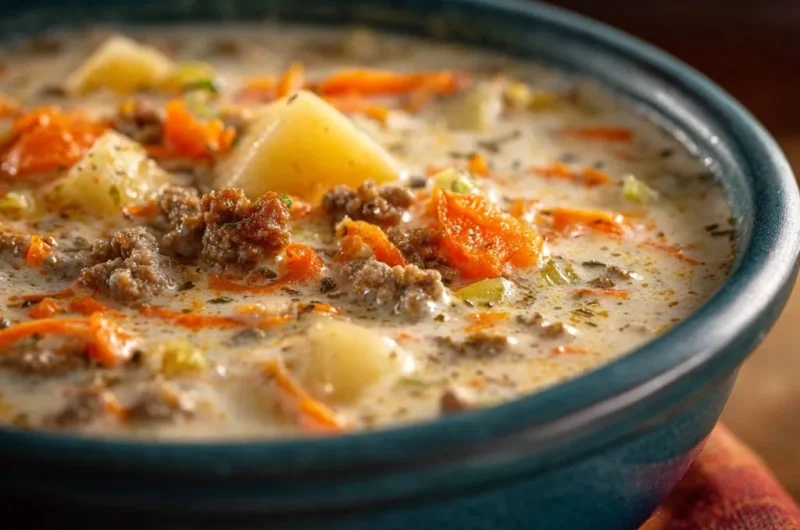
Beef and Potato Chowder
Course: Soups-StewsCuisine: AmericanDifficulty: medium6
servings20
minutes35
minutes550
kcal55
minutesThis Hearty Beef Chowder uses a unique preliminary step—rinsing the cooked ground beef—to guarantee a perfectly smooth, non-oily, and velvety broth. Traditional chowders often separate or look greasy, but this technique ensures creamy perfection every time. Rich with potatoes, carrots, and celery, this is ultimate comfort food.
Ingredients
1 pound lean ground beef
1 tablespoon cooking oil (canola or vegetable)
1 large yellow onion, diced
2 carrots, peeled and shredded or finely diced
2 stalks celery, diced
4 cups beef or chicken broth
3 medium Yukon Gold potatoes, peeled and cut into 1-inch chunks
1/4 cup all-purpose flour
1 cup whole milk
1 cup heavy cream
1 teaspoon dried thyme
1 teaspoon dried parsley
Salt and black pepper to taste
Directions
- Prepare the Beef for a Smooth Base. In a large Dutch oven or soup pot, brown the ground beef over medium-high heat, breaking it up as it cooks. Once fully browned, drain off all the rendered fat into a disposable container.
- Execute the Non-Greasy Solution. Transfer the drained ground beef to a fine mesh colander. Briefly run hot tap water over the cooked meat, stirring it gently, to wash away any remaining clinging fat residue. Shake the colander well to remove excess water and set the beef aside. This step is essential for guaranteeing a non-oily broth.
- Build the Base. Return the empty pot to medium heat. Add the 1 tablespoon of fresh cooking oil. Add the diced onion, carrots, and celery. Cook until the vegetables soften, about 5 to 7 minutes.
- Make the Roux. Sprinkle the flour over the cooked vegetables. Stir continuously for 1 minute until the flour is completely incorporated and has coated the vegetables.
- Deglaze and Simmer. Slowly pour in the broth, stirring constantly to prevent lumps from forming. Add the potatoes, thyme, and parsley. Bring the mixture to a boil, then reduce the heat to low, cover, and simmer for 10 minutes, or until the potatoes are almost tender.
- Combine and Finish. Stir the rinsed ground beef back into the pot. Pour in the milk and heavy cream. Continue to simmer gently for an additional 5 to 10 minutes, stirring occasionally, until the chowder has thickened to your desired consistency and the potatoes are completely tender. Do not allow the chowder to come to a hard boil once the cream is added.
- Serve. Taste and adjust seasoning with salt and pepper as needed. Serve hot.
Notes
- Rinsing the ground beef after browning is the crucial non-greasy solution needed to ensure the final chowder is perfectly creamy. Do not allow the chowder to come to a hard boil once the cream is added.