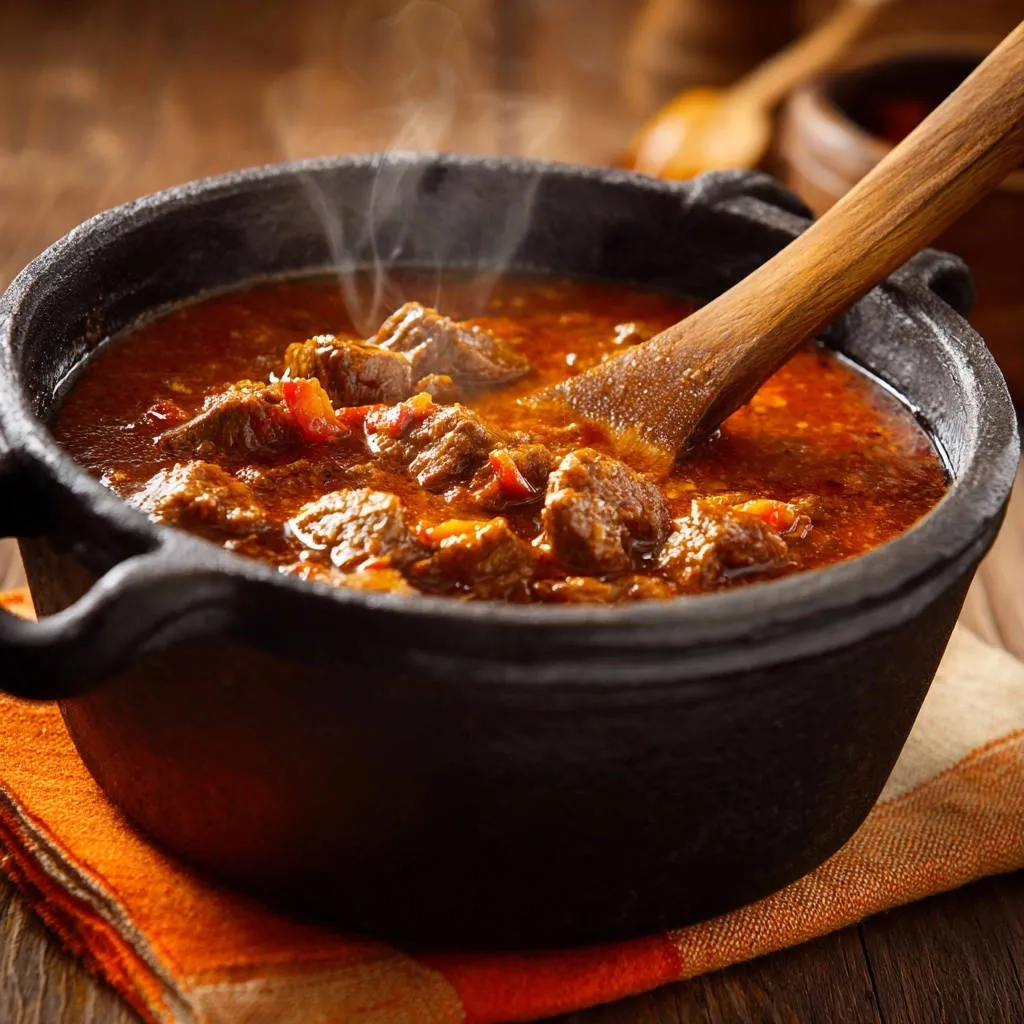
I used to believe that tough stew meat was just an unavoidable part of cooking slow-braised dishes, but after years of experimenting, I finally cracked the code. This recipe for Hearty Beef Goulash eliminates the disappointment of dry meat by utilizing two simple, non-negotiable techniques-a maximized sear and an impossibly low, controlled simmer.
You will achieve fork-shredding tenderness and a deeply flavored, rich sauce that transforms this traditional dish into a centerpiece meal you’ll be proud to serve.
Ditching Dry Stew: Why This Goulash Recipe Works Every Time
The common failure when cooking stew is impatience. Many recipes rush the searing phase or allow the liquid to boil vigorously, causing the tough collagen fibers in the meat to seize up instead of melting.
For even more slow-braised beef goodness, slow-braised beef and white bean stew offers a similar depth of flavor.
Our method focuses on locking in moisture through a critical browning step, followed by an extremely gentle, low-temperature braise that gives the meat enough time to completely break down into velvety richness.
This attention to detail in temperature control and ingredient preparation is what elevates this dish, ensuring every batch yields incredibly tender beef.
The Culinary Power of Proper Preparation
Patting the beef completely dry is essential because moisture creates steam, which prevents the Maillard reaction needed for deep browning and flavor development.
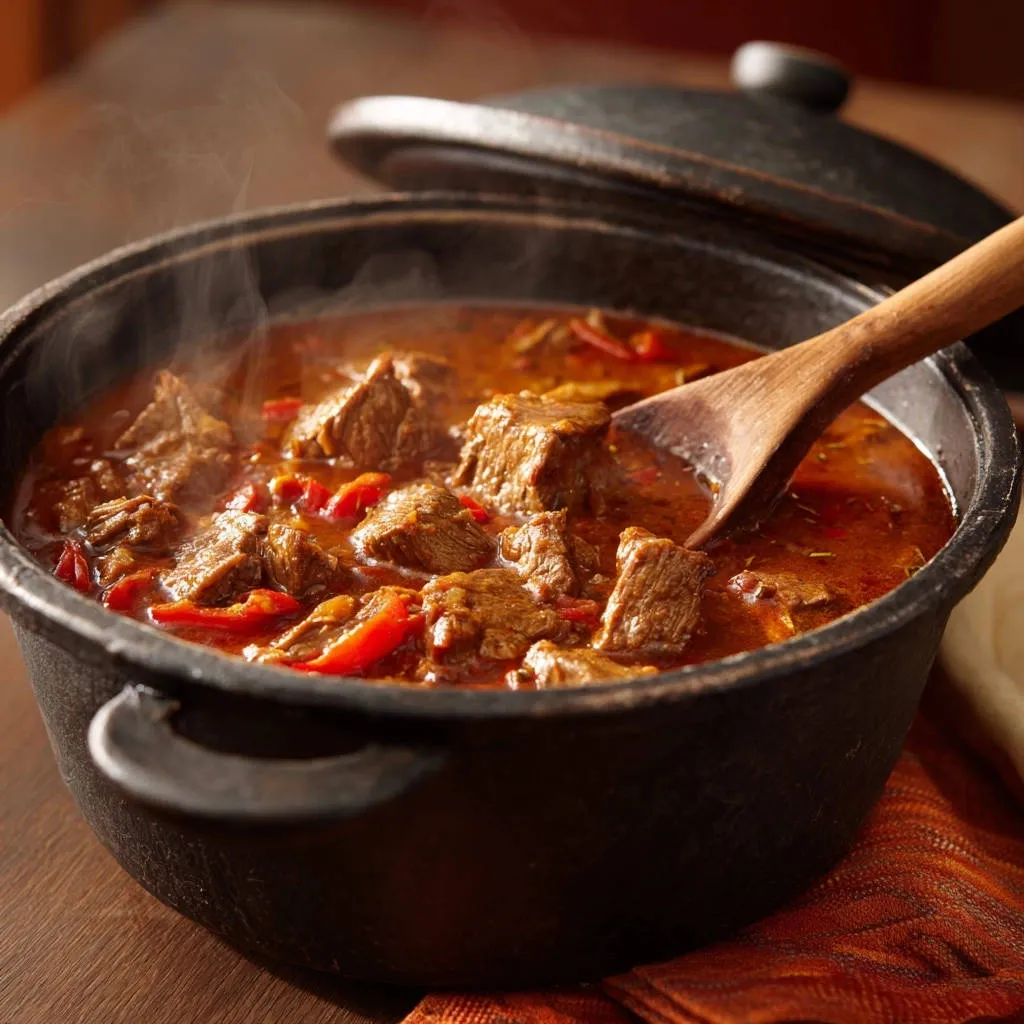
Tossing the dried cubes lightly with flour performs two crucial functions: it helps create a thicker, more durable crust during the sear, and it later contributes to the final velvety texture of the sauce.
The Magic of Blooming Paprika and Cumin
Spices, particularly paprika, contain fat-soluble flavor compounds. Adding them directly to hot oil or the fat rendered from the beef for 30 seconds activates these compounds.
This technique, known as “blooming,” instantly intensifies the aroma and deepens the essential red color of the paprika, ensuring the goulash sauce is vibrant and rich in flavor, not just color.
The Building Blocks of Depth: Essential Ingredients for Authentic Flavor
Exceptional flavor begins with high-quality core ingredients. We rely on fresh aromatics and the depth provided by high-quality beef broth to build a robust flavor profile that supports the richness of the meat.
Choosing the Right Beef Cut for Maximum Tenderness
Beef chuck (shoulder) is overwhelmingly preferred for this Hearty Beef Goulash due to its high fat and collagen content, which melts during the long braise to keep the meat moist.
Beef round is leaner and will require a slightly longer simmering time to ensure tenderness; regardless of the cut, always ensure the cubes are uniform for even cooking.
Aromatic Foundations: Onions, Garlic, and Tomato Paste
Onions and garlic form the irreplaceable aromatic base, which must be sautéed thoroughly to release their essential oils and sweetness before the liquid is introduced.
Tomato paste serves as an immediate source of concentrated umami, providing complexity and a slight acidity when cooked briefly before the spices are bloomed.
Liquid Gold: Selecting the Best Beef Broth
Using low-sodium beef broth is critical because it allows you to control the final seasoning precisely. High-sodium broths often result in an overly salty stew after hours of reduction.
The bay leaf adds a subtle, savory depth and a unique herbaceous note that brightens the long-cooked flavor of the stew without overwhelming the paprika.
Essential Tools and Prep Work for Seamless Cooking
Ensuring your workspace is set up correctly is the fastest way to guarantee success, especially with a recipe that moves quickly through the initial high-heat stages.
Why a Heavy Dutch Oven is Non-Negotiable
A thick-walled Dutch oven or heavy cast-iron pot retains and distributes heat far better than thinner pots.
This is vital for two reasons: achieving a high-heat sear without scorching, and maintaining the low, consistent, barely-bubbling temperature required for the three-hour braise.
Prepping Your Mise en Place
Dice the onion and mince the garlic before starting the stove.
Measure all spices, including paprika and cumin, into a small bowl for quick addition.
Ensure your beef broth, tomatoes, and tomato paste are measured and ready to pour.
Pat the beef dry and toss with flour (if using) before you heat the oil.
Step-by-Step Braise: Achieving Velvety Hearty Beef Goulash Perfection
The difference between a tough stew and a perfectly tender one lies entirely in mastering the searing and the extremely low simmering steps below. Do not rush or skip the process of browning the meat in batches.
This technique is also key to achieving that melt-in-your-mouth tenderness in a hearty beef and pepper goulash.
-
Prepare the Beef for Maximum Sear:
Pat the cubed beef completely dry using paper towels. If using the flour, very lightly toss the beef cubes just until coated. This technique is the first step in creating a moisture barrier.
-
Achieve the Perfect Deep Sear (The Browning Secret):
Heat the oil until shimmering. CRITICALLY, work in small, single-layer batches to avoid overcrowding the pot, which lowers the temperature and steams the meat instead of searing it. Sear until deep brown, not just light brown.
Remove the browned beef and set aside, reserving the flavorful oil and brown bits (fond) in the pot.
-
Building the Flavor Base: Aromatics and Paste:
Reduce the heat and cook the diced onion until translucent, scraping up the flavorful fond from the bottom of the pot. Add the minced garlic and tomato paste, cooking briefly until fragrant.
-
Unlock the Spices (Blooming Technique):
Stir in the paprika, cumin, salt, and pepper. Cook these spices for just 30 seconds, stirring constantly. This brief exposure to heat maximizes their flavor potential before the liquid is added.
-
Assembly and Initiating the Low Simmer:
Return all the seared beef to the pot. Add the remaining liquids and the bay leaf, bringing the mixture just to a simmer. Immediately reduce the heat to the lowest possible setting.
-
The Long, Slow Lock In: The “Barely Bubbling” Rule:
Cover the pot tightly. Simmer the goulash undisturbed for 2.5 to 3 hours. The goal is a barely perceptible bubble, which slowly breaks down the collagen without drying out the meat.
Avoid checking the stew too often; opening the lid drops the temperature and extends the cooking time. Only check and adjust the liquid if necessary after the two-hour mark.
-
Finishing Touches and Serving:
Remove the bay leaf. Taste the sauce and adjust seasonings with salt and pepper as needed. The sauce should be rich, thick, and velvety. Serve immediately.
Chef’s Secrets: Elevate Your Hearty Beef Goulash Game
The Overnight Chill (Improved Texture): Prepare the goulash a day ahead. Resting overnight in the refrigerator allows the flavors to deepen significantly and the sauce to thicken naturally.
Fixing a Thin Sauce: If your sauce is too thin after braising, remove the lid for the final 30 minutes of cooking or use a slurry of cornstarch and cold water (1 tbsp cornstarch to 2 tbsp water) stirred in at the end until thickened.
Adding a Touch of Acidity: A splash of red wine vinegar or a squeeze of lemon juice at the very end can brighten the rich, savory flavor profile of the goulash.
Controlling the Heat: If your stove runs hot, consider moving the Dutch oven to a preheated 300°F (150°C) oven instead of simmering on the stovetop to ensure consistent, gentle heat.
Goulash Troubleshooting and Common Ingredient Swaps
Why is My Beef Still Tough After Three Hours?
Tough beef is almost always due to the temperature being too high during the long braise. If the stew boils vigorously, the muscle fibers seize up. Reduce the heat immediately and confirm it is only barely bubbling. Also, ensure your pot is covered tightly to prevent excessive moisture loss.
Can I Substitute the Crushed Tomatoes for Peppers?
Yes. The recipe notes suggest diced red bell peppers as a classic Hungarian alternative to crushed tomatoes. If you use peppers, add them along with the onions and cook them down until soft before adding the garlic and tomato paste.
Is Flour Necessary for the Searing Stage?
The flour is optional, but highly recommended. When tossed lightly, it aids in developing a thicker, more caramelized crust during searing, which adds tremendous flavor depth and helps the sauce achieve a velvety texture without making a separate thickener.
Beyond the Bowl: Perfect Pairings and Storage Solutions
This rich Hearty Beef Goulash needs little accompaniment, but pairing it with the right starch enhances the dining experience by soaking up every last bit of the savory sauce.
Completing Your Goulash Meal
To make your hearty beef goulash meal even more satisfying, consider these complementary dishes.
- For a delightful contrast, try these crispy golden potato pancakes, offering a pleasant texture alongside the tender meat.
- Enjoy a touch of sweetness with these sweet poppy seed swirls, which bring a different kind of comfort to the table.
What to Serve Alongside Authentic Hearty Beef Goulash
Classic egg noodles (for soaking up the rich sauce).
Creamy mashed potatoes or polenta.
A simple, crusty bread or dinner rolls.
A light, acidic green salad or coleslaw to cut the richness.
Make-Ahead and Freezing Instructions
Hearty Beef Goulash is an excellent make-ahead meal, often tasting better the next day. Once cooled, store leftovers in an airtight container in the refrigerator for up to 4 days.
For longer storage, freeze the cooled goulash in freezer-safe containers for up to 3 months. Thaw overnight in the refrigerator and reheat gently on the stovetop, adding a splash of broth if necessary to restore consistency.
Ready to Impress? Share Your Hearty Beef Goulash Masterpiece!
This Hearty Beef Goulash recipe proves that patient cooking and specific techniques are the true secrets to tender, irresistible stew. We hope these steps guide you to creating the most flavorful, fork-shredding goulash you’ve ever tasted.
Don’t forget to tell us how your family reacted to this velvety masterpiece! Share your experience in the comments below.
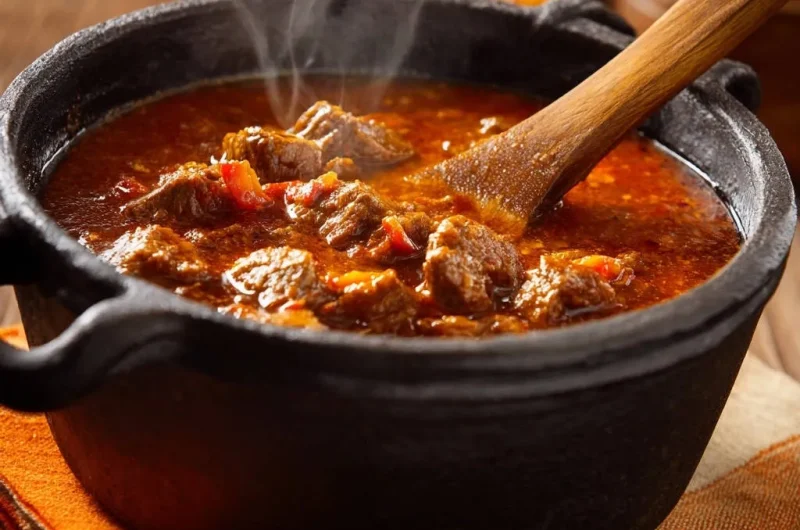
Beef Goulash
Course: Soups-StewsCuisine: Eastern EuropeanDifficulty: medium6
servings20
minutes3
hours450
kcal200
minutesThere is nothing more satisfying than perfectly tender, fork-shredding beef stew. This recipe employs critical searing and slow braising steps to lock in moisture, creating a rich, velvety goulash that makes the entire house smell incredible.
Ingredients
2 pounds beef stew meat (chuck or round), cut into 1 inch cubes
1/4 cup all-purpose flour (optional, for thickening/searing)
2 tablespoons vegetable oil
1 large yellow onion, diced
3 cloves garlic, minced
2 tablespoons paprika (sweet or Hungarian style)
1 teaspoon cumin
1/2 teaspoon salt
1/4 teaspoon black pepper
1 (14.5 ounce) can crushed tomatoes (or diced red bell peppers)
4 cups low sodium beef broth
1 bay leaf
1 tablespoon tomato paste
Water, as needed
Directions
- Prepare the Beef for Tenderness. Pat the cubed beef completely dry using paper towels. If using the flour, very lightly toss the beef cubes with the flour mixture just until coated. This step is critical to achieving the perfect sear and is the first secret to tenderness.
- Achieve the Perfect Sear. Heat the vegetable oil in a large Dutch oven or heavy pot over high heat until shimmering. Working in small, single-layer batches (do not overcrowd the pot), sear the beef cubes on all sides until deep brown and caramelized, about 2 to 3 minutes per batch. Remove the browned beef and set aside, reserving the oil and brown bits in the pot.
- Build the Base Flavor. Reduce the heat to medium. Add the diced onion to the pot and cook until soft and translucent, about 5 minutes, scraping up any browned bits from the beef. Add the minced garlic and tomato paste and cook for 1 minute until fragrant.
- Bloom the Spices. Stir in the paprika, cumin, salt, and pepper. Cook these spices for just 30 seconds, stirring constantly. This “blooming” step releases the full depth of flavor from the paprika.
- Assemble and Braise. Return all the seared beef to the pot. Add the crushed tomatoes (or peppers), beef broth, and bay leaf. Bring the mixture just to a simmer. Here is the second, most important secret: Immediately reduce the heat to the lowest possible setting. The stew should only be barely bubbling, almost imperceptible. Cover the pot tightly.
- Lock In the Tenderness. Simmer the goulash undisturbed on the stovetop for a minimum of 2.5 to 3 hours, or until the beef easily shreds with a fork. Checking the stew too often will lower the temperature and inhibit the collagen breakdown needed for tenderness. If the liquid reduces too much during cooking, add a splash of water or broth to maintain the consistency.
- Finish and Serve. Remove the bay leaf. Taste the sauce and adjust seasonings if necessary. Serve hot.
Notes
- Do not lift the lid during the 2.5-3 hour simmering phase to maintain consistent temperature for tenderness.