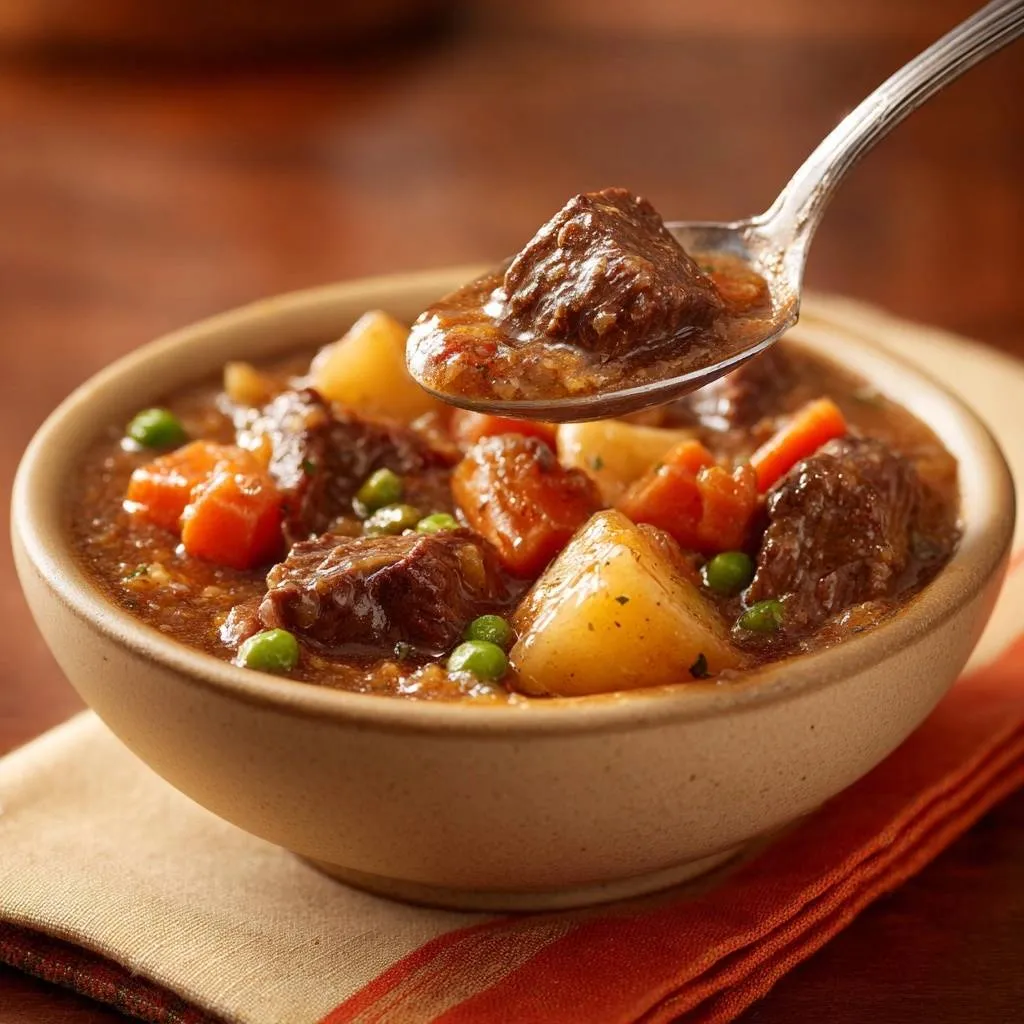
Ever ended up with a pot of hearty beef stew where the meat fights your fork like it’s personal? You know the drill: hours of cooking, but the beef stays tough and chewy. This recipe changes that with a quick sear followed by a gentle simmer. You’ll get fork-tender bites that melt in your mouth, no fancy gear required.
Here’s why it works so well. The high-heat sear creates a crust that traps juices inside the beef. Then, the low simmer breaks down tough collagen into silky gelatin. In addition, using chuck cut ensures rich flavor without dryness. It’s the classic braise method that’s fed families for generations.
The real secret lies in patting the beef completely dry before dredging in flour. That step guarantees a proper sear, not steam, so moisture stays locked in. This hearty beef stew serves 6, with just 20 minutes prep and about 2.5 hours total cook time. Oh man, that first bite? Pure comfort.
Why Hearty Beef Stew Demands Precision
Tough beef ruins most hearty beef stews because folks skip the sear or boil too hard. However, searing triggers the Maillard reaction, browning proteins for deep flavor and a barrier against drying out. Boiling, on the other hand, squeezes out juices and leaves meat stringy.
Chuck excels here since it’s loaded with collagen that melts at around 160°F during a slow braise. Therefore, this rich beef stew turns budget-friendly cuts into something luxurious. Precision in heat control makes all the difference. You’ll taste the science in every spoonful.
Chuck Cut: Collagen’s Tender Transformation
Grab 2 pounds of beef chuck, cut into 1-inch cubes. Lean cuts like sirloin dry out fast, but chuck’s marbling and connective tissues shine in a braise. They break down over 2 hours into tender, juicy meat. Perfect for hearty beef stew every time.
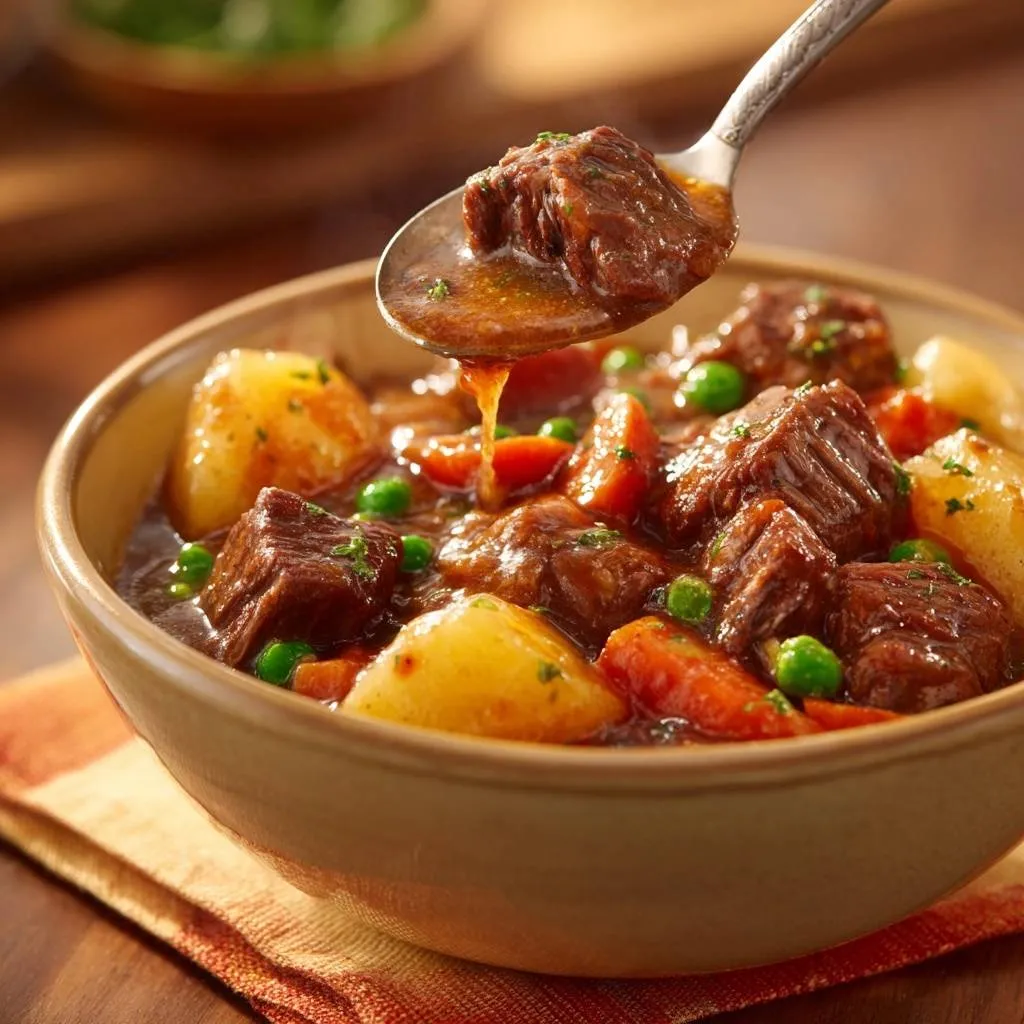
Moisture Control for Sear Success
Pat those cubes bone-dry with paper towels before anything else. Wet beef steams instead of sears, leading to gray, tough results. Dry surfaces let flour stick and form a crust that locks in flavor. It’s a game-changer for juicy beef stew.
Essential Ingredients for Hearty Beef Stew
These ingredients build your beef stew base without fuss. Flour dredged on beef thickens the hearty stew broth naturally as it simmers, no gums needed. Here’s the full list in a handy table for quick reference:
| Ingredient | Quantity |
|---|---|
| Beef chuck, 1-inch cubes | 2 pounds |
| All-purpose flour | 1/4 cup |
| Vegetable oil | 2 tablespoons |
| Onion, chopped | 1 large |
| Garlic, minced | 3 cloves |
| Carrots, peeled and sliced | 4 large |
| Potatoes, peeled and cubed | 4 medium |
| Frozen peas | 1 cup |
| Beef broth | 4 cups |
| Bay leaves | 2 |
| Dried thyme | 1 teaspoon |
| Salt and black pepper | To taste |
Beef and Aromatics Foundation
Chuck provides the hearty base, while onion and garlic build savory depth. Season beef generously with salt and pepper pre-sear; it draws out moisture for better browning. No subs here, they’re non-negotiable for flavor.
Root Vegetables and Broth Balance
Carrots and potatoes add sweetness and bulk, but add them early to soften fully. Frozen peas go in last for pop-in-your-mouth texture; they’re a quick shortcut over fresh. Beef broth beats stock for its richer body in this hearty stew broth.
Herbs: Thyme and Bay Depth
Thyme and bay leaves infuse earthy warmth that elevates the whole pot. Use dried for convenience; they’re potent in long simmers. Fresh thyme works too, but double the amount since it wilts faster.
Equipment Choices for Perfect Hearty Beef Stew
A Dutch oven is your beef stew pot hero with its thick walls and tight lid. It retains even heat for a perfect braise, preventing hot spots. Stockpots work but lose steam faster, so monitor closely. Heat oil until it shimmers, not smokes, for clean searing.
Dutch Oven Heat Distribution Edge
Those heavy walls distribute heat evenly, so nothing scorches on the bottom. The lid seals in steam, which tenderizes the beef. If you don’t have one, a deep cast-iron skillet with foil cover gets close.
Mastering the Sear in Hearty Beef Stew
Start by drying and flouring the beef, then sear in batches over medium-high heat. Don’t crowd the pot, or it’ll steam instead of brown. Onions and garlic deglaze next, scraping up those golden bits for max flavor in your sear beef stew.
Watch for a deep crust forming, about 4-5 minutes per side. That Maillard magic boosts umami. Transfer beef out, and you’ll smell the promise of tender beef stew ahead.
Dry Beef and Flour Dredge Technique
Pat dry, season with salt and pepper, then dredge in flour and shake off excess. Too much flour gums up the stew. This light coat crisps during searing and thickens later.
High-Heat Browning Without Smoking
Oil should shimmer hot; test with one piece first. Brown 4-5 minutes per side until crusty. Pull beef when it’s got color everywhere, locking in juices perfectly.
Low-Slow Braise: Hearty Beef Stew Core
Return beef, layer in carrots, potatoes, broth, and herbs, then simmer covered on low for 2 hours. Stir every 30 minutes to distribute heat. Uncover for peas at the end; the stew thickens as flour reduces in your simmer beef stew.
Keep it at a gentle bubble, not a boil, to melt collagen without toughening. Veggies soften to creamy, beef shreds easily. Pro tip: taste broth midway and adjust salt if needed.
If you enjoy this gentle, slow-simmered approach, you’ll appreciate the creamy texture found in creamy slow-simmered beef stew.
Layering Veggies and Broth Precisely
Add beef back with juices, then pile in carrots, potatoes, broth, bay leaves, and thyme. Nestle bay leaves on top for easy removal. Bring just to a simmer before covering.
2-Hour Simmer and Final Thickening
Lid on, low heat for 2 hours until fork-tender. Stir in peas, uncover, and simmer 15-20 minutes more. Sauce thickens naturally; skim excess fat if it looks oily.
Science of Tender Hearty Beef Stew
Collagen in chuck converts to gelatin above 160°F over low heat, unlike quick cooks that leave it chewy. The sear’s crust denatures proteins, sealing juices against braise steam. In this tender beef stew, pH from broth aids even breakdown for silky texture.
For even more succulence, explore how to achieve fork-tender results with slow-braised beef short ribs.
Maillard browning adds hundreds of flavor compounds you can’t get from steaming. Therefore, your braised beef stew tastes restaurant-quality. It’s simple science you control at home.
Connective Tissue Melting Process
Two hours hits the sweet spot for 1-inch cubes; smaller pieces over-tenderize. Collagen gels at low temps, creating that pull-apart quality. Patience pays off big here.
Crust Locks In Stew Juiciness
The sear shrinks surface proteins, trapping moisture inside. No crust means dry, boiled beef. Visual: deep brown exterior, pink-free interior after braise.
Avoiding Hearty Beef Stew Pitfalls
Common beef stew mistakes include overcrowding the sear, boiling hard, or rushing the simmer. Fix by batching beef and keeping heat low. Undercooked veggies? Extend simmer 15 minutes, covered.
No Tough Meat: Simmer Secrets
Monitor for lazy bubbles only; high boil contracts proteins. Check tenderness at 1.5 hours. If needed, go longer on lowest heat.
Preventing Watery Hearty Beef Stew
Flour dredge provides just enough starch; don’t add more. Uncover late so excess liquid evaporates. Simmer longer if still thin.
Flavor Variations for Hearty Beef Stew
Swap potatoes for parsnips for earthier sweetness in your variations hearty beef stew. Add mushrooms with onions for umami punch. For spice, stir in smoked paprika. Sparkling cranberry juice deglazes beautifully too.
Root Vegetable Swaps and Adds
Turnips replace potatoes for lower carbs, same tenderness. Skip peas for green beans if you prefer crunch. All hold up in the braise.
Make-Ahead and Freezing Hearty Beef Stew
Fridge leftovers up to 4 days in airtight containers; flavors deepen overnight. Freezing beef stew works great for 3 months; portion into bags flat for quick thaw. Reheat gently on stovetop with a splash of broth to revive texture.
Batch Cooking and Thaw Methods
Double the recipe for meals all week. Thaw overnight in fridge or use an ice bath for same-day use. Stir well before reheating low and slow.
Pairing Sides with Hearty Beef Stew
Serve hearty beef stew with crusty sourdough to sop up every drop. A crisp green salad adds brightness against the richness. Rice or mashed potatoes bulk it up too. Textural contrasts make the meal sing.
Completing Your Meal
Serve these dishes alongside your hearty beef stew for a complete experience.
- For a comforting bread option, try this golden cornbread and herb stuffing that complements the richness of the stew.
- Round out your meal with a fresh side like this creamy herb and pea potato salad, offering a cool contrast.
Bread and Salad Pairing Ideas
Sourdough’s chew soaks broth perfectly. Vinegar-dressed salad cuts richness with tang. Simple, but spot-on.
Common Hearty Beef Stew Queries
How do you store leftovers and freeze hearty beef stew?
Store in airtight containers in the fridge for up to 4 days. It freezes beautifully for 3 months; cool completely first, then portion into freezer bags, squeezing out air. Thaw overnight in the fridge and reheat on stovetop over low heat with a bit of extra broth to loosen it up. Avoid microwaving large batches to prevent uneven heating and toughness.
Why is my beef stew tough and how do I fix it?
Tough meat usually comes from skipping the sear or boiling instead of simmering. The sear locks in juices, and low, gentle heat (lazy bubbles only) melts collagen over 2 full hours. Next time, pat dry, brown in batches, and keep it covered on lowest heat. Test with a fork at 1.5 hours; if not shredding easily, simmer longer.
Can I substitute the flour for gluten-free in hearty beef stew?
Yes, use a 1:1 gluten-free all-purpose flour blend for dredging; it thickens similarly without gumminess. Cornstarch slurry (1 tbsp cornstarch + 2 tbsp water) works too, stirred in at the end. Avoid almond flour; it won’t crisp or thicken properly during the braise.
Can I make hearty beef stew in a slow cooker?
Absolutely. Sear beef first in a skillet (don’t skip!), then transfer to slow cooker with all other ingredients except peas. Cook low 8 hours or high 4-5 hours until tender. Add peas last 20 minutes. It won’t thicken as much, so finish on stovetop uncovered if needed.
What’s the best cut of beef for hearty beef stew?
Chuck roast or shoulder is king for its collagen and fat balance. Cut into 1-inch cubes for even cooking. Avoid lean cuts like round; they dry out. Budget-friendly and transforms perfectly in this braise method.
Can I use an Instant Pot for hearty beef stew?
Yes, but sear on sauté mode first in batches. Add remaining ingredients, pressure high for 35 minutes with natural release 15 minutes. Stir in peas after, sauté uncovered to thicken. It’s faster but misses some depth from long simmer; still tender and delicious.
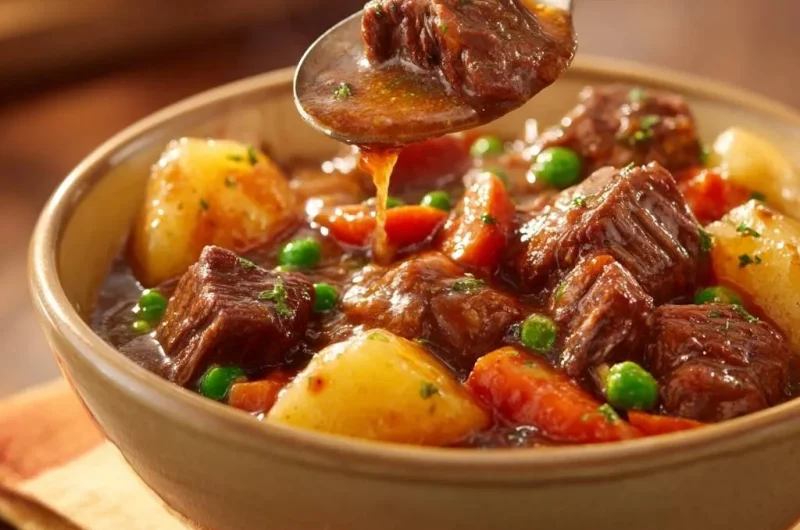
Beef Stew
Course: Main CourseCuisine: AmericanDifficulty: medium6
servings20
minutes2
hours450
kcal140
MinutesThis hearty beef stew uses a sear-then-simmer method to transform tough beef chuck into melt-in-your-mouth bites. Packed with carrots, potatoes, and peas in a rich broth.
Ingredients
2 pounds beef chuck, cut into 1-inch cubes
1/4 cup all-purpose flour
2 tablespoons vegetable oil
1 large onion, chopped
3 garlic cloves, minced
4 large carrots, peeled and sliced
4 medium potatoes, peeled and cubed
1 cup frozen peas
4 cups beef broth
2 bay leaves
1 teaspoon dried thyme
Salt and black pepper to taste
Directions
- Pat beef cubes completely dry with paper towels. This crucial step removes moisture for a proper sear that locks in juices and starts tenderizing. Season generously with salt and pepper, then dredge in flour, shaking off excess.
- Heat oil in a large Dutch oven over medium-high heat until shimmering hot (not smoking). Brown beef in batches, 4-5 minutes per side, without overcrowding. The high-heat sear creates a flavorful crust that prevents toughness by trapping moisture inside. Transfer to a plate.
- Lower heat to medium. Add onion and garlic to the pot, scraping up browned bits (deglaze for flavor). Cook 3-4 minutes until softened.
- Return beef and juices to pot. Add carrots, potatoes, broth, bay leaves, and thyme. Bring to a simmer, then cover and reduce to low heat. Simmer gently 2 hours, stirring occasionally. The low, slow braise melts connective tissues for guaranteed tenderness, no boiling.
- Uncover, stir in peas, and simmer 15-20 more minutes until veggies are tender and stew thickens from flour. Remove bay leaves. Taste and adjust salt/pepper. Serve hot, with beef falling apart on your fork.
Notes
- Pat beef dry before searing for best results. Simmer gently on low heat to avoid tough meat. Flour dredging helps thicken the stew naturally.