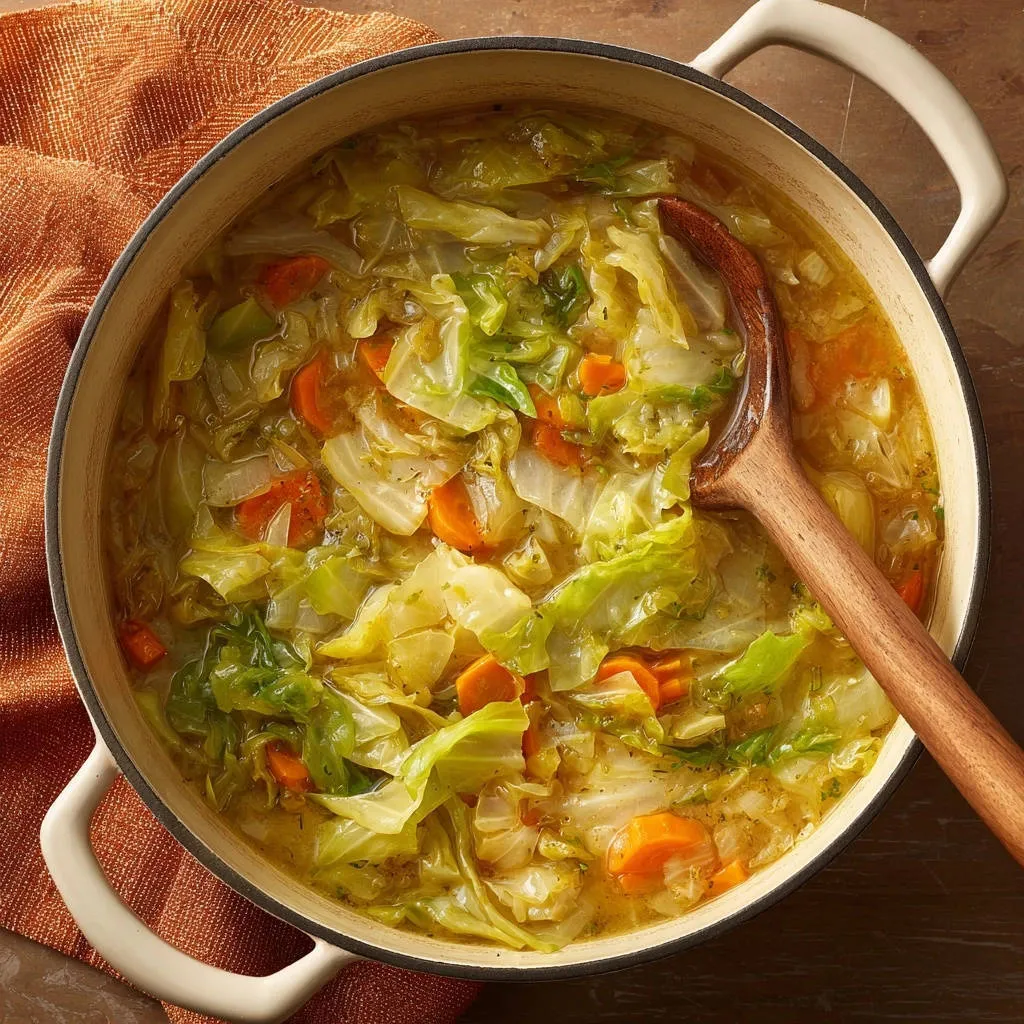
I used to struggle for years trying to make cabbage soup taste like anything more than seasoned hot water, a common frustration for even experienced home cooks.
The secret to achieving a truly deep, savory broth lies in two non-negotiable flavor steps we implement right at the start before any bulk liquid is added.
This simple technique transforms the sometimes-disappointing classic into the best-ever, intensely satisfying Hearty Cabbage and Carrot Soup, guaranteeing a satisfying meal every time.
For another great way to achieve a hearty texture, explore hearty lentil and kale soup recipes.
The Flavor Foundation: Why This Isn’t Your Grandmother’s Watery Cabbage Soup
Building the Deep Savory ‘Fond’ with Onions and Carrots
When onions and carrots are cooked slowly in oil for an extended period (8 to 10 minutes), their natural sugars begin to caramelize, creating hundreds of complex flavor compounds.
This critical process, known as the Maillard reaction, deposits savory brown bits, or “fond,” onto the bottom of the pot.
Skipping this necessary cook time means your soup will taste flat and primarily of boiled vegetables rather than a rich, layered, and complex broth.
The Critical Step: Sweating the Cabbage for Concentrated Flavor
Cabbage contains a high percentage of water which, if immediately boiled, severely dilutes the entire soup base and releases sulfuric compounds that taste bitter.
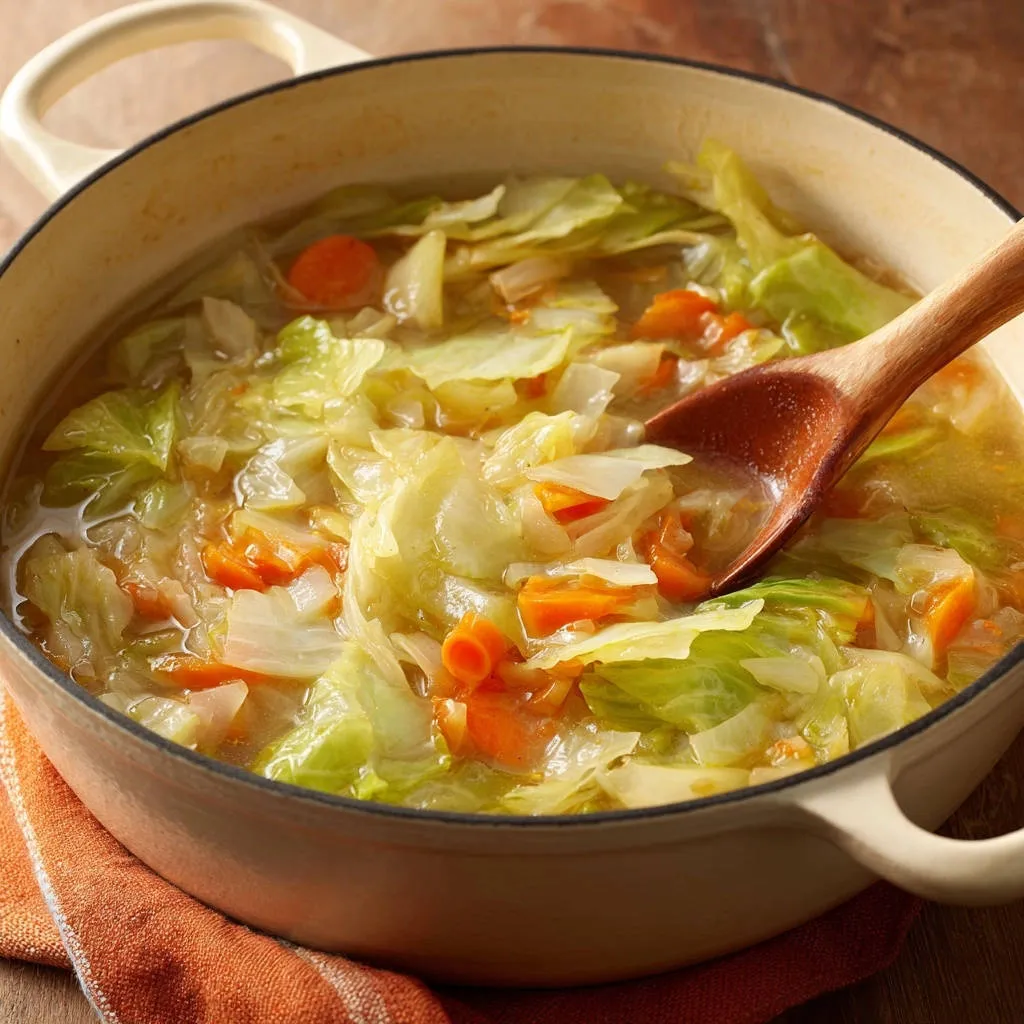
Sweating involves cooking the chopped cabbage down until it reduces by about half, evaporating the excess moisture and concentrating the essential vegetal flavor.
Allowing the edges to subtly soften and slightly caramelize before adding liquid prevents wateriness and ensures the final texture is melt-in-your-mouth tender, not chewy.
Gathering Your Arsenal: Essential Ingredients and Prep Tips
Essential Tools: The heavy base of a Dutch oven or a quality stainless steel soup pot is crucial because it distributes heat evenly, preventing the fond from burning while maximizing caramelization. A strong wooden spoon is necessary for successfully scraping up the flavorful fond during the deglazing step.
Cabbage Selection: Why Green is Usually Best for Hearty Soups
Standard green cabbage is the ideal choice for this Hearty Cabbage and Carrot Soup due to its robust texture and mild, slightly peppery flavor that stands up well to long cooking.
More delicate varieties like Napa and Savoy cabbages are often too fragile for this extended simmering process and will break down into mush too quickly.
Always core the cabbage thoroughly before chopping, ensuring the pieces are roughly uniform in size for consistent tenderness and even reduction.
Broth Choice: Mastering the Base (Vegetable vs. Chicken Stock)
The choice between vegetable and chicken broth significantly impacts the soup’s final profile and dietary status.
Vegetable broth keeps the dish fully plant-based while providing an earthy, clean base that allows the cabbage and herbs to shine through.
Chicken broth lends a deeper, meatier savoriness, contributing to an overall richer mouthfeel; in either case, opt for low-sodium versions to maintain full control over the seasoning.
The Power of Aromatics: Thyme and the Optional Kiss of Dill
Dried thyme provides a necessary earthy, slightly minty backbone that perfectly complements the natural sweetness of the carrots and the robust nature of the cabbage.
Dried dill is entirely optional but adds a refreshing, slightly tangy note that is characteristic of many classic Eastern European cabbage preparations.
If substituting with fresh herbs, use three times the amount of dried herbs and add them only during the final 10 minutes of simmering to preserve their delicate essential oils and flavor.
From Prep to Pot: A Detailed Guide to Hearty Cabbage and Carrot Soup Perfection
- Prepare the Base:
Heat the olive oil in your heavy pot over medium heat, then add the diced onion and sliced carrots, cooking while stirring frequently.
This initial cook time of 8 to 10 minutes must be strictly adhered to; the edges of the carrots should just be starting to show signs of light browning, a depth of color that translates directly to depth of savory flavor in the finished soup.
- Sweat the Cabbage and Season:
Add the chopped cabbage, salt, pepper, thyme, and dill to the pot, stirring vigorously to coat the massive volume of cabbage with the oil and spices.
Reduce the heat to medium-low and cook, uncovered, for a full 15 minutes, stirring every few minutes to prevent sticking.
Do not rush this sweating period; it is the single most important technique for avoiding a watery or “flat” final broth and the cabbage must visibly reduce by half.
- Deglaze and Build the Broth:
Pour in the 2 cups of water and immediately increase the heat, using a sturdy wooden spoon to scrape up every bit of the browned fond stuck to the bottom of the pot.
The browned bits are pure concentrated flavor, and successfully dissolving them into the liquid is crucial for maximizing the savory richness of the broth base.
- Finish the Simmer:
Pour in the remaining 6 cups of broth and bring the entire pot up to a rolling simmer over medium-high heat.
Immediately reduce the heat to low, cover the pot partially, and cook gently for 20 to 25 minutes, or until both the carrots and cabbage are extremely tender.
Partially covering the pot allows just enough steam to escape while still cooking the vegetables evenly and preventing the soup from boiling over aggressively.
- Adjust and Serve:
Always taste your Hearty Cabbage and Carrot Soup before serving, as the necessary salt levels can vary wildly depending on whether you used low-sodium or regular broth.
Adjust the salt and pepper as needed until the flavors pop, and serve the soup hot, perhaps topped with a swirl of sour cream or fresh parsley for garnish.
Beyond the Recipe Card: Chef’s Secrets and Customizing Your Soup
Elevating the Richness: Smoked Paprika or Bacon Fat Swap
For an instant, deeply layered profile, add a full teaspoon of high-quality smoked paprika when you incorporate the dried spices during the cabbage sweating phase.
Alternatively, substitute 1 tablespoon of the initial olive oil with high-quality rendered bacon fat or schmaltz, which provides a deep, non-vegetal savoriness that makes the soup incredibly satisfying.
Making it a Full Meal: Protein Additions and Hearty Bulk
To transform this Hearty Cabbage and Carrot Soup into a substantial main course, add pre-cooked protein during the final 10 minutes of simmering.
Excellent choices include pre-cooked shredded chicken, thinly sliced smoked sausage links, or fully cooked ground turkey, ensuring they heat through thoroughly.
For a vegetarian boost, stir in a 15-ounce can of rinsed and drained chickpeas or cannellini beans alongside the broth in step four.
Complementary Dishes
Explore these comforting recipes to complete your meal.
- For another hearty and savory experience, try this Rich Beef & Onion Stew with Cheesy Gratin, offering a similar depth of flavor.
- If you enjoy slow-cooked goodness, this Hearty Beef and Eggplant Stew provides a satisfying texture and robust taste.
Adjusting the Acidity and Brightness Post-Simmer
Deep, savory dishes often benefit significantly from a final hit of acid to balance the richness and lift the overall flavor profile.
Stir in 1 to 2 teaspoons of fresh lemon juice or a small splash of apple cider vinegar right before serving the soup.
This subtle bright note provides complexity and prevents the soup from tasting heavy or monotone.
Hearty Cabbage and Carrot Soup Troubleshooting and Storage
“Why is My Soup Still Bitter or Too Watery?” (The Undercooked Cabbage Issue)
Bitterness usually stems from undercooked cabbage or failure to properly scrape up the fond during deglazing, leaving burnt bits in the pot.
If the soup tastes watery or flat, it means you rushed the 15-minute sweating period, and the cabbage released too much water into the broth.
To salvage a watery soup, uncover the pot and simmer aggressively for 10-15 minutes to reduce the liquid volume, concentrating the flavors; you can add a pinch of sugar to counteract mild bitterness.
The Best Way to Store Leftovers: Refrigeration and Freezing Advice
Leftover Hearty Cabbage and Carrot Soup stores exceptionally well in an airtight container in the refrigerator for up to five days, and the flavors will often deepen overnight.
It also freezes beautifully for up to three months; portion the cooled soup into freezer-safe containers or bags, ensuring you leave some headspace for expansion.
Thaw overnight in the fridge before reheating gently on the stovetop or quickly in the microwave.
Frequently Asked Questions About Hearty Cabbage and Carrot Soup
Can I Substitute Frozen Cabbage or Carrots?
Frozen vegetables should generally be avoided for this specific recipe because the essential flavor-building steps rely on moisture reduction and caramelization.
Frozen vegetables, once thawed, often have a compromised texture, leading to a mushy final result that lacks the firm bite of fresh produce.
If you absolutely must use frozen carrots, add them only in the final 10 minutes of simmering since they require very little cooking time.
Is This Recipe Naturally Gluten-Free and Dairy-Free?
Yes, based solely on the ingredients listed-oil, fresh vegetables, broth, and dried spices-this recipe for Hearty Cabbage and Carrot Soup is both naturally gluten-free and dairy-free.
Always double-check the labels on your selected vegetable or chicken broth, as some low-quality commercially prepared broths may contain hidden starches or flavorings.
How Can I Thicken My Cabbage Soup Without Cream?
The simplest way to thicken this savory soup without using cream or dairy is by leveraging the vegetables already in the pot.
Once the soup is fully cooked, ladle 1 to 2 cups of the solids and liquid into a blender or use an immersion blender to partially puree the contents.
This process releases the natural starches from the carrots and cabbage, adding body and a velvety texture to the broth without changing the flavor profile significantly.
Warm Up Your Kitchen with the Best Hearty Cabbage and Carrot Soup
This methodical approach to layering flavor transforms basic, inexpensive components into a powerhouse meal, proving that simple ingredients can yield truly extraordinary results.
If you enjoy layers of flavor, discover how to create hearty quinoa and white bean soup that stays smooth.
Once you experience the depth that proper vegetable sweating and thorough deglazing bring, you will never again go back to bland, watery broth.
Gather your ingredients and create this warming, deeply savory pot of Hearty Cabbage and Carrot Soup today-it is destined to become a reliable, satisfying staple in your rotation.
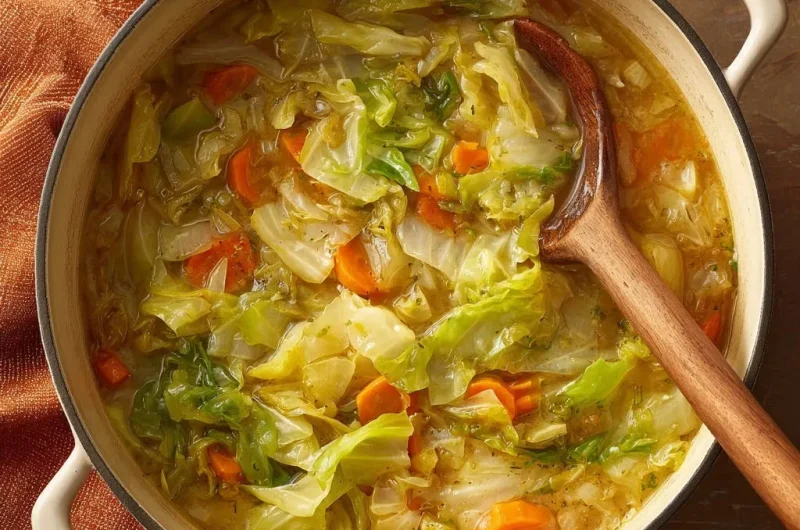
Cabbage and Carrot Soup
Course: Soups-StewsCuisine: InternationalDifficulty: easy6
to 8 servings20
minutes50
minutes120
kcal70
minutesStop suffering through watery cabbage soup! This recipe guarantees a savory, rich broth by building a deep foundation of flavor before adding the liquid. Using an extended sweat method, the vegetables caramelize slightly, ensuring a comforting, hearty meal.
Ingredients
1 large head of green cabbage, cored and roughly chopped
3 large carrots, sliced into 1/4 inch rounds
1 medium yellow onion, diced
6 cups vegetable or chicken broth
2 tablespoons olive oil
1 teaspoon dried thyme
1/2 teaspoon dried dill (optional, but visible in the image)
1 teaspoon salt
1/2 teaspoon black pepper
2 cups water
Directions
- Prepare the Base: Heat the olive oil in a large Dutch oven or heavy soup pot over medium heat. Add the diced onion and sliced carrots. Cook, stirring occasionally, for 8 to 10 minutes, until the onions are translucent and the carrots have softened considerably and are just beginning to lightly brown on the edges. This extended cook time is the first part of the flavor hack.
- Sweat the Cabbage (The Key Step): Add the chopped cabbage to the pot, along with the salt, pepper, thyme, and dill. This may look like too much cabbage, but it will cook down drastically. Stir well to coat the cabbage with the oil and spices. Reduce the heat to medium-low and cook for 15 minutes, uncovered, stirring every few minutes. The cabbage will release its moisture and reduce in volume by half. Allow the cabbage to truly soften and take on a slightly caramelized color before adding liquid; this is critical for preventing a bitter or watery final soup.
- Deglaze and Simmer: Pour in the 2 cups of water and use a wooden spoon to scrape up any browned bits stuck to the bottom of the pot (this is called the fond and adds immense flavor). Increase the heat to medium-high and bring the mixture to a simmer.
- Finish the Soup: Pour in the 6 cups of broth. Bring the entire pot to a rolling simmer, then immediately reduce the heat to low, cover the pot partially, and cook for 20 to 25 minutes, or until the carrots and cabbage are extremely tender but not mushy.
- Adjust and Serve: Taste the soup and adjust the salt and pepper as needed. Serve hot.
Notes
- The key to achieving a deep, savory flavor is the extended cook time for the vegetables (up to 25 minutes total) before the liquid is added.