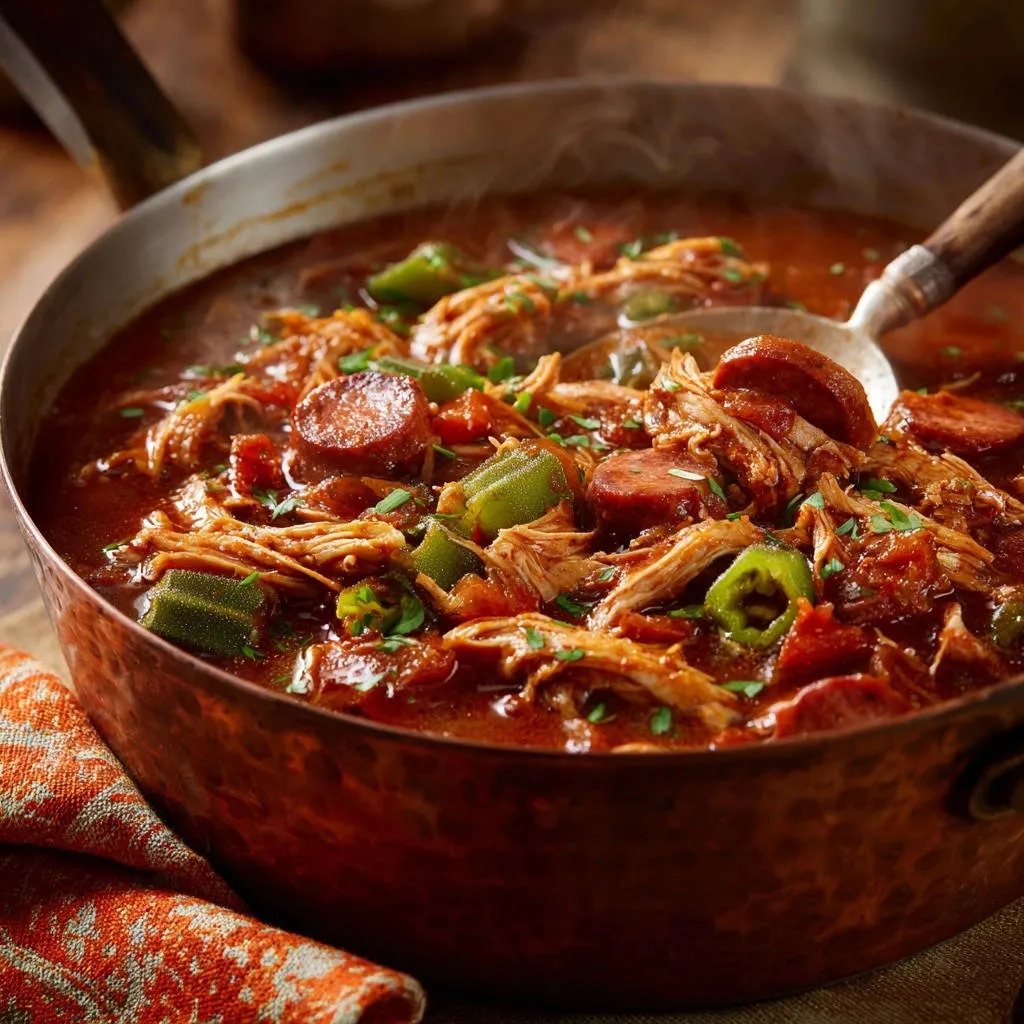
I used to avoid making gumbo because of that notoriously slimy texture from okra-it ruined the entire pot every time.
After years of perfecting this Southern classic, I developed a simple pre-treatment technique that guarantees perfectly structured okra and a rich, deep flavor foundation.
This specific recipe for Hearty Chicken and Sausage Gumbo features an authentic dark roux and delivers maximum comfort with zero textural compromise.
For a different kind of smooth, try this creamy corn and potato chowder.
Beyond the Basics: Why This Gumbo Recipe is a Game Changer
The Simple Secret to Perfectly Textured Gumbo
The infamous sliminess in okra comes from a natural thickener called mucilage, which is highly effective in raw form.
We neutralize this effect by searing the sliced okra in hot oil until all surface moisture evaporates and the slices start to lightly brown.
This crucial step locks in the okra’s shape and prevents the dreaded breakdown that compromises the texture of poorly made gumbo.
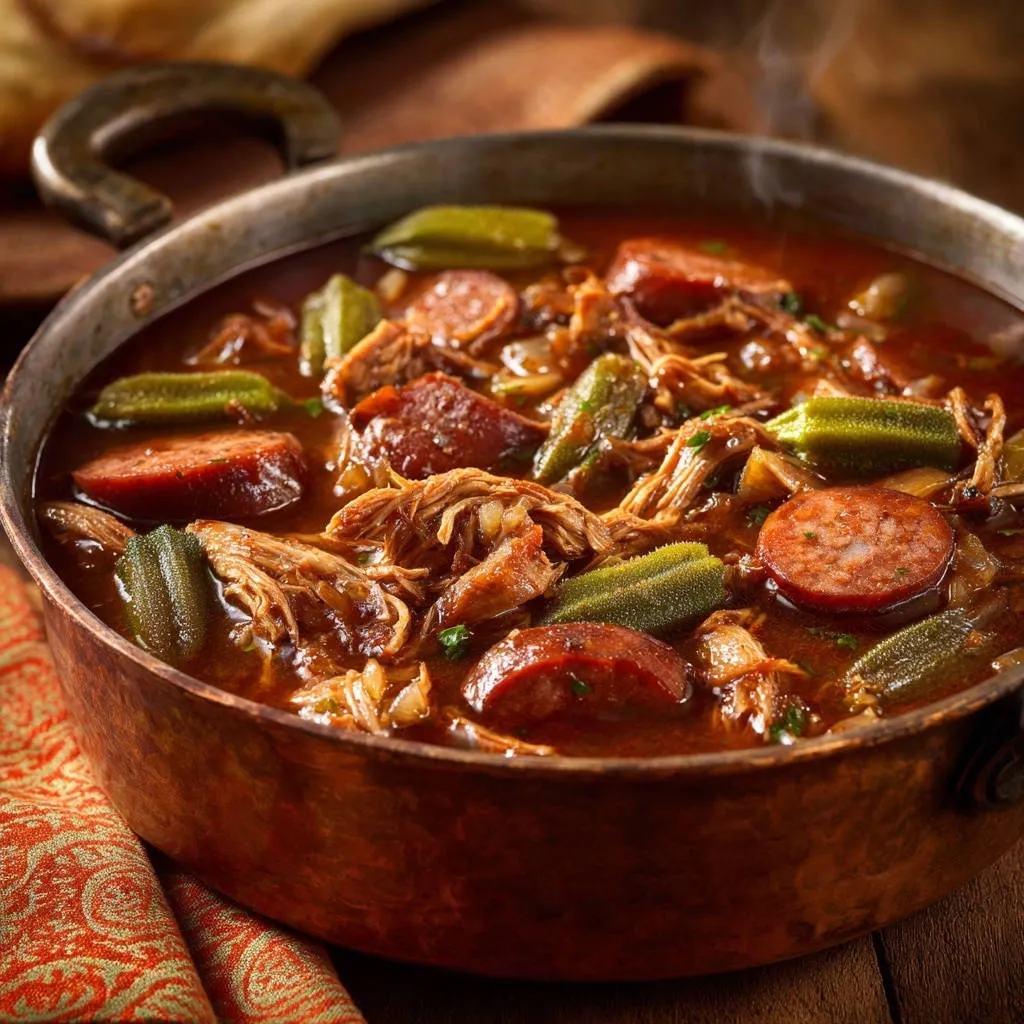
The Unmatched Depth of a Homemade Dark Roux
The roux is the soul of any proper gumbo, requiring patience and constant stirring to achieve a rich, nutty depth-the color of dark peanut butter.
This lengthy, 8-to-12-minute cooking process toasts the flour, developing hundreds of complex, savory flavor compounds that cannot be replicated by simply using pre-made stock.
This intense, authentic base defines the character and richness of this Hearty Chicken and Sausage Gumbo.
Efficient Protein Prep: Using Shredded Chicken and Smoked Sausage
Using pre-cooked, shredded chicken (breasts or thighs) saves significant time and allows the meat to fully absorb the spice and seasoning during the final simmer.
The smoked chicken sausage provides a necessary layer of heat and deep, savory fat that infuses the entire broth quickly.
Together, they create a hearty, balanced protein profile that stands up well to the dark roux foundation.
Selecting the Essential Building Blocks of Flavor
Roux Components: Choosing the Right Oil and Flour
For a dark roux that requires high, sustained heat, a neutral, high smoke point oil like canola, vegetable, or peanut oil is mandatory.
Avoid butter entirely, as its low smoke point will cause it to burn before the flour reaches the required rich brown color.
Standard all-purpose flour provides the ideal structure and starch content needed for proper thickening and flavor absorption.
The Holy Trinity: Onion, Pepper, and Celery
The ‘Holy Trinity’ of diced onion, green bell pepper, and celery is the aromatic foundation for almost all Cajun and Creole cuisine.
It must be cooked down into the roux to fully soften and nearly melt into the sauce, forming a cohesive flavor base.
Dice these vegetables evenly into small pieces (about 1/4 inch) to ensure they cook down at the same rate and integrate smoothly.
Sourcing Quality Sausage and Pre-Cooked Chicken
Opt for a high-quality, fully cooked smoked chicken or turkey sausage, such as mild Andouille or Kielbasa, for the best flavor and texture contrast.
If you are preparing the chicken yourself, use chicken thighs as they retain more moisture and impart richer flavor to the final gumbo than lean chicken breasts.
For more tender chicken, consider this braised chicken with peppers.
Creole Seasoning vs. Cajun Seasoning: What’s the Difference?
While often confused, Creole seasoning tends to be milder and incorporates more complex herbs, often featuring paprika and onion powder.
Cajun seasoning typically relies on hotter peppers and is primarily used as a dry rub or aggressive seasoning blend.
Creole seasoning provides the necessary depth and balance without overwhelming the rich dark roux and crushed tomatoes used in this gumbo.
Mastering the Dark Roux: The 12-Minute Flavor Foundation
Why Color Matters: From Blonde to Peanut Butter
As the roux cooks, it progresses from white to blonde (nutty aroma), then copper, and finally to the required milk chocolate or dark peanut butter color.
The darker the roux, the more time the flour has spent toasting, meaning it contributes a huge flavor payoff.
Understand that the darker the roux, the less thickening power it retains due to the breakdown of starches, which is why simmering time is crucial for texture later.
The Art of Constant Whisking and Temperature Control
Roux must be cooked over medium or medium-low heat to allow for slow, controlled browning without burning the flour.
Constant, methodical whisking is mandatory; if you stop, the flour particles will settle, scorch instantly on the bottom, and ruin the batch.
If you see even a few black specks or smell an acrid, burned aroma, discard the roux immediately and start fresh-a burned base will infuse bitterness throughout the entire gumbo.
Preparing Your Hearty Chicken and Sausage Gumbo: A Detailed Method
-
The Slime-Free Okra Technique:
Heat 2 tablespoons of oil in a Dutch oven or heavy pot over medium-high heat. Add the sliced okra and spread it into a single layer.
Cook for 5 to 7 minutes, stirring infrequently, until the okra slices begin to lightly brown and any initial surface moisture or “slime” has evaporated. This crucial searing process neutralizes the mucilage.
Remove the okra and set it aside immediately. Do not rinse the pot yet, as you will use the flavorful residue for the roux.
-
Making the Deep Dark Roux:
Reduce the heat to medium. Add the remaining 2 tablespoons of oil to the pot, followed immediately by the all-purpose flour.
Whisk continuously for 8 to 12 minutes until the roux reaches a rich, dark peanut butter brown color. Be patient, as this develops the essential nutty flavor foundation of the gumbo.
-
Building the Flavor Base (The Trinity and Seasoning):
Add the diced onion, bell pepper, and celery (the Holy Trinity) directly to the roux. Cook for about 5 minutes until the vegetables soften and release their moisture.
Then stir in the minced garlic, Creole seasoning, and thyme, cooking for exactly 1 minute until the spices are highly fragrant.
-
Simmering the Sauce Base:
Slowly whisk in the four cups of chicken stock, ensuring you scrape up all the browned bits from the bottom of the pot (this process is called deglazing and adds massive flavor).
Stir in the crushed tomatoes. Bring the mixture up to a gentle simmer, ensuring no flour clumps remain.
-
The Long Simmer: Marrying the Meats and Flavors:
Add the sliced smoked sausage and the shredded cooked chicken. Cover and let the Hearty Chicken and Sausage Gumbo simmer for a full 30 minutes.
This essential time allows the liquid to reduce slightly, the sauce to naturally thicken, and for the seasoning to fully penetrate the meats.
-
Final Okra Addition and Adjustment:
Stir in the pre-cooked okra (from Step 1) during the last 10 minutes of simmering. Since the okra is already treated, it will heat through without negatively affecting the texture.
Taste the finished gumbo and adjust salt and pepper liberally, as this step often requires more seasoning than anticipated. Garnish generously with fresh parsley before serving hot.
Troubleshooting and Expert Tips for Your Gumbo Masterpiece
Solving Common Gumbo Texture Problems
My Roux Burned: If you see black flecks, discard it immediately and start over, as a single burned spoonful will bitter the entire pot of Hearty Chicken and Sausage Gumbo.
The Gumbo is Too Thin: If the gumbo doesn’t thicken sufficiently after the final simmer, remove 1 cup of the hot broth and mix it thoroughly with 1 tablespoon of cornstarch (a slurry).
Whisk the slurry back into the pot and simmer for 5 minutes until it visibly thickens.
Gluten-Free Alternative: Instead of flour for the roux, you can use a combination of rice flour and potato starch, though the flavor will be less developed.
Alternatively, allow the base to thicken naturally during the long simmer and then stir in filé powder off the heat at the very end.
Strategic Substitutions and Preparation Hacks
Spice Level Control: The primary heat comes from the smoked sausage and the Creole seasoning blend.
If you desire more fire, add a dash of cayenne pepper along with the thyme, or simply serve with a range of hot sauces on the side.
Make-Ahead Prep: The roux and the full gumbo base (before adding the okra and meat) can be made 1-2 days ahead and refrigerated.
Add the meat and okra during the final reheat and simmer stage when you are ready to serve.
Freezing Gumbo: Gumbo freezes beautifully because of the stable dark roux base.
Cool completely, transfer to freezer-safe containers, and freeze for up to 3 months; the pre-treated okra holds up well during the thawing process.
How to Serve Gumbo Like a New Orleans Local
Choosing the Perfect Rice Companion
Fluffy white long-grain rice is the standard companion, acting as a neutral absorbent for the rich, deep gravy.
Avoid overly sticky rice; cook it separately and ensure it is slightly dry before serving a generous scoop directly in the bowl.
Always ladle the gumbo over the rice, rather than stirring the rice directly into the pot, which helps maintain the rich sauce consistency.
Essential Toppings and Side Dishes
While the gumbo is the star, complementary sides enhance the experience by cutting through the richness or adding texture.
Complementary Flavors
Round out your gumbo meal with these dishes that bring out the best in your chicken and sausage creation.
- For a crunchy texture that stands up to soupy dishes, try these crispy fried onion strings, a fantastic topping.
- Sweet and savory notes meet in these balsamic glazed pearl onions, offering a delightful contrast to the gumbo.
Garnish generously with fresh parsley and sliced green onions for brightness and color contrast.
Potato Salad (a surprisingly cooling and traditional pairing)
Crusty French bread for soaking up the last bits of sauce
A simple, lightly dressed side salad to cut the richness
Safe Storage and Reheating Best Practices
Store leftovers in an airtight container in the refrigerator for 3 to 4 days; note that the flavors will continue to deepen overnight.
Reheating slowly on the stovetop over low heat is the best method to maintain the integrity of the sauce and prevent the meats from drying out.
Hearty Chicken and Sausage Gumbo FAQs
Do I have to include okra in my gumbo?
Absolutely not; many classic gumbos omit okra entirely, especially in areas where okra isn’t easily sourced or desired.
If you prefer not to use it, you can utilize filé powder, which is ground sassafras leaves, as a traditional alternative to thicken the stew slightly.
How dark should my roux really be?
You should aim for the color of dark peanut butter or melted milk chocolate, which typically requires about 10 to 12 minutes of active cooking.
If the color passes dark chocolate, you risk a bitter, acrid taste, meaning the roux is likely scorched and should be discarded immediately.
Can I use different types of meat in this recipe?
Yes, gumbo is highly adaptable and welcomes substitutions like duck, turkey, or even firm white fish.
Be aware that adding delicate seafood like shrimp or oysters requires timing adjustments, as they should only simmer for the last 5 minutes to prevent overcooking.
Why do people say gumbo tastes better the next day?
During the cooling and resting period, a phenomenon called “flavor marriage” occurs, where the fat-soluble flavor compounds from the roux and spices fully integrate throughout the liquid.
The time allows the meats to absorb the complex flavors of the Creole seasoning and dark roux base, resulting in a more harmonious and deep taste profile.
Ready to Impress? Share Your Gumbo Masterpiece!
Creating a truly authentic, flavor-rich gumbo requires attention to detail, but the profound results are undeniably worth the effort.
By mastering the dark roux and utilizing the specific slime-free okra technique, you unlock the ultimate comfort food experience that will impress any guest.
Save this guide and prepare to share your perfectly textured Hearty Chicken and Sausage Gumbo with friends and family this season.
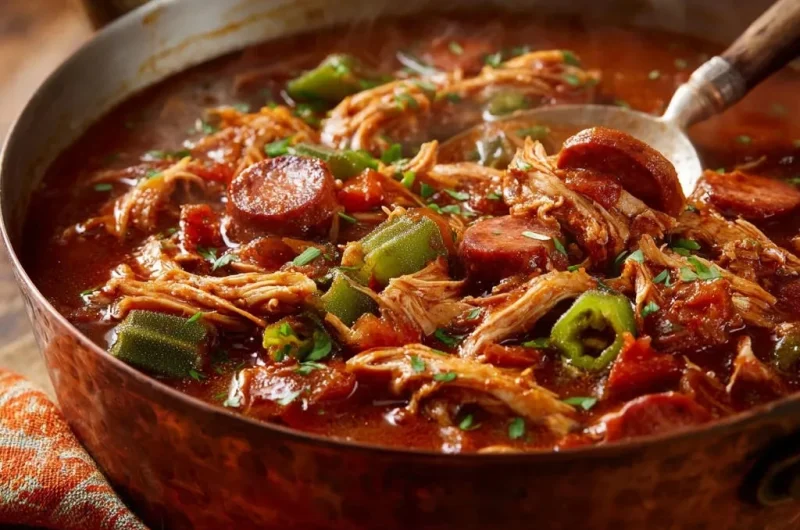
Gumbo
Course: Soups-StewsCuisine: AmericanDifficulty: medium6
servings20
minutes1
hour450
kcal80
minutesThis Hearty Chicken and Sausage Gumbo is built on a rich, dark roux and features tender shredded chicken and savory smoked sausage. The secret is the slime-free okra technique, ensuring perfect texture every time. It’s the ultimate comforting bowl of deep flavor.
Ingredients
1 pound boneless skinless chicken thighs or breasts, cooked and shredded
1 pound smoked chicken sausage, sliced into half-inch rounds
1 cup diced yellow onion
1 cup diced green bell pepper
1/2 cup diced celery
4 cups chicken stock (low sodium)
1 (14.5 ounce) can crushed tomatoes
1 cup fresh or frozen sliced okra
1/4 cup neutral cooking oil (like vegetable or canola)
1/4 cup all-purpose flour
2 cloves garlic, minced
1 tablespoon Creole seasoning blend
1 teaspoon dried thyme
Salt and black pepper to taste
Fresh parsley, chopped, for garnish
Directions
- THE SLIME-FREE OKRA TECHNIQUE: Heat 2 tablespoons of the cooking oil in a large Dutch oven or heavy pot over medium-high heat. Add the sliced okra and spread it into a single layer. Cook for 5 to 7 minutes, stirring infrequently, until the okra slices begin to lightly brown and any initial surface moisture or “slime” has evaporated. Remove the okra and set it aside. This crucial step prevents the mucilage from leaching into your stew later.
- MAKE THE ROUX BASE: Reduce the heat to medium. Add the remaining 2 tablespoons of oil to the pot, followed immediately by the flour. Whisk continuously for 8 to 12 minutes until the mixture turns a deep, rich peanut butter brown color. This dark roux is the flavor foundation of your gumbo. Do not rush this step, and keep stirring to prevent scorching.
- BUILD THE FLAVOR: Add the onion, bell pepper, and celery (the “holy trinity”) to the roux. Cook for about 5 minutes until the vegetables soften. Add the minced garlic, Creole seasoning, and thyme, cooking for 1 minute until fragrant.
- SIMMER THE SAUCE: Slowly whisk in the chicken stock, scraping up any browned bits from the bottom of the pot. Stir in the crushed tomatoes. Bring the mixture to a simmer.
- ADD MEAT AND OKRA: Add the sliced smoked chicken sausage and the shredded cooked chicken to the pot. Cover and let the gumbo simmer for 30 minutes, allowing the flavors to marry and the sauce to thicken naturally.
- FINAL TOUCH: Stir in the pre-cooked okra (from Step 1) during the last 10 minutes of simmering. Since the okra was already pre-treated, it will heat through without becoming slimy. Taste and adjust salt and pepper as needed. Garnish generously with fresh parsley before serving.
Notes
- Do not rush the dark roux; it is the essential foundation of the gumbo’s flavor profile.