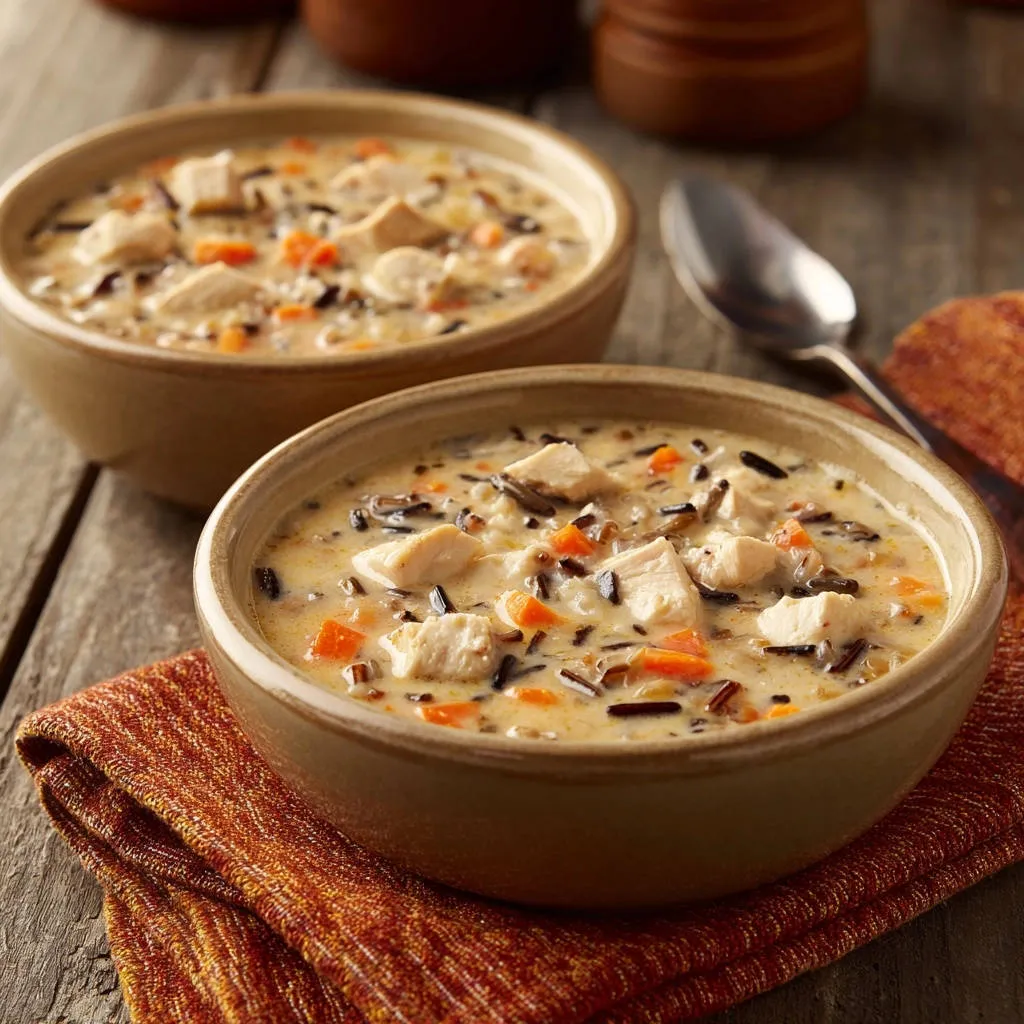
For years, I struggled to achieve a truly stable, creamy texture in my favorite comfort dishes; too often, my homemade soups would separate or turn thin after reheating. This reliable method for making truly exceptional Hearty Chicken and Wild Rice Soup finally cracked the code, centering on a carefully developed roux base that guarantees a spoon-coating, velvety consistency every single time.
This approach ensures your soup remains rich, thick, and perfectly comforting, solving the frustrating issue of a watery outcome while delivering maximum flavor.
For another flavorful chicken soup idea, explore the secret to clear lemon chicken orzo.
Beyond the Basic Bowl: Why This Soup Stays Rich and Velvety
The Common Pitfall: Why Homemade Soups Turn Thin
The primary reason homemade creamy soups fail is improper thickening. Many cooks rely on cornstarch slurries added late in the process, which thicken quickly but often break down when the soup is cooled and reheated.
For similar results with gnocchi, learn more about mastering the texture of creamy chicken gnocchi soup.
Rapidly adding cold liquid to a hot thickener or failing to bring the base back up to a simmer means the starches never fully activate, leading to a thin, unstable broth.
The Stable Solution: Mastering the Butter and Flour Roux Base
A roux-a cooked mixture of equal parts fat and flour-creates a superior thickening agent because the starch granules are coated in fat, allowing them to absorb liquid slowly and consistently.
Cooking the flour for a minute eliminates the raw, pasty flavor while establishing a sturdy matrix that binds the liquid and fat into a stable, lasting emulsion.
Built for the Fridge: Consistency That Withstands Reheating
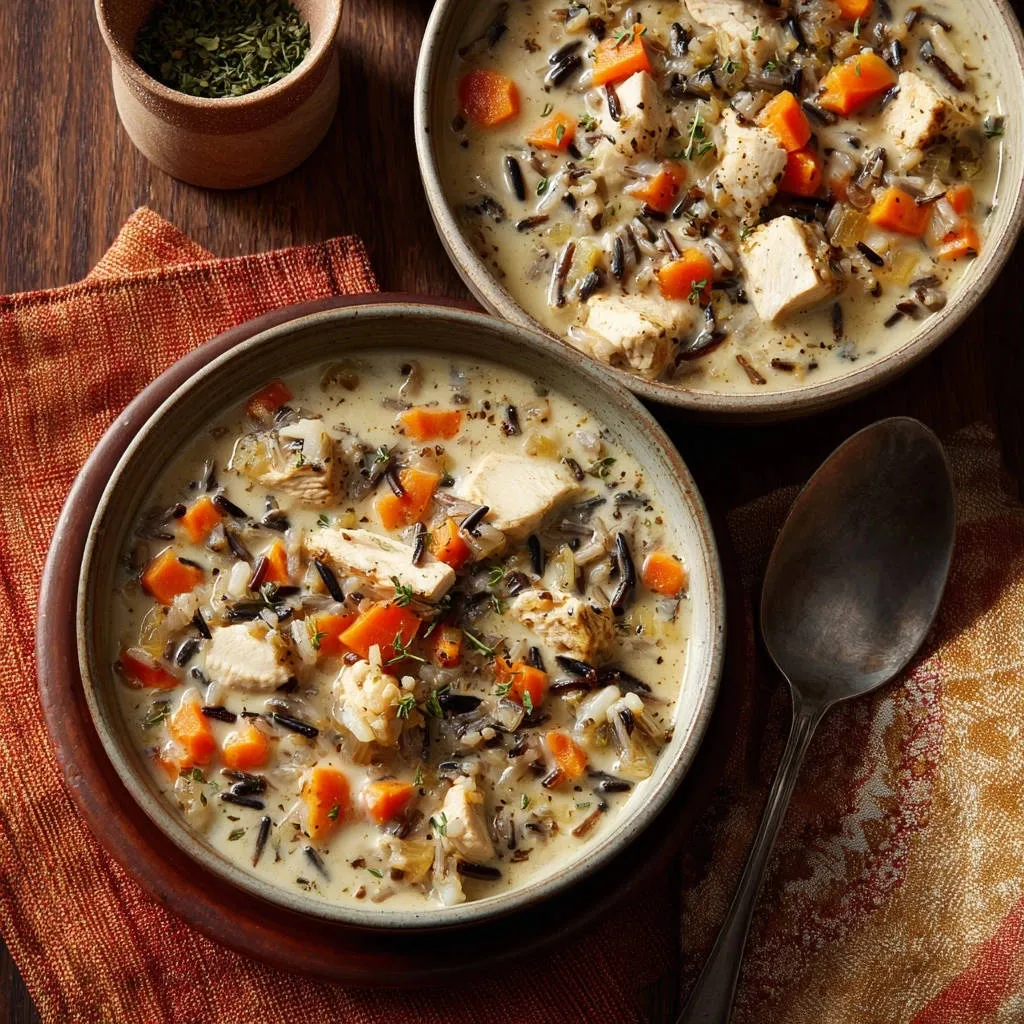
Unlike less stable thickeners, the robust roux foundation ensures the soup’s texture holds up beautifully when refrigerated.
When you reheat this Hearty Chicken and Wild Rice Soup, the velvety consistency remains intact, yielding luxurious leftovers without the separation or graininess often associated with cream-based soups.
The Essential Building Blocks: Selecting Your Ingredients for Optimal Flavor
The Wild Rice Factor: Why Rinsing and Bursting Matters
Rinsing wild rice before cooking removes surface debris and excess starch, leading to cleaner broth.
It is crucial to cook the rice until the kernels “burst open”; this signifies they are fully tender and provide the desirable chewy-yet-soft texture unique to this dish.
Aromatic Foundation: The Holy Trinity of Soup Vegetables
Onion, celery, and carrots form the essential aromatic base (mirepoix), providing foundational sweetness and complexity.
Sautéing these vegetables slowly until deeply tender is vital, as this process coaxes out their subtle sugars, creating a deeper flavor profile.
The Double Fat Rule: Oil, Butter, and the Perfect Roux Blend
Olive oil is used initially for sautéing the aromatics at a higher heat without burning.
Butter is then added specifically for the roux, as its lower melting point and dairy proteins contribute to a richer flavor and smoother, more effective thickening ability.
Selecting the Best Broth: Low Sodium is Key
Using low-sodium chicken broth is absolutely essential for flavor control in this recipe.
Since the soup liquid reduces and the flavors concentrate during simmering, low-sodium broth allows you to precisely manage the final seasoning balance without the risk of an overly salty finish.
Essential Gear and Prep: Setting the Stage for Success
The Dutch Oven Advantage: Heat Retention for Even Simmering
A heavy-bottomed Dutch oven is the ideal vessel because it distributes heat evenly and retains it exceptionally well.
This prevents scorching, which is a major risk once the flour has been added and the roux-thickened soup begins to simmer.
The Unsung Hero: Whisking for Zero Lumps
A sturdy balloon or coil whisk is non-negotiable during the crucial roux integration phase.
Vigorous, continuous whisking ensures the flour is fully incorporated into the broth without clumping, resulting in a perfectly smooth, lump-free base for your soup.
Step-by-Step: Crafting Your Velvety Hearty Chicken and Wild Rice Soup
-
Preparing the Wild Rice:
In a medium pot, combine the rinsed wild rice with 2 cups of chicken broth. Bring to a boil, then reduce heat, cover, and simmer for 40 to 45 minutes, or until the rice is tender and kernels have burst open. Set aside.
Pro Tip: Cooking the rice separately prevents the released starches from making the broth muddy prematurely.
-
Sautéing the Aromatics:
Melt the olive oil in a large Dutch oven or soup pot over medium heat. Add the onion, celery, and carrots. Cook, stirring occasionally, for 6 to 8 minutes until the vegetables are tender.
Do not rush this step; softening the vegetables is key to releasing their full sweetness into the broth base.
-
Establishing the Crucial Thickening Base (The Pale Roux):
Add the 1/4 cup of butter to the pot with the vegetables. Once melted, sprinkle in the 1/4 cup of all-purpose flour. Stir constantly for exactly 1 minute to cook the raw flour taste out and create a pale roux.
This pale roux is the foundation of the soup’s stable texture; timing is critical to avoid burning the flour.
-
Building the Broth Stability: Slow Integration is Key:
Slowly pour in the remaining 4 cups of chicken broth, adding it about 1 cup at a time. Whisk vigorously and continuously as you pour to fully incorporate the roux and ensure the broth is perfectly smooth and lump-free.
Bringing the liquid up to temperature slowly while whisking guarantees the thickening agents are properly activated without forming lumps.
-
Simmer, Combine, and Meld Flavors:
Bring the soup to a gentle simmer, stirring occasionally until the broth has visibly thickened (about 5 to 7 minutes). Add the cooked wild rice, diced chicken, dried thyme, salt, and pepper.
Allowing the flavors to meld for 5 minutes ensures the seasoning penetrates the chicken and rice evenly.
-
The Final Flourish: Incorporating the Cream (Off-Heat):
Remove the pot completely from the heat. Stir in the heavy cream. Taste and adjust seasoning as needed.
Crucial Warning: Do not boil the soup after the cream has been added, as this can cause the soup to separate or break the velvety texture you just achieved.
Chef’s Secrets: Elevate Your Hearty Chicken and Wild Rice Soup Game
Toasting the Rice: Before combining the wild rice and 2 cups of broth, lightly toast the rinsed rice in a dry pot for 2 minutes until fragrant. This deepens the nutty flavor profile considerably.
Roasted Chicken for Maximum Flavor: Instead of simple cooked chicken breast, use leftover shredded rotisserie or roasted chicken thigh meat. The caramelized brown bits add profound depth the soup.
Fresh Herbs Finish: While dried thyme is used for cooking, finish the soup with a sprinkle of fresh chopped parsley or dill just before serving. This provides a necessary burst of brightness.
Mushroom Upgrade: Sauté 1 cup of sliced cremini mushrooms alongside the aromatics. Mushrooms absorb the butter and add an earthy umami complexity that complements the wild rice.
Troubleshooting Common Hearty Soup Issues
Problem: The Soup Tastes Like Raw Flour
This means the roux wasn’t cooked long enough in Step 3. If you catch it early, you can let it simmer longer, but if the soup is already finished, the taste might linger. In the future, ensure you stir the flour and butter for a full minute, smelling for a nutty, cooked aroma before adding liquid.
Problem: The Broth is Too Thick or Sludgy
If the soup is too thick after simmering, slowly whisk in small amounts (1/4 cup at a time) of extra warm chicken broth or water until the desired consistency is reached.
Always add warm liquid to a hot roux-based soup to maintain temperature stability and prevent clumping.
Problem: My Soup Broke/Separated After Adding Cream
This often happens if you boil the soup after the heavy cream has been added. Heavy cream needs low, gentle heat. If separation occurs, try cooling the soup slightly, then blend a small portion with a hand immersion blender to re-emulsify the fats.
Make-Ahead Planning and Storage
Making Hearty Chicken and Wild Rice Soup in Advance
The rice and cooked chicken can be prepped up to two days ahead and stored in the fridge, significantly cutting down on assembly time.
If making the soup base in advance, complete all steps through Step 5 (adding the rice/chicken/seasoning), but hold the heavy cream until just before serving and reheating.
Storage Guidelines: Keeping Your Leftovers Fresh
Cool the soup completely before transferring it to an airtight container.
Leftover Hearty Chicken and Wild Rice Soup will keep beautifully in the refrigerator for 3 to 4 days.
Can I Freeze This Recipe? (A Cautionary Tale)
Soups thickened with flour and finished with heavy cream tend to break upon thawing, resulting in a grainy texture.
If you intend to freeze, stop after Step 5 (before adding the cream). Thaw the soup, reheat it gently, and then stir in the heavy cream just before serving.
Frequently Asked Questions About Chicken and Wild Rice Soup
How do I make this Hearty Chicken and Wild Rice Soup gluten-free?
To adapt this recipe, simply substitute the all-purpose flour in the roux with an equal amount of a neutral gluten-free thickening agent, such as a certified GF flour blend (like Cup4Cup) or a cornstarch slurry (though the roux offers better stability).
Can I use brown rice instead of wild rice?
While brown rice can be used, it requires a different cooking time and significantly changes the flavor and texture profile. Wild rice is nuttier and firmer. If substituting, pre-cook the brown rice entirely and adjust the simmering time.
What are the best side dishes to serve with this soup?
This soup is extremely filling, so simple sides work best. Consider a crusty baguette for dipping, a light green salad with a vinaigrette, or fresh cornbread.
Complementary Recipes
To round out your meal, consider these dishes that go well with chicken and rice.
- For a warm, savory addition, try Golden Cornbread and Herb Stuffing, which shares comforting, baked flavors.
- If you’re looking for a fresh counterpoint, the Grilled Chicken Kale and Cabbage Power Salad offers a bright, vegetable-forward option.
Ready to Impress? Your Next Cozy Meal Awaits!
This Hearty Chicken and Wild Rice Soup is the ideal recipe for achieving that deeply satisfying, non-watery texture you’ve always wanted. By taking care with the roux, you are guaranteed a batch of creamy goodness that will warm you through and stand the test of time (and leftovers).
Grab your Dutch oven and share your results!

Chicken and Wild Rice Soup
Course: Soups-StewsCuisine: AmericanDifficulty: medium6
servings15
minutes1
hour420
kcal75
minutesSay goodbye to thin, watery soup. This recipe focuses on mastering a stable, lump-free roux base, guaranteeing a rich, spoon-coating texture that stands up perfectly to reheating. It combines tender wild rice, hearty chicken, and savory vegetables in a velvety, comforting broth.
Ingredients
1 cup Wild Rice, rinsed
6 cups Chicken Broth (low sodium), divided
1 tablespoon Olive Oil
1/2 cup Diced Onion
1/2 cup Diced Celery
1 cup Diced Carrots
1/4 cup Butter
1/4 cup All-Purpose Flour
2 cups Cooked Chicken Breast, diced
1 cup Heavy Cream
1 teaspoon Dried Thyme
1/2 teaspoon Salt
1/4 teaspoon Black Pepper
Directions
- Prepare the Rice: In a medium pot, combine the rinsed wild rice with 2 cups of chicken broth. Bring to a boil, then reduce heat, cover, and simmer for 40 to 45 minutes, or until the rice is tender and kernels have burst open. Set aside.
- Sauté Aromatics: While the rice cooks, melt the olive oil in a large Dutch oven or soup pot over medium heat. Add the onion, celery, and carrots. Cook, stirring occasionally, for 6 to 8 minutes until the vegetables are tender.
- Establish the Thickening Base (The Solution Step): Add the 1/4 cup of butter to the pot with the vegetables. Once the butter is melted, sprinkle in the 1/4 cup of all-purpose flour. Stir constantly for 1 minute to cook the raw flour taste out and create a pale roux.
- Build the Broth Stability: Slowly pour in the remaining 4 cups of chicken broth, adding it about 1 cup at a time. Whisk vigorously and continuously as you pour to fully incorporate the roux and ensure the broth is perfectly smooth and lump-free. Bringing the liquid up to temperature slowly while whisking guarantees the thickening agents are activated properly.
- Simmer and Combine: Bring the soup to a gentle simmer, stirring occasionally until the broth has visibly thickened (about 5 to 7 minutes). Add the cooked wild rice, diced chicken, dried thyme, salt, and pepper. Simmer for 5 minutes to allow the flavors to meld.
- Finish with Cream: Remove the pot from the heat. Stir in the heavy cream. Taste and adjust seasoning as needed. Do not boil the soup after the cream has been added, as this can cause the soup to separate or break the velvety texture you just achieved. Serve warm.
Notes
- Do not boil the soup after adding the heavy cream, as this can cause the soup to separate or break the velvety texture.