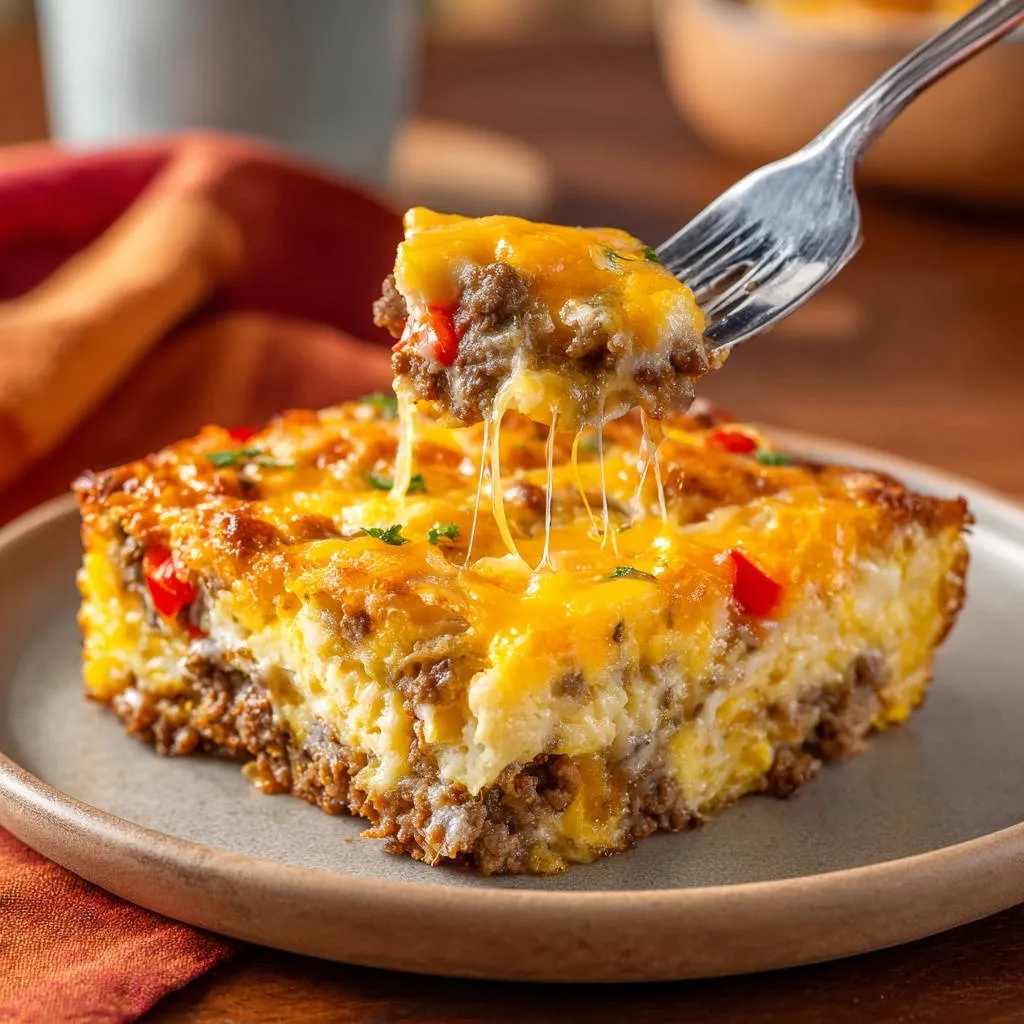
There is nothing more disappointing than baking a beautiful breakfast casserole only to find that the center is heavy, watery, or rubbery. After years of research and testing, I finally discovered the easy, scientific technique that stops sad, heavy eggs forever in this Hearty Layered Breakfast Bake.
This approach combines vigorous whisking with a crucial stabilizing ingredient, guaranteeing a high, fluffy, and perfectly set texture every time you make this classic dish.
The “Never Dense” Secret: Achieving Airy Breakfast Bake Perfection
The Stability Science: Why Flour is Your Fluffy Key
The secret to a light, airy breakfast bake lies in controlling how egg proteins coagulate during heating.
For a similar satisfying bite, check out these cheesy beef stuffed peppers.
When you dissolve all-purpose flour into the milk base, you introduce starch molecules that act as a crucial stabilizer.
This starch absorbs some of the liquid and prevents the egg proteins from binding too tightly and squeezing out water, which is the primary cause of a rubbery, dense texture.
Perfect for Prep: Make-Ahead Potential
One of the greatest advantages of this stabilized egg mixture is its stability, making it ideal for preparation the night before.
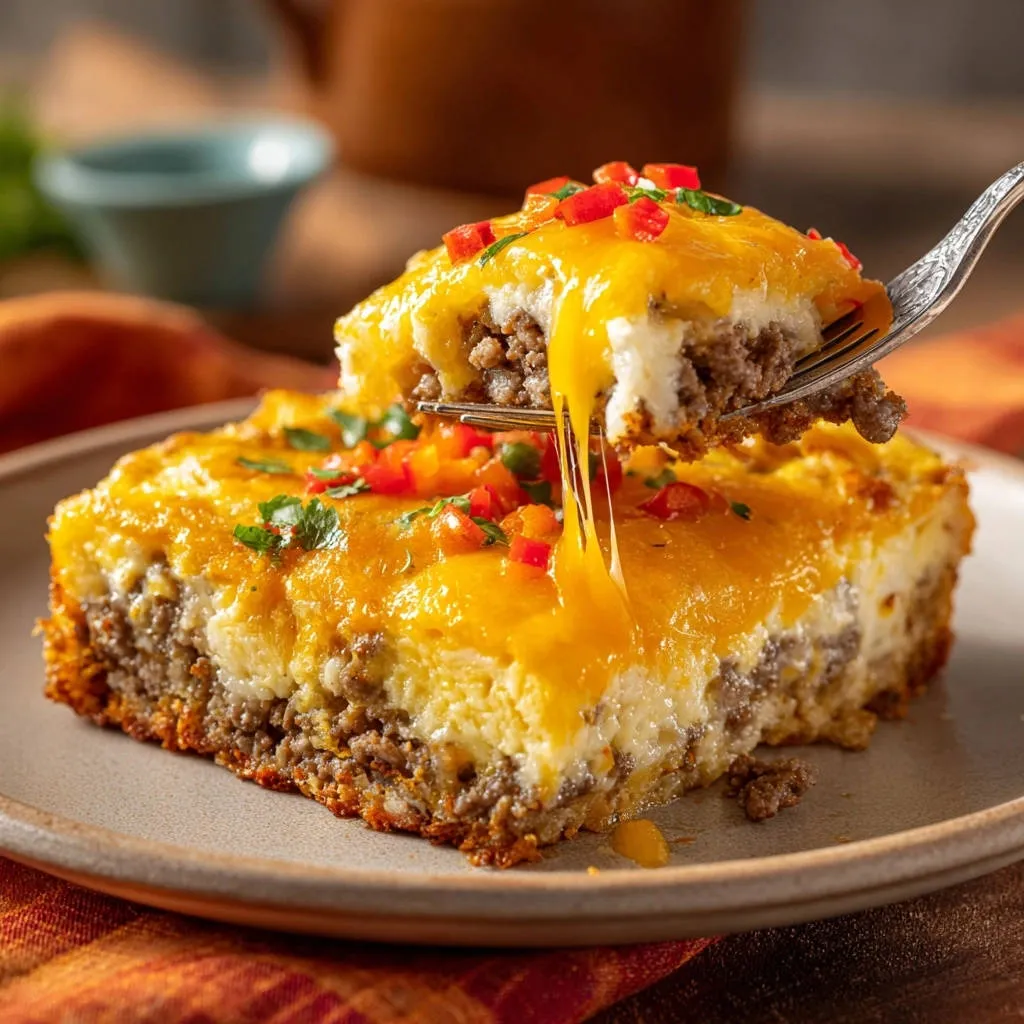
You can assemble the meat base and pour the egg mixture over it, cover the dish tightly, and refrigerate it until morning.
A True Crowd-Pleaser for Any Occasion
This Hearty Layered Breakfast Bake is the quintessential brunch item, perfect for holiday mornings or a weekend gathering.
Because it is so substantial and filling, it also works wonderfully as an easy and quick weeknight dinner option.
The Building Blocks of Flavor: Essential Ingredients & Substitutions
Meat Matters: Choosing the Best Ground Base
We use 1 pound of ground meat, such as ground beef or non-lamb sausage, to form a robust and satisfying base layer.
Regardless of your selection, it is absolutely crucial to drain off every bit of excess grease after browning to prevent the final bake from becoming soggy.
For more satisfying meals, consider this cheesy beef tater tot casserole.
The Dairy Difference: Whole Milk Versus Half-and-Half
The recipe calls for 1 cup of whole milk or half-and-half, and the fat content here is non-negotiable for richness.
Higher fat dairy provides a smoother mouthfeel and also helps further inhibit the proteins from over-coagulating, reinforcing the fluffy result.
Choosing Your Cheese: Maximizing Melt and Flavor
Shredded Cheddar cheese is classic for its sharp flavor, but a good blend always provides excellent melt characteristics.
For a different profile, consider substituting Monterey Jack for smooth melting or Pepper Jack for a gentle spice kick in your breakfast casserole.
The Role of Aromatics: Red Bell Pepper and Parsley
Finely chopped red bell pepper adds a necessary subtle sweetness and ensures textural contrast against the hearty meat layer.
Fresh parsley should be reserved for the garnish; it provides a bright, refreshing green note that cuts through the richness of the cheese.
Gearing Up: Essential Equipment for Layered Success
The Right Pan Size: Why 9×9 is Ideal
Using a 9×9 inch baking dish ensures the perfect volume and height for this recipe, creating thick, satisfying layers.
A smaller or larger pan will significantly alter the cooking time and may compromise the light texture we are aiming for.
The Power Whisk: Achieving the Frothy Egg Stage
Vigorous whisking of the eggs is a non-negotiable step that incorporates the essential air required for a light finish.
An electric mixer or a stand mixer is ideal here, but a large balloon whisk and some elbow grease will certainly achieve the required frothy stage.
Skillet Selection for Browning the Meat
Always use a heavy-bottomed skillet for browning the meat base evenly without scorching it.
This ensures you get a deeply flavored base layer without having to worry about uneven cooking.
Mastering the Method: A Detailed Step-by-Step Guide to the Layered Bake
- Preparation and Preheat:
Preheat your oven precisely to 375 degrees F (190°C), as accurate temperature control is essential for achieving a light texture.
Lightly grease your 9×9 inch baking dish completely and set it aside, ensuring nothing sticks to the sides.
- Preparing the Hearty Base Layer:
In a large skillet, brown the ground meat over medium-high heat, breaking it up thoroughly as you cook.
Once fully cooked, it is absolutely CRITICAL to drain all excess grease completely before stirring in the chopped red bell pepper.
Cook the peppers for just 2 minutes until slightly softened, then spread this mixture evenly across the bottom of the prepared baking dish.
- Crafting the Fluffy Egg Stabilizer Mixture:
In a large bowl, whisk the 10 eggs vigorously until they are pale yellow, slightly frothy, and noticeably increased in volume-this builds necessary internal structure.
In a separate, smaller bowl, whisk together the whole milk, flour, salt, pepper, and garlic powder.
Continue whisking this milk mixture until the 2 tablespoons of flour are completely dissolved, ensuring absolutely no lumps remain, which activates the stabilization.
- Assembly and The Initial Set:
Pour the stabilized milk and flour mixture slowly into the whipped eggs, whisking gently just until combined; do not overmix, or you will deflate the air.
Pour the entire egg mixture evenly over the hearty ground meat base in the baking dish.
Bake the casserole for 30 minutes, or until the edges are set but the very center is still slightly wobbly, indicating the eggs are mostly cooked but not dry.
- The Final Golden Finish and Resting Period:
Carefully remove the dish from the oven and sprinkle the 2 cups of shredded cheddar cheese evenly over the top layer.
Return the bake to the oven for another 10 to 15 minutes until the cheese is melted, bubbly, and lightly golden brown, and a knife inserted near the center comes out clean.
Let the casserole rest for a mandatory 10 minutes before slicing into portions; this resting period allows the proteins to fully set and ensures the slices hold their shape beautifully.
Chef’s Secrets: Elevating Your Breakfast Bake Game
Preventing a Soggy Bottom: If you are using high-fat meat (like standard sausage), consider patting the cooked base with paper towels after draining the bulk of the grease to absorb residual fat.
The Ultimate Doneness Test: The knife inserted into the center must come out clean, but also look for a slight, barely perceptible wobble-this guarantees moistness without being raw.
Baking Pan Materials: Glass or ceramic dishes cook slightly slower than metal, providing a gentler heat that prevents the edges from drying out before the center is set.
Garnish with Purpose: Add the fresh parsley right before serving; not only does it look beautiful, but the fresh herb flavor cuts through the richness of the cheese and meat, adding balance.
Troubleshooting Common Casserole Issues (And How to Fix Them)
Why Is My Center Still Runny?
A runny center often points to insufficient baking time or an oven that runs cooler than the set temperature.
Ensure you are not opening the oven door too frequently during the initial 30-minute set, as temperature fluctuations can interrupt the baking process.
If needed, return the casserole to the oven and continue baking in five-minute increments until the knife test is successful.
The Casserole Tastes Rubbery or Dry
Rubberiness is typically the result of overbaking or cooking the eggs too quickly at a temperature that is too high.
The flour stabilizer in this recipe helps mitigate this, but always pull the dish when the center is just set, relying on the mandatory rest time to complete the cooking process.
Edges Browned Too Quickly
If your oven has hotspots or if you are using a dark metal pan, the edges might brown faster than the center sets.
Loosely tenting the edges of the dish with a piece of aluminum foil halfway through the baking time will shield them from direct heat and slow the browning.
Serving Suggestions, Storage, and Customization Options
Creative Variations: Vegetarian and Spice Swaps
For a vegetarian Hearty Layered Breakfast Bake, substitute the meat with sautéed mushrooms, wilted spinach, or roasted sweet potato cubes.
Add depth and heat by stirring in a pinch of cayenne pepper, smoked paprika, or a dash of chili powder into the egg stabilizer mixture.
The Best Sides to Serve with Your Hearty Layered Breakfast Bake
Since this dish is rich and substantial, pair it with lighter, contrasting textures and flavors.
- A simple, lightly dressed fresh green salad
- A bowl of seasonal fresh fruit or mixed berries
- Toasted crusty sourdough bread or warm English muffins
- Crispy oven-roasted potatoes or hash browns
Storing Leftovers and Reheating for Best Results
Leftovers should be cooled completely, covered tightly, and refrigerated promptly; they will keep well for 3 to 4 days.
For the best texture, reheat individual slices in a toaster oven or standard oven at 300°F until warmed through, which prevents the sogginess that can occur in a microwave.
Frequently Asked Questions About Layered Breakfast Bakes
Can I make this Hearty Layered Breakfast Bake ahead of time?
Yes, this recipe is perfect for make-ahead convenience due to the stabilizing flour mixture.
Assemble the entire bake-the meat base and the egg mixture-in the dish the night before, cover it tightly (without the final cheese sprinkle), and store it in the refrigerator.
Sweet Endings and Morning Delights
If you’re craving something sweet to complement your breakfast bake, consider these chocolatey treats.
- For a rich, deeply satisfying chocolate experience, try the ultimate fudgy cocoa brownies, which share a love for intense chocolate.
- If you’re in the mood for a fun, bakery-style confection, these chocolate sprinkle donuts offer a delightful contrast with their crisp exterior.
Allow the dish to sit on the counter for 20 minutes while the oven preheats, then bake as directed, adding a few minutes to the total baking time if needed.
Can I freeze the leftovers?
You can absolutely freeze leftovers of this breakfast casserole, especially if you slice it into individual portions first.
Cool the slices completely, wrap each portion tightly in plastic wrap, then foil, and freeze for up to three months.
Is the flour necessary, or can I skip it for gluten sensitivities?
The flour is truly CRITICAL for achieving the light, non-rubbery texture as it performs the essential stabilizing function.
If you require a gluten-free dish, you can substitute the flour with an alternative stabilizer like 1 teaspoon of cornstarch or arrowroot powder, ensuring it is thoroughly whisked into the milk until fully dissolved.
Ready to Impress? Share Your Hearty Layered Breakfast Bake Masterpiece!
Say goodbye to dense, disappointing breakfast casseroles and hello to guaranteed light and fluffy results every time you bake.
This technique transforms the classic breakfast bake into a truly exceptional dish that shows off your culinary expertise.
Try this specific layered approach this weekend, perfect your whisking technique, and enjoy the praise that follows-we’d love to hear about your successful Hearty Layered Breakfast Bake!
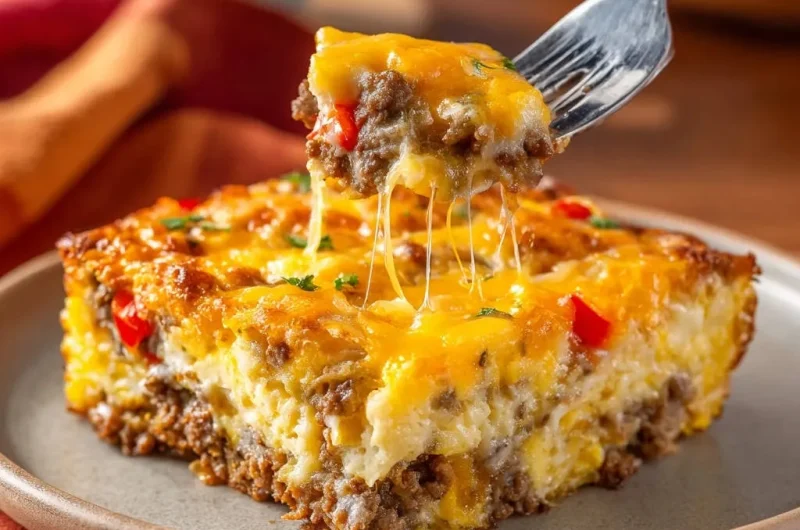
Breakfast Bake
Course: BreakfastCuisine: AmericanDifficulty: medium8
servings20
minutes45
minutes450
kcal60
minutesTired of dense, watery breakfast casseroles? This method guarantees a high, fluffy texture every time by stabilizing the eggs with a simple milk and flour mixture. Layered with ground meat and sharp cheddar, this bake is hearty enough for brunch or dinner.
Ingredients
1 pound Ground Meat (such as ground beef or non-lamb sausage)
1 tablespoon Cooking Oil
1/2 cup Finely chopped Red Bell Pepper
10 Large Eggs
1 cup Whole Milk or Half-and-Half
2 tablespoons All-Purpose Flour
1 teaspoon Salt
1/2 teaspoon Black Pepper
1/4 teaspoon Garlic Powder
2 cups Shredded Cheddar Cheese (or cheese blend)
2 tablespoons Chopped Fresh Parsley (for garnish)
Directions
- Preparation: Preheat your oven to 375 degrees F. Lightly grease a 9×9 inch baking dish and set aside.
- Cook the Meat Base: In a large skillet, heat the cooking oil over medium-high heat. Add the ground meat and brown it thoroughly, breaking it up as it cooks. Once cooked, drain off any excess grease completely. Stir in the chopped red bell pepper and cook for 2 minutes until slightly softened. Spread the meat and pepper mixture evenly across the bottom of the prepared baking dish.
- Prepare the Fluffy Egg Mixture (The Pain Point Solution): In a large bowl, whisk the 10 eggs vigorously until they are pale yellow and slightly frothy. This incorporates essential air. In a separate smaller bowl, whisk together the whole milk, flour, salt, pepper, and garlic powder until the flour is completely dissolved and no lumps remain. This is the critical step: The addition of the dissolved flour and the use of whole milk/cream stabilizes the egg protein, prevents over-coagulation, and locks in the air you whisked, which guarantees the light, fluffy texture.
- Assemble and Bake: Pour the milk and flour mixture slowly into the whipped eggs, whisking gently just until combined. Pour the entire egg mixture evenly over the ground meat base in the baking dish.
- Bake Initial Set: Bake the casserole for 30 minutes, or until the edges are set but the very center is still slightly wobbly. Cook until no pink remains and it reaches 160°F (71°C).
- Final Cheese Topping: Carefully remove the dish from the oven. Sprinkle the 2 cups of shredded cheddar cheese evenly over the top. Return the casserole to the oven and continue baking for another 10 to 15 minutes, or until the cheese is melted, bubbly, and lightly golden brown, and a knife inserted near the center comes out clean.
- Rest and Serve: Let the casserole rest for 10 minutes before slicing into portions. Garnish with fresh parsley before serving.
Notes
- The critical step is whisking the flour into the milk before combining it with the whipped eggs; this prevents over-coagulation during baking.