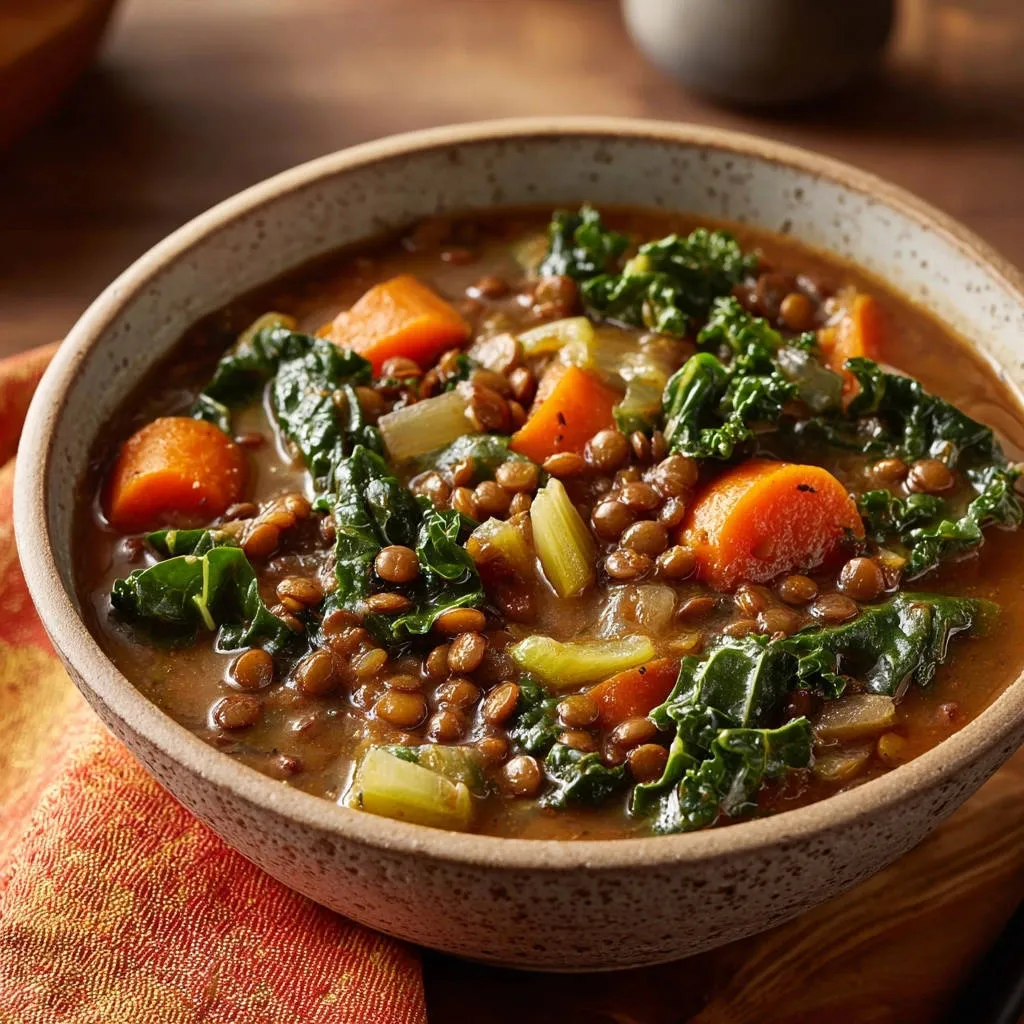
I spent years perfecting my vegetarian soups, only to consistently struggle with a thin broth or lentils that cooked down into gritty mush, completely ruining the promise of a truly satisfying meal.
This recipe for Hearty Lentil and Kale Soup finally solves that common dilemma, utilizing a unique, natural thickening method-blending a small portion of the finished soup-to deliver deeply rich flavor and a creamy body while keeping the majority of the lentils perfectly intact for a wonderful bite.
Trust me, mastering this simple technique is the secret weapon every home cook needs for exceptional comfort food.
Ditch the Gritty Mush: Why This Hearty Lentil and Kale Soup Works Every Time
Achieving that perfect, restaurant-quality thickness in lentil soup often seems like a dark art, but the solution is surprisingly simple and completely dairy-free.
We focus on building flavor slowly and introducing texture control only after the core ingredients are perfectly cooked.
The result is a reliable soup that avoids the common pitfalls of being overly watery or having an unpleasant, starchy consistency.
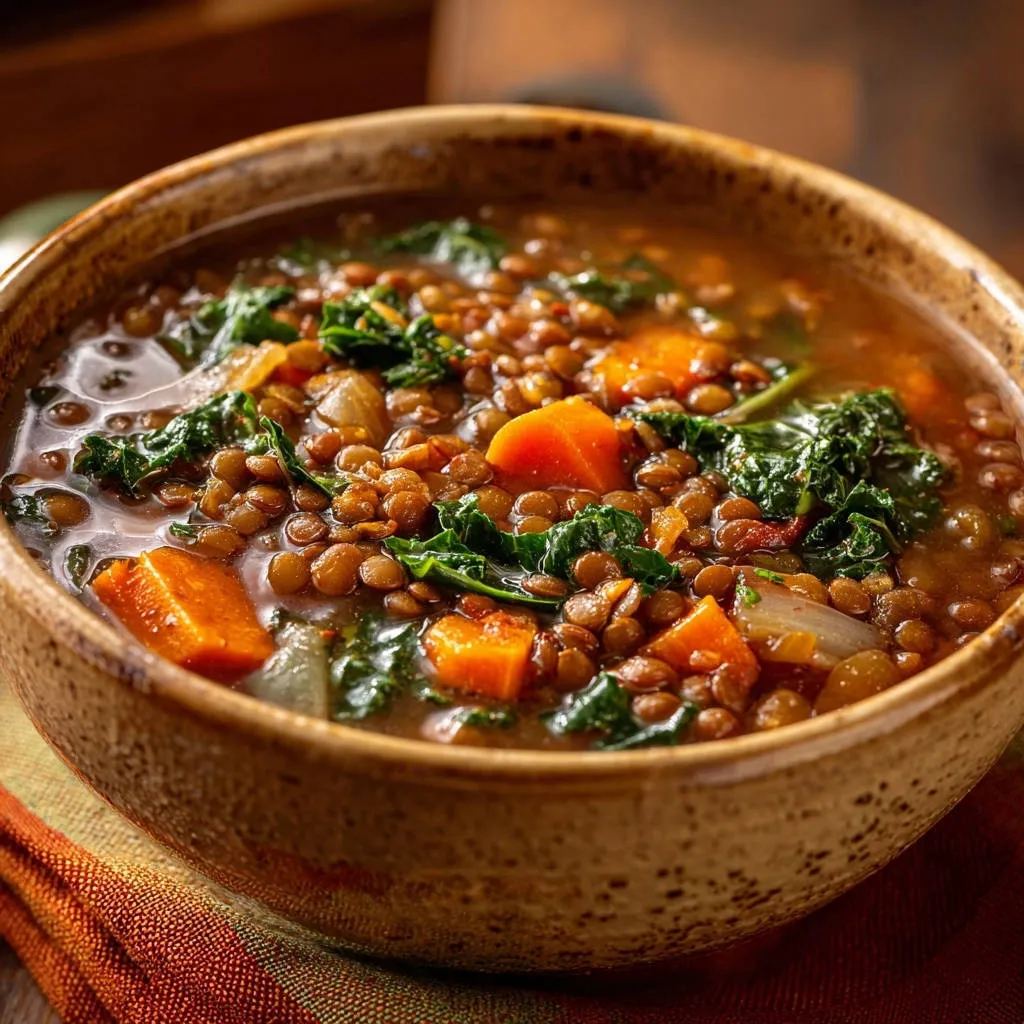
The Texture Secret Explained: Creamy without Cream
The magic happens post-simmering. By scooping out about 1.5 cups of the cooked soup-containing broth, lentils, and softened vegetables-and blending it until silky smooth, we activate the natural starch within the lentils.
This pureed mixture acts as a natural binding agent and thickener when reintroduced to the pot, immediately transforming the remaining liquid into a rich, creamy base.
This method ensures the texture is homogenous and velvety without forcing the entire batch of lentils to overcook and lose their shape.
A Nutrient Powerhouse in Under an Hour
This Hearty Lentil and Kale Soup is not just comforting; it’s packed with essential nutrients, making it ideal for a weekly meal rotation.
Lentils are an incredible source of plant-based protein and fiber, promoting satiety and digestive health.
Kale provides a significant boost of Vitamins K, A, and C, and is best added at the end to retain its crispness and nutritional integrity.
The Deepest Flavor Base: Building the Mirepoix
The foundational flavor of any great soup relies on properly preparing the aromatic base, known as mirepoix (onion, carrots, celery).
For a similarly satisfying meal, check out this hearty lentil soup.
The instruction to sauté these vegetables for 8 to 10 minutes is non-negotiable because this extended cooking time softens them completely and allows their natural sugars to caramelize slightly.
Skimping on this step results in hard vegetable pieces and a thin, one-dimensional broth lacking depth.
The Building Blocks: Selecting Ingredients for Optimal Flavor and Texture
Choosing the Right Lentil Variety
For this recipe, stick to brown or green lentils. These varieties hold their shape exceptionally well during simmering and are resistant to turning to mush.
Avoid red lentils, as they break down too quickly and are better suited for Indian-style daals or heavily pureed soups.
Always rinse your lentils thoroughly before adding them to the pot to remove any dust or debris.
The Power of Aromatics and the Bay Leaf
Garlic provides a pungent, warm counterpoint to the earthiness of the lentils and should only be cooked for about one minute until fragrant to avoid bitterness.
The bay leaf is crucial for infusing a subtle, complex background note that rounds out the savory profile of the vegetable broth.
Be sure to remove the bay leaf before blending or serving, as its flavor is concentrated and slightly bitter if consumed.
Incorporating the Kale: Leaf Prep and Timing
Proper kale preparation involves stripping the thick, bitter central stems and tearing the leaves into bite-sized pieces.
Kale is robust and can stand up to simmering, but it should only be added in the final 5 to 7 minutes.
This timing ensures the kale wilts just enough to become tender-crisp while maintaining its bright green color and structural integrity.
Preparing Your Culinary Canvas: Essential Equipment and Prep Tips
The Dutch Oven Advantage
A heavy-bottomed pot, such as a Dutch oven, is ideal because it distributes heat slowly and evenly, which is paramount when simmering lentils.
Immersion Blender vs. Countertop Blender
An immersion blender simplifies the thickening process tremendously, allowing you to puree the reserved soup directly in the measuring cup without transfer.
If using a countertop blender, ensure the hot soup has cooled slightly before blending, and always hold the lid securely with a towel to prevent steam pressure buildup.
Mise en Place: Cutting Prep
Before you turn on the heat, have all your vegetables diced and chopped and the lentils rinsed; this practice ensures a smooth cooking process and prevents rushing or burning the aromatic base.
The Game-Changing Technique: Step-by-Step Guide to Perfect Soup Body
-
Step 1: Building and Softening the Base
Start with medium heat to gently soften the onions, carrots, and celery without browning them.
Sautéing for the full 8 to 10 minutes releases the natural sugars and creates the deepest possible foundational flavor profile.
-
Step 2: Deglazing and Bringing to a Simmer
Briefly cook the garlic until just fragrant before adding the broth and lentils. If the garlic burns, it will lend a bitter note to the final soup.
Once boiling, immediately reduce the heat to low and cover. Consistent low simmering is key to preventing the lentils from bursting prematurely and ensures uniform cooking.
-
Step 3: The Crucial Scoop and Separation
Once the lentils are tender (25 to 30 minutes), remove the bay leaf and perform the crucial thickening step described in the recipe.
Use a measuring cup to ensure you scoop 1 1/2 cups of the liquid and solids for blending-this precise amount provides the perfect ratio for thickening 6 cups of broth.
-
Step 4: Pureeing for Natural Creaminess
Whether using an immersion blender or a standard blender, ensure the reserved portion is completely smooth; no chunks should remain.
This blending action mechanically breaks down the starches, resulting in a velvety soup base that provides body without any added fat or dairy.
-
Step 5: Finishing the Consistency and Greens
Stir the puree back into the pot. The thickening should happen almost instantly, transforming the broth from watery to a rich, glossy consistency.
Add the kale last, simmering just until tender-crisp. Overcooking the kale will cause it to lose its vibrant color and turn slimy and overly soft.
Troubleshooting Your Soup: Avoiding Mistakes and Elevating Flavor Depth
My Soup is Too Thin: How to Fix a Watery Broth
If you need extra thickening beyond the pureeing method, try mixing one tablespoon of cornstarch with two tablespoons of cold water to create a slurry and stirring it into the simmering soup.
Alternatively, remove the lid and allow the soup to simmer uncovered for 10-15 minutes; the evaporation will naturally reduce and thicken the liquid.
The Lentils Are Mushy: What Went Wrong?
Mushy lentils usually result from cooking at too high a temperature (aggressive boiling instead of a gentle simmer) or using red lentils by mistake.
Ensure the heat is kept on the absolute lowest setting once the initial boil is achieved, and check the texture frequently during the final 10 minutes of cooking.
Adding Umami Depth: Beyond Salt and Pepper
For an extra layer of savory depth in your Hearty Lentil and Kale Soup, try adding a tablespoon of red wine vinegar just before serving; the acidity brightens the overall flavor.
You can also drop a dried mushroom or a Parmesan rind into the broth while it simmers, removing it before blending, to infuse subtle umami notes.
Handling the Kale: Preventing Bitterness
If your kale is particularly mature or you are sensitive to bitterness, give the torn leaves a quick five-minute soak in lukewarm water before draining and adding them to the soup.
Alternatively, a light massage with a teaspoon of olive oil and a pinch of salt can tenderize the kale and neutralize some of its sharper flavors.
Beyond the Bowl: Serving Suggestions and Make-Ahead Strategies
Perfect Pairings: What to Serve with Lentil Soup
The robust flavor and satisfying texture of this soup are best complemented by simple, crisp accompaniments.
Serve generous bowls alongside thick slices of crusty sourdough bread for dipping or with a sharp, tangy grilled cheese sandwich.
A simple side salad dressed with a bright lemon vinaigrette offers a refreshing contrast to the hearty warmth of the soup.
How to Store and Freeze Hearty Lentil and Kale Soup
Cool the soup completely before transferring it to airtight, freezer-safe containers, leaving about an inch of headspace for expansion.
Properly stored, this Hearty Lentil and Kale Soup will keep beautifully in the freezer for up to three months.
Reheating for Maximum Freshness
Lentil soup often thickens significantly in the refrigerator due to the starches setting up.
Reheat the soup gently on the stovetop over low heat, stirring frequently, and add a splash of extra vegetable broth or water to restore the desired consistency.
Avoid rapid, high-heat reheating, which can cause the lentils to break down further.
Quick Kitchen Q&A: Your Top Hearty Lentil and Kale Soup Questions Answered
Can I Substitute Different Greens for Kale?
Yes, spinach is an excellent substitute, but it must be added only in the final 2-3 minutes of cooking, as it wilts much faster than kale.
Swiss chard can also be used; treat it like kale by removing the stems and simmering it for about 5 minutes.
Is This Recipe Naturally Gluten-Free and Vegan?
As written, this recipe uses only lentils, vegetables, and vegetable broth, making it naturally gluten-free and completely vegan.
How Can I Make This Soup with Chicken or Beef Broth?
You can easily substitute the vegetable broth with equal amounts of chicken or beef broth for a deeper, meatier flavor profile.
Note that using non-vegan broths will not impact the cooking time or texture of the finished dish.
Do I Need to Soak the Lentils Before Cooking?
No, soaking brown or green lentils is generally unnecessary and can actually lead to overcooked, mushy results.
A thorough rinse is sufficient preparation for these varieties before simmering.
Mastering this simple technique-blending just a portion of the lentils-is truly the key to achieving a bowl of Hearty Lentil and Kale Soup that is both deeply comforting and texturally perfect.
This method guarantees rich, naturally creamy body without ever sacrificing the satisfying bite of perfectly cooked lentils, earning its permanent place in your weeknight rotation.
Make this restorative, flavor-packed soup tonight, and let us know your favorite garnish!
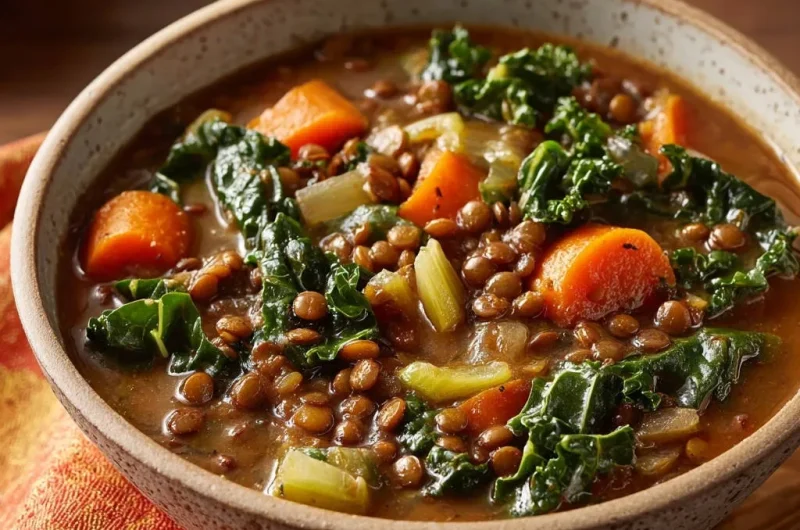
Lentil Kale Soup
Course: Soups-StewsCuisine: InternationalDifficulty: medium6
servings15
minutes45
minutes240
kcal60
minutesThis Hearty Lentil and Kale Soup uses a secret technique: pureeing a small portion of the finished soup to create a naturally thick, creamy base. This method locks in a satisfying, deeply rich texture while keeping the rest of the lentils perfectly intact. A wholesome and flavorful meal.
Ingredients
1 tablespoon olive oil
1 large yellow onion, diced
2 carrots, peeled and chopped into 1-inch pieces
2 stalks celery, chopped
2 cloves garlic, minced
1 1/2 cups brown or green lentils, rinsed
6 cups vegetable broth
1 bay leaf
1 bunch kale, thick stems removed and torn into bite-sized pieces
1 teaspoon salt, plus more to taste
1/2 teaspoon black pepper
Directions
- Building the Flavor Base Heat the olive oil in a large Dutch oven or soup pot over medium heat. Add the onion, carrots, and celery. Cook for 8 to 10 minutes, stirring occasionally, until the vegetables are softened and the onions are translucent. This crucial step deepens the base flavor.
- Add Aromatics and Lentils Stir in the minced garlic and cook for 1 minute until fragrant. Add the rinsed lentils, vegetable broth, bay leaf, salt, and pepper. Bring the mixture to a boil, then immediately reduce the heat to low, cover, and simmer.
- Cook until Just Tender Simmer the soup for 25 to 30 minutes, or until the lentils are tender but still hold their shape (not mushy). Remove the bay leaf.
- The Texture Secret To achieve a rich, creamy consistency without overcooking the remaining lentils or adding heavy cream, scoop out about 1 1/2 cups of the finished soup (including broth and lentils) and transfer it to a separate bowl or the cup of an immersion blender.
- Blend for Body Puree the reserved portion of the soup until it is completely smooth and creamy. This blending action breaks down the starches in the lentils, turning it into a natural, thick soup base.
- Combine and Finish Pour the pureed soup back into the pot with the remaining whole lentils. Stir well to incorporate the creamy mixture. The broth should instantly thicken to a beautiful, rich consistency.
- Add the Greens Stir in the torn kale leaves and continue to simmer for 5 to 7 minutes, or until the kale is tender-crisp and bright green. Taste the soup and adjust the salt and pepper as needed. Serve hot.
Notes
- The technique of blending a portion of the soup ensures a creamy consistency without using heavy cream.