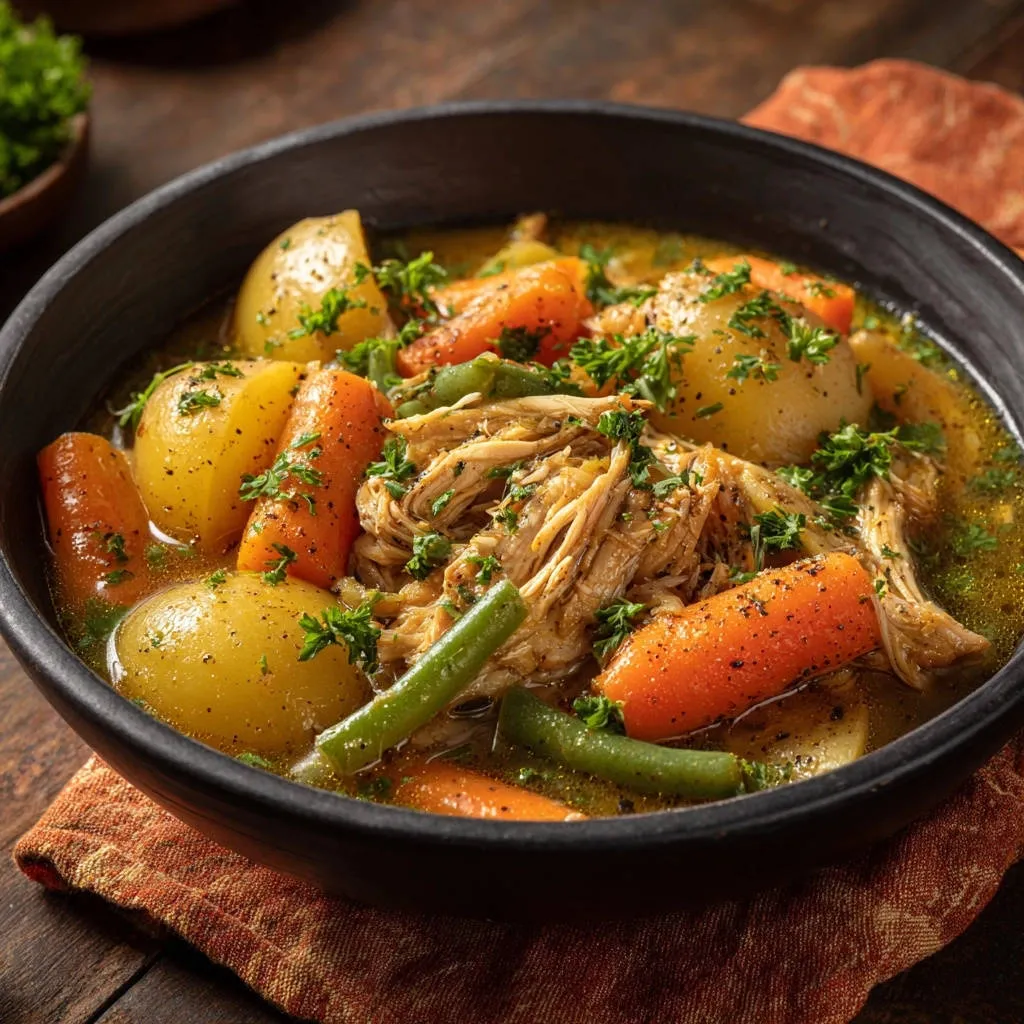
There is nothing more disappointing than scooping up a bowl of homemade soup only to find the broth is thin, bland, and runny. This specific recipe for Hearty Shredded Chicken Stew solves that common problem completely by utilizing a secret, natural thickening technique.
I promise a deeply flavored, stick-to-your-ribs texture every single time, making this the only chicken stew recipe you will ever need.
For an even richer texture, explore creamy harvest chicken stew techniques.
Why This Hearty Shredded Chicken Stew Will Become Your Go-To Recipe
The Underrated Magic of Low-and-Slow Simmering
The secret to profound flavor isn’t just the ingredients; it’s the time you allow them to mingle. A 3-to-4-hour, low-and-slow simmer concentrates the savory notes from the chicken stock, herbs, and bouillon paste.
This extended cooking time ensures the vegetables melt into tenderness while guaranteeing the chicken becomes fork-tender for effortless shredding.
The Secret Weapon: Achieving Natural Thickness Without Added Flour
We avoid the dull, pasty taste often associated with flour or cornstarch slurries. Instead, this recipe employs the natural starches found in the cooked yellow potatoes.
By blending back a portion of the potatoes and broth, we create an impossibly rich, silky sauce that binds the stew without compromising flavor or clarity.
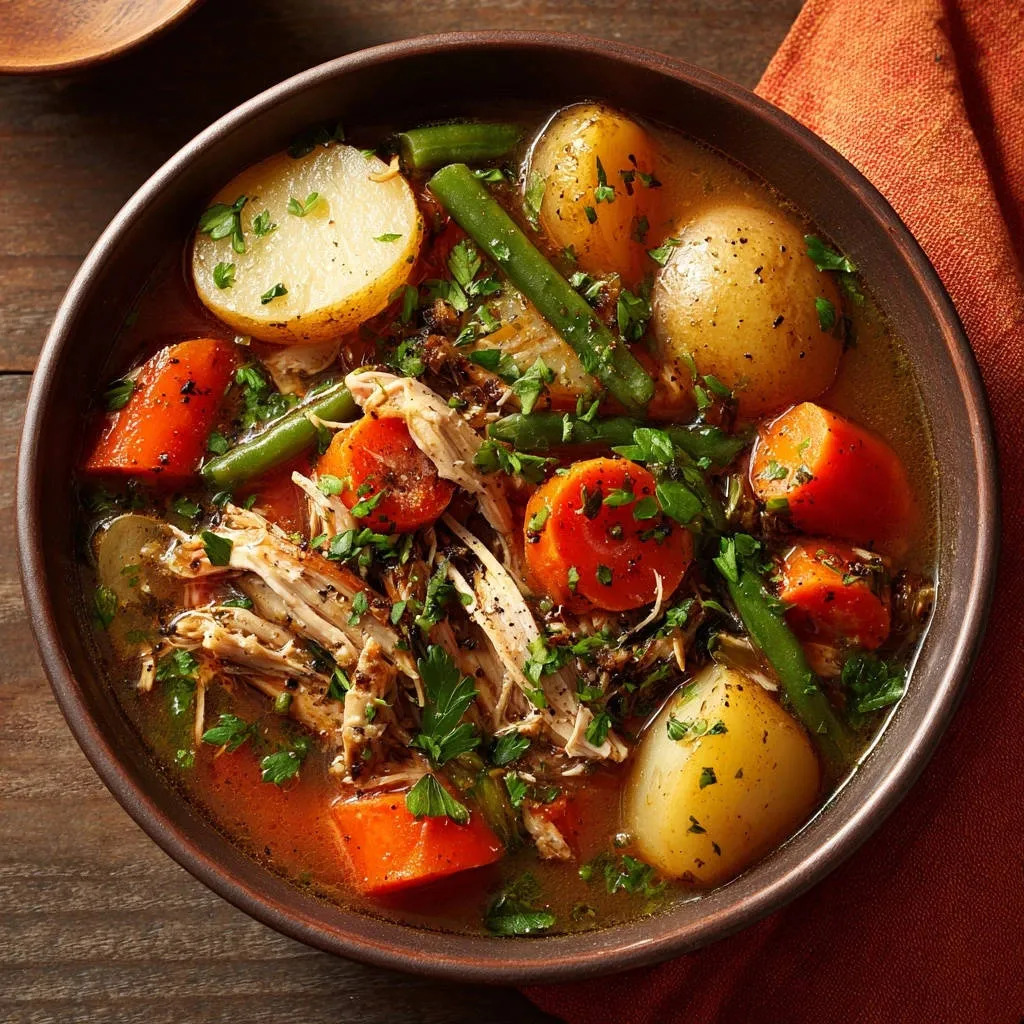
A Truly Satisfying, Stick-to-Your-Ribs Meal
This is comfort food perfected. The balance of protein, root vegetables, and a rich, substantial broth makes this stew a complete, satisfying meal.
It is the ultimate solution for cold weather, busy weeknights, or anytime you need nourishing, deeply flavorful sustenance.
The Building Blocks: Sourcing and Prepping Ingredients for the Perfect Stew
Protein Power: Choosing Between Chicken Breast and Thighs
You can use either boneless, skinless chicken breasts for a leaner result or thighs for maximum moisture and richness. Thighs are generally more forgiving during long cooking times.
Regardless of your choice, pat the chicken pieces very dry and season them aggressively with salt and pepper before searing to maximize the flavor crust.
The Flavor Foundation: Aromatics and Stock
Yellow onion forms the essential aromatic base. Ensure you choose low-sodium chicken stock, as the long simmer will reduce the liquid and intensify the salt levels.
The optional bouillon paste is highly recommended, delivering an essential layer of concentrated, savory, umami depth that standard stock alone often lacks.
The Starch Factor: Why Small Yellow Potatoes Work Best
Small yellow potatoes (like Yukon Golds) are the ideal choice because they are starchy enough to thicken the stew but waxy enough to largely hold their shape during the initial simmer.
Cut them into uniform 1-inch pieces to ensure even cooking and distribution, preparing them perfectly for both eating and using as a natural thickener.
Essential Tools for Stew Success
The Dutch Oven Advantage: Why a heavy-bottomed pot is crucial for searing and long, even simmering. It distributes heat uniformly, preventing scorching during the 3-4 hour cook time.
The Immersion Blender: An easy way to achieve a creamy, lump-free thickener. If you don’t own one, simply use a sturdy fork and some elbow grease to mash the potatoes.
Two Forks: The simplest tool for efficient shredding. Once the chicken is tender, it should practically fall apart under slight pressure.
Crafting Culinary Comfort: A Step-by-Step Guide to Your Hearty Shredded Chicken Stew
Searing for Flavor Depth (Step 1)
Searing the chicken for just two minutes per side creates the Maillard reaction, developing a rich, savory brown crust.
This crust, even though the chicken is not cooked through, provides crucial foundational flavor that dissolves into the liquid during the long simmering process.
Building the Aromatic Liquid Foundation (Steps 2-3)
Sauté the diced onion until softened before introducing your dried herbs: thyme, sage, and the optional bouillon paste. This process is called “blooming” the herbs.
Toast them for one minute until intensely fragrant; this technique activates their oils, maximizing their flavor contribution before the stock is added.
The Long Simmer: Achieving Fall-Apart Tenderness (Part of Step 3)
Once the stock and vegetables are added, bring the pot to a simmer, then immediately reduce the heat to the lowest setting and cover tightly.
The goal is a barely-there, gentle cook for 3 to 4 hours. This slow, steady heat is what guarantees the shredded chicken will be moist and the depth of flavor will be fully realized.
The Technique for Effortless Shredding (Step 4)
Carefully remove the hot chicken pieces and let them rest on the board for just a few minutes before shredding.
The meat should practically fall apart with two forks. Return the shredded pieces immediately to the hot liquid so they can soak up the concentrated broth.
Deep Dive: Pain Point Solved-How to Achieve Rich, Naturally Thick Broth
Extracting the Potato Starch: The Magic of Mashing
This is the moment of transformation. After the chicken is shredded, ladle out about one cup of hot broth along with four to five of the largest, softest cooked potato pieces.
When these starch-rich potatoes are vigorously mashed or blended, the starches rupture, creating a smooth, creamy paste-your perfect natural thickener.
The Perfect Bind: Stirring the Silky Thickener Back In
Ensure the mashed mixture is completely smooth with absolutely no lumps before returning it to the stew.
Stir the paste back into the main pot of stew gently but thoroughly to ensure even distribution and prevent any hot spots from forming.
The Final Simmer: Setting the Consistency
Add the green beans at this stage. Simmer the stew uncovered for the final 15 to 20 minutes, stirring occasionally.
This time allows the starches to fully activate and bind the liquid, transforming the broth into the desired rich, substantial sauce consistency.
For a similar heartiness, explore hearty garden vegetable and chicken stew.
Chef’s Corner: Pro Tips, Customization, and Make-Ahead Magic
Flavor Booster: Why Fresh Herbs Matter: While dried herbs build the simmer flavor, fresh parsley or dill, added only at the end, provides a necessary bright, acidic, and contrasting finish.
Adjusting Seasoning is Key: Always taste and adjust salt and pepper levels after the stew has thickened and finished cooking.
The long reduction concentrates all ingredients, including the salt, so waiting until the end prevents over-seasoning.
Serving Suggestions Beyond Basic Bread: Pair this Hearty Shredded Chicken Stew with crusty sourdough, flaky buttermilk biscuits, or a light side salad dressed with vinaigrette to cut the richness.
Complementary Dishes
To round out your meal, consider these dishes that pair well with hearty chicken stew.
- For a comforting bake alongside your chicken, try this golden cornbread and herb stuffing, which shares a similar warming profile.
- If you’re looking for a lighter but still satisfying accompaniment, this grilled chicken kale and cabbage power salad offers fresh textures that complement the stew’s richness.
Freezing and Reheating Your Hearty Shredded Chicken Stew
Stew that is thickened with potato starch freezes remarkably well and maintains its luxurious consistency when thawed, unlike flour-thickened sauces which can separate.
Cool the stew completely, portion it into airtight containers, and freeze for up to three months. Reheat slowly on the stovetop, adding a splash of stock if it appears too thick.
Troubleshooting Your Stew: Fixing Common Texture and Flavor Issues
“My Stew Broth is Still Too Thin”
The most common cause is not mashing enough potato. Remove another handful of potatoes and a small amount of broth, blend them until silky smooth, and stir back into the simmering pot.
As a final resort, whisk one tablespoon of cornstarch with two tablespoons of cold water and slowly stir the slurry into the stew until it reaches the desired thickness.
“The Chicken Tastes Dry or Rubbery”
This indicates the temperature was too high. The stew should never boil vigorously; it should only achieve a very low, slow bubble during the simmer.
To ensure maximum moisture retention in future batches, utilize boneless chicken thighs instead of breasts, as their higher fat content provides insurance against dryness.
“The Vegetables Are Mushy”
Different vegetables cook at different rates based on starch content and size. If your potatoes and carrots are breaking down excessively, try adding the carrots 30 minutes later in the cooking process next time.
Frequently Asked Questions About Hearty Stews
Can I make this Hearty Shredded Chicken Stew in a Slow Cooker?
Yes, absolutely. Sear the chicken and sauté the aromatics/herbs on the stovetop first for maximum flavor before transferring everything to the slow cooker.
Cook on Low for 6 to 8 hours. Follow the exact same thickening and shredding steps at the end of the cooking process.
Can I use dried beans instead of fresh green beans?
Dried beans require pre-soaking and long cooking times and are not recommended for a direct substitution in this recipe.
If you prefer dried beans, cook them separately until nearly tender before adding them to the stew for the last 45 minutes of the simmer. Canned, drained beans can be added during the final 20 minutes.
Are there any recommended gluten-free adaptations for this recipe?
This recipe is naturally gluten-free because it relies entirely on the starch found in the potatoes for thickening, not flour or a roux.
This method makes it ideal for GF diets; simply ensure your chosen chicken stock or bouillon paste is certified gluten-free, if applicable.
Ready to Cozy Up? Share Your Hearty Shredded Chicken Stew Experience!
The journey to the perfect bowl of comfort ends here. This method guarantees a rich, substantial, and incredibly satisfying Hearty Shredded Chicken Stew that elevates standard home cooking to true culinary comfort.
Gather your ingredients, take the time for the slow simmer, and prepare to be rewarded with a depth of flavor you won’t forget. Try this reliable recipe tonight and let me know your successes in the comments below!
Shredded Chicken Stew
Course: Soups-StewsCuisine: AmericanDifficulty: medium6
servings20
minutes4
hours380
kcal260
minutesEliminate thin, bland stew forever with this cozy recipe. This stick-to-your-ribs stew guarantees a deeply flavored, rich broth without relying on excessive flour or cornstarch. The secret lies in blending some of the cooked potato starch back into the sauce for a natural, creamy thickness.
Ingredients
1.5 pounds boneless, skinless chicken breast or thighs
4 cups chicken stock (low sodium)
2 tablespoons olive oil
1 large yellow onion, diced
3 medium carrots, peeled and chopped into 1-inch pieces
1.5 pounds small yellow potatoes, halved or quartered
1 cup fresh or frozen green beans
1 teaspoon dried thyme
1 teaspoon dried sage
1 bay leaf
1/2 teaspoon black pepper
1 teaspoon salt (or to taste)
1 tablespoon bouillon paste (optional, for intense flavor depth)
1/4 cup fresh parsley, chopped (for garnish)
Directions
- Sear and Setup: Pat the chicken dry and season lightly with salt and pepper. Heat olive oil in a large Dutch oven or heavy pot over medium-high heat. Sear the chicken for 2 minutes per side until lightly browned (do not cook through). Remove the chicken and set aside.
- Build Flavor Base: Add diced onion to the pot and cook until softened, about 5 minutes. Stir in the thyme, sage, black pepper, and bouillon paste (if using). Cook for 1 minute until fragrant.
- Add Liquids and Vegetables: Return the chicken to the pot. Add the potatoes, carrots, bay leaf, and chicken stock. Bring the liquid up to a simmer, then reduce heat to low, cover, and cook for 3 to 4 hours, or until the chicken shreds easily and the vegetables are tender. The chicken is done when it reaches 165°F (74°C) in the thickest part.
- Shred the Chicken: Carefully remove the chicken pieces and place them on a cutting board. Use two forks to shred the chicken, then return it to the stew.
- Pain Point Solution: Achieve Natural Thickness: This is the key step. Ladle about 1 cup of the broth and about 4 to 5 large potato pieces into a separate bowl. Using a fork or a handheld immersion blender, mash or blend these potatoes completely until smooth and creamy. This cooked potato starch will be your natural thickener.
- Finish the Stew: Stir the mashed potato mixture back into the main pot of stew. Add the green beans and simmer uncovered for an additional 15 to 20 minutes, stirring occasionally, allowing the stew to thicken perfectly. The natural starches released from the mashed potatoes will bind the liquid into a rich, substantial sauce.
- Serve: Remove the bay leaf. Taste and adjust seasoning as needed. Serve hot, garnished generously with fresh chopped parsley.
Notes
- The stew requires a long, slow cook time (3-4 hours) to achieve optimal flavor. Use bouillon paste for intense flavor depth.