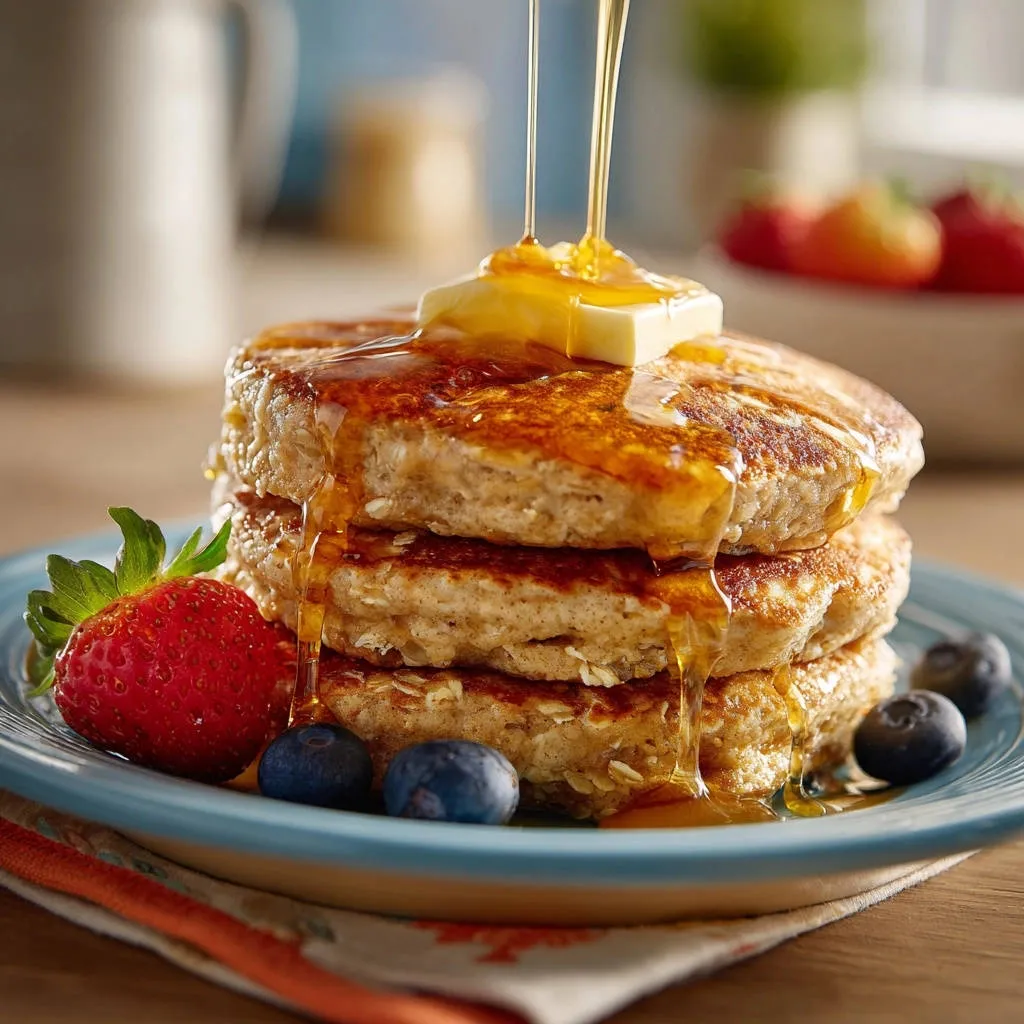
I spent years battling dense, flat whole grain pancakes until I cracked the code on achieving true loft and tender texture in a healthy breakfast.
The secret to transforming a healthy start into truly exceptional, fluffy whole grain stacks lies not in extra whipping, but in proper oat hydration and the controversial technique of minimal mixing.
For a simpler approach to fluffy results, consider these classic diner pancakes.
Follow this expert method for the most reliable, light, and deeply satisfying Hearty Whole Grain Pancakes you will ever make.
Beyond Basic: Why These Whole Grain Pancakes Rise Every Time
Whole grain flours and additions like rolled oats inherently lack the fine elasticity of plain white flour, often leading to a dense, heavy finished product.
Traditional recipes fail because they treat the batter like a standard one, ignoring the structural weight of the whole grains and the need for intense moisture absorption.
This method specifically tackles that weight by maximizing aeration and chemical leavening before gluten has a chance to fully form.
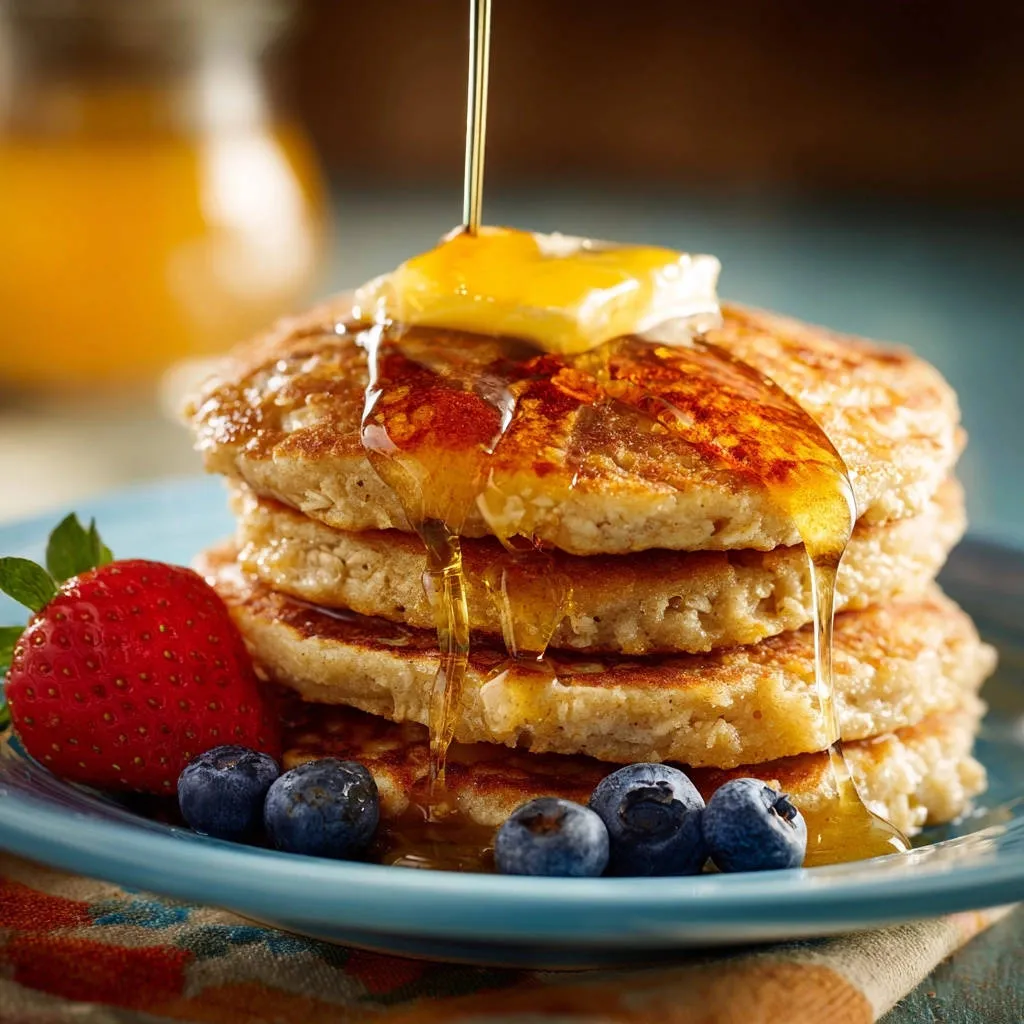
The Critical Rest Period: Why Hydrating the Oats is Non-Negotiable
Rolled oats are fibrous and incredibly absorbent; if they soak up moisture during cooking, they steal necessary liquid from the batter’s structure.
Allowing the oats to fully hydrate in the milk for at least 15 minutes softens them significantly before they ever hit the heat.
This mandatory preventative step ensures the final texture is light and tender, entirely eliminating the gummy or chewy bite often associated with oat pancakes.
Mastering the Lumpy Batter Technique for Maximum Fluff
Overmixing develops gluten, which quickly creates a tough, rubbery structure and simultaneously knocks the critical carbon dioxide out of your batter.
The goal is to mix only until the wet and dry ingredients are barely integrated; you must stop when large streaks or clumps of dry flour still remain visible.
A lumpy batter prevents unnecessary gluten formation and ensures every bubble generated by the leavening agents remains trapped, ready to expand dramatically on the hot griddle.
The Whole Grain Challenge: Ensuring Lightness (Even with Fiber)
Because whole grain elements are heavier, we utilize a robust, balanced combination of both baking powder and baking soda to ensure maximum loft.
Baking powder acts as the primary, double-acting lift, providing rise upon contact with liquid and again when exposed to heat.
The addition of baking soda is necessary to react with any naturally occurring acids in the milk or buttermilk, guaranteeing a powerful, immediate boost to overcome the dense whole grains.
Essential Building Blocks: Ingredients for the Perfect Hearty Whole Grain Pancakes
The Role of Rolled Oats Versus Quick Oats
We require old-fashioned rolled oats (not instant) because their structural integrity holds up beautifully after hydration, adding true heartiness and pleasant chewiness.
Instant or quick oats dissolve too readily when soaked, quickly turning into a mushy paste that results in a less appealing, slick texture in the final pancake.
Understanding the Leavening Power Duo: Baking Powder and Soda
Baking powder provides a reliable, heat-activated lift that forms the primary structure of these tall stacks.
Baking soda is added to ensure a strong chemical reaction, especially if you opt for buttermilk, creating an extremely tender and light crumb.
Using both agents together provides overlapping insurance that the batter will rise quickly and forcefully enough to overcome the density of the oats and flour.
Milk Matters: Choosing Between Dairy and Buttermilk for Texture
Standard whole milk works perfectly, relying on the robust double-acting baking powder for lift and structure.
However, traditional buttermilk provides a superior, slightly tangy flavor and interacts chemically with the baking soda to yield an incredibly tender, almost cake-like crumb.
If you use buttermilk, you will notice an even faster, more dramatic rise in your fluffy whole grain stacks.
The Fat Factor: Why Melted Unsalted Butter is Superior
Melted unsalted butter adds a crucial depth of flavor that cooking oil simply cannot replicate, perfectly complementing the nuttiness of the whole grains.
Furthermore, melted butter contributes to overall tenderness by coating flour particles, inhibiting excessive gluten development during the minimal mixing phase.
Tools of the Trade: Equipment for Effortless Pancake Production
The Ideal Griddle or Skillet: Use a well-seasoned cast iron pan or a high-quality nonstick griddle. These pans distribute heat most evenly, preventing hot spots that cause uneven browning.
Heat Control: Emphasize the need for a sustained medium setting. High heat burns the outside before the heavy whole grain interior can cook through; a stable medium is essential.
The Right Spatula: A wide, thin-edged metal or heat-safe plastic spatula is crucial. The thin edge allows you to slide under the pancake without tearing or deflating the structure during the flip.
Detailed Guide: Cooking Your Hearty Whole Grain Pancakes to Golden Perfection
- Step 1: Preparing the Oats and Milk (The Hydration Stage):
Combine the 1 cup of rolled oats and 1 cup of milk in a medium bowl. Set a timer for at least 15 minutes.
This step is mandatory to hydrate the oats and ensure a non-gummy texture, setting the foundation for the loft and structure of the Hearty Whole Grain Pancakes.
- Step 2: Mixing the Wet Ingredients:
Whisk the large egg and the 2 tablespoons of melted butter directly into the soaked oat mixture.
Ensure the mixture is fully emulsified and set aside. The batter may look loose and slightly thick from the oats at this stage, which is perfectly correct.
- Step 3: Combining the Dry Ingredients:
In a separate large bowl, thoroughly whisk together the flour, sugar, baking powder, baking soda, and salt.
This pre-mixing guarantees that the chemical leavening agents are perfectly distributed throughout the dry base, ready for rapid activation.
- Step 4: The Fluffy Technique (Minimal Mixing and Resting):
Pour the wet oat mixture into the dry ingredients. Use a rubber spatula and stir gently only until the ingredients are just combined-stop when large streaks of flour still remain.
The lumpy batter must then rest for exactly 5 minutes; this allows the flour to absorb residual moisture without developing gluten and sets the leavening agents in place.
- Step 5: Preheat and Prep the Cooking Surface:
Preheat your griddle or skillet over medium heat. Test the temperature by dropping a small amount of water; if it sizzles and evaporates quickly, the pan is ready.
Lightly brush the cooking surface with additional melted butter or oil, ensuring only a thin film is present to prevent scorching.
- Step 6: Portioning and Observing for the Flip:
Use a 1/4 cup measure to portion the batter onto the hot griddle, spacing them apart to allow room for spreading.
Cook undisturbed for 2 to 3 minutes. Wait until bubbles form across the entire surface, particularly near the center, and the edges appear dry and set. This is your visual cue that the bottoms are golden brown and ready to be turned.
- Step 7: Finishing and Serving:
Flip the pancakes quickly and carefully, and cook for an additional 1 to 2 minutes on the second side until deep golden brown.
Serve immediately stacked high with butter, maple syrup, and fresh berries for the best possible texture and warmth.
Chef’s Secrets: Troubleshooting and Elevating Your Pancake Game
Testing Griddle Temperature Like a Pro
The difference between a perfect golden crust and a burnt shell is precise temperature control; aim for a steady, even medium heat.
If you see smoke or if the first batch browns almost instantly, reduce the heat immediately and let the pan stabilize for two minutes before continuing.
Consistently checking the temperature ensures you utilize the full 2-3 minutes necessary to cook the hearty interior of these thick whole grain breakfast treats.
Why Are My Pancakes Still Flat and Dense? (Quick Fixes)
Check Your Batter: If the texture is elastic or smooth, you likely overmixed; remember, lumps are mandatory for these fluffy whole grain stacks.
Test Your Leavening Agents: Ensure your baking powder and baking soda are absolutely fresh; old agents lose efficacy quickly, resulting in poor rise and flat pancakes.
Verify Your Heat: Cooking on heat that is too low prevents the chemical leavening agents from activating aggressively, leading to a slow, dense cook rather than a rapid, necessary rise.
The Art of Customization: Swapping Flours and Grains
For a slightly lighter texture while maintaining the ‘whole grain’ claim, substitute up to half of the all-purpose flour with whole wheat pastry flour.
For added nutritional value, stir 1 tablespoon of ground flaxseed or chia seeds into the dry ingredients in Step 3.
Since these seeds absorb significant moisture, you may need to compensate by adding 1 teaspoon more milk to the soaked oat mixture.
Flavor Boost: Integrating Spices and Zest
Enhance the natural nuttiness of the oats and the overall warmth by whisking 1 teaspoon of ground cinnamon and a generous pinch of nutmeg into the dry ingredients in Step 3.
For a bright, refreshing lift, add the finely grated zest of half a lemon or orange to the wet ingredients before combining the batter.
Storage, Freezing, and Serving Suggestions
How to Keep Leftovers Fresh and Fluffy
To prevent sogginess, always cool cooked pancakes completely on a wire rack before attempting to stack or store them.
Store the cooled pancakes in an airtight container layered with parchment paper; they will keep well in the refrigerator for up to three days.
Make-Ahead Mastery: Preparing the Batter in Advance
You can prep the dry mix (flour, sugar, salt, and leavening agents) and the wet mix (oats, milk, egg, melted butter) separately and refrigerate overnight.
Do not combine the wet and dry ingredients until just 5 minutes before you are ready to cook.
Combining too early will prematurely activate the leavening agents, resulting in the loss of crucial rising power before the batter hits the heat.
Beyond Syrup: Creative Topping Combinations
Try a rustic Spiced Apple Compote, simmered with brown sugar and cloves, for a deeply cozy fall flavor profile.
A yogurt drizzle made with Greek yogurt, a splash of maple syrup, and vanilla bean paste adds a beautiful protein-rich tang.
For a unique savory-sweet meal, top these Hearty Whole Grain Pancakes with crispy bacon and a few shavings of sharp cheddar cheese.
Frequently Asked Questions About Whole Grain Pancake Baking
Can I use Gluten-Free Flour Substitutes?
Yes, but for reliable structure and lift, you must use a commercially available GF blend that is specifically designed for baking.
When using a GF blend, incorporating 1/2 teaspoon of xanthan gum with the dry ingredients is highly recommended to provide the necessary structure that gluten would typically supply.
What is the Difference Between Baking Soda and Baking Powder in This Recipe?
Baking powder is a complete, double-acting leavener that provides a consistent rise regardless of the type of liquid used.
Baking soda, conversely, is much stronger but requires an acid to fully react; it is primarily included here to interact perfectly if buttermilk is chosen for an extra rise.
Is it necessary to use melted butter? Can I use oil?
You can substitute a neutral oil like canola or vegetable oil if you prefer, as it will still add necessary moisture and tenderness.
However, melted butter is strongly encouraged because it vastly improves the flavor profile and richness, which is often lacking in healthy whole grain recipes.
The Ultimate Breakfast Victory: Enjoying Your Hearty Whole Grain Pancakes
Achieving tall, fluffy whole grain pancakes is no longer a kitchen challenge; it is simply a matter of respecting the oats and mastering the power of the lumpy batter technique.
Once you experience the light texture and incredible flavor of these truly hearty whole grain breakfast treats, you’ll see why this method is our definitive go-to.
Give this technique a try this weekend and enjoy the most satisfying and light Hearty Whole Grain Pancakes you’ve ever had.
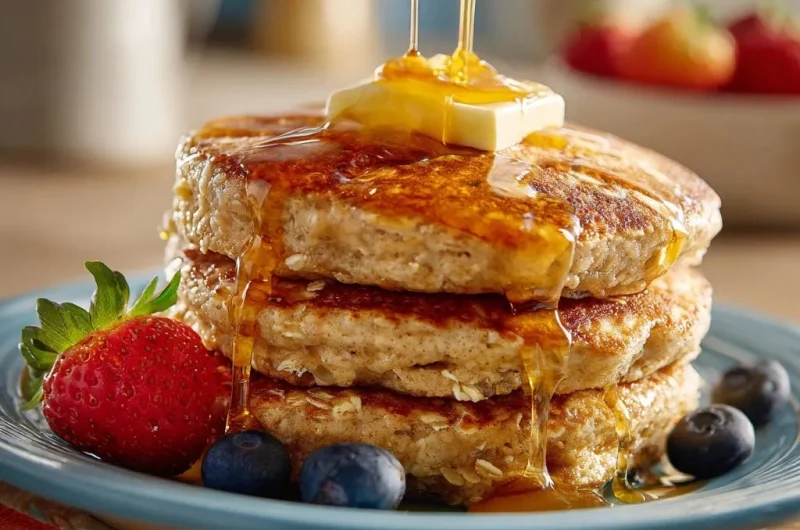
Whole Grain Pancakes
Course: BreakfastCuisine: AmericanDifficulty: easy10
Pancakes (3-4 servings)20
minutes15
minutes240
kcal35
minutesStop suffering through flat, dense pancakes! This recipe uses whole grain oats and a clever, minimal-mixing technique to ensure your stack is light, airy, and rises beautifully. They are hearty enough to keep you full but fluffy enough to melt in your mouth.
Ingredients
1 cup Rolled Oats (not instant)
1 cup Milk (or buttermilk for extra fluff)
1 large Egg
2 tablespoons Melted Unsalted Butter, plus more for cooking
1 cup All-Purpose Flour
2 tablespoons Granulated Sugar
1 teaspoon Baking Powder
1/2 teaspoon Baking Soda
1/4 teaspoon Salt
Butter and Maple Syrup, for serving
Fresh Berries, for garnish
Directions
- Prepare the Oats and Milk: In a medium bowl, combine the 1 cup of rolled oats and 1 cup of milk. Let this mixture stand for at least 15 minutes to allow the oats to soften and begin hydrating. This is crucial for preventing a chewy, gummy texture in the finished pancake.
- Mix the Wet Ingredients: Whisk the egg and the 2 tablespoons of melted butter into the oat and milk mixture. Set aside.
- Combine Dry Ingredients: In a separate, large bowl, whisk together the flour, sugar, baking powder, baking soda, and salt. Make sure the leavening agents are thoroughly incorporated.
- The Fluffy Technique (Minimal Mixing): Pour the wet oat mixture into the dry ingredients. Stir gently with a rubber spatula until just combined. The batter should still have lumps of dry flour visible. STOP immediately. Overmixing develops the gluten and releases the CO2 you need for rise, resulting in density. Lumpy batter is the secret to fluffy pancakes. Let the batter rest for 5 minutes.
- Preheat and Cook: Preheat a nonstick griddle or skillet over medium heat. The pan is ready when a drop of water quickly evaporates. Brush lightly with melted butter or oil.
- Portion and Flip: Pour 1/4 cup of batter onto the hot griddle for each pancake. Cook for 2 to 3 minutes until bubbles form across the surface, especially near the center, and the edges look set. The medium heat ensures the inside cooks through before the outside burns.
- Finish: Flip the pancakes and cook for another 1 to 2 minutes until golden brown. Serve immediately stacked high with butter, maple syrup, and fresh berries.
Notes
- The crucial step is allowing the rolled oats to hydrate in the milk for 15 minutes and stirring the final batter minimally (lumps are good!).