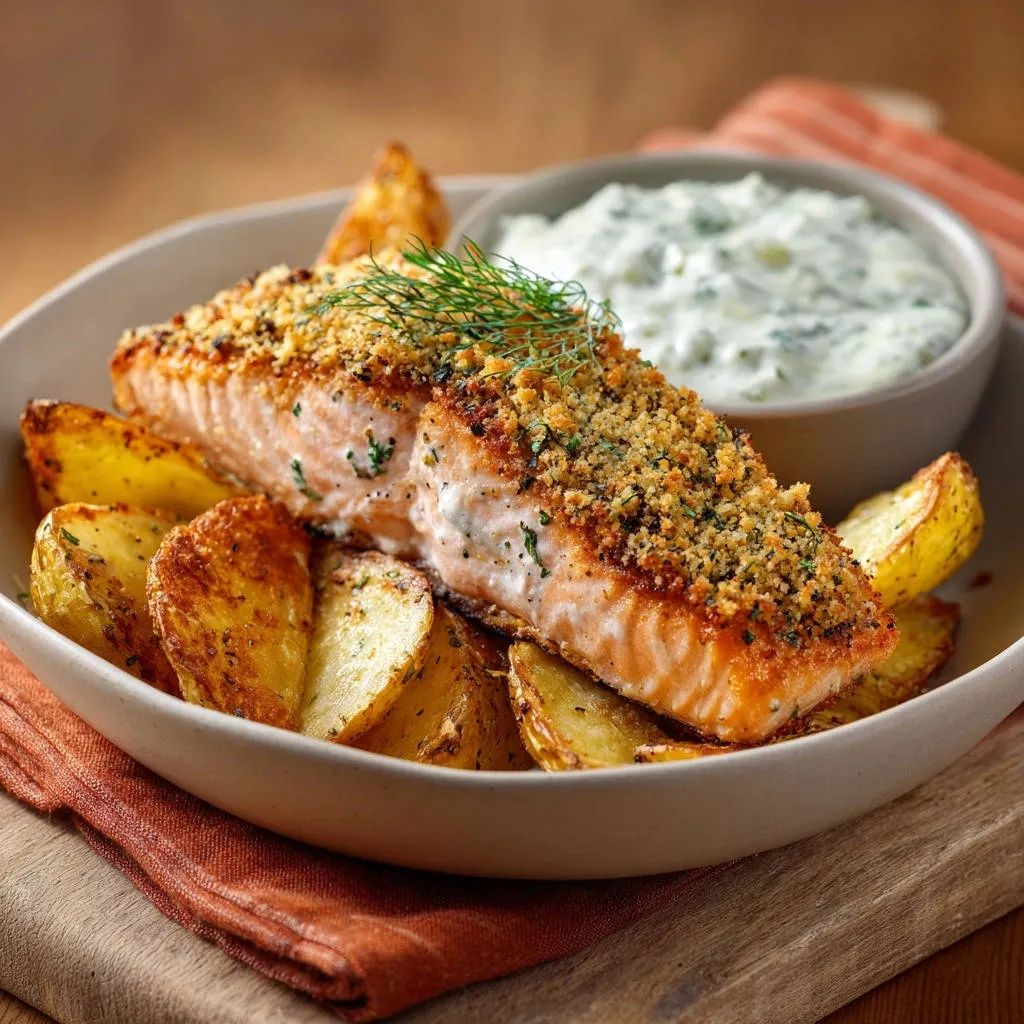
I spent years agonizing over dry, chalky salmon, a frustration many home cooks share when handling thick fillets.
Learning the simple secret of “carry-over cooking” changed everything, guaranteeing perfectly moist results beneath a crisp exterior every single time.
This definitive guide to Herb-Crusted Salmon and Garlic Roast Potatoes ensures your fish is flawlessly flaky and your potatoes are crisp, all baked efficiently on one sheet pan.
The Secret Weapon: Why Our Herb-Crusted Salmon Recipe Always Works
Solving the Dry Salmon Dilemma: The Carry-Over Cooking Rule
The biggest mistake in cooking salmon is aiming for the final internal done temperature while the fish is still in the oven.
We pull the fish when the internal temperature hits 130°F, slightly underdone, transferring it immediately to a resting plate.
The retained residual heat-known as the carry-over cooking effect-will gently raise the temperature to a perfect 140°F-145°F as it rests, locking in moisture for exceptionally flaky salmon.
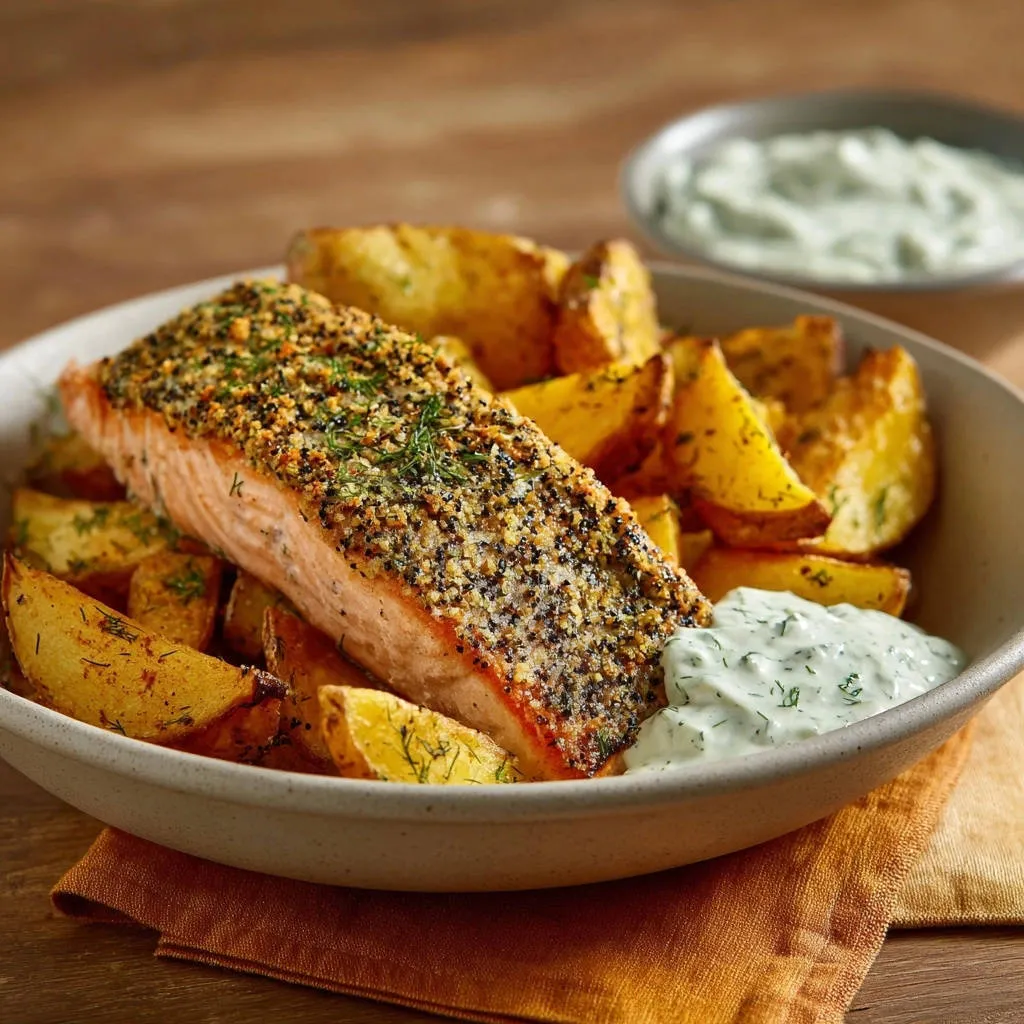
The Perfect Marriage: Crunchy Crust and Fluffy Garlic Roast Potatoes
This recipe provides beautiful textural contrast: delicate, moist fish sealed beneath a golden, crispy panko crust.
The combination of fresh herbs in the crust pairs seamlessly with the aromatic oregano and garlic powder coating the robust potato wedges.
Quick & Complete: A One-Pan Dinner in Under 30 Minutes
Efficiency is paramount here, utilizing a strategic timing trick to ensure both components finish cooking simultaneously.
By giving the dense potato wedges a 15-minute head start, we create a truly streamlined, complete one-pan dinner that is ideal for busy weeknights.
Deep Dive: Key Ingredients for the Ultimate Flavor and Texture
Selecting Your Fillets: Size, Thickness, and Skin-On vs. Skin-Off
Always select fillets that are thick and uniform (at least 1 to 1.5 inches at their thickest point) for this recipe.
Thick salmon, like King or Coho, performs best because it allows enough time for the crust to crisp without overcooking the interior before it reaches 130°F.
While skin-on adds insurance against drying, you can use skin-off here since we are focusing on the top herb crust.
The Panko Power: Achieving the Ultimate Crunchy Herb Crust
Panko breadcrumbs are non-negotiable for achieving a truly light and shattering crust texture.
Unlike standard breadcrumbs, Panko is flakier and absorbs less oil, ensuring maximum crispness and a superior golden-brown color.
Binder Breakdown: Mayonnaise, Yogurt, and the Importance of Patting Dry
Before applying any binder, you must pat the salmon fillets bone-dry using paper towels; moisture guarantees a soggy crust and steam.
Mayonnaise or plain Greek yogurt serves as the perfect low-moisture glue, ensuring the crust mixture adheres firmly during baking.
The Flavor Foundation: Oregano, Dill, and Fresh Parsley
We rely on dried oregano and garlic powder for the savory depth of the roast potatoes.
For the crust, the combination of fresh parsley and dried dill adds a bright, slightly sweet herbal note that cuts through the fish’s richness.
If substituting fresh herbs for dried in the crust, triple the quantity, but remember the crust needs minimal moisture, so chop them extremely finely.
Crafting the Cool Counterpoint: The Creamy Dill-Cucumber Dip
Why the Dip is Crucial for Balance
The richness of the salmon and the comforting starchiness of the potatoes demand a refreshing acidic element to cleanse the palate.
This simple Tzatziki-style dip provides that tangy, cool counterpoint, preventing the meal from feeling too heavy.
The Squeeze Factor: Preparing Cucumber for the Dip
The single most important step when using grated cucumber in a creamy dip is to remove its excess water.
After grating, place the cucumber in a clean kitchen towel or paper towel and squeeze aggressively until almost completely dry to prevent a watery, thin sauce.
[RECIPE CARD PLACEHOLDER]
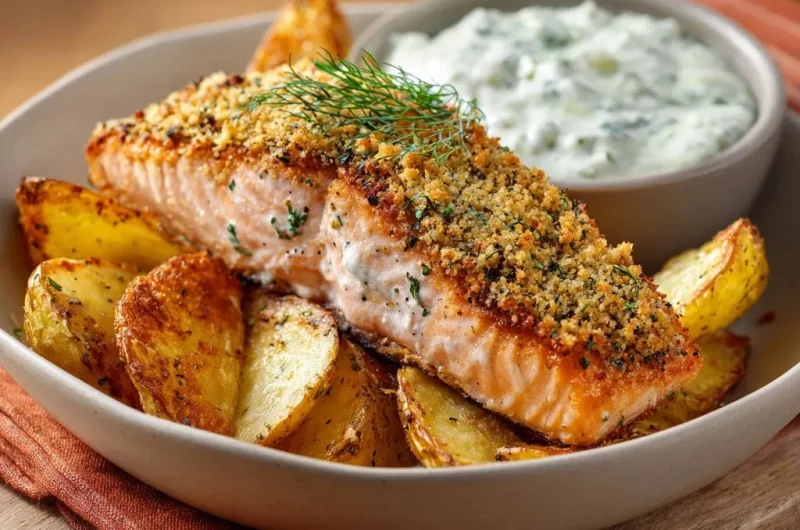
Herb-Crusted Salmon and Garlic Roast Potatoes
Prep Time: 10 minutes | Cook Time: 25-30 minutes | Yield: 2 servings
Ingredients
- For the Salmon & Crust:
- 2 large salmon fillets (about 6 ounces each, 1-inch thick)
- 1/2 cup panko breadcrumbs
- 2 tablespoons finely chopped fresh parsley
- 1 teaspoon dried dill, divided (1/2 tsp for crust, 1/2 tsp for dip)
- 2 tablespoons mayonnaise or plain Greek yogurt (for binder)
- Salt and freshly ground black pepper
- For the Garlic Roast Potatoes:
- 4 medium yellow potatoes, cut into 1-inch wedges
- 2 tablespoons olive oil, divided (1 Tbsp for potatoes, 1 Tbsp optional pan grease)
- 1 teaspoon dried oregano
- 1/2 teaspoon garlic powder
- Salt and pepper
- For the Creamy Dill-Cucumber Dip:
- 1/2 cup plain Greek yogurt (full fat recommended)
- 1/4 cup finely grated cucumber (moisture squeezed dry)
- Remaining 1/2 teaspoon dried dill
- 1 teaspoon lemon juice
- Pinch of salt and pepper
Instructions
- Prepare the Potatoes and Oven: Preheat the oven to 400°F (200°C). On a large, rimmed baking sheet, toss the potato wedges with 1 tablespoon of olive oil, oregano, garlic powder, salt, and pepper until evenly coated. Spread the potatoes into a single layer and place them in the preheated oven to roast for 15 minutes.
- Prepare the Crust: In a small bowl, combine the panko breadcrumbs, parsley, and 1/2 teaspoon of the dried dill. Season lightly with salt and pepper. Set aside.
- Prepare the Salmon: Pat the salmon fillets very dry with paper towels. Lightly brush the top side of each fillet with the mayonnaise or plain yogurt binder. Press the breadcrumb mixture firmly onto the binder layer until the top of the fillet is completely covered.
- Insert the Salmon (The Critical Timing): After the potatoes have roasted for 15 minutes, pull the pan out slightly. Place the crusted salmon fillets onto the baking sheet among the potatoes. Return the pan to the oven and bake for only 8 to 10 minutes.
- Rest and Finish: The salmon is done when the internal temperature reaches 130°F (54°C). Immediately remove the fish and transfer it to a plate to rest for 5 minutes. If your potatoes need extra crispness, return the pan to the oven (or use the broiler for 1-2 minutes) until golden brown.
- Make the Dip and Serve: While the salmon rests, mix the Greek yogurt, squeezed cucumber, remaining 1/2 teaspoon of dried dill, lemon juice, salt, and pepper in a small bowl. Serve the herb-crusted salmon immediately with the finished roast potatoes and the creamy dip.
Your Expert Guide to Timing Perfection: Step-by-Step Method
Phase 1: Preparing and Par-Roasting the Garlic Roast Potatoes
Preheat your oven to 400°F (200°C). This high temperature is necessary to ensure the potatoes achieve a crispy exterior.
Toss the potato wedges on a large, rimmed baking sheet with 1 tablespoon of olive oil, dried oregano, garlic powder, salt, and pepper.
It is vital to spread the potatoes into a single, uncrowded layer; overcrowding traps steam, preventing them from developing that desirable golden crust.
Roast the potatoes alone for 15 minutes to give them the necessary head start toward tenderness.
Phase 2: Crafting the Intense Herb Crust and Preparing the Salmon
While the potatoes roast, combine the panko breadcrumbs, finely chopped parsley, and 1/2 teaspoon of dried dill in a small bowl; season this mix lightly.
Take the salmon fillets and pat them extremely dry with paper towels; this step ensures proper adhesion and crispy results.
Brush the top side of each fillet lightly with the mayonnaise or yogurt binder, then firmly press the herb-panko mixture onto the fish until completely coated.
Phase 3: The Critical Timing for Salmon Insertion (The “Never Dry” Step)
After the 15-minute potato roast, slide the baking sheet out and nestle the crusted salmon fillets among the potatoes.
Return the pan to the oven and bake for only 8 to 10 minutes, depending on the thickness of your fish.
This simultaneous cooking phase ensures both the crispness of the crust and the perfect tenderness of the perfectly moist fish.
Phase 4: Finishing the Potatoes and Allowing the Salmon to Rest
Use a digital thermometer to check the salmon. Once it hits an internal temperature of 130°F (54°C), immediately remove the fish and transfer it to a resting plate.
Allow the salmon to rest undisturbed for five full minutes. This resting phase is crucial for the carry-over cooking to work its magic.
While the fish rests, return the potatoes to the oven or utilize the broiler for 1 to 2 minutes, if needed, to achieve a deep, golden crispness.
Finally, quickly mix the dip components-yogurt, squeezed cucumber, dill, and lemon juice-just before serving.
Troubleshooting and Pro Tips for Flawless Herb-Crusted Salmon and Garlic Roast Potatoes
Temperature Check: Why a Digital Thermometer is Non-Negotiable
Guessing the doneness of fish leads directly to disappointment. An instant-read digital thermometer eliminates all guesswork.
The target pull temperature of 130°F (54°C) is exact; pulling it even five degrees later can result in dry fish after resting.
My Crust Fell Off! Troubleshooting the Binder Application
Crust loss usually happens because the fish wasn’t patted dry enough, or the binder was applied too thickly.
Use only a thin, light layer of mayonnaise or yogurt, ensuring the crust mixture is pressed on firmly, almost adhering to the fish flesh itself.
Making Crispier Potatoes: The Starch-Release Trick
For ultra-fluffy interiors and shatteringly crispy exteriors, briefly boil the potato wedges for 3-5 minutes before roasting.
Drain them, shake them vigorously in the pot (to rough up the edges and release surface starch), then proceed with oiling and seasoning.
Preventing the Fillets from Sticking to the Pan
Always line your sheet pan with parchment paper, which provides excellent non-stick properties and allows for easy cleanup.
If you prefer using foil, ensure you brush it with a thin layer of olive oil before placing the fish down.
Serving Suggestions, Storage, and Recipe Variations
What to Serve Alongside Your Herb-Crusted Salmon
Since the potatoes are already rich, pair the meal with a light, acidic vegetable to complete the plate.
Steamed or roasted asparagus drizzled with lemon.
A simple mixed green salad with a bright vinaigrette.
Sautéed green beans or haricots verts with toasted almonds.
Make-Ahead Prep and Leftover Storage Best Practices
You can prepare the herb crust mixture and the creamy dip up to 24 hours in advance and store both in the refrigerator.
Leftover salmon should be stored tightly in the fridge, but avoid reheating it in the microwave, which turns fish rubbery.
The best method for reheating is placing it in a 300°F oven for about 10 minutes until warmed through, or serving it cold flaked over a salad.
Adaptations: Gluten-Free and Dairy-Free Substitutions
To make the crust gluten-free, substitute the panko breadcrumbs with high-quality gluten-free panko or finely ground almond meal.
For a dairy-free meal, ensure you use a vegan mayonnaise binder and substitute the Greek yogurt in the dip with a thick coconut or cashew-based alternative.
Frequently Asked Questions About Roast Potatoes and Crusted Salmon
Can I use dried herbs instead of fresh parsley for the crust?
Yes, you can, but the flavor will be less vibrant. If substituting, use about one-third the amount of dried herbs compared to fresh (e.g., 2 teaspoons dried herbs for 2 tablespoons fresh).
Ensure the dried herbs are very finely crushed so they integrate smoothly into the crispy panko crust.
Do I need to flip the potatoes while roasting, or is a single-layer spread enough?
Flipping is not strictly necessary if you have spread the potatoes in a perfect single layer and used enough oil.
However, turning them once halfway through the 15-minute par-roast will ensure even crispness on all sides.
How long should I rest the salmon, and does it matter if my fillets are very thin?
You must rest the salmon for at least 5 minutes to maximize the moisture retention via carry-over cooking.
If your fillets are significantly thinner than 1 inch, you must reduce the cook time to 6-8 minutes and watch the internal temperature closely, pulling slightly sooner.
Is it safe to eat salmon cooked to 130°F?
Yes, it is perfectly safe. The FDA recommends a final cooked temperature of 145°F, which this fish will achieve after its five-minute rest period.
The key is the resting time, which allows the temperature gradient to even out while pasteurizing the fish to the safe final temperature.
A Weeknight Hero: Embrace Your New Go-To Herb-Crusted Salmon Recipe
You now possess the expert knowledge to conquer the fear of overcooked fish and consistently produce truly flaky salmon at home.
This sheet-pan method for Herb-Crusted Salmon and Garlic Roast Potatoes proves that an elegant, restaurant-quality meal doesn’t require complex steps, just perfect timing.
Go ahead and bookmark this recipe; it is guaranteed to become your family’s favorite, stress-free weeknight staple!
Herb-Crusted Salmon and Garlic Roast Potatoes
Course: Main CourseCuisine: International CuisineDifficulty: easy2
servings20
minutes25
minutes45
minutesInternational Cuisine
Ingredients
2 large salmon fillets (about 6 ounces each)
4 medium yellow potatoes, cut into wedges
2 tablespoons olive oil, divided
1 teaspoon dried oregano
1/2 teaspoon garlic powder
1/2 cup panko breadcrumbs
2 tablespoons finely chopped fresh parsley
1 teaspoon dried dill, divided
2 tablespoons mayonnaise or plain yogurt (for binder)
Salt and freshly ground black pepper
1/2 cup plain Greek yogurt
1/4 cup finely grated cucumber (squeeze dry)
1 teaspoon lemon juice
Directions
- Prepare the Potatoes and Oven: Preheat oven to 400 degrees F. On a large, rimmed baking sheet, toss the potato wedges with 1 tablespoon of olive oil, oregano, garlic powder, salt, and pepper until evenly coated. Spread the potatoes into a single layer.
- Start Roasting: Place the potatoes in the preheated oven and roast for 15 minutes while you prepare the salmon and crust.
- Prepare the Crust: In a small bowl, combine the panko breadcrumbs, parsley, and 1/2 teaspoon of the dried dill. Season lightly with salt and pepper. Set aside.
- Prepare the Salmon: Pat the salmon fillets very dry with paper towels. This is essential for both flavor and ensuring the crust sticks. Lightly brush the top side of each fillet with the mayonnaise or plain yogurt. This acts as the binder for the crust. Press the breadcrumb mixture firmly onto the mayonnaise layer until the top of the fillet is completely covered.
- The Secret to Never Overcooking (Critical Step): After the potatoes have roasted for 15 minutes, pull the pan out slightly. Place the salmon fillets (crust side up) onto the baking sheet among the potatoes. Return the pan to the oven and bake for only 8 to 10 minutes. The salmon is done when the internal temperature reaches 130 degrees F. Immediately remove the fish from the oven and transfer it to a plate. The residual heat, known as carry-over cooking, will bring the internal temperature up to a perfect 140 to 145 degrees F as it rests, keeping it perfectly moist. Let the fish rest for 5 minutes while you finish the potatoes.
- Finishing the Potatoes: If your potatoes need a little extra crispness, return the baking sheet to the oven (or turn on the broiler for 1 to 2 minutes) until golden brown.
- Make the Dip: While the salmon rests, mix the Greek yogurt, squeezed cucumber, remaining 1/2 teaspoon of dried dill, lemon juice, salt, and pepper in a small bowl.
- Serve immediately with the finished roast potatoes and the creamy herb dip.
Notes
- Remove salmon immediately when internal temperature reaches 130°F. Carry-over cooking brings the fish up to a perfect 140-145°F as it rests.

