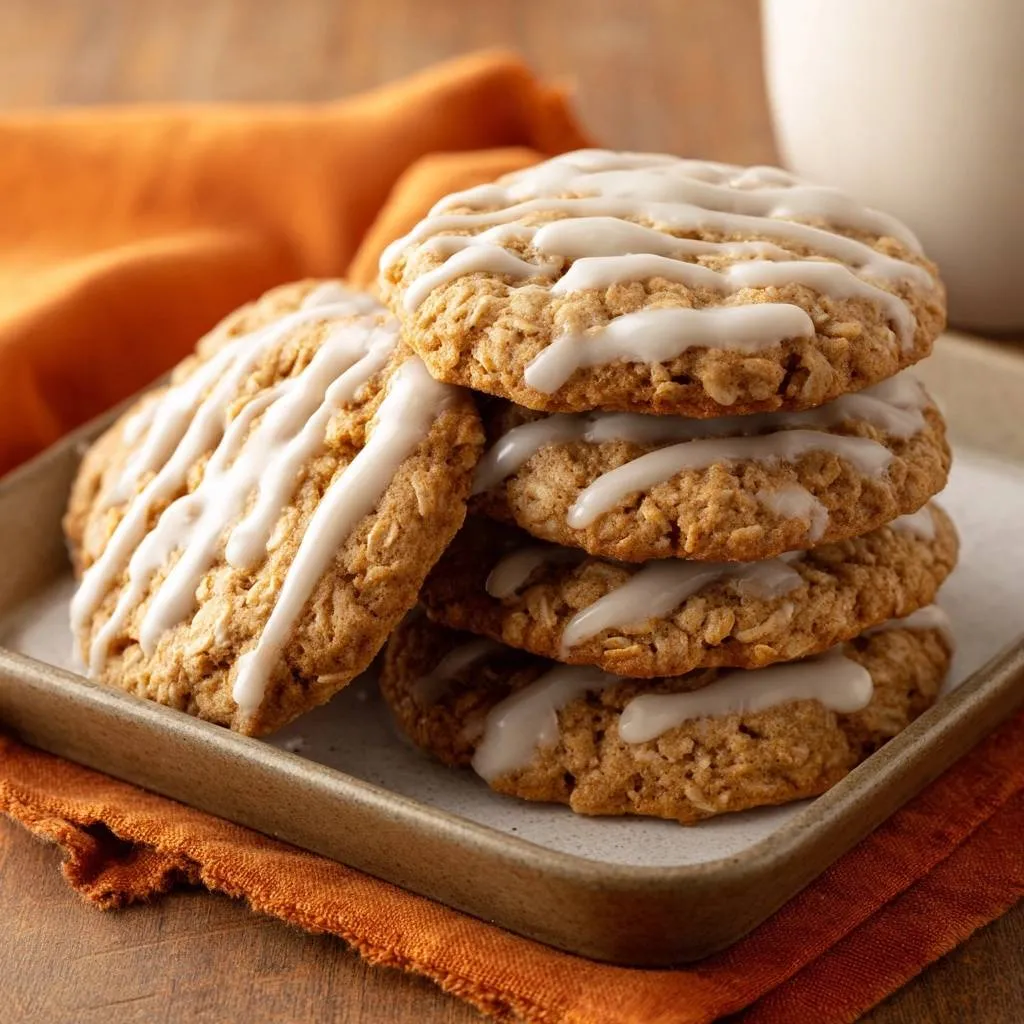
Ever pull oatmeal cookies from the oven only to find they’ve spread into sad, flat pancakes? You don’t have to anymore. These iced oatmeal cookies stay thick and chewy thanks to one simple chill step that changes everything.
That’s why this recipe works so well. Chilling the dough firms up the butter and lets the oats soak up moisture, so your iced oatmeal cookies hold their shape instead of melting across the pan. You’ll get that perfect stack every time.
Here’s the expertise kicker: use softened butter at exactly room temperature, not melted. It creams airy without greasy pools, setting you up for success right from the start.
More Sweet Treats to Try
If you enjoyed these cookies, consider these other baked goods for your next baking project.
- For a rich chocolate option, bake this Moist Chocolate Bundt Cake, which offers a different kind of comforting sweetness.
- If you like the texture of baked goods with a little crisp, try these Cinnamon French Toast Stacks for a delightful breakfast or brunch treat.
Why Chilling Transforms Iced Oatmeal Cookies
Chilling iced oatmeal cookie dough hydrates the oats perfectly. The oats absorb moisture from the dough, swelling just enough for chewiness without sogginess. Meanwhile, the butter solidifies, preventing wild spreading.
Skip the chill, and you’re in trouble. Warm dough hits the oven, butter liquifies fast, and cookies flatten out. But with 30 minutes in the fridge, you yield 30 to 36 thick iced oatmeal cookies that impress.
This quick overview nails it: cream butter and sugars, mix in dries and oats, chill, bake, ice. Simple steps, game-changing results.
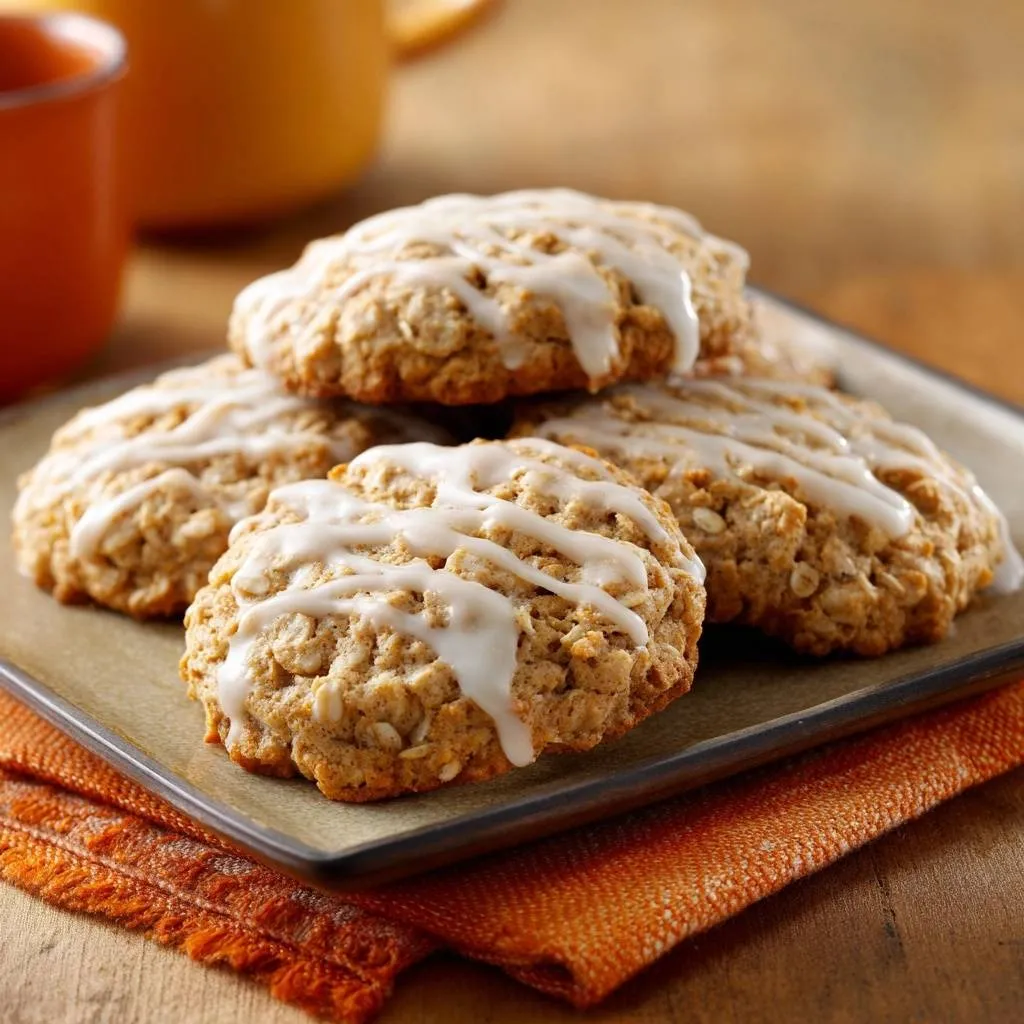
Signs Your Oatmeal Cookie Dough Needs Rest
Look for greasy shine on the dough or butter that’s too soft around the edges. Those mean it’s warm and ready to spread. Test by chilling a small ball; if it holds shape after 10 minutes, you’re good.
Room-temp butter feels cool to the touch but yields to pressure. If it’s melting from your fingers, pop the bowl in the fridge for 15 minutes first. This keeps your iced oatmeal cookies thick.
Key Ingredients for Thick Iced Oatmeal Cookies
Start with 1 cup softened unsalted butter for controlled richness. It creams light and holds structure during bake. Packed 1 cup brown sugar adds chew from molasses, while 1/2 cup granulated sugar crisps edges.
One large egg binds everything smooth, and 2 teaspoons vanilla brings cozy depth. Then 1 1/2 cups all-purpose flour provides stability without toughness. Don’t skip 1 teaspoon baking soda; it lifts gently.
Ground cinnamon (1 teaspoon) warms the flavor, salt (1/2 teaspoon) balances sweet. Three cups old-fashioned rolled oats deliver that signature chew and fiber boost. For icing, 1 1/2 cups powdered sugar, 3 tablespoons milk, and 1/2 teaspoon vanilla create silky drizzle.
Butter and Sugars: Building Chewiness
Brown sugar’s higher moisture keeps iced oatmeal cookies soft inside. White sugar helps snap on the edges. Soften butter to 65-70°F for peak aeration; melted ruins the texture.
Oats and Dry Goods: Structure Secrets
Old-fashioned rolled oats absorb chill moisture best, staying chewy. Quick oats make mush. Flour amount stabilizes, cinnamon adds spice that blooms in the oven.
Icing Essentials for Perfect Drizzle
Powdered sugar ensures no lumps. Milk adjusts thickness; add drops for thinner flow. Vanilla ties flavors together for that classic iced oatmeal cookie finish.
Science of No-Spread Iced Oatmeal Cookies
Chilling triggers fat crystallization in butter, locking dough shape. Oats hydrate slowly, creating structure. At 350°F, baking soda activates for lift without excess spread.
Maillard reaction browns edges golden while centers stay soft. Moisture migrates evenly during chill, so your iced oatmeal cookies bake uniform and chewy. Perfect temp prevents over-browning.
Chilling’s Role in Oat Hydration
Minimum 30 minutes firms butter globules. Ideal 1-2 hours lets oats fully absorb. Longer chills, like overnight, intensify flavor too. Don’t rush this for thick results.
Baking Chemistry for Golden Edges
350°F sets edges fast via Maillard, while centers firm slowly for chew. Too hot spreads more. Pull when pale in middle; carryover heat finishes them perfectly.
Equipment Choices for Iced Oatmeal Cookie Success
A stand mixer creams fast, but hand beaters work fine on medium speed. Parchment-lined sheets prevent sticking and even browning. Cookie scoop ensures uniform size for even bake.
Wire racks cool with airflow, stopping sogginess. Standard half-sheets fit more without crowding heat. No fancy tools needed, just smart picks for pro-level iced oatmeal cookies.
Best Sheets and Scoops Explained
Aluminum half-sheets conduct heat evenly. #50 disher scoop (1 tbsp) yields consistent 3-inch iced oatmeal cookies. Silicone mats soften bottoms slightly if you prefer.
Step-by-Step: Mastering Iced Oatmeal Cookie Dough
Beat 1 cup softened butter, 1 cup brown sugar, and 1/2 cup granulated sugar for 2 minutes. It turns pale and fluffy, trapping air for lift. Add egg and 2 teaspoons vanilla; mix until smooth and emulsified.
You’ll see the batter transform from gritty to creamy. This aeration step builds tenderness. Scrape sides often for even texture in your iced oatmeal cookies.
Creaming Butter for Airy Texture
Use paddle on medium; high speed warms butter too much. Two minutes max aerates without melting. Feel the lightness; that’s your chew guarantee.
Step-by-Step: Mixing and Chilling Iced Oatmeal Cookies
Whisk 1 1/2 cups flour, 1 teaspoon baking soda, 1 teaspoon cinnamon, 1/2 teaspoon salt. Add gradually to wet mix on low. Stir in 3 cups oats by hand to avoid tough gluten.
Dough looks shaggy at first; that’s fine. Cover tightly and chill 30 minutes minimum. This firms everything for no-spread iced oatmeal cookies.
Overnight chill deepens flavor. Plastic wrap or lid prevents drying. Pro tip: portion before chilling for faster baking later.
Folding Oats Without Deflating
Use a sturdy spatula; fold gently in thirds. Small lumps add texture. Stop when oats distribute evenly, no more.
Step-by-Step: Baking Thick Iced Oatmeal Cookies
Preheat to 350°F. Line sheets with parchment. Scoop tablespoon balls, space 2 inches apart, flatten tops lightly for even rise.
Bake 10-12 minutes. Edges turn golden, centers stay soft and pale. Cool on sheet 5 minutes; sugars set. Rack finish prevents bottoms sogginess.
Perfect Scoop Size and Spacing
1 tablespoon scoop makes 3-inch thick cookies. Slight flatten helps icing settle. 2-inch space allows spread without touching.
Applying Icing to Fresh Iced Oatmeal Cookies
Whisk 1 1/2 cups powdered sugar, 3 tablespoons milk, 1/2 teaspoon vanilla to smooth ribbon stage. Drizzle with fork over cooled cookies. Let set 10 minutes; it firms shiny.
Too thick? Add milk drops. Drizzle swirls add charm. Store iced only if eating soon; plain cookies freeze better.
Avoiding Common Mistakes in Iced Oatmeal Cookies
Warm butter causes spread; chill dough extra if needed. Skipping chill leads to flats; always rest. Overbaking dries them out; watch edges closely.
Quick oats mush up; stick to rolled. Test oven with one sheet first. These fixes keep your iced oatmeal cookies perfect.
Fixing Over-Spread or Dry Results
Over-spread? Chill longer next time, remake with colder butter. Dry? Reduce bake by 1 minute, store airtight. Adjust sugars for moisture balance.
Oven Hotspots and Rotation Tips
Middle rack, rotate halfway for even gold. Hotspots brown unevenly. Convection? Drop to 325°F.
Flavor Variations for Iced Oatmeal Cookies
Add 1 cup dried cranberries or raisins for tart chew; they hold shape fine. 3/4 cup chopped pecans adds crunch without flattening.
Chocolate chips melt in nicely. Swap cinnamon for pumpkin spice. For icing, stir in lemon zest. Chill extra 15 minutes with wet add-ins.
For more rich chocolate experiences, explore molten lava chocolate crinkle cookies.
All keep the thick form. Start small to test bake time.
Add-Ins That Maintain Thickness
Max 1.5 cups total. Dry like nuts best; wet fruits need longer chill. Fold last to preserve structure.
Make-Ahead and Freezing Iced Oatmeal Cookies
Chill dough up to 3 days in fridge. Freeze scooped balls 3 months; bake straight from freezer, add 2 minutes. Great for fresh iced oatmeal cookies anytime.
Baked plain cookies freeze 2 months in bags. Thaw, then ice. Portion singles for grab-and-go.
Freezer Packaging Best Practices
Flash freeze on sheet, then layer in parchment in airtight bags. Label with date. Avoid icing before freezing.
Pairing Iced Oatmeal Cookies with Beverages
Cold milk cuts the sweet perfectly, soaking into chewy oats. Coffee’s bitterness contrasts cinnamon warmth. Chai tea amplifies spice notes.
Hot cocoa doubles comfort on cool days. Sparkling apple cider refreshes for fall. Each enhances your iced oatmeal cookies.
For a similar citrusy sweetness, try glazed orange creamsicle cookies.
Frequently Asked Questions About Iced Oatmeal Cookies
Can I Use Quick Oats in Iced Oatmeal Cookies?
Yes, but expect finer, less chewy texture. Quick oats absorb faster, leading to softer, sometimes cakier iced oatmeal cookies. Rolled oats give the classic thick chew; sub 1:1 if needed, but chill longer.
How Long Do Iced Oatmeal Cookies Stay Fresh?
Airtight at room temp, they last 5 days with soft centers. Fridge extends to 1 week; warm before eating to restore chew. Freeze plain up to 2 months, iced less well due to milk.
Gluten-Free Iced Oatmeal Cookies Possible?
Absolutely, swap 1:1 gluten-free flour blend for all-purpose. Use certified GF oats to avoid cross-contamination. Chill extra 15 minutes; they spread more. Texture stays close to original thick iced oatmeal cookies.
Scaling This Iced Oatmeal Cookie Recipe?
Double works great for 60-72 cookies; mix in bigger bowl. Chill longer, up to 1 hour, for even hydration. Halve for small batches. Bake same temp, watch first sheet for timing tweaks.
Vegan Tweaks for Iced Oatmeal Cookies?
Use plant-based butter or coconut oil (softened). Replace egg with flax egg (1 tbsp flax + 3 tbsp water). Oat milk in icing. Chill dough 45 minutes minimum. Results in thick, chewy vegan iced oatmeal cookies.

Oatmeal Cookies
Course: DessertCuisine: AmericanDifficulty: easy36
cookies20
minutes12
minutes180
kcal60
MinutesTired of oatmeal cookies flattening out? This recipe delivers thick, chewy perfection with one key chill step that hydrates the oats and holds the shape.
Ingredients
Cookies:
1 cup unsalted butter, softened
1 cup packed brown sugar
1/2 cup granulated sugar
1 large egg
2 teaspoons vanilla extract
1 1/2 cups all-purpose flour
1 teaspoon baking soda
1 teaspoon ground cinnamon
1/2 teaspoon salt
3 cups old-fashioned rolled oats
Icing:
1 1/2 cups powdered sugar
3 tablespoons milk
1/2 teaspoon vanilla extract
Directions
- In a large bowl, beat softened butter, brown sugar, and granulated sugar until creamy, about 2 minutes. Add egg and vanilla; beat until smooth.
- In a separate bowl, whisk flour, baking soda, cinnamon, and salt. Gradually mix dry ingredients into wet until just combined. Stir in oats by hand.
- Cover dough and chill in the refrigerator for at least 30 minutes. This is the game-changing step: chilling firms the butter, lets oats absorb moisture, and prevents spreading for thick, chewy cookies that stay stacked high.
- Preheat oven to 350 degrees F. Line baking sheets with parchment paper. Scoop tablespoon-sized dough balls, place 2 inches apart, and gently flatten tops slightly.
- Bake 10 to 12 minutes until edges are golden but centers are still soft. Cool on sheet 5 minutes, then transfer to wire rack to cool completely.
- For icing, whisk powdered sugar, milk, and vanilla until smooth and drizzleable. Drizzle over cooled cookies. Let set 10 minutes. Enjoy with milk!
Notes
- Chilling the dough for at least 30 minutes is crucial to prevent spreading and ensure thick, chewy cookies.