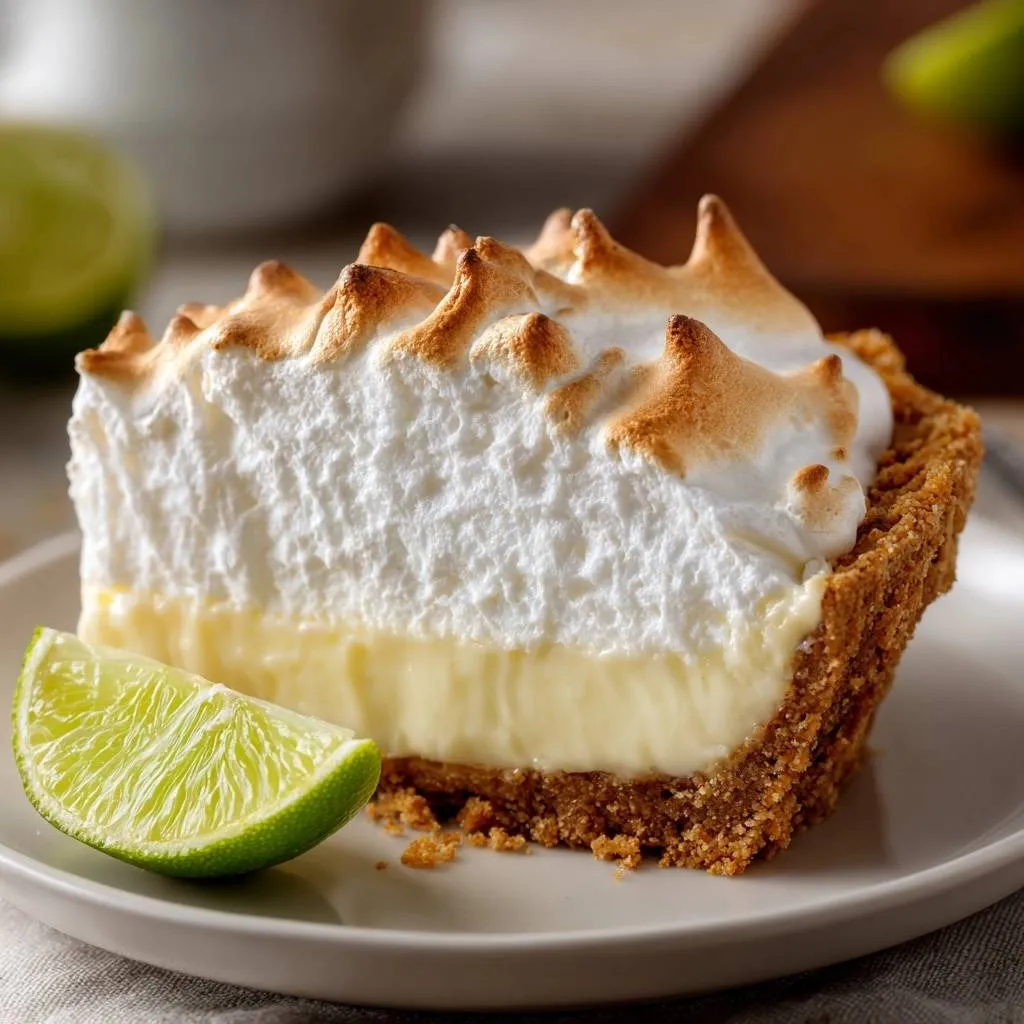
Nothing ruins a Key Lime Meringue Pie faster than weepy meringue that pools liquid and turns the whole thing soggy. You’ve probably dealt with those sad, sweaty peaks that deflate overnight. But this recipe fixes it for good with one foolproof trick: spreading meringue onto piping-hot filling and sealing it fully to the crust edges.
Therefore, you get sky-high, golden peaks that hold their shape without a drop of moisture escaping. In addition, the tart lime zing cuts through the creamy sweetness perfectly. It’s the Key Lime Meringue Pie everyone raves about.
The secret lies in that hot filling steam. It bonds right into the meringue base as you bake, locking everything in place. No more frustration, just flawless results every time.
Crust Foundation for Key Lime Meringue Pie
Graham cracker crumbs form the sturdy base for your Key Lime Meringue Pie. They deliver that classic crunch without sogginess because their fine texture binds well with butter and sugar. You mix 1 1/2 cups crumbs, 1/3 cup melted unsalted butter, and 1/4 cup granulated sugar.
Press the mixture firmly into a 9-inch pie plate for even thickness. Bake at 350 degrees F for 8-10 minutes until golden. Homemade crumbs beat store-bought every time since they’re fresher and control the coarseness.
Selecting Graham Cracker Crumbs
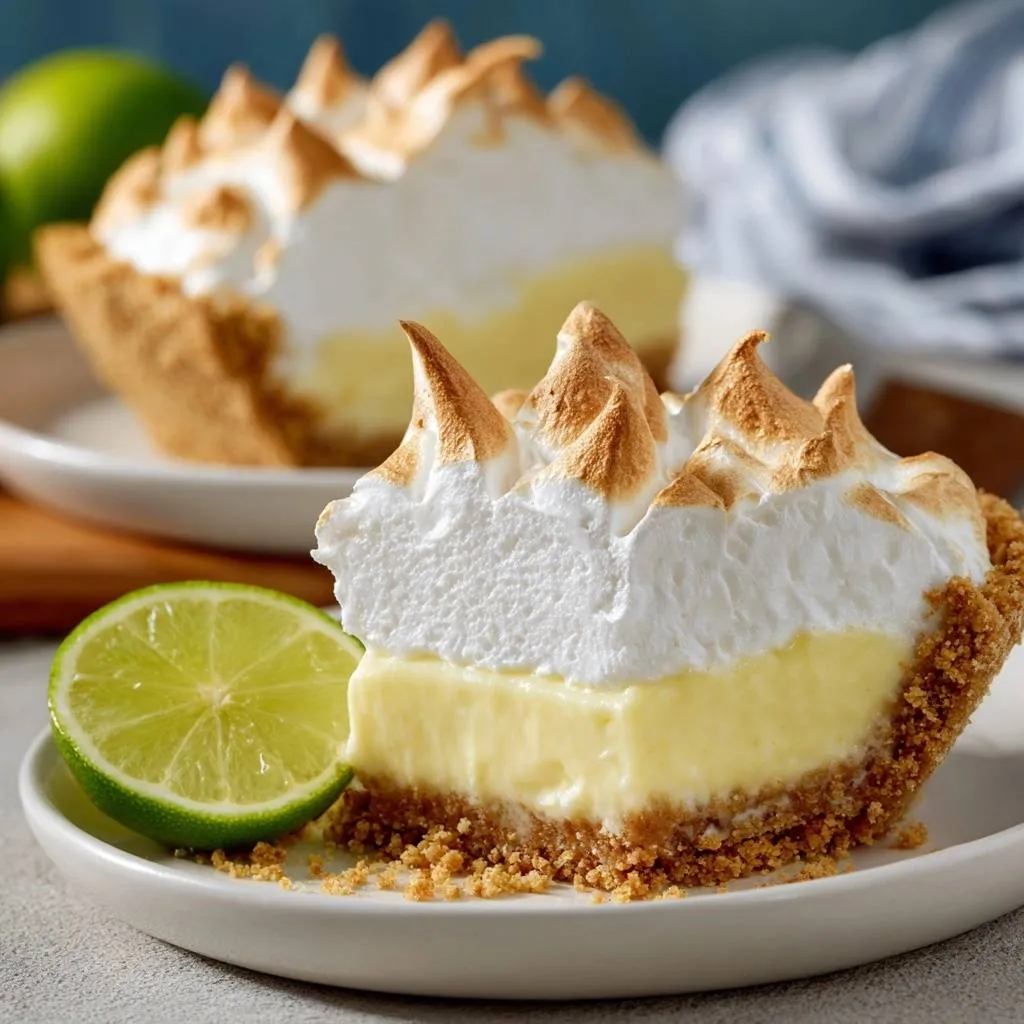
Fine crumbs create a crisp, compact crust that holds up to the moist filling. Coarse ones add texture but risk crumbling. Pulse whole graham crackers in a food processor for fresh crumbs; they smell toasty and bind better.
Store extra in an airtight container for up to a week. Prep ahead, and you’re set for spontaneous pie nights.
Melting Butter Perfectly
Unsalted butter keeps the crust balanced, not overly salty. Melt it gently on the stovetop over low heat to avoid separation. Microwaving works too, but stir every 20 seconds for even liquidity.
Warm butter binds the crumbs smoothly, creating a cohesive crust that won’t leak.
Key Lime Filling Secrets Revealed
The filling stars four large egg yolks, a 14-ounce can of sweetened condensed milk, 1/2 cup fresh key lime juice, and 1 tablespoon lime zest. Egg yolks emulsify for creaminess, while condensed milk provides sweetness and structure as it bakes.
Fresh juice trumps bottled; it delivers brighter tartness without artificial aftertaste. Zest amps up the floral aroma that makes Key Lime Meringue Pie unforgettable. Whisk everything smooth, and it sets into a silky pudding-like texture.
Pour into the warm crust, then bake 12-15 minutes until edges firm up but the center jiggles slightly. That slight wobble ensures perfect set without cracks.
Beating Egg Yolks Properly
Beat yolks until pale and thick, reaching the ribbon stage where they fall in streams. Room temperature yolks emulsify better than cold ones, preventing lumps. It takes about 3-4 minutes with a whisk or mixer.
Key Lime Juice Sourcing Tips
True key limes offer more acidity and floral notes than Persian limes, but regular works fine. Squeeze fresh to maximize yield; roll them first to loosen juices. Zest only the green skin to skip bitter pith.
Strain juice for clarity, avoiding pulp that muddies the filling.
Weep-Proof Meringue Technique Mastery
Start with four large egg whites at room temperature, 1/4 teaspoon cream of tartar, and 1 cup superfine sugar. Beat whites and tartar to soft peaks, then gradually add sugar for stiff, glossy peaks. Superfine sugar dissolves instantly, creating stable foam without graininess.
Here’s the no-weep magic: spoon meringue immediately over piping-hot filling. Spread it to seal completely to the crust edges all around. Use a spatula to create peaks; they’ll brown beautifully.
Bake 10-12 minutes until golden. The hot filling steams into the meringue, bonding layers perfectly.
For more on achieving that perfect top, learn the key lime pie secrets to a weep-free meringue.
Room Temperature Egg Whites
Warm whites whip to triple the volume of cold ones because heat relaxes proteins for better air incorporation. Let them sit out for 30 minutes. Separate carefully over a bowl to catch any yolk bits, which deflate foam.
Cream of Tartar Stabilization Role
Cream of tartar lowers pH, stabilizing proteins for firm peaks. It prevents overbeating collapse. Lemon juice substitutes, but it adds flavor that competes with lime.
Science of Stable Key Lime Meringue Pie
Meringue works through protein denaturation: egg whites unfold and trap air into foam. Sugar strengthens those bonds, while cream of tartar stabilizes. Overbeating dries it out, causing syneresis or weeping.
The hot filling at 350 degrees F releases steam that cooks the meringue base instantly. Sealing edges traps humidity inside, preventing moisture migration. It’s simple physics for perfect texture.
Visualize the steam rising as you spread; it integrates right into the peaks for that glossy hold.
Hot Filling Steam Mechanism
Piping-hot filling vapor bonds the meringue bottom layer during baking. This happens in the first few minutes at 350 degrees F, halting syneresis. Cool fully after to set everything.
Edge Sealing Physics
Spread meringue to touch crust all around, creating an airtight barrier. No gaps mean no humidity escape or weep. Swipe with an offset spatula for full contact.
Equipment Essentials for Key Lime Meringue Pie
A 9-inch glass pie plate conducts heat evenly for consistent browning. Metal plates crisp the crust faster but watch for overbrowning. You’ll need a stand mixer for meringue volume, plus an offset spatula for sealing.
Pro tip: use an oven thermometer. Ovens run hot or cold, and precision matters for no-weep success. Clean, grease-free bowls ensure peaks form right.
Best Pie Plate Choices
Glass shows browning progress clearly and retains heat well. Metal excels for quick crust crisping. Opt for standard depth; deep dishes squish meringue height.
Mixer Speed Control Matters
Stand mixers’ planetary motion aerates better than hand whisks, yielding glossy peaks faster. Use a deep bowl to prevent splatter. Medium-high speed whips without overbeating.
Baking Phases for Perfect Results
Preheat to 350 degrees F. Prebake crust 8-10 minutes, cool slightly. Pour filling, bake 12-15 minutes until jiggly-center set. Keep oven on.
Apply meringue right away to hot filling, seal edges, bake 10-12 minutes golden. Cool to room temp, then chill 4 hours. Total time: about 1 hour active, plus chilling.
Crust Prebaking Precision
Bake at 350 degrees F for 8-10 minutes to set without burning. Edges turn golden first. Cool just enough so crust holds filling shape.
Filling Set Indicators
Edges firm, center jiggles like Jell-O after 12-15 minutes. Smooth whisk test pre-pour confirms no lumps. Don’t overbake or it cracks.
Meringue Application Timing
Hot filling only, or weeping happens. Swirl peaks for even browning. Torch for extra char if you like.
Avoiding Key Lime Meringue Pitfalls
Cold whites flop flat, overbeating curdles meringue, incomplete seals weep, underbaking leaves raw eggs. Humidity softens everything faster in summer, so work quickly.
Prevention: room-temp whites, stop at stiff peaks, full edge seal, bake fully. Your pie stays crisp and tall.
Preventing Meringue Weeping
Hot fill plus edge seal traps steam. Use superfine sugar; coarse grains weep more. Best eaten day-of, but holds 3 days chilled.
Crust Sogginess Fixes
Cool crust fully before filling. Add extra bake time in humid weather. Brush with extra melted butter for insurance.
Key Lime Meringue Pie History Origins
Key Lime Meringue Pie evolved from 19th-century Florida Keys recipes. Fishermen’s wives used canned sweetened condensed milk, a shelf-stable ship staple before refrigeration. It replaced fresh milk perfectly.
Meringue topped the classic, inspired by lemon meringue pies. Modern tweaks like no-weep seals make it foolproof today. It’s pure Sunshine State comfort.
Florida Keys Invention Story
Sponge fishermen’s wives improvised with key limes, graham crackers, and Borden’s 1856 condensed milk patent. No ovens needed originally; it set at room temp. Meringue came later for elegance.
Flavor Twists on Key Lime Meringue Pie
Swap key lime for lemon or blood orange for brighter tang. Coconut flakes in the crust add tropical vibe. Try graham-pistachio crumbs for nutty depth.
For vegan, aquafaba whips like egg whites. Adjust acidity to match; taste as you go.
Citrus Juice Alternatives
Yuzu brings exotic citrus punch; calamansi adds floral sourness. Reduce by 1 tablespoon if less acidic than key limes. Zest accordingly for aroma balance.
Pairing Sides with Key Lime Meringue Pie
Fresh berries cut the richness with juicy pop. Shortbread cookies echo the crust crunch. Iced tea refreshes against tartness.
Seasonal fruit salad complements without overwhelming. Skip whipped cream; the meringue shines solo.
Storage Guide for Key Lime Meringue Pie
Cool to room temp, then chill at least 4 hours. Store covered in fridge up to 3 days; meringue softens after. Don’t freeze whole pie; meringue weeps upon thaw.
Freeze slices tightly wrapped up to 1 month. Thaw in fridge overnight, serve cold.
Troubleshooting Key Lime Meringue Issues
Why Did My Meringue Weep?
Weeping happens from incomplete edge seal or cool filling. Always spread onto hot filling and touch crust fully. Superfine sugar helps too; it dissolves without excess moisture.
Why Is My Filling Runny?
Underbaked filling or cold yolks prevent proper set. Bake until center jiggles lightly, use room-temp yolks for emulsification. Fresh juice acidity is key; bottled often lacks punch.
Why Did My Crust Crumble?
Insufficient pressing or too much coarse crumb. Pack firmly 1/4-inch thick up sides. Let baked crust cool slightly but not fully cold before filling.
Why Did Peaks Deflate?
Overbeating past stiff glossy stage or yolk contamination. Stop when peaks hold but meringue ribbons off beater. Clean bowl and utensils religiously.
Why Is Browning Uneven?
Oven hot spots or low meringue peaks. Rotate halfway, swirl taller peaks for even exposure. Glass plate helps visualize; metal browns faster.
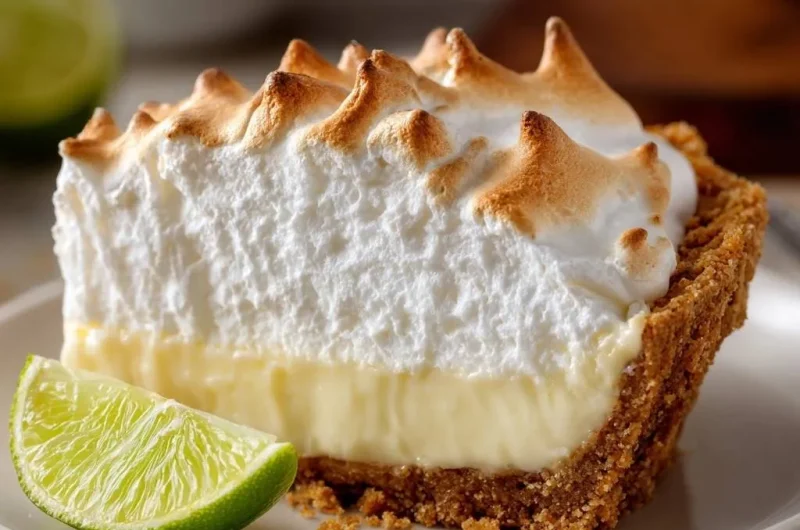
Key Lime Pie
Course: DessertCuisine: AmericanDifficulty: medium8
servings30
minutes35
minutes450
kcal300
MinutesTired of meringue that sweats and pools liquid ruining your pie? This foolproof recipe delivers sky-high peaks that stay perfect with one simple trick: spreading meringue onto piping-hot filling and sealing it fully to the crust edges. It locks in moisture for flawless texture every time.
Ingredients
Crust:
1 1/2 cups graham cracker crumbs
1/3 cup unsalted butter, melted
1/4 cup granulated sugar
Filling:
4 large egg yolks
1 (14-ounce) can sweetened condensed milk
1/2 cup fresh key lime juice (or regular lime juice)
1 tablespoon lime zest
Meringue:
4 large egg whites, room temperature
1/4 teaspoon cream of tartar
1 cup superfine sugar
Directions
- Preheat oven to 350 degrees F. Mix graham cracker crumbs, melted butter, and sugar. Press firmly into a 9-inch pie plate. Bake 8-10 minutes until golden. Cool slightly.
- For filling, beat egg yolks until pale. Whisk in sweetened condensed milk, lime juice, and zest until smooth. Pour into warm crust. Bake 12-15 minutes until set but slightly jiggly in center. Keep oven on.
- For meringue (the weep-proof secret): Beat egg whites and cream of tartar to soft peaks. Gradually add superfine sugar, beating to stiff, glossy peaks (do not overbeat to dry stage). Immediately spoon meringue over hot filling. Spread to seal meringue completely to crust edges all around, creating peaks with a spatula.
- Bake 10-12 minutes until meringue is golden brown. Cool to room temperature, then chill 4 hours. Slice and serve with lime wedges. The hot filling steams into the meringue base while the edge seal traps moisture, preventing weeping for good.
Notes
- Use fresh key lime juice for best flavor, or substitute regular lime juice. Ensure meringue seals completely to crust edges to prevent weeping. Chill for at least 4 hours before serving.