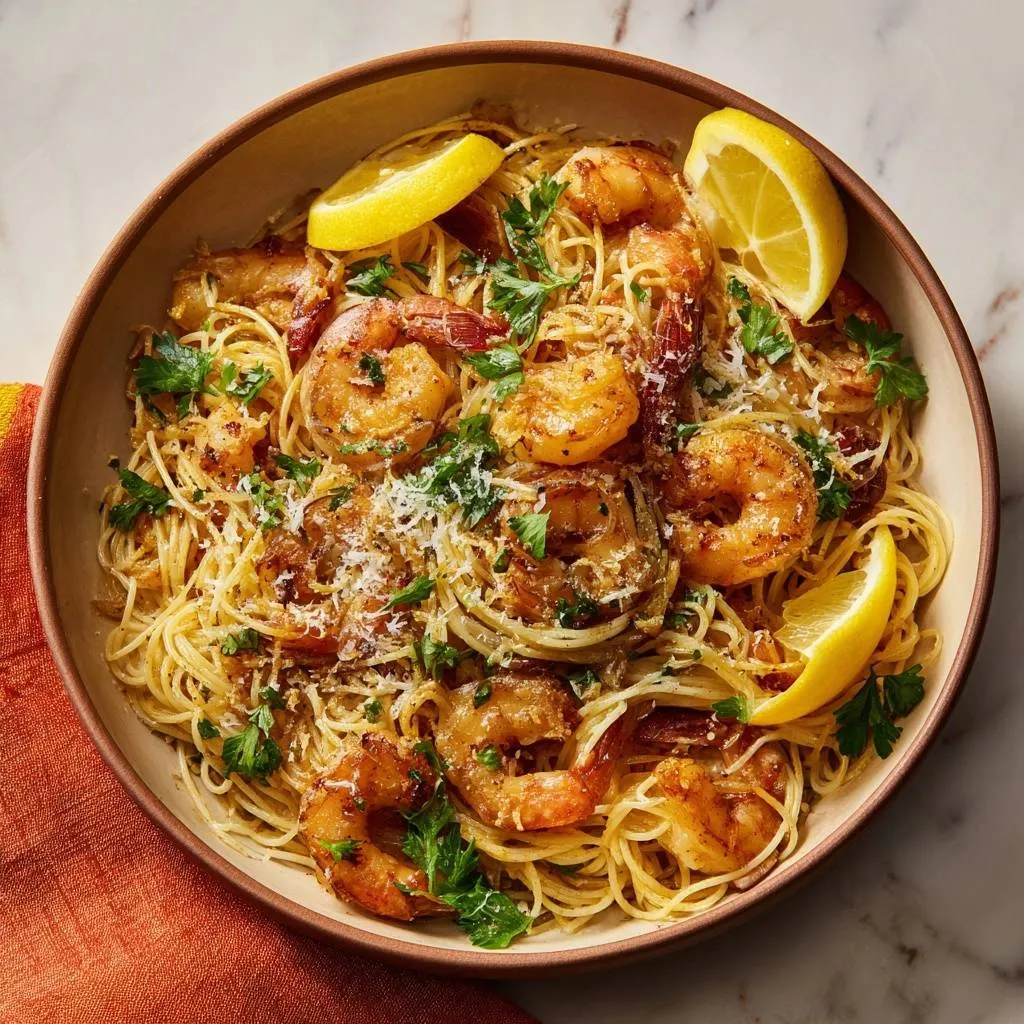
Tired of rubbery shrimp ruining your lemon garlic shrimp pasta? That chewy disappointment ends here. You get perfectly tender, juicy shrimp seared to golden perfection in under 20 minutes, faster than takeout delivery.
So why does this lemon garlic shrimp pasta succeed where others fail? It skips the boil that turns shrimp tough. Instead, a high-heat sear locks in moisture for that melt-in-your-mouth bite.
Here’s the expertise-proven tip: pat the shrimp bone-dry first. That simple step evaporates surface water, triggering the Maillard reaction for crispy edges without overcooking the insides. You’ll taste the difference immediately.
For another take on this flavor combination, see this creamy garlic shrimp pasta.
Why Lemon Garlic Shrimp Pasta Succeeds
This dish draws from shrimp scampi roots in Italian-American kitchens. It evolved into a quick weeknight hero for busy home cooks. However, boiling shrimp like pasta often leads to toughness, unlike this sear method.
Therefore, high-heat searing prevents common failures. You control doneness precisely, avoiding the rubbery texture from low-heat steaming. Variations like garlic lemon shrimp spaghetti keep it fresh and versatile.
Shrimp Scampi Roots Meet Modern Twists
Shrimp scampi hit 1950s US-Italian menus as a garlicky treat. Now it’s a staple with lemon’s bright kick balancing buttery richness. In addition, fresh parsley adds herbal pops that elevate every bite.
High-Heat Sear Locks in Juiciness
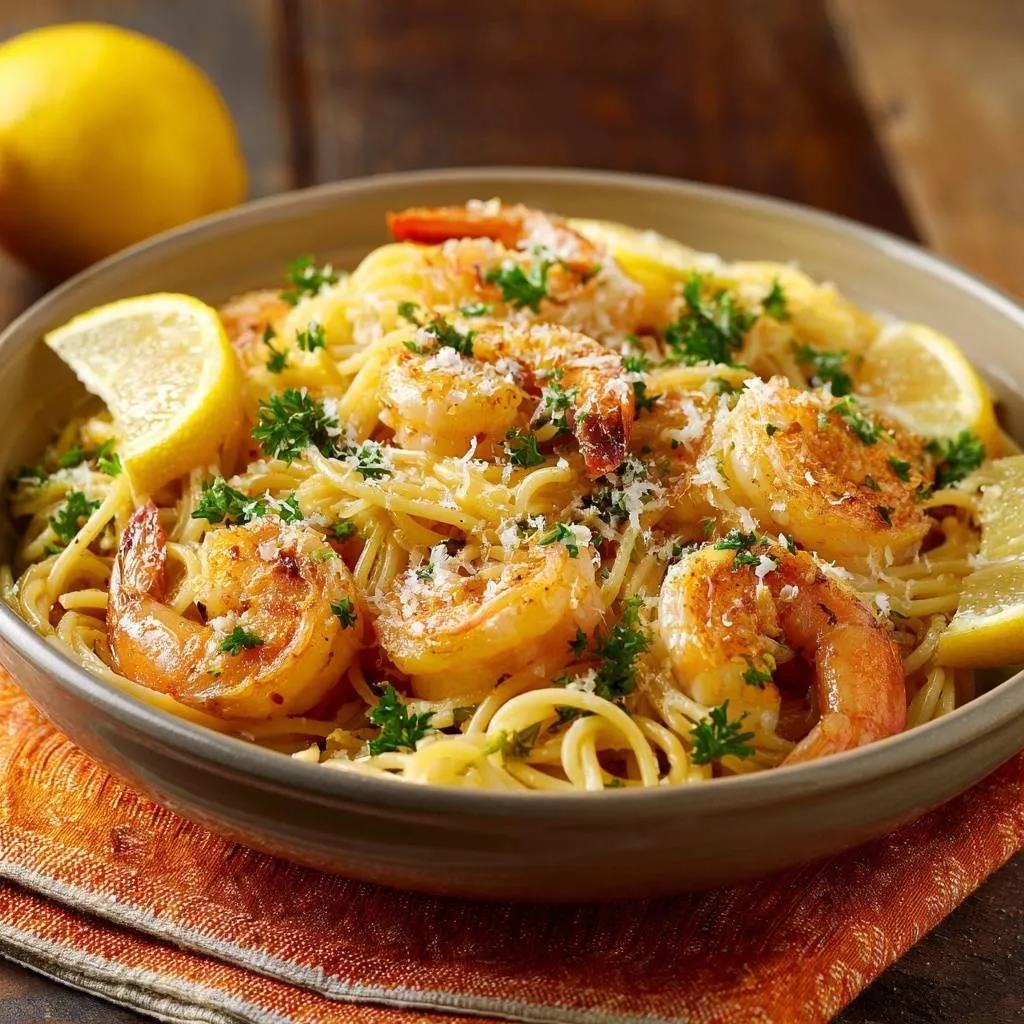
Pat-dry shrimp before seasoning. This sparks the Maillard reaction, creating golden edges. Consequently, proteins set at just 140°F, keeping centers juicy in your lemon garlic shrimp pasta.
Key Ingredients for Lemon Garlic Shrimp Pasta
Start with 8 ounces spaghetti for its sauce-clinging grooves. One pound large shrimp deliver plump texture; 16/20 count holds up best. Four minced garlic cloves build aromatic depth, while 3 tablespoons olive oil and 2 tablespoons unsalted butter form the glossy base.
Juice and zest from 2 lemons cut through richness with citrus punch. However, use fresh lemons, not bottled, for zest’s essential oils. Grated Parmesan (1/4 cup) melts smoothly, unlike pre-shredded which clumps.
For a similar bright citrus taste, try this lemon garlic shrimp orzo.
In addition, 1/4 cup chopped fresh parsley brings vibrancy; dried lacks punch. Crushed red pepper flakes (1/4 teaspoon) add subtle heat. Reserve 1 cup pasta water, its starch emulsifies everything into silkiness. For subs, try linguine in shrimp lemon pasta.
Shrimp Selection for Optimal Texture
Choose peeled, deveined large shrimp; wild-caught tastes sweeter. Pat them dry thoroughly. Surface moisture blocks browning, so this step ensures crisp sear over steaming.
Lemon Zest and Juice Balance
Zest packs oils without bitter pith; juice brightens the sauce. Use a microplane for fine shreds. It outperforms graters that drag too much white membrane.
Garlic, Butter, Oil Foundations
Mince garlic fresh and add last-minute to dodge bitterness. Olive oil’s smoke point suits searing; butter glosses the sauce. Therefore, unsalted butter lets you control salt perfectly.
Equipment Choices for Perfect Results
Grab a 12-inch skillet for single-layer shrimp searing; it prevents steaming. A wide 6-quart pot builds starchy pasta water. Tongs flip shrimp without piercing, preserving juices.
Cast iron shines here for heat retention over nonstick, which lacks crust. No fancy tools needed. These basics guarantee pro results in your lemon garlic shrimp pasta.
Skillet Size Impacts Shrimp Sear
A 12-inch minimum avoids crowding one pound shrimp. Crowding steams instead of sears. Cast iron holds heat steadily for even browning.
Pasta Pot for Starch Water Magic
Use at least 6 quarts with 1 tablespoon salt per gallon water. It concentrates starch. Reserve exactly 1 cup before draining.
Mastering the Shrimp Sear Technique
Boil salted water and cook spaghetti al dente, 8-9 minutes. Reserve 1 cup water, drain. Meanwhile, pat shrimp dry, season with salt, pepper, and red flakes.
Heat 2 tablespoons oil and 1 tablespoon butter until shimmering. Add shrimp in one layer; sear 1-2 minutes undisturbed till pink edges curl into C-shape. Flip, cook 1 minute more to opaque. Remove immediately; they’ll finish off heat.
This high-heat method evaporates moisture fast, browning via Maillard. Pull at 120°F internal for carryover to 140°F juicy perfection in lemon garlic shrimp pasta sear.
Pat Dry for Crisp Golden Edges
Paper towels soak up excess water; air-dry 5 minutes if time allows. Dry surfaces brown beautifully. Without it, shrimp steam and toughen.
Single-Layer High-Heat Timing
Test oil shimmer with a drop; it dances when ready. Cook 1-2 minutes per side max. C-shape means done; O-shape signals overcook.
Building Glossy Lemon Garlic Sauce
Lower to medium, add remaining oil and butter. Toss in garlic; stir 30 seconds till fragrant, no browning. Stir in lemon juice, zest, and 1/2 cup pasta water; simmer 1 minute.
Add spaghetti, shrimp, Parmesan, parsley. Toss 1-2 minutes, adding water for silkiness. Starch binds fat into glossy emulsion; acidity brightens every strand.
Gently reheating shrimp keeps them tender. Serve right away with wedges and extra cheese for peak lemon garlic shrimp pasta.
Garlic Aroma Without Burning
Stir constantly on medium for 30 seconds. Fragrant perfume means ready. Overheat turns it bitter fast.
Emulsifying Pasta Water Secret
Starchy water plus fat creates unctuous sauce; start with 1/2 cup. Add more incrementally. Lemon’s acid ties flavors together sharply.
Avoiding Common Lemon Garlic Shrimp Pasta Pitfalls
Overcooked shrimp curl tight into O-shapes; fix with exact timing and off-heat rest. Watery sauce lacks pasta water starch; always reserve and add gradually.
Bland results? Season shrimp pre-sear generously. Use a thermometer or test one shrimp first. Zest boosts if needed. These tweaks solve every pain point.
Preventing Rubbery Overcooked Shrimp
Sear briefly, remove early. Test one: it firms but stays juicy. Carryover heat finishes without toughening.
Fixing Dry or Separated Sauce
Splash more pasta water, toss vigorously. Warm cold pasta first in hot water. Constant motion emulsifies perfectly.
Flavor Variations on Lemon Garlic Shrimp Pasta
Swap spaghetti for linguine; it traps more sauce. Add spinach or artichokes for greens that wilt in. Cherry tomatoes burst with sweetness alongside shrimp lemon pasta.
More Delicious Ideas
Round out your meal with these complementary recipes.
- For a perfect accompaniment to your Lemon Garlic Shrimp Pasta, consider making Crispy Garlic Bread, known for its excellent texture.
- You might also enjoy the Ultimate Cheesy Garlic Pull-Apart Bread, offering a different take on garlic flavors that pairs well with seafood.
Boost heat with chili oil. For vegan, use tofu “shrimp” seared same way. Gluten-free pasta works; rinse starch lightly. Each clocks 500 calories, protein-packed.
Vegetable and Protein Boosts
Snap asparagus into sauce; roast broccolini aside. Sear chicken strips using same method for variety.
Pasta Shape and Spice Alternatives
Fettuccine clings best. Sub Calabrian chili for deeper heat over flakes.
Ideal Pairings for Lemon Garlic Shrimp Pasta
Crisp sparkling grape juice cuts richness, or try sparkling lemon water. Arugula salad with vinaigrette echoes lemon notes. Garlic bread sopps up every glossy drop.
Roasted broccolini adds char contrast. Finish with lemon sorbet for clean refresh. Bitter greens balance the acidity beautifully.
Simple Green Salads Complement
Baby arugula tossed in light vinaigrette mirrors citrus zing. Keeps the meal light and bright.
Crisp Breads for Sauce Sop-Up
Fresh focaccia or baguette mops glossy sauce perfectly. Warm it slightly for best texture.
Lemon Garlic Shrimp Pasta FAQ
Can Frozen Shrimp Work Here?
Yes, thaw overnight in fridge, then pat extra dry. Excess ice causes steaming, so double towels ensure crisp sear. Cook same timing for juicy results.
How to Make Dairy-Free Version?
Skip butter and Parmesan; use all olive oil. Swap in nutritional yeast or vegan parm for cheesy tang. Sauce stays glossy with pasta water emulsification.
Best Storage for Leftovers?
Store airtight in fridge up to 2-3 days. Reheat gently on stovetop with pasta water splash; microwave toughens shrimp. Don’t freeze; texture turns rubbery from moisture crystals.
Scaling for Larger Crowds?
Double ingredients, but sear shrimp in batches to avoid crowding. Use bigger skillet or two pans. Pasta water needs scale up too for sauce consistency.
Why Reserve Pasta Water Exactly?
Starchy water emulsifies sauce like magic; thin pasta water won’t bind fats. One cup gives flexibility to adjust silkiness without diluting flavors. Always salty for seasoning boost.
Lemon Garlic Shrimp Pasta
Course: Main CourseCuisine: AmericanDifficulty: easy4
servings15
minutes15
minutes550
kcal30
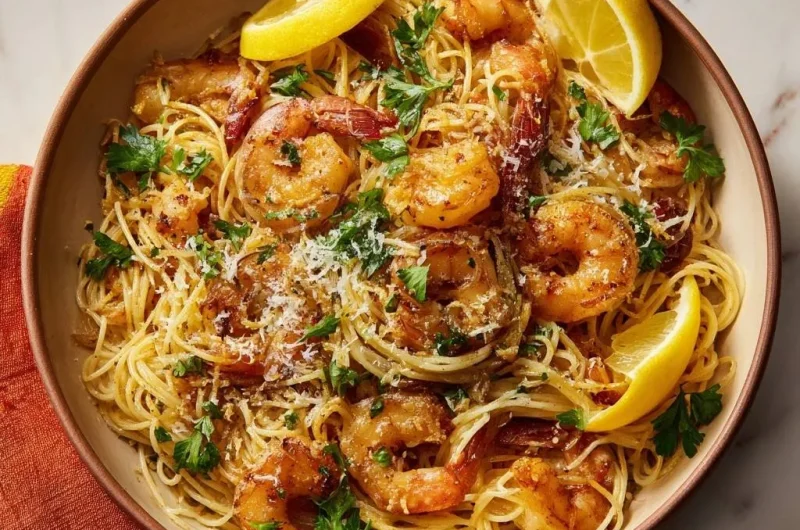
MinutesTired of shrimp turning tough and chewy in your pasta? This recipe nails perfectly tender, juicy shrimp every time with a simple high-heat sear and quick cook method that locks in moisture. Tossed in a glossy garlic-lemon sauce with spaghetti, fresh parsley, and Parmesan, it’s dinner frustration solved.
Ingredients
8 ounces spaghetti
1 pound large shrimp, peeled and deveined
4 cloves garlic, minced
3 tablespoons olive oil
2 tablespoons unsalted butter
Juice and zest of 2 lemons, plus lemon wedges for serving
1/4 teaspoon crushed red pepper flakes
1/4 cup grated Parmesan cheese, plus more for serving
1/4 cup fresh parsley, chopped
Salt and black pepper to taste
1 cup reserved pasta cooking water
Directions
- Bring a large pot of salted water to a boil. Cook spaghetti according to package directions until al dente, about 8-9 minutes. Reserve 1 cup pasta water, then drain and set aside.
- While pasta cooks, pat shrimp completely dry with paper towels. This crucial step removes excess moisture for a perfect sear that prevents rubberiness. Season shrimp generously with salt, black pepper, and crushed red pepper flakes.
- Heat 2 tablespoons olive oil and 1 tablespoon butter in a large skillet over medium-high heat until shimmering hot, about 1 minute. Add shrimp in a single layer. Sear undisturbed for 1-2 minutes until edges turn pink and golden. Flip and cook 1 minute more until just opaque. Do not overcook; shrimp will finish cooking off heat and stay juicy. Remove shrimp to a plate.
- Lower heat to medium. Add remaining 1 tablespoon olive oil and 1 tablespoon butter to skillet. Add minced garlic and cook 30 seconds until fragrant, stirring constantly to avoid browning.
- Stir in lemon juice, zest, and 1/2 cup reserved pasta water. Simmer 1 minute to create glossy sauce. Add spaghetti, shrimp, Parmesan, and parsley. Toss 1-2 minutes, adding more pasta water if needed for silky texture. Shrimp reheat gently without toughening.
- Serve immediately with lemon wedges and extra Parmesan. Enjoy tender shrimp perfection!
Notes
- Pat shrimp completely dry before seasoning for the perfect sear that prevents rubberiness. Do not overcook shrimp; they finish cooking off heat to stay juicy. Use reserved pasta water to achieve silky sauce texture.