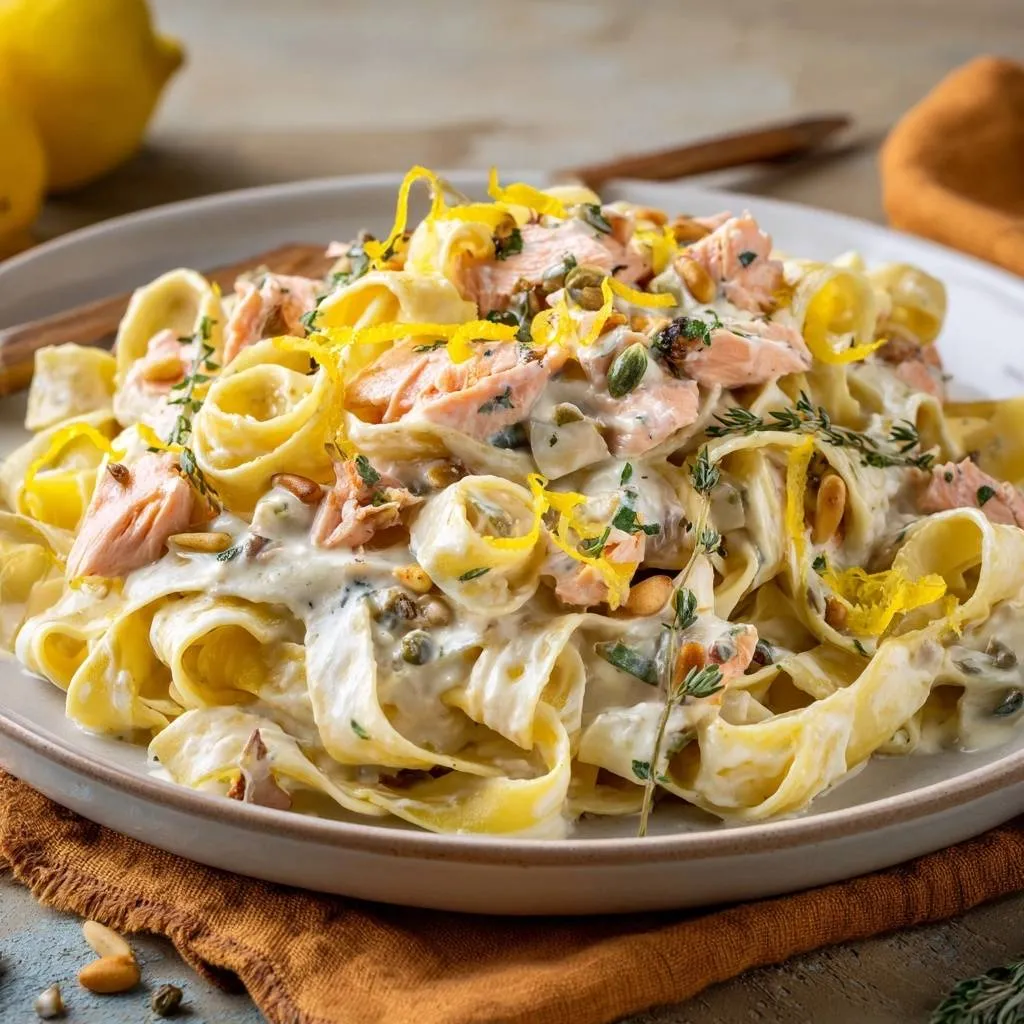
Why Lemon Salmon Tagliatelle Transforms Weeknight Dinners
Ever had your lemon cream sauce turn into grainy lumps right when you’re about to serve? Most home cooks face that curdled disaster because they add acid to hot cream. But this Lemon Salmon Tagliatelle fixes it with an off-heat whisk-in method and pasta water emulsion for a silky sauce that clings to every noodle.
Therefore, you get bright lemon zest, flaky salmon chunks, briny capers, crunchy pine nuts, and earthy thyme all in one dish. It takes just 25 minutes total for 4 servings, and honestly, it beats takeout every time with fresh ingredients you control. The result? Restaurant-quality pasta without the wait or the bill.
For another bright citrus idea, explore this Lemon Orange Dream Cake.
Here’s the expertise pro tip: reserve that pasta water religiously. Its starch binds everything into a glossy coating that won’t separate, no matter how much lemon you add. You’ll taste the difference immediately.
Key Ingredients for Flawless Lemon Salmon Tagliatelle
Start with 12 ounces of tagliatelle pasta. It holds the silky sauce better than thinner noodles because its wide, flat shape traps the cream perfectly. Cook it al dente so it doesn’t turn mushy.
Next, grab 8 ounces of skinless salmon fillet, cut into bite-sized chunks. Skinless cooks evenly and flakes just right without sticking. Fresh salmon gives the best texture, but more on that below.
Heavy cream, 1 cup, is non-negotiable. Its high fat content stabilizes the sauce against lemon’s acidity. Half-and-half splits easily, so don’t skimp here.
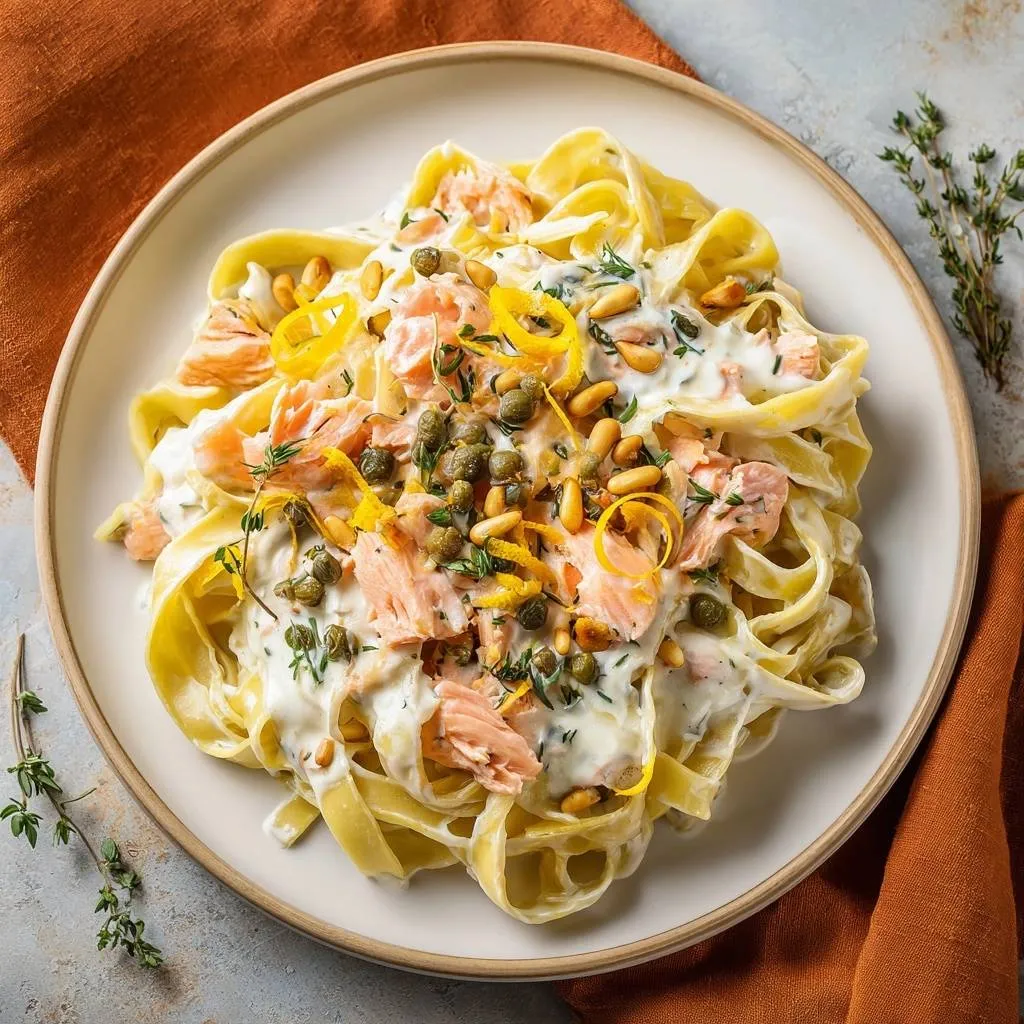
Juice and zest from 1 large lemon bring brightness. Zest infuses oils for flavor without extra acid upfront. Then, 2 tablespoons drained capers add briny pop, 1/4 cup toasted pine nuts give crunch, and 2 tablespoons fresh thyme leaves offer earthy notes. Finally, salt, pepper, and 1 tablespoon olive oil tie it together.
Selecting Premium Salmon for Tagliatelle
Choose bite-sized, skinless salmon chunks for quick searing. They turn opaque and flaky in 3-4 minutes without overcooking. Fresh wild salmon has better flavor and firmer texture than farmed, but farmed works fine if it’s bright pink and smells clean.
Avoid thick fillets; thinner ones sear evenly. If using frozen, thaw overnight in the fridge. Pat dry thoroughly so your sauce doesn’t get watery. This keeps the salmon juicy amid the creamy lemon.
Pasta and Cream Base Choices
Tagliatelle clings sauce better than fettuccine or linguine due to its ridges. Al dente cooking releases just enough starch for emulsion. Heavy cream’s fats emulsify with lemon off-heat, preventing curds. Lighter creams separate under acid.
Mastering the No-Curdle Lemon Cream Technique
Heat plus acid curdles cream by denaturing proteins. This recipe sidesteps it with off-heat whisking. Lemon juice emulsifies into the warm cream-fat base, creating stable droplets.
In addition, pasta water’s starch acts as a binder. It coats proteins, locking in silkiness. Gentle simmers keep pH balanced, so your sauce stays smooth and glossy.
Fresh lemon juice has the right acidity level. Zest adds essential oils for aroma. Whisk vigorously for 30 seconds, and you’ll see it transform into a pourable, noodle-coating dream.
Science of Pasta Water Emulsion
Pasta starch molecules bind cream and lemon into a glossy emulsion. Reserve 1 cup exactly; it thickens without flour. Add gradually while whisking for perfect cling without lumps.
Step-by-Step: Cooking Lemon Salmon Tagliatelle
Total time: 25 minutes. You’ll multitask pasta and salmon for efficiency. Watch for visual cues like flakiness and translucency to nail it every time.
Phase 1: Boiling Perfect Al Dente Tagliatelle
Bring a large pot of heavily salted water to a boil; it seasons the pasta like the sea. Cook 12 ounces tagliatelle 8-10 minutes until al dente, firm to the bite. Reserve 1 cup pasta water, then drain. Don’t rinse; starch helps the sauce.
Phase 2: Searing Juicy Salmon Chunks
Heat 1 tablespoon olive oil in a large skillet over medium. Season 8 ounces salmon chunks with salt and pepper. Sear 3-4 minutes, turning once, until opaque and flaky. Remove to a plate; it rests while you build sauce.
Phase 3: Building Lemon-Thyme Cream Base
In the same skillet, add 1 cup heavy cream, lemon zest, and 2 tablespoons thyme leaves. Simmer gently over medium-low 2-3 minutes, stirring. It thickens slightly and smells fragrant; never boil or it breaks.
Phase 4: Off-Heat Lemon Juice Emulsification
Remove from heat. Whisk in juice from 1 lemon vigorously for 30 seconds until smooth. If thin, add 1/4 cup reserved pasta water and whisk. Look for a glossy, clingy sheen, no separation.
Phase 5: Tossing Tagliatelle with Salmon and Finishers
Return salmon to skillet. Add drained tagliatelle; toss over low heat 1 minute, adding pasta water for silkiness. Stir in capers and pine nuts. Garnish with thyme sprigs and zest; serve hot.
Avoiding Pitfalls in Lemon Salmon Tagliatelle
Overcooked salmon dries out; use a timer and check for flakiness. Dry pasta means skimping on pasta water; add splashes during toss. Boiling cream curdles it instantly, so keep heat low.
However, if sauce separates, whisk in cold cream slowly. Too little zest mutes flavor; grate fresh for oils. Pro tip: toast pine nuts in a dry pan until golden for max crunch.
Fixing Grainy or Separated Sauce
Grainy sauce? Pull off heat and whisk in 2 tablespoons cold heavy cream plus pasta water. For bad separation, use an immersion blender on low. It rescues 90% of curdled attempts into silkiness.
Flavor Twists on Lemon Salmon Tagliatelle
Swap thyme for dill to brighten it further. Use shrimp instead of salmon; it cooks in 2 minutes. For vegan, try full-fat coconut cream; it emulsifies similarly off-heat.
Add chili flakes for heat or wilted spinach at the end. Keep the no-curdle whisk intact. Each twist maintains that silky texture you crave.
Ideal Pairings for Lemon Salmon Tagliatelle
Crisp sparkling grape juice cuts through the cream’s richness. Pair with arugula salad for peppery contrast or roasted asparagus for earthiness. Garlic bread soaks up extra sauce perfectly.
Simple sides balance the lemon’s brightness without overwhelming. Keep it light to let the pasta shine.
Lemon Salmon Tagliatelle FAQ
Can I Use Frozen Salmon?
Yes, thaw fully in the fridge overnight. Pat dry with paper towels to remove excess water. This prevents a watery sauce and ensures even searing for flaky chunks.
How to Store Leftovers?
Store in an airtight container in the fridge for up to 2 days. Reheat gently on the stovetop with a splash of pasta water or milk to revive silkiness. Don’t freeze; cream separates and pasta gets mushy.
Gluten-Free Lemon Salmon Tagliatelle Option?
Swap for gluten-free tagliatelle; it works great but releases more starch. Reserve extra pasta water for emulsifying. Same no-curdle method keeps sauce flawless.
Why Does My Sauce Curdle?
High heat denatures cream proteins when acid hits. Always whisk lemon juice off-heat. If it happens, blend with cold cream and pasta water to fix.
Substitute for Capers or Pine Nuts?
Olives or chopped green onions replace capers’ brininess. Slivered almonds sub for pine nuts’ crunch; toast them too. Both keep the dish balanced and textured.
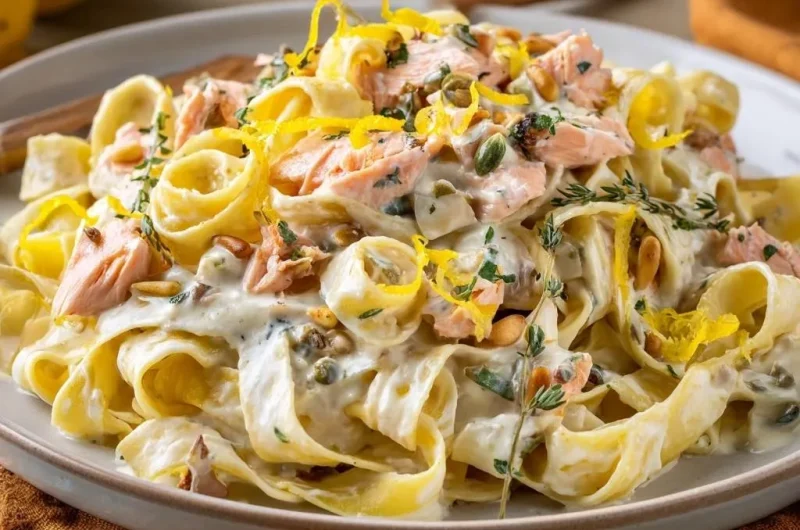
Lemon Salmon Tagliatelle
Course: Main CourseCuisine: ItalianDifficulty: easy4
servings15
minutes15
minutes750
kcal30
MinutesTired of lemon curdling your cream sauce? This foolproof recipe uses an off-heat whisk-in method and pasta water emulsion for a silky texture that coats every noodle perfectly.
Ingredients
12 ounces tagliatelle pasta
8 ounces salmon fillet, skinless, cut into bite-sized chunks
1 cup heavy cream
Juice and zest of 1 large lemon
2 tablespoons capers, drained
1/4 cup pine nuts, toasted
2 tablespoons fresh thyme leaves, plus extra sprigs for garnish
Salt and black pepper to taste
1 tablespoon olive oil
Directions
- Bring a large pot of salted water to a boil. Cook tagliatelle according to package until al dente, about 8-10 minutes. Reserve 1 cup pasta water, then drain.
- While pasta cooks, heat olive oil in a large skillet over medium heat. Season salmon chunks with salt and pepper. Add to skillet and cook 3-4 minutes, turning once, until just opaque and flaky. Remove salmon to a plate.
- In the same skillet, pour in heavy cream and add lemon zest and thyme leaves. Bring to a gentle simmer over medium-low heat, stirring occasionally, 2-3 minutes until slightly thickened. Do not boil.
- Remove skillet from heat. This is the key no-curdle step: Whisk in lemon juice vigorously for 30 seconds until fully emulsified and smooth. If sauce looks thin, add 1/4 cup reserved pasta water and whisk again to create perfect clingy consistency without separation.
- Return salmon to skillet. Add drained tagliatelle and toss gently over low heat 1 minute, adding more pasta water if needed for silky coating. Stir in capers and toasted pine nuts.
- Serve immediately garnished with thyme sprigs and extra lemon zest. Enjoy restaurant-quality cream sauce that stays flawless!
Notes
- Key to no-curdle sauce: Whisk lemon juice off-heat and emulsify with pasta water for perfect clingy consistency. Toast pine nuts for extra flavor.