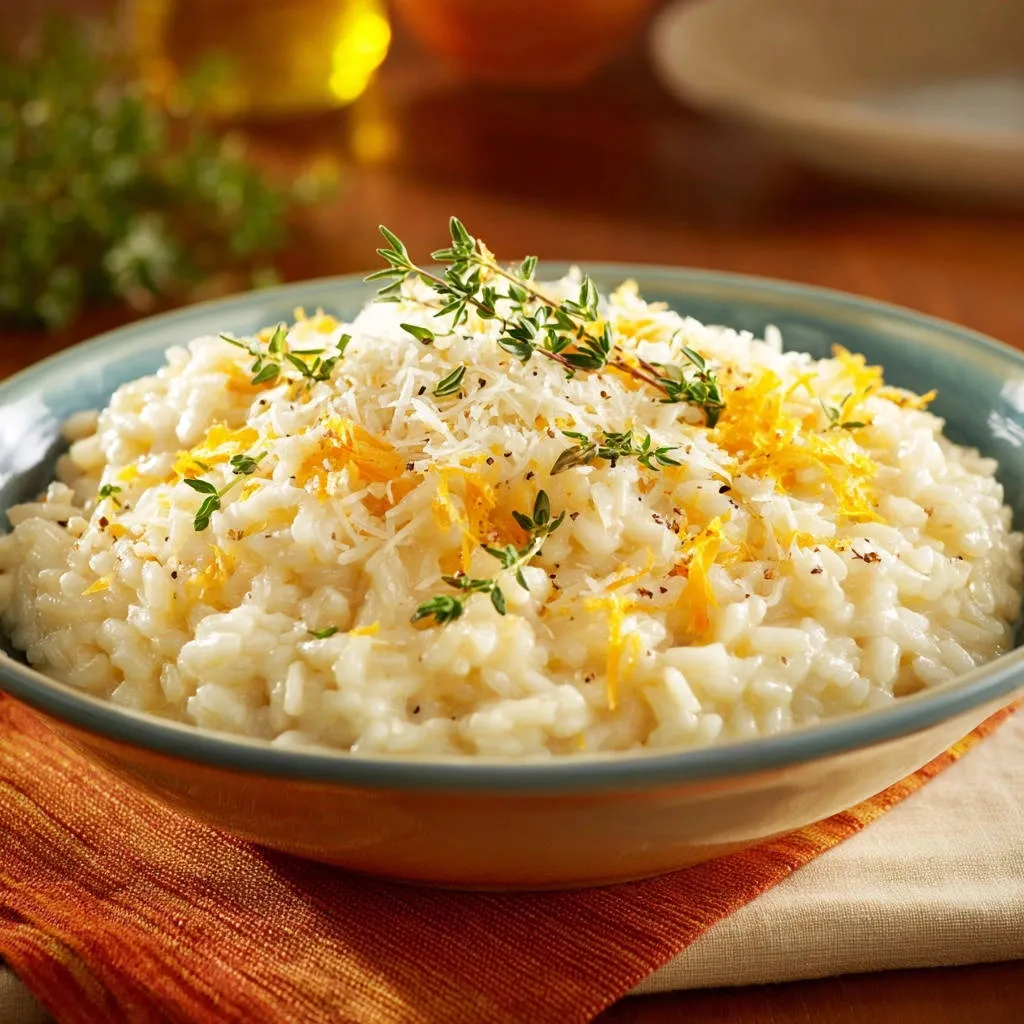
I spent years frustrated with tight, gummy risotto, believing that flowing, restaurant-quality results were impossible to achieve at home.
Once I perfected the simple two-step technique of Tostatura and Mantecatura, I unlocked the secret to the ultimate texture, which is the foundation of this bright, aromatic Lemon Thyme Risotto.
This method guarantees a consistently glossy, flowing consistency known as “all’onda” every single time you cook.
For another perspective on achieving that perfect texture, explore creamy roasted mushroom risotto.
The Secret to Success: Why This Lemon Thyme Risotto Never Fails
Addressing the Risotto Pain Point: Gummy vs. Glossy
Gummy risotto happens when the starch is released too quickly or when the liquid is allowed to evaporate before the starch has properly emulsified.
Traditional methods often neglect the two critical structural steps that control how starch binds the cooking liquid.
Our method focuses intensely on ensuring the final result is glossy, liquid, and flowing.
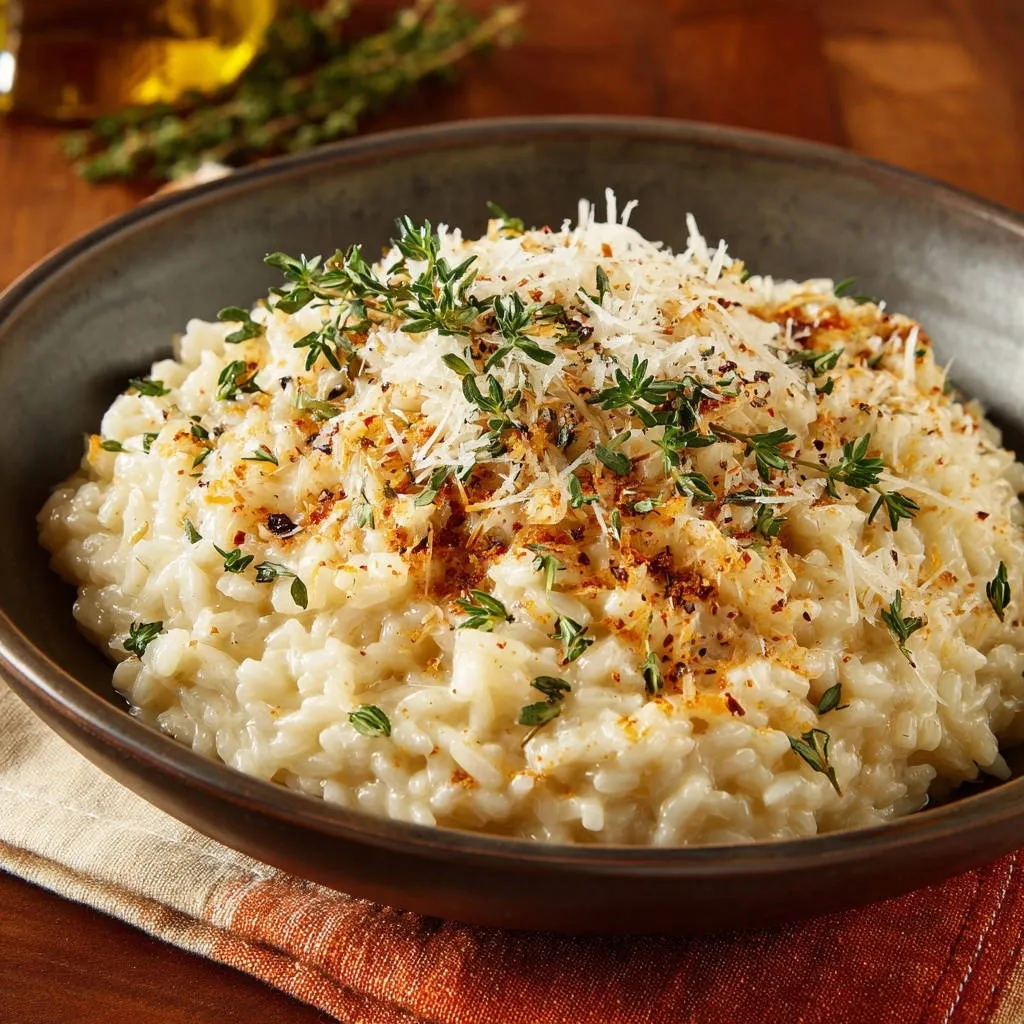
The techniques of Tostatura (sealing the rice) and Mantecatura (emulsifying the finish) are the non-negotiable fix for achieving superior creamy texture.
Understanding Mantecatura: The Off-Heat Emulsion
Mantecatura refers to the final, vigorous stirring process done completely off the heat source.
This step incorporates cold butter and finely grated Parmesan into the still-soupy rice, utilizing temperature shock and friction.
The combination of cold fat, starch, and released liquid creates a stable, high-fat emulsion.
This emulsion yields the desired flowing, liquid texture (the signature all’onda), preventing the starches from setting into a tight, sticky mass as the risotto cools.
For a similar velvety texture, explore this creamy Parmesan risotto technique.
Building the Bright, Herbaceous Base: Key Ingredients
Arborio Rice: The Essential Starch Source
Arborio rice is the classic choice due to its high concentration of amylopectin, the specific type of starch needed for creamy risotto.
This starch readily dissolves during controlled cooking to thicken the liquid into a luxurious sauce.
Carnaroli is a superior alternative that holds its shape slightly better, while Vialone Nano is also an excellent option if you prefer a slightly quicker cooking time.
Maximizing Flavor: Stock, Shallots, and Wine Substitute
Using hot, high-quality stock (vegetable or chicken) is absolutely crucial; cold stock halts the cooking process and inhibits starch release.
Shallots are preferred over standard yellow onions as they offer a milder, sweeter flavor that beautifully complements the delicate lemon and thyme profile.
The deglazing phase adds necessary acidity and depth; use a non-alcoholic white wine, or extra stock combined with a generous splash of fresh lemon juice.
The Fresh Finish: Lemon Zest, Thyme, and Parmesan
Fresh lemon zest is where the most vibrant citrus aroma resides; grate it carefully, using only the brightly colored layer and avoiding the bitter white pith.
Fresh thyme adds an earthy, savory counterpoint that balances the acidity.
Use only high-quality, freshly grated Parmesan (Parmigiano Reggiano) during the mantecatura for the best flavor depth and superior melting properties.
Essential Tools for Your Lemon Thyme Risotto Adventure
The Right Pot: Heavy-Bottomed Dutch Oven or Large Saucepan
A heavy bottom ensures even heat distribution, preventing the rice from scorching and allowing for consistent tostatura, or toasting of the grains.
A Sturdy Wooden Spoon or Spatula
Constant stirring is required, and a wooden utensil remains cool in the hand.
A flat-edged spatula can help ensure rice doesn’t stick to the corners or bottom of the pot, ensuring even cooking.
Keeping the Stock Warm: A Second Saucepan
It is non-negotiable to keep the stock simmering hot throughout the entire process.
Adding cold stock shocks the rice grains, stops the cooking process, and significantly ruins the potential for true creaminess.
Mastering the Method: A Step-by-Step Guide to All’onda Texture
Phase 1: Preparing and Maintaining Hot Stock
Pour the stock into a separate saucepan and bring it to a gentle simmer over medium heat. Ensure it stays consistently hot throughout the entire cooking duration, adjusting the burner as needed.
Phase 2: Building the Base and The Tostatura
In your main pot, melt the butter and olive oil. Sauté the minced shallots until they are completely translucent (about 3-4 minutes), making sure they never brown.
Add the Arborio rice and stir constantly for at least two minutes until the edges of the grains become translucent.
This process, called Tostatura, is critical for sealing the outside of the rice, which controls the starch release during the subsequent cooking phases.
Phase 3: Deglazing and Liquid Absorption
Pour in the non-alcoholic white wine or the recommended stock/lemon substitute.
Cook, stirring continuously, until the liquid is fully absorbed before adding any stock.
This step is essential as it adds vital acidity and complexity to the final flavor profile.
Phase 4: The Slow Simmer and Starch Release
Add the hot stock one ladleful (about 1 cup) at a time, stirring gently until fully absorbed before adding the next portion.
This constant, controlled stirring motion ensures a steady, even release of the necessary starch, gradually building the creamy sauce without creating stickiness.
Continue cooking and stirring for 18 to 22 minutes, or until the rice is al dente-cooked through but still possessing a slight, pleasant bite in the center.
Phase 5: Mantecatura-The Off-Heat Final Emulsion
When the rice is al dente and still visibly soupy, remove the pot completely from the heat source to immediately stop cooking.
Vigorously stir in the remaining cold butter, all the grated Parmesan, and the lemon zest for one full minute.
This aggressive off-heat stirring is the Mantecatura process; it successfully emulsifies the fats and starches, achieving the desirable glossy, flowing ‘all’onda’ consistency.
Phase 6: Final Seasoning and Garnish
Taste the finished Lemon Thyme Risotto and adjust seasoning generously with salt and pepper, which is necessary after adding the fats and cheese.
Serve immediately in warm bowls, topped with fresh thyme sprigs and extra Parmesan for maximum impact.
Chef’s Corner: Troubleshooting and Elevating Your Risotto Game
My Risotto is Too Dry or Tight
If your risotto is too tight, it likely cooled too much before the mantecatura phase, or you didn’t leave enough liquid before finishing.
To fix, stir in a splash of extra hot stock, reheat gently for 30 seconds, then immediately re-perform the vigorous off-heat stirring with a small knob of fresh, cold butter.
The Importance of the “All’onda” Test
The ultimate goal for perfect risotto is a texture “like a wave” (all’onda).
When you gently tilt the pot or plate the risotto, it should gently flow to the side, not sit as a solid mound.
If it sits solid, incorporate more hot stock during the mantecatura process until this flowing motion is achieved.
Why Cold Butter is Key for Emulsification
Using cold butter for mantecatura is crucial because the immediate temperature difference helps the fat globules break down and disperse perfectly.
This rapid dispersion into the hot liquid/starch mixture creates a stable, glossy emulsion instead of an undesirable oily separation.
Complementary Dishes
To round out your meal, consider these fresh and vibrant options that pair well with the bright flavors of your risotto.
- For a sharp, refreshing contrast, try the Lemony Arugula Parmesan Salad, offering a peppery bite to complement the creamy rice.
- If you prefer something with a bit more crunch, the Shredded Brussels Sprout Salad brings a delightful texture and a touch of sweetness from the raisins.
Serving Suggestions and Pairing Perfection
Protein Pairings that Complement Lemon and Thyme
The bright flavors of Lemon Thyme Risotto pair best with light, clean proteins.
Consider pan-seared scallops, which offer sweetness, or simple grilled chicken breast that won’t overpower the delicate herbal notes.
White fish like cod or halibut, lightly pan-fried in butter and lemon, also make an exquisite complement.
Complementary Vegetable and Side Dishes
Keep the sides simple and focused on fresh greens to cut through the richness of the risotto.
A simple arugula salad dressed with minimal lemon vinaigrette or lightly blanched, roasted asparagus works perfectly.
Drink Pairings for Bright Risotto
Choose crisp, bright drinks like sparkling lemonade or iced herbal tea that match the lemon and thyme.
A dry, unoaked sparkling grape juice or a refreshing, herbaceous sparkling grape juice provides the necessary acidity to balance the richness of the rice.
Alternatively, a light sparkling grape juice offers minerality without overwhelming the herbal notes.
Can You Make Risotto Ahead? Storage and Reheating Tips
Storage Safety and Best Practices
Store leftovers immediately in an airtight container in the refrigerator for up to 3 days maximum.
Risotto must be cooled quickly, as cooked rice can harbor harmful bacteria if left at room temperature for longer than two hours.
Reheating Risotto Without Losing Texture
Reheating risotto is challenging because the starches continue to tighten dramatically once cooled.
To restore the necessary creamy texture, reheat small portions in a saucepan over low heat.
Add generous splashes of hot stock (or water) and stir constantly until the desired consistency returns; never use a microwave, which will dry it out.
Freezing Risotto: A Note on Quality
While technically safe for consumption, freezing risotto is generally discouraged by chefs.
The freezing and thawing process severely damages the delicate starch structure, resulting in a separated, mushy, and sticky final product.
Quick Answers: Your Lemon Thyme Risotto FAQs
Do I have to use a wine substitute?
No, the recipe is designed with flexibility in mind. The suggested substitution uses extra stock combined with a splash of fresh lemon juice.
The primary goal is to introduce acidity and deglaze the pan, which the lemon juice can accomplish effectively, making this recipe suitable for those avoiding alcohol.
Why is my rice still hard in the center after 20 minutes?
The heat might be too low, or you may be adding the stock too slowly, causing the temperature to drop excessively.
Ensure the rice mixture is always gently bubbling when you introduce the stock.
If the rice still feels chalky or excessively firm, simply continue cooking and adding stock until it reaches the desired al dente tenderness.
Is constant stirring really necessary?
Yes, regular stirring is necessary, but it does not need to be a vigorous motion until the final Mantecatura phase.
Gentle, regular stirring (every 30 seconds to a minute) ensures the starch continuously rubs off the rice grains and dissolves into the liquid, effectively creating the signature creamy sauce.
Ready to Create Your Best Bowl of Lemon Thyme Risotto?
You are now fully equipped with the knowledge of Tostatura and Mantecatura-the true secrets to achieving Italian risotto perfection.
This Lemon Thyme Risotto is proof that glossy, restaurant-quality dishes are entirely achievable in your home kitchen using simple, controlled techniques.
Get stirring, taste frequently, and enjoy the rewards of achieving that perfect all’onda flow!
Don’t forget to tag us when you share your delicious, creamy creation!
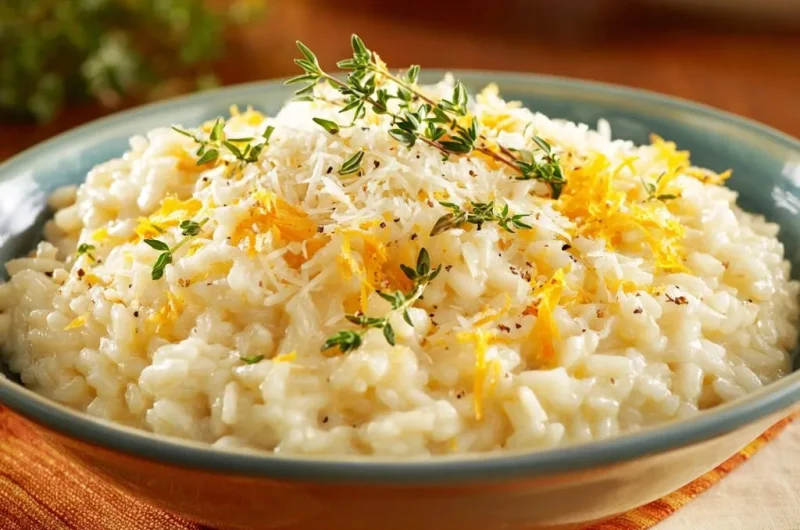
Lemon Thyme Risotto
Course: Main CourseCuisine: ItalianDifficulty: medium4
servings15
minutes30
minutes450
kcal45
minutesStop making dry, gummy risotto! This technique guarantees that glossy, flowing consistency known as all’onda. Featuring bright lemon, fresh thyme, and rich Parmesan, this bowl will be your best yet.
Ingredients
6 cups low-sodium vegetable stock (or chicken stock)
2 tablespoons unsalted butter, divided
1 tablespoon olive oil
1 medium shallot, minced
1 1/2 cups Arborio rice
1/2 cup dry white cooking wine substitute (e.g., non-alcoholic white wine, or extra stock with a splash of lemon juice)
1/2 cup finely grated Parmesan cheese, plus extra for serving
1 teaspoon lemon zest
Salt and freshly ground black pepper
Fresh thyme sprigs, for garnish
Directions
- Prepare the Stock. Pour the stock into a medium saucepan and bring it to a simmer over medium heat. Keep the stock hot throughout the entire cooking process. If the stock cools down, the risotto will not be creamy.
- Build the Base. In a large, heavy-bottomed pot or Dutch oven, melt 1 tablespoon of butter and the olive oil over medium heat. Add the minced shallot and cook until translucent, about 3 to 4 minutes. Do not allow the shallots to brown.
- Toast the Rice (Tostatura). Add the Arborio rice to the pot and stir constantly for 2 minutes until the edges of the grains become translucent. This toasting process, called tostatura, is essential for locking in the starch. Pour in the non-alcoholic wine substitute and cook, stirring, until the liquid is completely absorbed (about 2 minutes).
- Cook and Stir. Add one ladleful (about 1 cup) of the hot stock to the rice. Stir constantly until the stock is completely absorbed. Repeat this process, adding stock one ladleful at a time, allowing it to be absorbed fully before adding the next. Stirring regularly releases the starch, creating the signature creamy texture, but controlling the liquid prevents stickiness. Continue cooking and stirring for 18 to 22 minutes, or until the rice is al dente (cooked through but still firm to the bite). You may not need all the stock.
- The Texture Lock-In (Mantecatura) The secret to a truly creamy, non-sticky risotto is the final finish, done off the heat. When the rice is al dente and still slightly soupy, remove the pot completely from the heat source. This stops the cooking immediately.
- Finish and Serve. Add the remaining 1 tablespoon of cold butter, the grated Parmesan cheese, and the lemon zest to the warm rice. Stir vigorously (this is the key step) for 1 full minute. This aggressive off-heat stirring is the mantecatura process; it emulsifies the fats and starches perfectly, giving the risotto a flowing, liquid consistency (known as all’onda or “like a wave”) without becoming tight or sticky. Taste and season generously with salt and pepper. Serve immediately, garnished with extra Parmesan, lemon zest, and fresh thyme sprigs.
Notes
- The secrets to success are Tostatura (toasting the rice) and Mantecatura (vigorous, off-heat finishing) to achieve the all’onda consistency.