Why High-Heat Roasting Transforms Cauliflower Texture
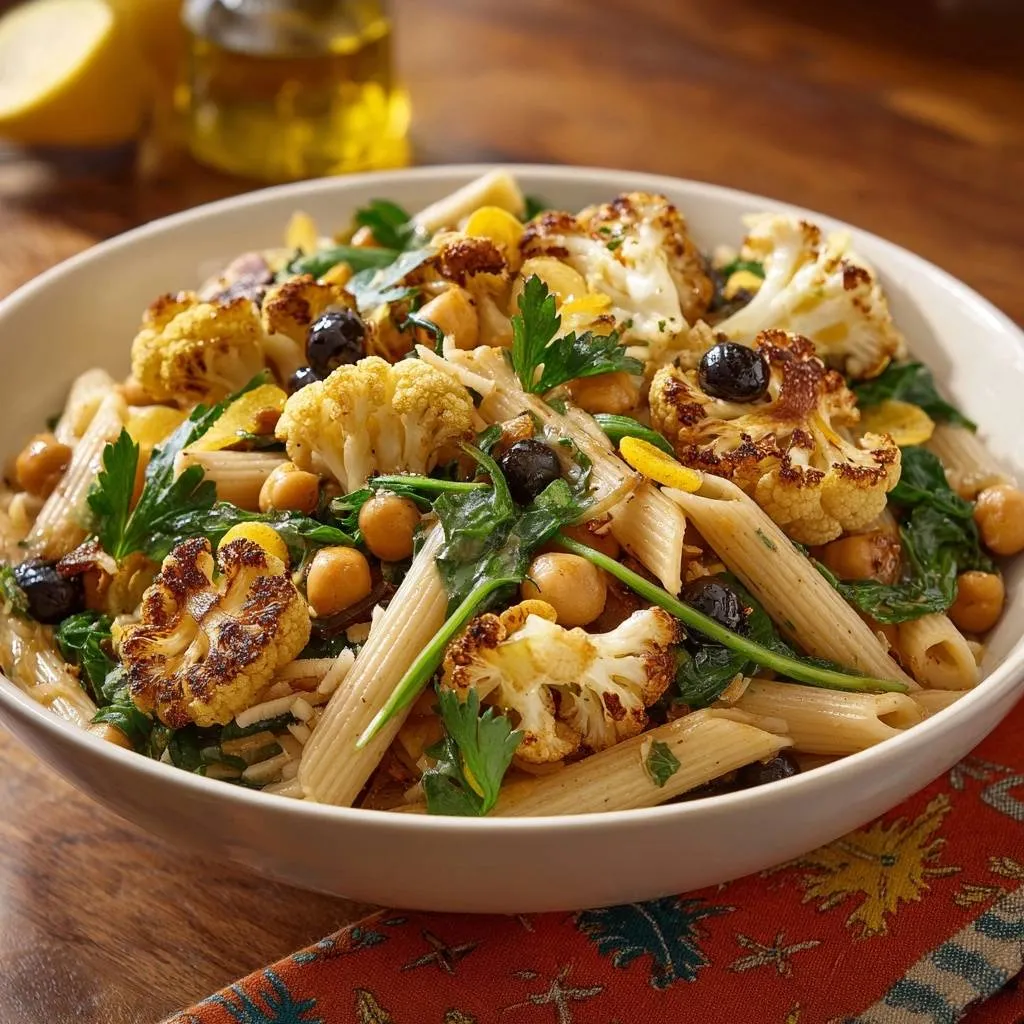
Imagine biting into pasta where the cauliflower actually crunches instead of turning to mush. That’s the magic of this Lemony Roasted Cauliflower Chickpea Pasta. You get golden, crisp florets that hold their own against thick bucatini, all thanks to a blazing 450°F oven that zaps moisture fast.
Most attempts at cauliflower pasta end up soggy because low heat just steams the veggies. However, this method nails the texture every time. In addition, chickpeas add hearty protein, olives bring salty punch, and lemon zest cuts through with brightness, making it a vegan weeknight star.
For another comforting cauliflower dish, try this creamy cauliflower chickpea soup.
Prep takes just 10 minutes, cooking runs 25 minutes, and it serves 4 at about 450 calories per bowl. The real secret? That single-layer roast prevents steam traps, so you end up with nutty, caramelized edges that elevate the whole dish.
Crisp Florets vs Steamed Mush: The Difference
High heat triggers the Maillard reaction, browning sugars and proteins for those irresistible golden edges. Therefore, your cauliflower develops a nutty flavor and firm bite. Low temps, however, keep moisture locked in, leading to limp results.
Spread florets in a single layer to let heat circulate freely. Overcrowding traps steam, so use two sheets if needed. You’ll see crisp tips and deep color after 20 to 25 minutes, not pale sogginess.
Key Ingredients for Lemony Roasted Cauliflower Chickpea Pasta
Cauliflower forms the crunchy base, chickpeas pack plant-based protein, bucatini clings to every bit of sauce, lemons deliver zing, and olives add umami depth. Fresh parsley and spinach wilt just right with the warm toss, boosting fiber and vitamin C.
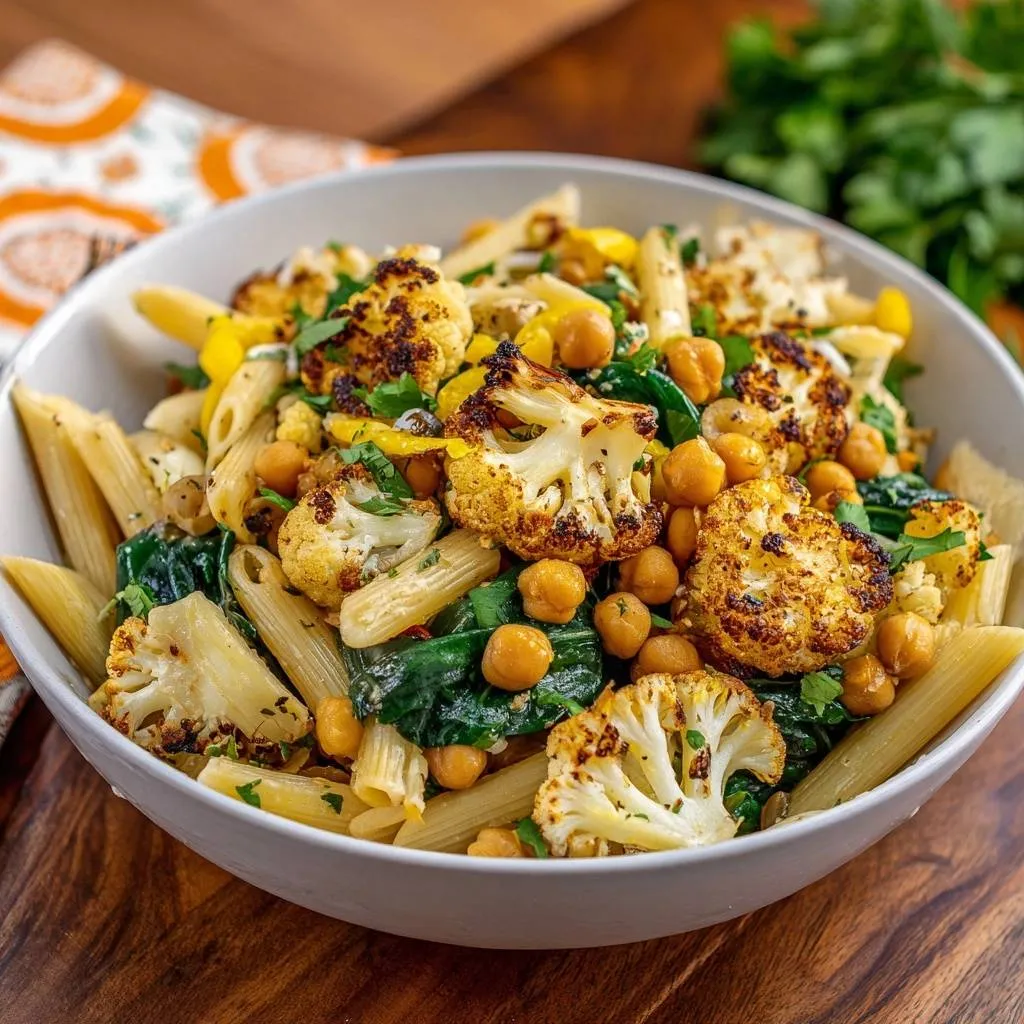
Grab a firm cauliflower head for even roasting. Rinse chickpeas well to ditch extra liquid that could soften the dish. In addition, use thick pasta like bucatini; it holds up better than thin strands.
Cauliflower and Chickpeas: Protein-Packed Base
Cut cauliflower into bite-sized florets so they roast evenly without steaming. Chickpeas provide creaminess and staying power. Rinse them thoroughly; otherwise, canned liquid makes everything watery.
Lemon Zest, Olives, Greens: Zesty Flavor Layers
Zest oils the emulsion for brighter flavor than juice alone. Pitted black olives halve easily and salt the dish perfectly. Spinach and parsley soften gently in the warm mix, adding fresh green pops without wilting to slime.
Mastering Crispy Cauliflower Roast Technique
Preheat to 450°F; this high blast evaporates surface water fast for crisp results. Toss florets with 3 tablespoons olive oil, 1 teaspoon salt, and 1/2 teaspoon pepper. Spread them single-layer on a baking sheet to avoid steam pockets.
Roast 20 to 25 minutes, flipping at the halfway mark. You’ll smell sweet caramelization filling your kitchen. Pro tip: If florets touch too much, they steam instead of crisp, so give them space.
For a deeper dive into this roasted delight, explore roasted cauliflower and chickpea penne.
Oil Toss and Sheet Pan Setup
Coat evenly with oil to lock in moisture without drying out edges. Bare sheet pans brown better than parchment, which can steam. However, line if you hate cleanup; just pat florets dry first.
Flip Timing for Uniform Golden Edges
Flip at 12 minutes for even char on all sides. Look for deep gold and crisp, ruffled edges as doneness cues. This keeps textures consistent, not half-raw and half-burnt.
Cooking Pasta Al Dente for Lemony Chickpea Toss
Boil in heavily salted water; it seasons every strand. Choose bucatini or thick spaghetti for sauce grip. Cook to al dente, about 10 minutes, so it doesn’t turn gummy in the final toss.
Reserve 1/2 cup pasta water before draining. Don’t rinse; the starch helps bind everything. This starchy liquid creates that glossy, restaurant-style sheen.
Reserving Pasta Water for Emulsion
Pasta water’s starch emulsifies the lemon dressing, coating cauliflower and chickpeas smoothly. Add a splash at a time while tossing. Too much makes it soupy, so go slow for perfect cling.
Assembling Lemony Roasted Cauliflower Chickpea Pasta
Whisk 1 tablespoon olive oil, lemon zest, juice from 2 lemons, minced garlic, and salt for the dressing. Toss in warm roasted cauliflower, chickpeas, halved olives, spinach, parsley, and hot pasta. Use reserved water to loosen for a glossy, cohesive bowl.
Serve right away to keep florets crunchy. The warmth wilts greens perfectly without sogginess. Every forkful balances crisp, zesty, and savory.
Lemon Garlic Dressing Emulsion Secrets
Whisk oil first, then zest, juice, and fine-minced garlic for stable emulsion. Coarse garlic bits overpower; mince finely. A pinch of salt pulls it together fast.
Tossing Order to Preserve Cauliflower Crispness
Add warm ingredients first to gently wilt spinach and parsley. Drizzle pasta water last, tossing lightly. This preserves crunch while coating everything evenly.
Science of High-Heat Roast in Cauliflower Pasta
At 450°F, moisture evaporates quicker than at 400°F, crisping cell walls before they break down. Maillard reactions kick in for nutty, browned flavors that pair with lemon’s tang. Chickpeas absorb those toasty notes without mush.
Imagine florets shrinking slightly as water escapes, leaving firm interiors. Low heat prolongs this, steaming instead. Therefore, high heat locks in the texture your pasta craves.
Moisture Evaporation and Browning Reactions
Heat bursts cell walls selectively, retaining structure while browning surfaces. Steam from overcrowding softens them fully. Single-layer roasting retains crispness amid the lemony toss.
Avoiding Common Mistakes in Roasted Cauliflower Chickpea Pasta
Don’t overcrowd the pan; it traps steam and ruins crispness. Skip low oven temps too; they steam more than roast. Overcook pasta, and it absorbs dressing unevenly.
Always reserve pasta water, or the toss stays dry. Whisk dressing while veggies are hot for best integration. These fixes keep your Lemony Roasted Cauliflower Chickpea Pasta vibrant.
Pan Crowding and Steam Traps
One medium head fits one large sheet with space between florets. Use two pans if needed. Crowding halves crisp factor by trapping humidity.
Pasta Water Oversight Fixes
Measure exactly 1/2 cup and add by tablespoon. Stir vigorously to emulsify. It transforms a dry mix into silky perfection.
Flavor Variations for Lemony Roasted Cauliflower Chickpea Pasta
Swap spinach for kale, but massage it first. Try green olives or add capers for extra brininess. Red pepper flakes heat things up without overpowering lemon.
Stir tahini into the dressing for creaminess. Go gluten-free with sturdy pasta. Broccoli rabe roasts similarly crisp. Keep the high-heat core for texture wins.
Spicy or Herbed Customizations
Add chili flakes to the roast for smoky heat. Oregano or basil in the dressing amps herbs. These tweaks build on lemon without muddling crispness.
Protein Boost Swaps
Tofu cubes roast up firm alongside cauliflower. White beans sub chickpeas seamlessly. Both hold texture in the zesty toss.
Pairing Sides with Lemony Roasted Cauliflower Chickpea Pasta
Balance zest with a crisp arugula salad. Garlic bread soaks up dressing nicely. Roasted nuts add crunch contrast.
Sparkling water refreshes the palate. Herbal tea complements lemon notes. Simple soup rounds out lighter meals.
Round Out Your Meal
To complement your Lemony Roasted Cauliflower Chickpea Pasta, consider these flavorful additions that share vibrant ingredients.
- For a refreshing and spiced addition, try the Moroccan Spiced Carrot and Chickpea Salad, bringing together earthy chickpeas and sweet carrots.
- Another bright option is the Mediterranean Zesty Chickpea Salad, which offers a similar use of chickpeas with a refreshing herb-forward taste.
Complementary Fresh Salads
Toss arugula with light vinaigrette. It cuts richness without overwhelming. Cucumber slices add cool snap.
Make-Ahead Guide for Cauliflower Chickpea Pasta
Roast cauliflower and chickpeas up to 3 days ahead; store crisp in airtight containers. Cook pasta fresh, or parboil and chill. Keep dressing separate until toss time.
Reheat veggies in a hot oven to recrisp. Freezing works for roasted cauliflower only, up to 1 month. Thaw and re-roast briefly.
Storage and Reheating Precision
Air-tight containers keep crispness 3 days in fridge. Reheat at 425°F for 5 minutes, not microwave, which steams. Avoid freezing full dish; pasta sogs.
Troubleshooting Lemony Roasted Cauliflower Chickpea Pasta
Soggy Florets Recovery
Re-roast at 450°F for 10 minutes on a dry sheet. Pat dry first and space out. This revives crunch fast.
Dressing Emulsion Failures
Whisk harder next time with oil first. If broken, add reserved pasta water slowly while stirring. It rebinds smoothly.
How do I store leftovers of Lemony Roasted Cauliflower Chickpea Pasta?
Store in an airtight container in the fridge for up to 3 days. The cauliflower stays mostly crisp if not packed tight. Reheat in a 425°F oven for 5-7 minutes to recrisp; microwave softens it. Don’t freeze the full dish; pasta and greens get mushy, but roasted cauliflower alone freezes well for 1 month in a zip bag, then re-roast from frozen.
Why isn’t my cauliflower crispy in this pasta?
Common culprits are overcrowding the pan or low oven temp. Steam builds up without space, and below 450°F just steams instead of roasts. Fix by using two sheets for single-layer spread and preheat fully; flip halfway for even evaporation and Maillard browning. Dry florets well before oil toss too.
Can I substitute ingredients in Lemony Roasted Cauliflower Chickpea Pasta?
Swap bucatini for gluten-free spaghetti, but choose thick-cut to hold sauce. No chickpeas? Use white beans or firm tofu cubes, rinsed and patted dry. Spinach out means kale or arugula works; sturdy greens roast similarly. Lemons scarce? Orange zest brightens but tones down acidity; balance with extra salt.
Why is my pasta dry after tossing?
You likely skipped or skimped on pasta water. Its starch emulsifies the lemon dressing for gloss. Reserve 1/2 cup exactly, add by tablespoon while tossing hot pasta and veggies. If too dry, splash in more warm water from the pot; cold water won’t bind.
How do I make the dressing less separated?
Whisk oil first, then slowly add lemon juice and zest to emulsify properly. Mince garlic fine and add last with salt. Warm bowl and hot ingredients help; if it breaks, drizzle in pasta water vigorously. Mustard or tahini stabilizes for future batches.
Can I prep this Lemony Roasted Cauliflower Chickpea Pasta ahead?
Yes, roast cauliflower and chickpeas 3 days early; store crisp separately. Boil pasta fresh or parboil and chill up to 1 day. Mix dressing last and toss warm. Full assembly holds 1 day in fridge but recrisp veggies before serving to avoid sogginess.
Lemony Roasted Cauliflower Chickpea Pasta
Course: Main CourseCuisine: AmericanDifficulty: easy4
servings15
minutes25
minutes450
kcal40
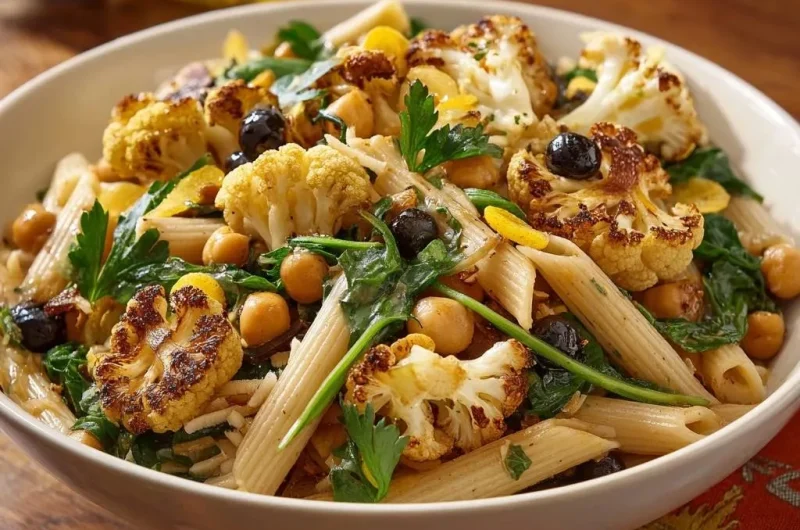
MinutesTired of cauliflower that steams instead of crisps up? This recipe nails perfectly golden, crunchy florets every time with a simple high-heat roast trick that locks in texture while tossing them into a zesty pasta packed with chickpeas, olives, and greens for a frustration-free weeknight win.
Ingredients
1 medium head cauliflower, cut into bite-sized florets
12 ounces bucatini or thick spaghetti
1 can (15 ounces) chickpeas, drained and rinsed
1 cup black olives, pitted and halved
2 cups fresh spinach leaves
1/2 cup fresh parsley leaves, chopped
1/4 cup olive oil, divided
Zest and juice of 2 lemons
2 garlic cloves, minced
Salt and black pepper to taste
Directions
- Preheat oven to 450 degrees F. This high heat is the key to crispy cauliflower: it quickly evaporates moisture for browned edges without steaming.
- In a large bowl, toss cauliflower florets with 3 tablespoons olive oil, 1 teaspoon salt, and 1/2 teaspoon pepper. Spread in a single layer on a baking sheet, avoiding overcrowding, which traps steam and causes mushiness. Roast for 20 to 25 minutes, flipping halfway, until deeply golden and crisp.
- Meanwhile, cook pasta in salted boiling water until al dente, about 10 minutes. Reserve 1/2 cup pasta water, then drain.
- In a large bowl, whisk remaining 1 tablespoon olive oil, lemon zest, lemon juice, minced garlic, and a pinch of salt to make the dressing. Add warm roasted cauliflower, chickpeas, olives, spinach, parsley, and pasta. Toss, using reserved pasta water to loosen if needed, for glossy cohesion without sogginess.
- Serve warm. The florets stay crunchy thanks to the roast method, elevating every bite.
Notes
- High-heat roasting at 450°F is key to crispy cauliflower—avoid overcrowding the baking sheet to prevent steaming. Use reserved pasta water to achieve glossy cohesion without sogginess.