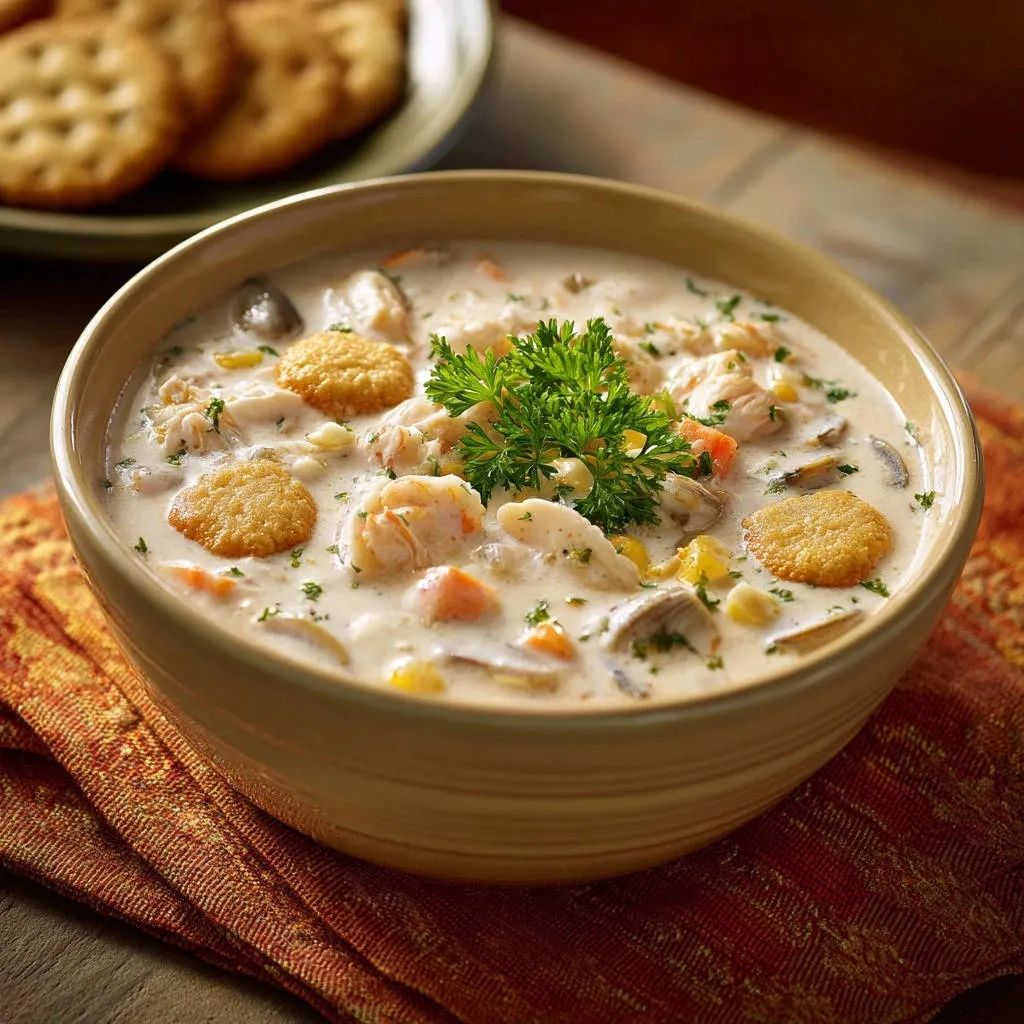
Achieving that rich, silky texture in seafood chowder often feels impossible, leading to frustratingly grainy or separated results.
After years of perfecting, I developed a foolproof “smooth base technique” that ensures your Luxurious Creamy Seafood Chowder is perfectly velvety every single time.
This method stabilizes the fat and liquid, eliminating separation and delivering the classic, comforting richness you crave.
The Secret Weapon: Achieving Silky Smoothness in Your Chowder Base
Why Standard Chowders Often Turn Grainy or Greasy
Graininess usually stems from the curdling of dairy, which occurs when milk proteins are rapidly exposed to high heat.
Insufficiently cooking the flour in the roux can also leave behind raw starch particles, resulting in a slightly gritty, unpleasant mouthfeel.
Rushing the liquid integration causes immediate clumping, trapping uncombined flour particles that will never fully dissolve into a smooth base.
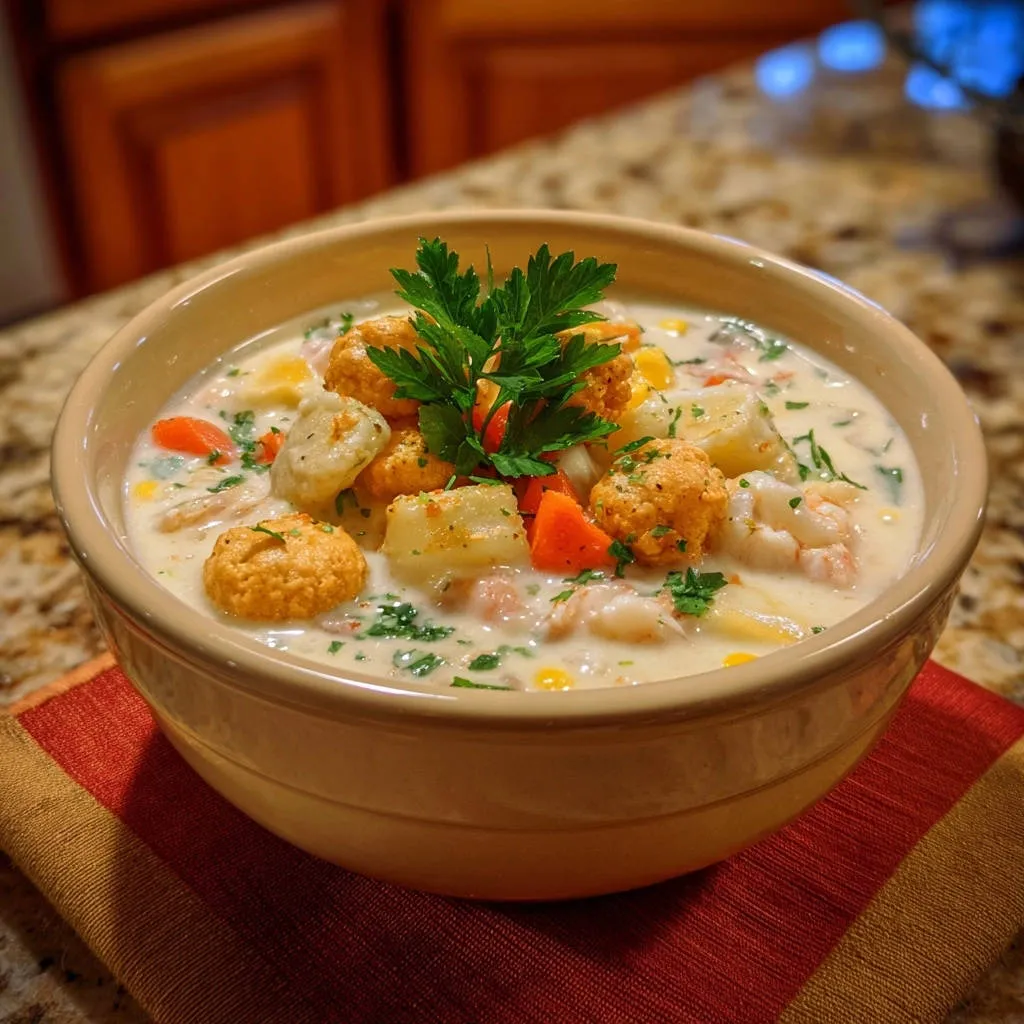
The Role of the Roux in Preventing Dairy Separation
The roux-a cooked mixture of fat and starch-is essential because it suspends the fat molecules from the butter within the starch structure.
This cooked starch acts as a powerful emulsifier and thickener, preventing the butterfat from separating and floating greasily on the surface.
When dairy is added, the stabilized roux base encapsulates the delicate milk solids, insulating them from direct heat and protecting them from seizing.
Mastering the Temperature Drop: Preventing Dairy Curdling
Dairy curdles most easily when high-fat liquids like cream hit an aggressively boiling or simmering base.
By removing the chowder pot completely from the heat before adding the final heavy cream, we allow the temperature to drop significantly.
The residual heat is then sufficient to gently warm the cream without ever reaching the scorching point that causes milk proteins to break down.
Building the Perfect Bowl: Ingredients and Preparation Pointers
Choosing and Preparing Your Mixed Seafood Proteins
For the best texture and safety, always use pre-cooked, high-quality seafood like cooked lobster meat, crab, or peeled shrimp.
It is crucial to pat the seafood dry before adding it to prevent excess moisture from watering down your expertly thickened base.
For more tender bites like these, explore quick shrimp and greens soup.
Adding the proteins at the very end, and off the heat, ensures they warm through gently without becoming tough or rubbery.
The Unexpected Depth of Flavor: Adding Cremini Mushrooms
Cremini mushrooms provide a savory, earthy quality often missing in simple chowder recipes.
By cooking them until their moisture evaporates and they start to brown slightly, you achieve a deep umami base.
This patience concentrates their complex flavor profile before the flour is introduced to the pot.
Dairy Ratio Matters: Balancing Whole Milk and Heavy Cream
This luxurious creamy seafood chowder relies on a specific blend of dairy to achieve its signature texture.
Whole milk provides the necessary liquid volume and body for simmering and thickening the initial roux.
Heavy cream is reserved for the final step off the heat, providing superior richness and high fat content, which acts as a powerful stabilizer against any last-minute separation.
Aromatic Foundation: Selecting the Right Onion and Carrot Ratio
The base of onion and carrots must be cooked low and slow in butter until fully translucent and tender.
This patience allows the sugars in the vegetables to caramelize slightly, providing a subtly sweet complexity to the soup base.
Do not rush this initial sauté step; it is the foundation of flavor for the entire dish.
Step-by-Step Mastery: Cooking This Luxurious Creamy Seafood Chowder
-
Prepare the Aromatics and Seafood:
Pat the seafood dry and set it aside. In a large heavy-bottomed pot or Dutch oven, melt the butter over medium heat.
Add the onion and carrots and cook until softened, about 5 to 7 minutes. Add the sliced mushrooms and cook until they release their moisture and begin to brown slightly (another 5 minutes).
This step concentrates their flavor and builds the aromatic foundation.
-
Phase 2: The Foolproof Roux Technique for a Lump-Free Base
Sprinkle the ½ cup of flour directly over the cooked vegetables. Stir continuously for a full 2 minutes.
The goal is to ensure the flour is completely cooked out, which eliminates the raw flour taste and maximizes its thickening power.
This cooked mixture is your flavor-infused roux-the critical key to the chowder’s velvety texture.
-
Phase 3: Building Viscosity with Cold Stock
Gradually pour in COLD seafood stock, about 1 cup at a time. Whisk vigorously after each addition until the liquid is perfectly smooth and thickens immediately.
Do not add the next cup until the mixture is completely uniform and lump-free.
Once all stock is incorporated, bring the mixture to a low simmer and cook for 5 minutes, allowing the starch molecules to hydrate fully.
-
Phase 4: Careful Dairy Integration and Corn Addition
Reduce the heat to low. Whisk in the whole milk and the corn kernels. Warm the mixture gently until it is steaming slightly but NOT bubbling or boiling.
CRITICAL STEP: Once warmed through, REMOVE THE POT FROM THE HEAT COMPLETELY. This temperature drop prevents the final, delicate cream components from curdling.
-
Phase 5: Finalizing the Chowder Off-Heat (A Pro Move)
Stir in the heavy cream, salt, and pepper. Add the cooked seafood pieces and the fresh parsley.
Let the chowder rest off the heat for 5 minutes. The residual heat will gently warm the heavy cream and the seafood through without running the risk of overcooking the proteins, which can lead to a rubbery texture.
-
Serving and Enjoying:
Serve immediately, garnished with extra fresh parsley and your choice of crackers or crusty bread.
The texture will be perfectly smooth and creamy, confirming the success of your foolproof method.
Elevating Your Chowder Game: Advanced Tips and Flavor Hacks
Troubleshooting: What to Do If Your Chowder Base Is Too Thin: If, after simmering, the base is too runny, mix 1 tablespoon of cornstarch with 1 tablespoon of cold water (a slurry) in a separate bowl.
Whisk this slurry into the simmering liquid and cook for one minute; the cornstarch will activate immediately and thicken the base without adding a floury taste.
The Best Way to Boost Seafood Flavor: Using Homemade Stock: While quality store-bought stock is fine, using a rich, homemade seafood stock made from reserved shrimp shells or lobster bodies will drastically improve the depth of flavor in this chowder.
This creates a complex base that complements the fresh seafood proteins beautifully.
Ingredient Swaps: Making This Recipe Gluten-Free or Low-Fat: For a gluten-free base, substitute the all-purpose flour in the roux with an equal amount of a GF all-purpose blend or potato starch.
For a lighter texture, swap the whole milk for half-and-half, but maintain the heavy cream final addition for necessary richness and stabilization.
The Ultimate Garnish: A Touch of Crispy Bacon or Beef Bacon: A sprinkle of smoky, crispy bacon or beef bacon immediately before serving adds a desirable salty contrast to the rich, creamy chowder base.
Ensure the garnish is added fresh and crunchy, not submerged, to maintain the textural difference.
Make-Ahead, Storage, and Perfect Pairings
Can You Freeze Seafood Chowder? (And How to Reheat It)
Freezing cream-based soups often leads to separation and a grainy texture upon thawing due to the fat content.
If meal prepping, your best option is to make and freeze the roux and stock base before adding the whole milk or heavy cream.
Upon reheating the base, thaw it completely, bring it to a gentle simmer, and then integrate the dairy using the temperature-controlled method described above.
Ideal Storage and Shelf Life
This luxurious creamy seafood chowder stores beautifully in the refrigerator for 3 to 4 days.
Always ensure the soup is completely cooled before transferring it to an airtight container to prevent condensation.
What to Serve Alongside Your Luxurious Creamy Seafood Chowder
The richness of this dish pairs perfectly with items that provide texture or a bright acidic contrast.
Serve with a substantial slice of crusty bread for dipping, a handful of classic oyster crackers, or a light, crisp green side salad dressed with a sharp vinaigrette.
Frequently Asked Questions About Homemade Chowder
How long should I cook the seafood for this recipe?
The seafood used in this recipe should already be cooked, whether it is shrimp, crab, or lobster.
We add the cooked seafood at the very end and rely on the residual heat of the chowder to warm it through during the 5-minute rest.
This technique is essential for preventing the proteins from seizing and becoming rubbery.
What is the difference between New England and Manhattan style chowder?
New England style chowder, like this one, relies on a cream or milk base for its signature thickness and color.
Manhattan style chowder is distinguished by its clear, tomato-based broth, which makes it lighter and more acidic.
What kind of pot is best for making a successful roux?
A heavy-bottomed pot or a proper Dutch oven is highly recommended for making any roux.
The weight of the pot ensures heat is distributed evenly across the bottom, preventing hot spots and reducing the chance of the flour or butter burning during the crucial 2-minute cooking phase.
Can I substitute dried herbs for fresh parsley?
Fresh parsley is strongly preferred for the vibrant color and bright, clean flavor it adds to the finished dish.
If you must use dried parsley, use only 1/3 the amount specified (about 2 teaspoons) and add it earlier in the process, during the 5-minute stock simmer, to allow the herbs time to properly rehydrate.
Ready to Ditch Grainy Soups Forever?
Stop settling for thin or grainy soups; mastering the foolproof roux technique ensures a velvety texture every time you make this luxurious creamy seafood chowder.
Trust the off-heat dairy integration and prepare to enjoy the richest, smoothest bowl of comfort food imaginable.
I encourage you to try this recipe tonight and share your success stories!

Seafood Chowder
Course: Soups-StewsCuisine: AmericanDifficulty: easy6
servings15
minutes30
minutes550
kcal45
minutesThis recipe uses a non-negotiable technique to build a perfectly smooth, lump-free roux base, ensuring the final chowder is rich, velvety, and never greasy. Loaded with mixed seafood, corn, and fresh vegetables for a truly satisfying meal.
Ingredients
1 pound mixed seafood (peeled shrimp, cooked lobster, or crab meat), cut into bite-sized pieces
4 tablespoons unsalted butter
1 cup chopped yellow onion
1/2 cup chopped carrots
8 ounces sliced cremini mushrooms
1/2 cup all-purpose flour
4 cups seafood stock (or chicken stock)
2 cups whole milk
1 cup heavy cream
1 cup canned or frozen corn kernels
1 teaspoon salt, plus more to taste
1/2 teaspoon black pepper
2 tablespoons fresh parsley, chopped, plus more for garnish
Directions
- Prepare the Aromatics and Seafood: Pat your seafood dry and set it aside. In a large heavy-bottomed pot or Dutch oven, melt the butter over medium heat. Add the onion and carrots and cook until softened, about 5 to 7 minutes. Add the sliced mushrooms and cook until they release their moisture and begin to brown slightly, another 5 minutes.
- The Smooth Base Technique (Roux Creation): This is the key step to prevent separation and graininess. Sprinkle the 1/2 cup of flour directly over the cooked vegetables. Stir continuously for 2 minutes, ensuring the flour completely coats the vegetables and cooks out the raw flour taste. This mixture is your roux.
- Build the Liquid Base: Gradually pour in the cold seafood stock, about 1 cup at a time, whisking vigorously after each addition until the liquid is smooth and thickens immediately. Wait until the mixture is completely uniform and lump-free before adding the next cup of stock. Once all the stock is added, bring the mixture to a low simmer and cook for 5 minutes, allowing the base to thicken fully.
- Integrate the Dairy Carefully: Reduce the heat to low. Whisk in the 2 cups of whole milk and the corn kernels. Once the mixture is gently warmed through (steaming slightly but not bubbling), remove the pot from the heat completely. This heat control prevents the final dairy from curdling.
- Finish and Season: Stir in the 1 cup of heavy cream, salt, and pepper. Add the cooked seafood pieces and the 2 tablespoons of chopped parsley. Let the chowder rest off the heat for 5 minutes, allowing the residual heat to gently warm the cream and the seafood through without overcooking the protein.
- Serve immediately, garnished with extra fresh parsley and crackers if desired. The texture will be perfectly smooth and creamy.
Notes
- Remove the pot from the heat completely before adding the final heavy cream to prevent curdling. Use cold stock for the smoothest roux incorporation.