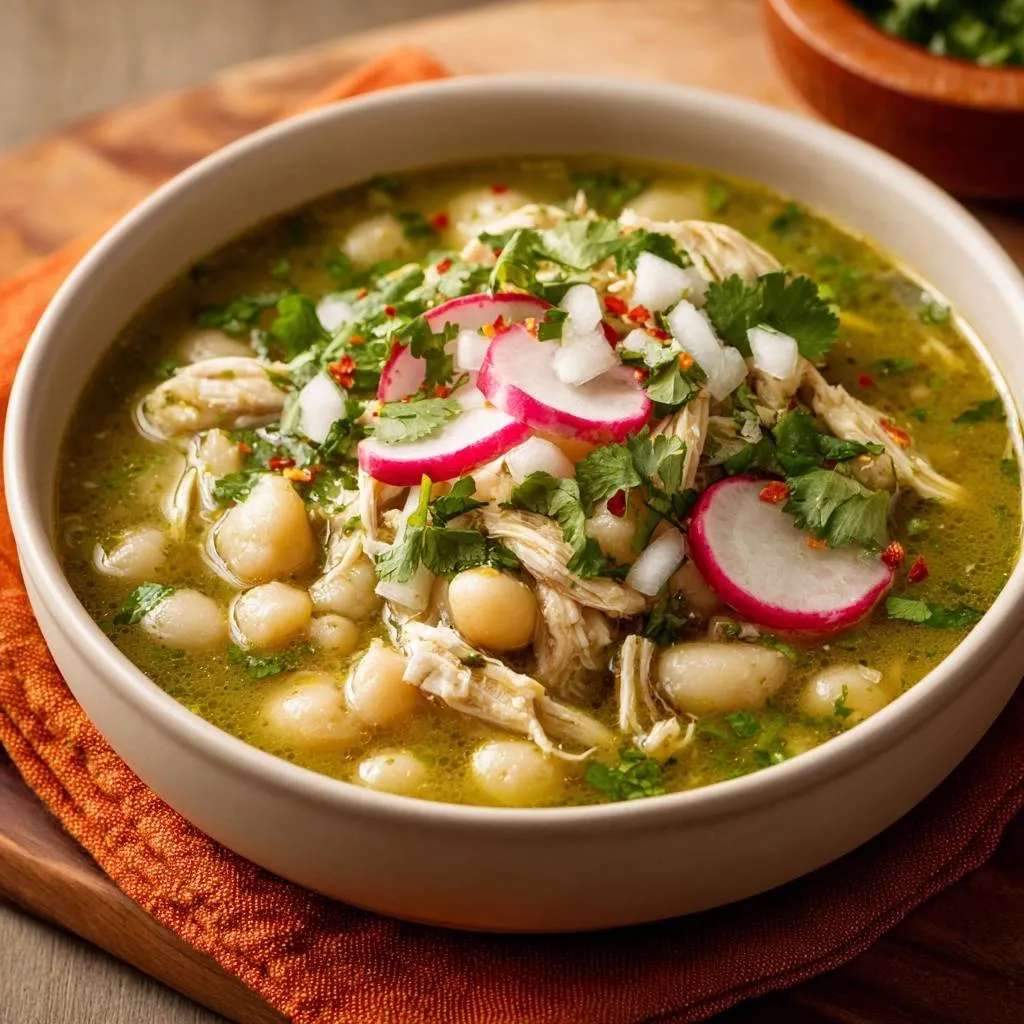
Most home cooks struggle with Pozole Verde that tastes like plain chicken soup rather than a vibrant, zesty masterpiece. You might find your broth looks thin or tastes a bit metallic from the tomatillos, leaving you wondering where that restaurant-quality depth went. The secret to avoiding a thin, flavorless broth is the “Sizzle and Simmer” technique, which transforms a simple puree into a rich, velvety base.
By frying your blended green salsa in a hot pot before adding the broth, you concentrate the flavors and create a base that clings to the hominy instead of tasting like water. This process removes the raw edge of the vegetables and allows the natural fats to emulsify with the ingredients. It’s the difference between a watery soup and a legendary Mexican stew that people will beg you to make again.
The real magic happens when you use toasted pepitas as your secret weapon. These pumpkin seeds don’t just add a nutty undertone; they act as a natural thickener that provides a luxurious mouthfeel without needing flour or cornstarch. I’ve found that grinding them into a fine powder before blending ensures your soup stays silky smooth rather than gritty.
The Anatomy of a Rich Green Broth
A true Authentic Chicken Pozole Verde is a study in balance. You’re looking for a specific profile: the bright acidity of tomatillos, the earthy richness of pumpkin seeds, and the mild, smoky heat of roasted poblanos. Unlike the red version which relies on dried chilies, the green version celebrates fresh, herbaceous notes that feel light yet incredibly satisfying.
This isn’t just a quick chicken soup; it’s a complex, layered stew where every ingredient has a job. The cilantro provides freshness, the garlic adds a savory backbone, and the Mexican oregano introduces a floral, citrusy aroma. When these elements hit the hot oil during the searing phase, they meld into a singular, deep flavor that defines the dish.
Why Bone-In Thighs Outperform Chicken Breast
If you want a broth that feels rich on the tongue, you have to use bone-in, skinless chicken thighs. As the thighs simmer, the collagen in the bones breaks down into gelatin, which gives the liquid a silky body that water alone can’t provide. Thighs also stay juicy and tender during the long simmer, whereas breast meat often turns stringy and dry.
For more juicy chicken tips, check out this Creamy Chicken Poblano Soup.
Using skinless thighs allows you to extract all that wonderful flavor without ending up with an overly greasy soup. Once the meat is tender, it pulls away from the bone in succulent chunks that hold onto the green sauce beautifully. This extra step in the beginning pays off in every single spoonful of the finished dish.
The Role of Toasted Pepitas as a Thickener
In traditional Mexican cooking, seeds and nuts are frequently used to provide body to sauces. Raw pumpkin seeds, or pepitas, contain natural fats and proteins that act as an emulsifier when blended and cooked. Think of it as a rustic, flavorful version of a French roux, but with much more character.
When you toast the pepitas before grinding them, you unlock a toasted, savory aroma that rounds out the sharp acidity of the tomatillos. Without this ingredient, the soup often feels “separated,” with the water and the vegetable solids refusing to stay together. The pepitas bind everything into a cohesive, creamy texture.
Essential Components for Authentic Chicken Pozole Verde
Your shopping list for this dish is relatively short, but quality matters immensely. When you’re at the market, look for tomatillos that are firm to the touch and have tight, papery husks. If the tomatillo feels soft or the skin is shriveled, it will be overly acidic and lack that bright, citrusy pop you need for the base.
The choice of oregano is another “make or break” moment for authenticity. Try to find Mexican oregano, which is actually related to lemon verbena. It has a distinct citrus and licorice profile that is much more pungent than the Mediterranean variety found in pizza sauce. If you can only find the standard kind, use a little less so it doesn’t overpower the delicate green peppers.
Selecting and Preparing White Hominy
Hominy is the heart of any pozole. These are dried corn kernels that have been treated with an alkali (a process called nixtamalization), which causes them to puff up and take on a chewy, nut-like texture. While you can find dried hominy, canned white hominy is the gold standard for home cooks because it’s consistent and saves hours of prep time.
Before you toss the hominy into your pot, make sure to drain and rinse it thoroughly under cold water. This removes the “tinny” liquid from the can and any excess sodium. Rinsing ensures that the only thing you taste is the pure, earthy corn flavor that complements the zesty green broth so well.
The Green Base: Peppers and Aromatics
The heat in this dish should be a gentle hum, not a roar. Poblanos provide a deep, vegetal flavor with very little spice, while the jalapeños bring the kick. By removing the seeds and ribs from the jalapeños, you control the spice level while keeping the fresh pepper taste.
Roasting the poblanos is a non-negotiable step. It softens the flesh and adds a subtle smokiness that you simply can’t get from boiling them. This charred element acts as a bridge between the bright tomatillos and the savory chicken broth, adding a layer of sophistication to the final bowl.
Phase One: Building the Foundation Broth
Start by poaching your chicken thighs with half an onion and a few cloves of garlic. As the water comes to a boil, you’ll notice some gray foam or “scum” rising to the top. Use a large spoon to skim this off and discard it; this simple trick ensures your final broth is clear and clean-tasting rather than cloudy.
For a deeper dive into building incredible broths, check out this savory chicken pozole.
Once the chicken is tender enough to fall off the bone, remove it from the liquid to cool. Strain the broth through a fine-mesh sieve to remove the boiled onion and garlic bits. You now have a liquid gold foundation that is far superior to anything you could pour out of a carton.
Phase Two: Crafting the Salsa Verde Base
After boiling your tomatillos and jalapeños until they turn a dull olive green, it’s time to blend. Combine them with your roasted poblanos, fresh cilantro, raw onion, garlic, and those ground pepitas. Add just enough of your reserved chicken broth to get the blades moving.
You want to blend this until it is completely smooth. If you leave large chunks of pepitas or pepper skin, the soup will feel gritty. A high-powered blender is great here, but any standard blender will work if you give it a full minute or two to process everything into a vibrant green velvet.
The Sizzle and Simmer: Avoiding Watery Soup
This is the most critical part of the entire recipe. Heat your lard or oil in a heavy-bottomed pot until it’s shimmering. When you pour the green salsa into the pot, it should sizzle loudly and steam. This is called “searing” the sauce, and it’s a technique used in the best Mexican kitchens to develop flavor.
Stir the salsa constantly for about 5 to 8 minutes. You will actually see the color transform from a bright, pale lime to a deep, concentrated forest green. This step cooks out the raw, metallic taste of the tomatillos and allows the ground pepitas to toast further and thicken the mixture. If you skip this, your pozole will taste like raw vegetables floating in water. By searing it, you create a rich, integrated stew base that has incredible staying power.
Phase Three: Integrating Hominy and Shredded Chicken
Once your salsa base is thick and fragrant, pour in the rest of your chicken broth. Add the rinsed hominy and the shredded chicken meat. This is when you add your dried oregano, cumin, and salt. Rub the oregano between your palms as you drop it in to release the essential oils.
Let the pot simmer on low for at least 30 minutes. This isn’t just about heating things up; it’s about the “blooming” of the hominy. The corn kernels will absorb the seasoned broth, softening slightly and taking on the green chili flavor. If you rush this, the hominy will taste plain and the broth will feel separate from the ingredients.
Troubleshooting Common Pozole Texture Issues
If your soup feels a bit too thin after the simmer, don’t panic. You can grind another tablespoon of pepitas with a little broth and stir it back in. Conversely, if the soup has thickened too much because the hominy absorbed a lot of liquid, simply splash in a bit more warm chicken broth until you reach your desired consistency.
For those who find the tomatillos a bit too sharp or acidic, a tiny pinch of sugar can balance the flavors without making the dish sweet. Always taste for salt at the very end. The hominy and chicken need a good amount of seasoning to really shine against the acidity of the green sauce.
Traditional Garnishes and Presentation Techniques
Pozole is a “choose your own adventure” meal. The garnishes aren’t just for looks; they provide essential texture and temperature contrasts. The cold, crunchy radishes and crisp raw onions cut through the richness of the warm, fatty broth. A squeeze of fresh lime at the table is mandatory to wake up all the flavors right before you eat.
What Else to Make
To round out your chicken pozole verde meal, consider these complementary recipes.
- For a touch of sweet and spicy heat, pair your pozole with this hot honey jalapeño cornbread, offering a delightful contrast.
- Another excellent choice for soaking up pozole broth is this honey jalapeño cornbread, known for its tender crumb.
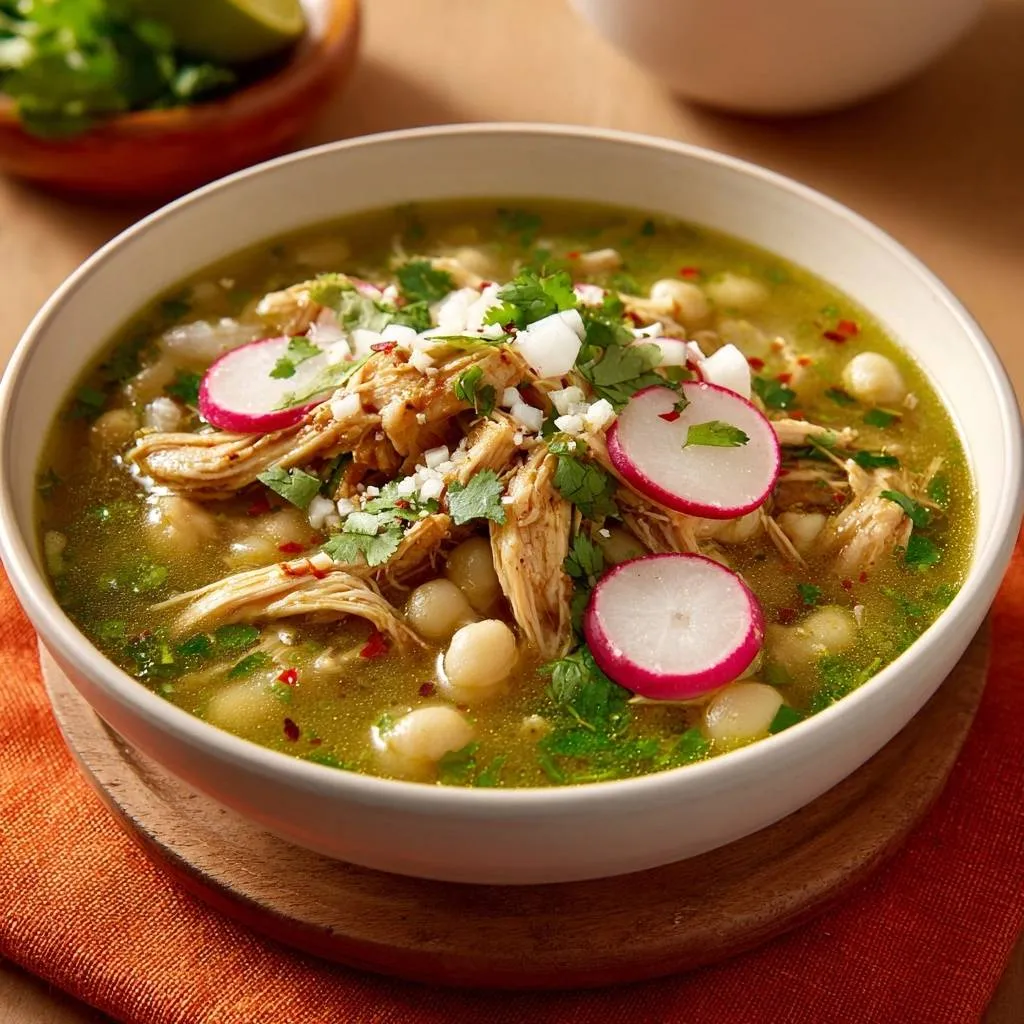
To serve like a pro, use the “Skyscraper” technique. Ladle the broth and hominy into the bowl first, then pile a generous mound of shredded chicken right in the center so it sits above the liquid. Arrange your radish slices and cilantro around the chicken “tower,” and finish with a sprinkle of red chili flakes for a pop of color. It looks beautiful and ensures every bite has a bit of everything.
Make-Ahead Strategies and Storage Guidelines
Like many stews, Pozole Verde actually tastes better the next day. As it sits in the fridge, the spices mellow and the hominy continues to soak up the savory broth. If you’re making this for a party, feel free to cook it a day in advance. Just be sure to cool the large pot quickly by placing it in a sink of ice water before moving it to the refrigerator.
You can freeze this pozole for up to three months in airtight containers. When you reheat it, the green color might have faded slightly. To fix this, simply stir in a handful of fresh chopped cilantro or a squeeze of fresh lime juice once it’s hot. This brings back that “just-cooked” brightness instantly.
Expert Tips for Success
How to Roast Poblanos Without a Gas Range
If you don’t have a gas stove to char your peppers over an open flame, use your broiler. Place the poblanos on a baking sheet right under the heating element, turning them every few minutes until the skin is blackened and blistered all over. Immediately put them in a sealed plastic bag or a bowl covered with plastic wrap for 10 minutes. The steam will loosen the skins, making them slide right off.
Adjusting the Heat Level Safely
The heat in jalapeños lives mostly in the white pith and the seeds. If you want the flavor of the pepper without the burn, scrape those out thoroughly with a spoon. For those who love heat, leave the seeds in one of the jalapeños. Always wash your hands immediately after handling them—trust me, you don’t want to touch your eyes later!
Is Canned Hominy Always the Best Choice?
While purists might argue for dried hominy, it requires an overnight soak and hours of boiling. For the home cook, high-quality canned hominy is a fantastic shortcut that doesn’t sacrifice flavor. It allows you to focus your energy on the green salsa, which is where the real character of the dish lies anyway.
Maintaining the Vibrant Green Color
If you boil the soup too vigorously for too long, the chlorophyll in the cilantro and peppers will break down, turning the soup a brownish-olive color. Keep the heat at a gentle simmer. If you feel the color is looking a bit dull, blend a handful of fresh spinach with a splash of broth and stir it in during the last five minutes for a natural color boost.
Frequently Asked Questions
How long can I store leftover Pozole Verde?
You can keep leftovers in an airtight container in the refrigerator for up to 4 days. The flavors will actually deepen over time. If the soup thickens too much in the fridge, just add a splash of water or chicken broth when reheating on the stove.
Why does my Pozole taste bitter or metallic?
This usually happens if the tomatillos weren’t cooked properly or if the salsa wasn’t “seared” in hot oil. The searing step is vital because it carmelizes the natural sugars in the vegetables and removes that raw, tinny edge. A tiny pinch of sugar can also help neutralize excess acidity.
Can I use chicken breast instead of thighs?
You can, but be careful. Chicken breast dries out very quickly. If you use breast meat, I recommend poaching it separately and only adding it to the soup at the very end so it doesn’t spend 30 minutes simmering and becoming tough.
What can I use if I can’t find pepitas?
If you can’t find raw pumpkin seeds, you can substitute with hulled sunflower seeds or even a tablespoon of almond butter in a pinch. However, the flavor will change slightly. The goal is to provide a fatty, nutty base to thicken the broth.
Is Pozole Verde gluten-free?
Yes! Since this recipe uses ground pepitas as a thickener instead of flour, it is naturally gluten-free. Just ensure your chicken broth is certified gluten-free if you are cooking for someone with a strict sensitivity.
Can I freeze Pozole Verde?
Yes, it freezes beautifully for up to 3 months. I recommend freezing the broth, chicken, and hominy together, but keep the fresh garnishes like radishes and lime for when you are ready to serve. Thaw overnight in the fridge before reheating slowly on the stove.
Chicken Pozole Verde
Course: Main CourseCuisine: MexicanDifficulty: medium6
servings20
minutes1
hour450
kcal60
MinutesA traditional Mexican soup featuring tender shredded chicken and hominy in a zesty green broth made from tomatillos, roasted poblanos, and toasted pumpkin seeds.
Ingredients
2 lbs chicken thighs, bone-in and skinless (for better broth flavor)
2 cans (29 oz each) white hominy, drained and rinsed
1 lb tomatillos, husked and rinsed
2 poblano peppers, roasted, peeled, and seeded
2 jalapeños, seeds removed
1 large white onion, halved
6 cloves garlic, peeled
1 bunch fresh cilantro
1/2 cup raw pumpkin seeds (pepitas), toasted and ground (the secret thickener)
8 cups low-sodium chicken broth
2 tablespoons lard or vegetable oil
1 tablespoon dried Mexican oregano
2 teaspoons salt (plus more to taste)
1/2 teaspoon ground cumin
Garnish: Sliced radishes, diced white onion, fresh cilantro, lime wedges, and red chili flakes
Directions
- In a large pot, combine the chicken thighs, half of the onion, 2 cloves of garlic, and the chicken broth. Bring to a boil, then reduce to a simmer. Cook for 25-30 minutes until chicken is tender. Remove chicken, shred the meat, and discard bones. Strain the broth and set aside.
- While the chicken cooks, place tomatillos and jalapeños in a small pot of water and boil for 8-10 minutes until soft. Drain.
- In a blender, combine the boiled tomatillos and jalapeños, the roasted poblanos, the remaining raw onion, 4 cloves of garlic, cilantro, and the ground toasted pepitas. Add 1 cup of the reserved chicken broth and blend until completely smooth.
- Heat the lard or oil in a large heavy-bottomed pot over medium-high heat. This is the critical step: pour the green salsa into the hot oil. It should sizzle loudly. Stir constantly for 5-8 minutes. This “searing” of the salsa removes the raw metallic taste of tomatillos and allows the pepitas to thicken the base so your soup is never watery.
- Pour the remaining chicken broth into the pot and bring to a simmer.
- Add the rinsed hominy and the shredded chicken. Stir in the oregano, cumin, and salt.
- Reduce heat to low and simmer for 30 minutes. This allows the hominy to bloom and absorb the concentrated green chili flavor.
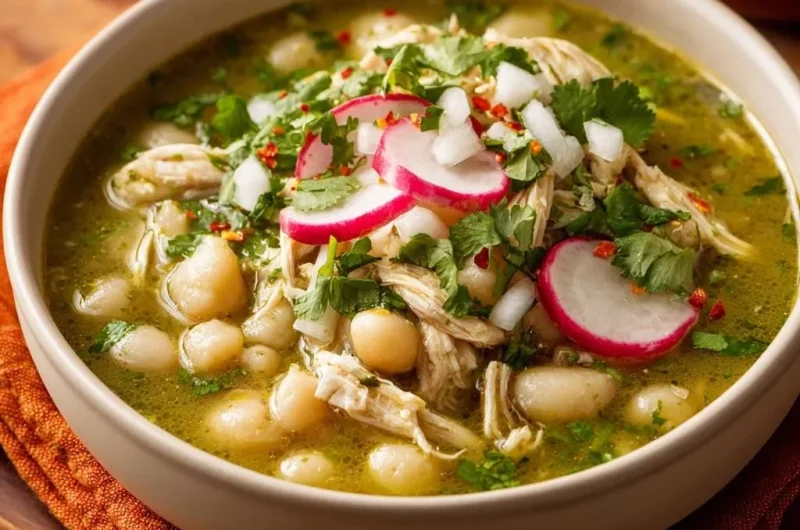
- Ladle into bowls. To match the visual presentation, top with a generous pile of shredded chicken in the center, followed by thin radish slices, diced onion, fresh cilantro, and a pinch of red chili flakes for heat and color. Serve with lime wedges.
Notes
- The secret to a thick, flavorful broth is frying the blended green salsa in hot oil (the Sizzle and Simmer technique) and adding ground toasted pepitas as a natural thickener.