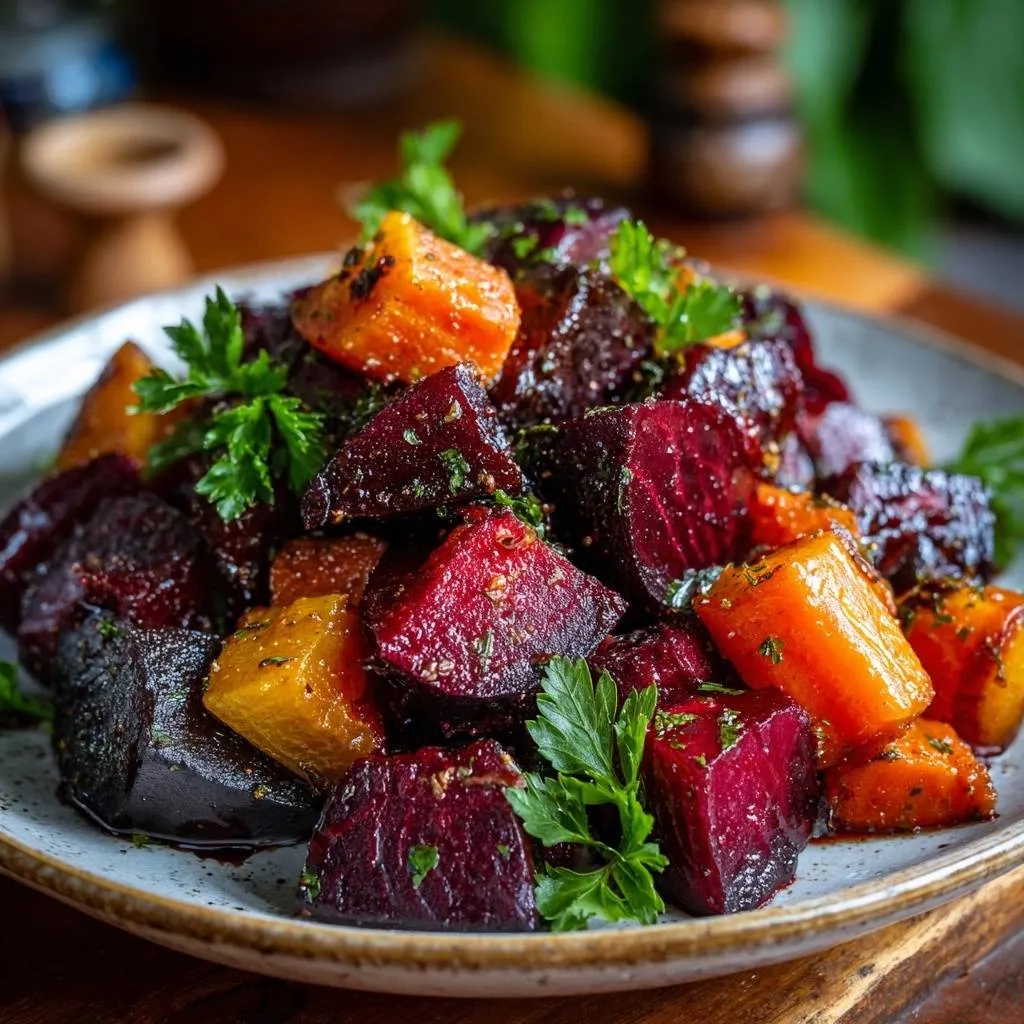
Most people have a love-hate relationship with root vegetables because they’ve only ever experienced them boiled into a sad, watery mush. When you roast beets and carrots correctly, they undergo a total transformation, turning from dense, earthy bulbs into candy-like morsels with crispy, charred edges. This recipe focuses on a high-heat technique that coaxes out natural sugars while maintaining a satisfying bite.
The secret to this restaurant-quality side dish lies in the timing of the glaze. If you toss your vegetables in balsamic vinegar and honey before they hit the oven, the sugars will burn and the moisture will steam the veggies rather than roasting them. By waiting until the final few minutes to apply the glaze, you create a glossy, glass-like coating that clings to the caramelized surface without compromising the texture.
For an even deeper flavor, check out this balsamic glazed beets method that keeps things tidy.
I’ve found that the most critical step is actually the prep work before the oven even turns on. You must pat your vegetables bone-dry with paper towels after peeling and chopping. Even a small amount of surface water creates a localized steam bath in the oven, which is the primary culprit behind soggy vegetables. Start with dry produce, and you’re already halfway to a perfect roast.
The Science of High-Heat Root Vegetable Roasting
Roasting at 425°F (220°C) is the magic threshold for root vegetables. At this temperature, the Maillard reaction—the chemical reaction between amino acids and reducing sugars—happens rapidly on the surface. This creates those deep brown, savory crusts that provide a complex counterpoint to the sweet interior of the carrot.
Because beets and carrots are incredibly dense, they require sustained heat to break down their tough cellular walls. High heat evaporates the internal water content as it’s released, concentrating the flavors. If the temperature is too low, the water leaks out slowly and pools on the pan, essentially poaching the vegetables in their own juices.
Why Surface Moisture is the Enemy of Crispness
Physics dictates that water cannot exceed 212°F at sea level. If your beets are wet when they go into the oven, the temperature of the vegetable surface won’t rise above boiling until that water evaporates. This delays the browning process significantly, often leading to an interior that is overcooked and soft before the outside ever gets a chance to crisp up.
Essential Components for Balsamic Roasted Beets and Carrots
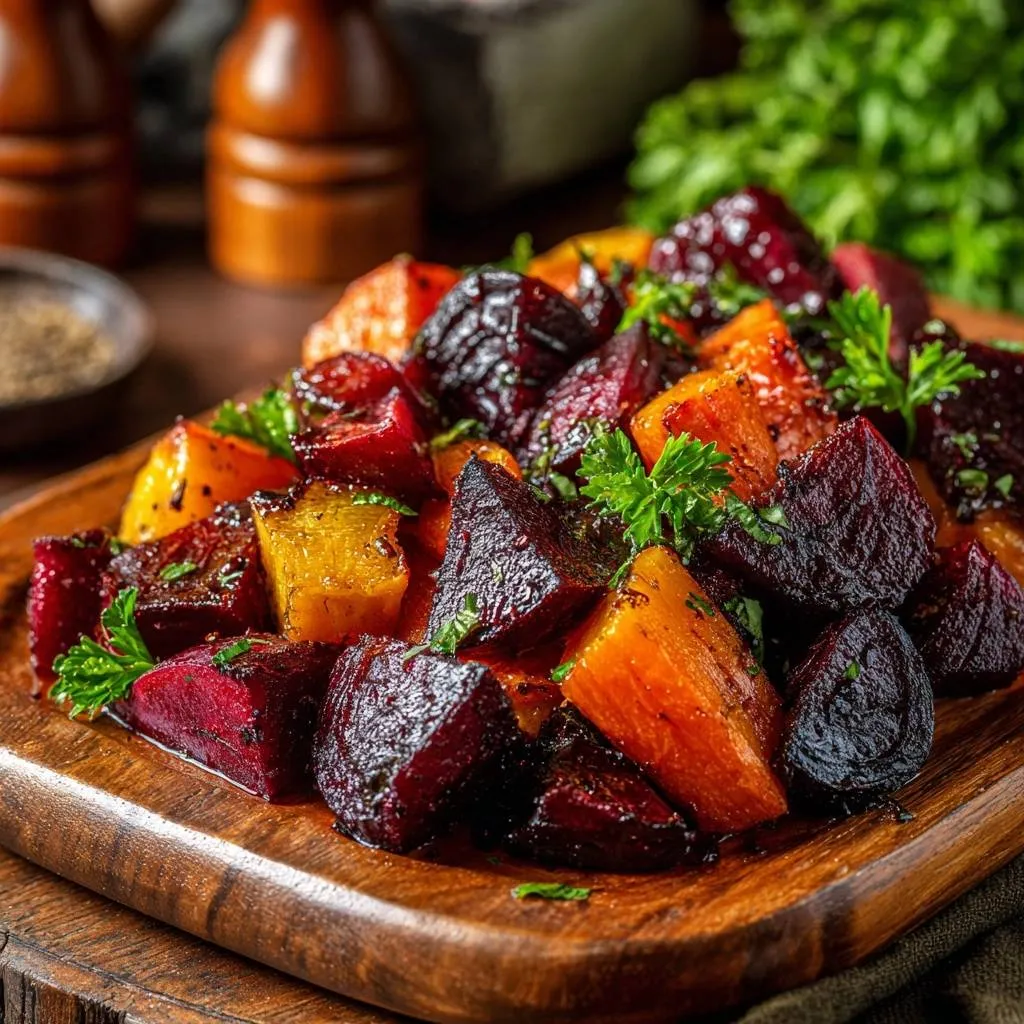
For the best results, look for medium-sized red beets that feel heavy for their size, which indicates they are still hydrated and fresh. Large, older beets can sometimes develop a woody, fibrous core that remains tough even after roasting. Similarly, choose carrots that are firm and bright; avoid the “baby” bagged carrots, as they lack the depth of flavor found in whole, skin-on carrots.
While extra virgin olive oil has a lower smoke point than some refined oils, it is perfect for this 425°F roast. The oil provides a necessary fat barrier that conducts heat evenly across the vegetable’s surface. It also carries the herbal notes of the thyme deep into the crevices of the chopped vegetables as they expand in the heat.
Selecting the Right Balsamic Vinegar and Sweetener
You don’t need an expensive, barrel-aged traditional balsamic for this, but avoid the very thin, watery “balsamic glazes” sold in squeeze bottles. A decent mid-range balsamic vinegar has enough natural sugar to reduce into a thick syrup in the oven. Pairing it with honey or maple syrup adds viscosity, ensuring the glaze “grips” the vegetables rather than sliding off onto the pan.
Fresh vs. Dried Herbs: Timing the Aromatics
Dried thyme is the workhorse here because it can withstand 45 minutes of intense heat without turning bitter or burning. Fresh herbs, however, are delicate. If you roasted fresh parsley, it would turn gray and tasteless. By adding the fresh parsley at the very end, the residual heat of the vegetables releases the herb’s volatile oils, providing a bright, peppery finish that cuts through the richness of the balsamic glaze.
Preparation: The Art of the Oblique Cut
To ensure everything cooks at the same rate, you need to master the oblique cut, also known as the “roll cut,” for your carrots. Hold your knife at a 45-degree angle, cut a piece, then roll the carrot a quarter turn and cut again. This technique creates more surface area than a standard coin cut, which means more space for caramelization and glaze adhesion.
Beets should be cut into wedges roughly the same thickness as the carrot chunks. Since beets are denser, they take slightly longer to soften. Keeping the carrot pieces chunky ensures they don’t turn to mush while the beets are still reaching that perfect fork-tender consistency.
Step-by-Step: Roasting Balsamic Beets and Carrots
The roasting process is a three-act play. You start with high-heat dehydration, move into structural softening, and finish with the “glaze set.” Each phase is vital for achieving that specific texture where the vegetable is firm enough to hold its shape but soft enough to melt in your mouth.
Phase 1: The Dry Roast and Oil Coating
After tossing your dried vegetables in oil and spices, spread them out on a large rimmed baking sheet. You must leave space between each piece. If the vegetables are touching or crowded, the air cannot circulate, and the moisture escaping from one piece will steam the piece next to it. Use two pans if you have to; it’s worth the extra cleanup.
Phase 2: The Mid-Point Rotation
Around the 20-minute mark, you’ll notice the vegetables starting to shrivel slightly and the bottoms becoming dark brown. This is the time to flip them. Using a wide spatula, turn the pieces over so the side that was facing the air now makes contact with the hot metal of the pan. This ensures a uniform crust on all sides.
Phase 3: Applying the Balsamic Reduction Glaze
Once the vegetables are tender, pull the pan out and drizzle your balsamic and honey mixture over them. Toss them quickly right on the baking sheet. When you put them back in for the final 5 minutes, the oven’s heat will rapidly boil off the vinegar’s water, leaving behind a thick, sticky coating that lacquers the vegetables beautifully.
Avoiding Common Mistakes with Roasted Root Vegetables
The most common issue is “The Bleeding Effect,” where the red beet juice turns the orange carrots a muddy purple. To minimize this, toss the beets and carrots in oil in separate bowls before putting them on the pan. Once they are coated in oil, the color transfer is much slower. Also, avoid tossing them too vigorously once the glaze is applied.
Another pitfall is the “Burnt Sugar Trap.” If your oven runs hot, the honey in the glaze can go from caramelized to burnt in sixty seconds. Keep a close eye on the pan during those final five minutes. You’re looking for the glaze to be bubbling and thick, not smoking or turning black. If it looks like it’s darkening too fast, pull the pan out immediately.
Flavor Variations and Ingredient Swaps
If you want to add more color to the plate, try using golden beets alongside the red ones. Golden beets are slightly sweeter and less “earthy” than red ones, and they won’t stain the carrots. You can also swap the thyme for rosemary if you want a more pine-like, wintery aroma that stands up well to the bold balsamic flavor.
For a citrus twist, zest an orange over the finished dish. The bright acidity of the orange zest complements the deep bass notes of the roasted beets perfectly. If you like a bit of heat, a pinch of red pepper flakes added during the oil-tossing stage provides a lovely back-of-the-throat warmth that balances the sweetness of the honey.
What to Serve with Balsamic Roasted Beets and Carrots
These vegetables are bold enough to stand up to hearty proteins. They are a classic partner for roasted chicken or a seared steak. The acidity in the balsamic glaze acts as a palate cleanser for richer meats. If you’re keeping it vegetarian, serve them over a bed of fluffy quinoa or farro with a handful of toasted walnuts for crunch.
One of my favorite ways to serve this is to crumble some cold goat cheese or feta over the top right before serving. The creamy, salty cheese melts slightly against the warm vegetables and creates a built-in sauce when mixed with the balsamic glaze. It’s a flavor combination that never fails to impress at a dinner party.
Make Ahead and Reheating Instructions
You can chop the vegetables up to two days in advance; just keep them in an airtight container in the fridge. However, don’t roast them until you’re ready to eat if you want that specific “crispy edge” texture. Once roasted, they will stay good in the refrigerator for about four days.
When reheating, avoid the microwave at all costs, as it will turn the glaze into a sticky liquid and make the vegetables rubbery. Instead, spread the leftovers on a baking sheet and pop them into a 400°F oven for about 8 to 10 minutes. This will re-crystallize the sugars in the glaze and bring back some of that original roasted texture.
Expert Troubleshooting and Technical FAQ
Can I use canned beets for this recipe?
I don’t recommend it. Canned beets are already cooked and sitting in liquid, meaning their cellular structure is saturated. They will never achieve the firm, caramelized exterior that fresh beets do. If you use canned, they will likely disintegrate or remain mushy regardless of how high you set the oven temperature.
Why did my balsamic glaze turn bitter?
Bitterness usually happens because the glaze over-reduced or scorched. This occurs if the honey or vinegar stays in the high-heat oven for too long. Stick strictly to the 5-7 minute window for the final glaze. If your oven has hot spots, the sugar can burn quickly, so it’s better to pull them out a minute early than a minute late.
How do I prevent the beets from staining my hands?
Red beets contain betalain pigments which are very effective dyes. To avoid “pink fingers,” you can wear thin food-prep gloves while peeling and chopping. If you don’t have gloves, rubbing a little olive oil on your hands before handling the beets can create a slight barrier, or you can use a piece of lemon juice and salt to scrub the stains off afterward.
Can I use parchment paper or silicone mats on the baking sheet?
While parchment paper makes cleanup easier, it actually insulates the vegetables from the direct heat of the metal pan. For the absolute best caramelization and “sear,” roasting directly on a dark, heavy-duty rimmed baking sheet is superior. If you must use parchment, expect the browning to take a few extra minutes.
Is it necessary to peel the carrots?
For this specific recipe, yes. Carrot skins can become slightly tough and bitter when roasted at high heat, and they can prevent the balsamic glaze from soaking into the flesh. Peeling the carrots ensures a uniform, tender texture and allows the honey and vinegar to create that beautiful, glossy finish directly on the vegetable.
Balsamic Roasted Beets and Carrots
Course: Side DishCuisine: AmericanDifficulty: easy4
servings15
minutes45
minutes240
kcal60
MinutesA specialized roasting technique that prevents mushy vegetables by using high heat, moisture control, and a late-stage balsamic honey glaze for a perfect caramelized finish.
Ingredients
3 large red beets, peeled and cut into 1-inch wedges
4 large carrots, peeled and cut into 1-inch thick oblique chunks (angled cuts)
3 tablespoons extra virgin olive oil
2 tablespoons high-quality balsamic vinegar
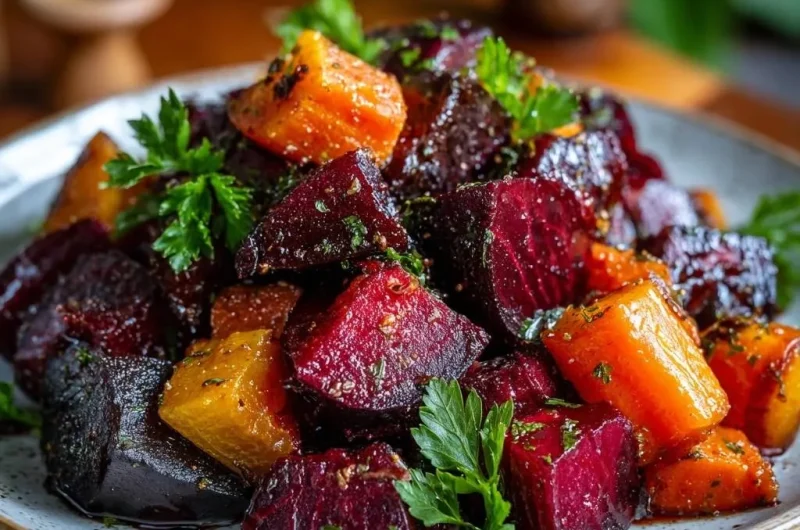
1 tablespoon honey or maple syrup (for the glossy glaze shown in the image)
1 teaspoon dried thyme
1/2 teaspoon sea salt
1/2 teaspoon cracked black pepper
1/4 cup fresh Italian parsley, roughly chopped for garnish
Directions
- Preheat your oven to 425°F (220°C). This high temperature is the first step in preventing mushiness by evaporating surface moisture quickly.
- Pat the chopped beets and carrots completely dry with paper towels. Any surface water will create steam in the oven, which leads to a soft, gummy texture.
- In a large bowl, toss the vegetables with olive oil, salt, pepper, and thyme. Do not add the balsamic vinegar or sweetener yet. Adding sugar-based liquids too early causes the vegetables to stew in their own juices rather than roast.
- Spread the vegetables in a single layer on a large rimmed baking sheet. Ensure there is significant space between the pieces. Overcrowding the pan is the number one cause of mushy vegetables because it traps steam.
- Roast for 30-35 minutes, tossing halfway through. The vegetables should be tender and showing dark, caramelized edges.
- While the vegetables roast, whisk the balsamic vinegar and honey/maple syrup together in a small bowl.
- Remove the pan from the oven. Drizzle the balsamic mixture over the hot vegetables and toss directly on the pan to coat.
- Return to the oven for a final 5-7 minutes. This allows the vinegar and sugar to reduce into the thick, sticky, dark glaze seen in the image, clinging to the crisp edges without softening the vegetable structure.
- Remove from the oven and immediately toss with half of the fresh parsley. Transfer to a serving bowl and garnish with the remaining fresh parsley sprigs for a vibrant contrast. Serve immediately while the exterior is at its peak crispness.
Notes
- To prevent mushiness, ensure vegetables are patted completely dry before roasting and do not overcrowd the baking sheet. Add the balsamic and honey mixture only in the final minutes of cooking.