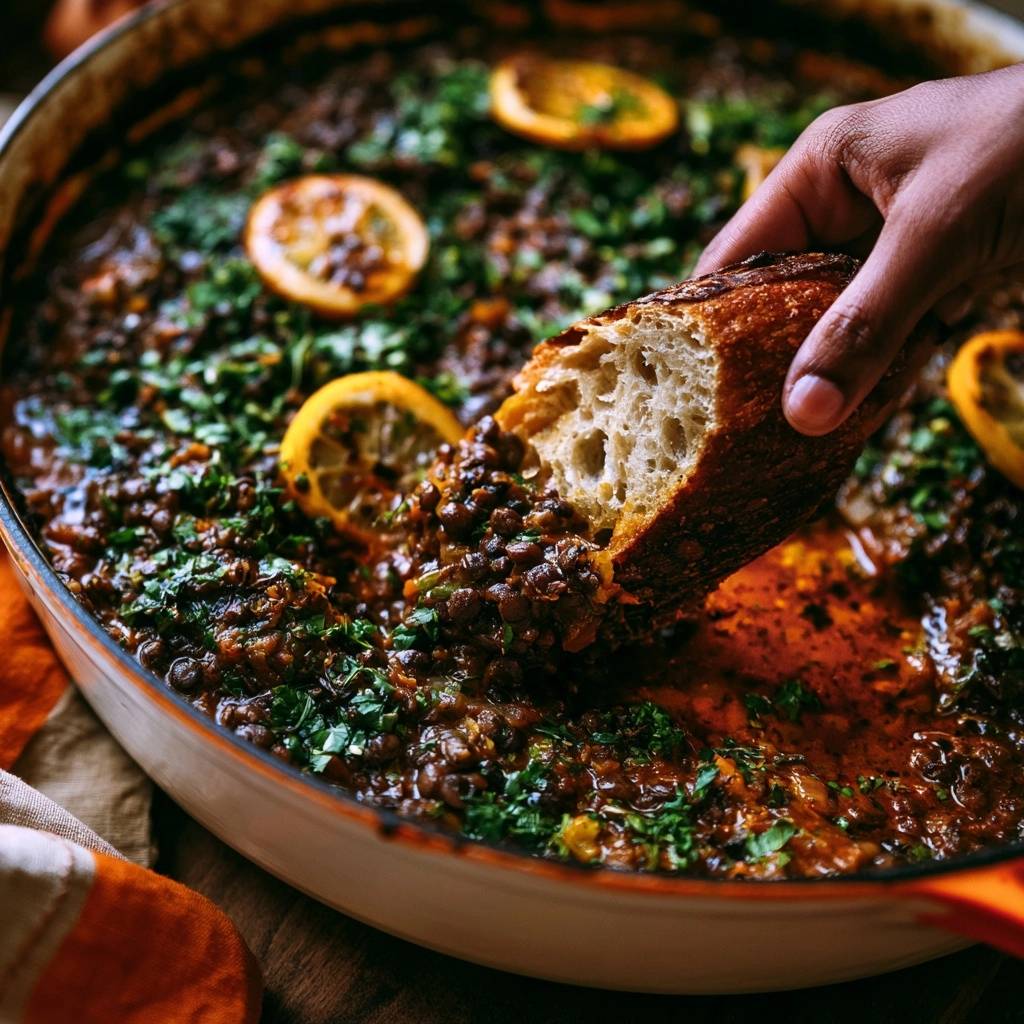
Forget everything you know about watery, gray, or disintegrated lentils that resemble baby food more than a gourmet meal. When you cook lentils the traditional way, they often lose their structural integrity, resulting in a mushy pile that lacks character. This recipe changes the game by focusing on the “caviar of legumes,” the black beluga lentil, which is prized for its ability to hold its shape while absorbing deep, complex flavors.
The secret to this restaurant-quality dish lies in the braising technique rather than a standard boil. By controlling the liquid ratio and the timing of your seasoning, you create a concentrated, jammy sauce that clings to every individual grain. It’s a transformation that turns a humble pantry staple into a sophisticated centerpiece that feels both hearty and refined.
I’ve found that the most common mistake home cooks make is salting the pot too early. If you add salt at the beginning, the skins of the lentils can become tough and leathery, preventing the centers from ever reaching that creamy, melt-in-your-mouth texture. We’ll wait until the very end to season, ensuring the lentils are perfectly tender while remaining distinct and beautiful on the plate.
Why Beluga Lentils Excel in Braised Preparations
Black beluga lentils are the undisputed stars of the legume world because of their unique anatomy. Unlike red lentils, which are designed to break down into a puree, or brown lentils, which can easily turn soft, black lentils possess a thicker outer skin. This skin acts as a protective barrier during the braising process, allowing the interior to become buttery while the exterior stays intact.
Beyond their stunning aesthetic, these lentils offer a dense nutritional profile that makes them incredibly satisfying. They’re packed with plant-based protein and a significant amount of fiber, which helps create a feeling of fullness without the heaviness of meat. Their earthy, slightly nutty flavor provides the perfect canvas for the bright acidity and warm spices we’ll be using in this Mediterranean preparation.
Essential Components for Braised Mediterranean Black Lentils
Building a deep flavor profile starts with a thoughtful selection of aromatics. While many recipes call for diced carrots, I prefer finely grating them. This allows the carrot to practically melt into the olive oil, acting as a natural thickener and providing a subtle, honey-like sweetness that balances the earthy lentils. It creates a rich, orange-tinted base that you just can’t get with chunks of vegetables.
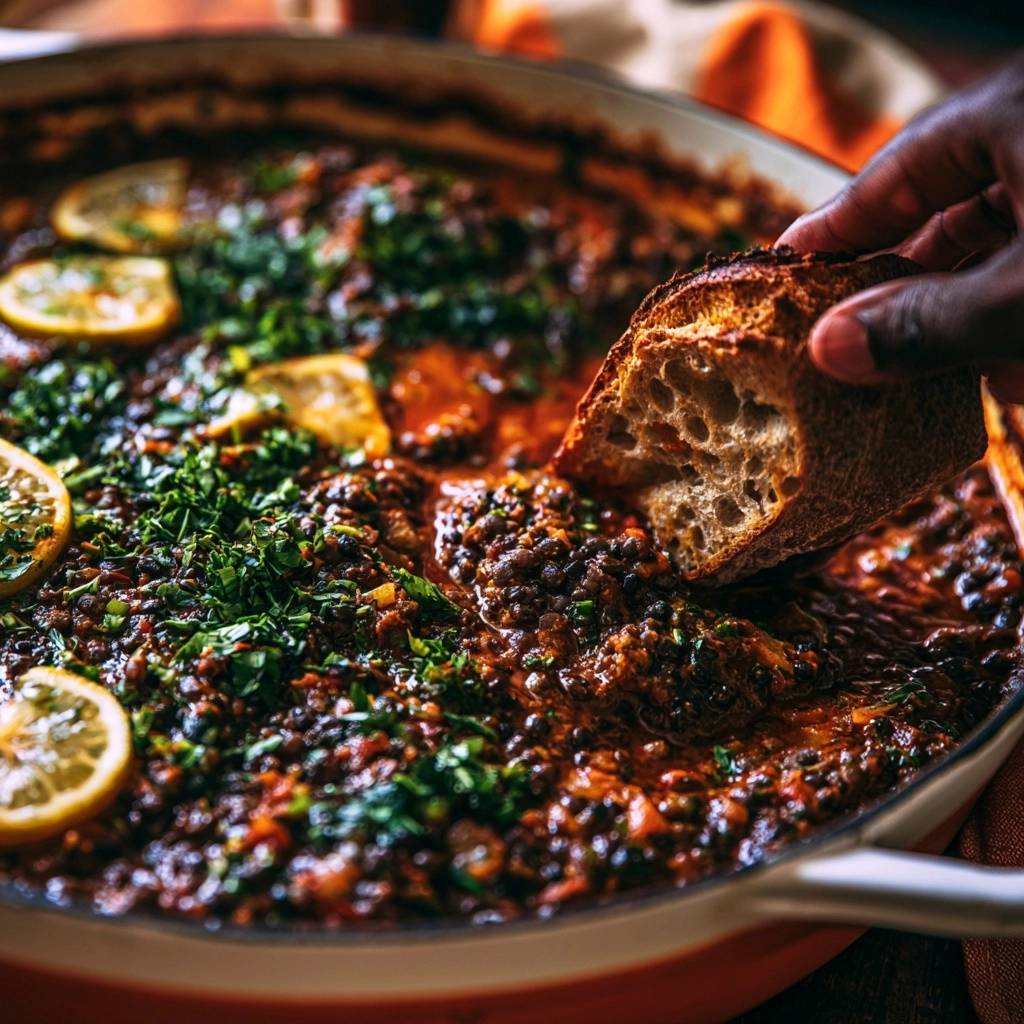
High-quality tomato paste is another non-negotiable ingredient here. It provides the “umami” backbone of the dish, giving the sauce a savory depth that mimics a slow-cooked meat ragu. Using vegetable broth instead of plain water is a simple way to layer in more flavor from the start, ensuring that every drop of liquid absorbed by the lentils is seasoned and delicious.
Finally, don’t underestimate the power of fresh lemons. We use them in two ways: sliced rounds during the simmer to infuse the broth with essential oils from the zest, and a fresh squeeze of juice at the end to brighten the entire dish. This acidity is what cuts through the richness of the olive oil and the earthiness of the legumes.
Selecting the Right Extra Virgin Olive Oil
We use a two-stage oil process to maximize both texture and flavor. The first three tablespoons are used for the initial sauté, where the oil carries the heat and extracts the pigments from the carrots and onions. As the oil heats up, its flavor mellows, providing a smooth fat base for the braise.
The final tablespoon is added “off-heat” right before serving. This is where you want to use your best, most robust extra virgin olive oil. Since it isn’t being cooked, you’ll taste its peppery, grassy notes, which provide a luxurious, glossy finish to the sauce and a fresh aromatic punch that ties everything together.
The Role of Aromatic Spices and Heat
The spice blend of smoked paprika, cumin, and red pepper flakes creates a bridge between the deep earthiness of the lentils and the bright citrus notes. Smoked paprika adds a hint of “charred” depth without needing a grill, while cumin provides a warm, nutty undertone that is classic in Mediterranean cooking.
The red pepper flakes aren’t meant to make the dish spicy, but rather to provide a gentle back-of-the-throat warmth. This heat balances the sweetness of the melted carrots and the tang of the lemon. When these spices hit the hot oil, they bloom, releasing fat-soluble flavors that permeate the entire skillet.
The Science of Texture: Avoiding Mushy Lentils
Achieving the perfect texture is a matter of chemistry. Lentil skins contain pectin, which stays firm when exposed to acids but can toughen if it reacts with salt too early in the cooking process. By delaying the salt until the lentils are fully cooked, we ensure the interiors are creamy while the skins remain supple.
The 2:1 liquid-to-lentil ratio is equally critical. Most people use too much water and end up having to drain the lentils, which washes away all the concentrated flavor you’ve worked so hard to build. With this precise ratio, the lentils absorb exactly what they need, leaving behind a thick, jammy glaze instead of a watery soup.
Step-by-Step: Building the Braised Flavor Base
The first phase of cooking is all about patience. When you sauté the onions and grated carrots in the olive oil, you’re looking for them to “melt” together. After about 8 to 10 minutes, the carrots will release their natural oils, turning the fat in the pan a vibrant, golden orange.
You aren’t looking for hard browning or crispy edges here. Instead, you want the vegetables to become translucent and soft. This creates a “soffritto” that serves as the flavor foundation. Once the garlic is added, it only needs a minute; you’ll know it’s ready when the kitchen starts to smell incredible and the garlic is just barely softened.
Toasting the Spices and Tomato Paste
Before adding any liquid, you must toast the tomato paste and spices. This step is vital for removing the raw, metallic taste often found in canned tomato products. As the paste fries in the oil, it undergoes a Maillard-like reaction, deepening in color from a bright red to a dark, brick red.
Keep the mixture moving with a wooden spoon so it doesn’t burn. You’ll notice the aroma change from sharp and acidic to rich and savory. This concentrated “flavor paste” is what will eventually turn into the glossy sauce that coats each lentil.
Coating the Grains in Spiced Oil
Once your base is ready, stir in the dry, rinsed lentils. This is similar to the “pilaf method” used for rice or the “tostatura” phase of making risotto. By stirring the lentils in the spiced fat for a minute before adding the broth, you’re creating a thin protective barrier on the skin of each grain.
This technique helps the lentils maintain their individual shapes during the long simmer. You’ll see the black lentils glistening as they become coated in the orange-tinted oil. This ensures that the flavor isn’t just in the sauce, but deeply infused into the lentils themselves.
The Braising Process: Simmering to Perfection
After adding the broth, place the lemon slices directly on top of the liquid. Covering the pan with a tight-fitting lid is essential during the first 25 minutes. This creates a pressurized environment that forces moisture into the center of the lentils, softening them evenly without agitation.
The second phase of cooking happens with the lid off. By increasing the heat slightly, you allow the excess moisture to evaporate. This is when the magic happens: the liquid reduces and thickens, transforming into a jammy glaze. The lemon slices soften and release their juices, adding a sophisticated citrus note that isn’t overly bitter.
Finishing Techniques for a Glossy Sauce
The final five minutes are all about the finish. Once the lentils are tender, remove the pan from the heat before adding the fresh lemon juice and the final tablespoon of olive oil. Adding these ingredients off the heat preserves their bright, volatile flavors that would otherwise be muted by boiling.
Stir gently to emulsify the oil and juice into the remaining braising liquid. You’ll see the sauce transform into a glossy, rich coating that hugs the lentils. This is the moment to season with salt and pepper. Taste as you go; the lentils will suddenly “pop” once the right amount of salt is reached.
Optimal Pairings for Mediterranean Lentils
To truly enjoy these lentils, you need a vehicle to scoop up that concentrated sauce. A crusty sourdough baguette is the perfect companion. The natural tang of the fermented bread provides a beautiful acidic contrast to the earthy, spiced lentils. Toast the slices with a little olive oil until they are golden and sturdy.
If you’re looking for a refreshing drink to serve alongside, a crisp sparkling mineral water with a few slices of cucumber or a sprig of mint works wonderfully. The bubbles cleanse the palate between bites of the rich, jammy lentils. A simple side salad of bitter greens like arugula or radicchio with a light vinaigrette also complements the dish’s depth.
Troubleshooting Common Lentil Issues
If your liquid evaporates before the lentils are tender, don’t panic. Simply add a splash more broth or water, a quarter-cup at a time, and keep the lid on. This usually happens if your lid isn’t perfectly tight or your “low” heat is a bit too high.
If the dish tastes “flat” even after salting, it almost always needs more acid. Add another squeeze of lemon juice or a teaspoon of red wine vinegar. Acid acts like a volume knob for flavor, making the spices and earthiness of the lentils stand out.
Crunchy lentils are often the result of using old beans or very hard water. Older lentils take much longer to soften. If you have hard water, the minerals can prevent the lentils from absorbing moisture; using filtered water or broth can solve this. If the broth is over-salted, add a peeled, halved potato to the pot for ten minutes to absorb some of the excess salt, then discard it.
Storage and Reheating for Maximum Flavor
Like many braised dishes, these lentils often taste even better the next day. As they sit in the fridge, the spices continue to meld and the lentils absorb even more of the savory sauce. Store them in an airtight container for up to four days.
When reheating, the stovetop is your best friend. Add the lentils to a small pan with a tablespoon or two of broth or water to loosen the sauce. Heat over medium-low, stirring gently until warmed through. Avoid the microwave if possible, as it can heat unevenly and sometimes cause the lentils to pop or dry out. While you can freeze these, the texture will soften significantly, so they are best enjoyed fresh or from the fridge.
How should I store leftover braised lentils?
Store your leftovers in an airtight container in the refrigerator for up to 4 days. These lentils actually develop more flavor overnight as the spices continue to infuse. When you’re ready to eat them, reheat them gently on the stovetop with a small splash of vegetable broth or water to bring the sauce back to its original jammy consistency. While you can freeze them for up to 3 months, the lentils may lose some of their distinct “pop” and become slightly softer upon thawing.
Why are my lentils still hard after 45 minutes of cooking?
There are usually two culprits for stubborn, hard lentils: age or hard water. Older lentils lose their ability to absorb moisture and can take significantly longer to soften. Additionally, cooking with “hard” tap water (high in minerals) can prevent the legumes from softening properly. If this happens, continue simmering with the lid on and add a bit more liquid. For future batches, try using filtered water or ensure your lentils are from a source with high turnover.
Can I substitute black beluga lentils with other types?
You can use French Green (Puy) lentils as a substitute because they also hold their shape well during cooking. However, avoid using red or yellow lentils, as they are “decorticated” (skins removed) and will dissolve into a porridge-like consistency. Standard brown or green lentils can work in a pinch, but they are much more prone to becoming mushy, so you’ll need to reduce the cooking time by 5-10 minutes and watch them closely.
What can I use if I don’t have tomato paste?
If you’re out of tomato paste, you can use a half-cup of tomato puree or crushed tomatoes, but you’ll need to cook it down significantly longer during the “toasting” phase to remove the excess moisture and concentrate the sugars. Another option is to omit it and add a teaspoon of balsamic vinegar at the end for depth, though you will lose that specific “brick red” color and thick sauce texture that the paste provides.
My sauce is too thin, how do I thicken it?
If your lentils are tender but the sauce is still watery, simply remove the lid and increase the heat to medium. Let the liquid rapidly simmer for 3 to 5 minutes. This evaporation process concentrates the flavors and thickens the liquid into a glaze. The grated carrots in this recipe also act as a natural thickener, so mashing a small spoonful of the lentils against the side of the pan can also help create a creamier consistency instantly.
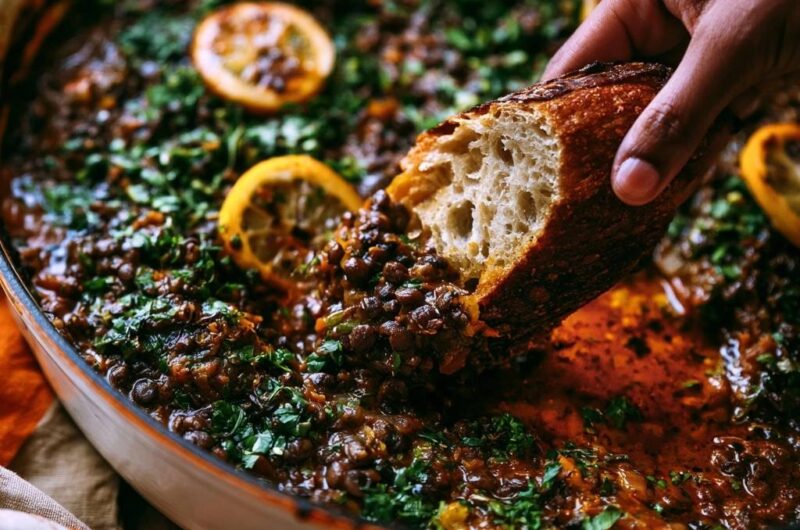
Braised Mediterranean Black Lentils
Course: Main CourseCuisine: MediterraneanDifficulty: easy4
servings10
minutes45
minutes55
Minutes340
kcalMediterranean
Ingredients
1.5 cups black beluga lentils, rinsed
1 large yellow onion, finely diced
1 large carrot, finely grated (for texture and sweetness)
4 cloves garlic, minced
1.5 tablespoons tomato paste
1 teaspoon smoked paprika
1 teaspoon ground cumin
1/2 teaspoon red pepper flakes
3 cups vegetable broth
2 lemons (1 sliced into rounds, 1 juiced)
1/2 cup fresh parsley, finely chopped
4 tablespoons extra virgin olive oil, divided
Salt and black pepper to taste
1 crusty sourdough baguette, sliced and toasted
Directions
- Heat 3 tablespoons of olive oil in a large, wide enameled skillet or braiser over medium heat. Sauté the onion and grated carrot for 8-10 minutes. The carrot should melt into the oil, creating the thick, orange-tinted base seen in the image. Add the garlic and cook for 1 minute until fragrant.
- Stir in the tomato paste, paprika, cumin, and red pepper flakes. Toast the paste and spices in the oil for 2-3 minutes, stirring constantly, until the paste turns a deep brick red.
- Add the rinsed lentils to the pan and stir thoroughly to coat every grain in the spiced oil. This “toasting” step helps the outer skins remain intact so they don’t burst.
- Pour in the vegetable broth. Crucial Step: Do not add salt yet. Adding salt too early can toughen the skins, but using exactly a 2:1 liquid ratio ensures they absorb the flavor without becoming mushy.
- Arrange the lemon slices across the surface of the lentils. Bring to a gentle simmer, then reduce heat to low. Cover with a tight-fitting lid and cook for 25 minutes.
- Remove the lid. Increase heat slightly to medium-low and simmer uncovered for another 10-15 minutes. This allows the liquid to reduce into a thick, jammy glaze that coats the lentils.
- Once the lentils are tender but still hold their distinct round shape, stir in the juice of the second lemon and the remaining tablespoon of olive oil for a glossy finish. Season generously with salt and black pepper to taste.
- Garnish heavily with the fresh chopped parsley. Serve directly from the skillet with thick, toasted sourdough slices to scoop the lentils, ensuring you catch the concentrated sauce at the bottom of the pan.
Notes
- Do not add salt until the very end to prevent the lentil skins from toughening. The 2:1 liquid ratio is essential for the perfect texture.