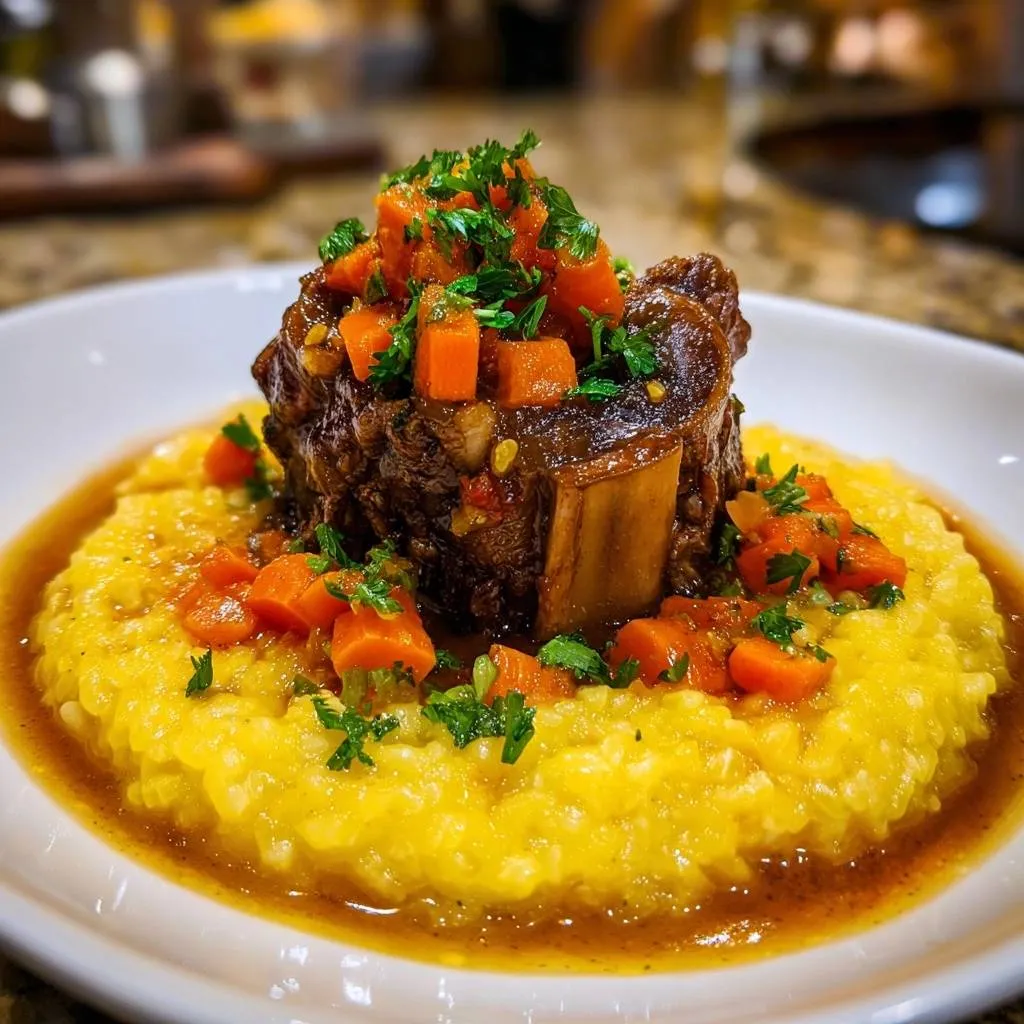
There is something truly transformative about the pairing of deeply savory, fork-tender beef and the ethereal, floral brightness of saffron. This dish represents the ultimate balance of culinary textures, where the heavy, umami-rich short ribs find their perfect partner in a vibrant, creamy risotto. However, many home cooks struggle with short ribs that turn out stringy or tough rather than meltingly soft.
For a different take on comforting beef and rice, consider this cheesy beef rice casserole.
The secret to success lies in understanding that great braising isn’t just about time; it’s about moisture control and temperature management. By mastering a few technical steps, you can ensure the beef yields to the slightest pressure of a fork. We’re going to bridge the gap between a rustic pot roast and a fine-dining masterpiece using a specific double-seal method that locks in every drop of flavor.
I’ve found that the most common mistake is rushing the initial sear or letting the braising liquid boil too vigorously. If you treat the ingredients with patience, the collagen in the beef will transform into a silky sauce that coats your palate. Let’s dive into the mechanics of how to make this happen in your own kitchen.
The Science of Connective Tissue and Braising
Short ribs are a hardworking cut of beef, which means they are packed with connective tissue, specifically collagen. Unlike tenderloin, which is mostly muscle fiber, short ribs require a specific thermal environment to become edible. If you cook them quickly over high heat, the muscle fibers tighten and become rubbery.
When we maintain a steady, low temperature of 300°F for over three hours, a beautiful chemical reaction occurs. The tough collagen fibers slowly break down and melt into gelatin. This gelatin is what gives the meat its “butter-soft” mouthfeel and adds a luxurious body to the braising liquid. It’s a slow transition that simply cannot be rushed by turning up the heat.
Furthermore, you must ensure the liquid never reaches a rolling boil. A hard boil will agitate the meat fibers, causing them to seize up and squeeze out their internal juices, resulting in dry, stringy beef. A gentle, barely-there simmer is the goal, allowing the heat to penetrate the bone and dissolve the connective tissues from the inside out.
Why the Double-Seal Method Guarantees Tenderness
Even in a covered Dutch oven, moisture can escape through the edges of the lid, leading to a dry top layer of meat. To combat this, we use a “cartouche,” which is just a fancy word for a parchment paper lid. By pressing the paper directly onto the surface of the liquid and the meat, you create a secondary barrier.
This method prevents evaporation and ensures the ribs stay fully submerged in a humid environment. It also forces the steam to circulate back into the meat rather than collecting on the lid and dripping down. When you combine the parchment paper with a heavy, tight-fitting lid or a layer of foil, you create a pressurized-like environment that guarantees consistent results.
Essential Components for Braised Short Ribs over Saffron Risotto
Quality ingredients are the foundation of this dish, starting with the beef. Look for short ribs with heavy marbling—those white flecks of fat within the meat—as they provide the internal lubrication needed during the long cook. The bone is equally important, as it houses marrow that enriches the sauce with deep, earthy notes.
For the risotto, Arborio rice is non-negotiable because of its high amylopectin starch content. This specific starch is what creates that signature “all’onda” (wavy) creaminess when agitated. Using a standard long-grain rice will result in a pilaf texture, which lacks the luxurious mouthfeel required to stand up to the rich beef.
Finally, invest in real saffron threads rather than ground powder. Saffron provides a complex, hay-like aroma and a brilliant golden hue that powder often mimics with yellow dyes. A small pinch of high-quality threads goes a long way in elevating the rice from a simple side dish to a floral centerpiece.
Selecting the Right Cut: Bone-In vs. Boneless
While boneless short ribs are easier to find, I strongly recommend using bone-in ribs for this recipe. The bone acts as a conductor of heat, helping the meat cook more evenly from the center. More importantly, the bones release minerals and gelatin into the braising liquid, creating a much thicker and more flavorful jus.
The marrow inside the bone melts out during the three-hour braise, adding a level of richness that boneless cuts simply can’t match. Plus, there is a rustic, impressive visual appeal to serving a large, bone-in rib over a bed of golden rice. It signals to your guests that this dish was prepared with traditional techniques.
The Role of Acidity: Pomegranate Juice
Acidity is the “secret” ingredient that cuts through the heavy fats of the beef and the butter in the risotto. Here, unsweetened pomegranate juice is used to deglaze the pan. Its tannins and acids help break down the meat fibers while providing a dark, fruity backbone to the sauce.
Unsweetened pomegranate juice is a spectacular choice. It has a deep, tart profile that becomes wonderfully complex as it reduces. This acidity is crucial because, without it, the dish can feel overly “heavy” or one-note on the tongue.
Step-by-Step: Achieving the Perfect Maillard Sear
The first step to a world-class braise is the sear. You must pat the short ribs completely dry with paper towels before they hit the pan. If the meat is damp, it will steam instead of brown, and you’ll end up with grey, unappealing beef. Season them aggressively with salt and pepper right before searing.
Heat your oil until it’s shimmering and just starting to smoke. Place the ribs in the pot and leave them alone for at least 4 minutes per side. You are looking for a dark, mahogany-colored crust. This is the Maillard reaction in action, which creates hundreds of different flavor compounds that will eventually season your entire sauce.
Building the Aromatics and Deglazing the Fond
Once the meat is removed, the bottom of your pot will be covered in brown bits called “fond.” This is concentrated flavor gold. Add your diced carrots, onions, and celery (the mirepoix) to the pot. Sauté them until they soften, using the moisture from the vegetables to begin loosening those browned bits.
Next, we use a technique called “pinçage.” Stir in the tomato paste and cook it for about two minutes until it turns from bright red to a rusty brick color. This removes the raw, metallic taste of the paste and sweetens it. Once the paste is dark, pour in your liquid and scrape the bottom of the pot vigorously with a wooden spoon to fully incorporate the fond.
The Long Game: Oven Braising and Temperature Control
Now it’s time to assemble. Return the seared ribs to the pot, ensuring they aren’t fully submerged. The liquid should come about halfway up the sides of the meat. This allows the submerged portion to braise while the exposed top gets basted by the rising steam and the parchment paper seal.
While you could do this on the stovetop, the oven is far superior. A stovetop only applies heat to the bottom of the pot, which can lead to scorching. An oven provides 360-degree radiant heat, ensuring a perfectly steady simmer. Set it to 300°F, tuck in your thyme sprigs, and let the gentle heat do the heavy lifting for the next few hours.
Technique: Agitation and Starch Release in Risotto
Risotto is often misunderstood as a difficult dish, but it’s really just about mechanical action. Start by toasting the rice in butter for about two minutes. This “tostatura” phase seals the exterior of the grain, ensuring it stays firm (al dente) even as the outside turns creamy. You’ll know it’s ready when the edges look translucent.
The creaminess of risotto doesn’t come from cream; it comes from the starch being rubbed off the rice as you stir. Add your warm broth one ladle at a time. You must stir frequently—this agitation is what creates the emulsion. Wait until the rice has absorbed almost all the liquid before adding the next ladle to keep the starch concentrated.
Infusing Saffron for Maximum Color and Aroma
To get the most out of your saffron, you need to “bloom” it. Instead of tossing the dry threads into the rice, crush them slightly and add them to your warm chicken broth about 10 minutes before you start cooking. This allows the water-soluble pigments and aromas to fully release into the liquid.
As you add the saffron-infused broth to the rice, you’ll see the color transform from a pale white to a brilliant, sun-drenched gold. This method ensures the flavor is evenly distributed throughout every single grain of rice, rather than having “hot spots” of saffron flavor in some bites and none in others.
Refining the Braising Jus for a Glossy Finish
Once the meat is tender, don’t just serve it straight from the pot. Remove the ribs and strain the liquid through a fine-mesh sieve into a saucepan. Discard the mushy vegetables, as they’ve already given up all their flavor. Let the liquid sit for a minute, then skim off the excess fat that rises to the top.
Simmer this liquid on the stovetop until it reduces and thickens. You are looking for a “nappé” consistency, which means the sauce should be thick enough to coat the back of a spoon. This concentrated jus will be incredibly powerful, so taste it before adding any extra salt. It should look glossy and rich, like liquid velvet.
Troubleshooting Common Braising and Rice Obstacles
If your meat is still tough after three hours, don’t panic! Every cow is different, and some cuts simply have more connective tissue. Just put the lid back on and give it another 30 to 45 minutes. It will eventually break down; it just needs more time in the “sauna.”
For the risotto, the most common issue is “mushiness.” This usually happens if the heat is too low or if you add too much liquid at once. If the rice is getting soft but there’s still too much liquid, turn up the heat slightly and stir faster to evaporate the excess. If the sauce is too salty, a small squeeze of lemon juice or an extra pat of unsalted butter can help balance the flavors.
Plating for Visual Impact and Texture
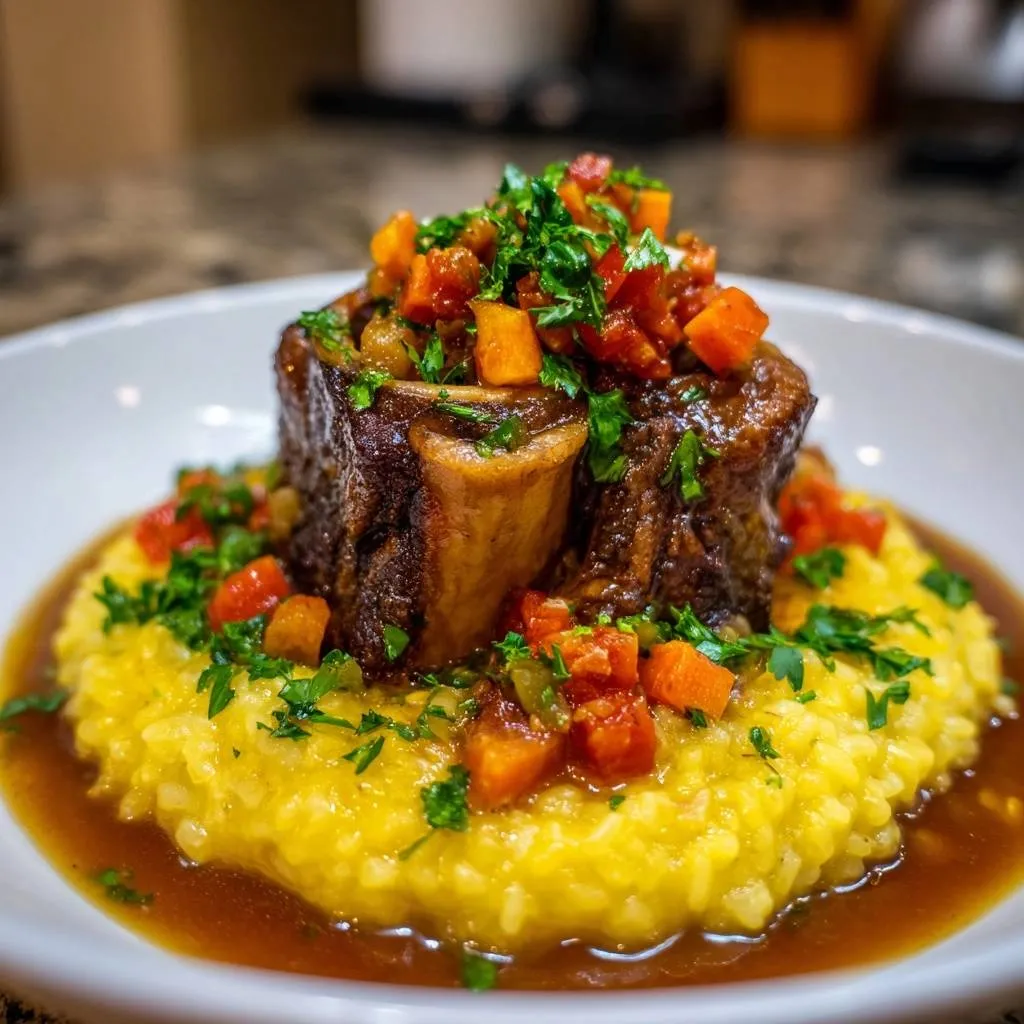
Presentation is key for a dish this special. Start with a wide, shallow bowl and spoon in a generous portion of the golden risotto. Give the bottom of the bowl a gentle tap on the counter to help the rice spread out evenly. Place one short rib right in the center, standing it tall.
Drizzle the glossy jus over the beef so it runs down the sides and pools slightly around the rice. Remember those carrots we set aside earlier? Place a few of those vibrant cubes around the beef for a pop of color. Finally, shower the dish with fresh Italian parsley. The green herb provides a necessary visual contrast and a hit of freshness to wake up the palate.
Make-Ahead Strategies and Storage Logistics
Braised short ribs are actually better the next day. As the meat cools in the liquid, it reabsorbs the juices, making it even more flavorful. If you’re cooking for a dinner party, make the beef a day in advance. Once cooled, you can easily lift off the solidified fat from the top, making the sauce even cleaner.
To reheat, place the ribs and sauce in a covered pan over low heat until warmed through. However, risotto should always be made fresh. If you do have leftover risotto, it will thicken significantly in the fridge. Reheat it with a splash of broth or water and a vigorous stir to bring back that creamy emulsion, though it will never be quite as perfect as the first time.
Expert Tips for Professional Results
Always use a heavy-bottomed pot like a cast-iron Dutch oven. These pots hold heat much better than thin stainless steel, which prevents the temperature fluctuations that can toughen the meat. Also, never use cold broth for your risotto. Cold liquid “shocks” the rice and slows down the starch release, leading to a chalky texture.
Take your time with the onions at the beginning. Sautéing them until they are truly translucent and sweet—without browning them too much—creates a flavor base that supports the beef without overpowering it. Finally, let the meat rest for at least 10 minutes before serving. This allows the fibers to relax and hold onto the sauce better.
Frequently Asked Questions
How do I store leftovers and can I freeze this?
Store the short ribs and their sauce together in an airtight container in the refrigerator for up to 4 days. They actually freeze beautifully for up to 3 months; just ensure they are completely covered in the liquid to prevent freezer burn. The risotto, however, does not freeze well as the rice grains become grainy and lose their structure. It is best to eat the rice within 2 days of cooking.
Why is my short rib meat still tough after 3 hours?
Toughness is almost always a result of undercooking or a loose seal. If the steam escapes, the temperature inside the meat won’t get high enough to melt the collagen. Ensure your lid is tight and the parchment paper is touching the liquid. If it’s still tough, simply continue braising in 30-minute increments. It is nearly impossible to overcook short ribs in a braise as long as there is still liquid in the pot.
Can I use a different type of rice for the risotto?
If you cannot find Arborio, Carnaroli is actually the preferred choice of many chefs because it has an even higher starch content and is harder to overcook. Vialone Nano is another great option. Avoid using standard white rice, jasmine, or basmati, as they lack the specific starch needed to create a creamy sauce and will turn into a mushy mess.
What can I use if I don’t have a Dutch oven?
You can use any deep, oven-safe pot or even a heavy casserole dish. The key is the seal. If your dish doesn’t have a heavy lid, use two layers of heavy-duty aluminum foil and crimp the edges very tightly around the rim to prevent any steam from escaping. You may need to check the liquid levels halfway through to ensure it hasn’t evaporated.
Is there a substitute for saffron?
There is no perfect flavor substitute for the unique, earthy-floral taste of saffron. However, if you only want the golden color, you can use a half-teaspoon of turmeric. Be careful, as turmeric has a very strong, earthy flavor of its own, so use it sparingly. For the best results, it is worth seeking out the real threads.
My sauce is too thin, how do I fix it?
If your braising liquid looks more like soup than sauce after straining, pour it into a wide skillet. The increased surface area will allow the liquid to evaporate much faster. Boil it over medium-high heat until it reduces. If you are in a rush, you can whisk in a small “beurre manié” (equal parts softened butter and flour mashed together), but reducing the liquid naturally provides a much deeper flavor.
Braised Short Ribs
Course: Main CourseCuisine: FusionDifficulty: medium4
servings25
minutes3
hours950
kcal205
MinutesA gourmet comfort dish featuring bone-in short ribs seared for deep flavor and slow-braised for three hours. Served atop a rich, buttery saffron risotto and finished with a savory red grape juice reduction jus.
Ingredients
4 large bone-in beef short ribs (approx. 1 lb each)
2 tablespoons vegetable oil
3 large carrots, peeled and cut into 1/2-inch cubes
1 large yellow onion, finely diced
2 stalks celery, finely diced
3 cloves garlic, minced
2 tablespoons tomato paste
1 cup unsweetened pomegranate juice (for acidity)
3 cups beef bone broth
2 sprigs fresh thyme
1.5 cups Arborio rice
4 to 5 cups warm chicken broth
1/2 teaspoon saffron threads, crushed
1/2 cup grated Parmesan cheese
4 tablespoons unsalted butter, divided
Salt and black pepper to taste
1/2 cup fresh Italian parsley, chopped
Directions
- To solve the tough meat problem, start by patting the ribs completely dry with paper towels. Season generously on all sides with salt and pepper. Heat oil in a heavy Dutch oven over medium-high heat. Sear the ribs for 4-5 minutes per side until a dark, caramelized crust forms. Remove ribs and set aside.
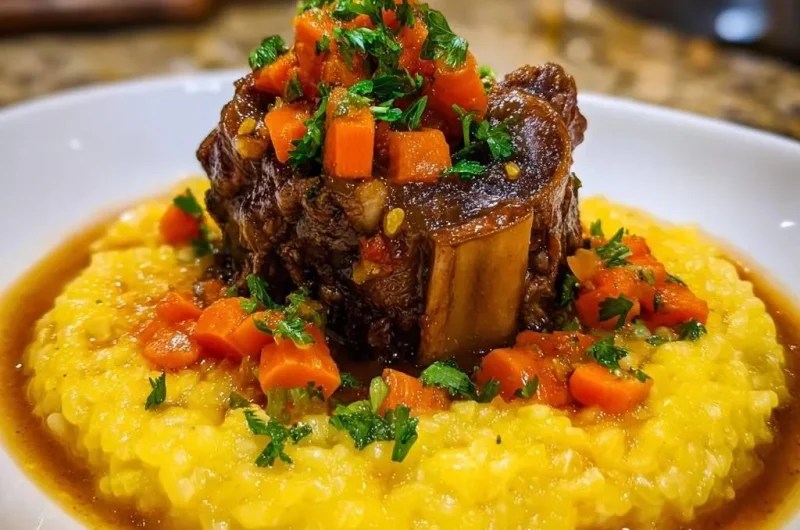
- Reduce heat to medium. Add the diced carrots, onion, and celery to the pot. Sauté for 6-8 minutes. The image shows distinct, vibrant carrot cubes; to achieve this, remove half of the carrots once they are tender-crisp and set aside to use as a garnish later.
- Stir the garlic and tomato paste into the remaining vegetables in the pot and cook for 2 minutes until the paste darkens.
- Pour in the pomegranate juice, scraping the bottom of the pot with a wooden spoon to release the fond (browned bits). Let the liquid reduce by half.
- Return the ribs to the pot and add the beef broth and thyme. The liquid should come about halfway up the sides of the ribs.
- The critical step for tenderness: Cover the pot with a piece of parchment paper pressed down to touch the liquid, then seal tightly with a heavy lid or aluminum foil. Place in a 300°F (150°C) oven for 3 to 3.5 hours until the meat is fork-tender and pulling away from the bone.
- While the meat rests, make the risotto. In a wide saucepan, melt 2 tablespoons of butter. Add the Arborio rice and toast for 2 minutes until the edges are translucent.
- Add the crushed saffron to the warm chicken broth. Add the broth to the rice one ladle at a time, stirring frequently. Wait until the liquid is nearly absorbed before adding the next ladle. This movement rubs the starch off the rice to create the creamy sauce seen in the image.
- Once the rice is al dente, stir in the Parmesan and the remaining 2 tablespoons of butter. Season with salt.
- To serve, place a generous mound of saffron risotto in a shallow bowl. Top with a short rib. Strain the braising liquid and skim off the fat, then pour the rich jus over the beef so it pools around the risotto. Top with the reserved cooked carrots and a heavy garnish of fresh parsley.
Notes
- To ensure maximum tenderness, use the parchment paper ‘cartouche’ method to create a tight seal. The unsweetened pomegranate juice provides the necessary acidity for breaking down the meat fibers.