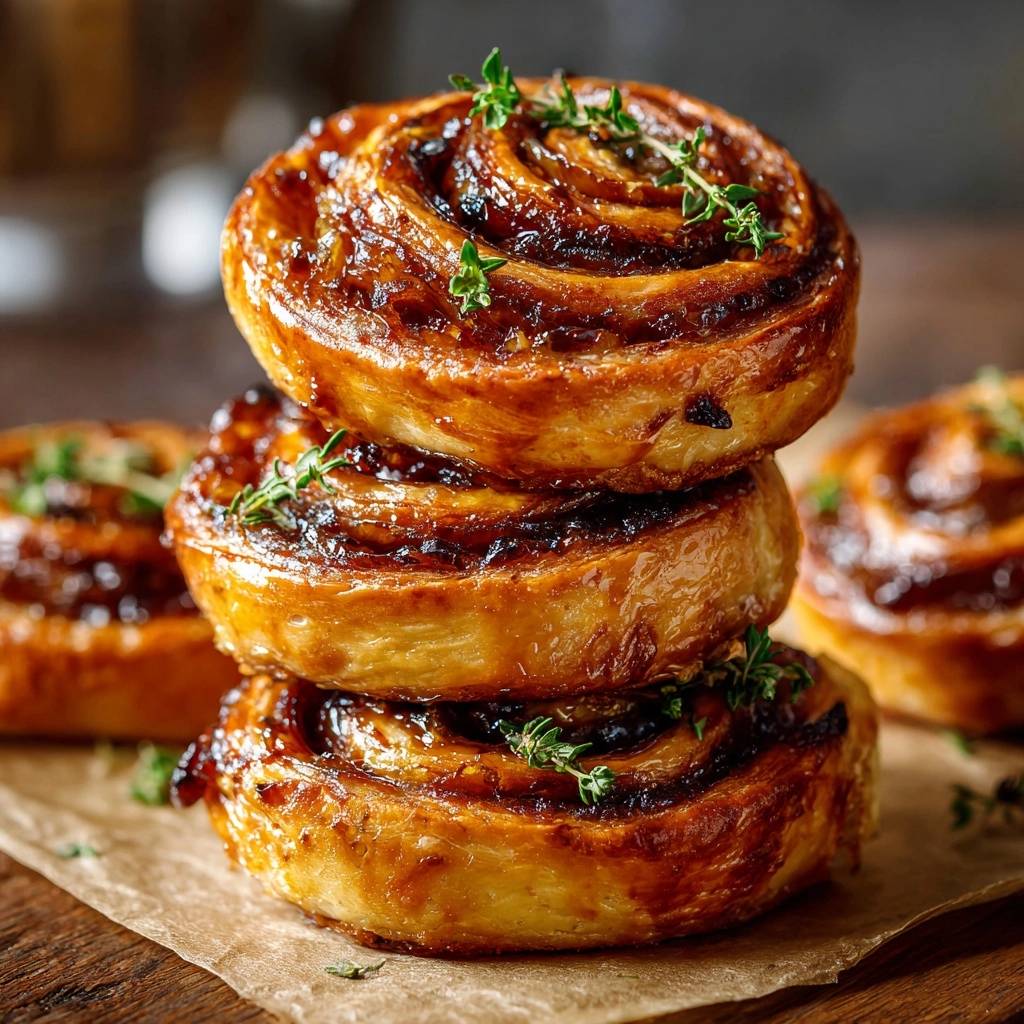
Imagine biting into a pastry that shatters with a crisp, buttery crunch before giving way to a deeply savory, jammy center. These Caramelized Onion and Gruyere Puff Pastry Swirls offer that perfect contrast between the airy, golden layers of dough and the rich, melted cheese. However, many home cooks struggle with the dreaded soggy bottom that often plagues savory appetizers.
The secret to a professional-grade result lies in moisture control and temperature management. By mastering the cooling process and the “flash-bake” technique, you can ensure every spiral remains structurally sound and incredibly flaky. It’s about more than just flavor; it’s about achieving that elusive, high-end bakery texture in your own kitchen.
I’ve found that the most common mistake is rushing the assembly while the onions are still warm. That heat instantly melts the delicate butter layers in the pastry, turning a potential masterpiece into a greasy mess. Follow these technical steps, and you’ll produce a tray of swirls that look as stunning as they taste.
More Savory Bites
If you enjoyed these pastry swirls, you might like these other recipes featuring rich, slow-cooked onions.
- For a comforting baked dish, explore the creamy roasted onion gratin, showcasing similar deep onion flavors.
- And for a different pastry creation, try the caramelized onion mushroom tart, pairing earthy mushrooms with sweet, cooked onions.
The Anatomy of a Crisp Savory Pastry
Puff pastry relies on hundreds of thin layers of solid fat trapped between layers of dough. When the pastry hits a hot oven, the water in the butter turns to steam, forcing the dough layers upward to create that signature lift. If the fat is already melted before it enters the oven, you lose that mechanical leavening entirely.
To achieve the “Anti-Soggy Bottom,” we must manage the structural integrity of the swirl from the inside out. This means the caramelized onions must be cooked until they are a thick jam, with no loose liquid remaining. Any excess moisture will seep into the dough during the bake, preventing the bottom from crisping up properly.
Furthermore, the thermal contrast between the ice-cold dough and the intense heat of the oven is what creates the “shatter” effect. By chilling the assembled log before slicing, we ensure the layers stay distinct. This allows hot air to circulate through every spiral, setting the pastry before the cheese has a chance to saturate the base.
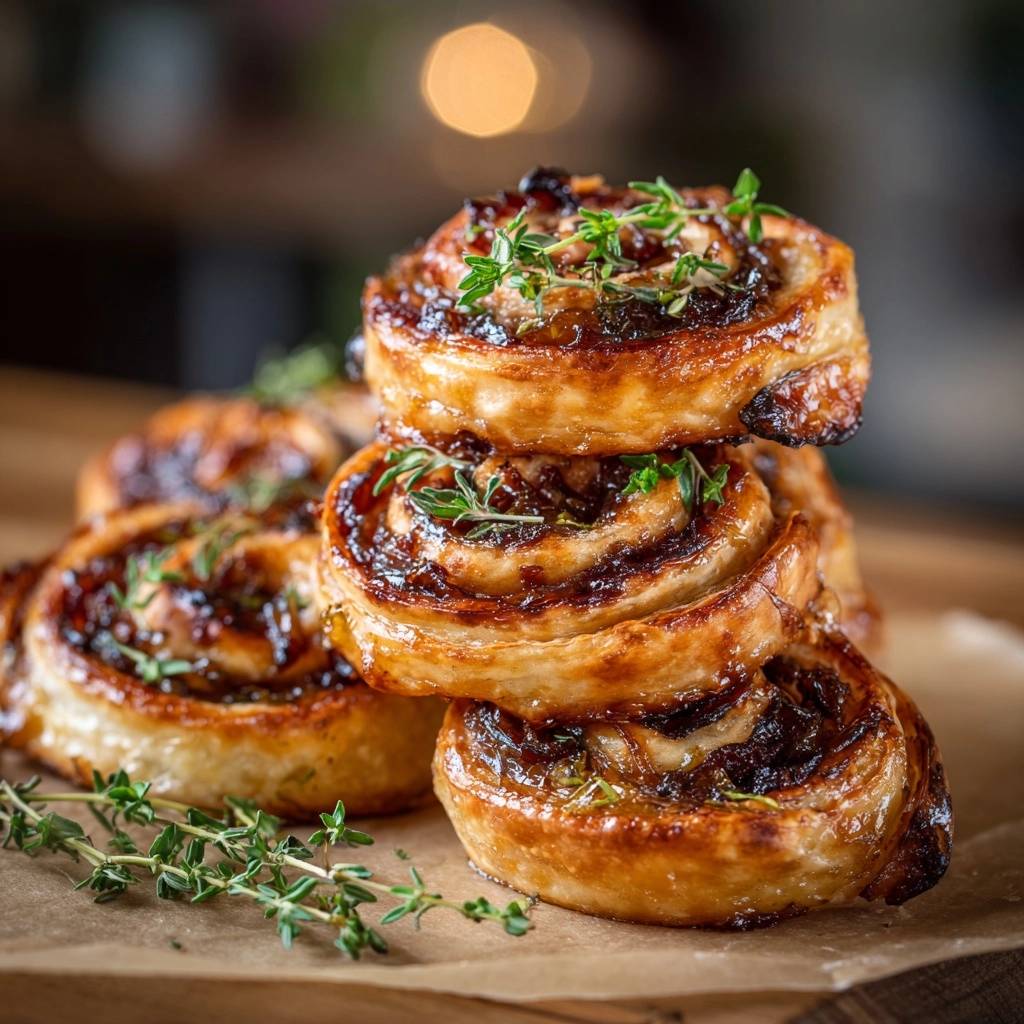
Essential Components for Caramelized Onion and Gruyere Swirls
Quality ingredients are the foundation of this dish, starting with the onions. I always recommend large yellow onions because they have a higher sugar content than white onions, which leads to a better mahogany glaze. They shrink significantly during the long cooking process, so don’t be alarmed by the mountain of slices you start with.
Gruyere is the gold standard here because of its nutty complexity and excellent melting properties. However, you must shred it finely. Large chunks of cheese create oily pockets that can weigh down the pastry layers. Finely shredded cheese distributes evenly, acting as a savory “glue” that binds the onions to the dough without overwhelming the structure.
The addition of balsamic vinegar and a touch of brown sugar isn’t just for flavor; it aids the Maillard reaction. This chemical process creates those deep, toasted notes that make the filling so addictive. Fresh thyme adds a woody, floral top note that cuts through the richness of the butter and cheese, providing a necessary aromatic balance.
For a different savory pastry experience, explore these crispy ham and cheese pockets.
Selecting and Handling Commercial Puff Pastry
When shopping, look for puff pastry made with all butter rather than vegetable oils for the best flavor and flake. Keep the pastry in the freezer until the night before you plan to bake, then thaw it in the refrigerator. You want the dough to be pliable enough to roll but still very cold to the touch.
If the pastry starts to feel soft or sticky while you’re working, stop immediately and put it back in the fridge for ten minutes. Handling warm dough destroys the lamination, which is the very thing that makes puff pastry special. A cold dough is a successful dough.
The Science of Slow-Caramelizing Onions
Caramelization is a slow exercise in patience, not a high-heat sear. You are looking to break down the sulfur compounds in the onions and coax out their natural sugars. Use medium-low heat and stir occasionally; if you see the onions browning too quickly at the edges, turn the heat down and add a tiny splash of water.
After about 30 minutes, the onions will transition from translucent to a pale gold, and finally to a deep, jammy mahogany. This is when you add the balsamic and brown sugar. The vinegar deglazes the pan, lifting all those flavorful browned bits (the fond) and incorporating them back into the onion mixture for maximum impact.
Why Chilling the Filling is Non-Negotiable
This is the most critical technical step in the entire recipe. You must spread the finished onions on a plate and refrigerate them until they are completely cold. If you spread warm onions onto a sheet of puff pastry, the butter in the dough will melt on contact.
Once that butter melts, the layers of the pastry fuse together. Instead of a light, airy swirl, you’ll end up with a dense, doughy puck. Taking 20 minutes to chill the filling ensures the pastry stays cold until the moment it hits the oven’s heat, preserving the lamination and the “lift.”
Step-by-Step: Constructing the Perfect Spiral
Once your onions are cold, roll your pastry into a 10 by 12-inch rectangle on a lightly floured surface. Spread the onion jam in a thin, even layer, but leave a 1/2 inch border at the top edge. This clean strip of dough acts as a seal when you finish rolling the log.
Roll the pastry tightly starting from the long edge closest to you. You want a snug cylinder so there aren’t large gaps in the middle of your swirls. If the roll is too loose, the filling might fall out during the bake, and the pastry won’t have the internal support it needs to stand tall.
The Freezer Firming Technique for Clean Slices
Before you even think about reaching for a knife, wrap the log in plastic and pop it in the freezer for 15 minutes. This isn’t to freeze it solid, but to firm up the fats. A firm log is much easier to slice without squashing the delicate layers of the spiral.
Use a very sharp serrated knife and a gentle sawing motion to cut the log into one-inch rounds. This prevents the weight of the knife from compressing the dough. When you see those distinct, clean circles of pastry and onion, you know you’ve maintained the airflow needed for a perfect puff.
Baking Mechanics: Heat, Airflow, and Surface Tension
Preheat your oven to a true 400°F. High heat is mandatory because it creates an immediate burst of steam within the dough. This steam inflates the layers and “sets” the structure of the pastry before the cheese has a chance to melt and soak into the bottom.
Use a heavy-duty baking sheet lined with parchment paper. Thin sheets can warp or create hot spots, leading to uneven browning. Space the swirls at least two inches apart; they need room for the air to circulate around the sides to ensure the edges get just as crispy as the top.
Achieving the High-Gloss Golden Finish
An egg wash is the difference between a dull, matte pastry and a professional, high-gloss finish. The proteins in the egg promote browning, while the fats provide a beautiful shine. Brush the wash carefully over the exposed pastry spirals, trying to avoid the cheese centers.
If you get too much egg wash on the cheese, it can brown too quickly and mask the flavor of the Gruyere. Once they come out of the oven, a garnish of fresh thyme adds a pop of color and a fresh herbal scent that signals to your guests that these were made with care.
Troubleshooting Common Pastry Failures
If your swirls unraveled in the oven, the seal likely failed. Next time, use a tiny drop of water or egg wash on that 1/2 inch border before finishing the roll to help it stick. If the bottom is greasy, your oven might be running cool, or your onions were too oily. Always drain any excess fat from the onions before chilling.
Bitter onions are usually the result of scorching the sugar at the end of the caramelization process. Keep the heat low and stir constantly once the balsamic is added. If the layers didn’t puff, the dough likely got too warm during assembly. Remember, the freezer is your best friend when working with puff pastry.
Lastly, if the cheese burned before the pastry was done, you might have used a cheese with too low a fat content or shredded it too coarsely. Finely shredded Gruyere melts into the onions, protecting it from the direct heat of the oven while still getting that delicious toasted flavor.
Make-Ahead Strategies and Storage Logistics
These swirls are fantastic for entertaining because you can prepare the log up to three months in advance. Wrap it tightly in plastic and then foil before freezing. When you’re ready to bake, slice the frozen log and add about 5 to 7 minutes to the total baking time.
If you have leftovers, store them in an airtight container in the refrigerator for up to three days. To regain that “shatter” texture, reheat them in a 350°F oven or an air fryer for a few minutes. Avoid the microwave at all costs, as it will turn the crisp pastry into a soft, rubbery disappointment.
Savory Pairings for Gruyere Swirls
These rich, savory bites pair beautifully with acidic elements that cleanse the palate. A simple arugula salad tossed in a sharp lemon vinaigrette is the perfect companion. The peppery greens and citrus notes cut right through the buttery pastry and the saltiness of the Gruyere.
For beverages, consider something with a bit of effervescence. A crisp sparkling cider or a dry white grape juice provides a refreshing contrast to the jammy onions. The bubbles help lift the richness of the cheese, making every bite feel as light as the first.
Expert Tips for Flavor Variations
Once you’ve mastered the base recipe, you can start experimenting with high-end variations. Try spreading a very thin layer of Dijon mustard on the pastry before adding the onions for a sharp, spicy kick. This adds another layer of complexity that pairs perfectly with the Swiss-style cheese.
You can also incorporate texture by sprinkling finely chopped walnuts or pecans over the cheese before rolling. For a different flavor profile, swap the Gruyere for a sharp aged white cheddar or a nutty Comté. Each cheese brings a different personality to the swirl while maintaining that essential savory backbone.
For a similar bite-sized treat, consider trying these goat cheese walnut pastry bites.
How do I store leftover puff pastry swirls?
Store any leftovers in an airtight container in the refrigerator for up to 3 days. To maintain the crispy texture, reheat them in a 350°F oven or an air fryer for 5 minutes. Do not use a microwave, as it will make the pastry soggy and chewy.
Why did my pastry swirls turn out soggy on the bottom?
Soggy bottoms usually happen for two reasons: the onion filling was too warm when applied, or the oven temperature was too low. Warm filling melts the butter in the pastry before it can bake, destroying the layers. Ensure your onions are completely cold and your oven is fully preheated to 400°F.
Can I substitute the Gruyere cheese?
Yes, you can use other high-quality melting cheeses like Comté, Emmental, or a sharp aged white cheddar. Avoid using pre-shredded cheeses from a bag if possible, as they are coated in potato starch which can affect how the cheese melts and interacts with the pastry.
Can I make these ahead of time and freeze them?
Absolutely. You can freeze the assembled, unbaked log for up to 3 months. Wrap it tightly in plastic wrap and foil. When ready to serve, slice the log while frozen and bake as directed, adding an extra 5-7 minutes to the baking time.
What is the best way to slice the pastry without squashing it?
The secret is a 15-minute chill in the freezer before slicing and using a sharp serrated knife. The freezer firms up the butter, allowing the knife to saw through the layers cleanly rather than crushing them down. This ensures the pastry can still “puff” properly in the oven.
My onions are taking a long time to brown, can I turn up the heat?
Resist the urge to use high heat! High heat will burn the outside of the onions while leaving the insides raw and crunchy. True caramelization requires low and slow heat to break down the sugars. If they look dry, add a tablespoon of water to help them soften and release their natural juices.
Caramelized Onion Gruyere Puff Pastry Swirls
Course: AppetizerCuisine: French InspiredDifficulty: medium12
swirls20
minutes45
minutes195
kcal65
MinutesThese savory swirls combine jammy, slow-cooked onions with nutty Gruyere cheese in a shatteringly crisp puff pastry. The recipe utilizes a specific chilling technique to ensure the pastry layers remain distinct and the base stays crunchy.
Ingredients
1 sheet frozen puff pastry (approx. 9-10 oz), thawed but very cold
3 large yellow onions, thinly sliced (onions shrink significantly)
2 tablespoons unsalted butter
1 tablespoon olive oil
1 teaspoon fresh thyme leaves, plus more for garnish
1 cup finely shredded Gruyere cheese
1 tablespoon balsamic vinegar
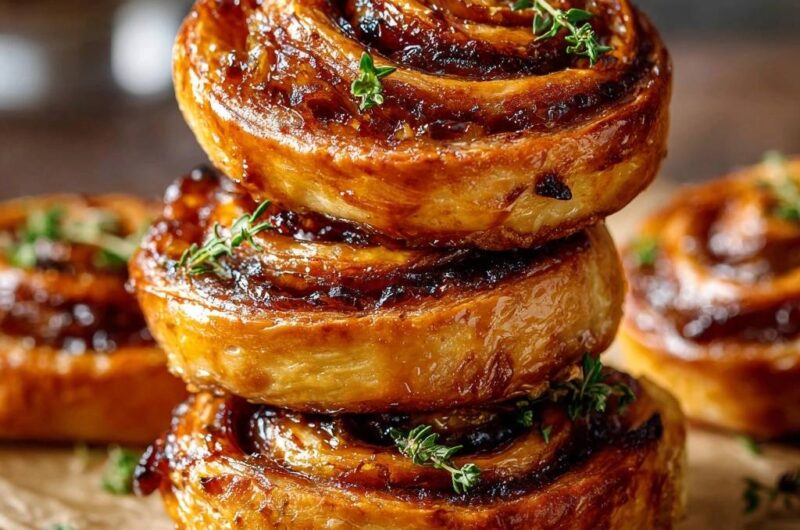
1 tablespoon brown sugar (to achieve the deep mahogany glaze shown)
1 egg, beaten with 1 teaspoon water
Kosher salt and black pepper to taste
Directions
- Heat the butter and olive oil in a large skillet over medium-low heat. Add the onions with a generous pinch of salt. Cook slowly for 30 to 40 minutes, stirring occasionally. If the onions look dry, add a splash of water.
- Once the onions are soft and golden, stir in the balsamic vinegar, brown sugar, and thyme. Cook for another 5 minutes until the mixture is dark, jammy, and the liquid has evaporated. Season with pepper.
- Crucial Step: Spread the onions on a plate and refrigerate for at least 20 minutes until completely cold. Putting warm onions on puff pastry melts the butter layers prematurely, which is the primary cause of a soggy, heavy bottom.
- On a lightly floured surface, roll out the cold puff pastry into a 10 by 12-inch rectangle.
- Spread the chilled onion mixture evenly over the pastry, leaving a 1/2 inch border at the top edge. Sprinkle the finely shredded Gruyere over the onions.
- Roll the pastry tightly starting from the long edge closest to you. Once rolled into a log, wrap it tightly in plastic wrap and place it in the freezer for 15 minutes. This firming process ensures the pastry layers do not squash together when slicing, allowing for maximum airflow and distinct lamination.
- Preheat your oven to 400°F (200°C). Line a heavy-duty baking sheet with parchment paper.
- Use a sharp serrated knife to slice the log into 12 even rounds (about 1 inch thick). Place them on the prepared baking sheet, leaving space between each.
- Brush the tops and the exposed pastry spirals with the egg wash. This provides the high-gloss, golden finish seen in the image.
- Bake for 22 to 25 minutes until the pastry is puffed and a deep, dark golden brown. The high heat is essential to “set” the bottom before the cheese oils can soak in.
- Let the swirls cool on the baking sheet for 5-10 minutes. This allows the sugars in the caramelized onions to set and the base to crisp up further. Garnish with fresh thyme sprigs before serving.
Notes
- The secret to avoiding a soggy bottom is ensuring the onion mixture is completely cold before spreading it on the pastry and flash-freezing the rolled log for 15 minutes before slicing.