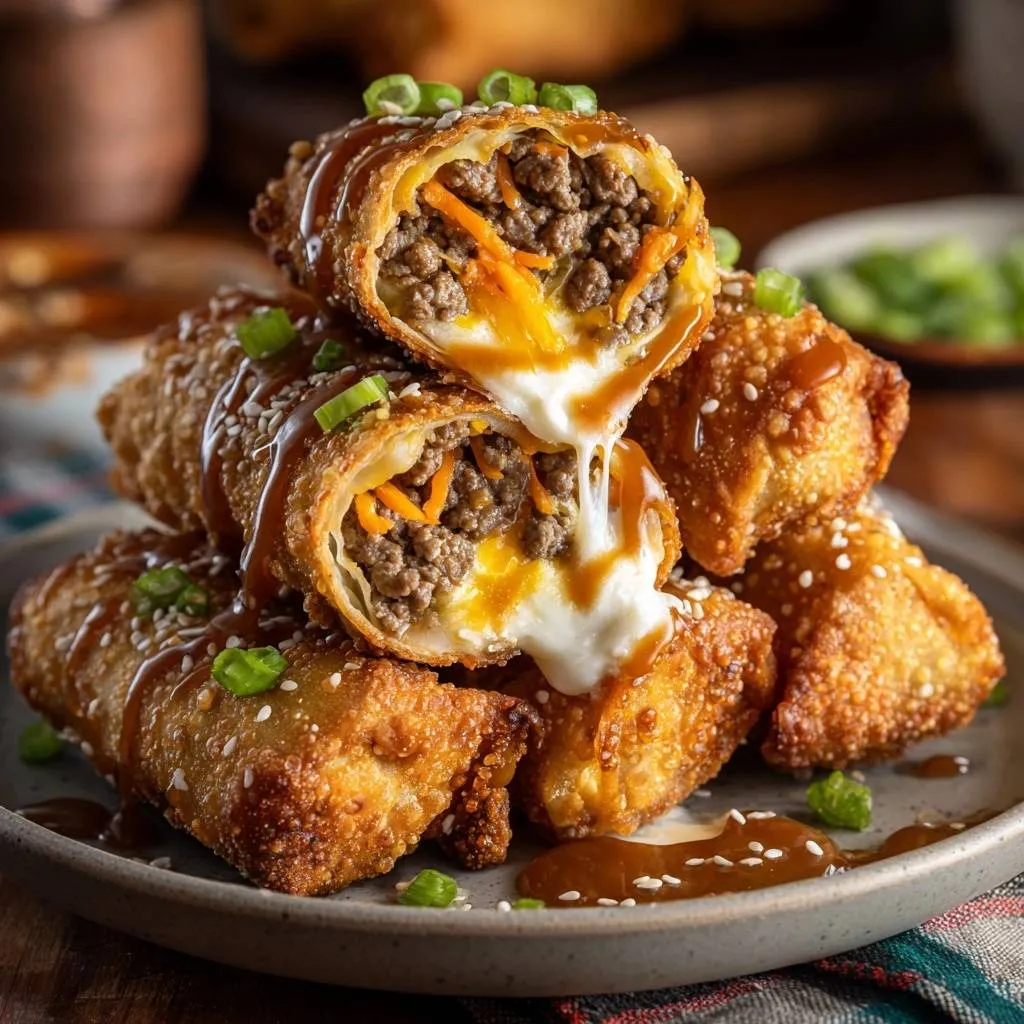
Imagine biting into a shell so crisp it shatters like glass, only to find a molten, savory center of seasoned beef and gooey, melted cheese. These Cheesy Beef and Carrot Egg Rolls offer a spectacular contrast between the golden, bubbly exterior and the rich, umami-heavy filling. It is the ultimate comfort food mashup that feels like a gourmet cheesesteak wrapped in a traditional dim sum favorite.
However, many home cooks struggle with the dreaded “soggy bottom” syndrome, where the wrapper turns gummy and limp before it even hits the plate. This happens because moisture is the enemy of a perfect fry. If you have ever had an egg roll fall apart in the oil, you know exactly how frustrating that can be.
The secret to professional-grade results lies in a simple but mandatory cooling and draining phase. By removing every drop of excess liquid and letting the filling reach room temperature, you prevent internal steam from ruining the dough. I’m going to show you exactly how to master this technique so your egg rolls stay crunchy for hours.
The Anatomy of a Perfect Egg Roll Filling
A great egg roll is all about the balance of textures and flavors within that tight little parcel. The lean ground beef provides a hearty, savory foundation that anchors the dish. Because we are adding cheese later, the beef needs to be seasoned deeply with soy and oyster sauce to ensure the flavor doesn’t get lost in the richness.
The carrots play a much bigger role than just adding color. As they sauté, they release a natural sweetness that cuts through the saltiness of the beef and the fat of the cheese. They also provide a necessary structural “bulk,” giving the egg roll a satisfying chew that isn’t just soft meat. When these ingredients combine, they create a filling that is dense enough to hold its shape but loose enough to let the cheese flow through every crevice.
Selecting the Right Beef and Carrot Cut
When you are shopping, reach for lean ground beef, specifically a 90/10 or 93/7 blend. While fat usually equals flavor, too much rendered fat inside an egg roll wrapper will lead to a greasy mess that leaks out during frying. You want the beef to brown and caramelize in its own juices without leaving a pool of oil in the pan.
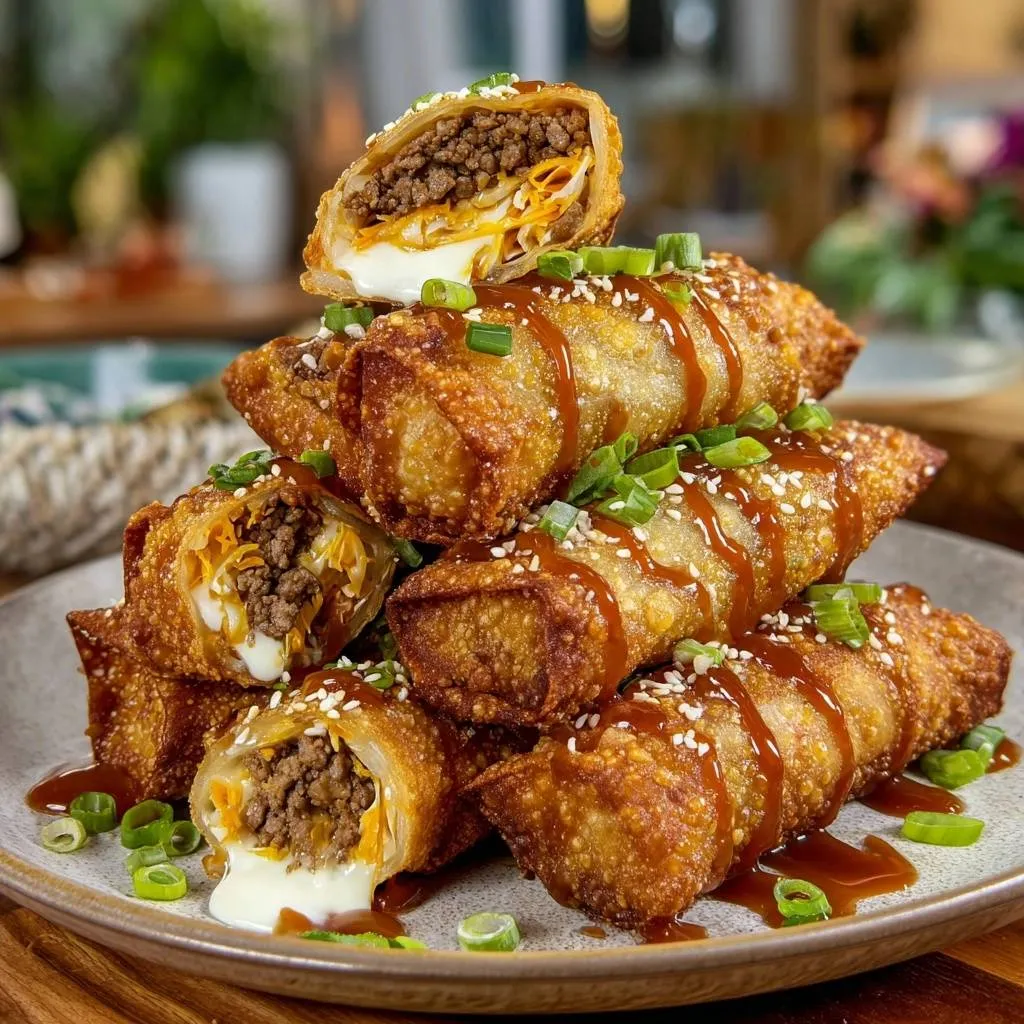
For the carrots, skip the fine grater and go for “matchstick” or julienned cuts. Finely grated carrots tend to turn into a watery mush when heated, which introduces unwanted moisture to the wrapper. Matchsticks, however, retain a slight “al dente” snap even after being fried, providing a much better mouthfeel and keeping the interior airy rather than compacted.
Aromatics: The Role of Ginger and Garlic
Never underestimate the power of fresh aromatics in a fried dish. Using fresh minced ginger and garlic is non-negotiable here because they provide a sharp, bright punch that bottled powders simply cannot replicate. The ginger adds a subtle heat and floral note that wakes up the heavy beef.
When you sauté these aromatics with the beef, you are building a foundational layer of flavor. The oils from the garlic and ginger permeate the meat and eventually the cheese. This ensures that every single bite is seasoned from the inside out, rather than just relying on a dipping sauce for flavor.
Essential Components for Cheesy Beef and Carrot Egg Rolls
To get started, you will need one pound of lean ground beef and two cups of matchstick carrots. For the wrapper, grab a standard pack of 12 egg roll wrappers from the refrigerated section. You will also need two tablespoons of soy sauce and one tablespoon of oyster sauce. The oyster sauce is a “secret weapon” here; it adds a glossy dark color and a deep, savory syrupiness that soy sauce alone lacks.
In addition to the proteins and sauces, you will need a tablespoon of minced ginger, two cloves of garlic, and a quarter-cup of sliced green onions. For the final touch, have some sesame seeds and vegetable oil ready for frying. These simple ingredients work together to create a complex, restaurant-quality profile in your own kitchen.
The Cheese Blend: Mozzarella vs. Cheddar
The cheese is what makes these egg rolls truly addictive, but you have to use the right types. I use a blend of 1.5 cups of low-moisture mozzarella and a half-cup of sharp cheddar. Mozzarella is the “workhorse” of the filling; it provides that iconic, stretchy cheese pull and a mild creamy flavor that doesn’t overpower the beef.
Sharp cheddar, on the other hand, provides the “bite.” It has a lower melting point and a higher salt content, which seasons the beef further as it melts. It is vital to use low-moisture mozzarella specifically. Fresh mozzarella (the kind stored in water) will release too much liquid as it melts, which will steam the wrapper from the inside and cause it to burst.
The Anti-Soggy Secret: Moisture Control Techniques
This is the most important part of the entire process: The Strainer Method. After you have cooked your beef and carrots, you must transfer the mixture into a fine-mesh strainer set over a bowl. Even if the pan looks dry, you would be surprised how much liquid drains out over fifteen minutes.
Residual fat and water from the vegetables are the primary causes of soggy egg rolls. If that liquid stays in the filling, it turns into steam the moment the egg roll hits the hot oil. That steam has nowhere to go, so it softens the dough, resulting in a limp, greasy wrapper. Draining the filling ensures that only the flavorful solids make it into your roll.
Why Cooling the Filling is Non-Negotiable
Patience is a virtue when it comes to rolling. If you place hot filling onto a cold, thin egg roll wrapper, condensation forms instantly on the surface of the dough. This creates a “wet spot” that will likely tear while you are rolling or, worse, explode in the deep fryer.
Let the filling sit in that strainer for at least 15 minutes until it reaches room temperature. This cooling window is a mandatory step for structural integrity. A cool, dry filling allows the wrapper to stay firm and pliable, which is exactly what you need to achieve those characteristic tiny bubbles on the surface during frying.
Step-by-Step: Preparing the Savory Beef Base
Start by browning your ground beef in a large skillet over medium-high heat. Don’t just cook it until the pink is gone; keep going until you see those dark, crispy caramelized bits on the edges of the meat. This “Maillard reaction” is where the deep, beefy flavor lives. Once browned, drain any visible fat from the pan before proceeding.
Next, toss in your carrots, garlic, and ginger. You only want to sauté these for about 2 to 3 minutes. The goal is to soften the carrots slightly while ensuring they still hold their shape. Stir in the soy and oyster sauces, coating everything evenly. Once the aroma of the ginger and garlic fills the kitchen, remove the pan from the heat and move the mixture to your strainer to cool.
The Art of the Tight Roll
To roll like a pro, lay your wrapper down in a diamond shape. Place about 2 to 3 tablespoons of the cooled beef mixture in the center and top it with your cheese blend. Fold the bottom corner up over the filling and tuck it under slightly to “snug” the ingredients together. This initial tuck is the key to a tight roll.
Fold the left and right corners toward the center, making it look like an open envelope. Continue rolling upward tightly. A tight roll is essential because air pockets can cause the egg roll to float unevenly or expand and pop in the oil. If the cheese leaks out into the fryer, it will burn and cause the oil to splatter violently, so make sure those sides are tucked in well.
Sealing the Deal: Water vs. Egg Wash
You need a “glue” to keep the top corner of the wrapper in place. A simple dab of water on the top edge usually does the trick for most home cooks. It hydrates the starch in the wrapper and creates a decent seal that holds up during the short frying time.
However, if you want an extra-secure bond, use a whisked egg wash (one egg beaten with a teaspoon of water). The protein in the egg creates a much stronger “industrial-strength” seal. This is especially helpful if you have overstuffed the rolls slightly, as it prevents the pressure of the melting cheese from forcing the seam open.
Frying for Maximum Crunch and Color
Oil temperature is the difference between a greasy mess and a golden masterpiece. You want your oil at exactly 350°F. If the oil is too cold, the wrapper will soak up the grease like a sponge before it crisps. If it is too hot, the outside will burn before the cheese in the center has a chance to melt.
Fry the rolls in small batches so you don’t crowd the pot, which would drop the oil temperature too quickly. It should take about 3 to 5 minutes to reach a deep golden brown. You will see those beautiful tiny bubbles forming on the surface—that is the sign of a perfectly hydrated and fried wrapper. Use a slotted spoon to gently rotate them so they brown evenly on all sides.
The Wire Rack vs. Paper Towel Debate
Most people instinctively reach for paper towels to drain fried food, but that is a mistake here. When you place a hot egg roll on a flat paper towel, the steam escaping from the bottom gets trapped between the roll and the towel. This creates moisture, which immediately softens the crunch you worked so hard to achieve.
Instead, use a wire cooling rack set over a baking sheet. This allows for 360-degree airflow, letting the steam escape from all sides of the egg roll. By the time they are cool enough to eat, the entire circumference of the roll will be shatteringly crisp, from the top all the way to the bottom.
Flavor Variations and Ingredient Swaps
If you can’t find oyster sauce at your local grocery store, you can substitute it with a vegetarian mushroom sauce or even a thick hoisin sauce mixed with a little extra soy. Both will provide that dark color and savory depth. For those who want a bit more crunch, feel free to add a cup of shredded cabbage to the beef and carrot mix for a more traditional “spring roll” texture.
You can also swap the ground beef for ground turkey or chicken if you prefer a lighter protein. Just keep in mind that poultry is leaner and may require an extra teaspoon of oil during the browning phase to prevent sticking. If you want a spicy kick, a teaspoon of red chili flakes or a squeeze of sriracha into the beef mixture works wonders.
What to Serve with Beef and Cheese Egg Rolls
Since these egg rolls are quite rich due to the beef and melted cheese, you want side dishes that offer a bright, acidic contrast. A cold cucumber salad with rice vinegar and sesame oil is a perfect palate cleanser. Pickled radishes or “quick-pickled” red onions also provide a sharp tang that cuts through the savory fat.
If you want to turn this into a full meal, serve the egg rolls alongside a bowl of light jasmine rice or a simple ginger-dressed green salad. For dipping, the classic choice is a sweet chili sauce, but a savory hoisin glaze or even a spicy hot mustard can add an exciting dimension to the flavor profile.
Make Ahead and Freezing Instructions
These are fantastic for meal prep. You can roll them ahead of time and keep them in the refrigerator for up to 24 hours before frying. Just make sure they are covered with a damp paper towel so the wrappers don’t dry out and crack. If you want to freeze them, do so “raw” (unfried). Place them on a parchment-lined tray in the freezer until solid, then transfer to a freezer bag.
When you are ready to eat frozen egg rolls, do not thaw them! Fry them directly from frozen, adding about 2 minutes to the total cook time. If you have leftovers that are already fried, the best way to regain that crunch is in the air fryer at 375°F for 3 to 5 minutes. Avoid the microwave, as it will make the wrappers chewy and tough.
Troubleshooting Common Egg Roll Failures
If your wrappers are tearing while you roll, you are likely putting in too much filling. Stick to 2 or 3 tablespoons; it might look small, but it expands as it cooks. Another common issue is greasy egg rolls. This almost always means your oil temperature dropped below 325°F. Use a thermometer to ensure the oil stays in that 350°F “Goldilocks” zone.
If your cheese isn’t melting by the time the outside is brown, your filling was likely too cold or your rolls are too thick. Ensure the beef mixture is at room temperature before rolling. If the rolls are very thick, lower the heat slightly to 335°F and fry them for an extra minute to give the heat time to penetrate the center without burning the shell.
Preventing Wrapper Bubbles and Blisters
While those tiny little bubbles are a hallmark of a good egg roll, massive blisters can be a problem. These usually occur when there is trapped air inside the roll or if the oil is screaming hot. When you are rolling, try to smooth the wrapper tightly against the filling to push out any air pockets.
If you see large bubbles forming instantly when the roll hits the oil, your temperature is likely too high. The water in the dough is turning to steam too violently. Lower the heat and let the oil cool for a minute before adding the next batch. A smooth, even fry results in a much more professional-looking appetizer.
Managing Oil Temperature Without a Thermometer
If you don’t have a kitchen thermometer, you can use the “wooden spoon” trick. Dip the handle of a wooden spoon into the oil. If steady, small bubbles start to rise from the wood and float to the surface, your oil is ready (around 350°F). If it bubbles violently, it is too hot; if it does nothing, it is too cold.
Another method is the bread cube test. Drop a small cube of white bread into the oil. If it turns golden brown in about 45 to 60 seconds, you are in the right temperature range. If it turns black instantly, pull the pot off the heat immediately. Consistent heat management is the final step to ensuring your egg rolls are perfectly cooked every single time.
How do I store leftover egg rolls?
Store any leftover egg rolls in an airtight container in the refrigerator for up to 3 days. To maintain the best texture, place a piece of parchment paper between layers to prevent them from sticking together. When you are ready to eat them, avoid the microwave at all costs, as it will make the wrappers soggy and rubbery. Instead, reheat them in an oven or air fryer at 375°F until the shell is crisp and the cheese is bubbly again.
Why did my egg rolls burst open in the fryer?
Egg rolls usually burst for two reasons: overfilling or trapped moisture. If you pack too much beef and cheese into the wrapper, the steam created during cooking will force the seams apart. Additionally, if you used high-moisture cheese or didn’t drain the beef well, the excess steam builds up pressure inside the roll. To prevent this, stick to the recommended 2-3 tablespoons of filling and ensure you use a tight “envelope” fold with a secure egg wash seal.
Can I use a different type of meat?
Yes, you can easily substitute the ground beef with ground chicken, turkey, or even ground lamb. If you use poultry, be aware that it has less natural fat, so you may need to add a teaspoon of oil to the pan to prevent the meat from drying out. Regardless of the meat you choose, the most important step remains the same: brown it thoroughly to develop flavor and drain all excess liquid before rolling.
What is the best oil for frying egg rolls?
You should use a neutral oil with a high smoke point, such as vegetable, canola, or peanut oil. These oils can handle the 350°F temperature required for frying without breaking down or adding an unwanted flavor to the wrappers. Avoid using olive oil or butter, as they have low smoke points and will burn, giving your egg rolls a bitter taste and a dark, unappealing color.
Can I bake these instead of frying them?
While frying provides the most authentic “shatter-crisp” texture, you can bake them for a lighter version. Preheat your oven to 400°F and place the egg rolls on a wire rack over a baking sheet. Lightly brush or spray the entire surface of each roll with vegetable oil to help them brown. Bake for 15 to 20 minutes, turning them halfway through, until they are golden and crisp. They won’t have the same bubbly texture as fried rolls, but they will still be delicious.
For more baking ideas, explore this crustless tuna and carrot bake for a similar texture.
Why are my egg rolls greasy?
Greasy egg rolls are almost always the result of low oil temperature. If the oil is below 325°F, the wrapper will absorb the oil rather than searing and crisping instantly. Always use a thermometer to check that your oil is at 350°F before adding the rolls. Also, avoid crowding the pan; adding too many cold egg rolls at once will cause the oil temperature to plummet, leading to a heavy, oily finish.
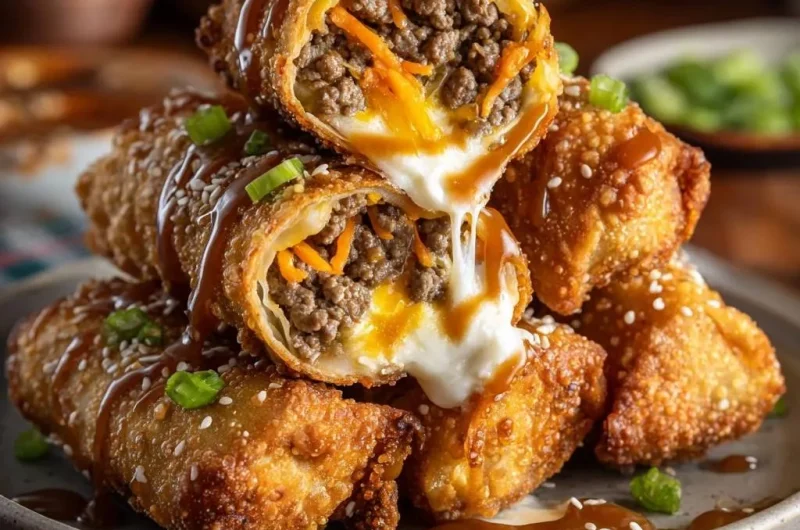
Cheesy Beef Egg Rolls
Course: AppetizerCuisine: Asian-American FusionDifficulty: medium12
egg rolls20
minutes15
minutes285
kcal35
MinutesA unique twist on traditional egg rolls featuring a savory beef and carrot filling with a dramatic mozzarella and cheddar cheese pull. The recipe focuses on a specific cooling and draining technique to ensure a shatteringly crisp wrapper every time.
Ingredients
1 pound lean ground beef
2 cups shredded carrots (matchstick style)
12 egg roll wrappers
1.5 cups shredded low-moisture mozzarella cheese (for that extreme cheese pull)
1/2 cup shredded sharp cheddar cheese
2 tablespoons soy sauce
1 tablespoon oyster sauce (for depth and color)
1 tablespoon minced ginger
2 cloves garlic, minced
1/4 cup sliced green onions
1 tablespoon sesame seeds
Vegetable oil for frying
1/2 cup sweet chili sauce or hoisin-glaze for drizzling
Directions
- Brown the ground beef in a large skillet over medium-high heat until fully cooked and slightly caramelized. Drain every drop of excess fat from the pan.
- Add the shredded carrots, garlic, and ginger to the beef. Sauté for 2-3 minutes until carrots are just tender but still hold their shape. Stir in the soy sauce and oyster sauce.
- THE CRISPY SECRET: Transfer the beef mixture to a fine-mesh strainer set over a bowl. Let the filling sit for at least 15 minutes to drain any remaining liquid and cool to room temperature. If the filling is hot or wet when you roll it, the wrapper will become soggy and tear during frying.
- Once the filling is completely cool and dry, stir in the green onions.
- Lay an egg roll wrapper on a clean surface in a diamond shape. Place 2-3 tablespoons of the beef mixture in the center. Top generously with a blend of mozzarella and cheddar cheese.
- Fold the bottom corner over the filling, tuck in the sides tightly to ensure no cheese leaks out, and roll. Seal the top edge with a dab of water or an egg wash.
- Heat 2-3 inches of vegetable oil in a heavy pot to 350 degrees F.
- Fry the egg rolls in batches for 3 to 5 minutes. Use a slotted spoon to turn them occasionally until they are deep golden brown and the wrapper shows those characteristic tiny bubbles.
- Drain on a wire rack (not paper towels) to allow air to circulate, keeping the bottoms perfectly crunchy.
- While hot, drizzle generously with sweet chili sauce. Sprinkle with sesame seeds and extra green onions before serving to match the visual presentation.
Notes
- The ‘Anti-Soggy Bottom Secret’ requires draining the filling in a fine-mesh strainer for 15 minutes and cooling it to room temperature before rolling. Always drain fried egg rolls on a wire rack rather than paper towels to maintain crunchiness.