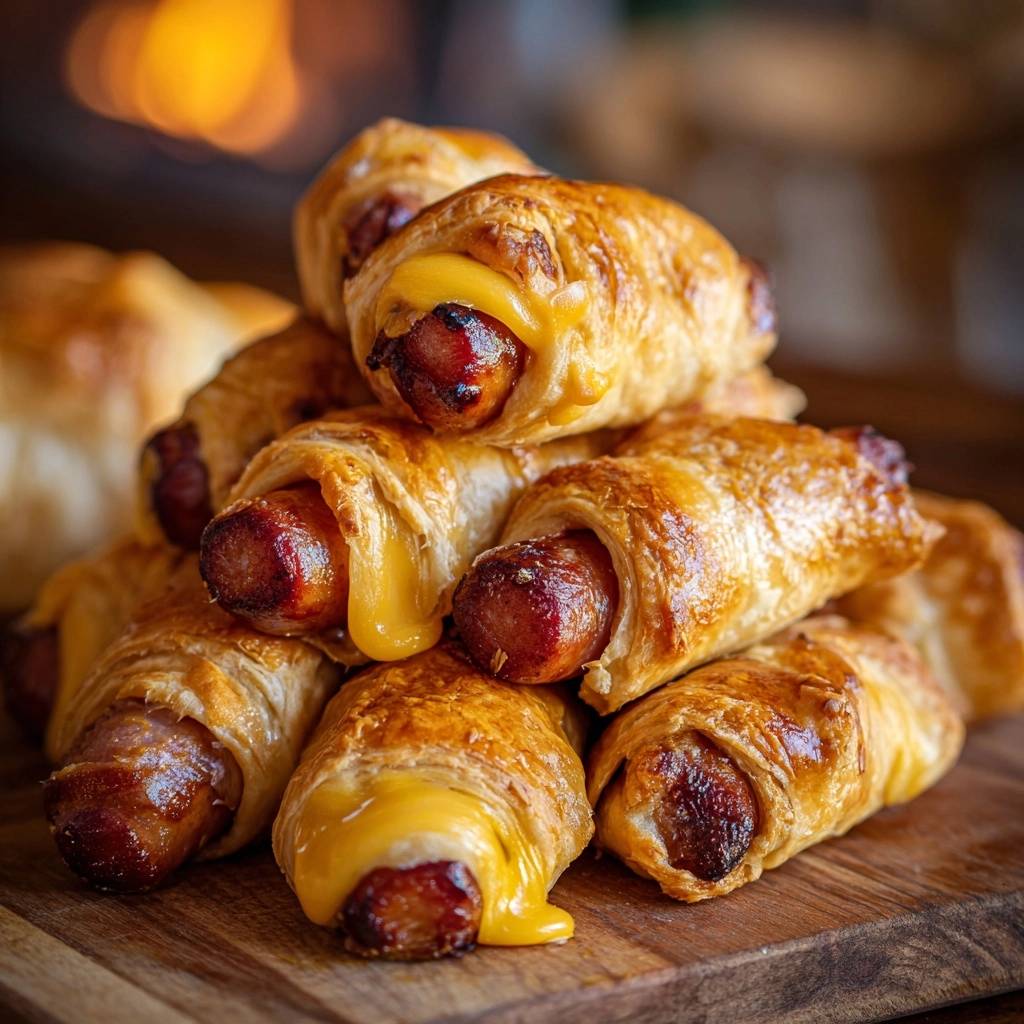
We have all been there: you reach for a golden, promising pastry at a party, only to bite into a greasy, doughy mess on the bottom. It is the classic “soggy bottom” tragedy that plagues even the most well-intentioned home cooks. While this appetizer is a staple of American comfort food, most versions rely on soggy dough and lukewarm meat that lacks any real texture.
The secret to a professional-grade roll lies in moisture control and heat management. By treating the puff pastry with respect and prepping the filling to remove excess fat, you can achieve a shatteringly crisp exterior that holds up for hours. This “Anti-Soggy” philosophy ensures every bite offers a distinct contrast between the flaky, buttery layers and the savory, snap-back of the sausage.
The real trick to success is the barrier method. Most people wrap raw dough directly around cold, damp sausages, which is a recipe for steam-trapped failure. Instead, we use a thin layer of sharp cheddar as a shield and pre-sear the meat to lock in flavor while keeping the pastry dry. It is a small extra step that makes a massive difference in the final result.
If you’re concerned about any layers becoming soggy, check out this epic baked taco dip.
The Anatomy of a Perfect Puff Pastry Appetizer
When you bite into a perfect cheesy pig in a blanket, you should hear an audible crunch. That sound is the result of hundreds of microscopic layers of butter and flour expanding rapidly in a hot oven. If the pastry is heavy or limp, the fat has likely melted into the dough rather than lifting it up.
This recipe focuses on managing the interaction between the sausage juices and the delicate pastry. Because sausages are naturally high in fat and moisture, they tend to “leak” during the baking process. By controlling this migration of liquid, we ensure the bottom of the pastry stays as crisp as the top, creating a uniform, gourmet texture.
Essential Components for Cheesy Pigs in a Blanket
Quality ingredients are the foundation of this dish. For the pastry, an all-butter refrigerated puff pastry is non-negotiable if you want that signature visual flake. Many brands use vegetable oils, which lack the flavor and the specific melting point required to create a truly light, airy crust. Butter provides the steam necessary for the “puff” while adding a rich, toasted flavor.
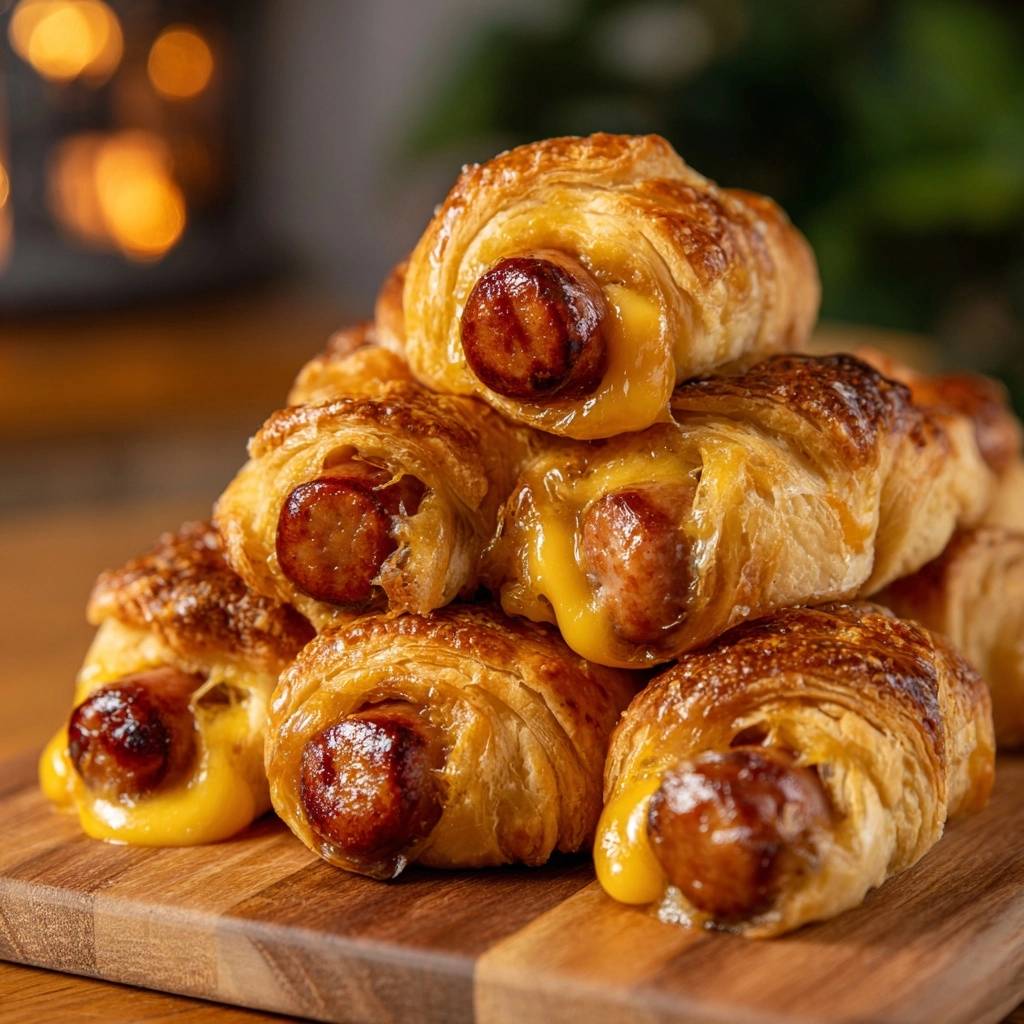
The protein choice matters just as much. Beef cocktail franks offer a robust, savory profile that stands up well to the richness of the dough. Unlike poultry-based sausages, beef franks maintain their structural integrity and provide a satisfying “snap” when bitten. This contrast in textures is what makes the appetizer so addictive.
Sharp cheddar is the final piece of the puzzle. While a mild cheese might disappear into the dough, a sharp cheddar provides a punchy flavor that cuts through the butter. It also has a lower moisture content than younger cheeses, which helps prevent the pastry from becoming waterlogged during the bake.
Selecting the Right Pastry and Protein
If you are choosing between refrigerated and frozen puff pastry, refrigerated is often easier to work with because it hasn’t undergone the ice crystal formation that can sometimes dampen the rise. However, if you use frozen, ensure it thaws completely in the fridge overnight. Never thaw it on the counter, or the butter will get too soft, ruining your layers.
Check the salt content on your mini sausages as well. Since puff pastry and cheese both contain salt, you don’t want a sausage that is an absolute salt bomb. Look for “hardwood smoked” varieties to add a layer of complexity that mimics a high-end charcuterie board.
The Role of Sharp Cheddar as a Moisture Barrier
The “Barrier Method” is a game-changer for this recipe. By placing the strip of cheddar cheese directly onto the dough before the sausage, you create a physical wall. As the oven heats up, the cheese melts and bonds to the pastry, preventing the sausage juices from soaking into the raw dough.
This technique ensures that the initial minutes of baking—when the pastry is most vulnerable—are spent crisping up rather than absorbing grease. The result is a clean, dry interior and a cheese “skirt” that often crisps up at the ends of the roll for extra flavor.
For a similar leak-proof approach, check out these cheeseburger bombs.
The Science of Preventing Soggy Pastry Bottoms
To master this dish, you have to understand the physics of steam. When the water inside the sausage heats up, it turns into steam. If that steam is trapped between the meat and the dough, it has nowhere to go but into the pastry, turning it into a gummy paste. This is why most store-bought or rushed versions fail.
Fat management is equally important. Sausages render out liquid fat as they cook. If this fat pools on the baking sheet, the bottom of your pigs in a blanket will essentially deep-fry in sausage grease. By pre-treating the meat, we remove the bulk of this excess moisture before it ever touches the dough.
Why Pre-Searing the Sausages is Mandatory
Pre-searing the sausages in a dry pan for a few minutes triggers the Maillard reaction. This creates a browned, flavorful crust on the meat that you simply cannot get from baking alone. More importantly, it renders out the surface fat and tightens the casing.
When you sear them first, you are essentially “pre-shrinking” the sausage. This prevents the meat from pulling away from the pastry inside the oven, which often leaves a hollow, sad-looking gap. Let them cool completely after searing; putting hot meat on cold pastry will melt the butter instantly and kill the puff.
Surface Moisture: The Enemy of the Crunch
Even after searing, you must pat the sausages dry with paper towels. Any microscopic layer of water left on the surface will turn to steam. It might seem like a small detail, but moisture is the absolute enemy of a crisp puff pastry. A dry sausage ensures a tight, dry bond with the cheese and dough.
Step-by-Step: Preparing the Pastry and Filling
Working with puff pastry requires a bit of speed. You want the dough to be chilled but pliable. If it gets too warm, the butter layers will merge, and you will lose the “shatter” effect. If you feel the dough getting sticky or limp, pop it back in the fridge for ten minutes before continuing.
When cutting your pastry, triangles are the traditional choice for a “croissant” look, but thin strips also work beautifully for a more modern, banded appearance. Aim for strips about one inch wide. This allows the ends of the sausage to peek out, which looks much more appetizing and allows steam to escape from the ends of the roll.
Rolling and Sealing for Structural Integrity
When you roll the sausage, keep the tension tight. A loose roll will unfurl in the oven as the pastry expands. Start at the wide end of your triangle or the edge of your strip and roll toward the point. This creates a beautiful tapered look that showcases the layers of the dough.
The most critical part of the assembly is the seam. Always place the rolls on the baking sheet with the seam side down. The weight of the sausage keeps the pastry from popping open like a jack-in-the-box. This ensures a uniform, circular shape that looks professional and stays together when dipped.
The Egg Wash: Achieving a Mahogany Glaze
An egg wash is the difference between a pale, matte finish and a deep, mahogany glow. By whisking a whole egg with a tablespoon of water, you create a glaze that provides both fat (for shine) and protein (for browning). It acts like a varnish for your pastry.
Be careful when applying the wash. You want a generous coat on the tops and sides, but avoid letting it pool at the bottom of the roll on the parchment paper. If the egg wash pools, it can act like glue, making the rolls difficult to remove and potentially tearing the delicate bottom crust.
Precision Baking and Temperature Control
Puff pastry needs high heat to succeed. Setting your oven to 400°F (200°C) is the “sweet spot.” This intense heat causes the water in the butter layers to evaporate almost instantly. This rapid evaporation is what forces the layers of dough apart, creating that incredible height and airy texture.
If the oven is too cool, the butter will simply melt and leak out of the pastry before the dough has a chance to set. You will end up with a flat, greasy cracker instead of a puffed pastry. Always use a heavy-duty baking sheet, as thin pans can warp and cause uneven browning.
Visual Cues for Doneness
Don’t just rely on the timer; use your eyes. You are looking for a deep, golden-brown color—think of the color of a well-baked croissant. The pastry should look dry and set, not shiny or translucent. You should also see the cheese “skirts” at the ends turning a dark, lacy orange.
If the tops are browning too fast but the sides look pale, you can tent the pan loosely with foil for the last few minutes. However, at 400°F, they should brown evenly. If you see the cheese bubbling vigorously and the pastry has doubled in size, you are likely in the home stretch.
The Wire Rack Cooling Strategy
As soon as the pan comes out of the oven, move the rolls to a wire cooling rack. This is a non-negotiable step for the “Anti-Soggy” method. If they sit on the hot baking sheet, the heat from the pan will continue to cook the bottoms, and steam will build up underneath the roll.
A wire rack allows air to circulate 360 degrees around the appetizer. This sets the crust and ensures the bottom stays as crunchy as the top. Let them rest for at least five minutes. This gives the molten cheese a chance to firm up slightly so it doesn’t all run out when you take your first bite.
Flavor Variations and Gourmet Swaps
Once you master the base technique, you can get creative with the flavors. Instead of sharp cheddar, try using Gruyère for a sophisticated, nutty profile that feels very French. If you like heat, a thin slice of Pepper Jack or a smear of jalapeño jelly inside the roll adds a fantastic kick.
More Savory Ideas
If you enjoyed this recipe, consider these other flavorful dishes.
- For a hearty and satisfying meal, try the Open-Faced Cheeseburger Melt, offering a similar cheesy indulgence.
- If you liked the savory pie aspect, you might also enjoy the Savory Beef and Cheddar Breakfast Pie for another comforting option.
Toppings are another way to add personality. While coarse salt is classic, everything bagel seasoning is a crowd favorite. You can also use poppy seeds, dried minced garlic, or even a dusting of smoked paprika to give the rolls a beautiful color and a hint of woodsy flavor.
Dipping Sauces Beyond Standard Mustard
While yellow mustard is traditional, these elevated pigs in a blanket deserve something better. A spicy honey-dijon sauce provides the perfect balance of sweet and heat. Simply mix Dijon mustard with a bit of honey and a pinch of cayenne pepper.
For a creamier option, a horseradish dip made with sour cream, prepared horseradish, and fresh chives cuts through the richness of the puff pastry beautifully. If you want something truly gourmet, a balsamic reduction drizzle can add a sophisticated acidity that brightens the whole dish.
Make-Ahead Strategies and Storage
These are perfect for hosting because you can do most of the work in advance. You can assemble the rolls (up to the egg wash step) and freeze them on a baking sheet. Once frozen solid, transfer them to a freezer bag. They will stay fresh for up to a month.
When you are ready to serve, bake them straight from the freezer. Do not thaw them, as this will make the pastry soggy. Just add about 5-8 minutes to the total baking time. Apply the fresh egg wash right before they go into the oven for the best possible shine.
Troubleshooting Common Pastry Issues
If your pastry didn’t puff, the most likely culprit is the temperature of the dough. If the butter melts into the flour before it hits the oven, the layers disappear. Always keep your dough cold. Another common issue is over-handling; the more you touch the dough, the more the gluten develops, which can make the pastry tough rather than flaky.
If you experience “blowouts” where the sausage pops out of the dough, it usually means the roll wasn’t tight enough or the seam wasn’t placed face-down. Make sure to press the seam firmly against the parchment paper to lock everything in place during the initial rise.
Why did my pastry fail to puff?
Beyond temperature, check your oven calibration. If your oven runs cold, the pastry will “slump” instead of rising. Using a stone or a heavy baking sheet can help maintain a consistent temperature. Also, ensure you aren’t using “low-fat” spreads or butter substitutes, as they contain too much water and not enough fat to create the necessary steam.
How to handle “blowouts” and leaks
Cheese leaks are actually part of the charm, but if you want a cleaner look, ensure the cheese strip is slightly shorter than the sausage. This keeps the cheese tucked inside the “blanket” while it melts. If a sausage starts to slide out, you can gently push it back in with a toothpick immediately after taking the pan out of the oven.
Pairing Suggestions for Entertaining
Since these rolls are rich and savory, you want drinks that offer a crisp, refreshing contrast. Sparkling botanical waters with hints of cucumber or lime are excellent choices. They cleanse the palate between bites of buttery pastry and salty sausage.
A sophisticated ginger beer or a sparkling apple cider also works wonderfully. The sharp carbonation and slight spice of the ginger or the acidity of the apple cut through the fat of the cheddar and puff pastry, making each bite feel as fresh as the first. Serve these in chilled glassware to keep the experience feeling upscale.
Frequently Asked Questions
Can I use crescent roll dough instead of puff pastry?
You can, but the texture will be completely different. Crescent roll dough is a leavened bread dough, so it will be soft, fluffy, and more like a dinner roll. Puff pastry is unleavened and relies on fat layers for lift, resulting in a shatteringly crisp, laminated texture. For the “Anti-Soggy” gourmet version, puff pastry is the superior choice.
How do I reheat these without losing the crunch?
Never use a microwave! The microwave will turn the pastry into a rubbery, soggy mess in seconds. Instead, place the leftovers in a 350°F oven or a toaster oven for 5-8 minutes. This recrisps the butter layers and melts the cheese without drying out the sausage. An air fryer also works exceptionally well at 340°F for about 3-4 minutes.
Can I use full-sized sausages for this recipe?
Yes, you can use full-sized hot dogs or bratwursts. You will need to adjust the pastry size accordingly, cutting larger triangles or wider strips. Because larger sausages hold more moisture, the pre-searing step becomes even more critical. You may also need to increase the baking time by 5-10 minutes to ensure the center of the larger sausage is hot.
What is the best way to transport these to a party?
To keep them crisp, let them cool completely on a wire rack first. If you pack them while warm, the steam will soften the pastry in the container. Once cool, layer them in a sturdy container with parchment paper between the layers. If you need to serve them warm, transport them in a ventilated box (like a cardboard bakery box) rather than an airtight plastic container.
Why is my egg wash streaky or uneven?
Streaky egg wash usually happens if the egg isn’t whisked thoroughly enough. Make sure the yolk and white are completely incorporated into a uniform liquid. Adding a pinch of salt can help break down the proteins in the egg white, making it easier to brush on smoothly. Also, use a pastry brush with fine bristles rather than a spoon to ensure an even, thin coating.
Cheesy Pigs in a Blanket
Course: AppetizerCuisine: AmericanDifficulty: easy8
servings15
minutes20
minutes280
kcal35
MinutesA classic party favorite elevated with moisture control techniques. By pre-searing the sausages and using cheese as a barrier, these rolls stay crispy on the bottom and molten in the middle.
Ingredients
1 package (approx. 14 oz) refrigerated puff pastry (all-butter preferred for the visual flake)
16 beef cocktail franks or mini smoked sausages
8 slices sharp cheddar cheese, halved into strips
1 large egg, beaten
1 tablespoon water
Optional: coarse salt or everything bagel seasoning for topping
Directions
- Preheat your oven to 400 degrees F (200 degrees C). Line a heavy baking sheet with parchment paper.
- The most important step to prevent a soggy bottom is to pat your sausages completely dry with paper towels. Sauté them in a dry pan over medium-high heat for 3-4 minutes until the skins are slightly blistered and browned. This renders out excess surface fat and ensures the sausage ends look roasted, not steamed. Let them cool completely on a paper towel.
- Roll out your puff pastry on a lightly floured surface. Cut the pastry into long, thin triangles (croissant style) or strips about 1 inch wide.
- Place a strip of cheddar cheese on the dough first. This acts as a barrier between the sausage and the pastry.
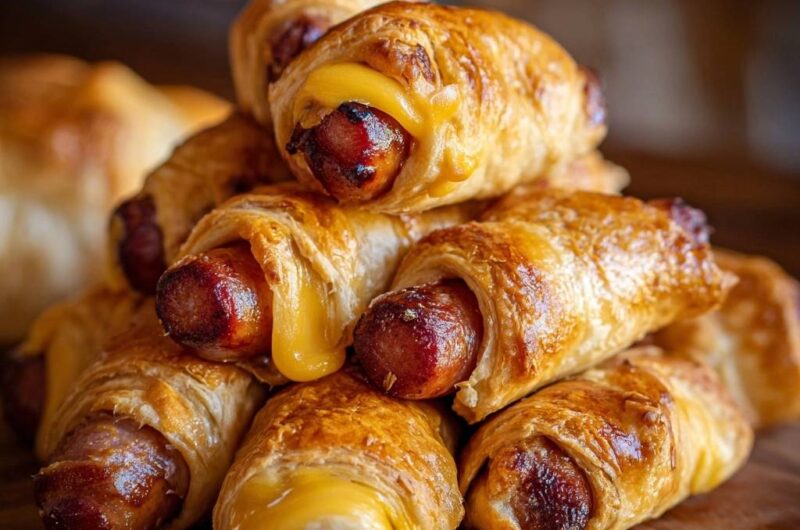
- Place the dried, cooled sausage on the wide end of the dough/cheese strip and roll tightly toward the point. Ensure the cheese is tucked inside so it melts out the ends beautifully as seen in the image.
- Arrange the rolls on the baking sheet with the seam side down. This weight prevents the dough from unfurling and keeps the roll tight.
- Whisk the egg and water together. Brush a generous layer of egg wash over the tops and sides of the pastry. This creates the deep mahogany, glossy finish shown in the photo.
- Bake for 18 to 22 minutes. You are looking for a deep golden-brown color and visible puffing of the pastry layers.
- Immediately move the rolls to a wire cooling rack. Letting them sit on the hot pan allows steam to build up under the pastry, which ruins the crunch. Serve warm while the cheese is still molten.
Notes
- To ensure maximum crunch, always move the finished rolls to a wire cooling rack immediately after baking to prevent steam from softening the pastry.