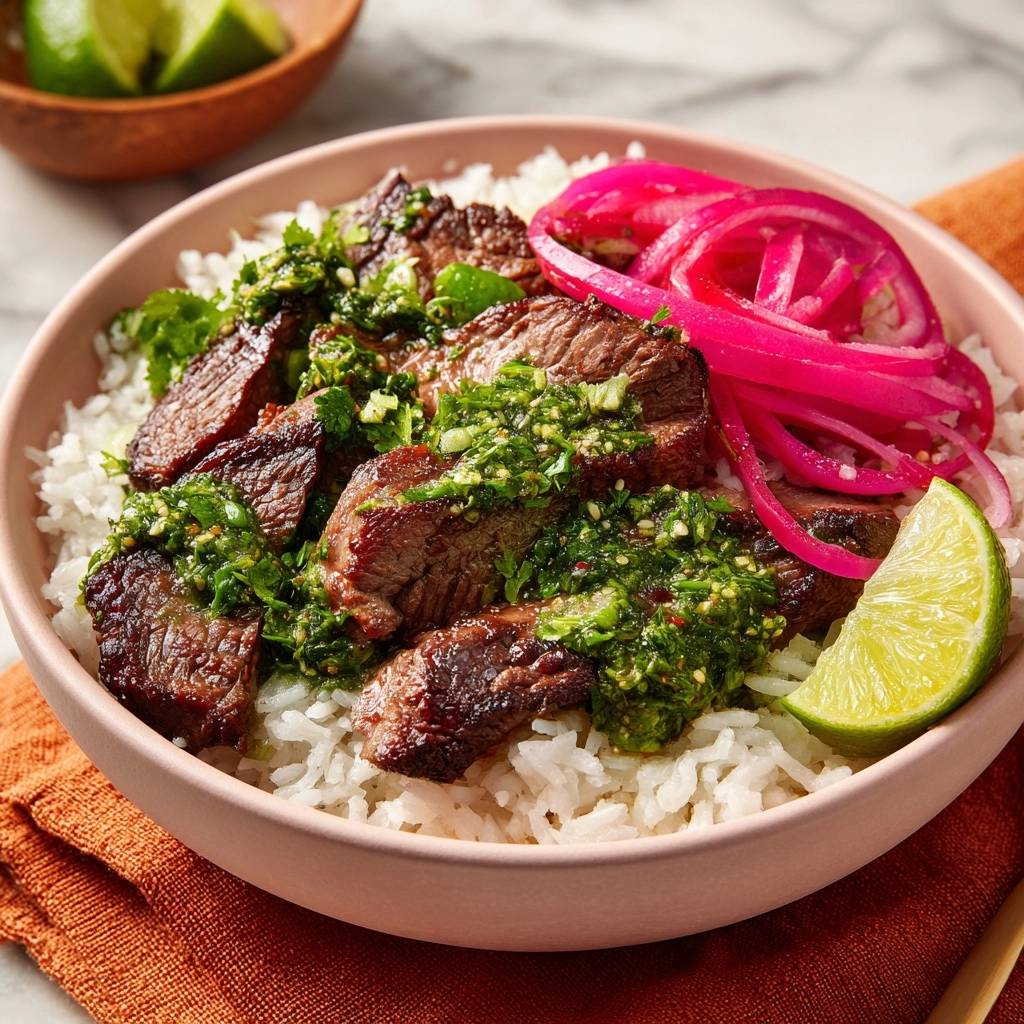
We’ve all been there. You spend good money on a beautiful piece of steak, sear it off with high hopes, and end up with something that feels like chewing on a rubber band. It’s frustrating because you can see the potential for a restaurant-quality meal, yet the texture just isn’t hitting the mark. These Chimichurri Steak Rice Bowls are designed specifically to solve that “tough meat” dilemma while delivering a massive punch of flavor.
The magic of this dish lies in the contrast of textures and temperatures. You get the warm, fluffy rice acting as a canvas for the rich, mahogany-crusted beef. Then, the cold, vibrant chimichurri hits your palate with a zing of vinegar and fresh herbs, followed by the crunch of bright pink pickled onions. It’s a complete sensory experience that feels fancy but comes together in about 35 minutes.
If you want to guarantee a melt-in-your-mouth result, the secret isn’t just the heat; it’s the moisture control. Most people pull steak straight from the fridge and toss it into a lukewarm pan. To get that professional crust and tender interior, you must pat the steak bone-dry with paper towels and wait for your oil to shimmer and slightly smoke. This ensures the heat goes into browning the meat immediately rather than steaming it in its own juices.
For a similar approach to cooking steak, check out this loaded steak burrito bowl with juicy sear technique.
The Science of Tenderness: Why Your Steak is Tough
Understanding why flank and skirt steaks turn out tough requires a quick look at how cows move. These cuts come from the abdominal muscles, which work hard throughout the animal’s life. Consequently, they are packed with long, thick muscle fibers and a fair amount of connective tissue. If you cook them like a thick filet mignon, you’re going to have a bad time. However, these fibers also hold incredible beefy flavor that more expensive cuts often lack.
When you apply high heat to the surface of the steak, a chemical reaction called the Maillard reaction occurs. This isn’t just browning; it’s the rearrangement of amino acids and sugars that creates hundreds of flavor compounds. While that high heat is great for the crust, it also causes the muscle fibers to contract and tighten up, squeezing out moisture like a wrung-out sponge. This is why the steak feels firm and bouncy right after it leaves the pan.
The resting phase is the biological requirement for a tender bite. During those ten minutes on the cutting board, the temperature stabilizes and the muscle fibers begin to relax. As they loosen, they reabsorb the juices that were pushed toward the center during cooking. If you cut the meat too soon, those juices end up on your board instead of in your mouth, leaving the fibers dry and stringy. Patience is literally the most important ingredient for tenderness.
Essential Components for Chimichurri Steak Rice Bowls
Quality ingredients make a massive difference when the preparation is this simple. For the sear, you need a high-smoke point oil like avocado or canola oil. Avoid extra virgin olive oil for the actual frying, as it will burn and turn bitter at the temperatures required for a good crust. Save that premium olive oil for the chimichurri sauce where its fruity, peppery notes can really shine.
The base of the bowl matters more than you might think. Long-grain white rice is the gold standard here because the grains stay distinct and firm. Unlike short-grain or sushi rice, which can become sticky and clump together, long-grain rice provides a light, airy texture. This allows the herb-infused oil from the chimichurri to seep down between the grains, flavoring every single bite of the bowl.
Red wine vinegar is the unsung hero of the sauce. While the herbs provide the “green” flavor, the acidity of the vinegar acts as a chemical tenderizer for your palate. It cuts through the heavy richness of the beef fat and the olive oil, keeping the dish from feeling too “heavy.” It provides that bright, electric finish that makes you want to go back for a second bowl.
Selecting the Right Cut: Flank vs. Skirt Steak
Flank steak and skirt steak are often used interchangeably, but they have slight differences. Flank steak is thicker, wider, and a bit leaner. It has a very consistent grain, making it easier to slice. Skirt steak is thinner with more fat marbling, which often leads to a more intense flavor. However, because it’s thinner, it’s much easier to overcook, so you have to be incredibly fast with your sear.
When you’re at the butcher counter, look for a deep red color and avoid any meat that looks grey or sits in a lot of liquid. Check the thickness of the cut; you want a piece that is uniform from end to end so it cooks evenly. If one end is much thinner than the other, it will turn into “steak jerky” by the time the thick part is medium-rare. Look for a piece with clear, visible muscle fibers running in one direction.
Fresh Herbs vs. Dried: The Chimichurri Rule
There is no substitute for fresh parsley and cilantro in this recipe. Dried herbs are great for slow-cooked stews, but they lack the volatile oils and “grassy” brightness that define a true chimichurri. When you use fresh herbs, you’re getting a burst of chlorophyll and essential oils that wake up the entire dish. If you try to use dried parsley, the sauce will taste dusty and muted.
Texture is also a major factor. While it’s tempting to throw everything into a food processor, I strongly recommend hand-chopping your herbs. Blending the sauce often turns it into a bright green paste or an emulsion. Hand-chopping keeps the individual components distinct, giving you a rustic, chunky texture that looks beautiful draped over the steak. You want to see the flecks of garlic and the red pepper flakes swimming in the oil.
Step-by-Step: Preparing the Quick Pickled Onions
Quick-pickling is a kitchen superpower that transforms a raw, pungent red onion into a sweet, tangy, and crunchy garnish. The acetic acid in the apple cider vinegar works to break down the harsh sulfur compounds in the onion. It also softens the cellular structure just enough so the onion loses its “bite” but keeps its satisfying snap. It’s the perfect acidic counterpoint to the savory steak.
As the onions sit in the brine of vinegar, sugar, and salt, you’ll notice a dramatic color shift. They start as a dull, matte purple and gradually turn into a neon, vibrant pink. This happens because the acid reacts with the natural pigments in the onion. For the best results, slice your onions as thin as possible—almost paper-thin—so the brine can penetrate the layers quickly. Twenty minutes is the minimum, but they only get better the longer they sit.
The Foundation: Achieving Fluffy Long-Grain Rice
The biggest mistake people make with rice is skipping the rinse. If you don’t wash your rice, the excess surface starch will turn into a sticky glue as it cooks, resulting in a gummy mess. Place your rice in a fine-mesh strainer and run cold water over it, swirling with your fingers, until the water running out the bottom is clear rather than milky. This simple step ensures every grain stays separate and fluffy.
To add an extra layer of flavor, try toasting your dry rice grains in a teaspoon of oil for two minutes before adding the water. You’ll hear them crackle and smell a slightly nutty aroma. This “pilaf method” prevents the grains from breaking and adds a sophisticated depth to the base of your bowl. Once the water is added, keep the lid on tight and don’t peek; the steam is doing all the hard work for you.
Technique: How to Sear Steak Without Smoke or Stress
A perfect sear requires a dry surface. If your steak is damp when it hits the pan, the heat has to evaporate that moisture before it can start browning the meat. This leads to a grey, steamed steak rather than a crusty one. Use several paper towels to press firmly on both sides of the meat until it feels completely dry to the touch. Only then should you season it generously with salt and pepper.
Get your cast-iron skillet hot—really hot. You want to see just a tiny wisp of smoke rising from the oil. When you lay the steak down, you should hear a loud, aggressive sizzle. If it’s a quiet hiss, your pan isn’t hot enough. Once the meat is in, leave it alone. Don’t poke it, don’t move it, and don’t flip it prematurely. It needs that uninterrupted contact with the hot metal to develop a deep, mahogany-colored crust.
Flip the steak once and repeat the process on the other side. For a flank steak that is about an inch thick, 4 minutes per side usually hits that perfect medium-rare sweet spot. If you have a meat thermometer, you’re looking for an internal temperature of 130°F to 135°F. Remember that the temperature will continue to rise a few degrees while the meat rests, so pull it off the heat just before it reaches your final target.
The 10-Minute Rule: Why Resting is Mandatory
Think of a steak like a sponge. When it’s raw, it’s full of water. When you cook it, you’re essentially squeezing that sponge. If you cut into it immediately, all that “water” (the flavorful juices) will pour out onto the board. By letting the steak rest for a full 10 minutes, you’re allowing the sponge to relax and soak that moisture back into its fibers. This is the difference between a dry, chewy steak and one that is succulent and tender.
Don’t tent the steak too tightly with foil, or you’ll end up steaming the crust you worked so hard to create. Just let it sit on a warm plate or a wooden cutting board. This is the perfect time to finish up your rice or set the table. Resist the urge to “just check” a piece. Every poke or prodding during the rest period can cause juice loss. Trust the process and let the residual heat do its final bit of magic.
Slicing Against the Grain for Maximum Tenderness
Even a perfectly cooked steak can be tough if you slice it the wrong way. Look closely at the meat; you’ll see long lines running across it. Those are the muscle fibers, also known as “the grain.” If you slice parallel to those lines, you’re leaving the long fibers intact, and your teeth have to do the hard work of breaking them down. That’s what creates that “chewy” sensation.
Instead, you want to slice perpendicular to those lines—against the grain. By doing this, you are cutting those long, tough fibers into very short pieces. This essentially “pre-chews” the meat for you, making it feel incredibly tender in your mouth. For the best presentation and texture, hold your knife at a 45-degree angle to create wide, thin bias-cut slices. This increases the surface area for the chimichurri to cling to.
Assembling the Chimichurri Steak Rice Bowls
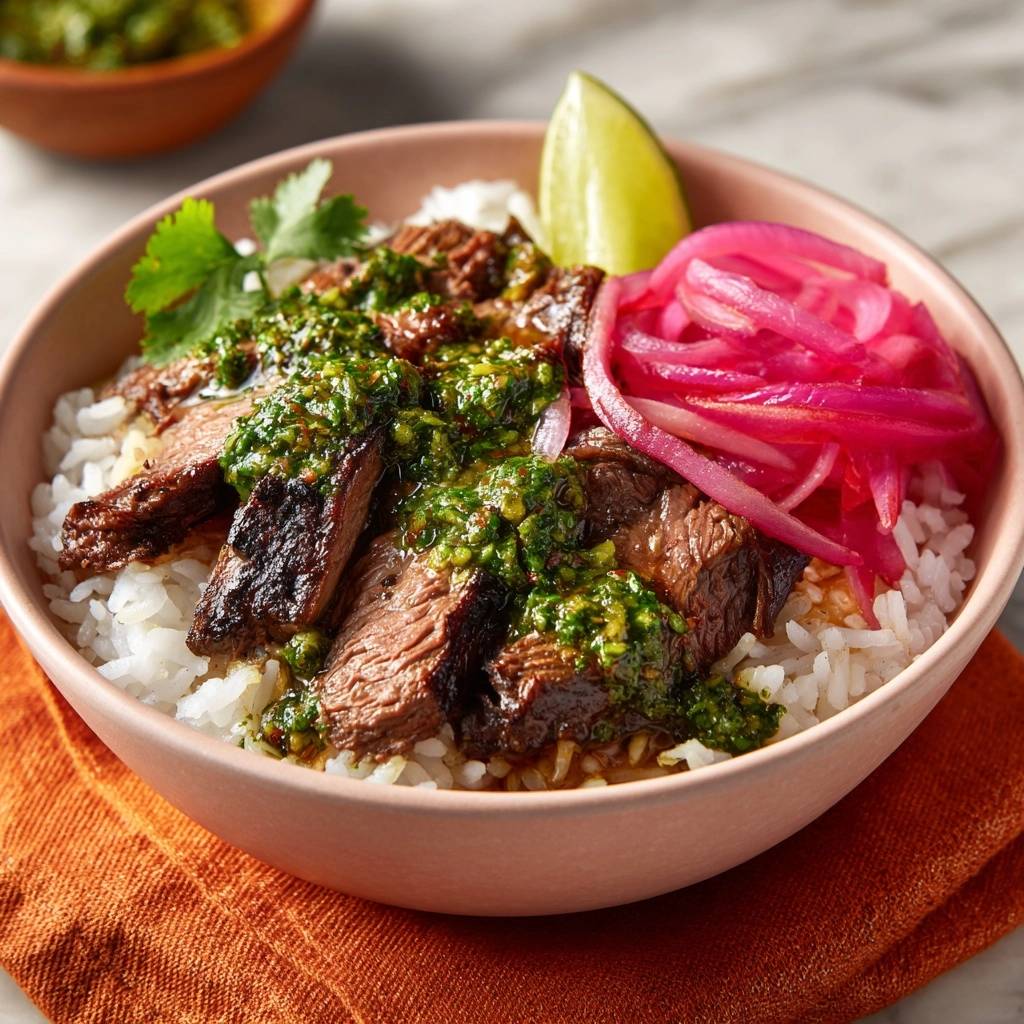
Building the bowl is all about architecture. Start with a generous mound of fluffy rice as your foundation. It acts as a sponge for the steak juices and the herb oil. Fan out your steak slices over one side of the rice, showing off that beautiful pink interior. The visual appeal of a medium-rare steak is half the enjoyment of the meal, so don’t hide it!
Round Out Your Meal
Here are a couple of ideas to complement your chimichurri steak rice bowls.
- For a fresh and vibrant addition, consider the Roasted Broccoli and Pineapple Salad, bringing a sweet and savory element to the table.
- If you’re in the mood for something creamy and satisfying, the Creamy Classic Chickpea Salad offers a delightful texture contrast.
Spoon the chimichurri right down the center of the steak. You want enough so that some of it drips down into the rice below. Add a bright cluster of the pickled onions to the side for a pop of color and crunch. Finally, don’t forget the lime wedge. Squeezing fresh lime juice over the bowl right before eating provides a final hit of citric acid that brightens the herbs and cuts through the richness of the beef fat.
Troubleshooting Common Steak and Rice Issues
If your steak came out grey instead of brown, your pan simply wasn’t hot enough or you overcrowded it. Next time, make sure the oil is shimmering and cook the meat in batches if your skillet is small. If the rice turned out mushy, you likely used too much water or didn’t rinse the starch off. Stick to a strict 1:1.5 or 1:2 ratio depending on your specific brand of rice and always use a tight-fitting lid.
Sometimes chimichurri can taste slightly bitter. This usually happens if the garlic is old or if you used too much dried oregano. To fix this, add a tiny pinch of sugar or an extra splash of vinegar to balance the flavors. If your pickled onions are still too crunchy and raw-tasting, they just need more time. You can speed up the process by slightly warming the vinegar mixture before pouring it over the onions.
Flavor Variations and Ingredient Swaps
This bowl is incredibly versatile. If you’re looking for a low-carb option, swap the white rice for cauliflower rice or a bed of massaged kale. The chimichurri works beautifully as a dressing for greens as well. For those who want more heat, finely dice a Fresno chili or a jalapeño and add it directly into the chimichurri sauce. It adds a fresh, spicy kick that complements the garlic and vinegar.
For another take on building flavorful bowls, check out zesty ground beef burrito bowls.
If you’re meal prepping, this is a fantastic recipe. Store the rice and steak together, but keep the chimichurri and pickled onions in separate small containers. This prevents the rice from getting soggy and keeps the herbs tasting fresh. When you’re ready to eat, reheat the rice and steak gently, then top with the cold sauce and onions for that perfect temperature contrast.
Expert Tips for Professional Presentation
To make your bowls look like they came from a high-end bistro, use wide, shallow bowls rather than deep ones. This allows you to spread the ingredients out so the diner can see every component. Fanning the steak is the classic “chef move”—overlap the slices slightly so they look like a deck of cards being spread. It highlights the contrast between the dark crust and the tender center.
A final sprinkle of flaky sea salt over the steak just before serving adds a wonderful crunch and makes the flavors pop. If you want to go the extra mile, char your lime wedges in the steak pan for 30 seconds before serving. It softens the lime and gives the juice a slightly smoky, caramelized flavor that ties the whole bowl together. It’s these small details that elevate a simple weeknight dinner into something special.
Frequently Asked Questions
Can I use a different cut like Ribeye or Sirloin?
Yes, you absolutely can. Ribeye will be much richer and fattier, while sirloin is a great middle-ground option. However, keep in mind that these cuts don’t have the same distinct grain as flank or skirt steak, so the “slicing against the grain” rule is less critical but still helpful. Adjust your cooking time based on the thickness of the cut, as a thick ribeye will take longer than a thin skirt steak.
How long does the Chimichurri sauce last in the fridge?
Chimichurri is best the day it’s made because the herbs are at their brightest. However, it will stay good in an airtight container for about 3 to 4 days. The acid in the vinegar will eventually cause the green herbs to turn a duller olive color, but the flavor will still be excellent. Just give it a good stir before using, as the oil and vinegar will naturally separate.
Can I make the pickled onions a day in advance?
Actually, I recommend it! While 20 minutes is enough for a “quick” pickle, letting them sit overnight in the fridge allows the flavors to fully penetrate and the color to become even more vibrant. They will stay crunchy and delicious for up to two weeks in the refrigerator, so feel free to make a big batch to use on tacos, salads, or sandwiches throughout the week.
What is the best way to reheat the steak without overcooking it?
Reheating steak is tricky because you don’t want to lose that medium-rare center. The best method is to use a low-power setting on your microwave in short 30-second bursts. Alternatively, you can quickly flash the steak slices in a hot pan for about 30 seconds just to take the chill off. Avoid long cook times, or the meat will turn grey and tough. Honestly, this steak is also delicious served cold or at room temperature!
Is there a substitute for cilantro if I have the “soap” gene?
If cilantro tastes like soap to you, don’t ruin your meal! Simply replace the cilantro with an equal amount of extra flat-leaf parsley. You could also add a bit of fresh mint or even some finely chopped arugula to keep that peppery, herbaceous profile without the cilantro flavor. The chimichurri will still be bright, acidic, and delicious.
Steak Rice Bowls
Course: Main CourseCuisine: Latin American InspiredDifficulty: easy4
servings20
minutes15
minutes580
kcal35
MinutesA vibrant and hearty meal featuring perfectly seared flank steak, zesty hand-chopped chimichurri sauce, and tangy pickled onions served over a bed of fluffy white rice.
Ingredients
1.5 lbs flank steak or skirt steak
2 cups long grain white rice
1 cup fresh parsley, finely chopped
1/2 cup fresh cilantro, finely chopped
4 cloves garlic, minced
1/2 cup extra virgin olive oil
3 tablespoons red wine vinegar
1 teaspoon dried oregano
1/2 teaspoon red pepper flakes
1/2 teaspoon salt (for sauce)
1 large red onion, thinly sliced into rounds
1/2 cup apple cider vinegar
1 tablespoon sugar
1 teaspoon kosher salt (for pickling)
2 fresh limes, cut into wedges
2 tablespoons high-smoke point oil (avocado or canola)
Directions
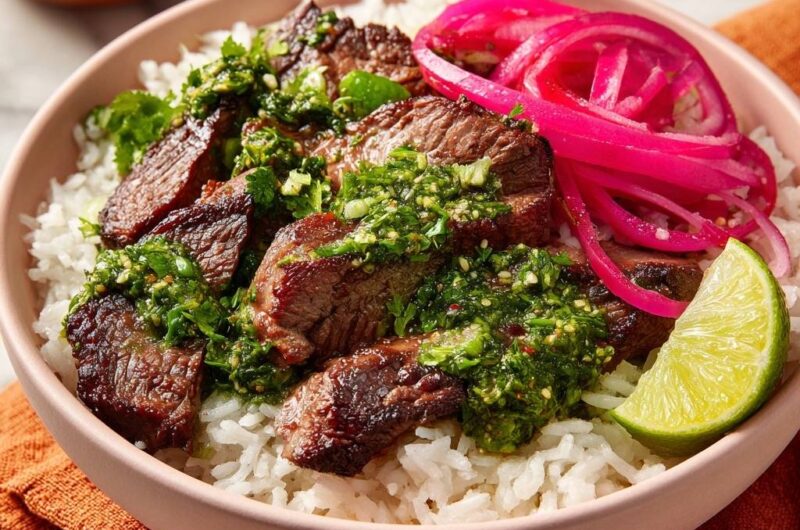
- Quick Pickle the Onions: In a small bowl, whisk together apple cider vinegar, sugar, and 1 teaspoon salt until dissolved. Submerge the sliced red onions. Let them sit for at least 20 minutes to achieve that bright pink color and tangy crunch shown in the image.
- Cook the Rice: Rinse the white rice until the water runs clear. Cook according to package instructions until fluffy. Keep warm.
- Prepare the Chimichurri: In a medium bowl, combine the chopped parsley, cilantro, minced garlic, olive oil, red wine vinegar, oregano, red pepper flakes, and salt. Stir well. For the vibrant, textured look in the image, ensure the herbs are hand-chopped rather than blended into a paste.
- Prepare the Steak: Pat the steak completely dry with paper towels. This is essential for the deep mahogany crust seen in the photo. Season both sides generously with salt and black pepper.
- The Sear: Heat a heavy cast-iron skillet over high heat until it begins to smoke slightly. Add the high-smoke point oil. Place the steak in the pan. Sear for 3-5 minutes per side (depending on thickness) for medium-rare. Do not move the meat while it is searing to ensure a heavy crust develops.
- The Rest: Remove the steak from the pan and transfer to a cutting board. Let it rest undisturbed for a full 10 minutes. This allows the fibers to relax and reabsorb juices, preventing the meat from becoming tough.
- Slice: Identify the direction of the grain (the long muscle fibers). Slice the steak thinly against the grain at a slight diagonal.
- Assemble: Fill bowls with a base of fluffy white rice. Arrange the steak slices on top. Spoon a generous amount of the textured chimichurri over the center of the meat. Add a cluster of the bright pink pickled onions to the side and serve with fresh lime wedges to squeeze over the top.
Notes
- To ensure the meat is never tough, always slice against the grain and allow the steak to rest for a full 10 minutes after searing. Hand-chopping the herbs for the chimichurri provides a better texture than using a food processor.