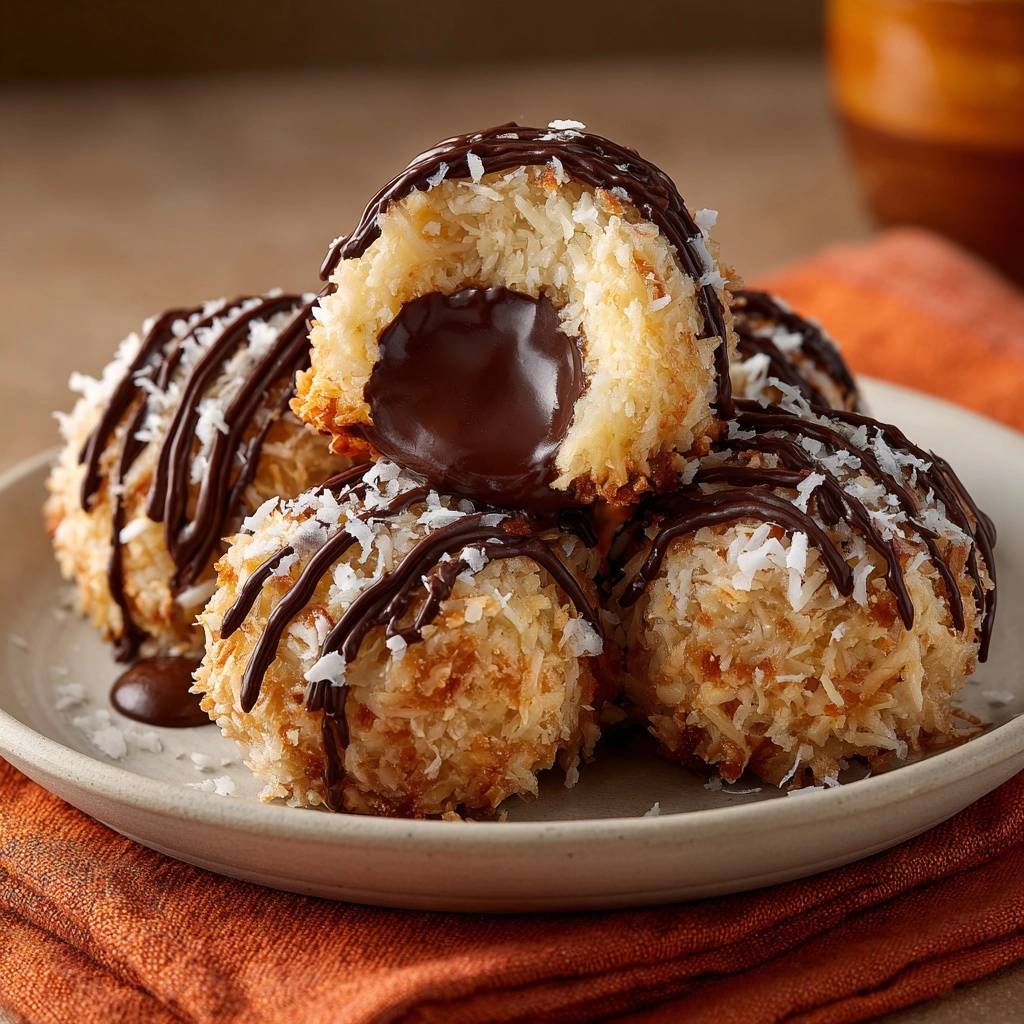
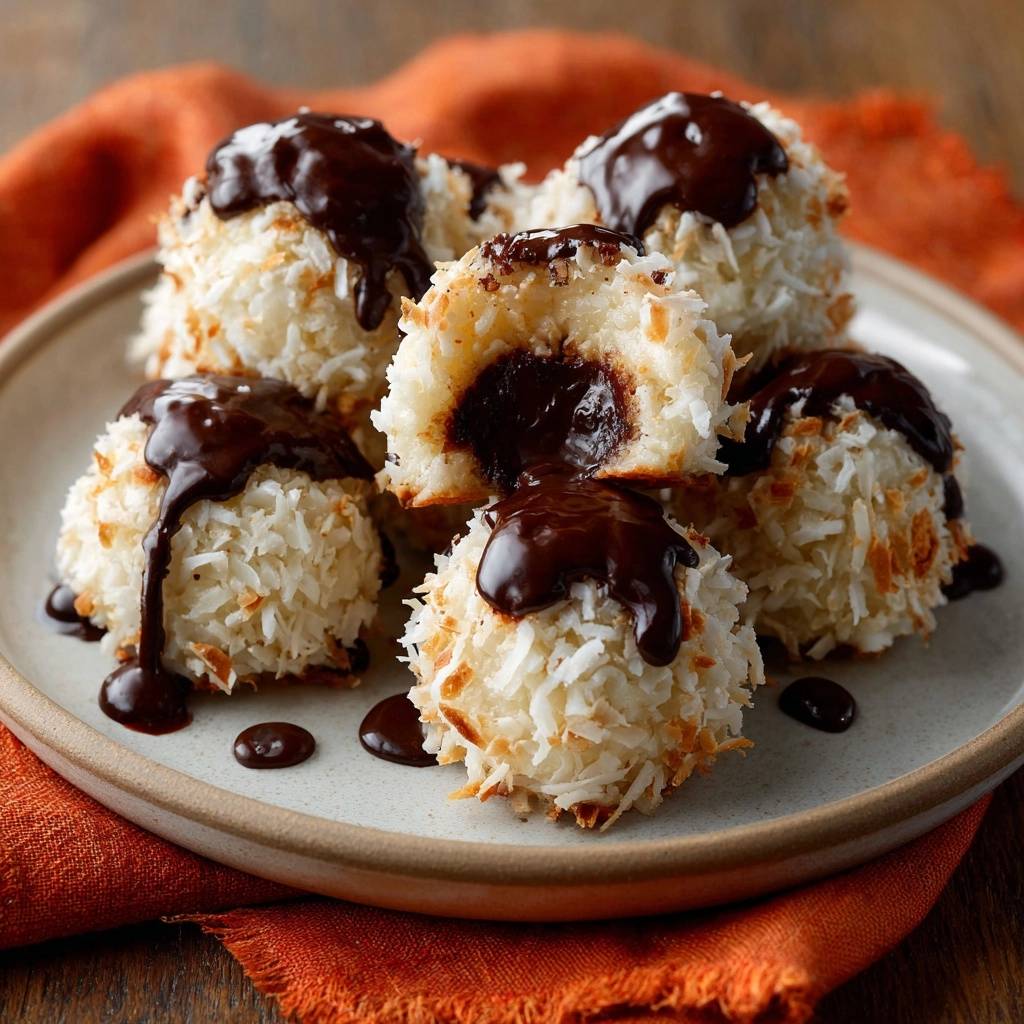
Imagine biting through a deeply toasted, golden-brown coconut crust that shatters slightly before giving way to a soft, chewy interior. Just as you reach the center, a warm, velvety stream of dark chocolate ganache flows out, creating a decadent contrast to the tropical sweetness of the coconut. These aren’t your average, dense coconut clusters; they are a sophisticated upgrade to a classic treat.
Most homemade macaroons suffer from the dreaded “soggy bottom” where the sugar and milk pool at the base, creating a greasy, sticky mess. This recipe solves that frustration by using a specific aeration technique that lifts the heavy coconut, ensuring every bite is airy yet rich. The addition of a molten lava core transforms a simple cookie into a bakery-style dessert that feels truly special.
For a different kind of chewy coconut treat, try these chocolate chip coconut balls.
The secret to success lies in the temperature of your ingredients and the precision of your egg whites. By whipping the whites to a medium-firm peak before folding them into the sweetened coconut, you create a structural “skeleton” that holds the ganache in place. This prevents the chocolate from leaking out during the bake and ensures the base stays crisp and light.
The Structural Science of the Perfect Macaroon
Coconut macaroons are essentially a delicate balance of moisture and protein. The sweetened condensed milk provides the richness and sweetness, but its high sugar content makes it prone to weeping and burning. When you simply stir coconut and milk together, the mixture is heavy and dense, which often leads to the liquid settling at the bottom of the pan during the baking process.
To fix this, we look to the science of meringue. Egg white proteins are incredible at trapping air when beaten. By introducing these air bubbles into the coconut mass, you change the density of the dough. The air pockets act as tiny spacers between the shreds of coconut, allowing the heat of the oven to circulate through the cookie rather than just hitting the exterior.
Furthermore, the egg whites act as a binder that sets quickly in the heat. While the condensed milk is still fluid, the egg white proteins coagulate, locking the coconut and the chocolate center in a firm grip. This structural integrity is what allows us to hide a liquid ganache inside without the macaroon collapsing or becoming a puddle of sugar on your baking sheet.
Why Aeration Prevents the Soggy Bottom
Aeration is the ultimate insurance policy against a flat, greasy macaroon. When you beat egg whites to medium-firm peaks, you are creating a stable foam. When this foam is folded into the heavy coconut and condensed milk, it lightens the entire mixture. This prevents the heavy liquids from sinking to the parchment paper.
Without this air, the condensed milk would naturally gravitate downward, caramelizing into a hard, sticky “foot” that often tastes burnt. The whipped whites keep the milk suspended within the coconut fibers. As the macaroon bakes, the air expands slightly, ensuring the base is just as toasted and dry as the top, giving you that perfect crunch all the way around.
Essential Components for Chocolate Lava Coconut Macaroons
Quality ingredients are paramount when the list is this short. For the base, you must use sweetened shredded coconut. This variety has the moisture and sugar content necessary to bond with the condensed milk. If you use the bone-dry unsweetened flakes found in the health food aisle, the macaroons will likely turn out crumbly and taste like sawdust.
The egg whites are the most temperamental part of the list. It is vital to use room temperature egg whites because they reach a higher volume and create a more stable foam than cold ones. Ensure your bowl is completely free of any grease or yolk, as even a tiny drop of fat will prevent the proteins from bonding, leaving you with a liquid mess instead of fluffy peaks.
Lastly, don’t skimp on the vanilla extract. Since coconut and chocolate are the primary flavors, a high-quality pure vanilla extract acts as a bridge, deepening the cocoa notes and mellowing the sweetness of the milk. A pinch of salt is also non-negotiable; it cuts through the sugar and makes the chocolate flavor pop.
Selecting the Right Chocolate for the Ganache
For the molten center, semi-sweet chocolate chips are the most reliable choice. They contain stabilizers that help the ganache maintain its shape while you are molding the coconut around it. However, if you want a truly professional finish, chopping up a high-quality dark chocolate baking bar will provide a smoother melt and a more complex flavor profile.
The heavy cream is what keeps the center “lava-like.” Without it, the chocolate would simply melt and then re-harden into a solid chunk once the macaroon cools. The fat in the cream prevents the chocolate from fully recrystallizing, ensuring that even at room temperature, the center remains soft and fudgy rather than brittle.
Step-by-Step: Engineering the Molten Ganache Core
Creating the lava center starts with a gentle melt. Combine your chocolate chips and heavy cream in a small bowl and microwave in 20-second bursts. It is tempting to go longer, but chocolate seizes easily if it gets too hot. Stir vigorously between each interval; often, the residual heat will finish the melting process even if a few lumps remain.
Once the ganache is glossy and smooth, it needs to chill. This is a critical step. You cannot shape warm ganache into the coconut dough. Place the bowl in the freezer for about 15 to 20 minutes. You are looking for a texture similar to cold truffle filling—firm enough to scoop and roll into a ball, but not frozen solid.
Work quickly once the ganache is ready. Use a half-teaspoon measure to portion out 12 small balls. If your hands are warm, the chocolate will start to melt instantly. You might find it helpful to roll them quickly and then pop them back into the fridge while you prepare the coconut mixture. Keeping them cold until the very last second is the key to a clean assembly.
The Folding Technique: Combining Coconut and Meringue
After you have mixed your coconut, condensed milk, and vanilla, it is time to introduce the whipped egg whites. This is where many bakers go wrong by stirring too aggressively. If you dump all the whites in and stir like you’re mixing pancake batter, you will pop all those hard-earned air bubbles, and your macaroons will be heavy.
Use the “two-batch” method. Take about a third of your whipped egg whites and stir them into the coconut mixture. This “lightens” the base and makes it easier to incorporate the rest. It doesn’t matter if you lose some air in this first batch; you are just prepping the texture.
For the second batch, use a rubber spatula to gently fold the remaining whites in. Cut through the center, scrape the bottom, and lift the mixture over the top. Stop the moment you no longer see white streaks. The resulting dough should look cloud-like and hold its shape on a spoon, rather than looking like a wet, heavy paste.
Assembly: Encasing the Lava Center Without Leaks
To assemble, take a generous tablespoon of the coconut mixture and flatten it slightly in your palm. Place one of your chilled ganache balls right in the center. Carefully pull the coconut up and around the chocolate, pinching it at the top to seal it. You want to ensure there are absolutely no gaps or thin spots where the chocolate can peek through.
If the chocolate is exposed, it will bubble out during baking, leaving you with a hollow macaroon and a burnt mess on your tray. Roll the ball between your palms with very light pressure to smooth out the surface. The goal is a tight, rounded sphere about the size of a golf ball.
Space them about two inches apart on your lined baking sheet. They won’t spread much because of the egg white structure, but they need enough room for the hot air to circulate around the sides. This ensures the entire exterior gets that signature toasted crunch while the center stays protected and moist.
Precision Baking and the Crisp-Set Phase
Baking at 325°F is the “sweet spot” for macaroons. A higher temperature would brown the outside too quickly, leaving the interior raw and the ganache cold. A lower temperature would dry them out before they get golden. You are looking for the tips of the coconut to turn a deep mahogany while the rest of the cookie is a warm honey color.
The most important part of the process happens after the timer goes off. Don’t just pull them out of the oven. Turn the heat off, crack the oven door open a few inches, and let them sit for five minutes. This is the “Crisp-Set Phase.” It allows the internal steam to escape slowly without the cookies collapsing from a sudden temperature change.
This extra five minutes is what transforms the exterior from soft to crunchy. It also gives the molten center a moment to stabilize so it doesn’t run out the second you move the cookies to a cooling rack. Once they are out, let them cool on the pan for at least ten minutes before you attempt to drizzle them with the extra chocolate.
Troubleshooting Common Macaroon Failures
If your macaroons spread into flat puddles, you likely over-mixed the dough or didn’t whip the egg whites long enough. The whites must reach medium-firm peaks—where the tip of the foam curls over slightly when you lift the beaters. If they are still liquidy when you fold them in, they won’t provide the necessary lift.
If the macaroons are dry and crumbly, they were likely over-baked. Every oven is different, so start checking them at the 15-minute mark. They should feel firm to the touch but still have a slight give. If the chocolate center isn’t molten, you might have used too little cream in your ganache or waited too long to eat them after they cooled.
For a center that has hardened, a quick 5 to 10 seconds in the microwave will usually bring that lava effect back to life. Just be careful not to overdo it, or the coconut will lose its crunch and become chewy.
Expert Tips for Handling Sticky Coconut Dough
Working with sweetened coconut and condensed milk is a sticky business. To make the assembly process easier, keep a small bowl of room temperature water nearby. Lightly dampening your palms before shaping each macaroon prevents the coconut from sticking to your skin and allows you to create a much smoother, tighter ball.
Using a spring-loaded cookie scoop is another great trick for consistency. It ensures every macaroon is the same size, which means they will all bake at the same rate. Scoop the coconut mixture, press the ganache in, and then top with a little more coconut before releasing the scoop into your hand for the final shaping.
Storage and Reheating for Maximum Molten Effect
To keep that perfect crunch, store your macaroons in an airtight container at room temperature for up to three days. Do not refrigerate them if you can help it, as the moisture in the fridge will soften the toasted coconut exterior and make them lose their signature texture.
If you want to enjoy that “just-baked” lava experience a day later, the toaster oven is your best friend. Heat it to 300°F and pop the macaroon in for 3 to 4 minutes. This crisps up the outside while gently warming the ganache core. If you’re in a rush, the microwave works too, but only for a few seconds, or the cookie will get soft.
Frequently Asked Questions
Can I use unsweetened coconut for the base?
It is not recommended for this specific recipe. Unsweetened coconut is much drier and lacks the sugar coating that helps the macaroon bind together. If you use it, the macaroons will likely be very crumbly and won’t have the same chewy, moist interior. If you must use it, you may need to add extra condensed milk to compensate for the lack of moisture.
Why did my egg whites not reach firm peaks?
The most common culprit is a dirty bowl or a tiny speck of egg yolk. Fat is the enemy of meringue. Ensure your bowl and beaters are perfectly clean and dry. Also, make sure your eggs are at room temperature; cold whites are tighter and take much longer to incorporate the air needed for firm peaks.
Can I freeze the unbaked macaroon balls?
Yes, you can freeze the assembled, unbaked balls for up to three months. Place them on a tray to freeze solid, then transfer to a freezer bag. When you are ready to bake, do not thaw them. Bake them straight from the freezer at 325°F, adding about 3 to 5 extra minutes to the baking time. This is a great way to have fresh lava macaroons on demand.
How do I know exactly when they are done?
Look for color rather than firmness. The tips of the coconut should be a deep, toasted brown, and the body of the macaroon should be golden. If they look pale, they will be soggy. They will feel a bit soft when you first touch them in the oven, but they will firm up significantly during the “Crisp-Set” phase and as they cool on the counter.
Can I substitute the heavy cream in the ganache?
If you don’t have heavy cream, you can use whole milk or evaporated milk, but the center may not stay as liquid at room temperature. The high fat content in heavy cream is what ensures the ganache remains a “lava” consistency. Avoid using water, as this will cause the chocolate to seize and become grainy.
Why did my chocolate leak out during baking?
This usually happens if there was a small hole or a thin spot in the coconut shell. When the ganache heats up, it expands and looks for the path of least resistance. Make sure you mold the coconut dough firmly around the chocolate ball and check for any visible dark spots before placing them in the oven. A tight, seamless seal is essential.
Chocolate Lava Coconut Macaroons
Course: DessertCuisine: AmericanDifficulty: easy12
macaroons25
minutes20
minutes195
kcal45
MinutesThese Chocolate Lava Coconut Macaroons solve the common problem of soggy bottoms by using whipped egg whites for structural lift. Each macaroon features a crunchy toasted coconut exterior and a rich, gooey ganache center.
Ingredients
3 cups sweetened shredded coconut
2/3 cup sweetened condensed milk
1 teaspoon vanilla extract
2 large egg whites
1/4 teaspoon salt
1/2 cup semi-sweet chocolate chips
3 tablespoons heavy cream
1/4 cup dark chocolate melting wafers (for drizzling)
1 tablespoon unsweetened shredded coconut (for garnish)
Directions
- Preheat your oven to 325°F (165°C). Line a baking sheet with parchment paper or a silicone baking mat.
- Prepare the Lava Center: In a small microwave-safe bowl, combine chocolate chips and heavy cream. Heat in 20-second intervals, stirring until glossy and smooth. Place this ganache in the freezer for 15-20 minutes until it is firm enough to be handled. Scoop into 12 small half-teaspoon balls and keep chilled until the moment of assembly.
- In a large bowl, stir together the 3 cups of shredded coconut, sweetened condensed milk, and vanilla until the coconut is thoroughly hydrated.
- The Aeration Secret: In a separate, perfectly clean glass or metal bowl, beat the egg whites and salt with a hand mixer until medium-firm peaks form. Gently fold the whipped egg whites into the coconut mixture in two batches. This creates a structural “lift” that prevents the condensed milk from pooling at the bottom, ensuring a crisp base rather than a soggy one.
- Assembly: Scoop a generous tablespoon of the coconut mixture into your palm. Press a chilled ganache ball into the center. Carefully mold the coconut around the chocolate, ensuring it is fully encased with no gaps. Shape into a tight, rounded ball.
- Bake for 18 to 20 minutes, or until the exterior is deeply golden brown and the coconut tips are toasted.
- The Crisp-Set Phase: Turn the oven off and crack the door open 2 inches. Leave the macaroons inside for an additional 5 minutes. This allows the internal steam to escape and the exterior to “set” into a crunchy shell while keeping the chocolate center molten.
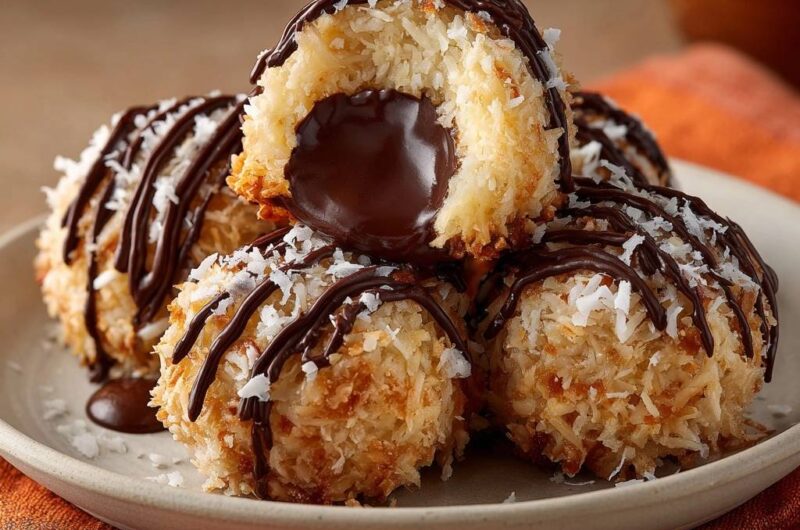
- Once cooled slightly, melt the dark chocolate wafers and drizzle generously over the tops. Immediately sprinkle with the dry unsweetened coconut for the visual finish shown in the image.
Notes
- The Crisp-Set Phase is crucial; leaving the oven door cracked for 5 minutes after baking allows steam to escape, ensuring the exterior stays crunchy while the center remains molten.