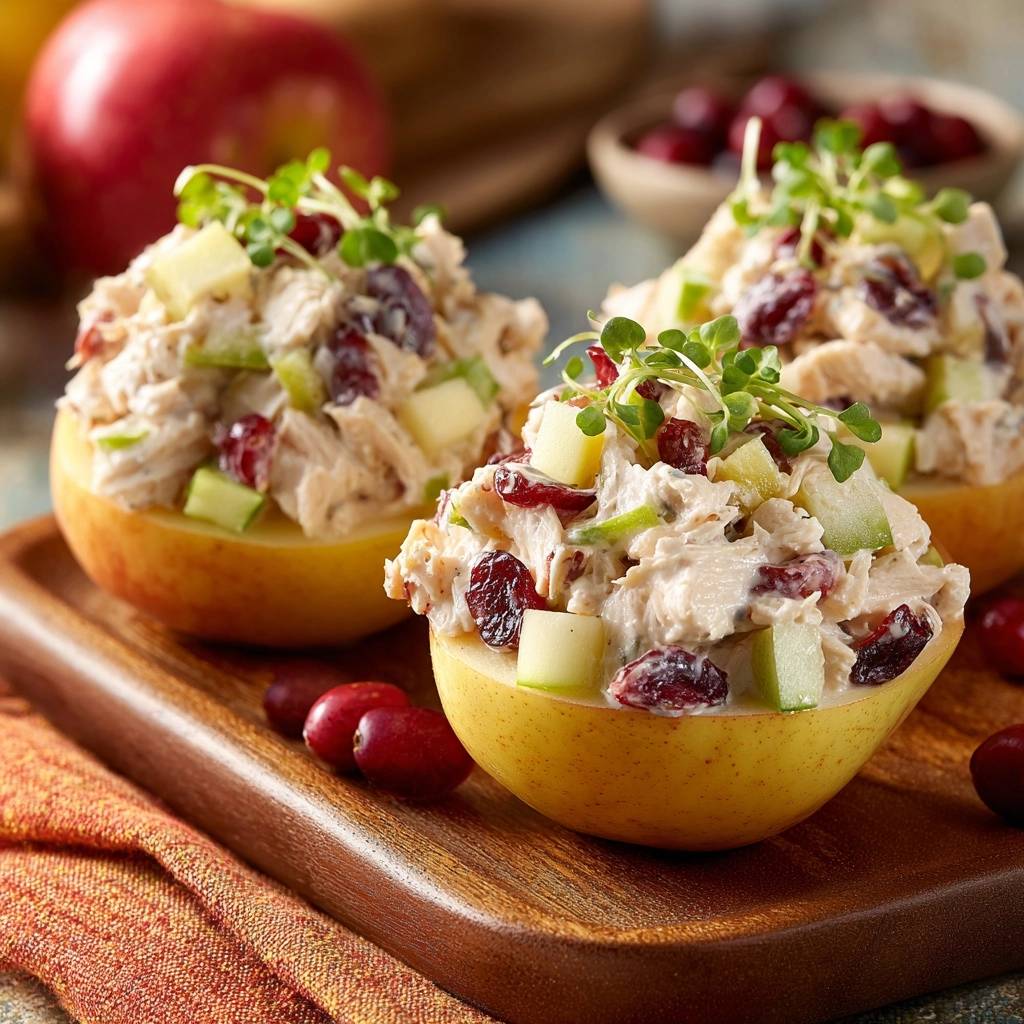
Nothing ruins a beautiful luncheon faster than a watery, weeping chicken salad that turns its container into a soggy mess. We’ve all been there, watching a perfectly creamy dressing separate into a thin liquid as the fruit releases its juices. These Cranberry Apple Chicken Salad Cups solve that problem entirely by focusing on structural integrity and moisture control.
This recipe isn’t just about mixing ingredients in a bowl; it’s a masterclass in balancing the sweet-and-savory profile of a classic Waldorf-style salad while maintaining a crisp, professional presentation. By using the apple itself as a vessel, you create a stunning appetizer that feels sophisticated yet remains incredibly approachable for a weekend brunch or a light weekday lunch.
For another way to enjoy chicken with a zesty twist, explore this creamy dill chicken pasta salad.
The secret to the “skyscraper” height and lasting creaminess lies in how you treat the fruit before it ever touches the mayonnaise. Most people toss wet fruit into the bowl, but I’m going to show you why a simple paper towel is actually your most important kitchen tool for this dish. When you manage the surface moisture correctly, the salad stays thick and the apple cups stay crunchy for hours.
The Science of Preventing Soggy Chicken Salad
To understand why chicken salad often turns runny, you have to understand osmosis. When you add salt or sugar to a dressing, it naturally wants to pull water out of the fresh apple cells to reach an equilibrium. This is why a salad that looks perfect at 10:00 AM often has a pool of liquid at the bottom by noon.
We combat this by creating what I call a “Hydrophobic Seal.” By using a fat-heavy base like mayonnaise and Greek yogurt, we can actually coat the individual pieces of chicken and apple. This fat layer acts as a waterproof barrier, preventing the salt in the dressing from reaching the water inside the fruit. However, this only works if the ingredients are bone-dry when the dressing is applied.
Essential Components for Texture and Flavor
The choice of apple is the most critical decision you’ll make for this recipe. I strictly recommend Honeycrisp or Fuji apples because they possess a dense cell structure that provides a loud, satisfying “snap” when bitten. These varieties hold their shape beautifully even after being hollowed out, whereas softer apples like McIntosh will collapse under the weight of the filling.
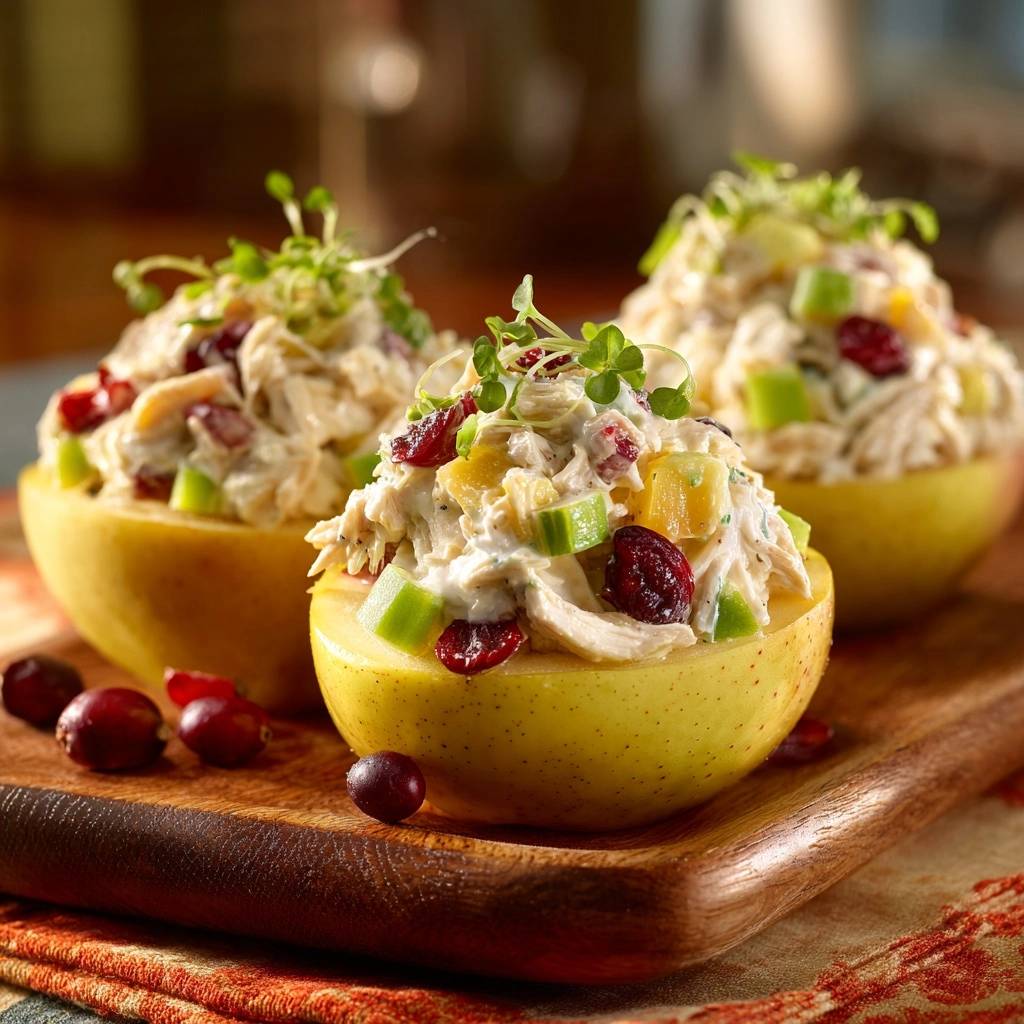
For the dressing, I use a blend of mayonnaise and Greek yogurt. The yogurt provides a bright, tangy lift that cuts through the richness of the mayo without making the sauce too thin. It also adds a boost of protein and a velvety texture that clings to the shredded chicken much better than a standard vinaigrette or a thin dressing would.
For a similar tangy goodness, explore the creamy zesty chicken and corn salad.
Selecting and Preparing the Chicken Base
While you can use rotisserie chicken for a quick shortcut, chilled poached chicken breast offers the cleanest flavor profile. It’s vital that the chicken is completely cold before you shred it. Warm meat will melt the fats in the mayonnaise, causing the dressing to break and become oily rather than creamy.
I prefer a “dry shred” for this specific dish. Use two forks to pull the meat into fine, shaggy strands rather than neat cubes. These irregular edges create more surface area for the dressing to latch onto, ensuring that every bite is perfectly seasoned and moist without being drowned in sauce.
The Role of Acid and Aromatics
Lemon juice serves two masters in this recipe: it stops enzymatic browning and balances the sugar in the dried cranberries. As soon as you cut into an apple, the oxygen in the air begins to turn the flesh brown. A quick brush of citrus keeps the cups looking ivory-white and vibrant on your serving platter.
Instead of standard table salt, I always reach for celery salt. It provides an earthy, savory undertone that mimics the crunch of fresh celery without adding extra moisture. This small swap adds a layer of “hidden” flavor that makes guests wonder why your chicken salad tastes so much more complex than the standard version.
Step-by-Step: Preparing the Apple Vessels
To create the perfect apple cup, slice your large apples in half horizontally across the “equator.” This provides a wider, more stable base than slicing them vertically. Use a melon baller to scoop out the core first, then carefully carve out the flesh until you have a 1/2-inch thick wall remaining.
Don’t go too thin! If the walls are less than half an inch, the apple will lose its structural integrity and might split when you try to pick it up. Once the interior is smooth, immediately apply your lemon juice to every inch of the exposed flesh to lock in that fresh, bright color.
The Anti-Soggy Moisture Barrier Technique
This is the most important step in the entire process. After you’ve carved your cups and diced your extra apple, take a clean paper towel and pat the interiors and the cubes until they are bone-dry. You want to remove every bead of surface moisture and any excess lemon juice.
Round Out Your Meal
Enhance your cranberry apple chicken salad cups with these complementary dishes.
- For a heartier poultry option, consider making these cranberry and spinach stuffed chicken breasts, echoing the fruit and protein theme.
- Pair your chicken salad cups with a refreshing starch like this creamy herb and pea potato salad, bringing together fresh flavors.
Removing this surface water ensures the dressing sticks directly to the fruit. If there is a film of water on the apple, the dressing will simply slide off and pool at the bottom of the cup. This “Pat-Dry” method is the difference between a professional-grade appetizer and a watery home experiment.
Mixing the Emulsion and Sealing Ingredients
Whisk your mayonnaise, Greek yogurt, and spices in a separate small bowl until the mixture is thick and completely smooth. You’re looking for a consistency similar to Greek yogurt—it should hold its shape on a spoon. If it feels too thin, you can whisk in an extra teaspoon of yogurt to tighten it up.
When it’s time to combine, use a folding motion with a rubber spatula rather than aggressive stirring. You want to gently “seal” the chicken, cranberries, and apples in the dressing. This folding technique ensures that the fat in the mayo coats every piece of fruit, creating that hydrophobic barrier we discussed earlier.
Assembly and Presentation for Maximum Impact
When filling the cups, don’t be afraid to pile the salad high. A generous, mounded scoop creates a much more appetizing “skyscraper” look than a flat surface. Use a large spoon to press the salad down slightly into the base of the cup so it stays secure, then build the height on top.
Finish each cup with a cluster of fresh microgreens. These aren’t just for looks; they provide a sharp, peppery contrast to the sweet apples and tart cranberries. If your apple cups are wobbling on the plate, you can slice a tiny sliver off the bottom of the apple to create a perfectly flat, stable surface.
Flavor Variations and Ingredient Swaps
While this recipe is a classic, you can easily adapt it to suit your pantry. If you don’t have dried cranberries, golden raisins or chopped dried apricots work beautifully. The goal is to maintain that chewy, sweet element that contrasts with the crunch of the fresh apple and the savory chicken.
For a dairy-free version, you can swap the Greek yogurt for a thick, plant-based yogurt alternative or simply use a bit more high-quality mayonnaise. Just ensure whatever substitute you use has a thick consistency, as a runny dressing will defeat the purpose of our moisture-management techniques.
Nut-Forward Additions for Extra Crunch
Toasted walnuts or pecans are a natural partner for these flavors. If you choose to add them, toast them in a dry pan for 2-3 minutes until they smell fragrant. However, wait until the absolute last second to fold them in or sprinkle them on top, as nuts will lose their crunch if they sit in the dressing for too long.
Herb-Infused Profiles
If you want a more sophisticated, French-inspired flavor, try adding a tablespoon of fresh chopped tarragon. Tarragon has a subtle licorice note that pairs incredibly well with chicken and fruit. Alternatively, fresh chives can add a mild onion bite that balances the sweetness of the Honeycrisp apples.
Make-Ahead Strategies and Storage Limits
You can prepare the chicken salad mixture up to 24 hours in advance, provided you store it in an airtight container in the fridge. However, do not carve the apple cups until you are ready to serve. Even with lemon juice, the cups are best when fresh and crisp.
Once assembled, these cups should be served within 2 hours for peak texture. This dish does not freeze well at all; the cellular structure of the apples will break down in the freezer, leaving you with a mushy mess once thawed. Keep everything chilled until the moment it hits the table.
Expert Troubleshooting for Cold Salads
Even with the best intentions, things can sometimes go wrong in the kitchen. The key is knowing how to pivot. Most cold salad issues stem from temperature or moisture, both of which are easily fixed if you catch them early enough in the preparation process.
What to Do if the Dressing Breaks
If your dressing looks oily or separated, it usually means the ingredients were too warm or you over-mixed it. To fix this, take a tablespoon of cold Greek yogurt and whisk it vigorously in a separate bowl, then slowly fold the broken dressing into the fresh yogurt. The protein in the yogurt helps re-emulsify the fats.
Preventing Rapid Oxidation (Browning)
If you are prepping for a large crowd and lemon juice isn’t enough, you can use the “submersion” method. Place your carved apple cups in a bowl of cold water mixed with a teaspoon of salt or honey. This creates a physical barrier against oxygen. Just remember to pat them completely dry before filling!
Adjusting Consistency for Large Batches
When scaling this recipe up for a party, the weight of the salad can sometimes cause more juice to release. I recommend slightly increasing the ratio of chicken to fruit for large batches. This provides more “absorbent” material to soak up any stray moisture that might escape the apple’s cells during a long event.
Ideal Pairings for a Light Luncheon
These chicken salad cups are quite rich, so they pair best with light, refreshing sides. A simple wild rice pilaf served at room temperature or a bed of bitter greens like arugula or frisée helps balance the sweetness of the apples and cranberries. The peppery greens especially complement the creamy dressing.
For drinks, think crisp and botanical. A sparkling water with a splash of pomegranate juice or a chilled white grape spritzer provides a clean finish to the palate. Avoid overly sugary drinks, as the apples and cranberries already provide plenty of natural sweetness to the meal.
How long can I store the assembled apple cups?
For the best experience, you should eat these within 2 hours of assembly. While the “pat-dry” technique helps prevent sogginess, the apple cups will naturally begin to soften over time. If you need to prep ahead, store the chicken salad and the carved apple cups separately in the fridge and assemble right before your guests arrive.
Why is my chicken salad still watery?
This usually happens if the chicken or the diced apples weren’t dried thoroughly before mixing. Even a small amount of water on the surface of your ingredients will prevent the dressing from “sealing” the food. Next time, use extra paper towels to ensure every component is bone-dry before you add the mayonnaise mixture.
Can I use a different type of apple?
You can, but avoid soft varieties like Red Delicious or Gala, as they tend to become mealy and won’t hold the weight of the salad. If you can’t find Honeycrisp or Fuji, Granny Smith is a great alternative if you prefer a much more tart flavor profile. Just ensure the apple is firm to the touch.
Can I substitute the mayonnaise?
You can use all Greek yogurt if you want a lighter version, but keep in mind that yogurt is more watery than mayo. If you go this route, strain the yogurt through a coffee filter or cheesecloth for 30 minutes first to thicken it up. This ensures your “seal” remains strong and the salad doesn’t become runny.
Is there a way to keep the apples from browning longer?
Beyond lemon juice, you can use a product like Ball Flex Batch Fruit Protector or a simple honey-water soak (2 tablespoons of honey in 1 cup of water). Honey contains a peptide that stops the oxidation process. However, the lemon juice in the recipe usually provides the best flavor balance for the savory chicken.
Can I freeze the leftovers?
No, this recipe is not suitable for freezing. The mayonnaise and Greek yogurt will separate and become grainy when thawed, and the fresh apples will lose their crisp texture and turn mushy. This dish is definitely best enjoyed fresh or within 24 hours if stored in the refrigerator.
Chicken Salad Cups
Course: Main CourseCuisine: AmericanDifficulty: easy4
servings20
minutes295
kcal20
MinutesA refreshing and crisp chicken salad featuring shredded chicken, dried cranberries, and diced apples served inside hollowed-out apple bowls. The recipe focuses on moisture management to prevent sogginess.
Ingredients
2 cups shredded cooked chicken breast (chilled)
3 large Honeycrisp or Fuji apples (2 for the cups, 1 for dicing)
1/2 cup dried cranberries
1/3 cup mayonnaise
2 tablespoons Greek yogurt
1 tablespoon lemon juice (divided)
1/2 teaspoon celery salt
1/4 teaspoon black pepper
Fresh microgreens for garnish
Directions
- Prepare the Apple Cups: Slice 2 large apples in half horizontally. Use a melon baller or spoon to scoop out the core and enough flesh to create a bowl with a 1/2-inch thick wall. Immediately brush the exposed interior with 1/2 tablespoon of lemon juice to prevent browning.
- The Moisture Barrier: Use a paper towel to pat the inside of the apple cups bone-dry. This is the “Anti-Soggy” secret-removing surface moisture prevents the dressing from drawing out the apple’s internal juices through osmosis, which is what usually causes pooling at the bottom.
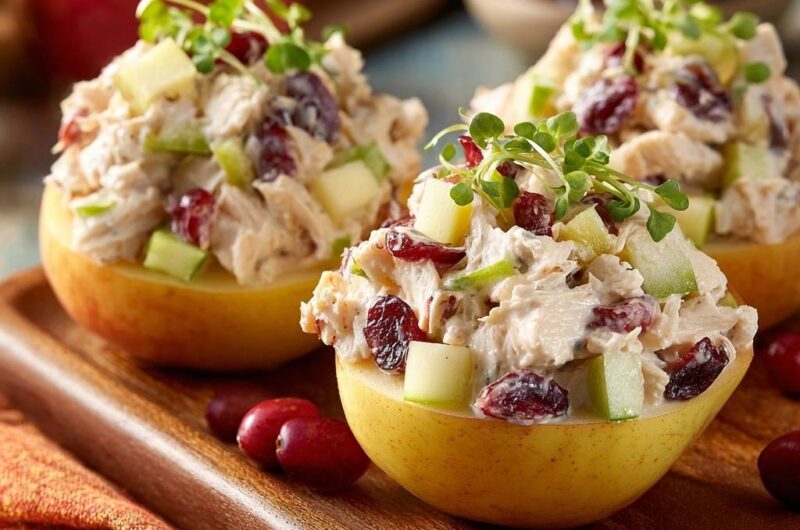
- Dice the Mix-ins: Dice the remaining apple into 1/2-inch cubes. To match the visual texture of the image, keep the skin on for color. Toss these cubes with the remaining lemon juice and pat them dry as well.
- Create the Emulsion: In a small bowl, whisk the mayonnaise, Greek yogurt, celery salt, and pepper until thick and smooth.
- The “Seal” Technique: In a large bowl, combine the shredded chicken, dried cranberries, and diced apples. Pour the dressing over the top and fold gently until every piece is coated. By coating the dry ingredients in the fat-based dressing first, you create a hydrophobic seal that prevents the fruit from leaking juice into the salad.
- Assembly: Spoon the mixture generously into the prepared apple cups, piling it high as seen in the photo.
- Garnish and Serve: Top with a cluster of fresh microgreens. Serve immediately, or refrigerate for up to 2 hours. Thanks to the “pat-dry” technique, the cups will remain crisp and the dressing will stay thick and creamy.
Notes
- The secret to preventing a watery salad is to pat the apple cups and diced fruit bone-dry before assembly. This creates a hydrophobic seal when combined with the mayonnaise and yogurt dressing.