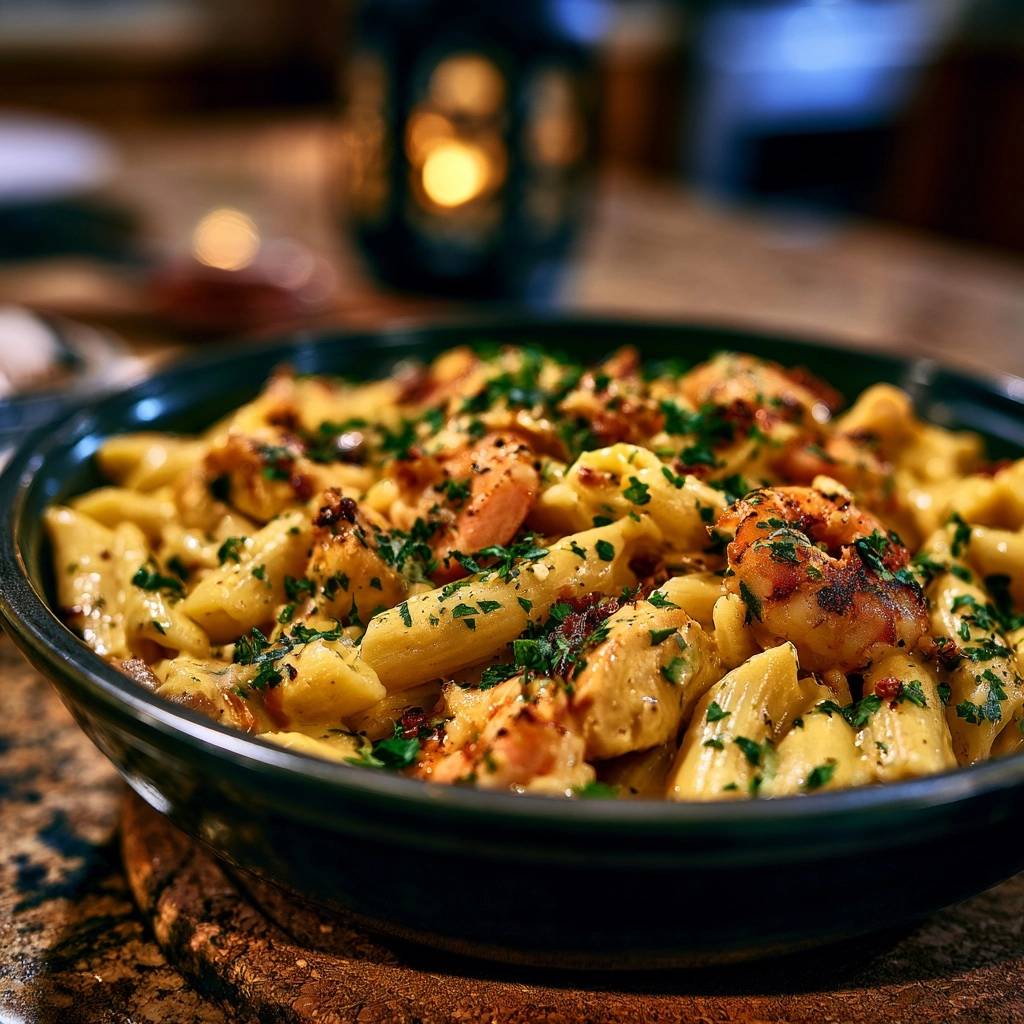
Nothing ruins a dinner faster than a plate of pasta sitting in a puddle of thin, broken liquid. You’ve likely experienced it before: a sauce that looks beautiful in the pan but separates into a watery mess the moment it hits your plate. This Creamy Cajun Shrimp and Chicken Penne is the definitive solution to that heartbreak, delivering a thick, velvety glaze that clings to every ridge of the pasta.
The secret to this restaurant-quality finish isn’t just adding more cheese or flour. It’s about the balance of heat from the Cajun spices and the richness of the cream, stabilized by a specific reduction technique. We’re creating a bold, savory profile that feels indulgent without ever feeling greasy or thin.
I’ve found that the real trick to a non-separating sauce is the “marriage” phase. By finishing the pasta directly in the simmering sauce rather than just pouring it over the top, the noodles release a tiny bit more starch. This acts as a natural glue, ensuring your sauce stays thick and emulsified until the very last bite. Oh man, the way this sauce coats the chicken is just incredible!
The Science of a Non-Separating Cream Sauce
Creating a stable cream sauce is more about chemistry than luck. When you use heavy cream, you’re working with a high fat content that is naturally more stable than milk or half-and-half. Milk contains more water and less fat, which means it’s prone to “breaking” or curdling when it meets the acidic elements of Cajun spices or the high heat of a skillet.
Heavy cream can withstand a simmer, allowing the water content to evaporate. This process, known as reduction, concentrates the fats and proteins. As the volume of the cream reduces by about one-third, it becomes naturally thicker and more resilient. This creates a sturdy base that can hold the weight of the chicken, shrimp, and pasta without thinning out.
Furthermore, we utilize the “fond”—those golden-brown bits stuck to the bottom of the pan after searing the chicken and shrimp. These bits are concentrated flavor bombs, but they also contain proteins that help anchor the sauce. When you deglaze the pan with the cream, you’re incorporating those solids into the liquid, building a structural foundation for the entire dish.
Why Starchy Pasta Water is Non-Negotiable
Never pour all your pasta water down the drain! That cloudy liquid is liquid gold because it’s packed with amylose and amylopectin, which are starches released by the wheat. These starches act as an emulsifier, a bridge that connects the fats in the butter and cream with the liquids in the sauce.
When you add a splash of this water to your skillet, it binds the ingredients together. It prevents the fats from separating into oil slicks and ensures the sauce remains a cohesive, silky glaze. It’s the difference between a sauce that slides off the noodle and one that hugs it tightly.
Essential Components for Cajun Shrimp and Chicken Penne
Quality ingredients are the backbone of this dish. For the cheese, you must use freshly grated Parmesan from a block. Pre-shredded cheeses are coated in cellulose, an anti-clumping agent that prevents the cheese from melting smoothly. If you use the bagged stuff, you’ll likely end up with a grainy, clumpy sauce rather than a smooth one.
The addition of sun-dried tomatoes might seem unusual, but they provide a massive hit of umami. They offer a chewy texture and a concentrated sweetness that cuts through the heavy cream. By chopping them finely, you ensure their flavor is distributed in every bite, adding depth that simple salt and pepper can’t achieve.
Selecting and Prepping Your Proteins
For the shrimp, look for “large” or “jumbo” sizes (usually 21/25 count). Raw shrimp is always better than pre-cooked because it allows you to develop that essential fond in the pan. If you use frozen shrimp, make sure they are completely thawed and patted dry with paper towels. Excess moisture will steam the shrimp instead of searing them.
When prepping the chicken breast, consistency is your best friend. Cut the meat into uniform, bite-sized pieces, roughly half an inch thick. This ensures the chicken cooks at the same rate as the shrimp and provides a perfect “fork-to-protein” ratio. You want a piece of chicken or shrimp in nearly every mouthful of pasta.
The Cajun Spice Profile: Heat and Herb Balance
A great Cajun blend is a complex mix of smoky, spicy, and earthy notes. It typically features a base of paprika and cayenne for heat, balanced by garlic and onion powders. Dried herbs like oregano and thyme add a floral, earthy finish that rounds out the spice.
Be mindful of whether your Cajun seasoning contains salt. If it’s a salt-heavy blend, you’ll want to be conservative when seasoning the rest of the dish. I prefer using a low-sodium or salt-free blend so I can control the seasoning levels myself, especially since the Parmesan cheese already adds a significant salty punch.
Step-by-Step: Building the Perfect Emulsion
Building this dish is a three-act play: the sear, the reduction, and the marriage. Each phase is critical to ensuring the final result is a cohesive, flavorful masterpiece. Don’t rush the process; let the ingredients transform in the pan.
Phase 1: Searing for Maximum Flavor
Start by getting your oil shimmering hot. When you drop the seasoned chicken and shrimp into the pan, you should hear a loud sizzle immediately. This high heat creates a crust that locks in juices and leaves behind those flavorful browned bits. Remove the proteins once they are just cooked through; keeping them in the pan while you build the sauce will turn them rubbery and dry.
Phase 2: Reducing the Cream and Garlic Base
After sautéing your garlic and sun-dried tomatoes in butter, pour in the cream. Watch the bubbles; they will start small and watery but will eventually become larger and more “viscous” as the cream reduces. You’ll know it’s ready when the sauce is thick enough to coat the back of a wooden spoon without immediately running off. This is the moment to whisk in your cheese slowly, allowing it to melt into the warm cream.
Phase 3: The Marriage of Pasta and Sauce
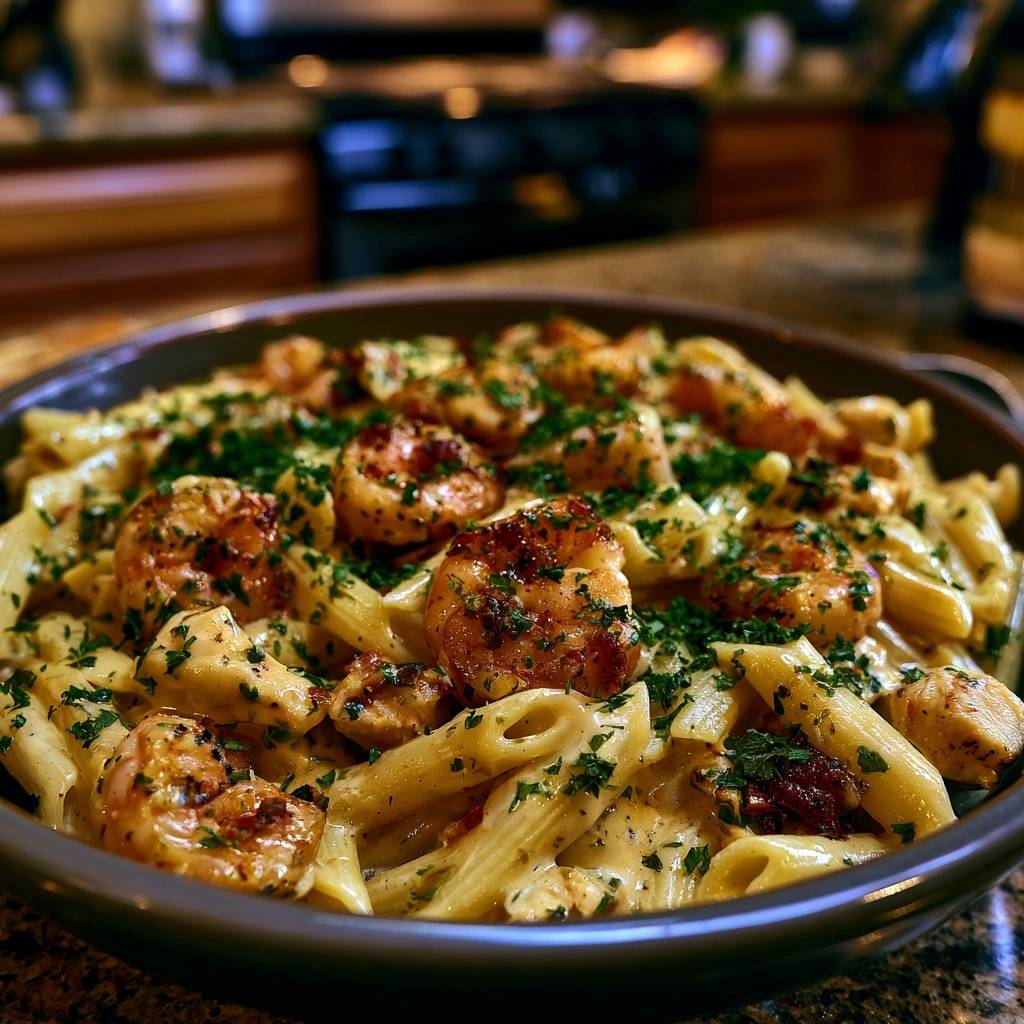
This is where the magic happens. Add your slightly undercooked penne and the proteins back into the skillet. Toss them constantly over low heat for about two minutes. The pasta will absorb the flavorful cream, and the sauce will tighten up into a velvety glaze. If it looks too thick, add a tablespoon of pasta water at a time until it reaches a glossy, perfect consistency.
Troubleshooting Common Pasta Sauce Failures
If your sauce looks grainy or clumpy, your heat was likely too high when you added the cheese. High heat causes the proteins in the cheese to tighten and separate from the fat. To fix this, remove the pan from the heat and whisk in a tiny splash of warm cream or pasta water to try and smooth it out.
If the sauce is too thick and won’t move in the pan, don’t panic. Simply add more of that reserved pasta water, one tablespoon at a time. The starch will keep the emulsion stable while thinning the consistency. Conversely, if it’s too thin, let it simmer for another minute before adding the cheese; the reduction is key to body.
If the spices taste bitter, you might have scorched the garlic or the dry seasonings. Always ensure there is enough fat (butter or oil) in the pan to coat the spices, which protects them from the direct heat of the metal. If the garlic turns dark brown, it’s best to wipe the pan and start the sauce phase over.
Flavor Variations and Ingredient Substitutions
While this recipe is fantastic as written, you can easily tweak it. If you want more crunch, sauté some diced bell peppers or onions with the garlic. For a deeper, smokier flavor profile, add a teaspoon of smoked paprika to your Cajun blend. It adds a wonderful “charred” aroma that complements the shrimp beautifully.
If you need a substitute for heavy cream, a roux-based bechamel (butter, flour, and milk) is your best bet for stability. However, keep in mind that it won’t have the same silky mouthfeel as a cream reduction. For a different texture, try using fusilli or rigatoni; any pasta with deep grooves will catch and hold that spicy sauce perfectly.
Optimal Side Dishes for Spicy Cream Pasta
Because this dish is so rich and bold, you want side dishes that offer a crisp, acidic contrast. A simple arugula salad tossed in a sharp lemon vinaigrette is the perfect palate cleanser. The peppery greens and citrus cut right through the heavy cream and butter.
Roasted broccolini with a squeeze of fresh lime and some garlic is another excellent choice. The charred edges of the vegetable mimic the blackened seasoning on the chicken. Avoid heavy, buttery garlic bread; instead, opt for a crusty baguette to soak up any extra sauce left on your plate.
Expert Tips for Storage and Reheating
Cream-based pastas are notoriously tricky to reheat because the fat tends to separate in the microwave. This dish is best served immediately while the emulsion is at its peak. However, if you have leftovers, they will stay fresh in an airtight container in the fridge for up to two days.
To reheat, avoid the microwave if possible. Place the pasta in a small skillet over low heat and add a teaspoon or two of water or milk. Stir gently as it warms up; the extra liquid helps the sauce re-emulsify and prevents it from turning into an oily mess. Once it’s creamy again, take it off the heat immediately.
Frequently Asked Questions
Can I use pre-cooked frozen shrimp?
You can use them, but the flavor won’t be as deep. Raw shrimp are preferred because they release juices that create the “fond” in the pan, which forms the base of your sauce. If you must use pre-cooked shrimp, thaw them completely and add them at the very end of the cooking process just to warm them through. Cooking them any longer will make them tough and rubbery.
What is the best substitute for heavy cream?
Heavy cream is the gold standard for this recipe because its high fat content prevents the sauce from breaking. If you must substitute, coconut cream is a thick alternative, though it will add a distinct coconut flavor to the Cajun spices. A roux-based sauce made with butter, flour, and whole milk is another option, but it will result in a heavier, more “gravy-like” texture rather than a silky glaze.
How do I prevent the Cajun spice from burning?
Spices burn quickly when exposed to dry, high heat. To prevent this, always toss your chicken and shrimp in the spices first so the seasoning adheres to the meat. Ensure your skillet has enough olive oil to coat the bottom. The oil acts as a buffer, distributing the heat evenly and “blooming” the spices without scorching them. If the pan looks dry, add a tiny bit more oil or butter.
Is there a specific brand of penne that works best?
Look for pasta that is “bronze-cut.” You can usually tell by the texture; the noodles will look slightly dusty or rough rather than smooth and shiny. Bronze-cut pasta has a sandpaper-like surface that is specifically designed to grab onto sauces. This ensures the creamy Cajun sauce sticks to the penne instead of sliding off to the bottom of the bowl.
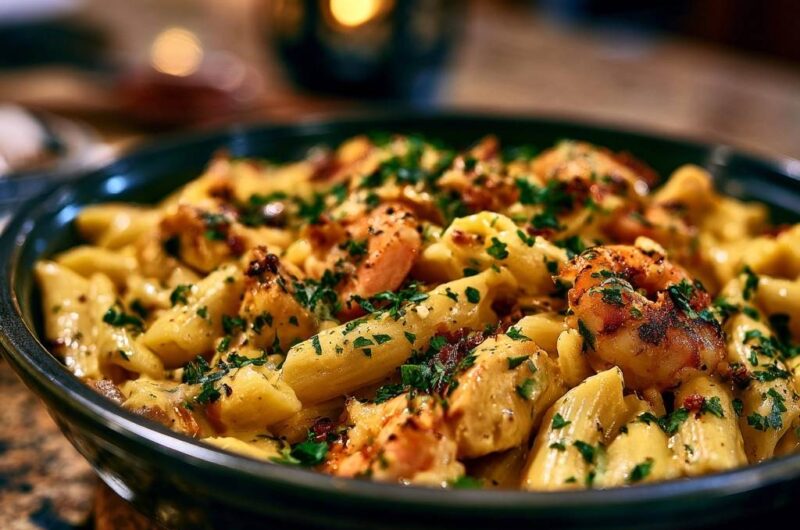
Creamy Cajun Shrimp and Chicken Penne
Course: Main CourseCuisine: AmericanDifficulty: easy4
servings15
minutes20
minutes35
Minutes620
kcalAmerican
Ingredients
1 pound penne pasta
1/2 pound large shrimp, peeled and deveined
1/2 pound chicken breast, bite-sized pieces
2.5 tablespoons Cajun seasoning (divided)
3 tablespoons unsalted butter
3 cloves garlic, minced
2 tablespoons sun-dried tomatoes, finely chopped (for color and texture)
1.5 cups heavy cream
3/4 cup freshly grated parmesan cheese
1/4 cup reserved starchy pasta water
2 tablespoons fresh parsley, finely chopped
1 tablespoon olive oil
Salt and pepper to taste
Directions
- Bring a large pot of heavily salted water to a boil. Cook the penne until it is just shy of al dente (about 2 minutes less than package directions). Before draining, scoop out 1/2 cup of the starchy pasta water and set it aside.
- While the pasta cooks, toss the shrimp and chicken in a bowl with 1.5 tablespoons of the Cajun seasoning until fully coated.
- Heat olive oil in a large skillet over medium-high heat. Sear the chicken until golden and cooked through (5-6 minutes). Add the shrimp and cook for an additional 2 minutes until pink and slightly charred. Remove both from the pan and set aside.
- Lower the heat to medium and melt the butter in the same skillet, scraping up the browned bits (fond) from the meat. Add the minced garlic and chopped sun-dried tomatoes; sauté for 1 minute until fragrant.
- Pour in the heavy cream and the remaining Cajun seasoning. To solve the watery sauce problem, let the cream simmer and reduce by one-third. This concentrates the fats and proteins so the sauce stays thick.
- Reduce heat to low. Whisk in the parmesan cheese slowly in batches until completely melted and smooth. Add 1/4 cup of the reserved pasta water. The starch in this water acts as a natural binder, locking the cream and cheese together into a stable emulsion.
- Toss the cooked penne, chicken, and shrimp into the skillet. Stir constantly for 2 to 3 minutes over low heat. This allows the pasta to finish cooking inside the sauce, ensuring the flavor is absorbed and the sauce tightens into a velvety glaze that coats the ridges of the penne.
- Garnish heavily with fresh parsley and an extra sprinkle of Cajun seasoning. Serve immediately while the emulsion is at its peak.
Notes
- The secret to the non-watery sauce is reducing the heavy cream by one-third and using starchy pasta water as a binder to create a stable emulsion.