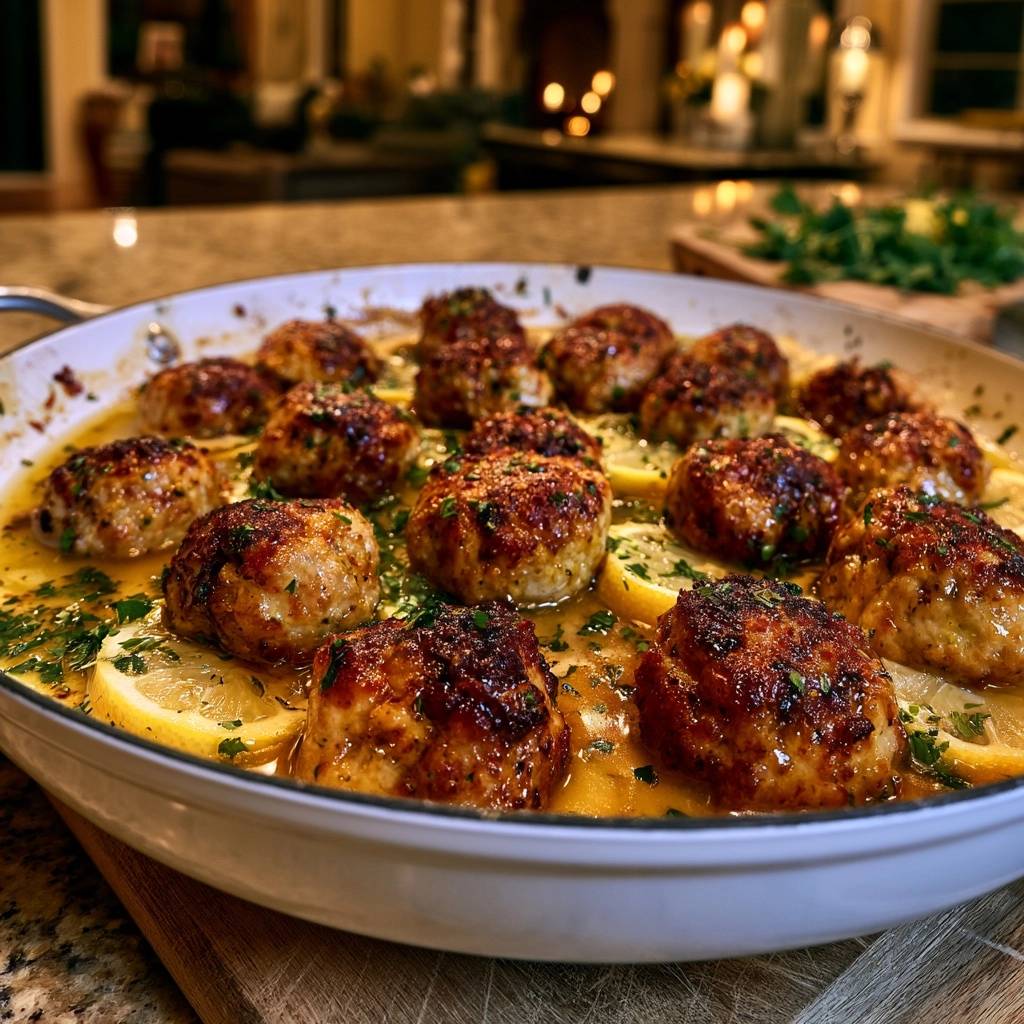
Most people avoid chicken meatballs because they’ve been burned by dry, rubbery results that taste like sawdust. Since ground poultry is incredibly lean, it lacks the natural fat that keeps beef or lamb juicy during a hard sear. However, you don’t have to settle for bland, tough protein when you’re trying to eat a bit lighter.
The secret to this recipe lies in a two-stage cooking process that mimics high-end restaurant techniques. We start with a high-heat sear to lock in moisture and then transition to a gentle butter-basting finish. This creates a succulent, melt-in-your-mouth texture that feels indulgent while remaining bright and fresh.
I’ve found that the real magic happens when the lemon juice hits the hot pan and emulsifies with the butter and honey. This creates a glossy, amber-colored glaze that clings to every curve of the meatball. One bite of that zesty, garlic-heavy sauce and you’ll never go back to basic red sauce again.
The Science of Succulent Chicken Meatballs
Ground chicken is a temperamental ingredient because its protein fibers are delicate and prone to tightening up. When you heat lean chicken, the proteins contract quickly, squeezing out whatever moisture is left inside. Therefore, we have to introduce “moisture insurance” through a well-crafted panade of panko and egg.
Using chicken thigh meat instead of breast meat is the single best decision you can make for this dish. Thigh meat contains more connective tissue and a slightly higher fat content, which provides a buffer against overcooking. It stays tender even when exposed to the high heat required for a golden-brown crust.
The addition of finely grated parmesan cheese serves a dual purpose in this mixture. Firstly, it acts as a binder that reinforces the structure of the meatball so it doesn’t fall apart in the skillet. Secondly, it provides a massive hit of umami that balances the sharp acidity of the lemon and the sweetness of the honey.
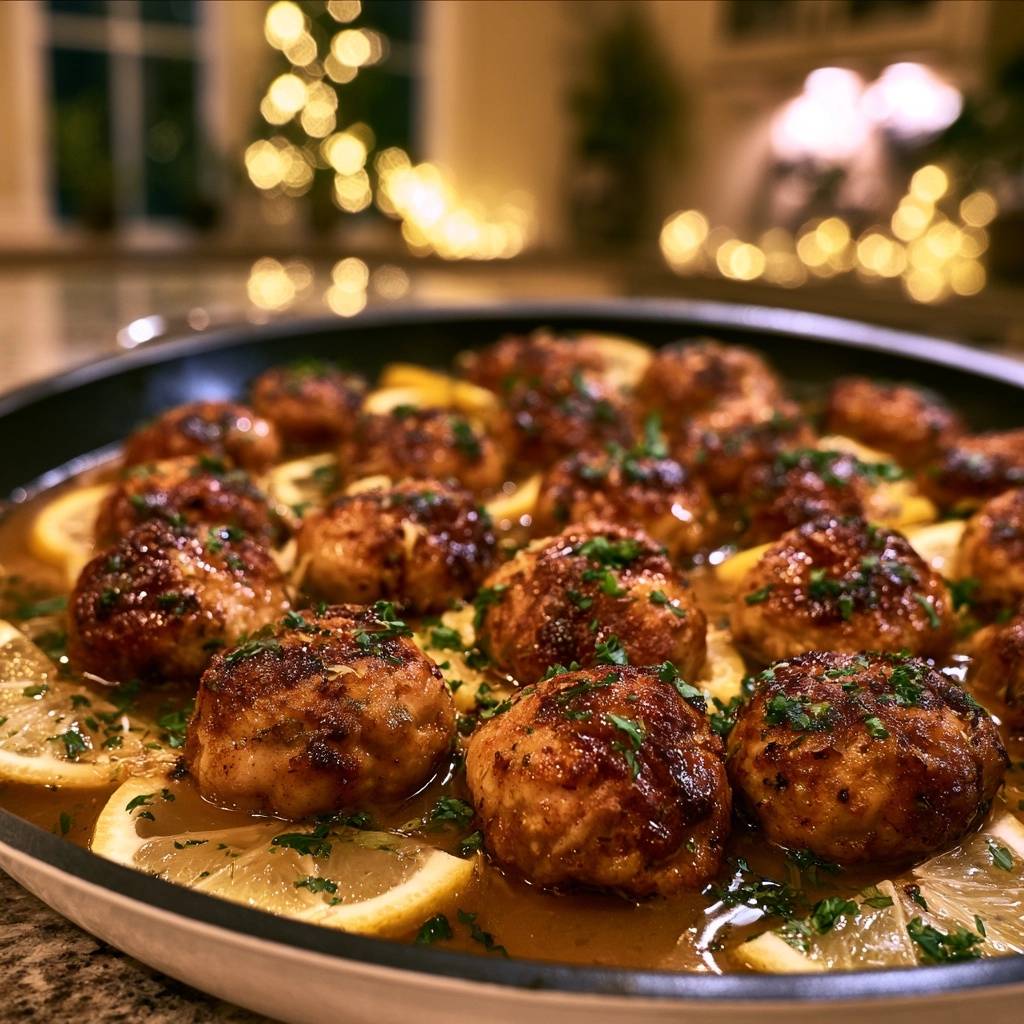
Essential Components for the Lemon Garlic Glaze
Quality ingredients are the backbone of a simple pan sauce, so don’t cut corners on the aromatics. Fresh garlic is non-negotiable here because the pre-minced jarred variety often has a bitter, metallic aftertaste. When you mince your own cloves, the natural oils release into the butter, creating a much deeper flavor profile.
I always recommend using unsalted butter for the glaze so you can control the salt levels yourself. Since the parmesan and chicken broth already contain sodium, using salted butter can quickly push the dish into “too salty” territory. This allows the floral notes of the lemon and the warmth of the smoked paprika to shine through.
Smoked paprika is my “secret weapon” for achieving that deep, professional-looking amber hue. It adds a subtle earthiness that complements the charred lemon slices without overpowering the delicate chicken. Meanwhile, the tablespoon of honey helps the sauce emulsify, ensuring it coats the meatballs rather than just sitting at the bottom of the pan.
Choosing the Right Ground Poultry
When you’re at the grocery store, look closely at the packaging labels for fat percentages. I recommend aiming for a 90/10 or 93/7 blend for the best balance of health and flavor. If you use 99% fat-free ground breast meat, the meatballs will likely turn out crumbly and dry regardless of your technique.
The Role of Aromatics and Herbs
Oregano and parsley might seem like standard garnishes, but they play specific roles in the flavor structure. Dried oregano is sturdy, so we mix it directly into the meat where it rehydrates and flavors the chicken from the inside out. Conversely, fresh parsley is delicate and should only be added at the very end to preserve its bright, peppery bite.
Step-by-Step: Mixing and Shaping for Tenderness
The most common mistake people make is overworking the meat mixture like they’re kneading bread dough. If you squeeze and mash the chicken too much, you’ll end up with a dense, rubbery texture. Instead, use your fingertips to gently toss the ingredients together until they’re just barely combined.
For perfectly even cooking, I highly suggest using a small cookie scoop to portion out the meatballs. This ensures every piece is the same size, so you don’t end up with some that are raw and others that are overdone. Once portioned, roll them lightly between damp palms to prevent the sticky meat from clinging to your skin.
Technique: Searing the Perfect Golden Crust
To get that gorgeous crust, you need to embrace the Maillard reaction by using medium-high heat. Don’t be tempted to move the meatballs around as soon as they hit the oil. Let them sit undisturbed for at least two minutes so they can develop a firm, dark-brown exterior that releases easily from the pan.
Overcrowding the skillet is a recipe for disaster because it drops the pan temperature too quickly. If the meatballs are too close together, they will release steam and turn a dull gray color instead of browning. Work in batches if you have to, ensuring there’s at least an inch of space between each meatball for proper airflow.
Deglazing and Building the Lemon Butter Emulsion
After searing, you’ll notice dark, caramelized bits stuck to the bottom of your skillet—this is called “fond.” This is concentrated flavor gold, and you don’t want to waste it. When you pour in the chicken broth and lemon juice, use a wooden spoon to scrape those bits up so they dissolve into the sauce.
The final step is the basting technique, which is a classic French method for finishing proteins. As the sauce simmers and thickens, use a large spoon to continuously pour the hot lemon butter over the meatballs. This gently cooks the centers while bathing the exterior in fat, ensuring the chicken stays incredibly succulent and glossy.
Troubleshooting Common Chicken Meatball Issues
If your meatballs are falling apart in the pan, your mixture might be too warm or too wet. Try chilling the rolled meatballs in the fridge for 20 minutes before searing to help the fats solidify and the binders set. This extra step makes them much easier to handle during the flipping process.
For those who find the flavor a bit flat, it’s usually an issue of under-seasoning or lack of acidity. Don’t be afraid to add an extra squeeze of lemon juice right before serving. Acidity acts like a volume knob for flavor, making the garlic and herbs pop against the richness of the butter sauce.
Optimal Side Dish Pairings
You definitely want a side dish that can act as a sponge for that incredible lemon butter sauce. Orzo pasta or a fluffy jasmine rice are my top picks because they soak up every drop of the garlic-infused glaze. If you want something heartier, a thick slice of toasted sourdough is perfect for mopping up the skillet.
For a lower-carb meal, these meatballs pair beautifully with roasted asparagus or a bed of sautéed zucchini noodles. The brightness of the lemon cuts right through the richness of the butter, making even a vegetable-heavy plate feel satisfying. The acidity also balances out the savory parmesan, keeping the whole meal feeling light.
Storage, Reheating, and Meal Prep Strategy
These meatballs are fantastic for meal prep because the flavors actually deepen after a day in the fridge. Store them in an airtight container for up to three days. When reheating, avoid the microwave if possible, as it can turn chicken rubbery in seconds.
Instead, place the meatballs and sauce in a small pan over low heat with a splash of water or broth. Cover the pan and let them steam gently until warmed through. You can also freeze these meatballs—either raw or cooked—for up to two months in a freezer-safe bag.
Expert Tips for Maximum Flavor
Firstly, use a microplane to grate your garlic directly into the butter sauce. This creates a garlic paste that melts instantly, preventing any burnt, crunchy bits of garlic. Secondly, make sure your egg is at room temperature before mixing it into the meat to ensure it emulsifies properly with the other ingredients.
Thirdly, if you have a cast-iron skillet, use it! The heavy metal retains heat better than stainless steel, giving you a superior sear. Finally, let the meatballs rest in the pan for two minutes after you turn off the heat. This allows the juices to redistribute so they don’t run out the moment you stick a fork in them.
Can I use gluten-free breadcrumbs?
Yes, you can easily swap the panko for gluten-free breadcrumbs or even almond meal. If using almond meal, keep in mind that it won’t absorb as much moisture as breadcrumbs, so you might need to add an extra tablespoon to get the right consistency. The flavor will be slightly nuttier, which actually pairs quite well with the lemon and garlic.
How do I know when the meatballs are fully cooked?
The safest way to check for doneness is using an instant-read thermometer to ensure the internal temperature has reached 165°F (74°C). If you don’t have a thermometer, you can use the “bounce test.” Gently press the top of a meatball with your finger; if it feels firm and springs back immediately, it’s likely done. If it feels soft or squishy, it needs more time.
Can I bake these instead of pan-searing?
You can bake them at 400°F for about 15-18 minutes, but you will lose that deep, caramelized crust that comes from pan-searing. If you choose to bake, you’ll need to make the sauce separately in a skillet and then toss the cooked meatballs in it. To mimic the sear, you can turn on the broiler for the last two minutes of baking, but watch them closely so they don’t dry out.
Is there a substitute for chicken broth?
Vegetable stock is an excellent substitute if you don’t have chicken broth on hand. In a pinch, you can even use water mixed with a little extra salt and a dash of soy sauce to provide that necessary savory base. The goal is to have a liquid that can lift the browned bits from the pan while balancing the sharp acidity of the lemon juice.
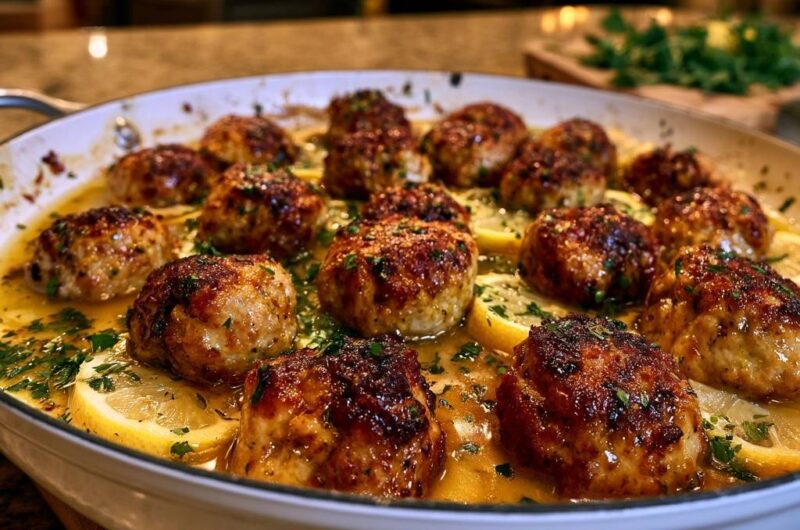
Lemon Butter Garlic Chicken Meatballs
Course: Main CourseCuisine: AmericanDifficulty: easy4
servings15
minutes20
minutes35
Minutes410
kcalAmerican
Ingredients
1 pound ground chicken (preferably thigh meat for moisture)
1/2 cup panko breadcrumbs
1 large egg, beaten
1/4 cup grated parmesan cheese
4 cloves garlic, minced (divided)
1 teaspoon dried oregano
1/2 teaspoon smoked paprika (for the deep golden color shown)
1/2 teaspoon salt
1/2 teaspoon black pepper
2 tablespoons olive oil
4 tablespoons unsalted butter
1/2 cup chicken broth
1 tablespoon honey (to achieve the caramelized glaze in the image)
1 large lemon, sliced into thin rounds
1/2 lemon, juiced
3 tablespoons fresh parsley, finely chopped
Directions
- In a large bowl, combine the ground chicken, panko, egg, parmesan, half of the minced garlic, oregano, smoked paprika, salt, and pepper. Mix gently with your hands until just combined. Do not overwork the meat, as this leads to toughness.
- Shape the mixture into 16 even meatballs.
- Heat the olive oil in a large skillet over medium-high heat. To solve the dry meat issue, sear the meatballs for 3 to 4 minutes, turning occasionally, until a deep, dark golden-brown crust forms on all sides as seen in the image.
- Once heavily browned, remove the meatballs from the pan and set aside on a plate. Lower the heat to medium.
- Add the butter to the same skillet. Once foaming, add the remaining garlic and cook for 30 seconds until fragrant.
- Pour in the chicken broth, lemon juice, and honey. Use a wooden spoon to scrape up all the browned bits (fond) from the bottom of the pan; this creates the rich, amber-colored sauce pictured.
- Arrange the lemon slices in the skillet and return the meatballs to the pan, nestling them between the lemon rounds.
- Use a spoon to baste the meatballs with the bubbling sauce. This basting technique is the key to ensuring the lean chicken stays succulent and tender.
- Simmer uncovered for 5-7 minutes, allowing the sauce to reduce and thicken into a glossy glaze that coats the meatballs. The chicken is done when it reaches 165°F (74°C) in the thickest part.
- Garnish generously with fresh parsley and serve immediately directly from the skillet.
Notes
- Using ground chicken thigh meat instead of breast meat provides higher fat content and better moisture. Do not overwork the meat mixture to ensure a tender texture.