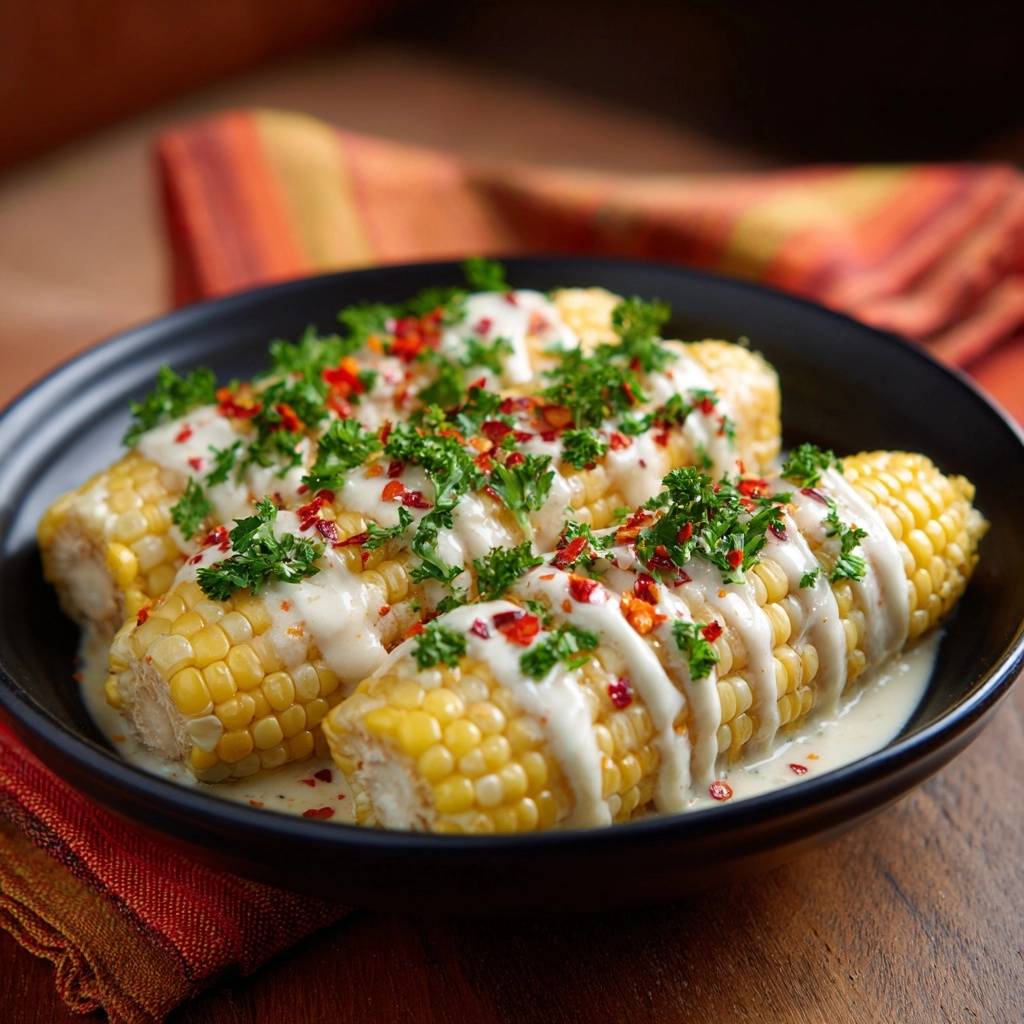
Corn ribs have taken the culinary world by storm, turning a humble side dish into a finger-licking centerpiece. However, many home cooks struggle with the dreaded “soggy bottom,” where the corn sits in a pool of its own juices and ends up mushy rather than crisp. This recipe solves that frustration by focusing on moisture management and a stabilized sauce that actually clings to the kernels.
The secret lies in treating the corn like a roasted protein rather than a boiled vegetable. By using high heat and a specific roasting elevation, we transform the natural sugars into a caramelized crust. The result is a savory, velvety, and sharp flavor profile that balances the sweetness of the corn with a punchy garlic kick.
I’ve found that the key to success is all in the sauce reduction. Most recipes just toss butter on the corn, but we’re creating a thick, opaque cream that stays put. This ensures every single bite delivers that rich, buttery mouthfeel without making the corn limp or greasy. It’s a total game-changer for your next dinner party.
The Anatomy of a Perfect Corn Rib
A corn rib is essentially a vertical quarter-section of a corn cob that curls slightly when exposed to high heat. This shape isn’t just for aesthetics; it creates a much larger surface area than a standard ear of corn. More surface area means more room for that glorious garlic butter to settle into every nook and cranny.
The structural integrity of the cob is vital here. Unlike traditional corn on the cob where the core is just a handle, the “rib” uses the cob’s natural curve to provide a sturdy base. This allows you to pick it up and eat it just like a traditional bone-in rib, making it a fun, tactile eating experience that guests always rave about.
Essential Components for the Garlic Cream Base
The sauce is the soul of this dish, and the ingredients you choose make or break the texture. Heavy cream is non-negotiable because its high fat content allows it to reduce into a thick glaze without curdling. If you use milk or half-and-half, the sauce will remain too thin and simply slide off the corn into a puddle.
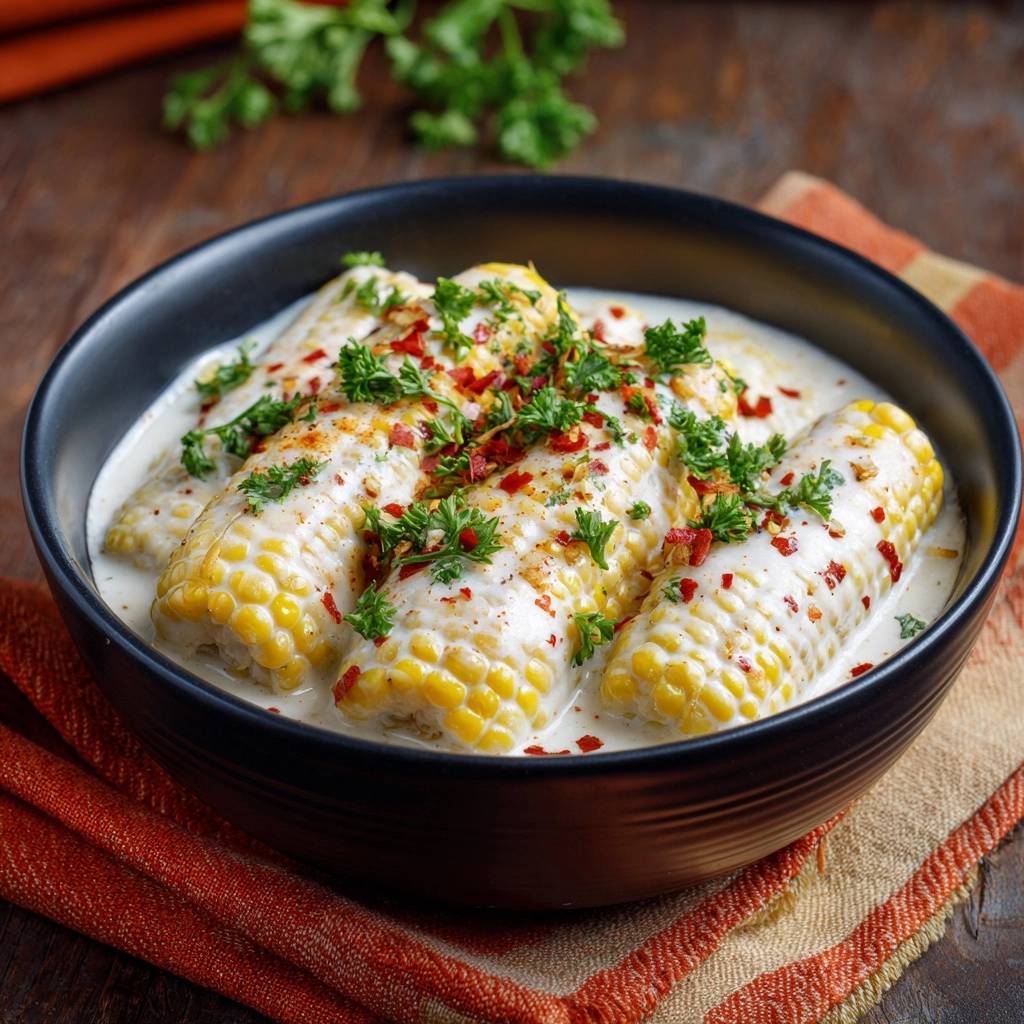
Freshly grated Parmesan acts as our secret stabilizer. Pre-shredded cheese is often coated in potato starch or cellulose to prevent clumping, which can make your sauce gritty. By grating it yourself, the cheese melts seamlessly into the cream, creating a chemical bond that keeps the sauce thick and velvety even as it cools slightly on the plate.
For the finishing touches, curly parsley provides a much-needed textural contrast and a pop of bright color. While flat-leaf parsley is great for stews, the ruffled edges of curly parsley hold onto the cream sauce better. Red chili flakes add a necessary hit of heat to cut through the richness of the butter and cream, ensuring the dish feels balanced rather than heavy.
Selecting the Best Ears of Sweet Corn
Great corn ribs start at the grocery store. Look for husks that are bright green and tightly wrapped; if they feel dry or look yellowed, the corn inside is likely starchy and old. Peel back the top just an inch to check the silk. It should be moist and golden, not black or slimy.
The kernels should feel plump and firm to the touch through the husk. Avoid any ears with visible gaps or shriveled kernels. While frozen corn is a staple for many dishes, it won’t work for the “rib” technique because you need the rigid structure of the fresh cob to create the signature curl and snap.
Safety and Precision: Cutting the Corn Ribs
Cutting through a corn cob requires a bit of muscle and a very sharp chef’s knife. To do this safely, start by cutting off both ends of the corn to create flat surfaces. Stand the corn upright on its widest end on a stable cutting board. This “vertical stand” method is the safest way to maintain control.
Place the blade of your knife across the center of the cob and use a rocking motion to slice downward. Don’t try to force it in one quick chop; instead, apply even, firm pressure. Once you have two halves, lay them flat-side down and repeat the process to create quarters. If the cob feels particularly tough, you can gently tap the top of the knife with a kitchen mallet to help it glide through.
The Science of High-Heat Roasting
We roast these ribs at 425°F to trigger the Maillard reaction. This is the chemical process where the natural sugars in the corn caramelize, creating those beautiful golden-brown edges and a deep, nutty flavor. If the temperature is too low, the corn will simply steam in its own moisture, resulting in a pale, rubbery texture.
At this high heat, the internal water evaporates quickly. This “shocks” the kernels into staying snappy. Unlike boiling, which saturates the corn with water, roasting concentrates the flavors. You’re looking for that sweet spot where the tips of the kernels start to char just as the cob begins to bend into its rib shape.
Why the Wire Rack is Non-Negotiable
If you place corn ribs directly on a flat baking sheet, the side touching the metal will trap steam. This creates a “steam trap” that leads to mushiness. A wire rack is the only way to ensure 360-degree airflow, allowing the hot air to circulate under the ribs as well as over them.
This elevation is the primary defense against the “soggy bottom.” It allows any excess moisture to drip away and evaporate instantly. By the time the corn comes out of the oven, it should be dry to the touch and perfectly crisp on all sides, ready to soak up the garlic cream without losing its crunch.
Step-by-Step: Achieving the Anti-Soggy Texture
Once your corn is quartered and brushed with melted butter, get it into that hot oven immediately. You’ll notice after about 10 minutes that the cobs start to lose their rigidity and begin to “curl.” This is exactly what you want. It’s a visual cue that the heat is penetrating the dense core of the cob.
Keep a close eye on the kernels during the last few minutes. You aren’t looking for a uniform brown color; instead, look for “leopard spotting”—tiny charred bits on the tips of the kernels. When the edges look golden and the cob has a distinct arch, they are ready. The corn should feel firm and have a noticeable “snap” when you bite into a kernel.
Reducing the Garlic Butter Cream Sauce
Reduction is a simple but vital culinary technique. By simmering the heavy cream and garlic, you are evaporating the water content, which leaves behind a concentrated, thick liquid. You’ll know it’s ready when the cream changes from a watery consistency to something that looks like liquid velvet.
If you enjoy the smooth consistency achieved through simmering, you’ll appreciate the secrets behind a silky sauce.
Keep the heat on medium-low. If the cream boils too vigorously, it can separate or burn the minced garlic. You want a gentle bubble. As it reduces by half, the garlic flavor mellows and infuses into the fat of the cream. This creates a base that is incredibly flavorful and thick enough to coat the back of a spoon.
Pro Tip: Don’t add the salt until after the reduction. As the liquid evaporates, the saltiness concentrates. If you salt at the beginning, the final sauce might end up way too salty. Wait until the very end to season to your liking.
Emulsifying the Parmesan for a Velvety Finish
Once the cream is reduced, take the pan off the heat before adding the Parmesan. Whisk the cheese in gradually, one small handful at a time. This prevents the cheese from clumping together into a single rubbery ball. The residual heat is more than enough to melt the cheese into a smooth emulsion.
If your sauce looks like it’s “breaking”—meaning you see clear oil separating from the solids—don’t panic. Simply whisk in a teaspoon of warm heavy cream or a splash of hot water. This helps re-emulsify the fats and proteins, bringing the sauce back to a perfectly smooth, glossy finish.
Troubleshooting Common Corn Rib Issues
If your corn isn’t curling, it’s almost always a temperature issue. Your oven might be running cool, or you didn’t let it preheat long enough. Ensure the oven is truly at 425°F before the corn goes in. Also, make sure you didn’t crowd the rack; if the ribs are touching, they won’t have the space they need to bend.
A runny sauce is usually the result of rushing the reduction. If it’s not thick enough to coat a spoon, keep simmering it. Remember that the addition of Parmesan will thicken it further, but the cream base must be sturdy first. If you’ve already added the cheese and it’s still thin, a tiny pinch of cornstarch mixed with water can save it in a pinch.
If the garlic tastes bitter, it likely scorched during the reduction. Garlic is delicate and turns acrid if it browns too much. To avoid this, make sure the garlic is submerged in the cream the whole time and keep the heat low. If you see the garlic turning dark brown, it’s best to start the sauce over to save the dish.
Flavor Variations and Herb Substitutions
While the garlic butter version is a classic, you can easily tweak the profile. For a smoky twist, add a teaspoon of smoked paprika to the melted butter before roasting. This gives the corn a “barbecue” vibe that pairs beautifully with the creamy sauce. You could also swap the parsley for fresh chives for a milder, onion-like finish.
If you want something brighter, whisk a teaspoon of fresh lemon zest into the finished cream sauce. The acidity cuts through the richness and highlights the sweetness of the corn. Regardless of the flavors you choose, keep that cream-to-cheese ratio the same to ensure the sauce maintains its stabilized, anti-soggy properties.
Optimal Pairings for Creamy Corn Ribs
These corn ribs are rich and savory, so they pair best with proteins that have a bit of char or acidity. A simple roasted chicken with lemon and thyme is a fantastic partner. The brightness of the chicken balances the heavy cream sauce perfectly. Seared lamb chops with a rosemary crust also stand up well to the bold garlic flavors.
For a vegetarian feast, try serving these alongside thick portobello steaks or a hearty lentil loaf. Because the corn ribs are quite filling and decadent, you don’t need a lot of other heavy sides. A simple green salad with a sharp vinaigrette is often all you need to round out the meal and keep the palate refreshed.
Serving and Presentation Standards
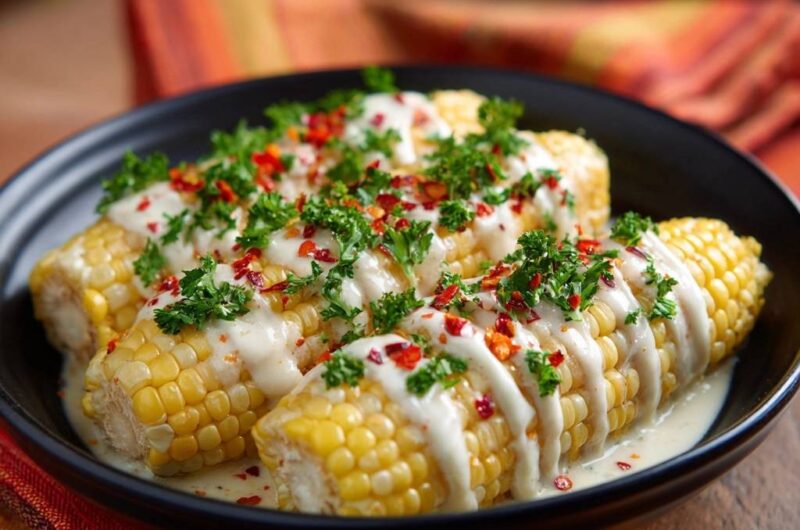
Presentation is everything with corn ribs. Arrange them in a shallow bowl or on a platter with the “arches” facing upward. Instead of dumping the sauce over the top, use a spoon to create a “ribbon drizzle.” Move your hand back and forth quickly to create thick, intentional lines of cream across the ribs.
Wait until the very last second to add your garnishes. The bright green parsley and vibrant red chili flakes provide a stunning visual contrast against the white cream and golden corn. If you garnish too early, the herbs will wilt into the hot sauce. Serve them immediately while the corn is at its peak “snappy” texture.
Frequently Asked Questions
Can I make these in an air fryer?
Yes, you can! Set your air fryer to 400°F and cook the buttered corn ribs for 12 to 15 minutes. Since air fryers have excellent circulation, you don’t need a wire rack, but make sure not to overlap the ribs. You will still need to make the sauce on the stovetop to get that proper reduction and thickness.
How do I store leftovers without them getting rubbery?
Store any leftover corn ribs in an airtight container in the refrigerator for up to 3 days. To reheat, avoid the microwave as it will make the cob rubbery and the sauce oily. Instead, place them back in a 350°F oven or air fryer for 5 minutes until the corn is hot and the sauce is bubbly again.
Can I use pre-shucked corn?
You can use pre-shucked corn, but it often dries out faster than corn still in the husk. Check the kernels closely for any shriveling. If using pre-shucked, you might want to reduce the roasting time by 2 or 3 minutes to ensure the kernels don’t become too tough or chewy.
Is there a dairy-free stabilization alternative?
If you need to avoid dairy, you can use a thick cashew cream as a base. To stabilize it without Parmesan, whisk in a small cornstarch slurry (1 teaspoon cornstarch mixed with 1 teaspoon water) while the cashew cream simmers. This will give you a similar “clingy” texture that won’t run off the corn.
Why did my sauce separate?
Sauce separation usually happens if the heat is too high when the cheese is added or if you used pre-shredded cheese with additives. Always remove the pan from the heat before stirring in your freshly grated Parmesan. If it does separate, a quick whisk with a tiny splash of warm cream usually brings it back together.
Corn Ribs
Course: Side DishCuisine: AmericanDifficulty: easy4
servings10
minutes20
minutes245
kcal30
MinutesA specialized corn rib recipe that utilizes high-heat roasting on a wire rack and a reduced Parmesan cream sauce to ensure a snappy texture and a velvety finish without any watery residue.
Ingredients
4 ears of fresh sweet corn, husked and cleaned
3 tablespoons unsalted butter, melted
1/2 cup heavy cream
1/4 cup freshly grated Parmesan cheese (the stabilizer)
2 cloves garlic, minced
1/2 teaspoon sea salt
1/4 teaspoon cracked black pepper
2 tablespoons fresh curly parsley, finely chopped
1 teaspoon red chili flakes
Directions
- Preheat your oven to 425°F (220°C). High heat is the secret to the Anti-Soggy Bottom; it evaporates excess moisture from the corn quickly so the kernels stay snappy rather than steaming in their own juices.
- Prepare the corn “ribs.” Using a sharp chef’s knife, stand the corn upright and carefully slice the cob in half lengthwise, then slice each half again to create quarters. (Note: The image shows thick, half-cob sections; for this visual result, simply slice the ears in half lengthwise).
- Brush the corn sections generously with melted butter and season with salt and pepper.
- Place the corn on a wire rack set over a baking sheet. This allows hot air to circulate entirely around the corn, preventing moisture from pooling underneath. Roast for 15 to 18 minutes until the kernels are tender and the edges begin to golden.
- While the corn roasts, prepare the stabilized sauce. In a small saucepan over medium-low heat, simmer the heavy cream and minced garlic. Reduce the liquid by half. Whisk in the Parmesan cheese until melted and smooth. This reduction and the addition of cheese are the keys to a thick, opaque sauce that clings to the corn instead of running off.
- Remove the corn from the oven and arrange in a serving bowl. Immediately drizzle the thickened garlic cream over the top in thick ribbons.
- Garnish heavily with fresh curly parsley and red chili flakes to match the visual profile. Serve immediately while the corn is at its peak crispness.
Notes
- Roasting the corn on a wire rack is essential to prevent steaming. The Parmesan cheese acts as a stabilizer for the cream sauce to ensure it clings to the corn.