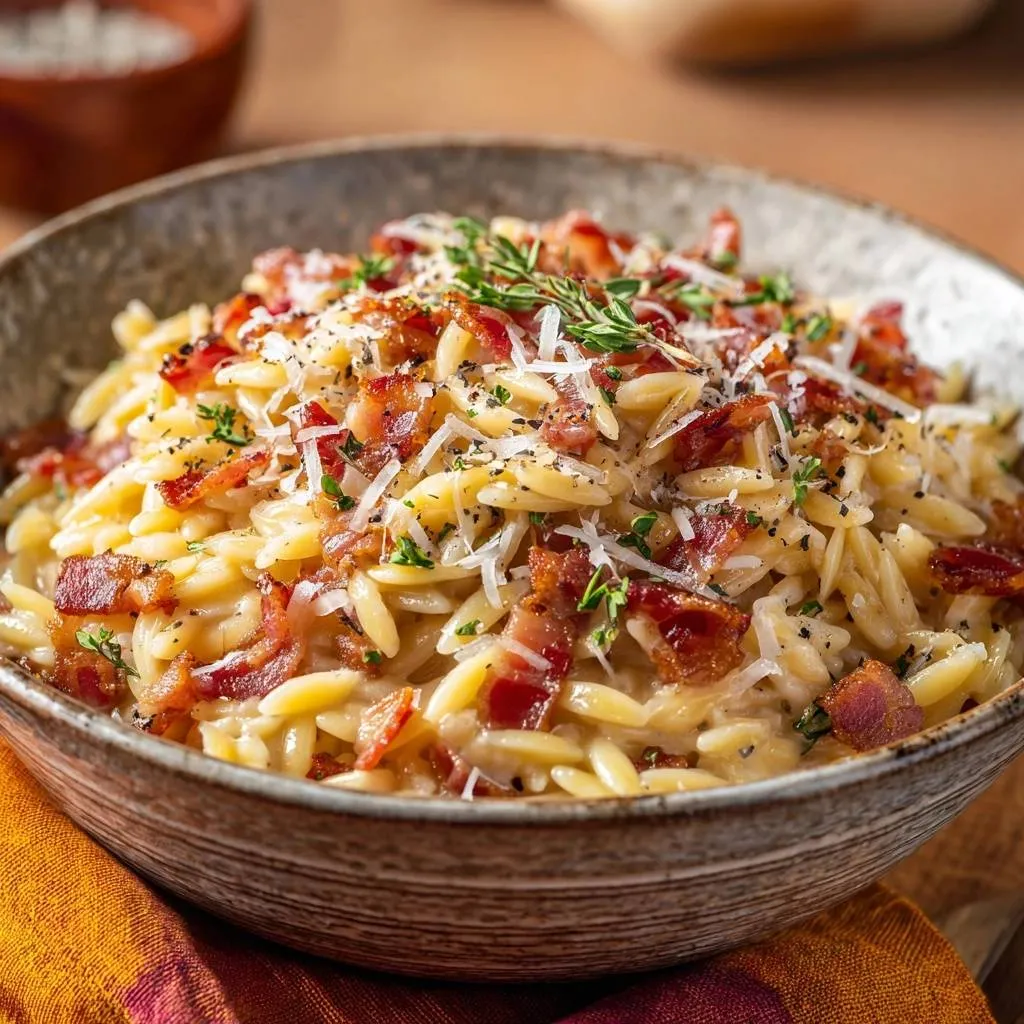
Imagine a bowl of pasta so velvety it feels like a warm hug, topped with the salty, smoky crunch of perfectly rendered beef bacon. Most home cooks struggle with orzo because it often ends up as a sticky, unappealing clump of mush. This Creamy Garlic Orzo with Crispy Bacon changes that narrative by treating the tiny pasta grains with the respect they deserve.
The secret to this restaurant-quality texture lies in the “Risotto Method.” Instead of boiling the orzo in a massive pot of water and draining away all the flavor, we cook it slowly in a shallow pan. This technique allows the starch to develop into a natural, glossy sauce while keeping each individual grain firm and distinct. It’s the ultimate comfort food that looks and tastes like you spent hours in the kitchen.
To ensure success, always start with a cold skillet when cooking your beef bacon. This allows the fat to render out slowly, providing a rich, flavorful base for toasting the pasta. If you throw bacon into a hot pan, the edges burn before the fat melts, and you lose that liquid gold needed to coat the orzo grains later. Trust the process, and you’ll never go back to boiling orzo again.
The Science of Starch: Why Orzo Turns Gummy
Orzo is a small, rice-shaped pasta with a high surface-area-to-volume ratio. When you boil it in a large pot of water, the starch on the outside of the grain gelatinizes rapidly. Once you drain it, those starches act like glue, causing the grains to fuse together into a gummy mass as they cool even slightly.
The “Risotto Method” flips this chemistry on its head. By using controlled hydration, we manage how much starch is released into the pan. Toasting the dry grains first creates a physical barrier on the surface of the pasta, which slows down the absorption of liquid. This ensures the center of the grain stays al dente while the outside creates a silky emulsion with the broth and cream.
Essential Components for Creamy Garlic Orzo with Crispy Bacon
Every ingredient in this dish serves a specific structural or flavor-based purpose. Thick-cut beef bacon is the star here because it offers a robust, meaty chew that stands up to the creamy pasta. The fat rendered from the beef bacon provides a deeper, more savory foundation than butter or oil alone could ever achieve.
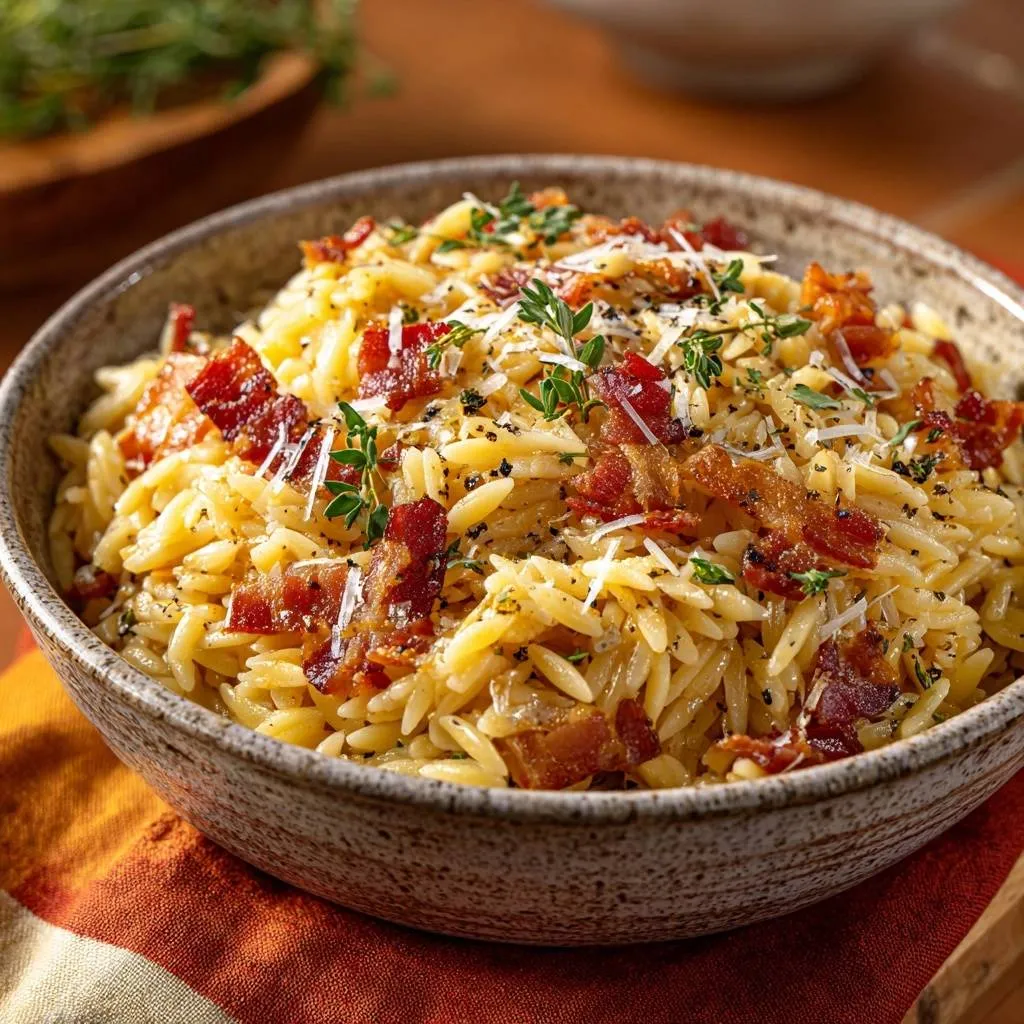
Using low-sodium chicken broth is a non-negotiable rule for this recipe. As the liquid simmers and reduces, the salt concentrates. If you start with full-sodium broth, the final dish will likely be unpalatably salty by the time the orzo is tender. You want to be the one in control of the seasoning at the very end.
Fresh herbs are equally vital. While dried thyme can work in a pinch, fresh thyme leaves provide a bright, lemony earthiness that cuts through the richness of the heavy cream. Adding the parsley at the very end ensures the color stays vibrant and the flavor remains punchy rather than muted by the heat.
Selecting the Right Fat: Beef Bacon and Olive Oil
Beef bacon has a distinct, bold flavor profile that pairs beautifully with the pungency of fresh garlic. Because beef fat has a higher melting point than some other fats, it creates a crispiness that lasts even when tossed into a creamy sauce. Combining it with a splash of olive oil ensures you have enough fat to coat every single grain of orzo during the toasting phase.
The Role of Heavy Cream and Aged Parmesan
Emulsification is the goal when you stir in the heavy cream and parmesan. The fat in the cream and the proteins in the aged cheese bind with the residual pasta starch in the pan. This creates a stable, luxurious sauce that clings to the orzo rather than pooling at the bottom of the bowl. Always grate your parmesan fresh; pre-shredded cheese is coated in potato starch which can make your sauce grainy.
The Importance of Toasting Dry Pasta
Toasting the dry orzo for 3 to 4 minutes is the most important step in this entire process. This triggers the Maillard reaction, the same chemical process that makes toasted bread or seared steak taste so good. You’ll notice the grains turning a beautiful golden brown and emitting a distinct, nutty aroma.
Beyond flavor, toasting serves a functional purpose. It partially “seals” the exterior of the pasta. This prevents the grains from over-expanding and becoming waterlogged. The result is a dish where you can feel the texture of every individual grain against your tongue, surrounded by a velvet-like sauce.
Step-by-Step: Rendering and Toasting the Base
Start by placing your chopped beef bacon into a cold skillet. Turn the heat to medium and let the pan warm up gradually. You’ll hear a gentle sizzle as the fat begins to liquefy. Cook until the pieces are deeply browned and have a satisfying crunch, then move them to a paper towel to drain.
Now, look at that flavorful fat left in the pan. Add your olive oil and pour in the dry orzo. Stir it constantly. You aren’t just warming it up; you are looking for a specific visual cue. The grains should transition from a pale off-white to a rich, toasted gold. Once they smell like toasted nuts, add your minced garlic for just 30 seconds until it’s fragrant but not browned.
The Hydration Phase: Adding Broth Gradually
The hydration phase requires patience and a bit of muscle. It is essential that your chicken broth is warm before it hits the pan. Adding cold liquid would shock the pasta and drop the temperature of the skillet, leading to uneven cooking and a longer wait time.
Add the broth one cup at a time. As you stir, the grains rub against each other, gently knocking off just enough starch to thicken the liquid. Wait until the orzo has absorbed nearly all the broth before adding the next splash. This gradual process ensures the pasta is cooked through perfectly while creating that signature “risotto” creaminess without any actual rice.
Emulsifying the Garlic and Cream Sauce
When the orzo is tender but still has a slight bite, it’s time for the finishing touch. Lower the heat and pour in the heavy cream, followed by the freshly grated parmesan. This is where you need to stir vigorously for about a minute. This action helps the cheese melt evenly and forces the fat and liquid to marry into a glossy coating.
Be careful not to let the pan get too hot at this stage. If the sauce boils aggressively after the cheese is added, the proteins in the parmesan can clump together, leaving you with a stringy, oily mess. You want a gentle simmer that results in a sauce that looks like liquid silk.
For a similar smooth sauce, try this creamy sausage orecchiette.
Troubleshooting Common Orzo Textural Issues
If you find that the liquid is disappearing too fast but the orzo is still hard, your heat is likely too high. Simply add an extra splash of warm broth or water and turn the flame down. The goal is a gentle simmer, not a rolling boil, to give the grains time to soften.
On the flip side, if your pasta is cooked but the sauce feels thin and watery, don’t panic. Continue to stir over low heat for another minute or two. The starch will continue to thicken the sauce as it cools slightly. You can also add an extra tablespoon of parmesan cheese to help bind the liquid.
If the orzo feels “crunchy” even after the broth is gone, it means the grains didn’t hydrate properly. This usually happens if the broth wasn’t added gradually enough. Add a bit more liquid, cover the pan with a lid for two minutes, and let the steam finish the job.
Flavor Variations and Ingredient Swaps
This recipe is a fantastic canvas for other flavors. If you want to add some color and a boost of nutrients, fold in a few handfuls of baby spinach at the very end. The residual heat will wilt the leaves in seconds. Roasted red peppers are another great addition for a touch of sweetness.
While thyme is the classic pairing for garlic and cream, you can easily swap it out. Fresh rosemary offers a more pine-like, wintery vibe, while sage provides a deep, earthy profile that works beautifully with the beef bacon. Just remember to use fresh herbs whenever possible for the best aromatic experience.
Optimal Pairings for Creamy Pasta Dishes
Because this orzo is so rich and savory, you want to pair it with something that offers a bright, acidic contrast. A simple arugula salad tossed in a sharp lemon vinaigrette is the perfect companion. The bitterness of the greens cuts right through the heavy cream.
Roasted vegetables also work wonders. Try charred asparagus with a squeeze of lime or balsamic-glazed Brussels sprouts. These side dishes provide a different texture and a pop of acidity that keeps your palate refreshed between bites of the decadent pasta.
Storage and Reheating for Best Texture
Orzo is notorious for soaking up liquid as it sits in the fridge. If you have leftovers, store them in an airtight container for up to three days. When you look at it the next day, it will likely look like a solid block of pasta. Don’t worry, it’s easy to fix.
To reheat, place the orzo in a small saucepan over low heat. Add a tablespoon or two of broth or milk. As it warms up, stir gently to break up the clumps. The added liquid will loosen the starch and bring that creamy sauce back to life without making the pasta mushy.
Expert Tips for Professional Presentation
For a professional look, serve the orzo in shallow bowls rather than flat plates. Use a spoon to create a bit of height in the center. Don’t mix all the bacon in; save half of those crispy bits to sprinkle on top right before serving. This ensures the person eating gets that immediate contrast of textures.
Finish the dish with a final dusting of parmesan and a few cracks of fresh black pepper. Placing a small, whole sprig of fresh thyme on top acts as a visual cue for the flavors inside. It’s these small details that transform a simple home-cooked meal into a gourmet experience.
Frequently Asked Questions
How do I store leftovers and can I freeze this?
Store leftovers in an airtight container in the refrigerator for up to 3 days. I do not recommend freezing this dish. The cream and cheese sauce will likely break and become grainy upon thawing, and the orzo grains will lose their distinct texture and become very mushy.
Why is my orzo still hard after adding all the broth?
This usually happens if the heat was too high, causing the broth to evaporate before the pasta could absorb it. To fix this, add another 1/4 cup of warm broth or water, cover the pan with a lid, and let it sit off the heat for 5 minutes. The steam will finish softening the grains.
Can I use a different type of pasta for this recipe?
While this method is specifically designed for orzo, you can use other tiny pasta shapes like ditalini or stelline. However, larger pasta shapes like penne or fusilli will not work with this specific “risotto method” as they require much more liquid and a different cooking time to soften properly.
What can I use if I don’t have heavy cream?
You can substitute heavy cream with half-and-half or whole milk, but the sauce will be thinner and less decadent. If using milk, you might want to add an extra tablespoon of butter or a bit more parmesan cheese to help achieve a similar level of richness and thickness.
Is it necessary to warm the broth before adding it?
Yes, it is highly recommended. Adding cold broth to a hot pan stops the cooking process and lowers the temperature of the orzo. This can lead to the pasta releasing starch too quickly or cooking unevenly, which often results in a gummy texture rather than a creamy one.
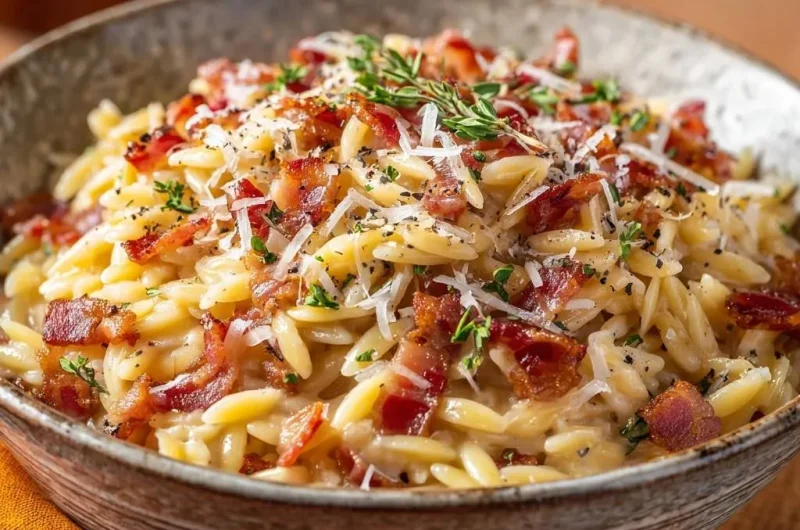
Creamy Garlic Orzo
Course: Main CourseCuisine: AmericanDifficulty: easy4
servings10
minutes20
minutes485
kcal30
MinutesA restaurant-quality orzo dish featuring crispy beef bacon, fresh thyme, and a silky parmesan cream sauce. By using a specific toasting technique, the pasta maintains a firm texture while creating a naturally creamy finish.
Ingredients
1.5 cups dry orzo pasta
6 slices thick-cut beef bacon, chopped
3 cups low-sodium chicken broth, warmed
1/2 cup heavy cream
1/2 cup freshly grated parmesan cheese, plus extra for garnish
3 cloves garlic, minced
1 tablespoon olive oil
2 teaspoons fresh thyme leaves (keep some whole sprigs for garnish)
1 tablespoon fresh parsley, finely chopped
1/2 teaspoon cracked black pepper
Salt to taste
Directions
- Place the chopped bacon in a large cold skillet. Turn the heat to medium and cook until the fat has rendered and the bacon is deeply browned and crispy. Use a slotted spoon to remove the bacon and set it aside on a paper towel, leaving the drippings in the pan.
- Add the olive oil to the bacon fat in the skillet. Add the dry orzo directly to the pan. Toast the dry orzo over medium heat for 3 to 4 minutes, stirring constantly, until the grains turn golden brown and smell nutty. This toasting creates a barrier that prevents the starch from becoming gummy.
- Stir in the minced garlic and cook for 30 seconds until fragrant.
- Add the warm chicken broth one cup at a time. Simmer gently over medium-low heat, stirring frequently. Wait until the liquid is almost fully absorbed before adding the next cup. This agitation releases just enough starch to create a natural creaminess without making the pasta sticky.
- Once the orzo is tender (al dente) and the liquid is mostly absorbed, stir in the heavy cream and parmesan cheese. Stir vigorously for 1 minute to emulsify the sauce into a silky coating that clings to the grains.
- Fold in half of the crispy bacon, the fresh thyme, and the chopped parsley. Season with cracked black pepper and salt to taste.
- Serve immediately in bowls. Top generously with the remaining crispy bacon, extra grated parmesan, more cracked black pepper, and a fresh sprig of thyme as shown in the image.
Notes
- To avoid gummy pasta, do not boil the orzo in a large pot of water. Toasting the dry grains in fat before adding liquid is essential for the correct texture.