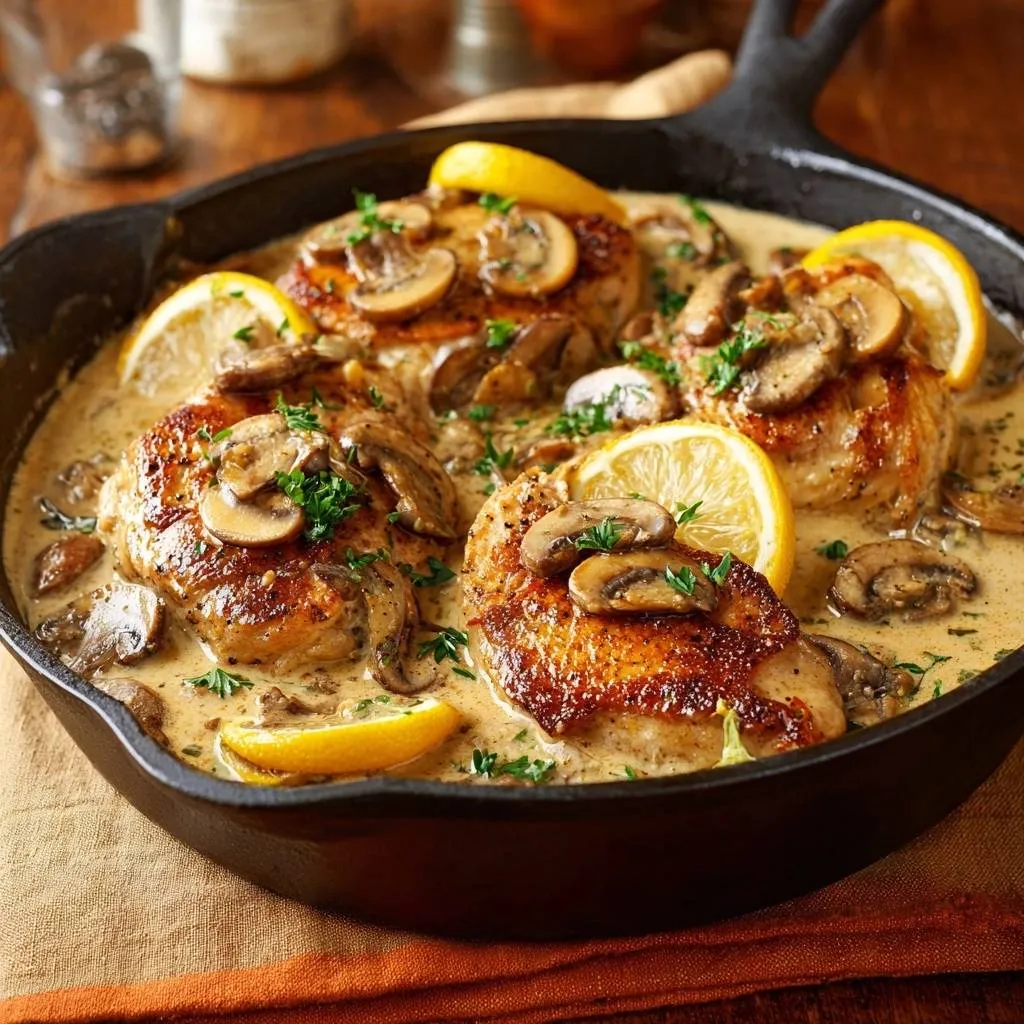
Nothing ruins a promising dinner faster than a puddle of watery liquid on your plate where a rich sauce should be. You’ve likely been there before: the chicken looks great, but the cream sauce is thin, broken, or simply slides right off the meat. This Creamy Lemon Mushroom Chicken solves that frustration by focusing on a thick, velvety emulsion that clings to every bite.
The secret lies in the balance between the earthy, savory depth of cremini mushrooms and the sharp, vibrant brightness of fresh lemon. When these flavors meet heavy cream that has been properly reduced, you get a restaurant-quality glaze that feels indulgent yet perfectly balanced. It is a dish that smells like a high-end bistro but comes together in a single skillet in under thirty minutes.
To ensure your sauce never breaks, you have to respect the temperature. Most home cooks rush the process by boiling the cream or adding the acid too early, which causes curdling. I’ve found that the real trick is a gentle simmer and a light flour dredge on the chicken, which acts as a hidden thickening agent for the entire pan. Let’s dive into the science of making this sauce stay perfectly creamy every single time.
The Anatomy of a Non-Watery Cream Sauce
A truly great cream sauce isn’t just about pouring liquid into a pan; it’s about building layers of flavor and texture. The foundation starts with the “fond,” those golden-brown bits stuck to the bottom of your skillet after searing the chicken. These bits are concentrated flavor bombs that dissolve into the sauce during the deglazing process, providing a savory backbone that prevents the cream from tasting flat.
Reduction is the most critical phase of this recipe. As the sauce simmers, water evaporates, leaving behind fats and solids that create a luxurious mouthfeel. Heavy cream is the superior choice here because its high fat content makes it much more stable than milk or half-and-half. While lighter dairy often curdles when it meets the acidity of lemon juice, heavy cream can handle the heat and the acid without separating, provided you keep the flame at a steady medium-low.
Why Mushrooms Cause Sauce Dilution
Mushrooms are essentially sponges filled with water. If you toss them into a pan and immediately hit them with salt, they release all that moisture at once, effectively boiling themselves in a gray, unappealing liquid. This excess water is the primary culprit behind a thin, runny sauce.

To prevent this, you must brown the mushrooms undisturbed in a hot pan without any salt for the first few minutes. This allows the water to evaporate quickly while the mushrooms develop a deep, caramelized crust. Only after they have shrunk and turned golden should you introduce seasonings and aromatics like garlic.
Essential Components for Creamy Lemon Mushroom Chicken
Quality ingredients make a massive difference when the list is this short. I always reach for cremini mushrooms, often labeled as “baby bellas,” instead of standard white buttons. Creminis are just more mature, meaning they have a firmer texture and a much deeper, woodsy flavor that stands up well to the richness of the heavy cream.
Using unsalted butter is another intentional choice. As the sauce reduces, the flavors concentrate, including the salt. By starting with unsalted butter, you maintain total control over the sodium levels. You can always add a pinch of salt at the end, but you can’t take it away once the sauce has thickened into a concentrated glaze.
Selecting and Preparing the Chicken Breasts
Chicken breasts are notorious for cooking unevenly because they are thick at one end and tapered at the other. To fix this, place your chicken between two sheets of plastic wrap and give them a few firm whacks with a meat mallet or a heavy skillet. Aim for a uniform thickness of about half an inch so the entire piece finishes cooking at the exact same moment.
The light coating of all-purpose flour is your second line of defense against a thin sauce. This dredge serves two purposes: it creates a beautiful golden crust through the Maillard reaction and it leaves behind just enough starch in the pan to help emulsify the cream later. It’s a subtle technique that yields a much more professional result than cooking naked chicken breasts.
For a similar comforting meal, check out this creamy mushroom and potato chicken skillet.
Fresh vs. Bottled Lemon Juice
Please, put down the plastic squeeze bottle. Bottled lemon juice often has a metallic aftertaste and lacks the volatile oils found in fresh citrus. Freshly squeezed lemon juice provides a clean, sharp acidity that cuts through the heavy cream and brightens the earthy mushrooms.
If you want an even deeper citrus punch without adding more liquid, you can grate a little lemon zest into the sauce right at the end. The zest contains the aromatic oils of the fruit, giving you that “sunny” flavor profile without altering the consistency of your carefully reduced cream base.
Step-by-Step: Searing for Maximum Flavor
When you start searing the chicken, your goal is a deep, mahogany crust. Don’t be tempted to move the chicken around too much. Let it sit in the hot oil and butter for a full five or six minutes per side. You’ll know it’s ready to flip when it releases easily from the pan; if it’s sticking, it hasn’t formed that perfect crust yet.
Use an instant-read thermometer to check for an internal temperature of 165°F. Taking the chicken out of the pan once it hits this mark ensures it stays juicy while you build the sauce. Remember, the chicken will rest for a few minutes and then return to the warm sauce, so you don’t want to overcook it during the initial sear.
The Deglazing Process and Building the Base
Once the mushrooms are browned and the garlic is fragrant, it’s time to deglate. Pouring in the chicken broth will cause a burst of steam, which is your cue to start scraping the bottom of the pan with a wooden spoon. Those brown bits are the “fond,” and they are the secret to a sauce that tastes like it’s been simmering for hours.
For a similar preparation, check out this skillet creamy mushroom chicken.
For a similar creamy skillet chicken, creamy chicken and asparagus avoids wateriness.
Before you add the cream, turn the heat down to medium-low. You want the pan to be warm but not scorching. If the pan is too hot when the cream hits it, the dairy can “shock” and graininess might occur. A gentle transition in temperature ensures the smoothest possible start for your sauce base.
Achieving the Perfect Sauce Reduction
This is where the magic happens. As the heavy cream simmers with the broth and mushroom juices, it will begin to thicken. You are looking for the “nappe” stage, a French culinary term meaning the sauce is thick enough to coat the back of a spoon. If you can run your finger through the sauce on the spoon and the line stays clean, you’ve nailed it.
This reduction usually takes about five to seven minutes. Be patient! If you add the lemon juice too early, the sauce might not thicken as effectively. By waiting until the very end to stir in the citrus, you preserve the bright flavor and ensure the emulsion is stable and glossy.
Troubleshooting Common Cream Sauce Issues
If your sauce becomes too thick—which can happen if the heat is a bit too high—don’t panic. Simply whisk in a tablespoon of chicken broth or water at a time until it reaches your desired consistency. The sauce should be pourable but substantial enough to coat the chicken completely.
In the rare event that your sauce looks like it’s beginning to “break” or separate into oil and solids, you can usually save it. Remove the pan from the heat immediately and whisk in a teaspoon of warm water. The extra moisture and the mechanical action of whisking can often pull the emulsion back together into a smooth liquid.
Flavor Variations and Ingredient Swaps
While cremini mushrooms are the standard, you can easily swap them for oyster mushrooms or even shiitakes for a more intense, umami-forward dish. Each mushroom variety brings a slightly different texture, with oysters being more delicate and shiitakes offering a firmer, meatier bite.
For those looking for a dairy alternative, full-fat canned coconut cream works surprisingly well. It won’t taste exactly like a traditional cream sauce, but the lemon and garlic do a great job of masking the coconut flavor. Just be aware that coconut cream reduces faster than heavy cream, so keep a close eye on the pan.
Optimal Side Dishes for Creamy Sauces
A sauce this good deserves a vehicle to soak it up. Garlic mashed potatoes are a classic choice, as the creamy texture of the potatoes mimics the sauce. If you prefer pasta, al dente linguine or fettuccine works beautifully; the wide noodles provide plenty of surface area for the lemon-mushroom glaze to cling to.
Complementary Dishes
To round out your meal with the creamy lemon mushroom chicken, consider these complementary recipes.
- For a fresh contrast, try the creamy kale Caesar salad, featuring a similar richness and delightful textures.
- If you enjoy vibrant chicken dishes, the creamy zesty chicken and corn salad offers another bright and satisfying option.
For a lighter option, try a wild rice pilaf or even just a big pile of roasted asparagus. The snap of the green vegetables provides a nice textural contrast to the tender chicken and soft mushrooms. Whatever you choose, make sure it’s something that won’t be overwhelmed by the rich, citrusy flavors of the main dish.
Storage and Reheating Without Separation
Leftovers can be stored in an airtight container in the refrigerator for up to three days. However, be aware that the sauce will thicken significantly as it cools, often turning into a gel-like consistency. This is perfectly normal due to the fats and proteins in the cream and chicken.
To reheat, avoid the microwave if possible, as it tends to heat unevenly and cause the sauce to break. Instead, place the chicken and sauce in a small skillet over low heat. Add a tablespoon of water or chicken broth and stir gently as it warms up. This extra liquid helps the sauce re-emulsify, returning it to its original velvety state.
Can You Freeze Creamy Lemon Mushroom Chicken?
Freezing dairy-based sauces is generally not recommended because the emulsion often breaks during the thawing process, resulting in a grainy texture. If you absolutely must freeze it, the best way to protect the sauce is to whisk in a tiny bit of cornstarch slurry during the initial cooking phase to help stabilize the fats.
A better meal-prep strategy is to freeze the seared chicken and sautéed mushrooms separately. When you are ready to eat, thaw them and then perform the cream reduction steps fresh. This ensures the sauce is perfectly smooth and the lemon flavor remains vibrant and sharp rather than dulling in the freezer.
Frequently Asked Questions
How do I keep the chicken from getting tough?
The most common reason for tough chicken is overcooking. Because chicken breasts are lean, they dry out quickly once they pass 165°F. Pounding the meat to an even thickness ensures it cooks quickly and uniformly. Additionally, letting the chicken rest while you make the sauce allows the juices to redistribute, keeping the meat tender when you slice into it.
Can I use milk instead of heavy cream?
I don’t recommend using straight milk for this recipe. Milk lacks the fat content necessary to create a thick glaze and is much more likely to curdle when you add the lemon juice. If you must use something lighter, half-and-half is a better middle ground, but you may need to whisk in a teaspoon of cornstarch mixed with water to help it reach the right thickness.
Why is my sauce still watery after simmering?
If your sauce hasn’t thickened after seven minutes, it usually means the heat was too low or the mushrooms weren’t browned enough. You can fix this by turning the heat up slightly to increase evaporation. Alternatively, you can whisk a teaspoon of flour or cornstarch with a little cold water and stir it into the simmering sauce to give it an extra boost.
What is the best way to clean the mushrooms?
Avoid soaking mushrooms in water, as they will absorb it like a sponge and make your sauce watery. Instead, use a damp paper towel or a soft brush to wipe away any dirt. If they are particularly gritty, a very quick rinse under cold water followed by immediate drying with a towel is acceptable, but never let them sit in a bowl of water.
Can I use dried parsley instead of fresh?
You can, but the flavor won’t be nearly as bright. Fresh parsley adds a necessary “green” note that cuts through the richness of the cream. If you only have dried, use about one-third of the amount called for in the recipe, as dried herbs are more concentrated. Stir them in a few minutes earlier so they have time to rehydrate in the sauce.

Creamy Lemon Mushroom Chicken
Course: Main CourseCuisine: AmericanDifficulty: easy4
servings10
minutes25
minutes410
kcal35
MinutesA savory chicken dish featuring golden-seared breasts and cremini mushrooms in a rich, lemon-infused cream sauce designed to cling perfectly to the meat.
Ingredients
4 boneless skinless chicken breasts (pounded to even thickness)
1 pound cremini mushrooms, sliced
2 tablespoons olive oil
2 tablespoons unsalted butter
1/4 cup all-purpose flour (for dredging)
3 cloves garlic, minced
1 cup heavy cream
1/2 cup chicken broth
1 tablespoon fresh lemon juice
1 lemon, sliced into rounds
2 tablespoons fresh parsley, chopped
Salt and black pepper to taste
Directions
- Season chicken breasts generously with salt and pepper. Lightly dredge each breast in flour, shaking off the excess. This creates the golden crust seen in the image and helps thicken the sauce later.
- Heat olive oil and 1 tablespoon of butter in a large cast iron skillet over medium-high heat. Sear the chicken for 5 to 6 minutes per side until deep golden brown and cooked through (165°F). Remove chicken from the pan and set aside.
- In the same skillet, add the remaining tablespoon of butter and the sliced mushrooms. This is the critical step: do not crowd the pan and do not add salt yet. Let them brown undisturbed for 3-4 minutes to release their natural sugars and evaporate excess water. Once browned and shrunk, stir in the garlic and cook for 1 minute.
- Pour in the chicken broth to deglaze the pan, scraping up all the flavorful brown bits (fond) from the bottom.
- Lower the heat to medium-low. Slowly pour in the heavy cream. To prevent a watery sauce, let the mixture simmer gently for 5 to 7 minutes until it reduces by a third and coats the back of a spoon.
- Stir in the lemon juice. Taste and adjust seasoning with salt and pepper.
- Add the chicken back into the skillet, nestling it into the sauce. Top with lemon slices and fresh parsley. Spoon the thickened sauce over the chicken and serve immediately while the emulsion is at its peak thickness.
Notes
- The secret to the thick sauce is searing the mushrooms first to remove moisture and simmering the cream until it reduces by one-third.