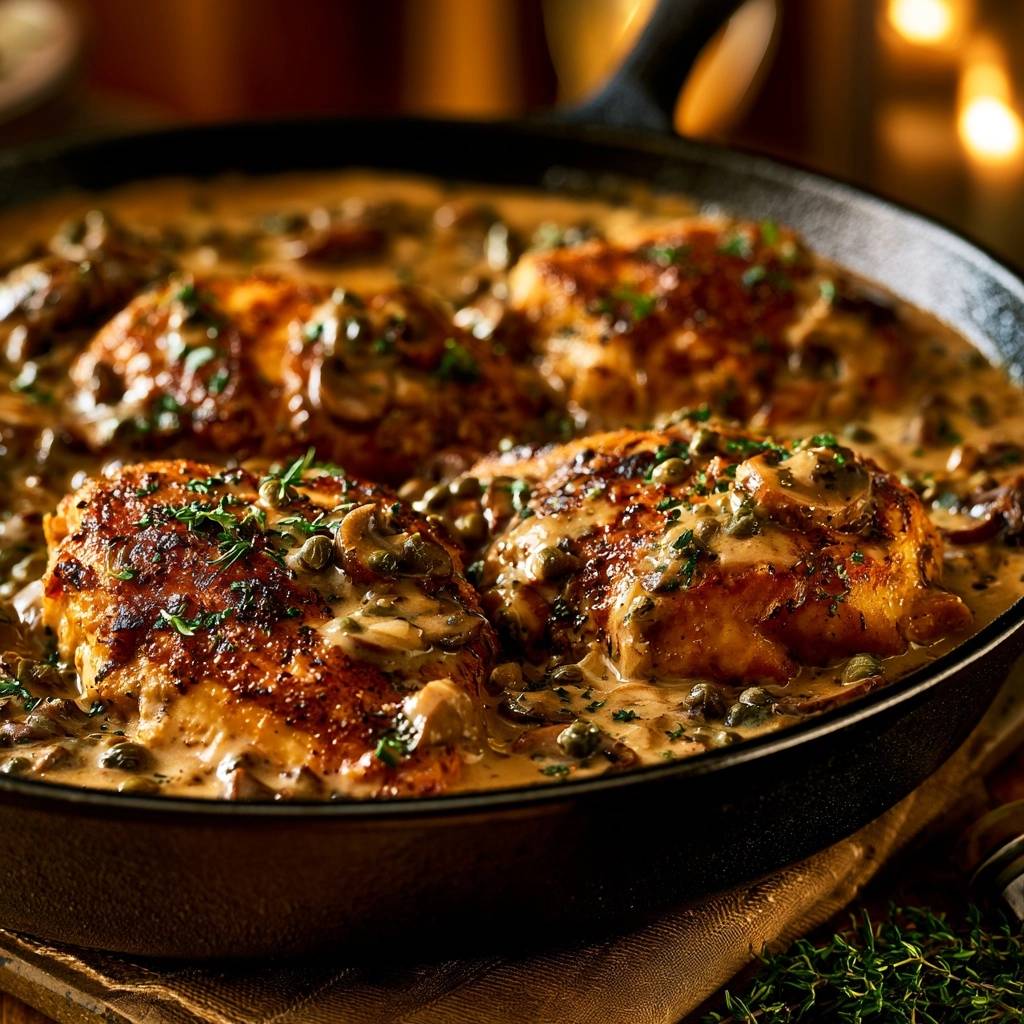
We’ve all been there. You’re craving a decadent, restaurant-style meal, but when you plate your chicken, the sauce turns into a thin, gray puddle. It’s frustrating when a recipe promises luxury but delivers a watery mess that slides right off the meat. This Creamy Mushroom Garlic Chicken is designed to end that struggle forever by focusing on structural integrity and deep, earthy flavors.
The goal here is a “skyscraper” quality sauce—one that has height, body, and enough grip to coat every inch of the chicken. By mastering the art of pan-sauce emulsification, you’ll create a dish that feels incredibly indulgent yet perfectly balanced. We aren’t just tossing cream into a pan; we’re building layers of flavor from the golden-brown crust of the chicken to the concentrated essence of sautéed mushrooms.
The secret to this success lies in the order of operations. Most home cooks add their liquids too early, trapping moisture in the mushrooms and diluting the cream. I’ve found that the real trick is a two-stage reduction process. By letting the chicken broth reduce by half before the cream even touches the skillet, you ensure the final result is thick, stable, and intensely savory. It’s a professional technique that makes a world of difference in your home kitchen.
The Anatomy of a Non-Watery Cream Sauce
A “broken” or thin sauce usually happens because of physics, not bad luck. Mushrooms are nearly 90% water, and if they aren’t cooked until they’re deeply browned, they’ll release that liquid directly into your cream. This creates a diluted, soupy texture that lacks richness. To combat this, we rely on three specific pillars of kitchen science: the flour dredge, the mushroom sear, and the parmesan stabilizer.
The flour on the chicken does more than just create a crust; it leaves behind tiny amounts of toasted starch in the pan. When you whisk in your liquids, that starch acts as a natural thickener. Furthermore, searing the mushrooms until they are dark and nutty ensures that their moisture has evaporated, leaving only concentrated flavor behind. Finally, adding freshly grated Parmesan cheese provides the necessary proteins and fats to bind the sauce together, creating a smooth emulsion that stays thick even as it cools on the plate.
Why Thighs Outperform Breasts in Creamy Dishes
While you can certainly use chicken breasts, boneless skinless chicken thighs are the superior choice for this specific preparation. Thighs contain more connective tissue and a higher fat content, which allows them to stay juicy during the searing and simmering phases. This extra fat also complements the heavy cream, creating a more cohesive flavor profile.
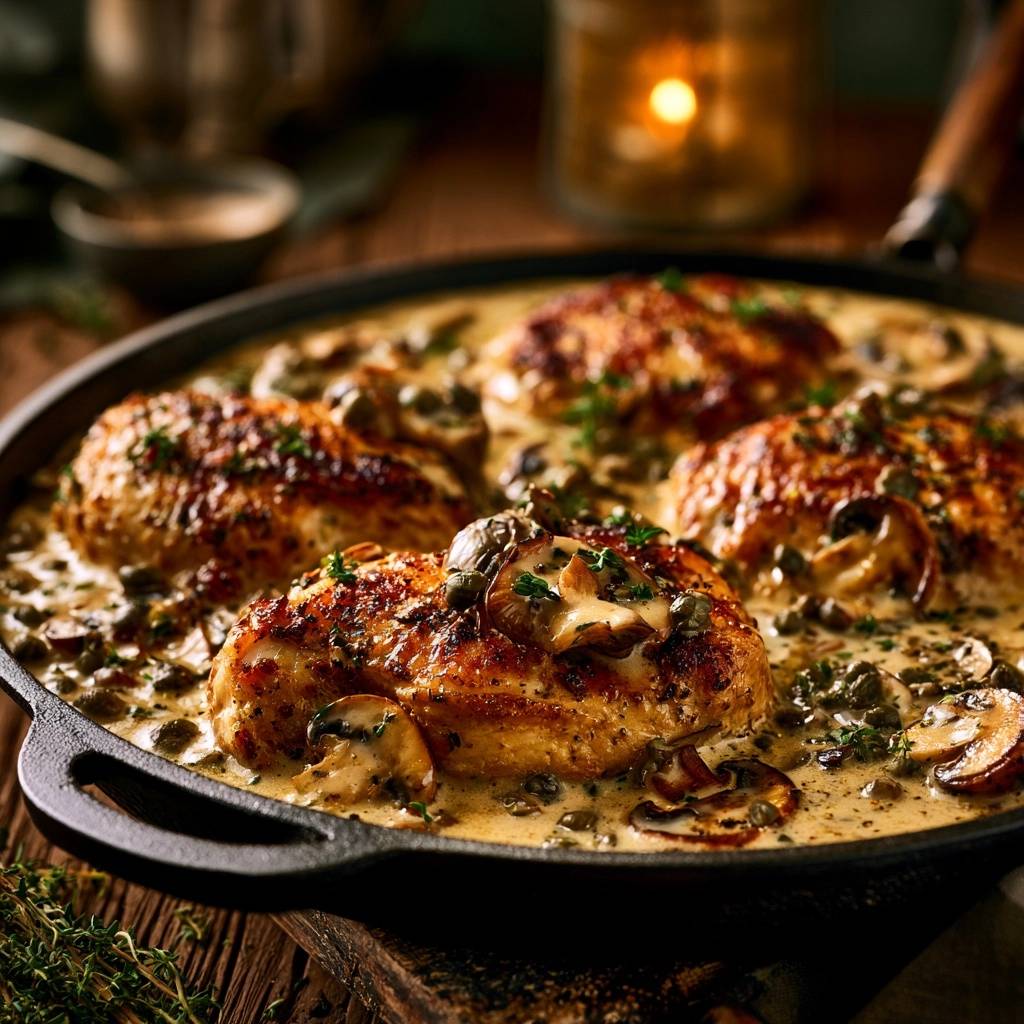
Chicken breasts are lean and prone to drying out, especially when they have to sit in a hot sauce to finish cooking. Thighs are much more forgiving. They develop a more robust, golden-brown crust that stands up beautifully against the weight of the mushroom and garlic gravy. If you do choose breasts, I recommend slicing them into thinner cutlets to ensure they cook quickly without becoming rubbery.
Essential Components for Creamy Mushroom Garlic Chicken
Quality ingredients are the backbone of this dish. For the mushrooms, skip the basic white buttons and reach for Cremini, often labeled as Baby Bellas. They have a lower water content and a much deeper, woodsy flavor that holds its own against the pungent garlic. When you slice them, keep them relatively thick so they maintain a meaty texture after browning.
The addition of capers might seem unusual, but they are the “secret weapon” here. Their briny, salty pop cuts right through the heavy fats of the cream and butter, preventing the dish from feeling too heavy or one-note. It’s that hit of acidity that keeps you coming back for another bite. Always drain them well before adding them to the pan to avoid introducing extra vinegar or brine into your cream base.
Lastly, the Parmesan cheese must be freshly grated from a block. Pre-shredded cheeses are coated in potato starch or cellulose to prevent clumping in the bag. While that’s fine for a taco, it’s disastrous for a cream sauce. Those anti-clumping agents can cause the sauce to feel gritty or grainy. A fresh grate ensures the cheese melts instantly into a silky, velvet-like finish.
The Role of Aromatics and Dried Herbs
Garlic is a primary player here, but it requires careful handling. We use four cloves, minced finely, to ensure the flavor is distributed throughout the sauce. However, garlic burns easily, which can turn a cream sauce bitter. That’s why we add it only after the mushrooms are browned, giving it just sixty seconds to bloom in the hot butter.
For the herbs, dried thyme is used during the cooking process because it is heat-resistant and infuses the fat with an earthy aroma. Fresh parsley and thyme sprigs are reserved strictly for the garnish. These fresh herbs contain volatile oils that disappear with heat, so adding them at the very end provides a bright, floral finish that wakes up the entire skillet.
Phase One: Achieving the Golden Crust
The first step to a great pan sauce is a perfect sear. Before the chicken ever touches the flour, you must pat it completely dry with paper towels. If the surface is damp, the chicken will steam instead of sear, and you’ll lose that beautiful Maillard reaction. A dry surface ensures the flour sticks evenly and browns quickly.
Once you dredge the chicken in the seasoned flour, shake off the excess. You want a thin, even coating, not a thick batter. When you place the chicken in the shimmering oil and butter, leave it alone. Don’t move it for at least six minutes. You’re looking for a deep, mahogany-gold color. That crust isn’t just for texture; it’s the foundation of the “fond”—those little brown bits stuck to the pan that hold all the flavor.
Phase Two: Sautéing Mushrooms to Prevent Excess Moisture
After removing the chicken, it’s time to tackle the mushrooms. The biggest mistake people make is crowding the pan. If the mushrooms are piled on top of each other, they will release steam and turn rubbery. Spread them out in a single layer in the hot butter and let them sit undisturbed for three minutes. You want them to sizzle and brown, not boil in their own juices.
You’ll notice they go through two stages. First, they’ll look a bit wet as they “sweat” out their moisture. Keep going. Once that moisture evaporates, they will suddenly start to take on a dark, rich color and a nutty smell. This browning phase is non-negotiable. If you skip it, your sauce will inevitably turn watery later on. Patience here pays off in the form of a concentrated, savory mushroom flavor.
Phase Three: Deglazing and Building the Pan Sauce
Deglazing is the moment the magic happens. When you pour in the chicken broth, use a wooden spoon to scrape up every single brown bit from the bottom of the skillet. This “fond” is pure gold; it contains the caramelized proteins from the chicken and mushrooms that will give your sauce its professional depth. It will turn the liquid a beautiful amber color almost instantly.
Now, follow the “reduction by half” rule. Don’t rush to add the cream. Let the broth simmer rapidly until it has reduced in volume by about 50%. This concentrates the salt and savory notes, ensuring the sauce doesn’t taste bland once the heavy cream is added. It also creates a more stable base for the dairy to cling to, preventing separation later.
Emulsifying the Heavy Cream and Parmesan
Once the broth is reduced, turn the heat down to medium-low. High heat is the enemy of dairy; if you boil heavy cream too vigorously, the fat can separate from the liquid, leaving you with an oily mess. Pour in the cream and whisk in the Parmesan slowly. The cheese acts as a stabilizer, helping the fats and liquids stay bonded together.
Simmer the sauce gently until it reaches “nappe” consistency. This is a fancy chef term that simply means the sauce is thick enough to coat the back of a spoon. If you run your finger through the sauce on the spoon and the line stays clean, it’s ready. This usually takes about three to five minutes of gentle bubbling.
Troubleshooting Your Creamy Garlic Sauce
Even with the best techniques, things can sometimes go sideways. If your sauce becomes too thick—perhaps you let it simmer a minute too long—don’t panic. Simply whisk in a tablespoon or two of chicken broth or water to loosen it back up. The sauce should be pourable but substantial, like a heavy gravy.
If the sauce looks oily or “broken,” it usually means the heat was too high. You can often fix this by removing the pan from the heat and whisking in a teaspoon of warm water very vigorously. This helps re-emulsify the fats. If the sauce isn’t thickening at all, it’s likely because the heat is too low or you didn’t let the broth reduce enough. Increase the heat slightly and keep whisking; the Parmesan will eventually do its job.
Optimal Side Dishes for Heavy Cream Bases
Because this dish is so rich and savory, you want sides that can either soak up the extra sauce or provide a sharp contrast. Garlic mashed potatoes are a classic choice, as the creamy spuds act like a sponge for the mushroom gravy. Wide egg noodles or a short pasta like rigatoni are also excellent for catching the capers and mushroom slices in every bite.
To balance the meal, I highly recommend something with a bit of acidity. A simple arugula salad dressed with lemon juice and olive oil provides a peppery, bright crunch that cuts through the heavy cream. Steamed asparagus or roasted broccoli with a squeeze of fresh lemon also works beautifully. Avoid sides that are already very buttery or creamy, as they can make the meal feel overwhelming.
Storage and Reheating Without Sauce Separation
Cream sauces are notoriously temperamental when it comes to leftovers. If you put this in the microwave, the high, uneven heat will almost certainly cause the sauce to break, leaving the chicken sitting in a pool of yellow oil. For the best results, store leftovers in an airtight container in the fridge for up to three days.
When you’re ready to eat, reheat the chicken and sauce in a small skillet over low heat. Add a splash of milk or chicken broth to the pan as it warms up. This extra liquid helps the sauce re-emulsify and return to its original velvety state. Gently spoon the sauce over the chicken as it heats through. Note that this dish does not freeze well; the dairy will likely curdle and change texture once thawed.
Expert Tips for Professional Results
To really take this dish to the next level, use a heavy-bottomed skillet like cast iron or stainless steel. These materials retain heat much better than thin aluminum pans, which helps you get that consistent, deep sear on the chicken and mushrooms. Also, never wash your mushrooms under running water. They act like sponges and will soak up the liquid, making them impossible to brown. Instead, wipe them clean with a damp paper towel.
Another pro tip is to use room temperature cream. If you pour ice-cold cream into a hot pan, the temperature shock can sometimes cause it to curdle. Take the cream out of the fridge about fifteen minutes before you need it. Finally, let the chicken rest for a few minutes after searing but before adding it back to the sauce. This allows the juices to redistribute so they don’t leak out and thin your sauce at the very end.
Variations: Swapping Proteins and Greens
This sauce technique is incredibly versatile. If you aren’t in the mood for chicken, the same mushroom and garlic cream base works beautifully with turkey cutlets or even thick-cut cauliflower steaks for a vegetarian option. The key is to still get that golden sear on whatever protein or vegetable you choose to use.
For a “Tuscan” twist, you can stir in two cups of fresh baby spinach during the final two minutes of simmering. The heat of the sauce will wilt the spinach perfectly without overcooking it. You could also add sun-dried tomatoes along with the garlic for a sweeter, more concentrated flavor profile that pairs excellently with the earthy mushrooms.
Frequently Asked Questions
How do I keep the sauce from getting watery?
The most important steps are browning the mushrooms thoroughly to remove their moisture and reducing the chicken broth by half before adding the cream. Additionally, using freshly grated Parmesan acts as a stabilizer that binds the sauce together. Never skip the flour dredge on the chicken, as those toasted starch bits help thicken the liquid from the start.
Can I use milk instead of heavy cream?
I don’t recommend using straight milk, as it lacks the fat content necessary to create a thick, stable emulsion and is much more likely to curdle. If you must use something lighter, half-and-half can work, but you may need to whisk in a teaspoon of cornstarch mixed with water (a slurry) at the end to achieve the desired thickness.
What is the best way to store and reheat leftovers?
Store the chicken and sauce in an airtight container in the refrigerator for up to 3 days. To reheat, place everything in a skillet over low heat on the stove. Add a tablespoon of milk or broth and whisk the sauce gently as it warms to bring the emulsion back together. Avoid the microwave, as it usually causes the cream sauce to separate and become oily.
Can I make this recipe dairy-free?
You can substitute the butter with a plant-based alternative and use a high-quality, unsweetened cashew cream or full-fat coconut milk in place of the heavy cream. However, keep in mind that coconut milk will add a slight tropical flavor. You would also need to use a dairy-free Parmesan alternative or nutritional yeast to help with the thickening and savory flavor.
Why did my garlic turn bitter?
Garlic turns bitter if it is burnt. This usually happens if the pan is too hot or if the garlic is added too early. Always add the minced garlic after the mushrooms are fully browned and cook it for only about 60 seconds until it smells fragrant. If it turns dark brown or black, it’s best to wipe out the pan and start the sauce phase over.
Creamy Mushroom Garlic Chicken
Course: Main CourseCuisine: AmericanDifficulty: easy4
servings10
minutes25
minutes35
Minutes465
kcalAmerican
Ingredients
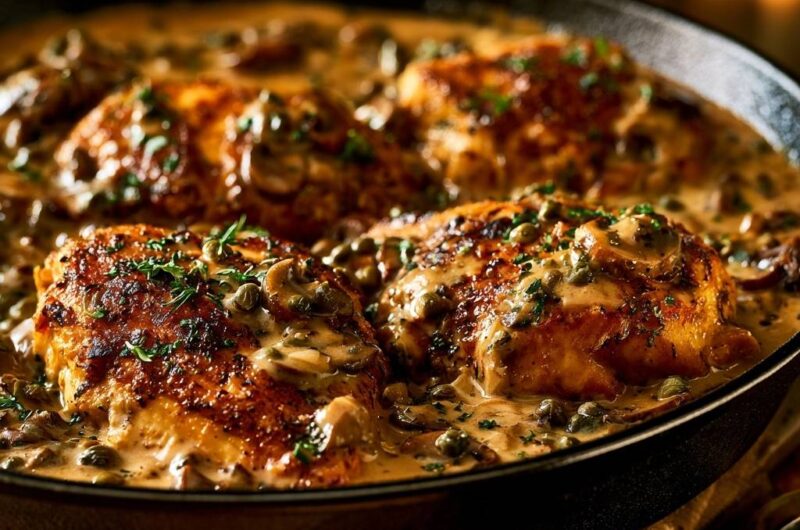
4 boneless skinless chicken thighs (preferred for the golden crust shown) or breasts
1/2 cup all-purpose flour (for dredging)
2 cups sliced cremini mushrooms
4 cloves garlic, minced
1 cup heavy cream
1/2 cup chicken broth
1/4 cup freshly grated Parmesan cheese
2 tablespoons capers, drained
2 tablespoons olive oil
3 tablespoons butter, divided
1 teaspoon dried thyme
1/2 teaspoon paprika
Salt and black pepper to taste
Fresh parsley and thyme sprigs for garnish
Directions
- Pat the chicken dry with paper towels. In a shallow bowl, mix the flour, paprika, salt, and pepper. Dredge each piece of chicken in the flour mixture, shaking off the excess. This creates the deep golden crust seen in the image and helps thicken the sauce later.
- Heat the olive oil and 1 tablespoon of butter in a large cast iron skillet over medium-high heat. Once shimmering, add the chicken. Sear for 6-7 minutes per side until a deep golden-brown crust forms and the chicken is cooked through. Remove chicken from the pan and set aside on a plate.
- In the same skillet, melt the remaining 2 tablespoons of butter. Add the mushrooms and cook undisturbed for 3 minutes, then stir and cook for another 3 minutes until they have released their moisture and turned deep brown. This step is crucial to prevent a watery sauce.
- Add the minced garlic and dried thyme; cook for 1 minute until fragrant.
- Pour in the chicken broth to deglaze the pan, scraping up all the flavorful brown bits (fond) from the bottom. Let the liquid reduce by half.
- Lower the heat to medium-low. Pour in the heavy cream and add the capers. Whisk in the grated Parmesan cheese-this acts as a stabilizer and thickener to ensure the sauce never turns watery. Simmer gently for 3-5 minutes until the sauce thickens enough to coat the back of a spoon.
- Return the chicken and any accumulated juices to the skillet. Simmer for 1-2 minutes to allow the crust to slightly absorb the cream.
- Spoon the thick mushroom sauce and capers over the chicken. Garnish with fresh parsley and thyme sprigs before serving directly from the skillet.
Notes
- To prevent a watery sauce, ensure mushrooms are cooked until they release all moisture and turn deep brown. Using Parmesan cheese acts as a stabilizer for the heavy cream.