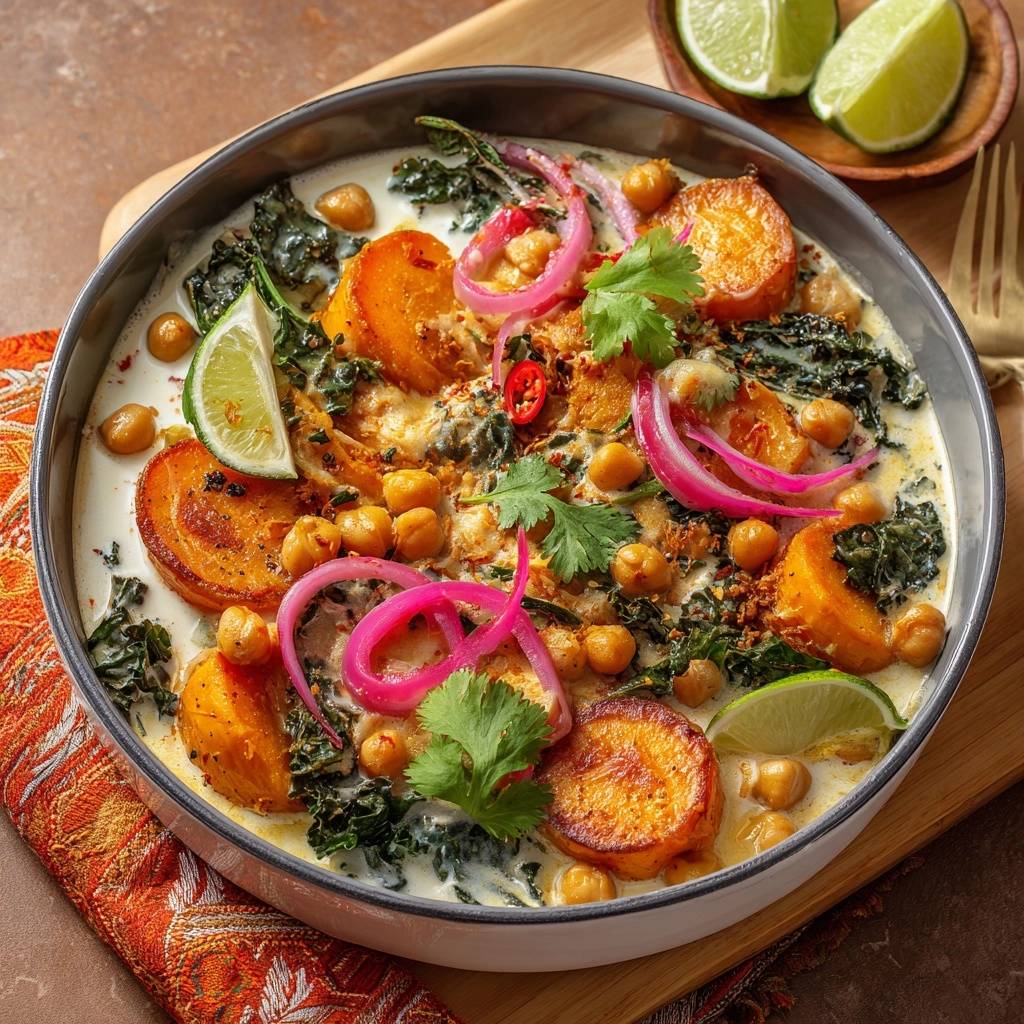
Most home cooks have experienced the disappointment of a homemade curry that looks more like a thin, watery soup than a rich, restaurant-style meal. You follow the recipe, yet the sauce separates on the plate and the vegetables feel boiled rather than flavorful. This happens because standard simmering methods don’t allow for proper emulsification or moisture control.
The secret to a velvety, “clingy” sauce lies in the starch-release method and the power of roasting. By caramelizing the sweet potatoes in the oven first, you lock in their natural sugars and create a structural integrity that survives the sauce. When those roasted edges finally meet the simmering coconut milk, they release just enough starch to thicken the liquid into a luxurious glaze.
I’ve found that the real trick to professional consistency is reducing your coconut milk by nearly half before the vegetables ever touch the pan. This concentrates the fats and sugars, ensuring your Creamy Roasted Sweet Potato and Chickpea Curry has a deep, concentrated flavor profile. You aren’t just making a stew; you’re building a complex emulsion that coats every bite perfectly.
The Science of Thick, Velvety Curry Sauce
Creating a thick curry sauce is an exercise in chemistry rather than just heat. When you use full-fat coconut milk, you’re working with a delicate balance of water, fat, and solids. If you simply boil it, the water stays trapped, resulting in that dreaded “runny” texture that pools at the bottom of your bowl.
Simmering the sauce uncovered is the most vital step in this process. As the steam escapes, the water content evaporates, leaving behind a higher concentration of coconut fats and proteins. This process, known as reduction, transforms the milk into a heavy cream consistency that naturally binds with the spices and aromatics.
Furthermore, the roasted sweet potatoes play a secondary role in the sauce’s final texture. Even though we add them at the end, the contact between the hot, roasted starch and the reduced coconut milk creates a natural thickening effect. This ensures the sauce stays stable and doesn’t break or become oily, even as it cools on the plate.
Essential Components for Roasted Sweet Potato Curry
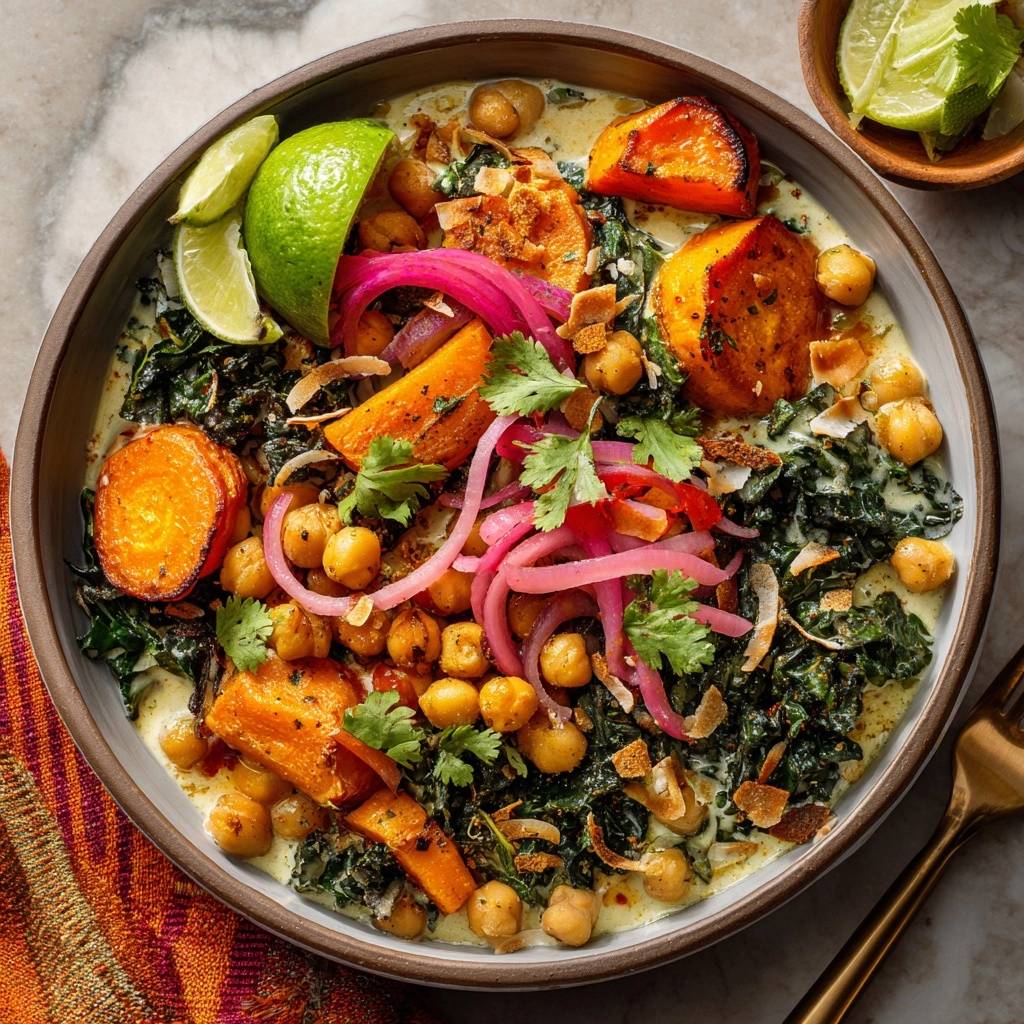
Every ingredient in this dish serves a specific structural or flavor-based purpose. Choosing the right cut and quality for these items determines whether the final result is mediocre or magnificent. It starts with the sweet potatoes, which should be sliced into 1-inch thick rounds rather than small cubes.
These larger rounds provide more surface area for the Maillard reaction to occur during roasting. This caramelization creates a “crust” that acts as a barrier, preventing the potato from turning into mush once it hits the liquid. You want a tender interior with a distinct, chewy exterior that holds its shape beautifully.
Chickpeas require similar attention to detail. If you toss them into the pan straight from the can, they remain soft and bland. By patting them bone-dry and roasting them alongside the potatoes, they develop a “pop” and a nutty toasted flavor. This adds a much-needed textural contrast to the creamy sauce.
For another wonderful way to enjoy chickpeas, explore the golden chickpea and squash curry.
The red curry paste is your flavor engine, containing complex notes of lemongrass, galangal, and chili. However, these flavors are fat-soluble, meaning they need to be “bloomed” in hot oil to reach their full potential. Finally, using hearty kale instead of spinach ensures your greens don’t disappear into a slimy mess; kale maintains its bite and adds a vibrant earthy balance.
Why Full-Fat Coconut Milk is Mandatory
If you’re tempted to reach for “light” coconut milk to save calories, I strongly urge you to reconsider for this specific dish. Light coconut milk is essentially full-fat milk diluted with water and stabilized with extra gums. It lacks the necessary fat solids to create a true emulsion, meaning your sauce will never achieve that glossy, thick finish.
Full-fat coconut milk provides the viscosity needed to carry the heavy spices and roasted vegetables. Without that fat content, the red curry paste will feel gritty on the tongue rather than smooth. The fat also acts as a flavor carrier, mellowing the sharp heat of the chilies and ginger into a rounded, comforting warmth.
Phase One: Achieving the Perfect Roasted Base
Roasting is the most important phase for building flavor depth. We set the oven to 400°F because this high heat is necessary to trigger caramelization before the vegetables overcook on the inside. It’s a race between browning the outside and softening the middle.
Tossing the potatoes and chickpeas in turmeric before roasting isn’t just for health; it’s for color. The oil helps the turmeric stain the vegetables a deep, vibrant gold that won’t wash off in the sauce. You’ll know they’re ready when the chickpeas look slightly shrunken and the potato edges are dark brown and crisp.
Don’t be afraid of those dark spots on the sweet potatoes. Those caramelized bits are concentrated sugar and salt, which provide a smoky contrast to the sweet coconut milk later. Make sure you flip the rounds halfway through to ensure both sides get that essential oven-sear.
Phase Two: Building the Aromatic Foundation
While the oven does the heavy lifting, the skillet is where the aromatic profile is born. Start by sautéing your red onions in a small amount of oil. You aren’t looking for a deep brown here; you want them translucent and soft so they melt into the background of the sauce.
Once the onions are soft, stir in the red curry paste and ginger. This is the “blooming” stage. You’ll notice the paste darkens in color and the kitchen suddenly smells incredible. This 2-minute window is when the spices release their essential oils into the fat, ensuring every drop of the curry is seasoned from the inside out.
Phase Three: The Reduction and Emulsification Process
Now comes the part where most people rush, but patience here is rewarded with texture. After pouring in the coconut milk and maple syrup, bring it to a gentle bubble. Do not put a lid on the pan. You need that steam to escape so the sauce can concentrate.
Watch the bubbles carefully. At first, they will be thin and pop quickly. As the water evaporates, the bubbles will become larger and “lazier,” indicating the sauce is thickening. This usually takes about 10 to 12 minutes over medium-low heat.
Use the “back of the spoon” test to check your progress. Dip a metal spoon into the sauce and run your finger through the coating. If the line stays clean and the sauce doesn’t run back into the gap, you’ve achieved the perfect emulsion. The maple syrup added here isn’t just for sweetness; it helps the sauce thicken and balances the acidity of the lime.
Phase Four: Integrating Greens and Roasted Elements
When the sauce is thick, fold in the torn kale. It might look like a lot of greens at first, but they will wilt down significantly within two minutes. The small amount of moisture released by the kale actually helps the sauce reach its final, perfect viscosity.
Finally, add your roasted sweet potatoes and chickpeas. Use a gentle folding motion rather than aggressive stirring. You want to coat the vegetables in the sauce without breaking the delicate roasted rounds or knocking the “crunch” off the chickpeas. Simmer for just one minute to marry the temperatures.
For a similar rich texture, explore mastering the golden chickpea curry.
For a similar smooth texture, consider this creamy golden chickpea stew.
The Art of the Quick-Pickled Onion Garnish
A rich, creamy curry needs a sharp “zing” to keep the palate excited. While the vegetables roast, the sliced red onions sit in lime juice and salt. This quick pickle softens the raw onion bite and turns them a stunning neon pink.
This acidity is functional, not just decorative. It cuts through the heavy coconut fats, making the whole dish feel lighter and more balanced. When you hit a pocket of pickled onion along with the creamy potato, it creates a flavor explosion that keeps you coming back for another spoonful.
Troubleshooting Common Curry Texture Issues
If your sauce becomes too thick—which can happen if your stove runs hot—don’t panic. Simply whisk in a tablespoon or two of vegetable broth. This will loosen the emulsion without making it watery, as long as you add the liquid gradually.
If your potatoes feel mushy, it’s likely they were sliced too thin or roasted at too low a temperature. Next time, ensure they are a full inch thick. If the flavor feels “flat” or one-dimensional, it almost always needs more salt or a final squeeze of fresh lime juice to wake up the spices.
Flavor Variations and Dietary Swaps
This recipe is incredibly flexible. If you want more protein, you can add pan-seared tofu cubes along with the sweet potatoes at the end. The tofu will soak up the reduced sauce like a sponge, making it a very satisfying addition.
For those who prefer more heat, don’t just add more curry paste, as that can make the dish too salty. Instead, increase the fresh red chilies in the garnish or add a pinch of extra red pepper flakes during the blooming stage. If kale isn’t your favorite, Swiss chard or collard greens work beautifully as long as you remove the tough stems.
Optimal Pairings for Creamy Vegetable Curry
To truly enjoy this sauce, you need a vessel to soak it up. Long-grain Basmati rice is the gold standard here because its fluffy, separate grains allow the sauce to flow between them. Jasmine rice is another great choice if you prefer a slightly more floral aroma and a stickier texture.
Complementary Bites
To round out your meal, consider these dishes that share ingredients or offer a different texture.
- For a sweet finish, explore the Silky Smooth Perfection Creamy Sweet Potato Pudding, offering a comforting sweetness that echoes the roasted sweet potato in your curry.
- If you’re looking for a lighter, fresh option, try the Creamy Chickpea Salad Wraps, a satisfying way to enjoy chickpeas with a pleasant texture.
Warm, toasted flatbread is also a fantastic companion. Use it to scoop up the roasted potato rounds and chickpeas. The contrast between the charred bread and the velvety coconut sauce is one of the best culinary combinations you can experience at home.
Storage, Reheating, and Meal Prep Strategy
This curry actually tastes better the next day. As it sits in the fridge, the spices continue to infuse into the sweet potatoes. However, the starches will cause the sauce to thicken significantly while cold, often turning it into a thick paste.
When reheating, do not use the microwave if possible. Instead, place the curry in a small saucepan over low heat with a splash of water or broth. Stir gently as it warms; the heat will melt the coconut fats back into a liquid state, and the extra splash of moisture will restore that original creamy consistency.
Expert Tips for Professional Presentation
For a high-end look, serve this in shallow, wide bowls rather than deep ones. This allows you to arrange the sweet potato rounds so their golden, roasted tops are visible above the sauce. It signals to your guests that the vegetables have been treated with care.
Layer your garnishes for visual depth. Start with a scattering of fresh cilantro, then add the bright pink pickled onions, and finish with the sliced red chilies. This layering creates a professional, vibrant aesthetic that matches the bold flavors of the dish.
How long can I store this curry in the refrigerator?
You can store this curry in an airtight container for up to 4 days. In fact, the flavors often deepen and meld together after 24 hours. Just be aware that the sweet potatoes will continue to absorb the sauce, so you will likely need to add a splash of water when reheating to bring back the creamy texture.
Why is my curry sauce still thin after simmering?
The most common reason for a thin sauce is not simmering it long enough or using a lid. You must leave the pan uncovered so the water can evaporate. Additionally, ensure you are using full-fat canned coconut milk; the carton versions used for cereal are mostly water and will never thicken properly regardless of how long you cook them.
Can I freeze this sweet potato curry?
I do not recommend freezing this specific recipe. Sweet potatoes tend to become grainy and lose their structural integrity when frozen and thawed. Furthermore, coconut milk emulsions can sometimes “break” or separate during the freezing process, resulting in a curdled appearance when you reheat it.
What can I use if I don’t have red curry paste?
If you can’t find red curry paste, you can substitute it with a mix of yellow curry powder and a squeeze of tomato paste for color and acidity. However, the flavor will shift from Thai-inspired to a more traditional Indian profile. To keep the Thai vibe, a mix of minced lemongrass, chili flakes, and extra ginger is your best bet.
Is there a substitute for kale in this recipe?
Yes, you can use other hearty greens like Swiss chard, collard greens, or even bok choy. If you choose to use spinach, add it at the very last second and turn off the heat immediately. Spinach releases a lot of water and wilts instantly, so it can thin out your carefully reduced sauce if cooked too long.
How do I make the chickpeas even crispier?
The secret to crispy chickpeas is removing as much moisture as possible before roasting. After draining and rinsing them, roll them between two paper towels to dry them thoroughly. If you have time, let them air dry on the counter for 15 minutes before tossing them in oil and spices. This ensures the oven heat goes toward crisping the skin rather than evaporating surface water.
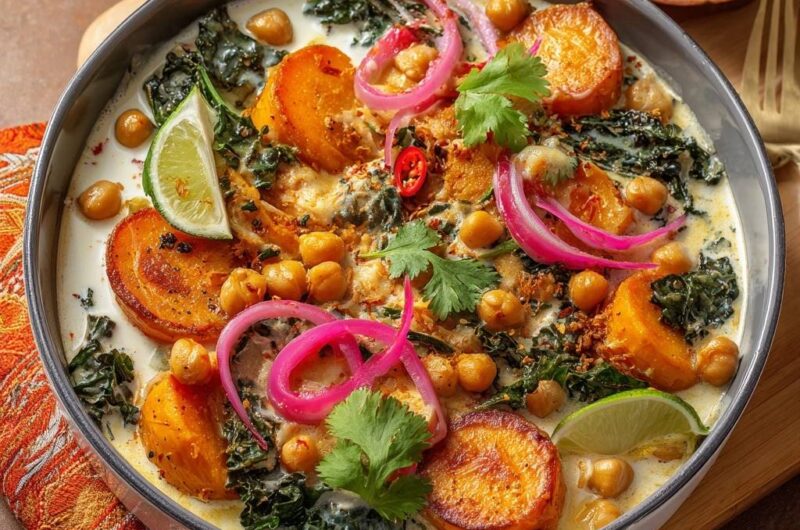
Sweet Potato Chickpea Curry
Course: Main CourseCuisine: FusionDifficulty: medium4
servings15
minutes35
minutes410
kcal50
MinutesA hearty and flavorful curry featuring caramelized roasted sweet potatoes and crispy chickpeas simmered in a reduced, full-fat coconut milk sauce with fresh kale and aromatic spices.
Ingredients
2 large sweet potatoes, peeled and sliced into 1-inch thick rounds
1 can (15 oz) chickpeas, drained and patted dry
1 can (14 oz) full-fat coconut milk (do not use light)
3 cups fresh kale, stems removed and torn into large pieces
1 red onion, thinly sliced
2 tablespoons red curry paste
2 tablespoons olive oil (divided)
1 teaspoon turmeric
1 teaspoon ground ginger
1/2 cup vegetable broth (only if needed for thinning)
1 tablespoon maple syrup or brown sugar (to balance the lime)
Fresh cilantro, lime wedges, and sliced red chilies for garnish
Salt and red pepper flakes to taste
Directions
- Preheat your oven to 400°F (200°C). On a large sheet pan, toss the sweet potato rounds and chickpeas with 1.5 tablespoons of olive oil, salt, and turmeric. Arrange the potatoes in a single layer. Roast for 25-30 minutes, flipping the potatoes halfway through, until they have a deep golden-brown caramelized crust and the chickpeas are slightly crisp.
- While the vegetables roast, prepare the pickled onions. Place half of the sliced red onions in a small bowl with a squeeze of lime juice and a pinch of salt. Let sit for at least 15 minutes until they turn bright pink.
- Heat the remaining 0.5 tablespoon of oil in a large, deep skillet over medium heat. Add the remaining raw onions and sauté for 3 minutes. Stir in the curry paste and ginger, cooking for 1-2 minutes until the paste darkens and becomes highly fragrant.
- Pour in the full-fat coconut milk and maple syrup. To solve the watery sauce problem, bring the liquid to a gentle boil, then reduce heat to medium-low. Simmer uncovered for 10-12 minutes. You are looking for the sauce to reduce by nearly half until it is thick, creamy, and coats the back of a spoon heavily.
- Add the torn kale to the skillet. Stir for 2-3 minutes until the kale is wilted and tender. The kale will release a small amount of moisture which will perfectly finish the sauce consistency.
- Carefully place the roasted sweet potato rounds and chickpeas into the sauce. Do not over-stir; you want the caramelized crust of the potatoes to remain visible. Simmer for 1 minute just to heat through.
- Serve in shallow bowls. Arrange the potatoes so the golden tops peek out of the cream. Garnish generously with the quick-pickled red onions, fresh cilantro, lime wedges, sliced chilies, and red pepper flakes.
Notes
- To ensure a thick sauce, use full-fat coconut milk and allow it to reduce by half before adding the roasted vegetables. Roast the potatoes until golden brown to add texture and prevent them from becoming mushy in the sauce.