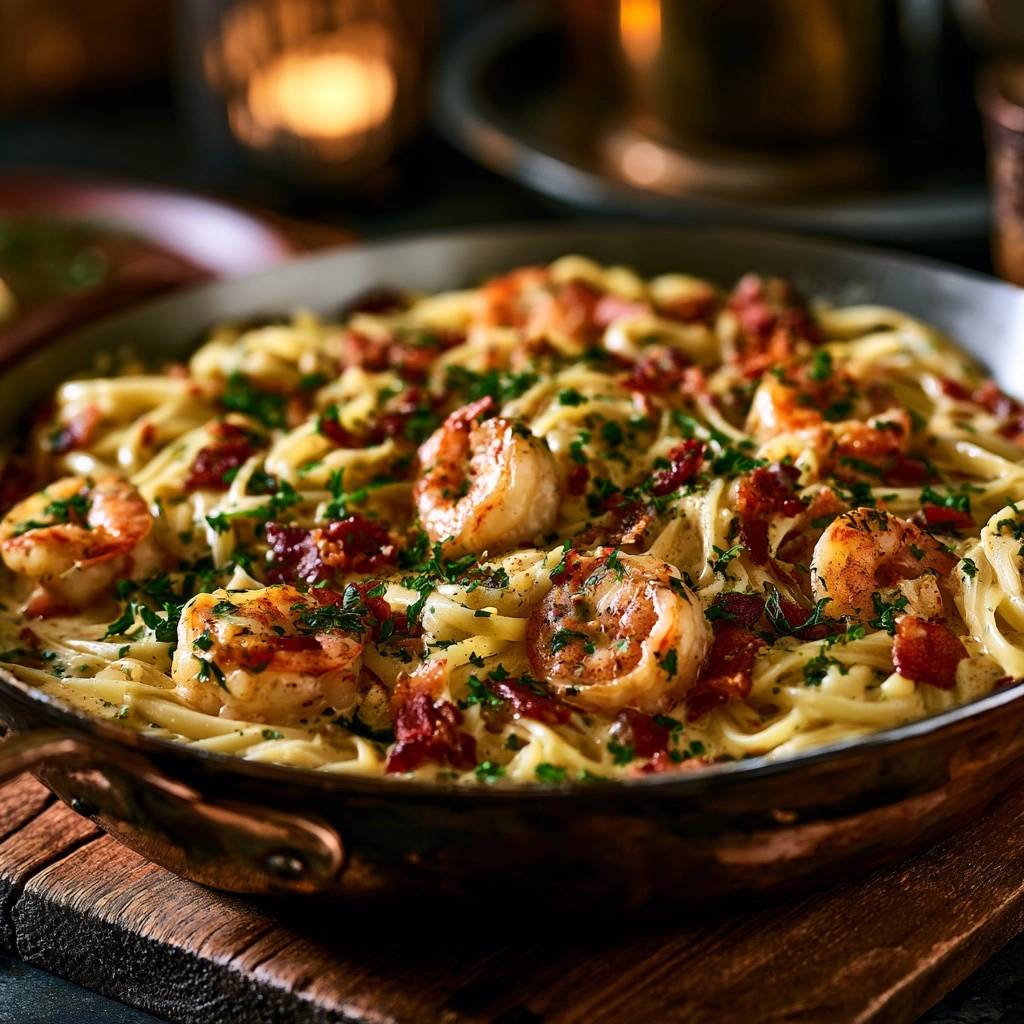
There is nothing more disappointing than a plate of pasta sitting in a puddle of thin, flavorless liquid. You expect a rich, clinging sauce, but instead, you get a watery mess that slides right off the noodles. Achieving that restaurant-quality silkiness isn’t about luck; it’s about mastering the science of emulsification to ensure every bite is decadent and cohesive.
The secret lies in the synergy between the rendered fats, the concentrated proteins in the cream, and the liquid gold known as starchy pasta water. When these elements combine correctly, they create a velvety coating that hugs the linguine and juicy shrimp. This recipe focuses on building layers of flavor, starting with a smoky base and finishing with a stable, glossy emulsion that won’t break on your plate.
I’ve found that the absolute key to success is the reduction phase. Most home cooks add the pasta too early, but you must let the heavy cream simmer until it thickens naturally. This concentration of fats ensures the sauce has enough body to hold onto the cheese and pasta water without separating into an oily mess. Trust the process, and you’ll never deal with a broken sauce again.
Essential Components for Creamy Shrimp and Bacon Linguine
Quality ingredients are the foundation of this dish, especially since we are relying on natural fats for texture. For the best results, choose a thick-cut beef or turkey bacon. These varieties offer a superior fat-to-meat ratio compared to thinner slices, which often shrivel into nothing. The rendered fat from thick-cut bacon provides a smoky, savory base that infuses the entire sauce with depth.
When it comes to the seafood, look for “dry-packed” large shrimp, specifically in the 16/20 count range. Many frozen or “wet-packed” shrimp are treated with sodium tripolyphosphate, which causes them to leach water in the pan. This excess moisture prevents a proper sear and steams the shrimp instead. Dry-packed shrimp allow you to achieve a gorgeous golden crust that locks in sweetness and snap.
Always pat your shrimp bone-dry with paper towels before they hit the skillet. Even a tiny amount of surface moisture will drop the pan temperature and ruin the texture. By starting with high-quality, dry proteins, you ensure the fats in the pan stay clean and ready to form the base of your cream reduction.
Selecting the Right Pasta Shape
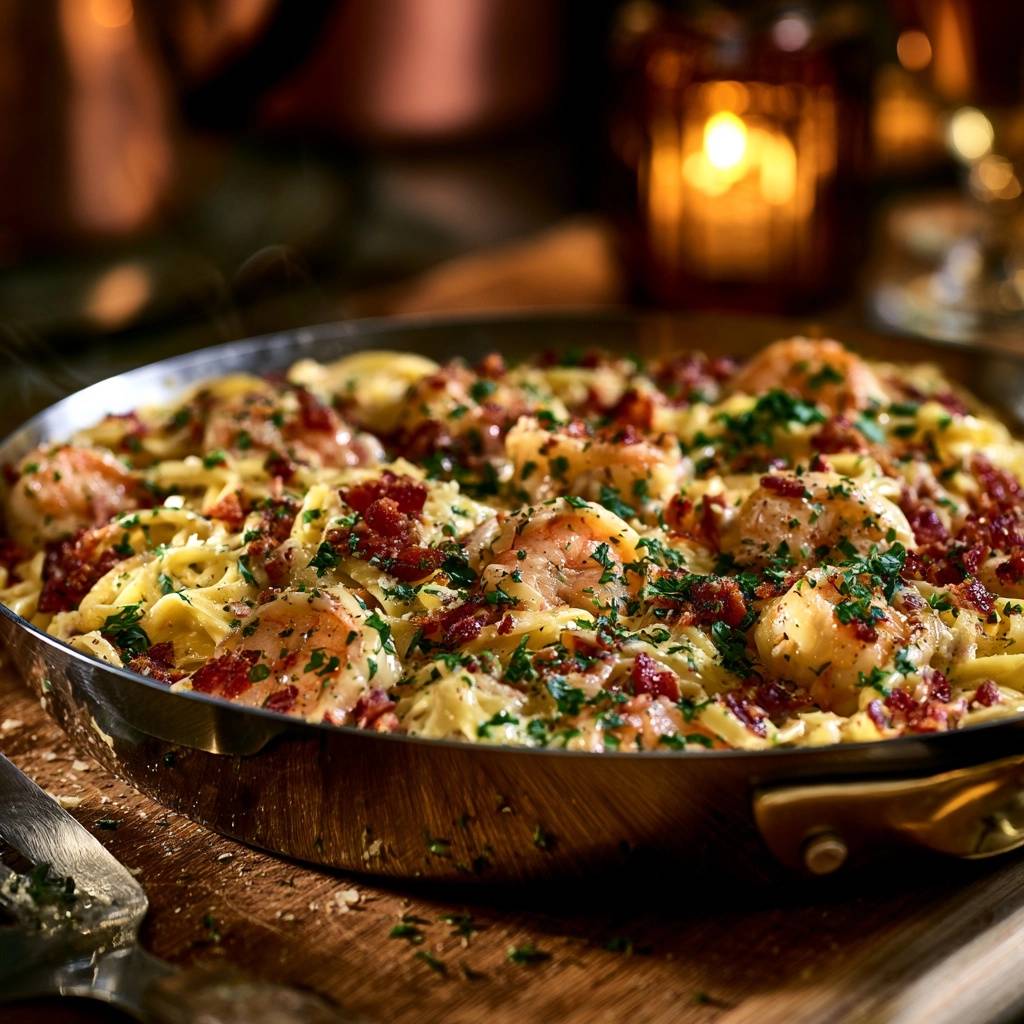
Linguine is the undisputed champion for this specific sauce weight. While spaghetti is too thin to carry the heavy cream and fettuccine can sometimes feel overly doughy, linguine offers the perfect middle ground. Its flat, narrow surface area provides just enough “grip” for the emulsified sauce to cling to without the noodle becoming lost in the richness.
The elliptical shape of linguine also creates a better mouthfeel when paired with the curve of the shrimp. As you toss the pasta vigorously in the pan, the sauce fills the gaps between the strands, creating a cohesive dish rather than a pile of noodles with sauce sitting at the bottom of the bowl.
The Role of High-Fat Dairy and Real Parmesan
To achieve a stable emulsion, you must use heavy cream rather than half-and-half or milk. Heavy cream has a high enough fat content to withstand simmering without curdling. This fat acts as a stabilizer, allowing the sauce to thicken into a lush coating that feels expensive on the tongue.
Furthermore, you must use freshly grated Parmesan cheese. Pre-shredded cheeses are coated in cellulose or potato starch to prevent clumping in the container. These anti-caking agents will prevent the cheese from melting smoothly into your cream, resulting in a grainy, gritty texture. Grating a block of Parmigiano-Reggiano by hand ensures the cheese melts instantly into a smooth, salty finish.
The Science of Emulsification and Sauce Stability
The real hero of this recipe is the reserved pasta water, often called “liquid gold.” As pasta cooks, it releases amylose starch into the water. When you add this starchy water to your cream and fat base, the starch molecules act as a bridge. They physically link the fats from the cream and bacon to the water-based elements of the sauce, creating a stable emulsion.
Reducing the heavy cream by one-third is a chemical necessity. This process evaporates excess water and concentrates the proteins and fats. If you skip this step, the sauce will be too thin to support the weight of the cheese and pasta. By reducing the volume, you are creating a high-viscosity base that is primed to bond with the starch in the pasta water.
When you toss the pasta in the skillet, you are using mechanical energy to force these molecules together. This is why a “vigorous toss” is essential. The movement helps the starch and fat interlock, resulting in a sauce that is thick, glossy, and permanent. It won’t turn back into a watery liquid the moment it hits a cold plate.
Step-by-Step: Rendering Fat and Searing Seafood
Start by placing your chopped bacon in a cold skillet and then turning the heat to medium. This slow start allows the fat to render out gently, leaving the bacon pieces perfectly crisp rather than burnt. Once the bacon is golden and the pan is filled with liquid fat, remove the bits but keep that flavorful oil. This is the soul of your sauce.
Increase the heat to medium-high for the shrimp. You are looking for the Maillard Reaction—that beautiful browning that occurs when proteins hit high heat. Because you patted the shrimp dry, they will sear in about 90 seconds per side. They should look opaque and slightly curled, but not tightly coiled like a spring.
Be careful not to crowd the pan. If you add too many shrimp at once, the temperature will plummet, and they will release their juices, leading to a rubbery texture. Sear them in batches if necessary. Remove them the second they turn pink; they will finish warming through when you fold them back into the hot pasta at the very end.
Building the Reduction and Emulsifying the Sauce
After removing the shrimp, lower the heat before adding the garlic. Garlic burns in seconds, and burnt garlic tastes bitter and acrid. Sauté it just until you smell that sweet, pungent aroma, then immediately pour in the heavy cream. Use a wooden spoon to scrape up the brown bits (the fond) from the bottom of the pan; that’s concentrated flavor.
Let the cream bubble gently. You’ll notice the bubbles change from large and watery to small, thick, and frothy. This is your visual cue that the reduction is happening. Once it has thickened enough to coat the back of a spoon—the “nappe” stage—it is time to introduce the cheese and the pasta.
Add the linguine while it is still slightly undercooked. The pasta will finish cooking inside the sauce, absorbing the cream into its outer layer. Add your pasta water and toss with tongs or a large spoon. You will see the liquid transform from a thin cream into a thick, ivory-colored glaze that moves with the pasta.
Troubleshooting Common Texture Issues
If your sauce looks oily or “broken,” don’t panic. This usually means the fat has separated from the liquid. To fix it, add a tablespoon of hot pasta water and whisk vigorously over low heat. The extra starch will help pull the emulsion back together. If the sauce is too thick and gummy, simply add more pasta water a teaspoon at a time until it loosens up.
Another common issue is cold shrimp. If you find your shrimp have cooled too much while resting, fold them into the pasta during the last 30 seconds of tossing. The residual heat of the sauce will warm them perfectly without overcooking them into a rubbery state. Always serve on warmed bowls to keep the cream from seizing up too quickly.
Flavor Variations and Protein Swaps
While this version is a classic, you can easily adapt the flavors. For a bit of acidity to cut through the richness, stir in some chopped sun-dried tomatoes or a squeeze of fresh lemon juice at the very end. If you like heat, adding a pinch of red pepper flakes to the garlic sauté will infuse the entire cream base with a gentle warmth.
If you want to swap the protein, sea scallops are a fantastic alternative. Use the same searing technique, ensuring they are bone-dry to get that crusty top. You could also use chunks of a firm white fish like halibut. The key is to maintain the bacon fat base, as that smokiness is what balances the heavy dairy.
Optimal Side Dishes for Rich Pasta
Because this Creamy Shrimp and Bacon Linguine is quite rich, you want side dishes that offer contrast. A bright arugula salad with a simple lemon vinaigrette is perfect. The peppery greens and sharp acid cleanse the palate between bites of the velvety pasta. It prevents the meal from feeling too heavy.
Charred broccolini with a hint of garlic and red pepper is another excellent choice. The slight bitterness of the charred vegetable cuts through the fat of the cream sauce. Avoid heavy, buttery garlic bread; the pasta already provides plenty of carbohydrates and fats. A light, crunchy vegetable is all you need to round out the plate.
Expert Tips for Reheating and Storage
Cream-based pastas are notorious for separating when reheated. If you have leftovers, store them in an airtight container in the fridge for up to two days. When you’re ready to eat, avoid the microwave if possible. The intense, uneven heat will cause the fat to leak out, leaving you with oily noodles.
Instead, reheat the pasta in a small skillet over low heat. Add a splash of milk or a tablespoon of water to the pan. As the pasta warms, gently toss it to re-emulsify the sauce with the new liquid. This restores the creamy texture. I do not recommend freezing this dish, as the dairy will likely grain and separate upon thawing.
Frequently Asked Questions
Why is my shrimp tough and rubbery?
Shrimp cook incredibly fast and continue to cook even after you take them out of the pan due to residual heat. This is called carry-over cooking. To keep them succulent, remove them from the skillet the moment they turn opaque and form a “C” shape. If they curl into a tight “O,” they are already overdone.
Can I use milk instead of heavy cream?
Milk is not a good substitute here because it lacks the fat content necessary to create a stable reduction. Milk is much more likely to curdle when it hits the heat and the salt from the cheese. If you must use something lighter, use half-and-half, but be aware the sauce will be significantly thinner and less stable.
How do I prevent the garlic from burning?
The trick is to lower the heat significantly after searing the shrimp. The pan will be very hot from the medium-high sear, so give it a minute to cool down. Add the garlic only when the fat is shimmering but not smoking. Sauté it for no more than 30 seconds before adding the cream to stop the cooking process.
What if I forgot to save the pasta water?
If you accidentally poured the water down the drain, you can create a quick substitute. Whisk 1/4 teaspoon of cornstarch into 1/2 cup of boiling water. It won’t have the same flavor as the salted pasta water, but the starch will provide the necessary binding power to help your sauce emulsify and cling to the noodles.
Is there a substitute for the bacon fat?
If you prefer not to use bacon fat, you can use two tablespoons of high-quality clarified butter (ghee) or a neutral oil like avocado oil. However, you will lose the smoky depth that the bacon provides. If using oil, I recommend adding a tiny extra pinch of smoked paprika to the sauce to mimic that missing flavor profile.
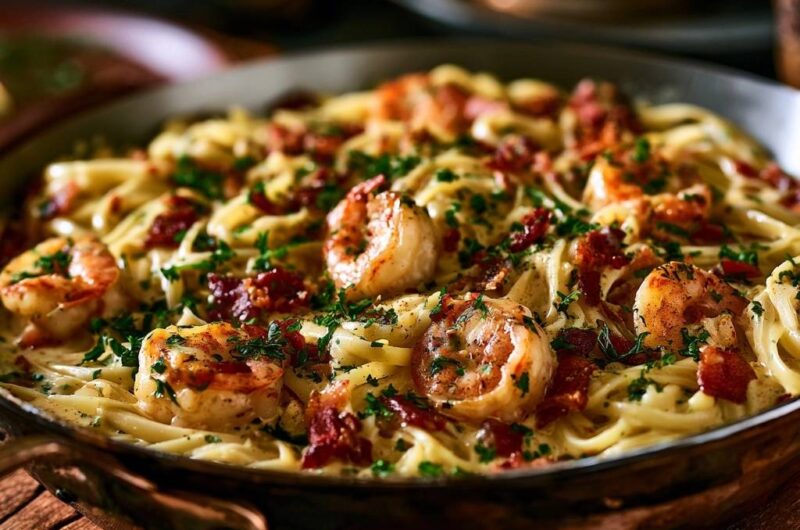
Creamy Shrimp and Bacon Linguine
Course: Main CourseCuisine: AmericanDifficulty: easy4
servings10
minutes20
minutes30
Minutes640
kcalAmerican
Ingredients
1 pound linguine pasta
1 pound large shrimp, peeled and deveined
6 slices thick-cut bacon, chopped
3 cloves garlic, minced
1.5 cups heavy cream
1/2 cup freshly grated Parmesan cheese
1/2 teaspoon smoked paprika
1/4 teaspoon black pepper
1/2 teaspoon kosher salt (plus more for pasta water)
2 tablespoons fresh parsley, finely chopped
1/2 cup reserved starchy pasta water
Directions
- Bring a large pot of heavily salted water to a boil. Cook the linguine until it is just shy of al dente (about 2 minutes less than package directions). Before draining, reserve 1/2 cup of the starchy pasta water. This water is the key to preventing a watery sauce.
- While the pasta cooks, place the chopped bacon in a large skillet over medium heat. Fry until crisp and the fat has fully rendered. Remove the bacon with a slotted spoon and set aside on a paper towel, leaving about 2 tablespoons of the rendered fat in the pan.
- Increase the skillet heat to medium-high. Pat the shrimp completely dry with paper towels. Season the shrimp with smoked paprika, salt, and pepper. Sear the shrimp in the bacon fat for 1.5 to 2 minutes per side until they have a golden-brown crust and are just opaque. Remove the shrimp from the pan immediately to avoid overcooking.
- Lower the heat to medium and add the minced garlic to the skillet. Sauté for 30 seconds until fragrant, scraping up any browned bits (fond) from the bottom of the pan.
- Pour in the heavy cream. To solve the watery sauce problem, let the cream simmer and reduce by one-third for about 3-4 minutes before adding anything else. This concentrates the fats and proteins for a thicker base.
- Whisk in the Parmesan cheese slowly until melted and smooth. Add the cooked linguine and half of the reserved pasta water to the skillet.
- Toss the pasta vigorously over medium heat for 2 minutes. The starch in the water reacts with the reduced cream and cheese to create a thick, stable emulsion that clings to the noodles. If the sauce becomes too thick, add the remaining pasta water a tablespoon at a time.
- Fold the seared shrimp and half of the crispy bacon back into the pasta. Garnish generously with the remaining bacon and fresh parsley. Serve immediately while the sauce is at its perfect, velvety consistency.
Notes
- The secret to preventing a watery sauce is reducing the heavy cream by one-third and using starchy pasta water to create a stable emulsion.