
Most chicken chili recipes promise a hearty meal but deliver a thin, pale soup that feels more like a mistake than a masterpiece. You’ve likely seen it before: the dairy separates into grainy flecks, and the broth stays watery no matter how long you simmer it. This version changes the game by focusing on a specific two-step thickening method that creates a velvety, vibrant orange sauce that actually clings to the chicken.
The secret lies in how we bridge the gap between the acidic tomatoes and the rich dairy. By using a stabilized base, we ensure the cream cheese and heavy cream emulsify perfectly without breaking. You aren’t just making a soup; you’re building a rich, cohesive sauce that carries the bold flavors of the Southwest in every single spoonful.
I’ve found that the real trick to professional-level chili is the “slurry-first” approach. By whisking a cornstarch mixture into the broth before adding the dairy, you create a structural net that holds the fats in place. This prevents that dreaded oily film on top and results in a glossy, restaurant-quality finish that stays thick even as it cools in your bowl.
Essential Components for Bold Southwest Flavor
Every ingredient in this chili serves a functional purpose beyond just adding flavor. We use fire-roasted diced tomatoes instead of standard ones because the charring process adds a smoky depth that balances the richness of the cream. Since we don’t drain them, the acidic juice helps brighten the heavy base, ensuring the dish doesn’t feel overly weighed down by the dairy.
Low-sodium chicken broth is a non-negotiable choice here. Because we are reducing the liquid to concentrate the flavors, standard broth often becomes far too salty by the time the chili reaches the right consistency. Using a low-sodium version gives you total control over the final seasoning, allowing the spices to shine through rather than just the salt.
For the beans, black beans provide a beautiful color contrast against the orange-hued sauce. They also hold their shape better than pinto or navy beans during the simmering process. When you rinse them thoroughly, you remove the metallic-tasting canning liquid, which keeps the flavors of the cumin and smoked paprika clean and sharp.
The Role of Tomato Paste and Spices
Tomato paste is the unsung hero of Southwest cooking. While often associated with Italian sauces, here it provides a savory “umami” backbone and that signature deep sunset color. When you cook the paste down with the aromatics, it loses its raw tinny taste and transforms into a sweet, concentrated flavor base.
Cumin acts as the earthy heart of the dish, while smoked paprika adds a layer of “faked” slow-cooked flavor. Unlike standard sweet paprika, the smoked variety mimics the taste of a wood-fired grill. This combination, paired with a high-quality chili powder, creates a complex profile that tastes like it spent all day on the stove.
Selecting the Right Chicken and Dairy
If you’re in a rush, a rotisserie chicken is your best friend. The meat is already seasoned and tender, which saves you about twenty minutes of prep. However, if you have the time, poaching fresh chicken breasts directly in the seasoned broth ensures the meat is incredibly moist and infused with the chili’s spices from the inside out.
When it comes to the dairy, don’t reach for the low-fat options. Full-fat cream cheese and heavy cream have the structural integrity needed to withstand the heat of the pot. Lower-fat versions contain more water and fillers, which are much more likely to curdle or “break” when they hit the acidic tomato base.
The Science of Emulsification and Thickening
Cooking a creamy chili is an exercise in chemistry. When you mix acidic ingredients like tomatoes and green chiles with dairy, the proteins in the milk usually want to clump together. This is why many creamy soups look curdled. To prevent this, we use a cornstarch slurry to increase the viscosity of the liquid before the dairy ever touches the pot.
The cornstarch acts as a stabilizer, physically getting in the way of the dairy proteins so they can’t bond together into clumps. This creates a smooth emulsion where the fat from the cream cheese is suspended evenly throughout the broth. The result is a sauce that feels heavy on the tongue but looks perfectly uniform and silky.
Temperature management is the second half of the science. If you drop cold cream cheese into a rolling boil, the thermal shock will cause the proteins to tighten instantly. By softening the cheese first and lowering the heat to a bare simmer, you allow the fats to melt gently into the sauce, maintaining that luxurious mouthfeel.
Why We Bloom the Spices
Most of the flavor compounds in cumin and chili powder are fat-soluble, meaning they don’t release their full potential in plain water or broth. By “blooming” them in the pot with the sautéed onions and garlic, you toast the spices and release their essential oils. You’ll notice the aroma change from dusty to intensely fragrant in about sixty seconds.
This step also allows the spices to coat the aromatics evenly. Instead of floating on top of the liquid in dry clumps, the spices become part of the flavor base. This ensures that every bite of the chili has a consistent level of heat and earthiness rather than having “hot spots” of unmixed powder.
Preventing Separation in Creamy Soups
The most common mistake is adding the cream and cheese too early. Dairy should always be the final act. If you boil the chili after adding the cream, the high heat will break the emulsion, and you’ll end up with a layer of yellow oil on the surface. Always turn the heat down to low before whisking in your dairy components.
Using a whisk is also better than a spoon for this stage. The mechanical action of the whisk helps break down the cream cheese cubes into the liquid more efficiently. It forces the fat and water-based broth to play nice, creating a thick, orange velvet consistency that a spoon simply can’t achieve.
Step-by-Step: Building the Perfect Chili Base
Start by dicing your yellow onion finely so it melts into the background of the sauce. Sauté it with the minced garlic until it’s soft and translucent. You aren’t looking for dark brown caramelization here; you just want to remove the raw bite and create a sweet, aromatic foundation for the spices.
Once the onions are soft, stir in the tomato paste and the dry spices. This is the “bloom” phase. Stir constantly for about two minutes. You’ll see the tomato paste darken from a bright red to a deep, brick-red color. This visual change tells you the sugars are caramelizing and the spices are fully toasted.
Developing Depth Through Controlled Simmering
Now, pour in the chicken broth, the undrained tomatoes, and the green chiles. Add the black beans and corn. It might look a bit thin at this stage, but don’t worry. Bring the pot to a gentle simmer. You want to see small bubbles breaking the surface, not a violent, rolling boil that might break the beans apart.
Let this simmer for about ten minutes. This short window allows the starch from the beans to begin thickening the broth naturally and lets the fire-roasted tomatoes release their smoky flavor. The acidity from the tomato juice will start to mellow out as it melds with the savory chicken broth.
Integrating the Velvet Cream Base
This is where the transformation happens. Mix your cornstarch and cold water until smooth, then whisk it into the simmering pot. Within a minute or two, the broth will take on a glossy, slightly thicker appearance. This is your “insurance policy” that ensures the dairy will stay perfectly integrated.
Turn the heat down to low. Add your softened cream cheese cubes and the heavy cream. Whisk steadily. At first, it might look a bit messy, but keep going. As the cream cheese melts, the liquid will turn a beautiful, creamy orange. Once it’s smooth, fold in the shredded chicken and let it sit for five minutes to heat through.
Troubleshooting Common Chili Consistency Issues
If your chili still feels too thin after adding the dairy, don’t panic. You can simmer it on low for an extra ten minutes without a lid to allow some moisture to evaporate. Just be careful not to let it boil. If it’s too thick, simply whisk in an extra splash of chicken broth until you reach your desired consistency.
If you notice the sauce looks “broken” or oily, it usually means the heat was too high. You can often fix this by removing the pot from the heat entirely and whisking in a tablespoon of cold heavy cream. The sudden drop in temperature and the fresh emulsifiers in the cold cream can sometimes pull the sauce back together.
Flavor Variations and Ingredient Swaps
For those who love heat, dicing up a chipotle pepper in adobo sauce and adding it during the spice-blooming phase adds a massive kick and extra smokiness. If you want more crunch, you can add diced bell peppers or even zucchini during the initial sauté. They bulk up the meal without changing the fundamental texture.
If you need a dairy-free version, you can swap the cream cheese for a thick cashew butter and use full-fat coconut cream instead of heavy cream. While the flavor profile will shift slightly toward a nutty finish, the cashew butter provides a similar structural thickness that keeps the chili from becoming watery.
Optimal Pairings for Southwest Flavors
This chili is incredibly rich, so it needs something bright or crunchy to balance it out. A big squeeze of fresh lime juice right before eating is essential; the acid cuts through the heavy cream and makes the spices pop. Fresh cilantro adds a grassy freshness that lightens the entire experience.
Instead of standard saltines, try serving this with honey-glazed cornbread or crispy tortilla strips. The sweetness of the cornbread is a classic foil for the smoky paprika and cumin. If you want a heartier meal, serve a ladle of the chili over a small scoop of lime-cilantro rice to soak up every drop of that orange sauce.
Storage, Reheating, and Freezing Guidelines
Like most stews, this chili tastes even better the next day. As it sits in the fridge, the starches in the beans and the cornstarch will continue to set, so it will likely look like a thick paste when you pull it out. This is normal! When reheating, add a splash of broth or water to the pot to loosen it back up.
I don’t recommend freezing this specific recipe because of the high dairy content. Cream cheese and heavy cream often take on a grainy, separated texture once thawed and reheated. If you must freeze it, do so before adding the dairy. You can freeze the “base” and then simply add the cream and cheese when you’re ready to serve it fresh.
Expert Tips for Professional Results
Can I make this in a slow cooker?
Yes, but you have to change the timing. Cook the chicken, broth, beans, tomatoes, and spices on low for 6 hours. Only add the cornstarch slurry, cream cheese, and heavy cream during the last 30 minutes of cooking. If you add the dairy at the beginning, it will almost certainly curdle over the long cook time.
How do I make it spicier without changing the texture?
The best way to add heat without thinning out the sauce is to use cayenne pepper or extra green chiles. Avoid adding hot sauces that are vinegar-heavy until the very end, as too much extra liquid can throw off the thickness we worked so hard to achieve.
What is the best way to shred chicken for maximum sauce absorption?
Use two forks to shred the chicken while it’s still warm. You want long, thin strands rather than chunks. These strands act like little sponges, soaking up the creamy sauce and ensuring that you get plenty of flavor in every single forkful.
Can I use dried beans instead of canned?
You can, but they must be fully cooked and softened before they go into this recipe. Dried beans take much longer to cook than this 30-minute recipe allows. If you use home-cooked dried beans, make sure they are tender, as they won’t soften much further once the acidic tomatoes are added.
Creamy Southwest Chicken Chili
Course: Main CourseCuisine: AmericanDifficulty: easy6
servings15
minutes30
minutes45
Minutes445
kcalAmerican
Ingredients
1.5 lbs shredded cooked chicken breast
2 cans (15 oz) black beans, drained and rinsed
1 cup frozen sweet corn
1 can (14.5 oz) fire-roasted diced tomatoes (do not drain)
1 can (4 oz) diced green chiles
1 small yellow onion, finely diced
3 cloves garlic, minced
1 tablespoon chili powder
1 teaspoon cumin
1 teaspoon smoked paprika
3 cups low-sodium chicken broth (reduced from 4 to ensure thickness)
8 oz cream cheese, softened and cubed
1/2 cup heavy cream
2 tablespoons tomato paste (essential for the deep orange color and body)
1 tablespoon cornstarch mixed with 1 tablespoon cold water
Fresh cilantro for garnish
Salt and pepper to taste
Directions
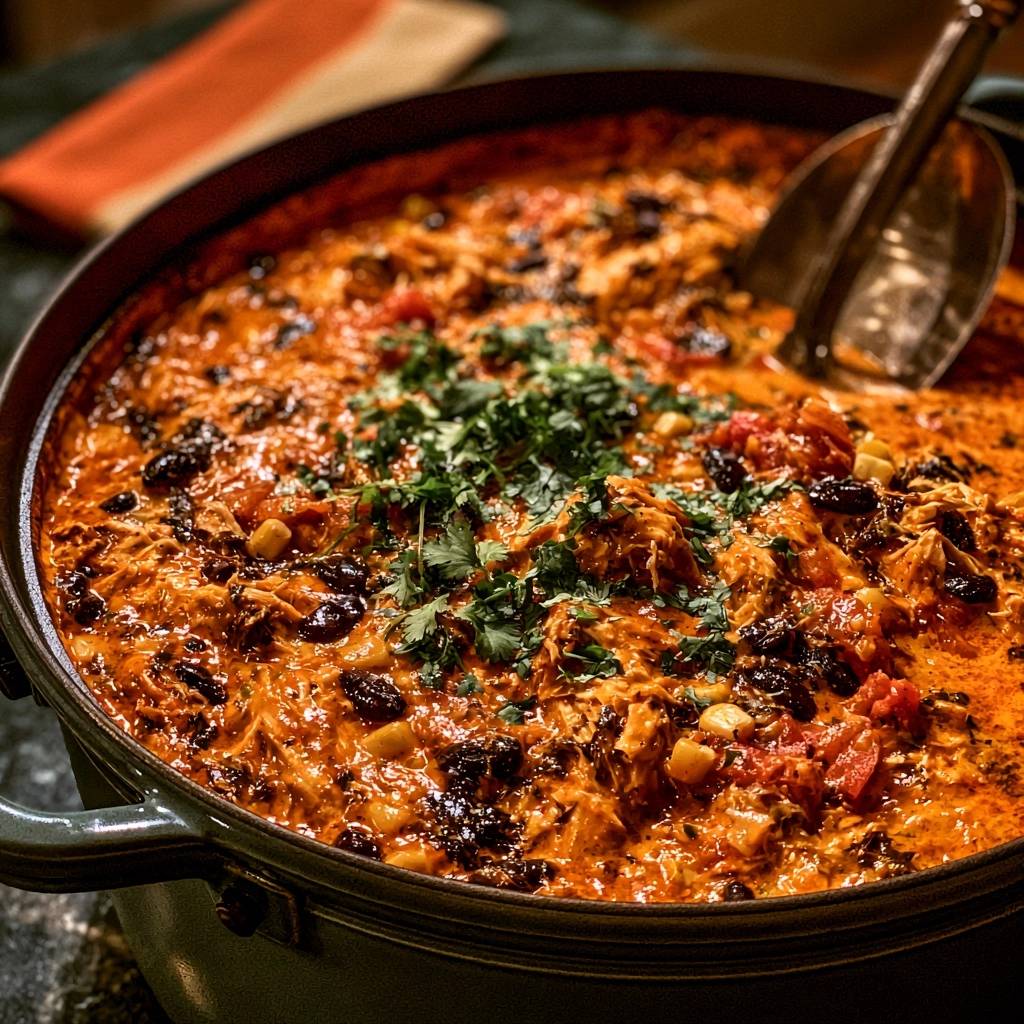
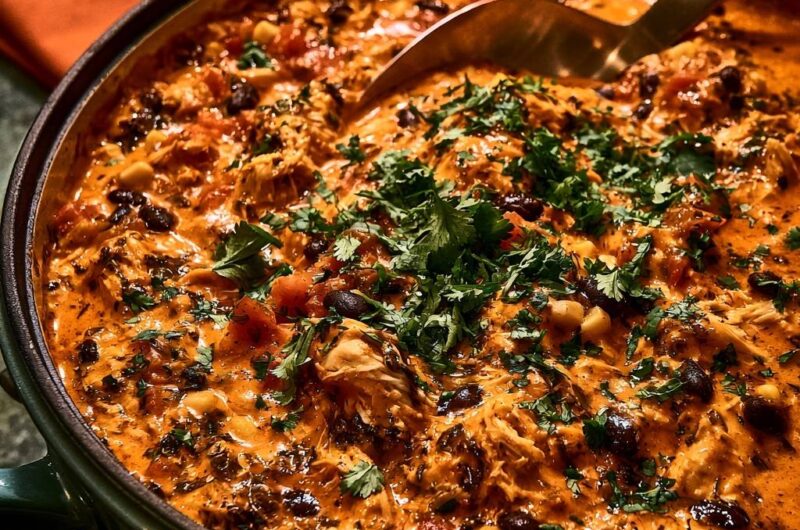
- Sauté and Bloom: In a large heavy-bottomed pot or Dutch oven, sauté the onion and garlic over medium heat until translucent. Add the tomato paste, chili powder, cumin, and smoked paprika. Stir constantly for 2 minutes; this “blooms” the spices and caramelizes the tomato paste to achieve the deep, rich color seen in the image.
- Simmer: Add the chicken broth, diced tomatoes (with juices), green chiles, black beans, and corn. Bring the mixture to a gentle simmer for 10 minutes to allow the flavors to meld.
- The First Thickening: Whisk the cornstarch slurry into the simmering broth. Let it bubble for 2 minutes. This creates a stable, viscous base that prevents the dairy from separating later.
- The Cream Base: Reduce heat to low. Add the softened cream cheese cubes and heavy cream. Use a whisk to stir steadily until the cheese is fully melted and emulsified into a smooth, velvety orange sauce.
- The Finish: Fold in the shredded chicken. Let it heat through for 5 to 10 minutes on low. The chili will continue to thicken into a rich consistency that heavily coats the chicken and beans.
- Serve: Season with salt and pepper to taste. Serve hot in a large pot or individual bowls, topped with a generous handful of fresh chopped cilantro to provide a bright contrast to the rich, creamy base.
Notes
- The two-step thickening method of using a cornstarch slurry followed by cream cheese prevents the dairy from separating and ensures a thick, velvety texture.