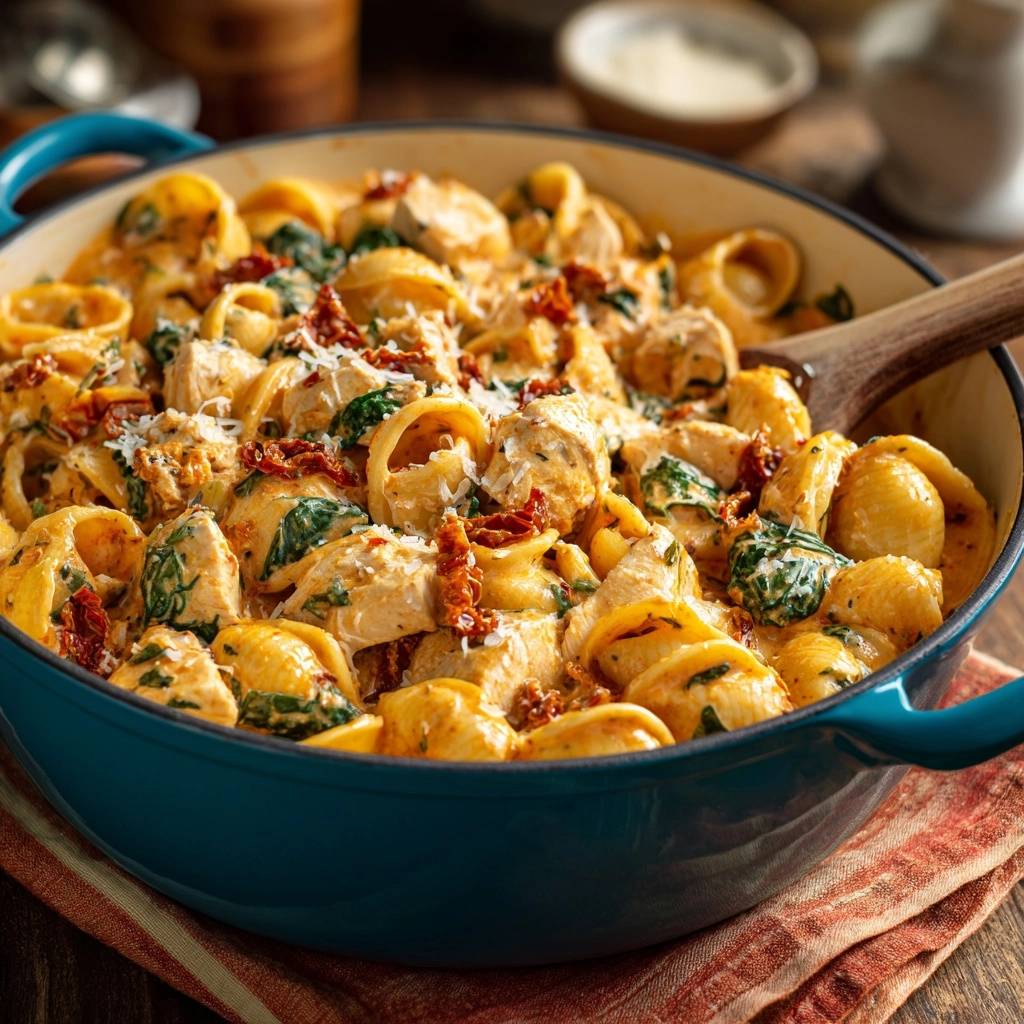
Few things are more disappointing than a plate of pasta sitting in a puddle of thin, broken liquid. You expect a rich, velvety coating, but instead, the sauce slides right off the noodles and pools at the bottom of the bowl. This common kitchen fail usually happens because the sauce lacks a proper emulsion, leaving the fats and liquids separated and weak.
The secret to restaurant-quality Creamy Sun-Dried Tomato Chicken Shells lies in managing your starches and fats. By focusing on a specific reduction technique and utilizing the natural binders found in your cooking water, you can create a sauce that actually clings. We aren’t just making a cream soup; we are building a structural glaze that coats every curve of the pasta.
If you enjoy this creamy chicken base, you’ll also love the perfect sear achieved in creamy chicken orzo.
Expertise in this dish comes down to one specific move: pulling the pasta two minutes early. Finishing the shells directly in the simmering sauce allows them to absorb the cream while releasing starch. This creates a physical bond between the noodle and the sauce that prevents separation even as the dish cools on the table.
The Science of a Non-Watery Cream Sauce
Creating a stable cream sauce is a lesson in chemistry. When you pour heavy cream into a pan, it is a mixture of water and butterfat. If you simply toss it with pasta, the heat often causes the water to leach out, resulting in that dreaded watery mess. To prevent this, you must reduce the cream by at least one-third. This evaporation process concentrates the fats, making the liquid thick enough to support the weight of the chicken and tomatoes.
Tomato paste plays a dual role in this scientific equation. Beyond providing a deep, savory umami punch, the solids in the paste act as a stabilizer. They provide a mesh-like structure that helps hold the fat and water together. When you stir in the paste and cook it down, you are essentially creating a thick base that prevents the heavy cream from breaking under high heat.
Finally, the temperature of your additions matters. Adding cold cheese to a boiling sauce can cause the proteins to clump, leading to a grainy texture. By lowering the heat to a gentle simmer before whisking in the Parmesan, you ensure the cheese melts smoothly into the fat molecules of the cream, creating a seamless, glossy finish.
Why Pasta Water is Your Secret Weapon
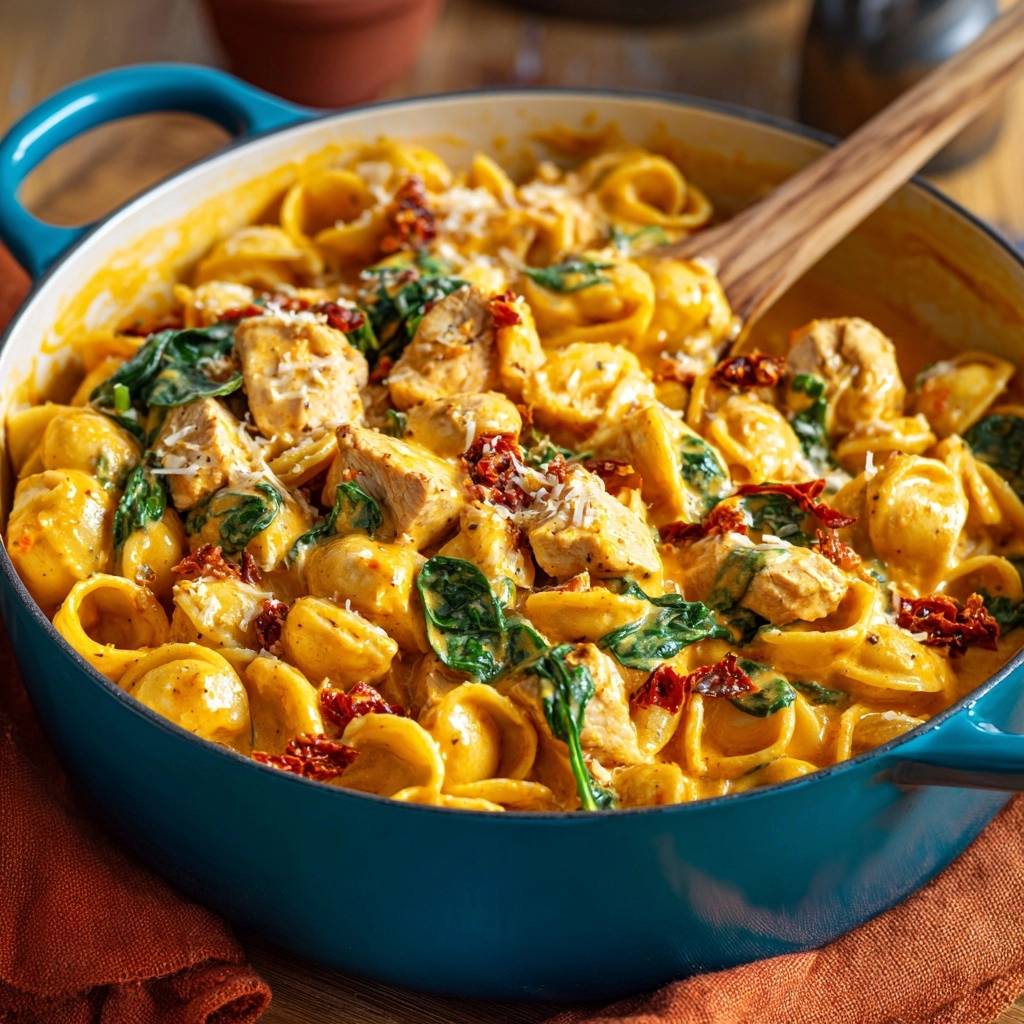
Never pour your pasta water down the drain. As the shells boil, they release amylose starch into the water, turning it into a cloudy, powerful emulsifier. This “liquid gold” acts as a bridge between the oil-based fats in the cream and the water-based elements of the sauce.
When you add a splash of this starchy water to your skillet, it binds everything together. It creates a creamy tension that allows the sauce to grip the smooth surface of the pasta. Without it, the sauce is just a liquid; with it, the sauce becomes a cohesive coating.
The Reduction Phase: Concentrating Flavor and Fat
Reduction is the process of simmering a liquid to decrease its volume through evaporation. In this recipe, simmering the heavy cream with the tomato paste is non-negotiable. You want to see small, consistent bubbles around the edges of the pan for about four minutes.
As the water evaporates, the flavor of the sun-dried tomatoes and garlic becomes more intense. The sauce will transform from a pale pink to a vibrant, thick orange. This concentrated base is what gives the dish its luxurious mouthfeel and ensures it stays thick from the first bite to the last.
Essential Components for Sun-Dried Tomato Chicken Shells
Quality ingredients are the foundation of this dish. For the best results, always use sun-dried tomatoes packed in oil rather than the dry-packed variety in pouches. The oil-packed tomatoes are more tender and come infused with herbs that add an extra layer of fat-soluble flavor to the chicken as it sears.
The cheese choice is equally critical. Pre-shredded Parmesan is coated in potato starch or cellulose to prevent clumping in the bag. Unfortunately, these additives prevent the cheese from melting properly in a cream sauce, often resulting in a gritty texture. Grate your cheese fresh from a wedge for a silky, professional result.
Fresh garlic is another must. Jarred minced garlic often has a metallic or acidic aftertaste that can ruin the delicate balance of the cream. Three large cloves of freshly smashed and minced garlic will provide a sweet, aromatic backbone that complements the tartness of the tomatoes perfectly.
Selecting the Right Pasta Shape
Medium shells are the undisputed champion for this specific sauce. Their concave, cup-like shape acts as a tiny vessel, scooping up the heavy cream, bits of minced garlic, and chopped tomatoes. Every bite becomes a self-contained explosion of flavor.
While penne or rigatoni can work in a pinch, they don’t have the same “scoop factor.” The shells provide a larger surface area for the emulsified sauce to cling to, ensuring that you don’t leave half the flavor behind on the plate.
Chicken Prep: Achieving the Golden Sear
To get the best texture, pat your chicken breast dry with paper towels before cubing it into one-inch pieces. Moisture is the enemy of a good sear. If the chicken is wet, it will steam in the pan rather than brown, leaving you with rubbery meat instead of golden, flavorful bites.
Cutting the chicken into uniform cubes ensures they all cook at the same rate. This size also provides the maximum surface area for “fond” to develop. Fond is the collection of browned bits stuck to the bottom of the pan, which contains concentrated savory notes that will eventually dissolve into your cream sauce.
Step-by-Step: Building the Emulsified Sauce
Building a great pan sauce is all about layering flavors in the right order. You can’t just throw everything in at once and expect a complex result. It starts with high heat and ends with a gentle simmer to keep the dairy stable and the chicken tender.
Phase 1: Searing and Fond Development
Heat your skillet until the olive oil and sun-dried tomato oil are shimmering but not smoking. Add the seasoned chicken in a single layer. Don’t crowd the pan; if you have to cook in two batches, do it. You want the chicken to develop a crusty, golden exterior in about six minutes.
Using the oil from the tomato jar here is a pro move. That oil is already infused with the essence of the sun-dried tomatoes. As the chicken sears, it absorbs those concentrated flavors, ensuring the meat isn’t just a protein addition but a core part of the flavor profile.
Phase 2: The Aromatic and Paste Base
Once the chicken is removed, lower the heat. You’ll see brown bits on the bottom of the pan—don’t wash those away! Add your garlic and sun-dried tomatoes, stirring for just a minute until the garlic smells fragrant. Then, stir in the tomato paste.
Cook the paste for about two minutes, moving it constantly. You are looking for it to shift from a bright red to a dark, brick-red color. This “blooming” process removes the raw, tinny taste of the paste and unlocks a deep, caramelized sweetness that defines the sauce.
Phase 3: Simmering and Incorporating Greens
Slowly pour in the heavy cream while scraping the bottom of the pan with a wooden spoon. This deglazes the skillet, lifting all that flavorful fond into the liquid. Let it simmer and thicken until it coats the back of a spoon. This is when the sauce becomes stable.
Add the spinach at the very last second before the pasta goes in. Spinach is mostly water, and if you cook it too long, it will leak moisture into your perfectly reduced sauce. You only want it to wilt slightly from the residual heat, keeping its bright green color and firm texture.
Troubleshooting Common Creamy Pasta Mistakes
If your sauce looks oily or separated, it has “broken.” This usually happens if the heat was too high after adding the cheese. To fix it, add a tablespoon of your reserved pasta water and whisk vigorously. The starch will help pull the oil back into the emulsion.
A grainy texture is almost always caused by using pre-shredded cheese or adding cheese to a boiling liquid. If this happens, you can’t really “un-grain” it, but you can thin it slightly with a splash of cream to make it less noticeable. Next time, remember to kill the heat before the cheese goes in.
If the dish feels too heavy or flat, it likely needs acid. Even though there are tomatoes, a tiny squeeze of fresh lemon juice right before serving can brighten the entire flavor profile. It cuts through the heavy fat of the cream and makes the savory notes pop.
Flavor Variations and Ingredient Swaps
While chicken breast is classic, using boneless, skinless chicken thighs will result in a much juicier bite. Thighs are more forgiving and won’t dry out during the simmering phase. If you want a Mediterranean twist, try adding a handful of drained artichoke hearts or capers along with the tomatoes.
For those who like a bit of heat, don’t stop at the red pepper flakes. Stirring in a teaspoon of Calabrian chili paste during the aromatic phase adds a smoky, fruity heat that pairs beautifully with the sun-dried tomatoes. It deepens the color of the sauce even further.
Optimal Side Dishes for Rich Pasta
Because this pasta is incredibly rich and creamy, you want side dishes that offer a sharp contrast. A simple arugula salad tossed in a bright lemon vinaigrette is the perfect partner. The peppery greens and acidic dressing cleanse the palate between bites of the heavy sauce.
Roasted balsamic broccoli or charred asparagus also work well. The slight bitterness of roasted vegetables cuts through the richness of the Parmesan and heavy cream. Avoid heavy garlic bread; instead, opt for a crusty baguette to soak up any extra sauce left on the plate.
Make-Ahead Strategy and Reheating Instructions
Cream sauces are notorious for thickening into a solid block in the fridge. If you have leftovers, store them in an airtight container for up to three days. Do not freeze this dish, as the cream will likely separate and become grainy upon thawing.
To reheat, avoid the microwave if possible. Place the pasta in a skillet over low heat and add a splash of milk or water. As it warms, stir gently to re-emulsify the sauce. The extra liquid will loosen the starch and restore that glossy, restaurant-style texture without making the chicken rubbery.
Expert Tips for Professional Results
One of the biggest secrets in professional kitchens is warming the serving bowls. If you put a hot, emulsified cream sauce into a cold ceramic bowl, the sauce will seize and thicken instantly. Run your bowls under hot water or put them in a low oven for a few minutes before plating.
Always aim for “al dente” when boiling your shells. Since the pasta finishes its cooking journey inside the skillet with the sauce, it will continue to soften. If you cook it fully in the water, it will turn mushy and lose its shape by the time it hits the dinner table.
The Importance of High-Fat Dairy
This recipe specifically calls for heavy cream because of its high fat content. Do not try to substitute milk or half-and-half. Lower-fat dairy does not have the stability to withstand the reduction process and will almost certainly curdle or remain watery when mixed with the acidic tomato paste.
Managing Salt Levels
Be cautious with your salt shaker. Both the sun-dried tomatoes and the Parmesan cheese contain significant amounts of sodium. Always taste your sauce after the cheese has melted before adding any additional salt. You want to enhance the flavors, not overpower them with saltiness.
Frequently Asked Questions
How do I store leftovers?
Store any remaining pasta in an airtight container in the refrigerator for up to 3 days. When reheating, the sauce will have thickened significantly. Add a tablespoon of milk or water per serving before heating on the stovetop over low heat to bring the creamy consistency back to life.
Why is my sauce grainy?
Graininess usually comes from using pre-shredded cheese which contains anti-clumping agents like cellulose. It can also happen if the sauce is boiling when the cheese is added, causing the proteins to seize. Always use freshly grated cheese and stir it in over medium-low heat.
Can I use milk instead of heavy cream?
No, milk will not work for this specific reduction technique. Milk lacks the fat content necessary to thicken into a stable sauce and will likely curdle when it hits the acidic tomato paste and heat. Stick to heavy cream for that velvety, non-watery finish.
Can I use chicken thighs instead of breasts?
Absolutely. Chicken thighs are actually more flavorful and stay much moister than breasts. Follow the same searing instructions, though they may need an extra minute or two to cook through completely due to the higher fat content.
What if I don’t have sun-dried tomato oil?
If your tomatoes didn’t come in a jar of oil, you can use regular extra virgin olive oil. However, you might want to add a pinch of dried basil or extra oregano to the chicken to make up for the lost herb-infused flavor from the tomato oil.
How do I prevent the spinach from getting slimy?
The key is timing. Only add the spinach at the very end of the process once the pasta is back in the pan. The residual heat is enough to wilt the leaves in about 30 to 60 seconds. Overcooking spinach causes it to release water, which will thin out your sauce.
Chicken Shells
Course: Main CourseCuisine: AmericanDifficulty: easy4
servings15
minutes20
minutes620
kcal35
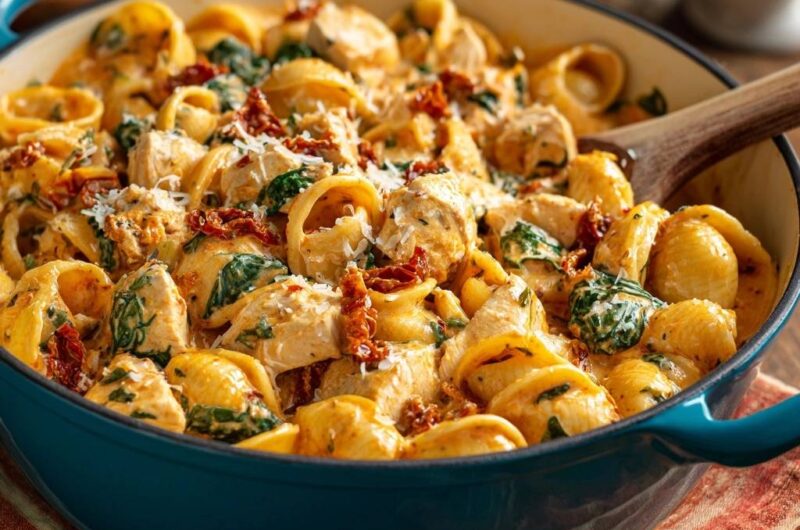
MinutesA rich and flavorful pasta dish featuring tender chicken, sun-dried tomatoes, and baby spinach tossed in a thick cream sauce. The recipe utilizes tomato paste and starchy pasta water to ensure a perfect emulsion that clings to the shells.
Ingredients
1 pound medium pasta shells
1.5 pounds chicken breast, cut into 1-inch cubes
1/2 cup sun-dried tomatoes (packed in oil), drained and chopped
1 tablespoon sun-dried tomato oil (from the jar)
3 cups fresh baby spinach
3 cloves garlic, minced
1.5 cups heavy cream
1/2 cup freshly grated parmesan cheese
1 tablespoon tomato paste (essential for the deep color and thickness shown)
1 teaspoon dried oregano
1/2 teaspoon red pepper flakes
1 tablespoon olive oil
Salt and black pepper to taste
1/2 cup reserved starchy pasta water
Directions
- Bring a large pot of heavily salted water to a boil. Cook the pasta shells for 2 minutes less than the package directions for al dente. Before draining, scoop out 1/2 cup of the starchy pasta water and set it aside. This water is the key to preventing a watery sauce.
- While the pasta cooks, heat 1 tablespoon of olive oil and 1 tablespoon of the sun-dried tomato oil in a large skillet or dutch oven over medium-high heat. Season the chicken cubes with salt, pepper, and oregano. Brown the chicken until golden and cooked through, about 6 to 8 minutes. Remove chicken from the pan and set aside.
- In the same pan, lower the heat to medium. Add the minced garlic and chopped sun-dried tomatoes. Sauté for 1 minute. Stir in the tomato paste and cook for 2 minutes, stirring constantly, until the paste turns a deep brick red.
- Pour in the heavy cream and bring to a gentle simmer, scraping the bottom of the pan to release the browned chicken bits. To solve the watery sauce problem, let the cream reduce by one-third for about 3-4 minutes. This concentrates the fats and the tomato base so the sauce stays thick and vibrant.
- Stir in the parmesan cheese and red pepper flakes. Once the cheese is melted and the sauce is smooth, add the spinach and stir until just wilted.
- Add the cooked pasta shells and chicken back into the pan. Pour in half of the reserved pasta water. Toss everything together over medium heat for 2 minutes. The starch in the water acts as a bridge between the fats in the cream and the pasta, creating a thick, glossy coating that will not separate. If the sauce is too thick, add the remaining pasta water one tablespoon at a time until it reaches the rich consistency shown in the image.
- Serve immediately in the pan or a warm bowl with an extra sprinkle of parmesan cheese.
Notes
- To prevent a watery sauce, ensure you reduce the heavy cream by one-third and use the reserved starchy pasta water to bind the sauce to the pasta.