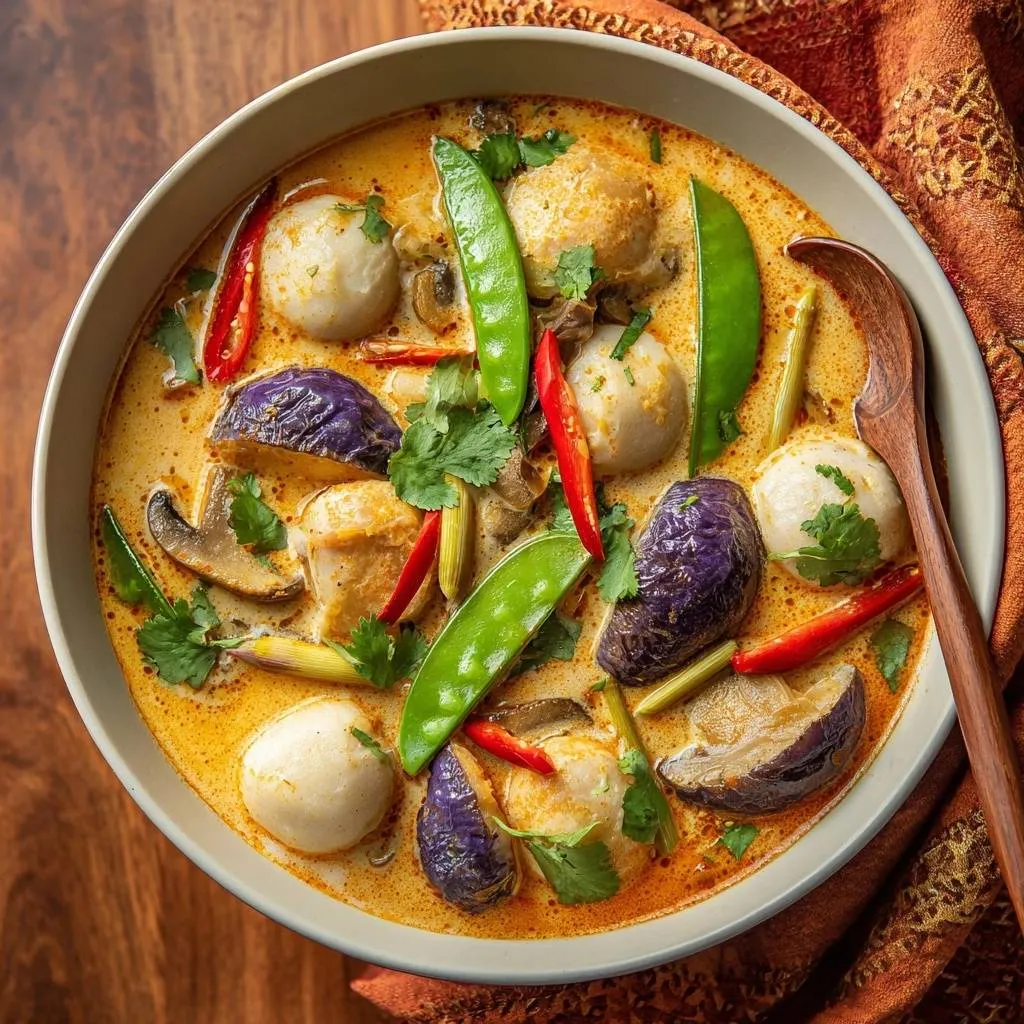
Most home cooks feel a wave of disappointment when they lift the lid of their pot only to find a thin, broken curry. Instead of that lush, velvety sauce you get at your favorite Thai spot, you see orange oil slicking the top and grainy white clumps floating in a watery base. It’s a common frustration that usually stems from one simple mistake: boiling the coconut milk too hard and too fast.
This recipe changes the game by focusing on the “crack and temper” method, a traditional technique that ensures your Creamy Thai Red Curry with Fish Balls stays perfectly emulsified. By treating the coconut milk as a delicate ingredient rather than a boiling liquid, you create a sauce that is rich, stable, and restaurant-quality. The fish balls provide a lean, bouncy protein source that absorbs the spicy, aromatic flavors without becoming heavy or greasy.
The secret to this success lies in the “crack.” You must resist the urge to shake your coconut milk cans before opening them. That thick, solid layer of cream at the top is your most valuable asset for frying the curry paste. When you fry the paste in that concentrated fat, you unlock oil-soluble aromatics that boiling simply cannot reach, resulting in a depth of flavor that defines authentic Thai cuisine.
The Chemistry of a Perfect Coconut Curry Emulsion
To understand why curries curdle, you have to look at the science of coconut milk. It isn’t just a liquid; it’s a complex emulsion of water, fats, and proteins. When you buy a can of full-fat coconut milk, the “cream” is the concentrated fat that rises to the top, while the “water” sits underneath. If you dump the whole can into a boiling pot, the high heat causes the proteins to denature and clump together, which is exactly what creates that unappealing grainy texture.
The “crack and temper” method is the scientific solution to this problem. By starting with just the thick coconut cream, you are essentially frying your curry paste in a natural, flavorful fat. As the water evaporates from the cream, the oil “cracks” or separates. You’ll see little beads of red oil shimmering on the surface. This isn’t a mistake; it’s a sign that the flavors have bloomed and the emulsion is stabilized.
Once you’ve achieved this crack, you gradually temper in the remaining liquid. By adding the thinner coconut water slowly and keeping the heat at a gentle simmer rather than a rolling boil, you prevent the proteins from shocking and clumping. This creates a stable suspension where the fat and water stay bonded, resulting in a luxurious mouthfeel that coats your palate and carries the heat of the chilies evenly through every bite.
Essential Components for Thai Red Curry with Fish Balls
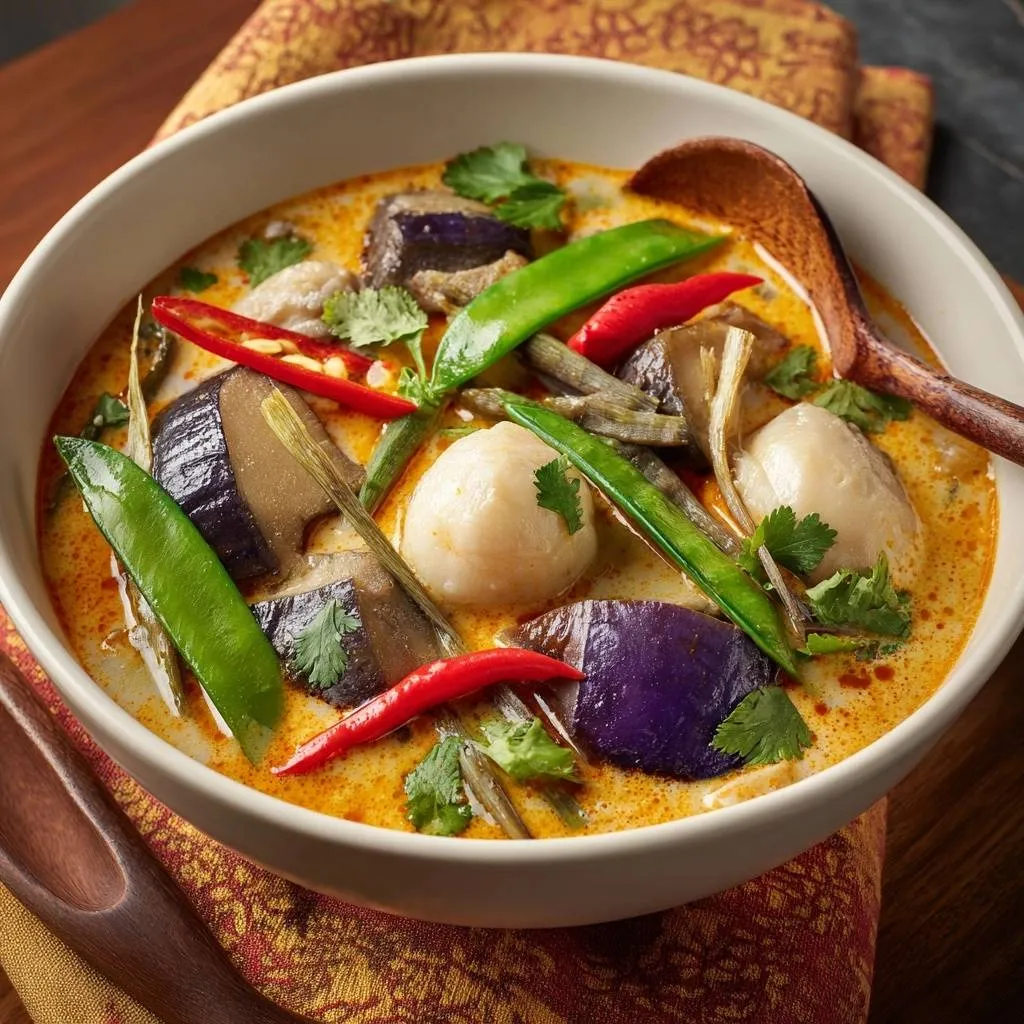
The star of this dish is the fish ball, a staple in Southeast Asian markets. These are typically made from pounded white fish like pollock or threadfin bream, mixed with a bit of starch to create a signature “bouncy” or springy texture. Unlike a flaky fillet of fish, these balls hold their shape perfectly in a simmering broth and provide a satisfying, chewy contrast to the tender vegetables. Look for the refrigerated or frozen varieties that feel firm to the touch.
Your red curry paste is the aromatic engine of the dish. A high-quality paste contains a concentrated blend of dried red chilies, galangal, lemongrass, garlic, and shrimp paste. Because these ingredients are ground into a fine paste, they need to be “toasted” in fat to release their essential oils. If you skip the frying step and just boil the paste, the curry will taste “raw” and the spices will feel one-dimensional rather than layered and complex.
Coconut milk selection is non-negotiable here. You must use full-fat, canned coconut milk. Low-fat or “lite” versions lack the fat content necessary to achieve the “crack,” and carton-based coconut milks often contain stabilizers that interfere with the traditional cooking process. Finally, the aromatics like bruised lemongrass and bird’s eye chilies add the finishing layers. Bruising the lemongrass with the back of a knife breaks the internal fibers, allowing the citrusy oils to infuse the sauce without making it woody.
Selecting and Preparing the Vegetables
Texture is everything in a Thai curry, which is why the vegetable selection is so specific. Chinese eggplant is preferred over the larger Italian variety because it has thinner skin and fewer seeds, allowing it to soak up the curry sauce like a sponge. Snow peas provide a necessary crunch and a pop of bright green, while cremini mushrooms add an earthy, savory depth that complements the seafood notes of the fish balls.
Uniformity is your best friend in the kitchen. Cut the eggplant into bite-sized chunks and slice the mushrooms to a similar thickness. This ensures that everything finishes cooking at the exact same time. To keep the eggplant from turning a muddy brown, add it to the pot as soon as it’s cut and keep it submerged in the simmering liquid. This preserves that beautiful, vibrant purple hue that makes the dish look as good as it tastes.
Step-by-Step: Executing the Crack and Temper Method
Phase one begins with frying the paste. Heat your oil and add the red curry paste, stirring it constantly for about two minutes. You’ll notice the aroma filling your kitchen as the chilies and galangal toast. This step is crucial because many of the flavor compounds in the paste are oil-soluble. If you don’t fry them, those flavors stay trapped, and your curry will lack that signature restaurant-style punch.
Phase two is the “cracking” of the cream. Spoon in about half of that thick coconut cream you saved from the top of the can. As you stir it into the paste over medium heat, the water will evaporate. After 3 to 5 minutes, you will see the red oil begin to separate from the cream. This “blooming” process is the secret to a deep, rich sauce. It signals that the fat has been infused with the spices and is ready to form a stable emulsion with the rest of the liquid.
Phase three requires patience and temperature control. Gradually whisk in the remaining coconut cream and the thin coconut water. If the sauce looks too thick for your liking, add a splash of stock. The most important rule here is to maintain a gentle simmer. You should see small bubbles breaking the surface, not a violent, rolling boil. Excessive heat is the enemy of a smooth curry; keep it low and slow to ensure the sauce remains velvety and unified.
Integrating the Fish Balls and Finishing Touches
In the final five minutes, you’ll bring the dish together. The fish balls and snow peas go in last because they require very little cook time. You want the fish balls to be heated through until they are plump and bouncy, while the snow peas should remain bright green and crisp-tender. If you overcook the snow peas, they lose their sweetness and become limp, which ruins the textural balance of the dish.
The final step is balancing the “Salty-Sweet-Spicy” triad that defines Thai cooking. Fish sauce provides the salt and umami, while palm sugar adds a mellow, caramel-like sweetness that tames the heat of the red chilies. Don’t be afraid to taste and adjust. If it’s too spicy, add a pinch more sugar. If it’s too flat, a dash more fish sauce will wake up the flavors. Remove the lemongrass stalks before serving, as they’ve done their job and are too tough to eat.
Consider trying creamy tomato fish curry if you’re looking for another way to get flaky fish in a rich sauce.
Troubleshooting Your Creamy Thai Red Curry
If your sauce happens to separate despite your best efforts, don’t panic. You can often fix a broken curry by removing it from the heat and vigorously whisking in a tablespoon of room-temperature coconut cream or a splash of heavy cream. This introduces new emulsifiers that can help pull the oil and water back together. It won’t be quite as perfect as a successful “crack,” but it will save the meal.
For another take on this popular dish, explore Thai yellow curry with fish balls.
If you find the curry is too spicy, do not try to thin it out with water, as this will ruin the creamy texture. Instead, add a little more coconut milk or a teaspoon of sugar to neutralize the capsaicin. Conversely, if the curry feels too thick or heavy, use a small amount of chicken or vegetable stock to loosen it up. The stock adds flavor without the extra fat of more coconut milk, keeping the consistency light enough to pour over rice.
Explore More Curries
If you enjoyed the flavors of Thai red curry, consider these other curry creations.
- For a different take on curry with protein, try this crispy pan-seared chicken curry, offering a satisfying crunch alongside aromatic spices.
- Another way to enjoy bold curry flavors is with this yellow salmon curry over rice, which brings a different spice profile and flaky fish.
Optimal Pairings for Seafood-Based Thai Curries
The classic pairing for this curry is steamed jasmine rice. The long, fragrant grains are perfect for soaking up the creamy sauce without becoming mushy. For a different texture, you can serve the curry over thin rice vermicelli noodles, which is a popular way to enjoy red curry in Thailand. The noodles provide a soft, delicate base that lets the bouncy fish balls stand out.
To cut through the richness of the coconut milk, consider serving a light cucumber relish, known as Ajad, on the side. The vinegar and crisp cucumbers provide a sharp, acidic contrast to the creamy curry. A fresh lime wedge squeezed over the bowl just before eating can also brighten the seafood flavors and add a zesty top note that balances the earthy mushrooms and eggplant.
Storage and Reheating Without Texture Loss
Leftover curry often tastes even better the next day as the flavors have more time to meld, but coconut milk curries can thicken significantly in the fridge. Store your leftovers in an airtight container for up to three days. When you’re ready to eat, avoid the microwave if possible, as it can heat the sauce unevenly and cause it to break or turn the fish balls rubbery.
Instead, reheat the curry in a small saucepan over low heat. Add a tablespoon or two of water or stock to help “re-emulsify” the sauce as it warms up. Stir gently and constantly until it reaches a simmer. This slow approach ensures the eggplant stays intact and the fish balls regain their signature bounce without becoming tough. Do not freeze this curry, as the coconut milk and eggplant will both suffer significant texture changes once thawed.
Frequently Asked Questions
Can I use frozen fish balls directly in the curry?
Yes, you can add frozen fish balls directly to the pot. However, they will take about 2 to 3 minutes longer to heat through than refrigerated ones. Make sure the curry stays at a gentle simmer during this time so the sauce doesn’t break while you wait for the centers of the fish balls to get hot.
What is the best substitute for palm sugar in Thai cooking?
If you can’t find palm sugar, light brown sugar is the best substitute. It has a similar moisture content and a hint of molasses that mimics the earthy sweetness of palm sugar. Use it in a 1:1 ratio. Avoid white granulated sugar if possible, as it provides a “sharp” sweetness that lacks the depth needed for a balanced curry.
Why did my eggplant turn brown instead of staying purple?
Eggplant browns quickly when exposed to air due to oxidation. To keep it purple, cut it immediately before adding it to the pot. Ensure the pieces are fully submerged in the liquid so oxygen can’t reach the skin. Cooking it quickly over steady heat also helps set the color before it has a chance to fade.
Is there a vegan-friendly alternative to fish balls that maintains the same texture?
While the flavor will differ, vegan “shrimp” or “squid” made from konjac flour offer a very similar bouncy, chewy texture. Alternatively, extra-firm tofu puffs (fried tofu) are excellent at soaking up the sauce, though they lack the specific “snap” of a traditional fish ball. Remember to swap the fish sauce for a vegan stir-fry sauce or soy sauce as well.
How do I make this curry spicier without changing the salt levels?
The best way to increase heat without adding salt is to add more fresh bird’s eye chilies. You can slice them thinly and sauté them with the curry paste at the beginning, or simply add them at the end. For an even more intense heat, bruise the chilies before adding them to release their seeds and oils directly into the sauce.
Thai Red Curry Fish Balls
Course: Main CourseCuisine: ThaiDifficulty: easy4
servings15
minutes20
minutes385
kcal35
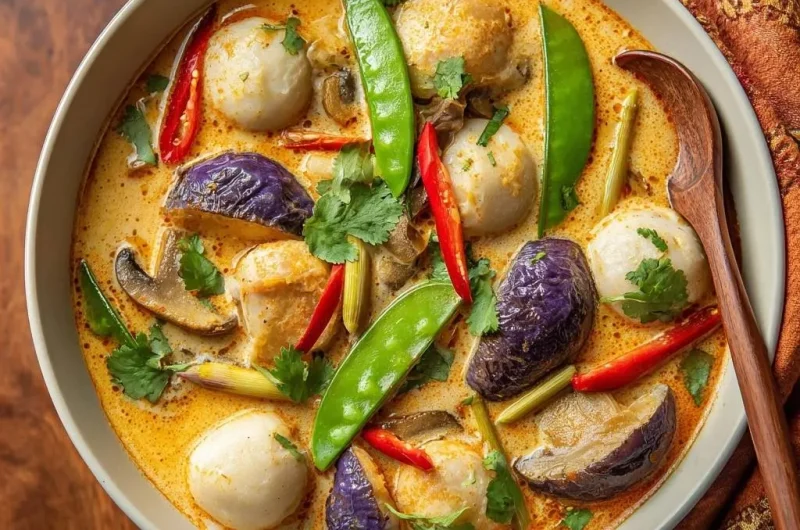
MinutesA rich and velvety Thai red curry featuring white fish balls, Chinese eggplant, and snow peas. This recipe focuses on specific coconut milk techniques to ensure a smooth, non-separated sauce.
Ingredients
1 pound white fish balls (available at Asian markets)
2 cans (13.5 oz each) full-fat coconut milk, do not shake
3 tablespoons Thai red curry paste
1 cup Chinese eggplant (purple variety), cut into bite-sized chunks
1 cup snow peas, trimmed
1 cup sliced cremini mushrooms
2 stalks lemongrass, bruised and cut into 2-inch pieces
3 red bird’s eye chilies, sliced diagonally
2 tablespoons fish sauce
1 tablespoon palm sugar (or brown sugar)
1/2 cup chicken or vegetable stock (optional, for desired consistency)
Fresh cilantro for garnish
1 tablespoon vegetable oil
Directions
- Open your cans of coconut milk without shaking them. Carefully spoon out the thick, solid coconut cream from the top into a bowl. Pour the remaining thin coconut water into a separate container.
- Heat 1 tablespoon of vegetable oil in a large pot or wok over medium heat. Add the red curry paste and fry for 2 minutes, stirring constantly, until the paste is fragrant and darkened slightly.
- Add half of the thick coconut cream to the paste. Stir frequently over medium heat for 3-5 minutes. You are looking for the “crack”-when the red oil begins to separate from the cream and bead on the surface. This step develops the flavor and stabilizes the emulsion.
- Gradually whisk in the remaining coconut cream and the thin coconut water. If the sauce is too thick, add up to 1/2 cup of stock. Bring to a very gentle simmer. Do not let the curry reach a rolling boil, as excessive heat will cause the coconut proteins to clump and curdle.
- Add the lemongrass, eggplant, and mushrooms. Simmer gently for 6-8 minutes until the eggplant is tender but still holds its vibrant purple color.
- Stir in the fish balls, snow peas, and sliced red chilies. Cook for another 3 to 4 minutes until the fish balls are heated through and the snow peas are bright green and crisp-tender.
- Season with fish sauce and sugar. Taste and adjust; the flavor should be a balance of salty, spicy, and slightly sweet.
- Remove the lemongrass stalks. Ladle the curry into bowls, ensuring each serving has a mix of fish balls and vegetables. Garnish generously with fresh cilantro and serve immediately with steamed jasmine rice.
Notes
- Do not shake the coconut milk cans before opening. Use the thick cream to ‘crack’ the curry paste for the best flavor and texture. Avoid a rolling boil to prevent the sauce from curdling.