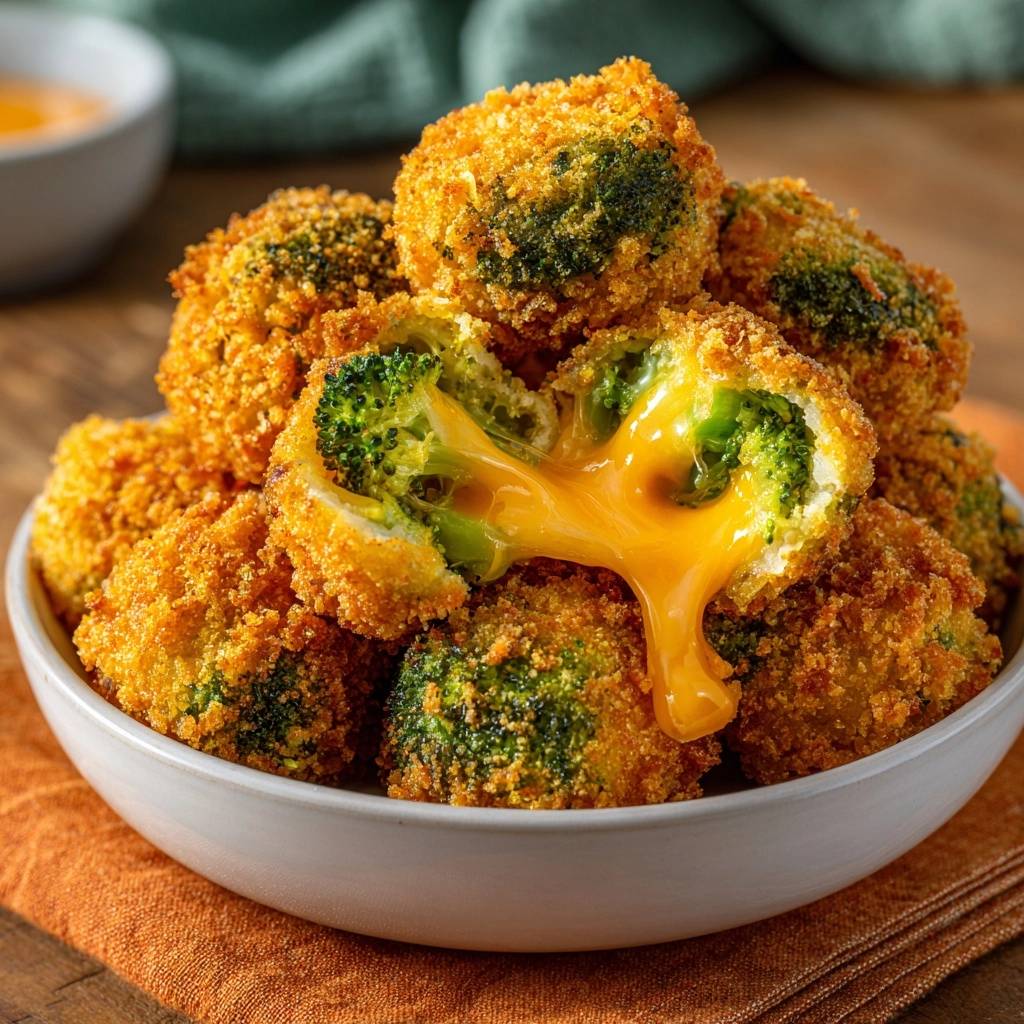
If you have ever bitten into a veggie tot only to find a mushy, water-logged center, you know the disappointment of poor texture. Most recipes call for pulverizing the vegetable into a paste, which destroys the structural integrity and flavor of the broccoli. These Crispy Cheddar-Stuffed Broccoli Florets solve that problem by keeping the vegetable whole and vibrant.
The sensory experience here is all about the contrast between the shatteringly crisp Panko shell and the molten, sharp cheddar core. You get the snap of a perfectly blanched floret followed by a rush of creamy, savory cheese. It is a sophisticated take on a comfort food classic that actually tastes like real food.
The secret to success lies in the “Core-Stuffing” technique and a mandatory flash-chill. By tucking the cheese into the natural crevices of the floret and freezing it briefly, you ensure the exterior browns before the cheese has a chance to liquefy and escape. This precision prevents the dreaded “hollow shell” syndrome common in deep-fried appetizers.
For a similar crisp finish with a cheesy bite, check out cheesy pigs in a blanket.
The Anatomy of a Non-Soggy Broccoli Bite
Using whole florets provides a sturdy skeleton for the breading to cling to. Unlike chopped broccoli, which releases moisture from every cut surface, a whole floret keeps its juices locked inside its fibrous walls. This structural integrity ensures the bite stays firm even after it hits the hot oil.
The contrast between the earthy, slightly bitter broccoli and the rich, salty fat of the cheddar creates a balanced flavor profile. This recipe often wins over people who typically avoid steamed vegetables. The crunch of the Panko acts as a gateway to the tender vegetable hidden inside.
Essential Components for Crispy Cheddar-Stuffed Broccoli Florets
Quality ingredients are the foundation of this dish. I recommend using sharp cheddar rather than mild because it has a lower moisture content and a more aggressive flavor punch. This ensures the cheese taste isn’t lost behind the breading and the broccoli.
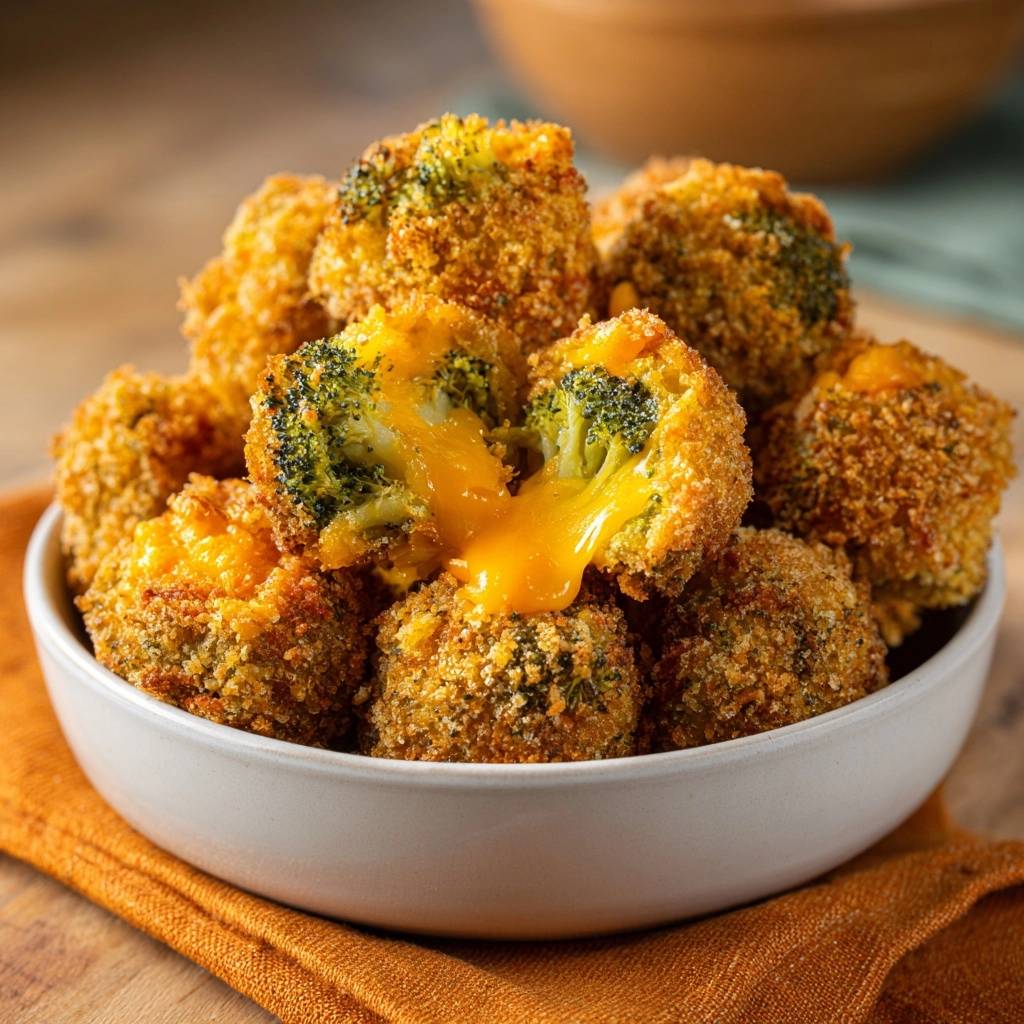
The cream cheese acts as a culinary “glue.” Without it, the shredded cheddar would simply tumble out of the florets before you could even start the dredging process. It binds the shreds into a malleable paste that stays exactly where you put it.
Selecting the Right Broccoli Florets
Look for broccoli heads with tight, dark green beads. If the florets are starting to turn yellow or look loose, they will likely fall apart during the blanching process. Freshness is non-negotiable for maintaining that “snap” in the final product.
Keep the stems short but present. A half-inch stem gives you a “handle” to hold onto while stuffing and dredging. It also provides a solid base that helps the floret maintain its shape when it hits the high heat of the frying oil.
The Role of Panko vs. Traditional Breadcrumbs
Panko is superior here because of its large, jagged surface area. These flakes create tiny air pockets that allow steam to escape during frying, which results in a much lighter and crunchier exterior. Traditional breadcrumbs are too fine and often create a dense, doughy coating.
The Science of the 90-Second Blanch
Blanching for exactly 90 seconds deactivates the enzymes that cause vegetables to turn brown and lose their flavor. This short window is the “Goldilocks” zone. It softens the florets just enough to accept the cheese stuffing without reaching the “mush point” where they lose their crunch.
If you skip this step, the broccoli will remain raw and tough inside the fried shell. However, if you go over two minutes, the vegetable will become too soft to hold the weight of the cheese and breading. Precision timing is your best friend here.
The Ice Bath: Stopping Residual Heat
As soon as those 90 seconds are up, you must plunge the florets into a bowl of ice water. This stops carry-over cooking instantly. If you leave them to drain in a colander while hot, the internal steam will continue to cook the fibers, leading to a limp texture.
The ice bath also locks in the chlorophyll, keeping the broccoli a stunning, bright green. This visual contrast against the golden-brown crust makes the dish look as good as it tastes. It is a professional step that makes a massive difference in the final result.
Achieving the Bone-Dry Surface Requirement
Water is the absolute enemy of a crispy crust. If there is even a hint of moisture on the surface of the broccoli, it will turn to steam the moment it hits the oil. This steam pushes the breading away from the vegetable, causing the crust to slough off in the pan.
Take the time to pat each floret individually with a paper towel. You want them bone-dry to the touch. This ensures the flour in the first step of the dredge can actually bond with the vegetable, creating a dry foundation for the egg and Panko to stick to.
Engineering the Perfect Cheddar Stuffing
When mixing your cheese paste, ensure the cream cheese is fully softened so it incorporates smoothly. I highly recommend grating your own sharp cheddar. Pre-shredded cheeses are coated in potato starch or cellulose to prevent clumping, which can interfere with how the cheese melts and bonds inside the floret.
The “Core-Stuffing” Technique Explained
Think of this as structural engineering for snacks. You aren’t just slapping cheese on top; you are pressing the mixture into the natural gaps between the tiny buds of the floret. Use your thumb to mold the cheese around the center of the broccoli.
By integrating the cheese into the crevices, you create a single, unified unit. This prevents the cheese from forming a separate layer that might slide out. The goal is to have the cheese “tucked” in so the breading can seal it completely.
For similar stuffed delights, check out this technique for no-leak red velvet cheesecake stuffed cookies.
Why Flash-Freezing Prevents Cheese Blowouts
Frying is a race between the exterior browning and the interior melting. By freezing the stuffed florets for 15 minutes, you give the cheese a “head start.” The core stays solid long enough for the Panko to form a hard, protective shell.
Without this flash-freeze, the cheese often liquefies and bursts through the breading before the crust is even golden. This leads to messy oil and empty broccoli shells. Those 15 minutes in the freezer are the difference between a professional appetizer and a kitchen disaster.
Step-by-Step: The Double-Dredge Method
The double-dredge is your insurance policy. After the first coat of Panko, dip the floret back into the egg and then into the Panko a second time. This creates a reinforced “armor” that is thick enough to trap the molten cheese inside.
To keep things clean, use the “wet hand, dry hand” rule. Use one hand for the egg wash and the other for the flour and Panko. This prevents your fingers from becoming heavily breaded, which saves ingredients and keeps the coating on the broccoli where it belongs.
Precision Frying: Temperature and Oil Management
Target 360°F for your oil. If the oil is too cold, the breading will soak up grease and become heavy. If it is too hot, the Panko will burn before the cheese in the center has a chance to soften. Use a clip-on thermometer to stay accurate.
Never overcrowd the pan. Adding too many florets at once will cause the oil temperature to plummet. Fry in small batches of four or five so the oil can recover its heat quickly between additions. This ensures every bite is equally crispy.
Choosing the Right Frying Medium
You need an oil with a high smoke point. Vegetable oil, grapeseed oil, or peanut oil are all excellent choices. These oils can handle the 360°F heat without breaking down or adding an off-flavor to the delicate broccoli and cheese.
Troubleshooting Common Breading Failures
If your breading is falling off in the oil, it almost always traces back to moisture. Either the broccoli wasn’t dry enough before dredging, or the oil wasn’t hot enough to set the crust instantly. Ensure the oil is shimmering and at temperature before you drop the first batch.
If the cheese is leaking out, check your stuffing density. You might be using too much cheese or not pressing it firmly enough into the florets. Also, ensure you aren’t skipping the double-dredge, as that second layer of Panko provides the necessary structural reinforcement to hold the molten core.
Optimal Pairings for Stuffed Broccoli
These bites are rich, so they pair beautifully with sauces that offer a bit of acidity or heat. A creamy garlic aioli with a squeeze of fresh lemon juice is a classic choice. Alternatively, a spicy yogurt-based dip can cut through the richness of the cheddar.
As a side dish, these florets complement grilled chicken or a hearty steak perfectly. They provide a crunchy, cheesy element that replaces the need for a standard potato side. They also make a fantastic standalone appetizer for game days or casual gatherings.
Make-Ahead Strategies and Storage
You can prepare these all the way through the breading stage and keep them in the freezer for up to 24 hours before frying. This makes them an excellent option for hosting. Just fry them straight from the freezer, adding an extra minute to the cook time.
If you have leftovers, avoid the microwave at all costs. It will turn the Panko into a soggy mess. Instead, reheat them in an air fryer at 375°F for 3-4 minutes or in a conventional oven. This restores the “shatter-crisp” texture and gets the cheese melty again.
Expert Tips for Maximum Crunch
The biggest mistake people make after frying is placing the food on paper towels. While it absorbs oil, it also traps steam underneath the food, which softens the bottom of the crust. Instead, use an elevated wire rack set over a baking sheet.
The wire rack allows air to circulate 360 degrees around the floret. This prevents steam buildup and ensures the bottom stays just as crunchy as the top. It is a simple professional trick that guarantees a superior texture every time.
More Delicious Broccoli Ideas
If you enjoyed these cheddar-stuffed florets, you might like these other broccoli dishes.
- For a different way to enjoy broccoli, consider this creamy baked broccoli casserole, featuring similar comforting flavors.
- If you’re looking for a hearty meal that complements the cheesy notes, try this zesty cheeseburger pasta salad.
Variation: Spicy Jalapeño Cheddar Stuffing
For those who like a kick, finely mince a jalapeño and mix it directly into the cheese paste. Make sure the pieces are very small so they don’t create large gaps in the stuffing. The heat of the pepper pairs perfectly with the sharp cheddar and earthy broccoli.
Variation: Smoked Paprika and Garlic Crust
You can add depth to the exterior by seasoning the Panko itself. Mix in a teaspoon of smoked paprika and a half-teaspoon of garlic powder. This gives the crust a beautiful reddish hue and a subtle smoky flavor that enhances the overall savory profile of the dish.
Frequently Asked Questions
Can I use frozen broccoli for this recipe?
I do not recommend using frozen broccoli. Frozen florets have already been blanched and frozen, which breaks down the cell walls. When thawed, they release too much water and become very soft. They won’t have the structural strength to hold the cheese stuffing or maintain a crisp texture after frying.
Can these be baked instead of fried?
Yes, you can bake them, though the texture will be slightly different. Place the breaded florets on a parchment-lined sheet and spray them generously with oil. Bake at 425°F in a convection oven for about 15-18 minutes until golden. The air fryer is also a great alternative; cook at 400°F for 8-10 minutes for a result very close to deep-frying.
Why did my cheese disappear during frying?
This usually happens for two reasons: skipping the flash-freeze or a weak breading layer. If the cheese isn’t cold when it hits the oil, it melts too fast. If the breading is thin, the cheese finds a hole and leaks out. Always use the double-dredge method and the 15-minute freezer rest to keep the cheese locked inside.
How do I keep the oil clean between batches?
Use a fine-mesh skimmer or a slotted spoon to remove any stray Panko crumbs between batches. If those crumbs stay in the oil, they will burn and attach to the next batch of broccoli, giving them a bitter taste and a speckled, burnt appearance. Keeping the oil clean ensures a bright, golden-brown finish on every piece.
Can I use different cheeses like Mozzarella or Pepper Jack?
You certainly can! Pepper Jack is a fantastic substitute for a bit of spice. Mozzarella provides a great “cheese pull” but has a milder flavor, so you might want to add extra seasoning to the flour or Panko. Just ensure whatever cheese you use is mixed with the cream cheese to maintain that necessary “paste” consistency for stuffing.
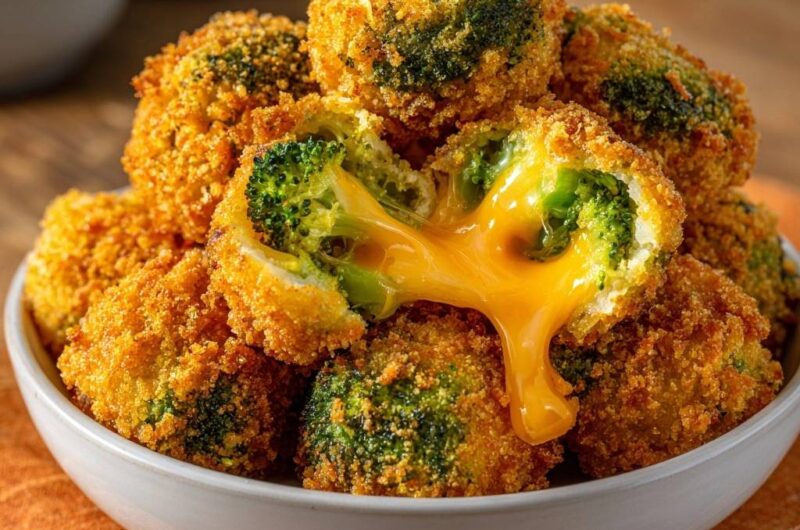
Cheddar-Stuffed Broccoli
Course: AppetizerCuisine: AmericanDifficulty: medium4
servings20
minutes10
minutes310
kcal30
MinutesA unique take on veggie bites featuring whole broccoli florets stuffed with a savory cheddar and cream cheese mixture, flash-frozen to maintain structure, and double-breaded for a shatteringly crisp exterior.
Ingredients
12-15 large fresh broccoli florets (bite-sized, with short stems)
1.5 cups sharp cheddar cheese, shredded
1/4 cup cream cheese, softened
1/2 teaspoon garlic powder
1/2 teaspoon onion powder
1/2 cup all-purpose flour
2 large eggs, beaten with 1 tablespoon water
2 cups Panko breadcrumbs
Vegetable oil for frying
Salt and pepper to taste
Directions
- Steam the whole broccoli florets for exactly 90 seconds. They should be bright green and slightly tender but still firm. Immediately plunge into ice water.
- The Critical Step: Drain the broccoli and pat each floret individually with a paper towel until bone-dry. Moisture on the surface of the broccoli is what causes the breading to slide off and become soggy.
- In a small bowl, mash the shredded cheddar, cream cheese, garlic powder, and onion powder together until it forms a thick paste.
- Take a small amount of the cheese mixture (about a teaspoon) and press it firmly into the crevices of the broccoli floret, molding it around the center so the cheese is “tucked” into the vegetable.
- Place the stuffed florets on a tray and freeze for 15 minutes. This flash-chill ensures the cheese doesn’t liquefy and burst through the crust before the exterior is golden.
- Set up your dredging station: Bowl 1 (Flour seasoned with salt/pepper), Bowl 2 (Beaten eggs), Bowl 3 (Panko breadcrumbs).
- Roll each chilled floret in flour, shaking off the excess. Dip in the egg, then coat thoroughly in Panko. For the heavy, golden crust shown in the image, dip the floret back into the egg and then into the Panko a second time. Press the crumbs firmly with your hands to adhere.
- Heat 2 inches of oil in a heavy skillet or Dutch oven to 360°F.
- Fry the bites in small batches for 2 to 3 minutes, turning once, until deep golden brown. Do not overcrowd the pan, as this drops the oil temperature and leads to grease absorption.
- Drain on a wire rack to allow air to circulate around the entire crust. Serve immediately to enjoy the molten cheese pull.
Notes
- The secret to preventing sogginess is patting the broccoli bone-dry after steaming and using the flash-chill method to keep the cheese from bursting during frying. Always drain on a wire rack instead of paper towels to maintain crispness.