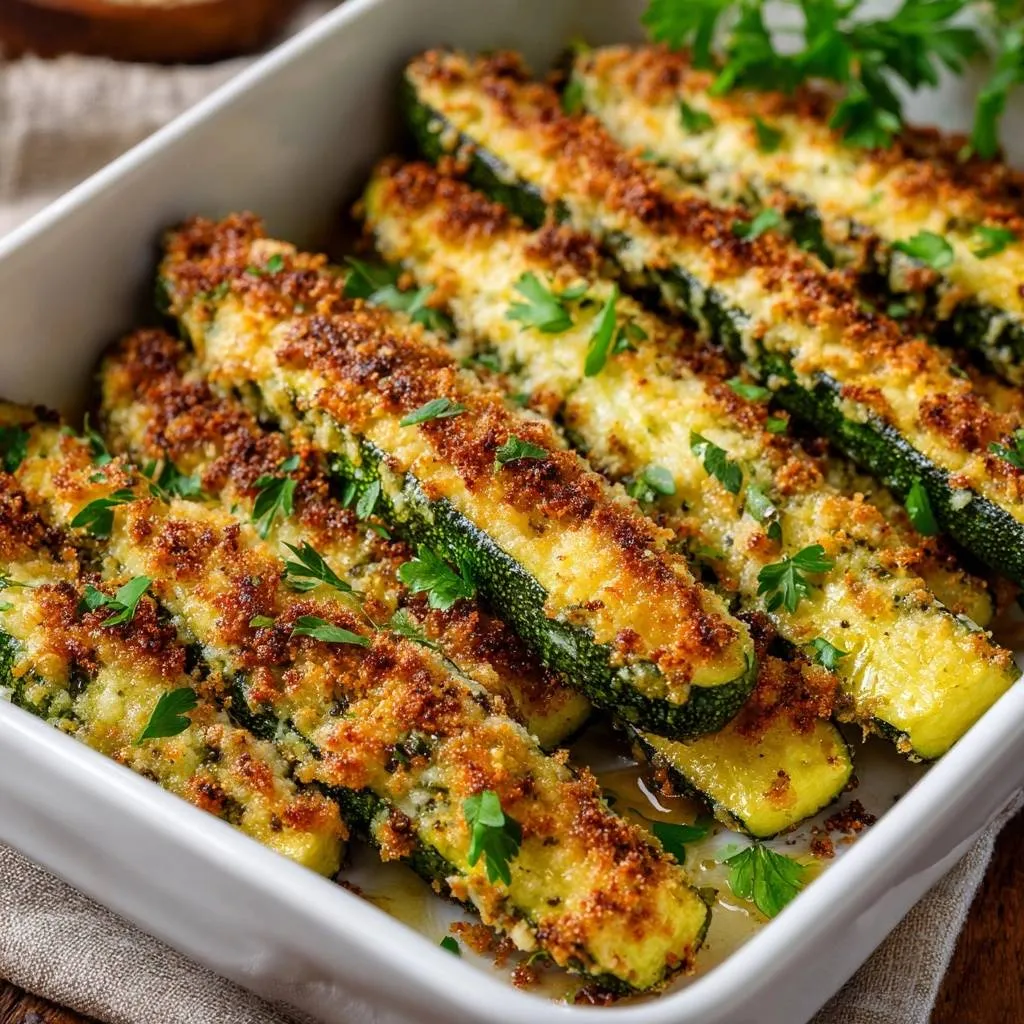
We’ve all been there. You’re craving a healthy, golden-brown side dish, but you end up with a pile of grey, watery squash that slides right off the fork. Zucchini is notorious for its high water content, which usually turns a promising roast into a soggy disappointment. This recipe changes that narrative by treating the vegetable with the respect it deserves.
The secret to this Crispy Parmesan Roasted Zucchini isn’t just the seasoning; it’s the mechanical removal of moisture before the heat even hits the pan. By using a professional “sweating” technique, we ensure the vegetable stays firm and snappy. Meanwhile, the Parmesan-Panko crust creates a shatteringly crisp exterior that rivals any deep-fried appetizer.
If you want that perfect crunch, you have to start with a dry surface. Most people make the mistake of oiling the zucchini while it’s still “sweating” its natural juices. Instead, you must aggressively pat the spears dry after salting them. This allows the olive oil to act as a true adhesive for the breadcrumbs rather than sliding off in a pool of vegetable water.
The Science of Moisture in Summer Squash
Zucchini is roughly 95% water, which is why it feels so refreshing in the summer but acts so poorly in a hot oven. When you apply heat, the cellular walls of the squash break down, releasing all that internal liquid. If that water has nowhere to go, it steams the zucchini from the inside out, resulting in that dreaded mushy texture.
To combat this, we use the power of osmosis. By sprinkling salt over the sliced spears, we create a high-sodium environment on the surface. This forces the water inside the cells to move outward to balance the concentration. Within fifteen minutes, you’ll see actual beads of water pooling on the flesh of the vegetable.
Removing this “pre-cook” water is the only way to achieve a high-heat roast without the squash collapsing. It transforms the zucchini from a sponge into a sturdy vessel for the topping. Without this step, the steam from the vegetable would hydrate the breadcrumbs from underneath, making them soft instead of crunchy.
Essential Components for the Perfect Crunch
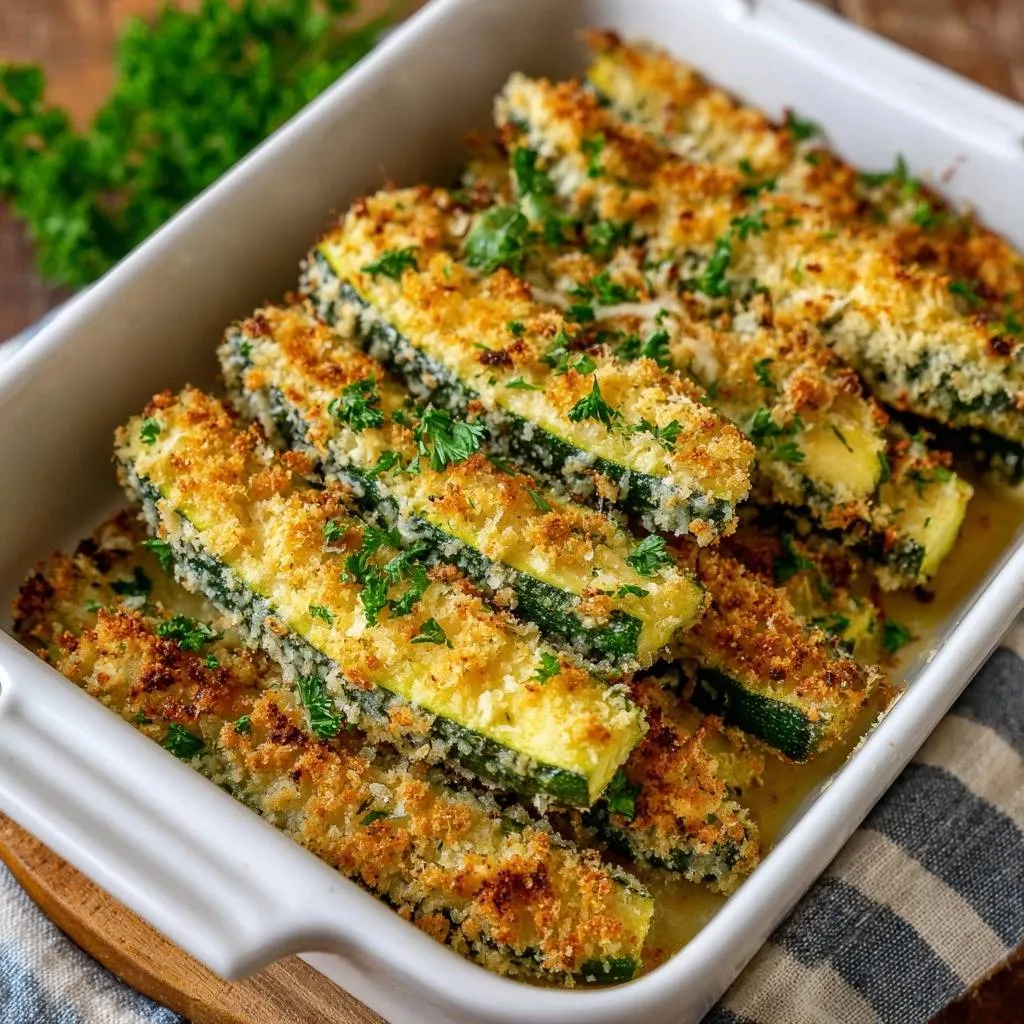
The texture of this dish relies heavily on the specific type of breadcrumb you choose. Panko is the undisputed king here because the flakes are larger and airier than traditional sandy breadcrumbs. These jagged edges create more surface area, which translates to a more complex, audible crunch when you take a bite.
Pairing Panko with finely grated Parmesan is a strategic move. You want the cheese to be powdery—think the texture of cornmeal—rather than long, thick shreds. Finely grated cheese melts quickly and fuses with the Panko, creating a lacy, golden “frico” effect that coats every inch of the spear.
Don’t skip the smoked paprika or the high-quality olive oil. The paprika provides a deep, sunset hue that makes the dish look professionally catered. Meanwhile, the olive oil acts as a heat conductor, frying the breadcrumbs in the dry heat of the oven so they turn golden without burning the delicate cheese.
Selecting the Right Zucchini Spears
Size matters when you’re shopping for roasting zucchini. Avoid those giant, “baseball bat” sized squashes you often see at farmers’ markets. Those large specimens have developed massive seed cavities and a much higher water-to-flesh ratio, which makes them nearly impossible to get crispy.
Look for medium-sized zucchini that feel heavy for their size and have smooth, dark green skin. These have smaller seeds and a denser internal structure. When you slice them, aim for uniform spears about four inches long. Consistency is key; if some are thin and others are thick, the small ones will turn to mush before the large ones are cooked through.
The Role of Panko and Parmesan
The ratio of cheese to breadcrumbs in this recipe is nearly one-to-one. This isn’t just for flavor; it’s for chemistry. Parmesan is a high-fat cheese, and as it melts in the oven, that fat renders out and soaks into the dry Panko flakes.
This interaction essentially “shallow fries” the breadcrumbs while they sit on top of the zucchini. It creates a rich, savory crust that stays attached to the vegetable. If you used only breadcrumbs, the topping would taste dusty; if you used only cheese, it would simply melt away and become greasy.
For even more crunch, try learning how to make garlic butter roasted baby potatoes.
Step-by-Step: The Moisture Draw Technique
Start by setting a wire cooling rack over a standard baking sheet. This setup is vital because it allows air to circulate under the zucchini, preventing the bottom skins from sitting in their own juices. Lay your spears out with the flesh side facing up, ready for their salt treatment.
Sprinkle the salt evenly, but don’t go overboard—remember, we’re using the salt to move water, not just for seasoning. Let them sit for a full 15 minutes. You’ll actually see the transformation happen as the green flesh becomes glossy and wet. It’s a clear visual cue that the technique is working.
Once the time is up, take a clean kitchen towel and press down firmly on each spear. You aren’t just dabbing; you’re trying to squeeze out any lingering surface moisture. The zucchini should feel slightly tacky to the touch afterward. This dry surface is the perfect “primer” for the oil and crust to follow.
Building the Parmesan-Panko Crust
When you mix your topping, add a tablespoon of olive oil directly into the bowl with the crumbs and spices. Use a fork to toss it until the mixture looks like damp sand. This ensures that every single crumb is lightly coated in fat before it even enters the oven, leading to perfectly even browning.
To apply the coating, don’t just sprinkle it over the top. Take each oiled zucchini spear and press the flesh side down into the bowl of crumbs with a bit of pressure. This “press and seal” method packs the topping onto the vegetable so it forms a solid crust that won’t crumble off when you plate it.
If the topping feels loose, give it a gentle pat with your fingers once the spears are on the baking sheet. You want a thick, even layer. This crust acts as an insulator, protecting the zucchini flesh from the direct intensity of the heat while it crisps up beautifully on the outside.
High-Heat Roasting for Maximum Texture
We roast at 425°F because we need the moisture to evaporate quickly. At lower temperatures, the zucchini sits in the oven too long and the internal fibers break down completely, leading to a soft texture. High heat sears the exterior while leaving the center “tender-crisp.”
Airflow is your best friend during this stage. If you crowd the spears together, they will trap steam between them, which softens the crust. Give each spear at least half an inch of “breathing room.” If you’re doubling the recipe, use two separate pans rather than cramming everything onto one.
Keep a close eye on the oven around the 18-minute mark. You’re looking for a deep, golden-brown color on the Panko. If the zucchini feels tender when pierced with a fork but the top is still pale, move the pan to the top rack for a minute or two. The extra heat from the top element will provide that final toasted finish.
Flavor Variations and Herb Swaps
Once you master the base technique, you can play with the flavor profile. For a Mediterranean twist, mix in a teaspoon of fresh lemon zest and some dried thyme into the breadcrumb mixture. The citrus cuts through the richness of the Parmesan beautifully.
For a Mediterranean twist, try these crispy sheet pan potatoes, peppers, and zucchini.
If you like a bit of heat, add a pinch of red pepper flakes or Aleppo pepper to the dry mix. The spice infuses into the oil as it roasts, giving the crust a subtle, warming glow. It’s a fantastic way to wake up the mild flavor of the squash.
For an extra savory, umami-packed version, try adding a teaspoon of nutritional yeast or a tiny pinch of truffle salt. These ingredients deepen the “cheesy” flavor without changing the moisture content of the topping. Just be sure to keep your additions dry so you don’t compromise the crunch.
Optimal Pairings for Roasted Zucchini
This crispy side dish is incredibly versatile. It pairs perfectly with a hearty roasted chicken or a piece of grilled salmon. Because the zucchini has such a distinct crunch, it provides a great textural contrast to softer mains like a lemon-herb risotto or a creamy polenta bowl.
What to Serve Alongside
To complement your crispy zucchini, consider these other satisfying dishes.
- For a creamy pasta night, try the creamy salmon and dill penne, which offers a different texture and flavor profile.
- If you’re in the mood for a rich pasta, consider the one-pot hearty beef spaghetti for a different kind of satisfying meal.
If you want to serve these as an appetizer, consider a dipping sauce. A thick, cold Greek yogurt dip with garlic and dill is a refreshing counterpoint to the warm, salty crust. Alternatively, a zesty marinara sauce works well, but serve it on the side so the spears don’t sit in the liquid and lose their crispness.
These also make a great addition to a vegetarian “power bowl.” Lay them over a bed of quinoa with some roasted chickpeas and a drizzle of tahini. The Parmesan crust adds enough salt and fat to make the whole meal feel indulgent and satisfying.
Troubleshooting Common Texture Issues
If your zucchini still comes out soft, the most likely culprit is the “sweating” phase. If you don’t wait long enough or don’t pat them dry thoroughly, that leftover water will steam the crust from below. Next time, try pressing a bit harder with your kitchen towel to ensure the surface is bone-dry.
Another factor could be the thickness of your spears. If they are sliced too thin, they will overcook and turn mushy before the breadcrumbs have a chance to brown. Aim for spears that are at least 3/4 of an inch thick. This gives the vegetable enough structural integrity to withstand the high heat of the oven.
Finally, check your oven calibration. If your oven runs cool, the zucchini will bake for too long. Using an oven thermometer can help you ensure you’re hitting that true 425°F. If all else fails and the crust is pale, a quick 60-second blast under the broiler can usually save the day.
Preventing the Topping from Falling Off
If you find the Parmesan-Panko mixture isn’t sticking, you might need a slightly stronger “glue.” While olive oil usually does the trick, you can lightly brush the spears with a tiny amount of Dijon mustard before pressing them into the crumbs. The mustard adds a sharp tang and acts as a fantastic binder.
Also, make sure you aren’t flipping the zucchini. These should be roasted crust-side up the entire time. Moving them around during the cooking process is the fastest way to knock off that beautiful golden topping. Let them sit undisturbed until they are ready to be served.
Managing Leftovers Without Losing the Crunch
Whatever you do, stay away from the microwave when reheating leftovers. The microwave will turn the zucchini into a watery mess and make the crust chewy. Instead, use an air fryer at 350°F for about 3-4 minutes. This will revive the oil in the crust and bring back that original snap.
If you don’t have an air fryer, a toaster oven or a standard oven set to 400°F works just as well. Place the spears on a rack to allow the heat to circulate. While they won’t be quite as perfect as they were fresh out of the oven, this method is the best way to maintain the integrity of the dish.
Expert Tips for Success
For the best results, use a dark-colored baking sheet. Dark metal absorbs more heat than shiny aluminum, which helps the bottom of the zucchini cook faster and prevents it from becoming soggy. It’s a small change that makes a big difference in the final texture.
Keep the skin on! Some people like to peel zucchini, but the skin provides the necessary structural “skeleton” for the spear. Without the skin, the squash has nothing to hold it together, and it will likely fall apart when you try to pick it up.
Always grate your own Parmesan from a block if possible. Pre-shredded cheeses are often coated in potato starch or cellulose to prevent clumping in the bag. These additives can interfere with how the cheese melts and browns, sometimes resulting in a gritty texture rather than a crisp one.
Can I use a different squash?
This technique works beautifully with yellow summer squash as well. Yellow squash tends to have slightly larger seeds and a bit more water than zucchini, so you might need to let it “sweat” for an extra five minutes. The flavor is slightly sweeter, which pairs excellently with the salty Parmesan.
Pattypan squash can also be used, though you’ll need to slice it into thick wedges rather than spears. The goal remains the same: draw out the water, dry the surface, and roast at high heat. Just keep an eye on the timing, as different shapes may cook slightly faster or slower.
Is there a gluten-free alternative for Panko?
If you need to avoid gluten, you can substitute the Panko with crushed gluten-free crackers or even almond flour. Almond flour won’t give you the same “shatter” as Panko, but it creates a lovely, nutty crust that browns well thanks to its natural fat content.
Another great option is crushed rice cereal. It provides a similar airy crunch to Panko without the wheat. Just make sure whatever substitute you use is pulsed into small, uneven crumbs to mimic the texture of the original breadcrumbs as closely as possible.
How do I scale this for a crowd?
When cooking for a large group, the biggest challenge is moisture management. A dozen zucchinis releasing steam at once can turn your oven into a sauna. To prevent this, use two racks and rotate the pans halfway through the cooking time to ensure even heat distribution.
You may also need to increase the roasting time by a few minutes since the oven temperature will drop slightly with more cold vegetables inside. Ensure you still leave plenty of space between each spear; if you have to cook in batches to avoid crowding, it is well worth the extra time.
Why is my Parmesan burning before the zucchini is cooked?
If the cheese is turning dark brown or black before the zucchini is tender, your pan is likely too close to the top heating element. Move your oven rack to the center position. This provides a more balanced heat that cooks the vegetable and the crust at the same rate.
Also, check that you aren’t using “Parmesan” from a green shaker can. That shelf-stable product has a much lower melting point and burns very easily. Real, aged Parmesan cheese has the fat content necessary to withstand the 425°F heat without scorching prematurely.
How long can I store these in the fridge?
You can store these in an airtight container for up to 3 days. However, be aware that the zucchini will continue to release a small amount of moisture as it sits, which will naturally soften the crust. For the best experience, always reheat them in an oven or air fryer to crisp them back up. Do not freeze this dish, as the cellular structure of the zucchini will collapse upon thawing, leaving you with a very mushy result.
Why did my crust fall off when I served it?
This usually happens if the zucchini wasn’t dried thoroughly enough or if not enough oil was used as a binder. If there is a layer of water between the vegetable and the crust, the crust will simply slide off. Make sure to press the spears firmly into the breadcrumb mixture to “embed” the topping into the flesh of the squash. Using a thin spatula to lift the spears off the baking sheet also helps keep the crust intact.
Can I use dried herbs instead of fresh?
Yes, you can certainly use dried herbs in the breadcrumb mixture. In fact, dried oregano and garlic powder are preferred in the crust because they won’t burn as easily as fresh garlic or fresh herbs in a 425°F oven. Save the fresh herbs, like the Italian parsley mentioned in the recipe, for a garnish at the very end. This adds a pop of color and a burst of fresh flavor without the risk of bitterness from charred leaves.
What if I don’t have a wire rack for the sweating step?
If you don’t have a wire rack, you can place the zucchini spears directly on a layer of heavy-duty paper towels or a clean kitchen towel on your counter. Sprinkle with salt as directed. The towels will help absorb the water from the bottom while the salt pulls it from the top. Just make sure to flip them and pat the skin side dry as well before oiling and coating, as moisture can trap underneath.
Can I make this ahead of time?
You can prep the zucchini by slicing and “sweating” them up to 4 hours in advance. Store the dried spears in the fridge wrapped in a dry towel. You can also mix the Parmesan-Panko topping ahead of time and keep it in a sealed container. However, do not coat the zucchini until you are ready to put them in the oven. If the breadcrumbs sit on the moist vegetable for too long before cooking, they will absorb moisture and won’t get as crispy.
Is there a substitute for Panko if I want it even crunchier?
If you want an extreme crunch, some chefs use crushed cornflakes (unsweetened) or even crushed toasted almond slivers. These provide a very sturdy texture that holds up well to the moisture of the zucchini. However, for the classic “fried” mouthfeel, Panko remains the gold standard due to its light, airy structure that allows the Parmesan flavor to really shine through.
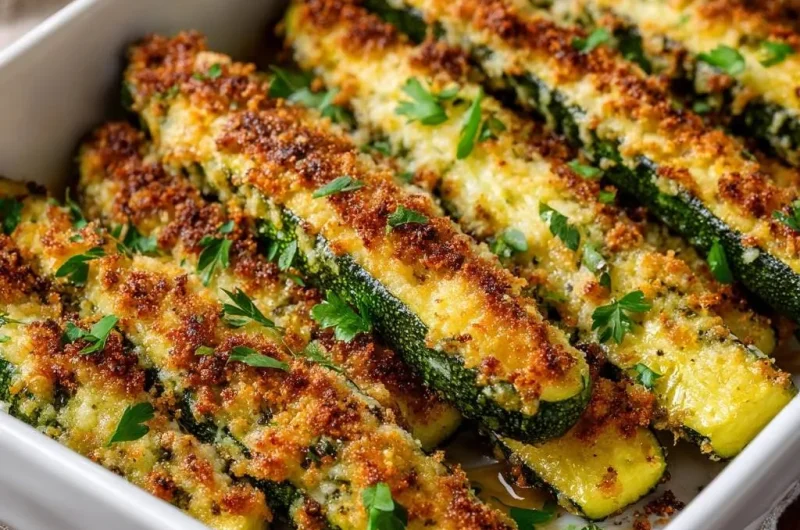
Crispy Parmesan Roasted Zucchini
Course: Side DishCuisine: AmericanDifficulty: easy4
servings15
minutes20
minutes185
kcal35
MinutesA professional-grade recipe that uses a moisture-drawing technique to ensure zucchini spears stay firm and crisp under a golden Parmesan and herb breadcrumb topping.
Ingredients
4 medium zucchini, sliced into thick spears
1/2 cup finely grated Parmesan cheese
1/2 cup Panko breadcrumbs
1 teaspoon garlic powder
1/2 teaspoon dried oregano
1/4 teaspoon smoked paprika (for color)
3 tablespoons extra virgin olive oil, divided
1/2 teaspoon salt (for sweating)
1/4 teaspoon black pepper
Fresh Italian parsley, chopped for garnish
Directions
- The Moisture Draw: Place zucchini spears on a wire rack set over a baking sheet. Sprinkle the flesh sides evenly with 1/2 teaspoon of salt. Let sit for 15 minutes. You will see significant beads of water rise to the surface.
- Dry Thoroughly: Use a clean kitchen towel or heavy-duty paper towels to firmly pat each spear dry. Squeeze slightly to ensure all surface moisture is removed. This is the essential step for a “never-soggy” result.
- Preheat: Preheat your oven to 425°F (220°C).
- Prepare the Crust: In a shallow bowl, combine the Parmesan cheese, Panko breadcrumbs, garlic powder, oregano, smoked paprika, and black pepper. Drizzle 1 tablespoon of the olive oil into the crumbs and toss with a fork until the mixture looks like damp sand; this ensures the topping browns evenly without burning.
- Coat: Lightly brush the flesh side of each dried zucchini spear with the remaining olive oil. Press the oiled side firmly into the Parmesan-Panko mixture, ensuring a thick, even layer adheres to the top.
- Arrange: Place the spears in a single layer in a large baking dish or on a parchment-lined baking sheet. Do not crowd them; space between the spears allows steam to escape and heat to circulate.
- Roast: Bake for 18 to 22 minutes. If the topping isn’t deep golden brown by the 18-minute mark, move the pan to the top rack for the final 2 minutes. The zucchini should be tender-crisp, not mushy.
- Finish: Garnish generously with fresh chopped parsley. Serve immediately while the crust is at its peak crunch.
Notes
- The salt-sweating step is essential; do not skip it if you want to avoid a mushy texture. Ensure the oven is fully preheated to 425°F for maximum crunch.