Most of us have experienced the heartbreak of a side dish gone wrong. You spend an hour peeling and boiling, only to end up with a sticky, gluey mess that resembles wallpaper paste more than food. It’s the ultimate kitchen frustration when the comfort food you craved turns into a gummy disappointment on the plate.
The secret to achieving that elusive, cloud-like texture isn’t just about how much butter you use. It’s actually a matter of physics. By using a professional steam-drying technique, you can ensure your potatoes stay light and airy while becoming the perfect vessel for savory garlic and rich fats.
I’ve found that the real trick lies in how you handle the moisture. If you leave even a little bit of water on those boiled spuds, they’ll never absorb the cream properly. This recipe focuses on a specific heat-treatment step that makes the potatoes “thirsty” for flavor, resulting in the most decadent Loaded Garlic Mashed Potatoes you’ve ever tasted.
For more loaded potato ideas, see how to make loaded twice-baked potatoes.
The Science of Starch: Why Potatoes Turn Gummy
To understand a great mash, you have to understand starch. Potatoes are packed with starch granules called amylose and amylopectin. When you boil them, these granules swell and soften, but they are incredibly fragile. If you treat them too roughly, they rupture like tiny water balloons.
When those granules burst, they release a sticky substance that creates that dreaded “glue” texture. This is exactly why you should never, ever put your potatoes in a blender or food processor. The high-speed blades act like a wrecking ball to the starch molecules, turning a fluffy side dish into a stretchy, unappetizing paste in seconds.
Choosing the right potato is your first line of defense. While Russets are great for baking, Yukon Golds are the undisputed champions for mashing. They have a naturally creamy, buttery yellow flesh and a medium starch content. This balance allows them to hold their shape during boiling but break down into a smooth, velvety consistency without becoming grainy.

By respecting the cellular structure of the potato, you control the final mouthfeel. Using gentle tools like a ricer or a hand masher ensures that the starch stays trapped inside the granules. This results in a dish that feels substantial yet melts away the moment it hits your tongue.
Essential Components for Loaded Garlic Mashed Potatoes
Quality ingredients are the backbone of this dish. Since there are only a few primary elements, each one needs to pull its weight. Yukon Gold potatoes provide a built-in richness that cheaper varieties simply can’t match. Their skin is thin enough that even if a tiny bit remains, it adds character rather than a tough texture.
When it comes to the liquid, heavy cream is non-negotiable for a truly “loaded” experience. The high fat content in cream does more than just add calories; it actually coats the potato proteins and prevents them from clumping together. If you use skim milk, you’ll likely end up with a watery, thin consistency that lacks that signature luxurious finish.
Garlic is a key player here, but raw garlic is far too aggressive for a creamy mash. By gently sautéing minced cloves in butter before adding them to the mix, you mellow out the sharp “bite.” This process infuses the butter with a sweet, toasted aroma that distributes evenly throughout every bite of the potatoes.
For the “loaded” aspect, we use high-quality beef or turkey bacon. It provides a necessary salty crunch and a hint of smokiness that cuts through the richness of the cream. Always finish with fresh parsley. Dried herbs often taste like hay and lack the bright, peppery pop that fresh greens provide to balance the heavy fats.
Round Out Your Meal
To go with your fluffy loaded garlic mashed potatoes, consider these dishes that share comforting flavors or offer a different experience.
- For a complete chicken dinner, try the herb roasted chicken, which complements the garlicky potatoes wonderfully.
- If you’re in the mood for something from the sea, the creamy lobster clam chowder offers a rich, satisfying contrast.
The Steam-Drying Technique for Maximum Fluffiness
This is the step that separates home cooks from professional chefs. After you drain your potatoes in a colander, don’t just start mashing them immediately. There is still a significant amount of surface moisture clinging to the cubes, and that water is the enemy of flavor.
Return the drained potatoes to the hot, empty pot and place it back over low heat for about two minutes. Shake the pot constantly so the potatoes don’t stick or brown. You’ll actually see steam rising from the pot as the excess water evaporates. This is the “steam-drying” phase.
By removing this moisture, you create a vacuum effect within the potato cells. Once you add your warm cream and garlic butter, the potatoes will soak it up like a sponge. This leads to a much deeper flavor profile and a texture that is light and airy rather than heavy and sodden.
Step-by-Step: Preparing the Garlic Infusion
While your potatoes are simmering, you should prepare the garlic butter. Melt a tablespoon of butter in a small skillet over low heat. Add your minced garlic and watch it closely. You aren’t looking for a dark brown color, which would make the garlic taste bitter and burnt.
Instead, you want the garlic to become soft and translucent. After about two minutes, it will smell fragrant and slightly sweet. This infused fat becomes the primary flavoring agent for the entire dish. Set it aside so it’s ready the moment your potatoes are dried and mashed.
The Proper Method for Mashing and Folding
If you want the best results, use a potato ricer. It looks like a giant garlic press and forces the potato through tiny holes, creating thin “noodles” of potato. This method breaks down the spuds with the absolute minimum amount of agitation, which is the key to avoiding gumminess.
If you don’t have a ricer, a standard hand masher works fine, but it requires a bit more elbow grease. Once the potatoes are broken down, switch to a wooden spoon or a silicone spatula. Do not use a whisk, as it can overwork the starch and make the mixture heavy.
Gently fold in your warm cream and garlic butter. Use a “folding” motion—cutting through the center and lifting from the bottom—rather than stirring vigorously. Stop the moment the ingredients are combined. Over-mixing at this stage is the most common reason for a failed texture.
Assembling the Loaded Toppings and Presentation
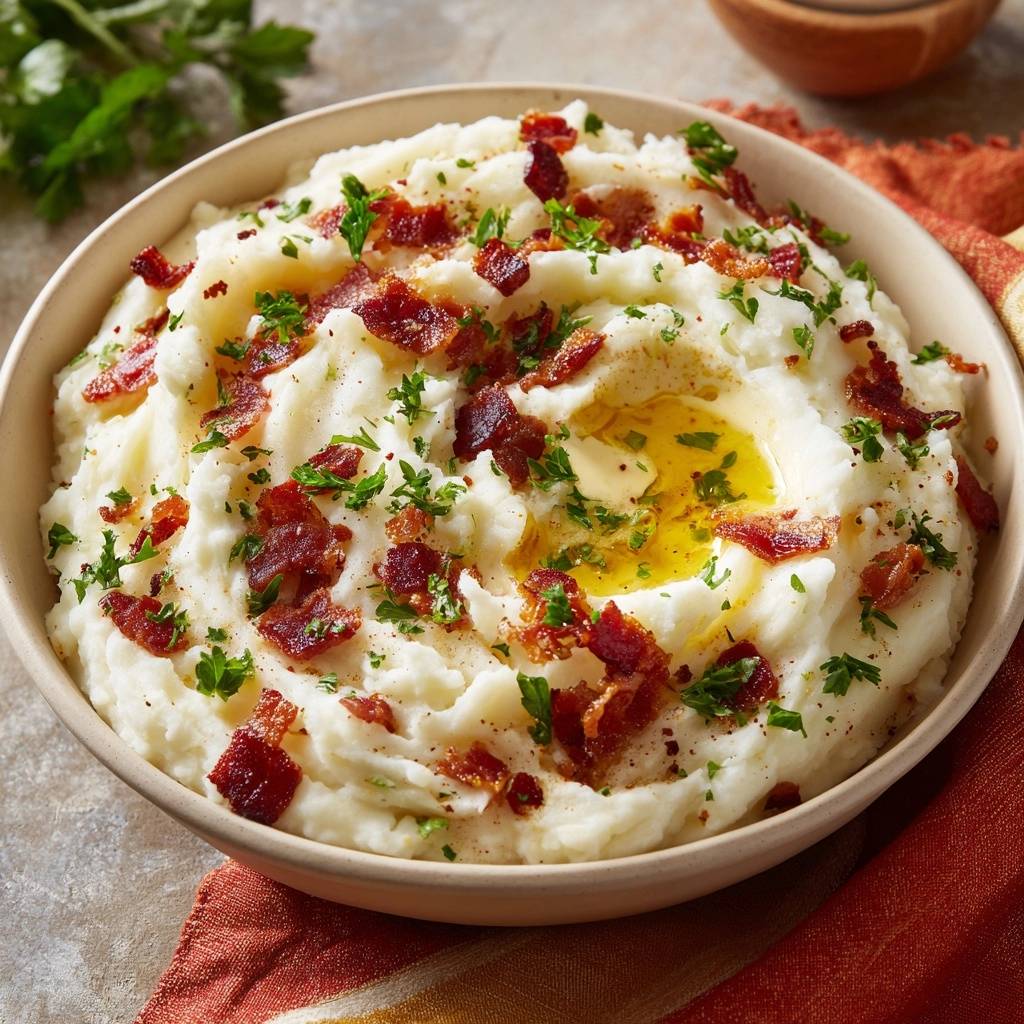
Presentation matters, especially for a dish this indulgent. Transfer the mash to a serving bowl and use the back of a large spoon to create a deep, swirling well in the center. This isn’t just for looks; it creates a reservoir for the extra melting butter to pool in.
Drop your remaining butter into that well and watch it turn into a golden lake. Sprinkle your crispy beef or turkey bacon bits generously over the top, followed by the fresh parsley. A tiny pinch of paprika adds a beautiful red contrast against the yellow potatoes and green herbs.
To keep the dish at its peak, try to serve it in a pre-warmed ceramic bowl. Potatoes lose heat quickly because of their high surface area once mashed. A warm bowl helps maintain that “just-made” temperature while everyone makes their way to the table.
Troubleshooting Common Mashed Potato Failures
If you find your potatoes are too salty, don’t panic. You can balance the salt by adding a bit more unsalted butter or a splash of unseasoned cream. If you have an extra potato on hand, boil and mash it without any salt and fold it into the main batch to dilute the seasoning.
If the texture feels too heavy or stiff, it usually means the potatoes have cooled down too much or need more moisture. Fold in a tablespoon of warm cream at a time until the consistency lightens up. Remember to always warm your liquids before adding them to prevent “shocking” the starch.
For garlic that tastes too pungent, you can mellow the dish by adding a dollop of sour cream or Greek yogurt. The acidity helps cut through the sharp garlic notes. If you need to keep the potatoes warm for a long time, use a bain-marie (a bowl over a pot of simmering water) to prevent them from drying out on the bottom.
Pairing Suggestions: What to Serve Alongside
These Loaded Garlic Mashed Potatoes are incredibly rich, so they pair best with proteins that have a strong savory profile. A roasted chicken with crispy skin is a classic choice, as the meat is lean enough to let the potatoes shine while the juices act as a natural sauce.
For a lighter side that still delivers on flavor, try these creamy garlic brussels sprouts.
Braised beef short ribs or a slow-cooked pot roast are also fantastic partners. The deep, umami-rich gravy from the beef mingles perfectly with the garlic and bacon in the mash. The potatoes act as a sturdy base that won’t disappear under a heavy reduction or sauce.
For a lighter option, consider grilled lamb chops. The earthy flavor of the lamb stands up well to the garlic, while the fresh parsley in the potatoes provides a bright finish that cleanses the palate between bites. No matter what you choose, these potatoes will likely be the star of the show.
Expert Tips for Reheating and Storage
If you have leftovers, store them in an airtight container in the fridge for up to three days. Avoid the microwave if possible, as it tends to heat unevenly and can make the starch granules feel tough or rubbery. Instead, reheat them on the stovetop over low heat.
Add a splash of milk or cream to the pot to help loosen the texture as they warm up. If you must use an oven, place the potatoes in a baking dish, cover tightly with foil to trap the moisture, and heat at 300°F until warmed through. This gentle heat preserves the fluffy integrity of the dish.
Frequently Asked Questions
How do I store leftover loaded mashed potatoes?
Place your leftovers in an airtight container and keep them in the refrigerator for up to 3 to 4 days. When you are ready to eat them again, it is best to reheat them slowly on the stovetop with an extra splash of milk or a pat of butter to restore the creamy texture. Avoid freezing these potatoes, as the heavy cream and butter can separate when thawed, resulting in a grainy and watery consistency.
Why did my mashed potatoes turn out like glue?
The most common reason for gluey potatoes is over-processing. If you used a food processor, blender, or even over-whisked them with an electric mixer, you likely ruptured the starch granules. This releases too much starch, which binds together into a sticky paste. To fix this next time, use a potato ricer or a hand masher and stop mixing the moment the ingredients are combined.
Can I use a different type of potato if I don’t have Yukon Golds?
While Yukon Golds are the best for this recipe due to their creamy texture, you can use Russet potatoes as a substitute. Russets are very starchy and will produce a very light, fluffy mash, though they won’t be quite as naturally “buttery” as the Golds. Avoid using red waxy potatoes for a mash this loaded, as they tend to stay firm and can become heavy when mixed with lots of toppings.
What can I use instead of heavy cream?
If you don’t have heavy cream, whole milk is the next best option, though the result will be slightly less decadent. You can also use a mixture of milk and a little extra butter to mimic the fat content of cream. For a tangier twist, some people enjoy using sour cream or plain Greek yogurt, which adds a nice thickness and a bit of zip to the flavor profile.
How do I keep the potatoes warm for a dinner party?
The best way to keep mashed potatoes warm without scorching them is to use a slow cooker on the “warm” setting. Grease the insert with butter first, then add the potatoes. If you don’t have a slow cooker, place the potatoes in a heat-proof bowl and set it over a pot of barely simmering water (a double boiler method). Cover the bowl with foil to keep the moisture in until you are ready to serve.
Can I make these ahead of time?
You can certainly peel and cube the potatoes ahead of time and keep them submerged in a bowl of cold water in the fridge for up to 4 hours. This prevents browning. However, for the best texture, it is highly recommended to mash and season them right before serving. If you must make the full dish ahead of time, under-season them slightly and add a fresh splash of warm cream when you reheat them to bring the fluffiness back to life.

Garlic Mashed Potatoes
Course: Side DishCuisine: AmericanDifficulty: easy6
servings15
minutes25
minutes340
kcal40
MinutesA foolproof recipe for light and airy mashed potatoes that avoids a sticky texture by using a steam-drying method. These potatoes are infused with garlic butter and topped with crispy bacon and fresh herbs.
Ingredients
3 pounds Yukon Gold potatoes, peeled and cubed
6 strips thick-cut bacon, cooked until crispy and crumbled
1/2 cup unsalted butter (divided: 6 tbsp for mash, 2 tbsp for the center well)
1/2 cup heavy cream, warmed
4 cloves garlic, minced
1/4 cup fresh parsley, finely chopped
1 teaspoon sea salt (plus more for boiling water)
1/2 teaspoon cracked black pepper
Optional: A pinch of paprika for garnish
Directions
- Place cubed potatoes in a large pot and cover with cold water. Add a generous pinch of salt. Bring to a boil, then reduce heat and simmer for 15 to 20 minutes until fork-tender.
- While potatoes boil, sauté the minced garlic in 1 tablespoon of the butter over low heat for 1-2 minutes until fragrant but not browned. Set aside.
- To solve the gummy texture problem, drain the potatoes thoroughly in a colander. Immediately return the drained potatoes to the hot, empty pot over low heat for 2 minutes. Shake the pot constantly to steam off every drop of excess moisture. This prevents the potatoes from becoming watery or gluey.
- While the potatoes are still hot and dry, use a potato ricer or a hand masher to break them down. Do not use a food processor or blender, as high-speed blades tear the starch molecules and create a sticky mess.
- Gently fold in the warmed heavy cream, the 6 tablespoons of butter (including the garlic-infused butter), salt, and pepper using a wooden spoon or spatula. Mix only until just combined and smooth.
- Transfer to a serving bowl. Use the back of a spoon to create a deep well in the center. Place the remaining 2 tablespoons of butter in the well to melt.
- Top generously with the crispy crumbled bacon and fresh parsley. Add a final crack of black pepper or a pinch of paprika to match the visual finish. Serve immediately.
Notes
- To ensure a cloud-like texture, never use a blender or food processor. Always use a potato ricer or hand masher to prevent the starch from becoming gluey.