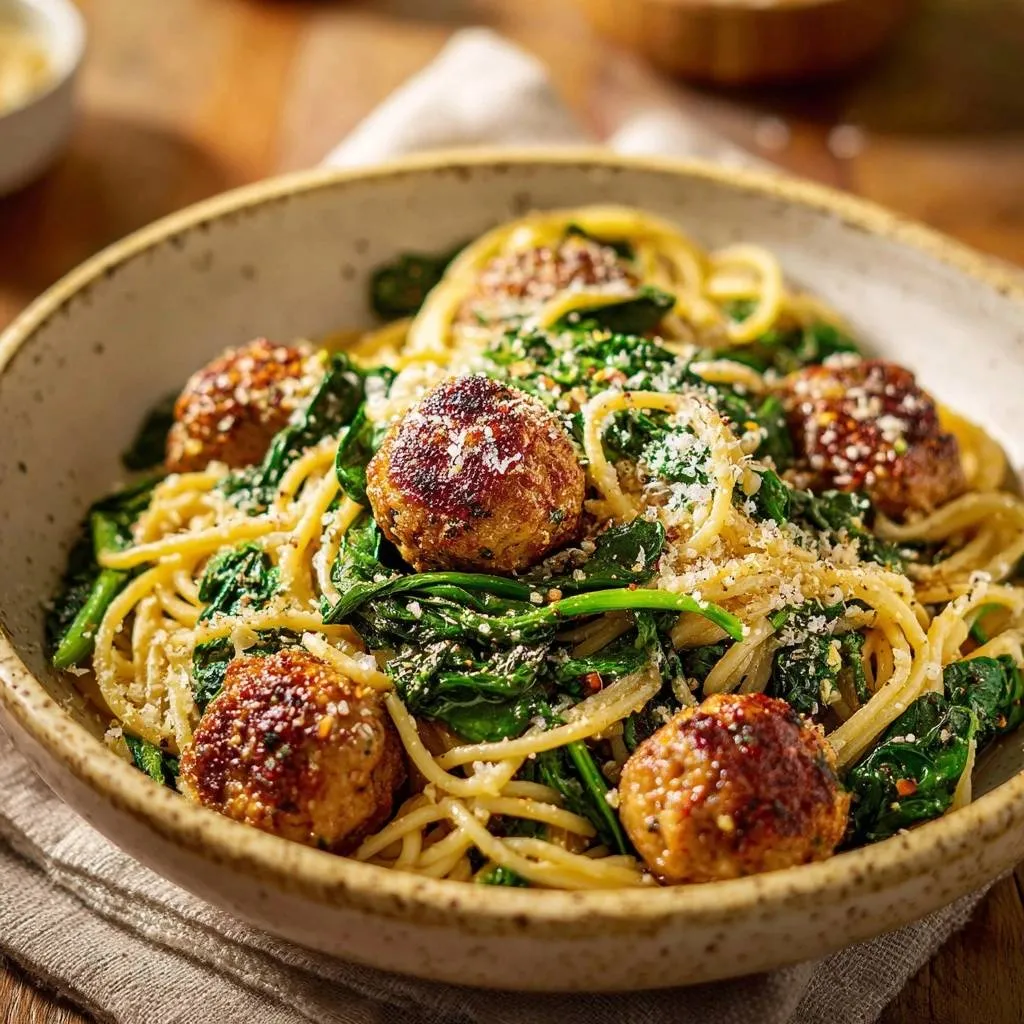
Nothing ruins a cozy dinner faster than biting into a meatball that feels like a rubber bouncy ball. We’ve all been there, chewing through dense, tough meat that lacks any real moisture. This Garlic Butter Meatball Pasta with Spinach is the antidote to those kitchen frustrations, offering a silky, decadent experience that feels like high-end comfort food.
The magic lies in the balance between the rich, savory beef and the bright, earthy notes of fresh baby spinach. When you swirl everything together in a glossy garlic butter emulsion, the flavors meld into something truly spectacular. It’s a dish that feels indulgent but stays light enough for a weeknight meal thanks to the fresh greens.
If you want to achieve that melt-in-your-mouth texture, you have to master the “panade.” By soaking breadcrumbs in milk before they ever touch the meat, you create a moisture-lock system. This single professional secret ensures your meatballs stay tender and juicy, even after they’ve been seared to a golden-brown crisp on the outside.
The Science of Tender Meatballs: Why Panades Matter
Most home cooks assume that adding an egg is enough to keep a meatball moist, but science tells a different story. When meat proteins heat up, they begin to coil and bond tightly together, squeezing out moisture like a wrung-out sponge. This is exactly what leads to that dreaded rubbery texture that can make beef feel dry and unappealing.
A panade, which is simply a paste made from starch and liquid, acts as a physical barrier between those protein strands. The starch molecules from the panko or breadcrumbs get in the way, preventing the proteins from linking up too closely. Therefore, the meat stays tender because the fibers can’t contract into a dense, tough mass during the cooking process.
Using milk as your liquid component adds an extra layer of luxury. The fats and sugars in the milk contribute to a softer “crumb” within the meatball, making it feel much more sophisticated than a standard burger-style mix. While some recipes call for dry crumbs, this wet paste method is the gold standard for achieving a delicate, velvety interior.
Choosing the Right Fat Ratio for Beef
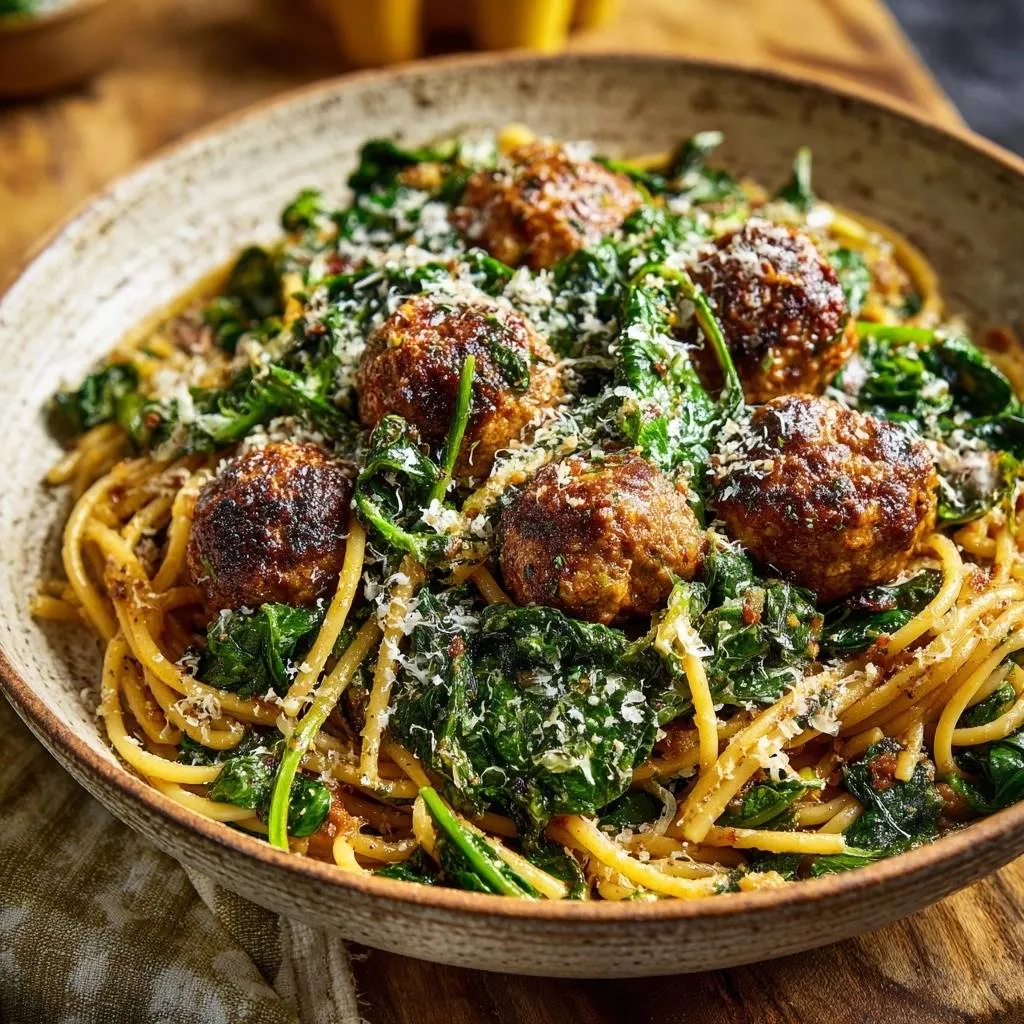
When you’re shopping for meat, reach for the 80/20 ground beef blend. While leaner options like 90/10 might seem healthier, they lack the necessary fat to create a truly succulent meatball. That 20% fat content is vital because it renders out during the searing process, mingling with the butter to create a deeper, meatier sauce base.
If you use meat that is too lean, the meatballs will likely turn out crumbly and dry, regardless of your technique. The fat provides the “mouthfeel” we crave in a pasta dish. In addition, that rendered beef fat carries the flavors of the oregano and garlic throughout the entire skillet, ensuring every strand of spaghetti is seasoned to perfection.
Essential Components for Garlic Butter Meatball Pasta with Spinach
Success in this dish depends heavily on the quality of your aromatics and greens. Fresh garlic is non-negotiable here; the pre-minced stuff in a jar often has a metallic, bitter aftertaste that can ruin a delicate butter sauce. When you mince fresh cloves, you release natural oils that perfume the butter with a sweet, pungent aroma that jarred versions simply can’t match.
The spinach also plays a starring role, and baby spinach is the preferred choice for its tender stems and mild flavor. Mature spinach can be stringy and often requires longer cooking times, which might lead to overcooking your pasta. Baby spinach wilts in seconds, providing a pop of color and a boost of nutrients without changing the texture of the dish.
Finally, don’t you dare pour that pasta water down the drain! That cloudy, starchy liquid is the “liquid gold” that turns a greasy pan of butter into a cohesive, restaurant-quality sauce. It acts as a bridge, helping the fat from the butter cling to the smooth surface of the spaghetti noodles.
The Role of High-Quality Parmesan
You’ll notice a massive difference if you grate your own Parmesan cheese from a block. Pre-shredded cheeses are coated in cellulose or potato starch to prevent clumping in the bag, but those additives prevent the cheese from melting smoothly. For the meatballs, freshly grated cheese acts as a savory binder that dissolves into the meat fibers.
In the sauce, high-quality Parmesan provides the saltiness and umami needed to balance the richness of the butter. As it hits the warm pasta water and butter, it creates a creamy consistency without the need for heavy cream. It’s a dual-purpose ingredient that provides both structural integrity to the meatballs and a luxurious finish to the pasta.
For a similar savory depth, explore the cheesy baked spaghetti casserole next.
For an even more vibrant side, try this garlic butter spinach.
Phase One: Preparing the Moisture-Lock Meatball Base
When you start mixing your meatball base, remember that less is more. Once you’ve combined your milk-soaked breadcrumbs with the beef and spices, use a light touch. I like to use my hands and gently “toss” the ingredients together rather than squeezing them through my fingers like dough.
If you overwork the meat, you’ll crush those beautiful air pockets and break down the proteins too much, resulting in a heavy, leaden meatball. You want the mixture to just hold together. The breadcrumb paste should look like a thick, wet mash before it goes in; this ensures the moisture is evenly distributed throughout the entire batch.
Phase Two: Achieving the Perfect Maillard Reaction Sear
To get that gorgeous, dark crust, your oil needs to be shimmering and hot before the meatballs hit the pan. This is the Maillard reaction in action—the chemical reaction between amino acids and reducing sugars that gives browned food its distinctive flavor. Don’t crowd the pan, or the temperature will drop and the meat will steam instead of sear.
The goal here isn’t to cook the meatballs all the way through. You want a deep brown exterior and a center that is still slightly pink. This “par-cooking” ensures that when you add them back into the sauce later, they finish cooking gently, staying juicy rather than drying out from double-exposure to high heat.
For an equally satisfying exterior on your meatballs, check out this guide to golden baked meatballs.
Phase Three: Emulsifying the Garlic Butter and Spinach Sauce
This is where the technical magic happens. After you’ve melted your butter and softened the garlic, you’ll add that reserved pasta water. Whisk it vigorously into the butter over medium heat. You’re looking for the liquid to transform from a watery yellow to a pale, creamy, and opaque sauce.
This emulsion is what makes the dish feel professional. If you just tossed the pasta in melted butter, it would feel oily and heavy on the tongue. By creating an emulsion, you’re suspending tiny droplets of fat in the starchy water, creating a coating that is light, silky, and perfectly seasoned.
Phase Four: The Finishing Toss and Texture Check
Timing is everything when it comes to the pasta. You must pull your spaghetti out of the boiling water about two minutes before the package says it’s “al dente.” It should still have a bit of a firm “snap” in the middle because it’s going to finish its journey inside the skillet with the sauce.
As the pasta tosses with the garlic butter and spinach, it absorbs the flavorful liquid like a sponge. This ensures the flavor is inside the noodle, not just sitting on top of it. If the pan starts to look a little tight or dry, add another splash of pasta water to loosen things up until the sauce looks glossy again.
Troubleshooting Common Meatball and Pasta Issues
If your sauce looks “broken” or greasy, it usually means the heat was too high or you didn’t use enough starchy water. To fix this, turn the heat down to low and add a tablespoon of pasta water at a time, whisking constantly until the sauce comes back together. It’s a quick fix that saves the entire meal.
If your meatballs are sticking to the pan during the initial sear, don’t force them! Meat usually “releases” itself from the pan once a proper crust has formed. If they’re stuck, give them another 30 seconds. Also, ensure you’ve wiped out any burnt bits before making the butter sauce to keep the flavor clean and bright.
Preventing Bitter Burnt Garlic
Garlic is delicate and can turn from sweet to bitter in a matter of seconds. When you transition from searing the meat to making the sauce, make sure the pan isn’t screaming hot. Lower the heat to medium and let the pan cool for a moment before adding the butter and the remaining garlic to ensure a gentle sizzle.
Flavor Variations and Ingredient Swaps
While ground beef is the classic choice, you can easily swap it for ground lamb for a more robust, earthy flavor profile. If you prefer ground turkey, just be sure to add a tablespoon of olive oil to the meat mixture to compensate for the lower fat content, otherwise, the meatballs may lose that signature tenderness.
If spinach isn’t your favorite, kale makes a fantastic substitute. However, since kale is much heartier, you’ll need to sauté it for 3-4 minutes with a splash of water before adding the pasta to ensure it’s soft enough to eat. For a bit of brightness, a teaspoon of fresh lemon zest stirred in at the very end can cut through the richness of the butter beautifully.
Round Out Your Meal
To complement your garlic butter meatball pasta, consider these fresh and flavorful options.
- For a bright, herb-infused addition, try the Garlic Herb Grilled Chicken Salad, offering a lighter counterpoint.
- To add a vibrant medley of fruits and grains, pair your pasta with the Strawberry Avocado Quinoa Salad, which brings a refreshing sweetness.
Optimal Side Dishes for Buttery Pasta
Because this pasta is quite rich and savory, you’ll want a side dish that offers some acidity and crunch. A simple arugula salad with a sharp lemon vinaigrette is the perfect companion. The peppery bite of the arugula cuts right through the garlic butter, refreshing your palate between bites of meatball.
Roasted balsamic tomatoes are another excellent choice. The burst of warm, acidic tomato juice acts almost like a secondary sauce for the pasta. If you’re feeling extra indulgent, a piece of crusty sourdough bread is great for mopping up any leftover garlic butter at the bottom of your bowl.
Storage and Reheating for Maximum Moisture
Leftovers are a treat, but the microwave is often the enemy of the meatball. High-frequency waves can turn the proteins rubbery in seconds. Instead, try the “skillet splash” method. Place your leftovers in a skillet over medium-low heat with a tablespoon of water or broth.
Cover the pan with a lid for 3-5 minutes. This creates a steam-room effect that gently re-hydrates the pasta and warms the meatballs through without toughening them up. Store your leftovers in an airtight container in the fridge for up to three days, but try to eat them sooner for the best texture.
How do I keep my meatballs from falling apart in the pan?
Meatballs usually fall apart because they haven’t been chilled or because the pan wasn’t hot enough to sear the exterior quickly. If you have time, let the rolled meatballs rest in the fridge for 15 minutes before cooking to help the proteins set. Additionally, make sure you don’t flip them too early; let that crust form so it acts as a structural shell.
Can I freeze these meatballs for later use?
Yes, these meatballs freeze beautifully! You can freeze them raw or cooked. To freeze raw, place them on a baking sheet in the freezer until solid, then transfer to a zip-top bag for up to three months. If freezing cooked meatballs, let them cool completely first. Thaw in the refrigerator overnight before reheating in a skillet with a little butter or water.
What is the best substitute for panko breadcrumbs?
If you don’t have panko, regular plain breadcrumbs work perfectly fine. You can even use a slice of white bread with the crusts removed; just tear it into tiny pieces and soak it in the milk as directed. The goal is the starch, so even crushed crackers can work in a pinch, though they may add extra salt to the dish.
Why is my garlic butter sauce watery instead of creamy?
A watery sauce usually means the emulsion didn’t form. This happens if you don’t whisk the pasta water and butter together vigorously enough, or if the pasta wasn’t starchy enough. Make sure you use the water from the very end of the pasta’s cooking time, as that’s when the starch concentration is highest. A final toss with a handful of Parmesan cheese will also help thicken the sauce instantly.
Can I make this recipe gluten-free?
Absolutely. To make this gluten-free, use your favorite gluten-free spaghetti and swap the breadcrumbs for gluten-free crumbs or even almond meal. Since gluten-free pasta releases different types of starch, you might find you need a little less pasta water to get the sauce to emulsify, so add it gradually.
Garlic Butter Meatball Pasta
Course: Main CourseCuisine: AmericanDifficulty: easy4
servings15
minutes20
minutes950
kcal35
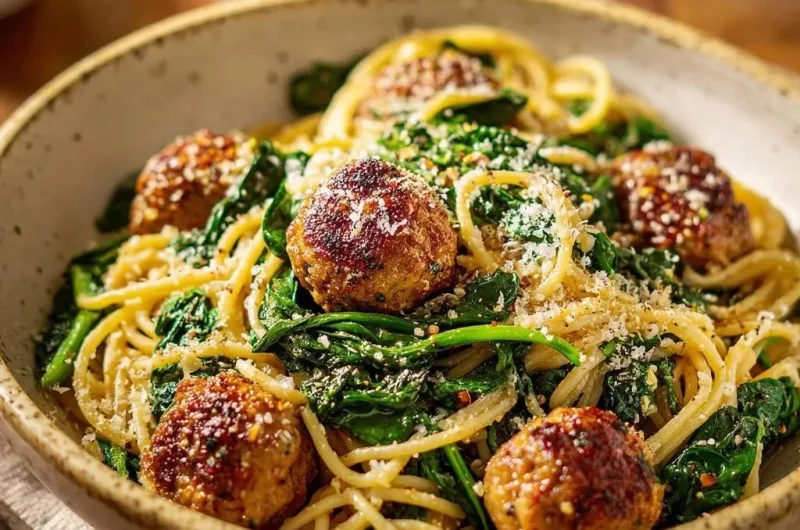
MinutesA flavorful pasta dish featuring melt-in-your-mouth beef meatballs seared to perfection and tossed in a silky garlic butter sauce with fresh baby spinach and Parmesan cheese.
Ingredients
1 pound ground beef (80/20 blend for best flavor)
1/2 cup panko or plain breadcrumbs
1/4 cup whole milk
1 egg, beaten
3/4 cup grated Parmesan cheese (divided: 1/2 cup for meatballs, 1/4 cup for garnish)
5 cloves garlic, minced (divided)
1 teaspoon dried oregano
1/2 teaspoon red pepper flakes
1 teaspoon kosher salt
1/2 teaspoon black pepper
12 ounces spaghetti
6 cups fresh baby spinach (it wilts significantly)
6 tablespoons unsalted butter
2 tablespoons olive oil
Directions
- In a small bowl, soak the breadcrumbs in the milk for 5 minutes until it forms a paste. This panade is the moisture-lock secret that prevents the meat proteins from bonding too tightly and becoming dense.
- In a large bowl, gently combine the beef, the milk-soaked breadcrumbs, egg, 1/2 cup Parmesan, half the minced garlic, oregano, salt, pepper, and red pepper flakes. Mix with your hands until just combined; do not overwork the meat or the meatballs will become tough.
- Roll into roughly 12-14 small meatballs.
- Heat olive oil in a large skillet over medium-high heat. Once the oil is shimmering, add the meatballs. Sear for 3 minutes per side to develop a dark, golden-brown crust as seen in the image. The meatballs should be browned on the outside but still slightly pink in the center. Remove meatballs from the pan and set aside on a plate.
- While searing meat, boil the spaghetti in a large pot of salted water until just shy of al dente (about 2 minutes less than package directions). Reserve 1 cup of the starchy pasta water before draining.
- Wipe any burnt bits from the skillet, then melt the butter over medium heat. Add the remaining garlic and cook for 1 minute until fragrant but not brown.
- Add the fresh spinach to the butter and toss for 30 seconds until it begins to wilt.
- Add 1/2 cup of the reserved pasta water to the skillet, whisking it into the butter to create a silky, glossy sauce.
- Add the spaghetti and the seared meatballs (and any juices from the plate) into the skillet. Toss gently for 2 minutes over medium heat. The pasta will finish cooking in the sauce, and the meatballs will reach a perfect, juicy internal temperature. If the pasta looks dry, add a splash more pasta water.
- Serve immediately in warm bowls, topped with the remaining 1/4 cup of grated Parmesan and an extra pinch of red pepper flakes for visual pop.
Notes
- The secret to the texture is the panade (milk-soaked breadcrumbs) and avoiding overworking the meat. Always reserve pasta water to create the glossy butter sauce emulsion.