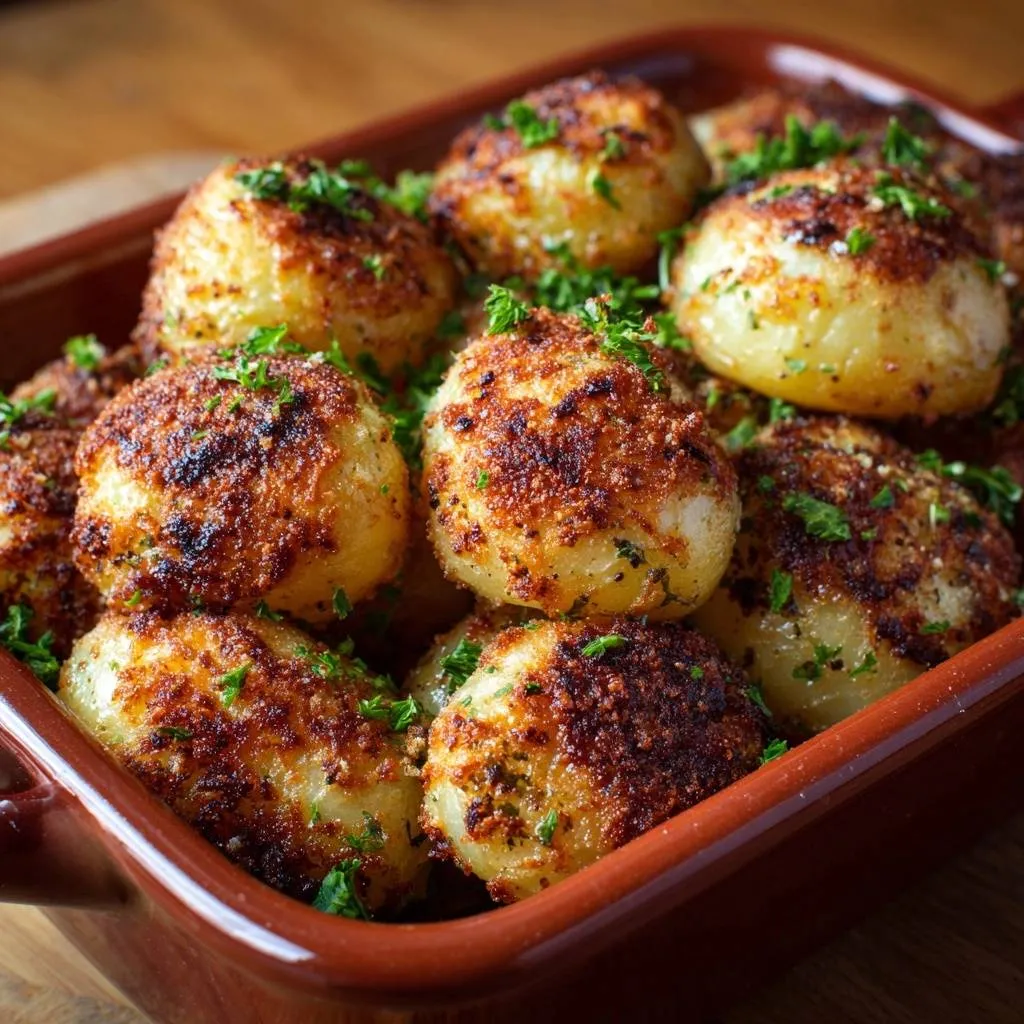
You’ve likely experienced the disappointment of pulling a tray of potatoes out of the oven only to find them limp, greasy, or stuck to the pan. Most home cooks rely on high heat alone to create a crust, but that usually results in burnt edges and a soggy bottom. If you want a potato that actually crunches when you bite into it, you have to change how you prep the surface before it ever touches the oven.
The secret to a shattering, deep-brown crust lies in a specific “rough-up” technique that transforms the exterior of the potato into a starchy paste. This paste acts as a natural adhesive for the Parmesan and breadcrumbs, creating a thick, savory shell. Instead of a thin layer of seasoning, you get a structural crust that fries in the olive oil, protecting the creamy, fluffy interior of the potato.
For an even crispier finish, consider trying garlic herb smashed potatoes.
I’ve found that the most critical step is the steam-dry period right after boiling. If you toss wet potatoes into oil, the moisture traps under the coating and steams the crust from the inside out. By letting the potatoes sit for two minutes until they look matte and chalky, you ensure that every bit of heat goes toward crisping that Parmesan shell rather than evaporating water.
The Science of the Shattering Potato Crust
Creating the perfect Garlic Parmesan Roasted Potatoes is more about chemistry than luck. When you par-boil the potatoes, the heat gelatinizes the starches on the outermost layer. This makes the surface soft and malleable. Therefore, when you shake the potatoes in a dry pot, those softened starches break down into a “fuzzy” mash that clings to the potato.
This process creates thousands of tiny micro-fissures and ridges, which exponentially increases the surface area of each potato. In addition, these ridges provide the perfect nooks and crannies for the Parmesan cheese and Panko breadcrumbs to lodge themselves. Without this rough surface, the breading would simply slide off into a pool of oil on the baking sheet.
Once the potatoes hit the hot oven, this starch-and-cheese paste undergoes the Maillard reaction. The proteins in the Parmesan and the starches from the potato dehydrate and fuse together. This creates a rigid, structural shell that mimics the texture of deep-fried food without the need for a vat of oil. The result is a mahogany-colored exterior that stays crisp even as the potatoes cool slightly.
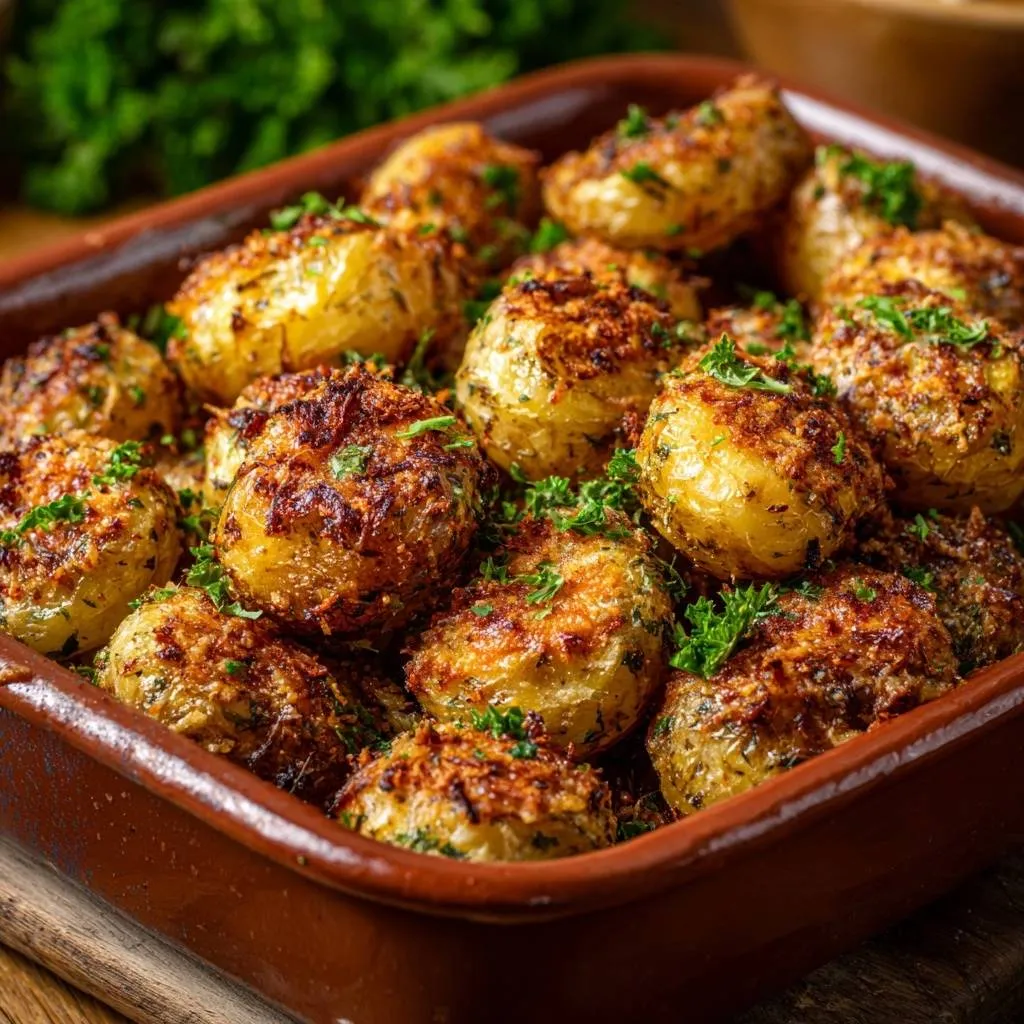
Essential Components for Garlic Parmesan Roasted Potatoes
Choosing the right potato is the foundation of this recipe. While Russets are great for baking, Yukon Golds are the superior choice here because they occupy the middle ground between waxy and starchy. They hold their shape during the vigorous shaking process but still release enough starch to create that essential “fuzzy” exterior. Their natural buttery flavor also pairs perfectly with the sharp saltiness of the cheese.
The texture of your Parmesan matters just as much as the potato variety. For this specific crust, the finely grated, powdery Parmesan—the kind that looks like sand—is actually better than freshly shaved shards. The smaller particles provide more surface contact, allowing the cheese to melt and bond with the breadcrumbs into a uniform, armor-like coating. High-quality extra virgin olive oil is also vital, as it conducts heat efficiently to fry the crust while adding a fruity depth to the flavor profile.
Choosing the Right Potato Variety
Yukon Golds are the gold standard because their medium starch content allows the center to remain creamy and custard-like while the outside crisps up. Red Bliss potatoes are often too waxy and won’t produce enough surface starch when shaken. Conversely, Russets can sometimes fall apart entirely if boiled a minute too long, leaving you with mashed potatoes instead of roasted ones.
The Role of Panko and Parmesan Textures
Panko breadcrumbs provide a distinct, airy crunch that standard breadcrumbs can’t match. However, you should crush them slightly before mixing them with the cheese. This ensures they are a similar size to the Parmesan granules, preventing the breadcrumbs from burning before the cheese has a chance to fully crisp. The salt in the Parmesan also works to season the potato deeply, drawing out moisture to further enhance the crunch.
Phase One: Par-Boiling and the Rough-Up Technique
You must start your potatoes in a pot of cold, heavily salted water. If you drop them into boiling water, the outside will overcook and turn to mush before the inside is even warm. Starting cold ensures the potato heats evenly from the core to the surface. You are looking for a specific window of doneness: the exterior should be soft enough to pierce with a fork, but you should feel significant resistance in the center.
For a similar smooth texture in another potato favorite, check out this guide to creamy garlic mashed potatoes.
Once you reach that stage, drain them immediately. Do not let them sit in the water, or they will become waterlogged. After draining, return them to the hot, dry pot. This is where the transformation happens. Cover the pot with a lid and shake it vigorously for about 15 seconds. You want the potatoes to look battered and covered in a thin layer of mashed potato paste. This “fuzz” is the secret ingredient for a world-class crust.
Steam-Drying for Maximum Crunch
After shaking, let the potatoes sit uncovered in the colander or the pot for at least two minutes. You will see steam rising off them; this is moisture leaving the potato. If you skip this, that moisture will turn into steam in the oven, which softens the breading. You’ll know they are ready when the surface looks dull and feels slightly tacky to the touch.
Phase Two: Creating the Parmesan Breading Paste
While the potatoes steam-dry, whisk your olive oil, Parmesan, crushed Panko, and spices in a large bowl. This should look like a thick, gritty sludge rather than a liquid dressing. Mixing the spices directly into the oil is a technique called “blooming.” The fat in the oil carries the flavors of the garlic powder, thyme, and paprika, ensuring every square inch of the potato is seasoned.
Add the roughed-up potatoes to this mixture while they are still warm. Use your hands or a large spoon to press the paste onto the potatoes. Because of the starchy surface you created earlier, the paste should adhere in a thick, heavy layer. Don’t be afraid to really work the mixture into the crevices of the potatoes; the more uneven the coating, the more crunch you’ll have later.
Phase Three: High-Heat Roasting and Pan Management
A “screaming hot” baking sheet is non-negotiable for this recipe. Place your heavy-duty rimmed baking sheet in the oven while it preheats to 425°F. When you pull the tray out and dump the potatoes onto it, they should sizzle immediately. This initial contact sears the bottom crust instantly, which prevents the cheese from sticking to the metal and tearing off when you try to flip them.
Roast the potatoes for about 40 minutes, but keep an eye on the color. You are looking for a deep mahogany brown, not just a light tan. Halfway through, use a metal spatula to carefully flip each potato. This ensures the oil on the pan fries every side of the Parmesan shell. If the crust feels soft when you touch it with the spatula, it needs more time.
The Danger of Overcrowding the Pan
If you crowd the potatoes too closely together, they will release steam that gets trapped between them. This creates a humid environment that ruins the crunch. Therefore, make sure there is at least an inch of space between each potato. If you are doubling the recipe, use two separate baking sheets on different racks to maintain proper airflow and heat circulation.
Troubleshooting Common Roasting Obstacles
If your potatoes are sticking to the pan, it usually means the tray wasn’t hot enough or you didn’t use enough oil. Always use a metal spatula to get under the crust; plastic ones are often too thick and will break the breading. If the garlic flavor tastes bitter, you may have used a rack that was too high in the oven, causing the garlic powder to scorch before the potatoes finished cooking.
Uneven browning is another common issue. Most ovens have “hot spots,” so it is a good idea to rotate the baking sheet 180 degrees halfway through the roasting time. If the potatoes are browning too quickly on the bottom but look pale on top, move the rack to the upper third of the oven for the last ten minutes of cooking.
Preventing a Burnt Cheese Exterior
Parmesan has a lower burning point than the potato itself. If you notice the cheese getting too dark before the 35-minute mark, lower the oven temperature to 400°F. However, the paprika in this recipe helps provide a deep color without needing excessive heat, so stick to the 425°F setting unless your oven runs particularly hot.
Flavor Variations and Herb Substitutions
While thyme and parsley are classic, you can easily adapt this profile. For a Mediterranean twist, swap the thyme for dried oregano and add a teaspoon of lemon zest after the potatoes come out of the oven. If you prefer a bit of heat, add a pinch of cayenne pepper or red chili flakes to the oil mixture before coating the potatoes.
Rosemary is another fantastic option, but it can be quite woody. If you use fresh rosemary, chop it very finely so it integrates into the Parmesan crust. For a smokier profile, replace the standard paprika with smoked Spanish paprika (pimentón). This gives the potatoes a “charcoal-grilled” essence that pairs beautifully with the salty cheese.
Optimal Pairings for Crispy Garlic Potatoes
These potatoes are incredibly rich and crunchy, so they pair best with proteins that have a clean, savory profile. A simple roasted chicken or a pan-seared steak provides a great textural contrast to the shattering crust of the potatoes. The garlic and Parmesan notes also complement grilled Mediterranean vegetables like zucchini or bell peppers.
Round Out Your Meal
These dishes offer a wonderful complement to your garlic parmesan roasted potatoes, bringing together earthy flavors and satisfying textures.
- For a warming and wholesome addition, consider the Hearty Kale White Bean Orecchiette Soup, which shares a similar comforting quality.
- Pair your potatoes with the bright, zesty notes of the Charred Lemon-Scallion Chicken Thighs for a balanced plate.
Because the crust is so substantial, these potatoes can even hold up to sauces. Serve them alongside a bowl of garlic aioli or a bright chimichurri. The acidity in a herb-based sauce cuts through the richness of the olive oil and cheese, balancing the entire meal. They are also a fantastic addition to a holiday spread where you need a side dish that stays crispy on the table.
Storage and Reheating for Texture Retention
Never use a microwave to reheat these potatoes. The microwave will turn the crispy Parmesan shell into a rubbery, chewy mess. Instead, store leftovers in an airtight container in the fridge for up to three days. When you’re ready to eat them again, the best method is the air fryer or the oven.
To reheat, place the potatoes in a 400°F oven or air fryer for 5 to 7 minutes. This high heat will re-activate the oils in the crust and crisp the Parmesan back to its original state. Do not freeze these potatoes; the freezing and thawing process breaks down the cellular structure of the Yukon Golds, making them grainy and mealy.
Expert Tips for Professional Results
- Use a heavy-duty rimmed baking sheet. Thin cookie sheets warp in high heat and don’t distribute heat evenly, leading to hot spots and burnt cheese.
- Opt for sea salt or kosher salt. The larger grains provide a better flavor burst than fine table salt, which can make the potatoes taste overly metallic.
- Add the fresh parsley only at the very end. If you roast the parsley, it will turn black and bitter. Adding it to the hot potatoes right out of the oven preserves its bright color and fresh aroma.
- Don’t skimp on the oil. The oil is what “fries” the crust in the oven. If the pan looks dry, the Parmesan will burn rather than crisp.
- Crush your Panko. If the breadcrumbs are too large, they won’t stick to the potato fuzz as effectively as the finely grated cheese.
How do I keep the potatoes from sticking to the baking sheet?
The most effective way to prevent sticking is to preheat the baking sheet in the oven for at least 10 minutes before adding the potatoes. When the cold oil and starch hit the hot metal, it creates an immediate sear. Additionally, ensure you are using enough olive oil; the bottom of the pan should have a thin, visible sheen to act as a barrier between the cheese and the metal.
Why are my roasted potatoes soft instead of crunchy?
Soft potatoes are usually the result of two things: excess moisture or overcrowding. If you don’t let the potatoes steam-dry after boiling, the water turns into steam and softens the crust. Similarly, if the potatoes are touching each other on the pan, they trap steam between them. Always give them plenty of space and ensure they look “matte” before you coat them in the oil and cheese mixture.
Can I use pre-shredded Parmesan cheese from a bag?
It is best to avoid the thick, refrigerated shreds of Parmesan for this recipe. Those shreds often contain potato starch or cellulose to prevent clumping, which interferes with how the cheese melts and bonds to the potato. The shelf-stable “powdery” Parmesan or very finely grated fresh Parmesan works best because the small particles create a more continuous, armor-like crust.
What is the best way to reheat leftovers?
To bring back the original crunch, use an air fryer at 400°F for about 5 minutes. If you don’t have an air fryer, a standard oven at 400°F for 8-10 minutes will also work. Avoid the microwave at all costs, as it will make the crust soggy and the interior gummy. Reheating in a dry skillet over medium heat is another great alternative if you only have a few pieces left.
Can I make these ahead of time?
You can par-boil and “rough up” the potatoes up to 4 hours in advance. Keep them at room temperature, uncovered, so they continue to dry out. However, do not coat them in the oil and Parmesan mixture until you are ready to put them in the oven. If the cheese sits on the damp potatoes for too long, it will turn into a paste that won’t crisp up as effectively during roasting.
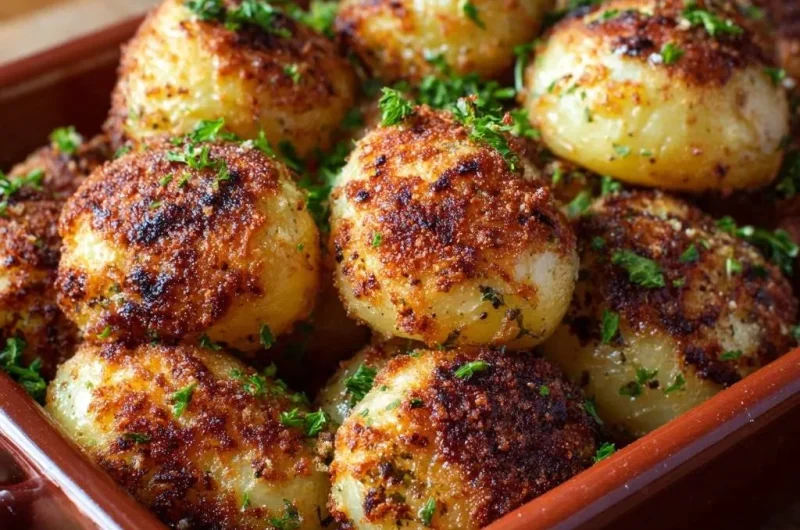
Garlic Parmesan Roasted Potatoes
Course: Side DishCuisine: AmericanDifficulty: medium6
servings15
minutes45
minutes320
kcal60
MinutesThese potatoes use a par-boiling and shaking technique to create a starchy surface that, when combined with Parmesan and Panko, forms a thick, savory shell that fries to a deep mahogany brown in the oven.
Ingredients
3 pounds Yukon Gold potatoes, peeled and left whole (or halved if very large)
1/2 cup extra virgin olive oil
3/4 cup finely grated Parmesan cheese (the powdery kind works best for this crust)
1/2 cup Panko breadcrumbs, crushed finely
1 tablespoon garlic powder
1 teaspoon dried thyme
1/2 teaspoon paprika (for the deep golden color)
1 teaspoon sea salt
1/2 teaspoon cracked black pepper
1/4 cup fresh parsley, finely chopped
Directions
- Place the peeled potatoes in a large pot of cold salted water. Bring to a boil and cook for 8 to 10 minutes. The goal is for the exterior to be soft enough to pierce with a fork, while the center remains firm.
- Drain the potatoes thoroughly in a colander and let them steam-dry for 2 minutes. Return them to the dry pot, cover with a lid, and shake vigorously for 10-15 seconds. The potatoes should look “fuzzy” or covered in a thin layer of mashed potato paste.
- Preheat your oven to 425°F (220°C). Place a large, heavy-duty rimmed baking sheet inside the oven while it preheats to get it screaming hot.
- In a large bowl, whisk together the olive oil, Parmesan cheese, crushed Panko, garlic powder, thyme, paprika, salt, and pepper. This will form a thick, gritty paste.
- Add the roughed-up potatoes to the bowl. Use a large spoon or your hands to coat them thoroughly, pressing the Parmesan mixture into the starchy surface of each potato until they are heavily encrusted.
- Carefully remove the hot tray from the oven. Pour 1 tablespoon of additional oil onto the tray if needed, then place the potatoes onto the tray. They should sizzle immediately.
- Roast for 35 to 40 minutes. Do not crowd the pan. Flip the potatoes halfway through the cooking time to ensure the crust browns evenly on all sides.
- Once the crust is deep mahogany brown and feels hard to the touch, remove from the oven. Garnish generously with fresh parsley and serve immediately.
Notes
- The secret is par-boiling and shaking the potatoes to create a ‘fuzzy’ starch layer before coating. Use a preheated baking sheet to ensure the potatoes sizzle and crisp immediately upon contact.