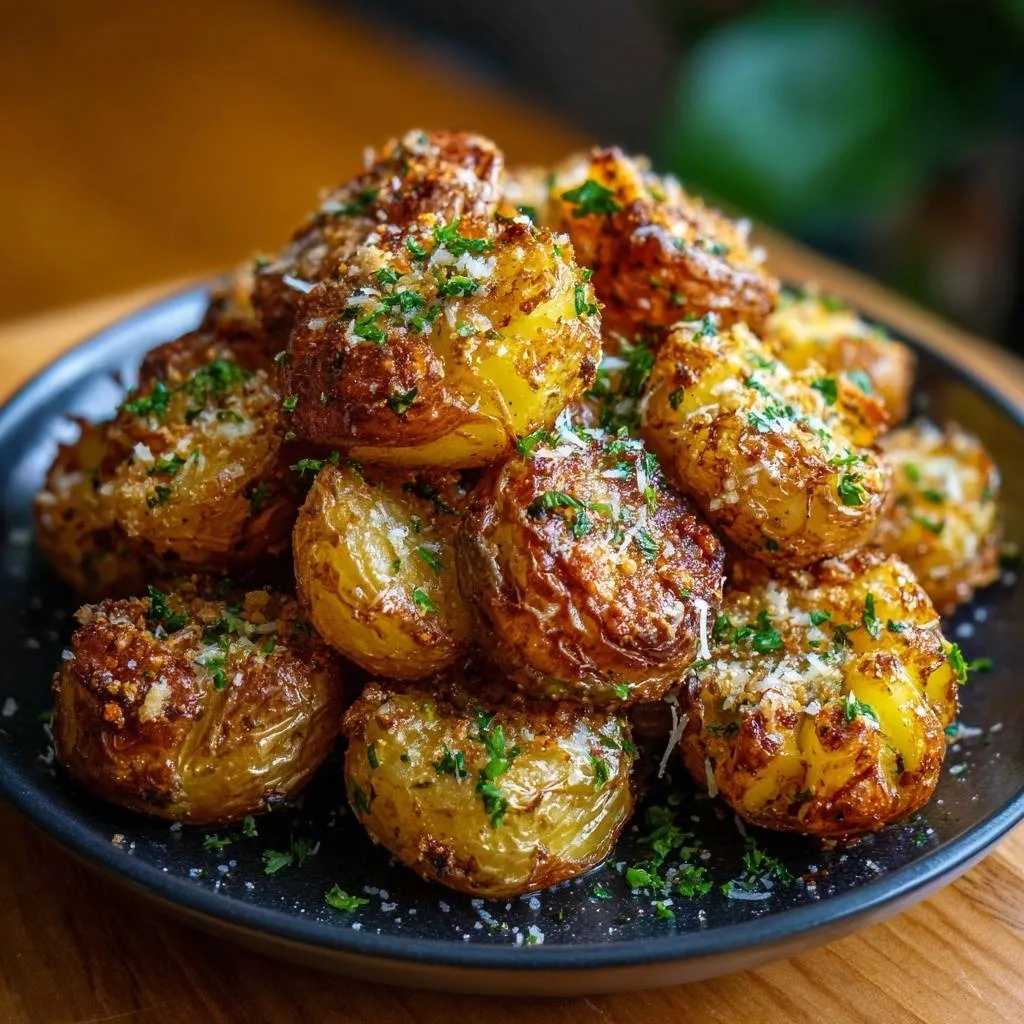
We have all experienced the disappointment of a soggy roasted potato. You expect a shattering, golden crunch, but you end up with something soft, greasy, or stubbornly stuck to the baking sheet. The secret to achieving that elusive, lacy Parmesan crust lies in a specific two-step moisture removal process that most home cooks overlook.
These Garlic Parmesan Smashed Potatoes rely on a textural contrast between a creamy, buttery interior and a jagged, salty exterior. By combining par-boiling with a dedicated steam-drying phase, you prepare the starch to crisp up perfectly. This technique ensures every nook and cranny of the potato becomes a vessel for toasted garlic and cheese.
For more crispy goodness, check out these garlic parmesan baby potatoes.
The real pro move here is the “rough-up” method. Once the potatoes are dry, you must toss them vigorously in your seasoning paste until the skins look slightly scuffed. Those tiny frayed edges of potato starch act like a sponge for the olive oil and cheese, creating a textured surface that fries against the hot pan for a superior crunch.
The Science of the Shattering Crunch
Achieving the perfect roast potato is actually a lesson in chemistry. When you par-boil the potatoes, you gelatinize the outer layer of starch. However, water is the ultimate enemy of the Maillard reaction, which is the chemical process that creates browning and complex flavors. If your potatoes go into the oven wet, they will spend the first ten minutes steaming rather than frying.
By allowing the potatoes to sit in a colander after boiling, you trigger steam evaporation. This dries out the surface and concentrates the starches. As the potatoes roast at high heat, these dried starches undergo retrogradation, which helps them form a rigid, crispy structure. Without this step, the moisture inside the potato migrates outward, resulting in a limp, sad texture.
Furthermore, the addition of finely grated Parmesan cheese introduces milk solids and proteins that brown beautifully. When these solids meet the hot oil on the baking sheet, they form a “lacy” skirt around the base of the potato. This isn’t just about flavor; it provides a structural “crunch” that supports the softer potato flesh inside.
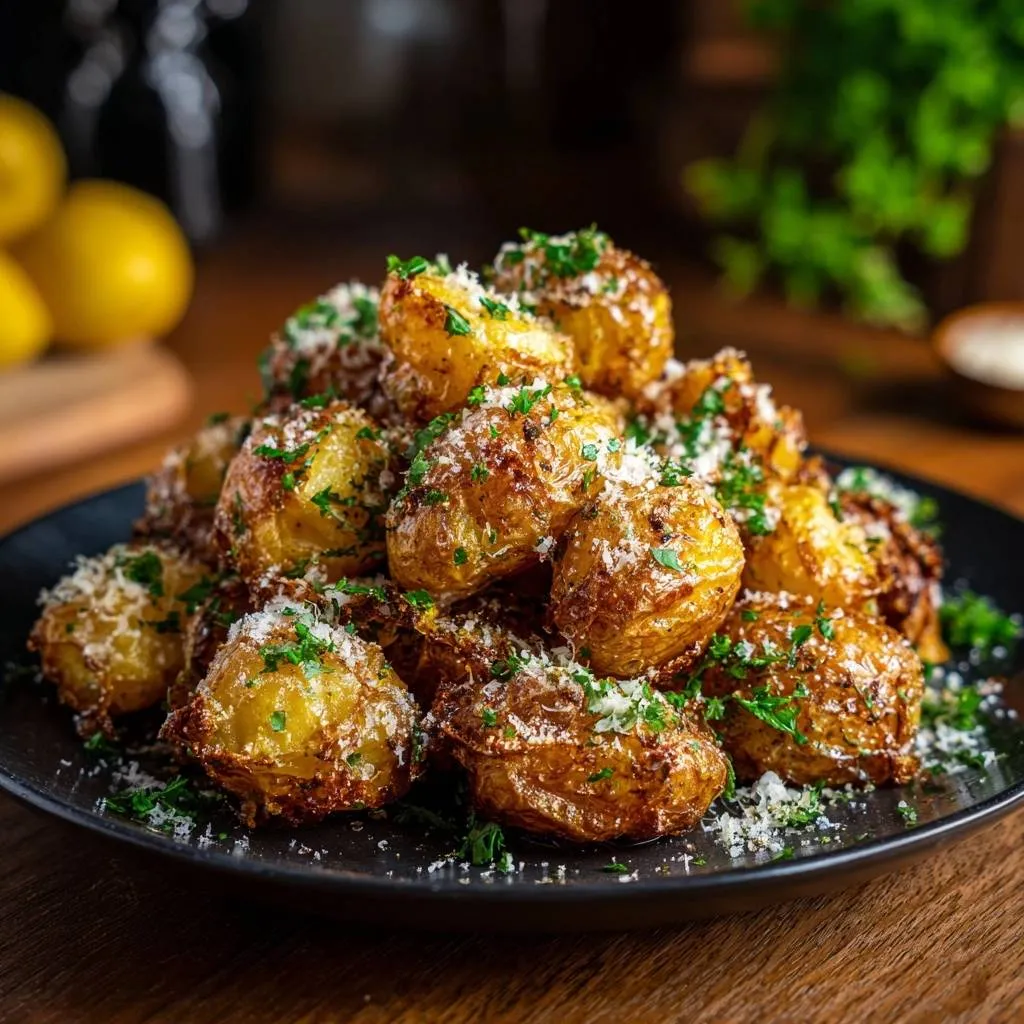
Essential Components for Garlic Parmesan Smashed Potatoes
Quality ingredients are the foundation of this dish, and it starts with the right spud. You want a potato that can hold its shape after being smashed but still offers a velvety mouthfeel. While many reach for whatever is in the pantry, choosing a specific variety will significantly change your results.
Freshness also matters when it comes to your aromatics. While we use dried spices for the roasting phase to prevent burning, the finishing touch of fresh parsley adds a necessary brightness. It cuts through the richness of the olive oil and the salty depth of the Parmesan, balancing the entire flavor profile.
Finally, pay attention to your cheese. Pre-shredded cheese in a bag often contains anti-caking agents like potato starch or cellulose. These additives can prevent the cheese from melting and then crisping into that desired lacy crust. Grating your own cheese or using a high-quality finely powdered Parmesan will yield a much better “paste” for coating.
Choosing the Right Potato Variety
Yukon Gold potatoes are the undisputed champions for smashing. They sit right in the middle of the starch spectrum, offering more creaminess than a waxy Red Bliss but more structural integrity than a floury Russet. Their naturally buttery flavor complements the garlic perfectly.
Fingerling potatoes are a fun alternative if you want smaller, bite-sized appetizers. However, avoid large baking potatoes. If you have to cut a potato in half to make it “baby-sized,” you lose the protective skin on one side, which often leads to the potato falling apart during the smashing process.
The Role of High-Smoke Point Fats
Extra virgin olive oil provides a wonderful peppery backnote to this recipe. While it has a lower smoke point than vegetable oil, the Parmesan cheese actually acts as a buffer. The cheese solids and potato starch absorb the oil, creating a barrier that allows the potatoes to roast at 425°F without the oil breaking down and tasting bitter.
Phase One: Par-Boiling and the Critical Steam-Dry
Always start your potatoes in a pot of cold, heavily salted water. If you drop them into already boiling water, the outside will overcook and turn mushy before the center is tender. Bring the pot to a gentle boil and cook until a fork slides into the center with just a tiny bit of resistance.
Once you drain the potatoes, do not rush to the next step. This is the most important part of the recipe. Let them sit in the colander for at least 5 to 8 minutes. You will see steam rising off them; that is moisture leaving the building. If you skip this, that moisture will trapped under the oil paste, and you will never get a true crunch.
While they dry, the skins will start to look slightly matte and wrinkled. This is exactly what you want. A dry potato skin is a skin that is ready to bond with the fat and seasonings. If they still look shiny or wet, give them another minute or two to air out.
Phase Two: Creating the Parmesan Infused Paste
In a large bowl, whisk together your oil, garlic powder, onion powder, salt, pepper, and the first measure of Parmesan. This should look like a thick, gritty sludge. We use garlic powder here because fresh minced garlic has a tendency to burn and turn bitter at high roasting temperatures.
Add your warm, dry potatoes to the bowl and toss them with some enthusiasm. You aren’t trying to mash them yet, but you do want them to knock against each other. This “scuffs” the surface, creating a starchy slurry that mixes with the Parmesan paste to form a thick coating.
This coating is what creates the “shattering” effect later. Every little bit of roughed-up potato skin becomes a crispy peak once it hits the oven. Ensure every potato is completely matte and covered in the gritty cheese mixture before you move them to the baking sheet.
Phase Three: The Smash and High-Heat Roasting
Transfer the coated potatoes to your greased baking sheet, leaving plenty of space between them. Use the bottom of a heavy glass or a flat potato masher to press down firmly. You are aiming for a thickness of about 1/2 inch. If you go too thin, the potato will become a chip; too thick, and it won’t get crispy enough.
If any of that delicious garlic-cheese paste is left in the bowl, spoon it directly onto the tops of the smashed potatoes. This extra layer will melt down the sides and create those crispy, lacy edges that everyone fights over. Roast them in the upper third of your oven for the best heat circulation.
Flip the potatoes halfway through the cooking time. Be gentle so you don’t break the crust, but don’t worry if a little cheese stays on the pan. By the end of the 30 minutes, the edges should be a deep mahogany brown, and the cheese should look like a crisp wafer.
Avoiding Common Smashed Potato Mistakes
The most common failure is over-boiling the potatoes. If they are falling apart in the colander, they will turn into mashed potatoes on the baking sheet rather than smashed potatoes. Aim for “just tender.” You want the skin to stay intact until the moment you manually press down on them.
Another pitfall is under-seasoning. Potatoes are incredibly bland on their own and absorb a lot of salt. Make sure your boiling water tastes like the sea, and don’t be shy with the sea salt in your oil paste. The Parmesan adds saltiness, but it still needs that extra boost to make the flavors pop.
Lastly, don’t crowd the pan. If the potatoes are touching, the steam escaping from one will soften the edge of the one next to it. Use two baking sheets if you have to. Airflow is your best friend when you are chasing a world-class crunch.
Preventing Pan Adhesion
Potatoes love to stick to metal. To prevent this, ensure your baking sheet is generously greased with oil. While parchment paper is great for easy cleanup, roasting the potatoes directly on a dark metal pan actually produces a superior, more even crust because metal conducts heat more efficiently than paper.
If you find the potatoes are sticking when you try to flip them, they might just need more time. Often, the potato will “release” itself from the pan once the crust has fully formed and hardened. Give it another three minutes and try again with a thin metal spatula.
Managing Oven Hot Spots
Most ovens have areas that are hotter than others, usually in the back corners. To ensure every potato is equally crispy, rotate your baking sheet 180 degrees when you flip the potatoes. This prevents the ones in the back from burning while the ones in the front stay pale.
Flavor Variations and Herb Substitutions
While garlic and Parmesan are a classic duo, you can easily adapt this method to other flavor profiles. For a smoky, Spanish-inspired version, swap the garlic powder for smoked paprika and use a sharp Manchego cheese instead of Parmesan. The technique remains exactly the same.
If you want something brighter, add a teaspoon of lemon zest to the oil paste and swap the parsley for fresh dill or chives at the end. You can also add a pinch of red pepper flakes if you like a little heat. Just remember to keep the cheese as the base, as it provides the structural crunch.
For a more earthy vibe, rosemary and thyme are excellent. Finely mince the fresh herbs and mix them into the oil paste. The oils in the herbs will infuse into the potatoes as they roast, creating a deeply aromatic side dish that pairs perfectly with roasted meats.
Main Course Pairings for Crispy Potatoes
These potatoes are so flavorful they can almost steal the show, so pair them with proteins that can hold their own. A simple roasted chicken with lemon and herbs is a natural fit. The juices from the chicken mingle beautifully with the garlic and cheese on the plate.
They also work exceptionally well with a seared steak or grilled lamb chops. If you are looking for a vegetarian option, serve them alongside a large Mediterranean salad and some grilled halloumi. The salty, crispy texture of the potatoes provides a great contrast to fresh, crunchy vegetables.
Expert Tips for Reheating and Storage
If you have leftovers, do not put them in the microwave. The microwave will turn that beautiful crust into a rubbery, chewy mess. Instead, store them in an airtight container in the fridge for up to three days. They stay safe to eat, but they will lose their initial crunch.
To bring them back to life, use an air fryer at 375°F for about 4 to 5 minutes. If you don’t have an air fryer, place them on a baking sheet in a 400°F oven for 10 minutes. This re-activates the fats and crisps the Parmesan back up to its original glory.
Troubleshooting Your Smashed Potatoes
Can I use large potatoes instead of baby potatoes?
It is not recommended. Large potatoes need to be cut into pieces to cook evenly, and once you cut a potato, you expose the starchy interior. This makes them much more likely to fall apart or turn into mush when you try to smash them. Baby Yukons have the perfect skin-to-flesh ratio for this dish.
Why is my Parmesan burning before the potato is crispy?
This usually happens if your oven rack is too high or if you are using a very oily, low-quality cheese. Try moving your rack to the center position. Also, ensure you are using finely grated Parmesan; large shreds have more surface area exposed to the air and tend to singe faster than a fine powder mixed into a paste.
Can I make these ahead of time?
Yes, you can par-boil and steam-dry the potatoes up to 24 hours in advance. Store the dried, un-smashed potatoes in the refrigerator. When you are ready to eat, toss them in the oil paste and proceed with the smashing and roasting. They might need an extra 5 minutes in the oven since they are starting from a cold temperature.
My potatoes are sticking to the masher; what do I do?
This is a common frustration! If the potatoes are sticking to the bottom of your glass or masher, place a small square of parchment paper over the potato before you press down. Alternatively, lightly coat the bottom of your smashing tool with a little bit of olive oil between every few potatoes to keep things moving smoothly.
Why aren’t my potatoes getting crispy on the bottom?
You likely have too much moisture or not enough oil. Ensure you don’t skip the steam-drying step in the colander. Also, make sure you are using a metal baking sheet. Glass or ceramic dishes do not get hot enough to properly fry the bottom of the potato, which is essential for that golden crust.
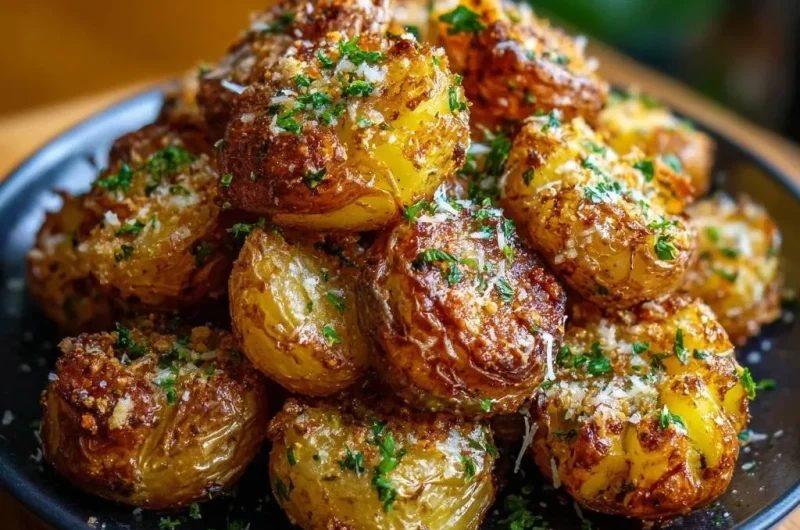
Smashed Potatoes
Course: Side DishCuisine: AmericanDifficulty: easy4
servings10
minutes45
minutes450
kcal55
MinutesA foolproof method for achieving ultra-crispy roasted potatoes. By par-boiling, steam-drying, and coating baby Yukon Golds in a garlic-parmesan paste, you create a textured, starchy crust that delivers a shattering crunch every time.
Ingredients
2 pounds baby Yukon Gold potatoes
1/3 cup extra virgin olive oil
1 teaspoon garlic powder
1/2 teaspoon onion powder
3/4 cup freshly grated Parmesan cheese (finely grated/powdered works best for the crust)
2 tablespoons chopped fresh parsley
1 teaspoon sea salt
1/2 teaspoon cracked black pepper
Directions
- Place potatoes in a large pot of cold salted water. Bring to a boil and cook for 15 to 20 minutes until fork-tender but not falling apart.
- Drain the potatoes and let them sit in the colander for 5 to 8 full minutes. This is the crucial step to prevent sogginess; you must let the surface steam dry completely.
- Preheat your oven to 425°F (220°C). Generously grease a large rimmed baking sheet with oil or non-stick spray.
- In a large mixing bowl, whisk together the olive oil, garlic powder, onion powder, salt, pepper, and 1/2 cup of the grated Parmesan cheese to create a thick, gritty paste.
- Add the dry, warm potatoes to the bowl and toss vigorously. You want the edges of the potatoes to slightly “scuff” and roughen up, which allows the Parmesan paste to cling to the nooks and crannies.
- Transfer the potatoes to the baking sheet. Use the bottom of a heavy glass or a potato masher to gently press down on each potato until it is about 1/2 inch thick. Ensure any leftover paste from the bowl is spooned onto the tops.
- Roast for 25 to 30 minutes, flipping halfway through, until the edges are deeply browned and the cheese has formed a dark, lacy crust.
- Remove from the oven and immediately sprinkle with the remaining 1/4 cup of Parmesan cheese and fresh parsley. The residual heat will melt the fresh cheese into the crispy layers.
- Serve hot, ensuring you scrape up the crispy cheese bits from the pan.
Notes
- The secret to the crunch is letting the potatoes steam dry in the colander for 5-8 minutes after boiling. This removes excess moisture that causes sogginess. Use finely grated Parmesan for the best crust formation.