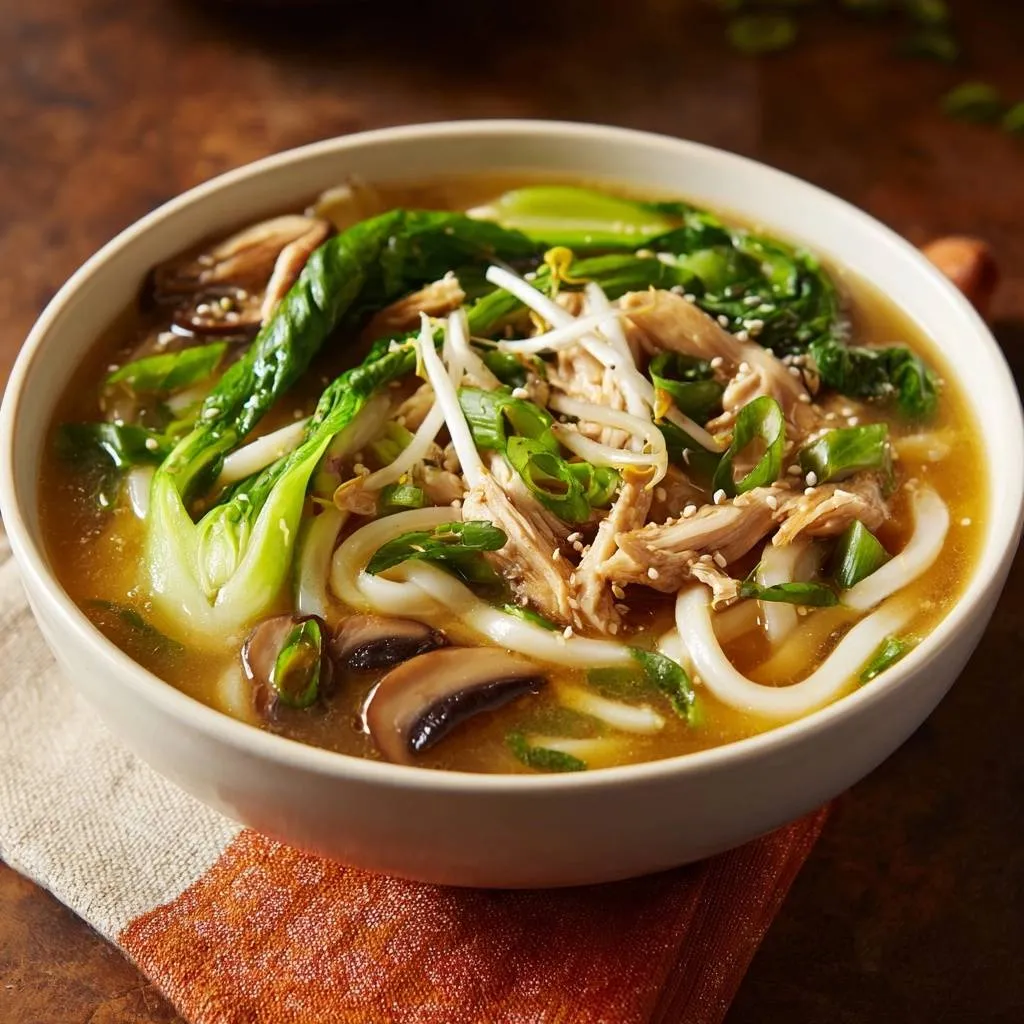
There is nothing quite like the restorative power of a steaming bowl of udon. When the broth is right, it feels like a warm hug from the inside out. However, most home cooks struggle with the transition from a “good” soup to a “restaurant-quality” bowl because of one major culprit: the noodle texture.
You have likely experienced the disappointment of a beautiful broth ruined by thick, gummy noodles that have absorbed too much liquid. This guide isn’t just a recipe; it’s a technical manual for achieving that elusive “mochi-mochi” bounce. We are going to fix the common mistakes that lead to mushy wheat and cloudy broth.
The secret to professional-grade udon lies in the temperature shock. By boiling the noodles separately and immediately hitting them with cold water, you lock in the structural integrity of the wheat. This prevents the surface starch from leaching into your soup, ensuring every spoonful of your ginger-infused base remains crystal clear and vibrant.
The Anatomy of Perfect Ginger Chicken Udon
A perfect bowl of udon is a study in balance. You want the sharp, spicy heat of fresh ginger to cut through the savory depth of the chicken broth. It’s a flavor profile that feels both light and incredibly satisfying, making it a staple for wellness and satiety.
The white miso paste plays a supporting role here, adding a whisper of umami and a beautiful golden hue without overpowering the delicate aromatics. When you combine this with the chewy resistance of the thick noodles, you create a dish that hits every sensory note from salty to spicy to savory.
Why Texture Defines the Udon Experience
In Japanese culinary culture, the term “mochi-mochi” describes a texture that is uniquely chewy, bouncy, and elastic. Unlike ramen, which is thinner and firmer, or rice noodles, which are soft and slippery, udon is prized for its substantial bite. It should feel like it’s fighting back just a little when you chew.
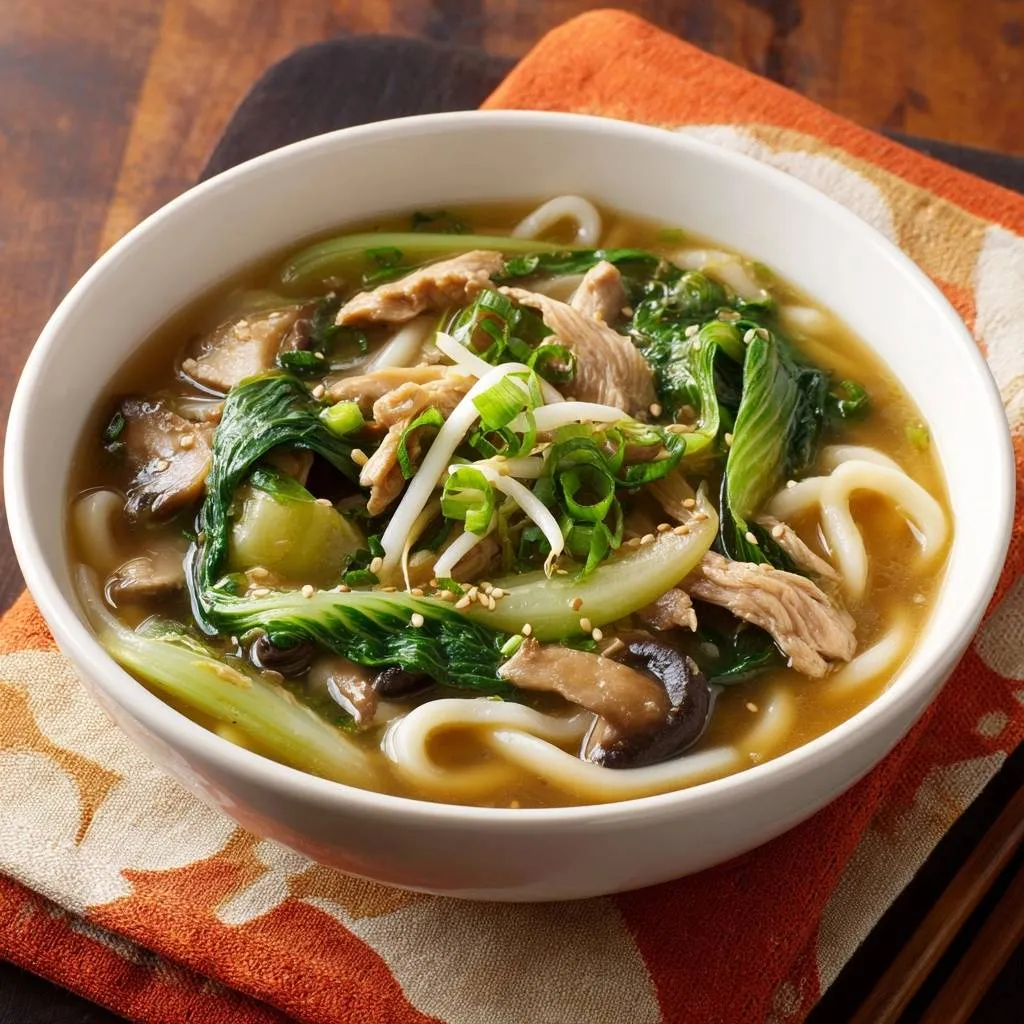
This texture is incredibly fragile. If you simmer udon directly in the broth, the outer layers of the noodle overcook while the center remains doughy. By the time you sit down to eat, the noodles have turned into a sponge, soaking up your precious soup and losing their signature bounce.
Essential Components for a Rich Ginger Broth
Your broth is the canvas for this dish, so quality matters. Using a low-sodium chicken broth gives you total control over the salt levels, allowing the soy sauce and miso to provide the seasoning. If you use a full-sodium broth, the final result might become unpleasantly salty as it simmers and reduces.
Freshness is non-negotiable when it comes to the aromatics. Jarred ginger or garlic paste often has an acidic, metallic aftertaste that can ruin a delicate soup. Grating fresh ginger releases the natural oils and juices, providing a clean, sharp heat that warms the throat without burning the tongue.
White miso is the preferred choice for this specific recipe. It is fermented for a shorter time than red or brown miso, resulting in a milder, sweeter flavor. It adds body to the broth, giving it a “creamy” mouthfeel without the need for dairy or heavy fats.
Selecting the Right Udon: Fresh vs. Frozen
If you have access to a well-stocked grocery store, look for frozen udon (often labeled Sanuki style). These are usually flash-frozen immediately after being made, which preserves the internal moisture and elasticity better than any other variety. They go from the freezer to the pot and come out perfectly chewy every time.
Shelf-stable, vacuum-packed noodles are convenient but can sometimes have a slightly sour preservative scent. If you use these, make sure to rinse them thoroughly in warm water before boiling to remove that coating. Dry udon is also an option, though it tends to be flatter and less “bouncy” than its fresh or frozen counterparts.
The Role of Aromatics and Umami Boosters
Shiitake mushrooms are more than just a vegetable in this soup; they are an umami powerhouse. When you sear them in the pot before adding the liquid, you trigger the Maillard reaction. This browning process creates a deep, earthy flavor that infuses the entire broth base.
If you enjoy the depth of shiitake flavor, you’ll appreciate the rich profile of creamy mushroom udon.
To incorporate the miso paste properly, never drop a cold clump directly into the pot. Instead, use the “slurry” method. Place the miso in a small bowl, add a ladle of hot broth, and whisk until it is completely smooth. Stirring this liquid back into the pot ensures the miso distributes evenly without leaving salty lumps at the bottom of your bowl.
Step-by-Step: Building the Ginger Chicken Base
Start by heating your vegetable oil until it shimmers. When you add the shiitakes, leave them alone for a minute or two. You want to see a deep brown crust form on the edges of the mushrooms. This is where the “meatiness” of the vegetarian components comes from.
Once the mushrooms are browned, lower the heat before adding your ginger and garlic. These aromatics are delicate and can turn bitter in seconds if they burn. You are looking for them to become soft and highly fragrant, which usually takes about 60 seconds of constant stirring.
Pour in your broth and soy sauce slowly, scraping the bottom of the pot to release any browned bits from the mushrooms. This “deglazing” ensures all that concentrated flavor ends up in your soup rather than stuck to the pan. Bring it to a gentle simmer, but don’t let it reach a rolling boil, which can make the broth cloudy.
The Cold-Shock Technique for Bouncy Noodles
This is the most important part of the process. Boiling noodles directly in the broth is a mistake because the surface starch acts as a thickener, turning your clear soup into a murky, heavy liquid. Furthermore, the noodles will continue to cook in the residual heat of the pot, leading to that dreaded gummy texture.
Instead, boil a separate pot of plain water. Drop your udon in and set a timer. You want to cook them just until they untangle and lose their raw flour taste. As soon as the timer goes off, drain them and immediately run them under cold tap water for at least 10 seconds.
This cold rinse serves two purposes. First, it stops the cooking process instantly, “locking” the noodle at the perfect chew. Second, it washes away the excess starch. When you touch the noodles after the rinse, they should feel slick and firm, not sticky or slimy.
Timing the Boil for Maximum Chew
The golden rule for soup noodles is to cook them for exactly one minute less than the package directions suggest. If the bag says three minutes, pull them at two. Remember, the noodles will be hit with boiling broth later, which will finish the cooking process perfectly.
If you are using frozen udon, they often only need about 60 to 90 seconds to thaw and soften in boiling water. Keep a close eye on them; as soon as the block breaks apart into individual strands, they are usually ready for their cold bath.
Flash-Warming: The Final Assembly Secret
You might worry that putting cold noodles into a bowl will result in a lukewarm dinner. This is where the thermodynamics of “flash-warming” come in. By dividing the cold, rinsed noodles into deep ceramic bowls and pouring piping hot broth over them, you achieve the perfect eating temperature.
The intense heat of the broth warms the exterior of the noodle instantly, while the core remains firm and chewy. This method ensures that the first bite is just as good as the last, as the noodles won’t have time to break down or become waterlogged while you eat.
Integrating Proteins and Vibrant Greens
Using poached chicken breast is a great way to keep the dish lean and clean. Poaching the meat separately in water or a little broth ensures it stays tender and easy to shred. If you overcook the chicken in the main soup pot, it can become rubbery and dry.
Round Out Your Meal
To complement your ginger chicken udon soup, consider these other chicken dishes.
- If you enjoyed the ginger and chicken in your soup, you might like the sesame ginger chicken salad, which uses a similar flavor base.
- For another take on chicken, explore the crispy Asian chicken salad for a satisfying crunch.
For the baby bok choy, timing is everything. You want the leaves to be wilted and soft, but the white stems should still have a distinct “snap” when you bite into them. Adding them to the simmering broth for just the last two minutes of cooking keeps them a vibrant emerald green.
Flavor Variations and Ingredient Swaps
If you want to add some heat to your bowl, a drizzle of chili oil or a spoonful of chili crisp at the end works wonders. For extra crunch, thinly sliced radishes or even a few water chestnuts can add a refreshing contrast to the soft noodles and tender chicken.
For those avoiding meat, firm tofu cubes make an excellent protein swap. Just press the tofu to remove excess water and sear it alongside the mushrooms for the best texture. If you need a seafood version, peeled shrimp can be dropped into the simmering broth for the final 3 minutes until they turn pink and opaque.
Avoiding Common Ginger Chicken Udon Mistakes
If your broth looks cloudy, you likely skipped the cold rinse or let the soup reach a violent boil. Keep the heat at a gentle simmer to maintain clarity. If the ginger flavor feels bitter, you probably browned it too much at the start; next time, ensure the heat is low when the aromatics hit the oil.
Flat flavor is usually a result of missing the balance of salt and acid. If the soup tastes “boring,” try adding an extra teaspoon of soy sauce or a tiny splash of rice vinegar. The acid in the vinegar can brighten the ginger and miso, making the whole dish pop.
Equipment: Why a Heavy-Bottomed Pot Matters
A heavy-bottomed pot, like a Dutch oven or a thick stainless steel stockpot, is essential for heat retention. When you add cold ingredients like bok choy or shredded chicken, a thin pot will lose its temperature rapidly, stalling the cooking process.
A heavy pot maintains a steady, even heat, which is crucial for a gentle simmer. It also prevents “hot spots” that can burn your garlic and ginger during the initial sautéing phase. If you have a ceramic or cast-iron pot, this is the perfect time to use it.
Expert Tips for Professional Presentation
To make your bowl look like it came from a high-end noodle shop, pay attention to the garnishes. Slice your green onions on a sharp bias (diagonal) to create long, elegant shards. This looks much more sophisticated than simple circles and provides a better crunch.
When assembling the bowl, place the bean sprouts in a small mound in the center to create height. Pour the broth around the sides so you don’t wash the garnishes away. Using deep, heavy ceramic bowls will help retain the heat of the broth, ensuring your soup stays hot until the very last drop.
Frequently Asked Questions
Can I use chicken thighs instead of breast?
Yes, chicken thighs are a fantastic alternative. They have a higher fat content, which will make the broth feel richer and more “silky.” However, keep in mind that thighs may release more fat into the soup, which can slightly cloud the broth compared to the lean profile of chicken breast.
For more chicken ideas, check out this soy glazed chicken with bok choy.
How do I store leftovers without noodles getting soggy?
The most important rule for leftovers is to store the broth and the noodles in separate airtight containers. If they sit together in the fridge, the noodles will continue to absorb the liquid and turn into mush. When you are ready to eat, heat the broth until boiling, then drop the cold noodles in for 30 seconds to warm through.
Is there a substitute for Miso paste?
While miso provides a unique depth, you can substitute it with an extra tablespoon of soy sauce or a teaspoon of dashi granules. However, you will lose the slightly creamy body and the fermented sweetness that miso provides. Avoid using tahini or other nut butters, as they will change the flavor profile too drastically.
What is the best way to grate fresh ginger?
Use a microplane or a dedicated ceramic ginger grater. These tools turn the ginger into a fine paste and leave the tough, woody fibers behind. If you don’t have one, you can finely mince the ginger with a knife, but a grater provides a much smoother texture in the final broth.
Can I make this Ginger Chicken Udon Soup gluten-free?
To make this gluten-free, you must swap the wheat-based udon for thick rice noodles or brown rice udon. Additionally, replace the soy sauce with tamari. Always check your miso paste label, as some varieties are fermented with barley or rye, which contain gluten; look for miso labeled as “gluten-free” or made with rice (kome-miso).
Ginger Chicken Udon
Course: Main CourseCuisine: Japanese InspiredDifficulty: easy2
servings15
minutes20
minutes510
kcal35
MinutesA restaurant-quality udon soup featuring a rich ginger and miso broth, shredded chicken, and fresh vegetables. The recipe uses a specific boiling and rinsing method to ensure noodles stay chewy and the broth remains clear.
Ingredients
2 packs (approx. 7oz each) fresh or frozen Udon noodles
1 pound chicken breast, poached and shredded
6 cups low-sodium chicken broth
1 tablespoon white miso paste (for depth and color)
2 cups baby bok choy, halved lengthwise
1 cup shiitake mushrooms, sliced
1 cup fresh bean sprouts
2 green onions, sliced on a bias
2 tablespoons fresh ginger, grated
3 cloves garlic, minced
1 tablespoon soy sauce
1 teaspoon toasted sesame oil
1 tablespoon vegetable oil
1 teaspoon toasted sesame seeds
Black pepper to taste
Directions
- Heat vegetable oil in a large pot over medium-high heat. Add the sliced shiitake mushrooms and sear until browned and tender.
- Lower the heat to medium. Add the grated ginger and minced garlic, sautéing for 1 minute until highly fragrant.
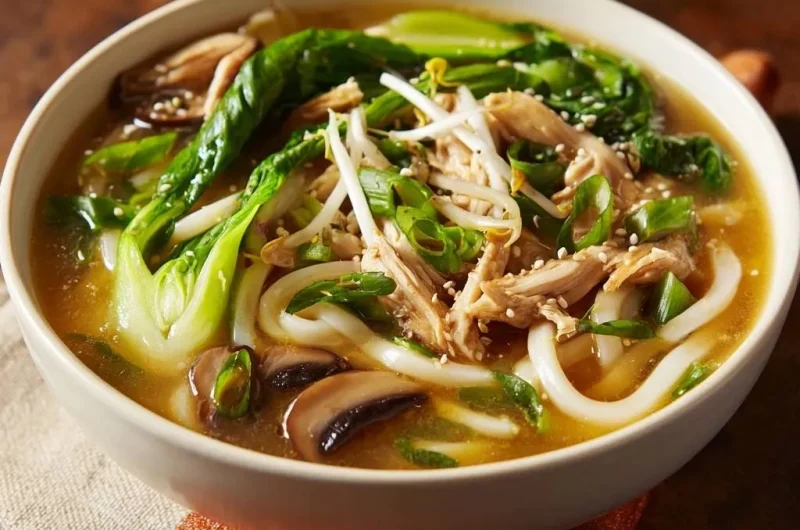
- Pour in the chicken broth and soy sauce. Bring to a simmer. In a small bowl, whisk the miso paste with a ladle of hot broth until smooth, then stir it back into the pot. This creates the rich, golden hue seen in the image.
- To solve the gummy noodle problem, do not cook the udon in the broth. Instead, boil a separate pot of water. Drop the udon in for exactly 2 minutes (or 1 minute less than the package directions).
- Immediately drain the noodles and rinse them under cold running water for 10 seconds. This removes excess surface starch that makes soup cloudy and prevents the noodles from continuing to cook into a mushy texture.
- Add the halved baby bok choy to the simmering broth for 2 minutes until the leaves are wilted but the stems remain crisp and vibrant green. Stir in the sesame oil.
- Divide the cold, rinsed noodles into two deep bowls. Arrange the shredded chicken and a handful of fresh bean sprouts on top.
- Ladle the piping hot broth, mushrooms, and bok choy over the noodles. The intense heat of the broth will flash-warm the noodles to the perfect eating temperature without degrading their structural integrity.
- Garnish generously with sliced green onions and toasted sesame seeds. Serve immediately.
Notes
- To prevent gummy noodles, always cook them in a separate pot of water and rinse with cold water before adding to the serving bowl. Do not boil the noodles directly in the soup broth.