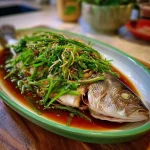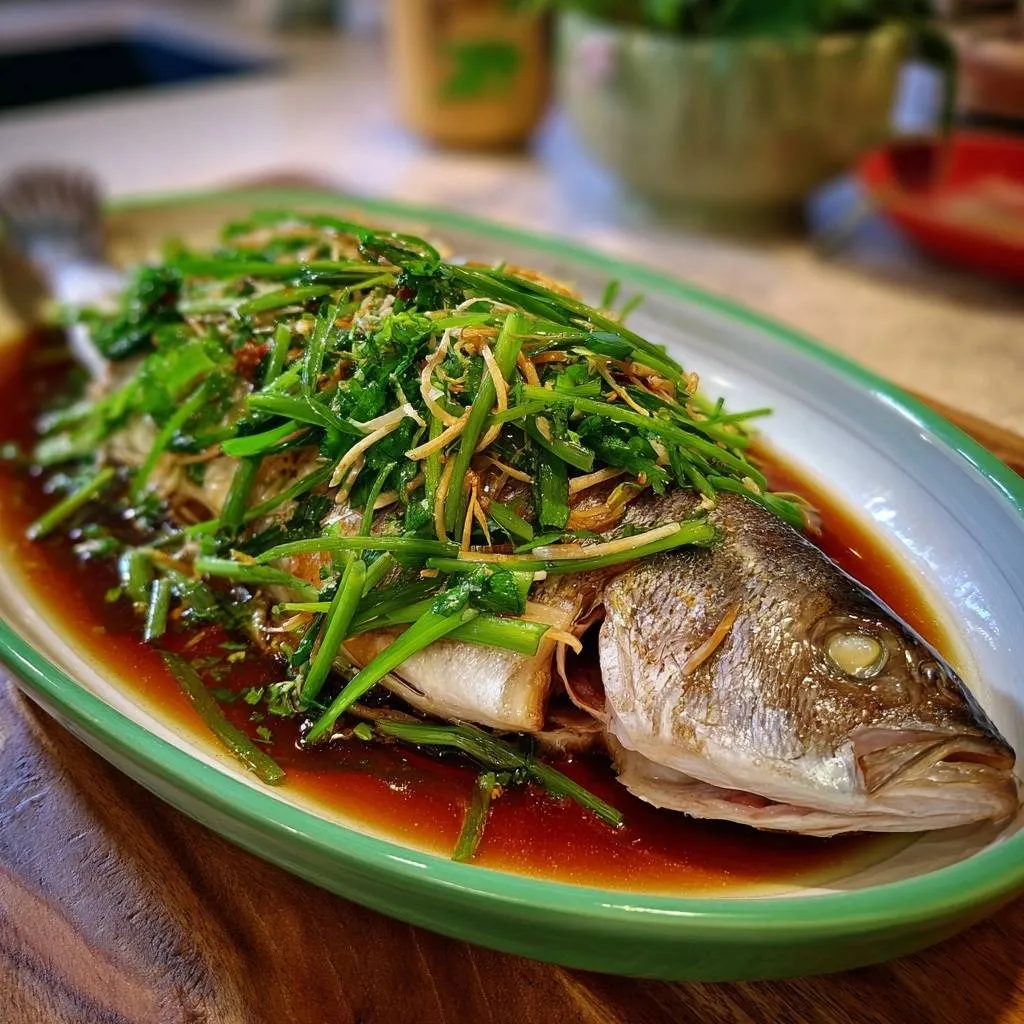
The sound of smoking hot oil hitting fresh ginger and scallions is a signal that dinner is going to be spectacular. However, many home cooks shy away from steaming a whole fish because they fear that dreaded “muddy” or overly fishy aftertaste. When done correctly, the meat should be as silky as custard and taste incredibly clean and sweet.
For another flavorful Asian-inspired dish with similar spice notes, check out spicy sesame noodles.
The secret to achieving that high-end Cantonese restaurant quality isn’t just about the freshness of the catch. It actually comes down to a professional technique called the “first water discard.” By removing the bitter, cloudy juices that collect during the initial steam, you strip away the impurities and leave only the pure essence of the fish.
I’ve found that the most common mistake is letting the fish sit in its own juices while serving. Those juices contain proteins that coagulate and create a heavy, unpleasant smell. If you want that delicate, melt-in-your-mouth texture, you must drain the plate completely before adding your seasoned soy sauce. This one simple step changes everything.
For another great way to prepare white fish, check out this juicy pan-seared white fish.
Selecting the Best White Fish for Steaming
Choosing the right fish is the foundation of this dish. You want a white-fleshed fish with a lean to medium fat content. Sea Bass is a top-tier choice because its high collagen content creates a buttery mouthfeel. Branzino is another fantastic option for its mild flavor, while Snapper offers a slightly firmer, flakey texture that holds up well to the steam.
Avoid oily fish like salmon or mackerel for this specific preparation. The steaming process can make oily fish feel heavy and greasy rather than light and clean. When you’re at the market, look for clear, bulging eyes and bright red gills. The flesh should feel firm to the touch and spring back immediately when pressed.
If the fish smells like the ocean, it’s perfect. If it smells “fishy” before you even buy it, keep looking. A fresh whole fish should have a neutral, briny scent. Ask your fishmonger to scale and gut the fish for you to save time, but make sure they leave the head and tail on for the best flavor and presentation.
Essential Aromatics and the Soy Base
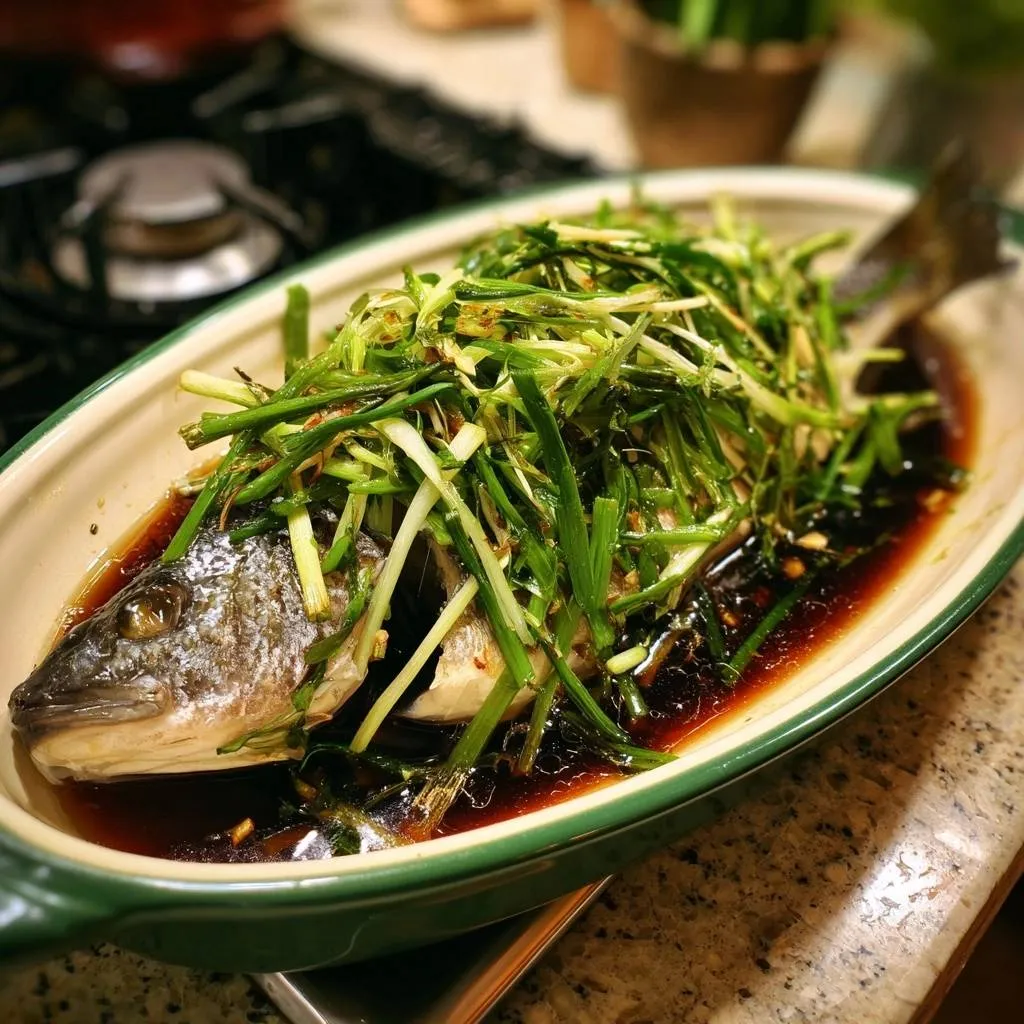
Ginger is your best friend in this recipe. When you julienne it into fine matchsticks, it releases juices that neutralize any residual odors during the steaming process. It provides a sharp, warm contrast to the savory soy sauce. Use plenty of green onions and cilantro stems to create a fragrant environment inside the steamer.
The sauce is a delicate balance of light soy sauce and seasoned seafood soy sauce. Light soy provides the salt, while the seasoned version adds a hint of sweetness and umami depth. If you can’t find seasoned seafood soy, you can mimic it by adding a pinch of sugar and a drop of mushroom extract to your regular light soy.
White pepper is a non-negotiable ingredient here. Unlike black pepper, which can be gritty and visually distracting, white pepper offers a floral, sharp heat that blends seamlessly into the sauce. It enhances the aromatics without overpowering the delicate sweetness of the white fish meat.
The Importance of Neutral High-Smoke Point Oils
You need an oil that can handle high heat without breaking down or adding its own flavor. Vegetable, grapeseed, or peanut oils are ideal because they have high smoke points. Avoid olive oil, as its distinct flavor clashes with the soy, and sesame oil, which will burn and turn bitter if heated to the smoking point.
The oil must be shimmering and just starting to send up a tiny wisp of smoke. This heat is necessary to flash-fry the raw aromatics on top of the fish. If the oil isn’t hot enough, you’ll end up with greasy herbs instead of a fragrant, infused sauce. That signature sizzle is the sound of the essential oils being released.
Preparation: Scoring and Stuffing for Even Heat
Even though the fish is going into a moist environment, you must pat it completely dry with paper towels first. Removing surface moisture allows the aromatics to stick better and prevents the skin from becoming soggy. Don’t forget to dry the inside of the cavity as well.
Use a sharp knife to make three shallow diagonal slashes on both sides of the fish. These scores serve two purposes. Firstly, they allow the steam to penetrate the thickest parts of the fish so the backbone cooks at the same rate as the thin tail. Secondly, they provide little pockets for the soy sauce to seep into later.
Stuff the cavity with ginger and cilantro stems. This seasons the fish from the inside out. By placing the fish on a bed of scallions and ginger on the plate, you lift it up slightly. This allows the steam to circulate 360 degrees, ensuring the bottom of the fish doesn’t get mushy while the top cooks.
The Steaming Process: Timing and Temperature Control
Whether you use a traditional bamboo steamer or a metal rack in a wok, the water must be at a rolling boil before the fish goes in. High, consistent heat is the key to a silky texture. If the heat is too low, the fish will “stew” in its own juices, resulting in a rubbery texture.
A 1.5-pound fish usually takes about 8 minutes, while a 2-pound fish may need 10 to 12 minutes. You can check for doneness by inserting a chopstick into the thickest part of the meat. If it slides through to the bone with no resistance, it’s ready. The meat should look opaque and pull away from the bone easily.
Keep the lid tightly sealed during the entire process. Every time you lift the lid, you lose the built-up pressure and temperature, which can lead to uneven cooking. Trust the timer and only check the fish once the minimum suggested time has passed. The steam should be vigorous and visible throughout the cook.
The Critical Technique: Discarding the First Water
Once the timer goes off, you’ll notice a pool of cloudy, greyish liquid at the bottom of the steaming platter. This liquid is full of albumin and trimethylamine. These are the compounds responsible for that “old fish” smell. If you leave this liquid on the plate, it will dilute your sauce and ruin the flavor of the dish.
Carefully remove the platter from the steamer using heat-proof mitts or a plate gripper. Hold the fish in place with a spatula and tilt the plate over the sink to drain every last drop of that liquid. It might feel like you’re pouring away flavor, but you’re actually pouring away the source of the fishy aftertaste.
At this point, you should also discard the wilted ginger and scallions that were underneath the fish. They have done their job of absorbing odors and providing a lift. You want a clean slate for the fresh aromatics and the final sauce. This step is what separates a home-cooked meal from a professional restaurant dish.
Flash-Searing Aromatics for Maximum Fragrance
After draining the plate, pour your soy sauce mixture around the base of the fish. Do not pour it directly over the skin, as you want to keep the skin intact and ready for the hot oil. Pile a fresh mound of julienned ginger, shredded scallions, and cilantro leaves directly on top of the fish.
Heat your neutral oil in a small saucepan until it is shimmering. When you pour the smoking oil over the fresh herbs, they should sizzle violently. This process flash-cooks the aromatics in seconds, wilting them just enough to release their bright, peppery oils into the soy sauce below.
This creates an instant emulsion between the hot oil and the soy sauce. The result is a silky, fragrant dressing that coats the fish without being greasy. The contrast between the hot, seasoned oil and the cool, tender meat is the hallmark of a perfectly executed steamed fish. Serve it immediately while the sizzle is still fresh.
Troubleshooting Common Steaming Obstacles
If you find the fish is sticking to the plate, it usually means you didn’t use enough aromatics as a “bed” or the plate wasn’t clean. You can lightly brush the plate with oil before adding the fish next time. If the meat is still pink or translucent near the bone, simply pop it back into the steamer for another 2 minutes.
Sometimes the oil doesn’t sizzle when you pour it. This happens if the oil wasn’t hot enough or if the herbs were too wet. Make sure your aromatics are patted dry after washing. If the oil isn’t shimmering, it isn’t ready. You want to see a tiny bit of smoke rising from the pan before you make the pour.
If the skin bursts during steaming, don’t worry! This usually happens if the heat was a bit too intense or the slashes weren’t deep enough. You can easily hide any cosmetic tears with the mound of fresh herbs and ginger. The flavor will still be incredible regardless of a few cracks in the skin.
Optimal Side Dishes for a Balanced Meal
Steamed jasmine rice is the absolute best companion for this dish. The long grains are perfect for soaking up the ginger-infused soy sauce and the fragrant oil. I like to spoon extra sauce over my rice so every bite is packed with umami. It provides a neutral base that lets the fish shine.
Complementary Dishes
To round out your meal featuring the Ginger Soy Steamed Whole Fish, consider these refreshing and comforting additions.
- For a cool contrast, try a Refreshing Cucumber Salad that complements the delicate flavors of the fish.
- To add a warm starter, this Classic Wonton Soup offers a comforting broth and satisfying dumplings.
To balance the richness of the oil, serve some crisp greens on the side. Baby bok choy or gai lan (Chinese broccoli) steamed quickly and drizzled with a little oyster sauce provides a great textural crunch. The bitterness of the greens cuts through the savory sauce, making the whole meal feel light and healthy.
Expert Tips for Presentation and Service
In many cultures, serving a whole fish is a sign of abundance and respect. When you bring the dish to the table, the head should ideally face the guest of honor. If you’re nervous about de-boning, use two spoons to gently lift the top fillet away from the spine. It should come off in large, clean pieces.
Once the top fillet is gone, you can lift the entire skeleton away by the tail, leaving the bottom fillet perfectly intact on the plate. Don’t forget the “cheek meat” located just below the eyes. It is widely considered the most tender and flavorful part of the entire fish. It’s a small prize for the person who knows where to look!
Frequently Asked Questions
Can I use fish fillets instead of a whole fish?
You can use thick fillets like cod or halibut, but you’ll miss out on the collagen and flavor that comes from the bones and head. Reduce the steaming time to about 5-7 minutes depending on thickness. Be extra careful when draining the liquid, as fillets are more fragile than a whole fish and can break apart easily.
What if I don’t have a steamer large enough for the fish?
You can create a makeshift steamer using a large wok or a deep roasting pan. Place three balls of crumpled aluminum foil or a small ceramic bowl upside down in the bottom of the pan. Fill with an inch of water and rest your plate on top of the foil or bowl. Cover the whole setup tightly with a lid or heavy-duty foil to trap the steam.
Is there a substitute for seasoned seafood soy sauce?
Yes, you can make a quick version at home. Mix 3 tablespoons of light soy sauce with 1 tablespoon of water, 1/2 teaspoon of sugar, and a tiny pinch of bouillon powder or mushroom powder. Simmer it for one minute until the sugar dissolves. This provides the slightly sweet, complex profile that standard soy sauce lacks on its own.
How do I store and reheat leftovers?
Steamed fish is best enjoyed immediately because the texture of the meat changes when reheated. If you have leftovers, store them in an airtight container in the fridge for up to one day. Instead of microwaving, which makes the fish rubbery, flake the cold meat into a pan of hot ginger fried rice. The residual heat from the rice will warm the fish gently without ruining the texture.
Steamed Whole Fish
Course: Main CourseCuisine: ChineseDifficulty: medium2
to 4 servings15
minutes12
minutes320
kcal27
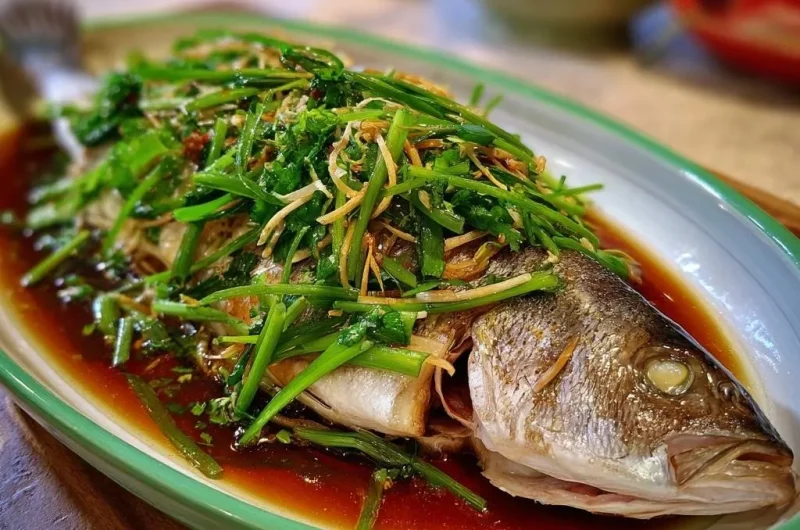
MinutesA delicate and aromatic steamed whole fish dish featuring sea bass or snapper, topped with flash-seared ginger, green onions, and cilantro in a savory soy-based sauce.
Ingredients
1 whole white fish (1.5 to 2 lbs sea bass, snapper, or branzino), cleaned and scaled
3 inches fresh ginger, peeled and julienned into fine matchsticks
6 green onions, cut into 3-inch lengths and shredded into fine slivers
1 large bunch fresh cilantro, stems and leaves separated (stems cut into 2-inch lengths)
4 tablespoons light soy sauce
1 tablespoon seasoned seafood soy sauce (or extra light soy sauce)
1 teaspoon sugar
1/4 teaspoon white pepper
4 tablespoons neutral oil (like vegetable or grapeseed oil)
2 tablespoons water
Directions
- Pat the fish completely dry with paper towels inside and out. Make three shallow diagonal slashes on both sides of the fish to ensure even cooking and flavor penetration.
- Place one-third of the ginger and the cilantro stems inside the fish cavity. Place another third of the ginger and half of the green onions on a heatproof steaming platter to act as a bed for the fish, allowing steam to circulate underneath.
- Set up a steamer over boiling water. Place the platter inside, cover tightly, and steam on high heat for 8 to 10 minutes. The fish is done when the meat is opaque at the thickest part and flakes easily.
- This is the critical step: Carefully remove the platter from the steamer. You will see a pool of cloudy liquid at the bottom of the dish. Drain this liquid away completely and discard the cooked ginger and onions from the platter. This liquid contains the “fishy” impurities you want to avoid.
- In a small bowl, whisk together the soy sauce, seasoned seafood soy sauce, sugar, white pepper, and water until the sugar dissolves. Pour this mixture onto the base of the platter around the fish (not directly over the skin).
- Pile the remaining fresh ginger, shredded green onions, and the fresh cilantro leaves in a high mound directly on top of the fish.
- In a small saucepan, heat the neutral oil until it is shimmering and just starting to smoke.
- Carefully pour the smoking hot oil directly over the fresh aromatics on top of the fish. You should hear a loud, vigorous sizzle. This flash-sears the herbs and ginger, releasing their essential oils into the soy sauce below to create a fragrant, silky sauce. Serve immediately with steamed rice.
Notes
- The secret to success is discarding the cloudy liquid after the initial steam; this removes the bitter, fishy impurities. Ensure the oil is smoking hot before pouring it over the aromatics to properly release their flavors.