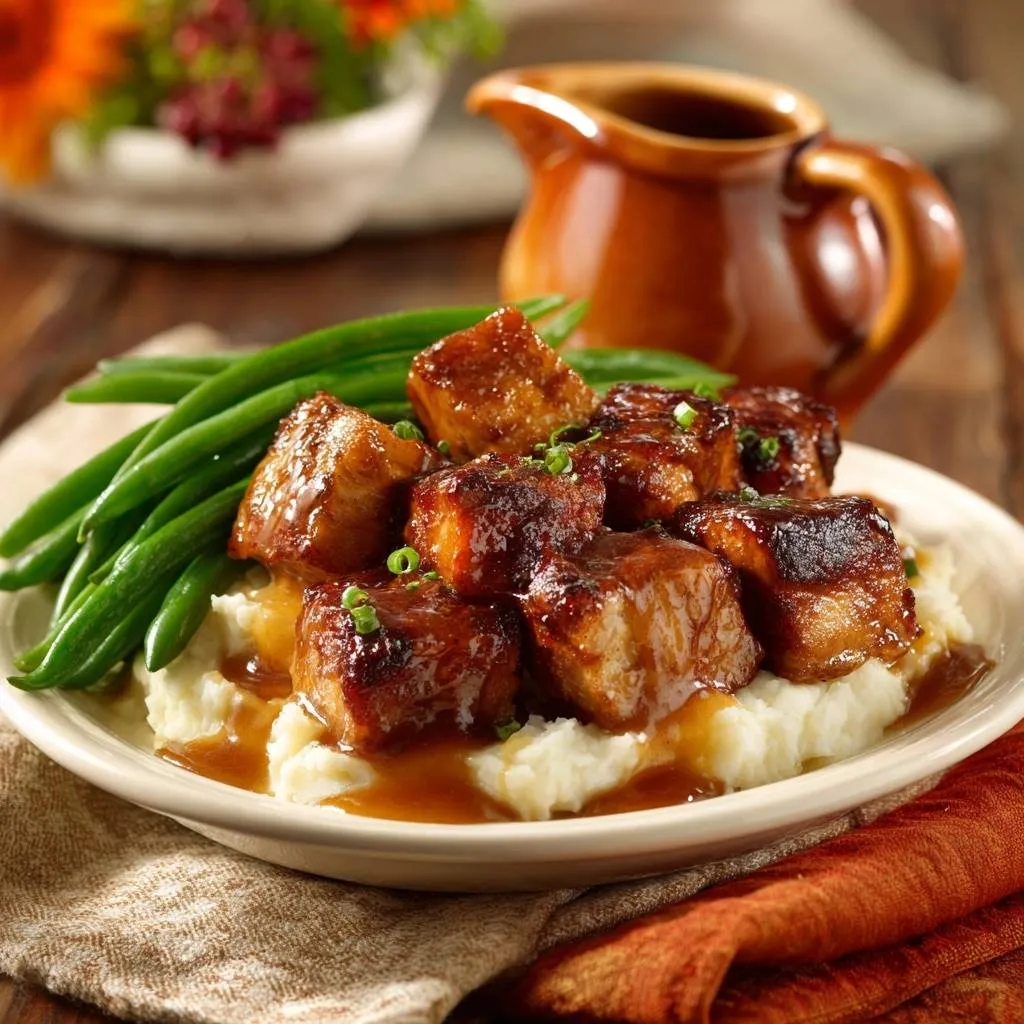
We’ve all been there. You buy a beautiful cut of sirloin, sear it with high hopes, and end up with a plate of rubbery, grey cubes that require a workout just to chew. It’s frustrating because you know that beef has the potential to be the star of the show. The secret to fixing this isn’t just buying more expensive meat; it’s about mastering the science of the sear and the velvet touch of a proper glaze.
For more ideas on preparing beef bites, explore seared beef bites with baby potatoes.
This recipe transforms humble beef tips into a dish that feels like a high-end steakhouse favorite. By using a light dusting of cornstarch, we create a micro-thin, crispy crust that acts like a sponge for the savory-sweet glaze. When that crispy exterior meets the silky, buttery texture of homemade mashed potatoes, it creates a mouthfeel that is pure comfort. You’ll get that satisfying crunch followed by a tender, juicy center in every single bite.
The real trick to success here is patience during the searing phase. Most home cooks move the meat too early, which prevents the crust from forming. I’ve found that letting the beef sit undisturbed in a screaming hot pan for at least two minutes is the only way to lock in those juices. Once you see that deep mahogany color, you’ll know you’ve nailed the texture that separates a mediocre meal from a masterpiece.
For a similar sweet and savory taste, explore this sticky orange glazed meatballs recipe.
The Science of Tenderness: Why Beef Tips Get Tough
To understand why beef gets tough, we have to look at what happens inside the skillet. When meat hits a pan, the heat causes the muscle fibers to contract and squeeze out moisture. If your pan isn’t hot enough, or if the meat is crowded, that moisture pools at the bottom. Instead of searing, your beef ends up “steaming” in its own juices, resulting in a grey color and a bouncy, rubbery texture.
The Maillard reaction is the chemical process responsible for that delicious browned crust we crave. This reaction only happens at high temperatures and in the absence of surface moisture. This is why the “pat dry” step is absolutely non-negotiable. If there is even a thin film of water on the beef, the energy of the pan goes into boiling that water rather than browning the proteins. You want the heat to hit the meat directly and instantly.
Complementary Dishes
To round out your meal centered on glazed beef tips, consider these flavorful options.
- If you enjoyed the glaze on your beef, you might also like these spicy glazed baby potatoes, offering a similar flavor profile with a little kick.
- For another way to enjoy glazed vegetables alongside your main, try the glazed sheet pan sweet potatoes and green beans, a simple and colorful addition.
Furthermore, overcooking is the enemy of the sirloin tip. Because these are small cubes, they cook through very quickly. By searing at a very high heat for a short duration, you achieve a flavorful exterior while keeping the interior medium-rare to medium. This balance ensures the fibers stay relaxed and tender rather than tightening into knots. Resting the meat after searing is the final safeguard, allowing those juices to redistribute so they don’t run out the moment you take a bite.
The Role of Cornstarch in Meat Texturization
Cornstarch is the secret weapon in this recipe, acting as a sacrificial barrier between the intense heat and the delicate meat fibers. This technique, often inspired by “velveting” in professional kitchens, allows the beef to brown much faster than it would on its own. The starch absorbs any microscopic bits of surface moisture and fries into a delicate, golden shell that protects the internal proteins from drying out.
Unlike flour, which can become gummy or taste “pasty” if not cooked out perfectly, cornstarch yields a much lighter result. It also plays a dual role. As the beef rests, some of that starch remains in the pan or on the surface of the meat. When you add your liquids, that residual starch naturally thickens the sauce into a glossy, translucent glaze. It creates a beautiful sheen that clings to the beef rather than sliding off to the bottom of the plate.
Essential Components for Glazed Beef Tips and Mashed Potatoes
Choosing the right cut of meat is the foundation of this dish. While ribeye offers incredible marbling and flavor, a good quality top sirloin is often the more practical choice for beef tips. Sirloin is lean but tender enough for quick cooking, provided you don’t overdo it. If you use ribeye, be prepared for a richer, fattier experience, which some people prefer. Whichever you choose, ensure the cubes are uniform in size so they cook at the same rate.
The glaze relies on a balance of salt, sugar, and acid. We use balsamic vinegar here because it offers a complex, fruity acidity that cuts through the richness of the beef better than a sharp lemon juice would. When combined with soy sauce and honey, it creates a deeply savory profile with a hint of tang. For the cooking fat, skip the butter or extra virgin olive oil for the initial sear. You need a high-smoke point oil like vegetable, canola, or grapeseed oil. These oils can handle the high heat required for a proper sear without burning or smoking you out of the kitchen.
Don’t overlook the quality of your beef broth. Since we are reducing the liquid to concentrate the flavors, a low-sodium broth is usually the best bet. This gives you total control over the saltiness of the final glaze. If the broth is too salty to start with, the reduction might become overpowering. Fresh chives at the end aren’t just for looks; they provide a necessary pop of oniony freshness that wakes up the heavy, savory flavors of the meat and potatoes.
Selecting the Right Potato for the Base
The potatoes aren’t just a side dish; they are the vessel for the extra glaze. Russet potatoes are the classic choice for fluffiness because their high starch content allows them to mash into a light, airy texture. However, they can sometimes be a bit bland on their own. Yukon Golds, on the other hand, have a naturally buttery flavor and a creamy, dense texture that feels incredibly luxurious.
For the ultimate experience, I recommend a 50/50 blend of Russets and Yukon Golds. This combination gives you the structural integrity of the Russet to hold up the beef, with the rich, golden color and flavor of the Yukon. When mashing, always use warm milk or cream. Adding cold liquid to hot potatoes can make the starches seize up, resulting in a gluey texture rather than a velvety one.
Step-by-Step: Achieving the Perfect High-Heat Sear
The first phase of a perfect sear is all about the oil. You aren’t just looking for a warm pan; you need the oil to be shimmering. When you see the first tiny wisp of smoke, that is your cue to add the beef. If the meat doesn’t sizzle aggressively the moment it hits the pan, it’s not hot enough. Take it out and wait another minute. That initial contact is what determines the final texture of your crust.
Phase two is the “Single Layer Rule.” It is tempting to dump all two pounds of beef into the skillet at once, but that is a recipe for disaster. Crowding the pan drops the temperature instantly and traps steam between the cubes. Work in batches if you have to. Each piece of beef needs at least half an inch of space around it to breathe. This ensures the heat can circulate and crisp up every side of the cube.
Phase three is the hardest part: the “No-Touch” Zone. Once the beef is in the pan, leave it alone. Don’t stir it, don’t poke it, and don’t flip it for at least two full minutes. You need that time for the proteins to bond and the cornstarch to brown. If you try to flip the meat and it sticks to the pan, it’s telling you it isn’t ready yet. When a proper crust has formed, the meat will release naturally from the surface of the skillet.
Deglazing the Skillet for Maximum Flavor
After you remove the beef, you’ll see dark brown bits stuck to the bottom of the pan. This is called the “fond,” and it is concentrated flavor gold. Do not wash the pan! When you pour in the beef broth and balsamic vinegar, use a wooden spoon to scrape those bits up. They will dissolve into the liquid, providing a deep, roasted complexity to your glaze that you simply can’t get from a bottle.
As the liquid simmers, watch for the “nappe” consistency. This is a French culinary term that means the sauce is thick enough to coat the back of a spoon. You’ll see the bubbles get larger and slower, and the liquid will take on a glossy, mirror-like finish. This reduction process is what transforms thin broth into a luxurious glaze that will hug the beef tips instead of running all over the plate.
Troubleshooting Common Texture Issues
If your glaze feels too thin even after simmering, it usually just needs another minute or two of reduction. However, if you’ve already reduced it significantly and it’s still watery, you can whisk a teaspoon of cornstarch with a tablespoon of cold water and stir it in. This will tighten the sauce instantly. Just remember that the glaze will continue to thicken as it cools slightly on the plate.
If your meat looks grey and unappetizing, the culprit is almost always moisture or low heat. Next time, ensure the beef is bone-dry before coating it in cornstarch. Also, check that you aren’t using a non-stick pan if possible. Stainless steel or cast iron are much better at conducting the high heat necessary for browning. If you must use non-stick, you’ll need to be even more diligent about not crowding the pan.
Burnt garlic is another common pitfall. Garlic powder is used in the glaze rather than fresh minced garlic because fresh garlic would likely burn during the high-heat searing phase. By adding the garlic powder during the reduction phase, you get all the flavor without the bitterness of charred bits. If you prefer fresh garlic, add it only in the last 30 seconds of the glaze reduction before returning the beef to the pan.
Optimal Pairings: Beyond the Green Bean
While blanched green beans offer a clean, crisp snap that balances the soft potatoes, there are plenty of other ways to round out this meal. Roasted root vegetables like carrots or parsnips bring a natural sweetness that complements the honey in the glaze. The caramelization from roasting echoes the seared flavor of the beef, creating a very cohesive plate.
If you find the dish a bit too rich, try serving it with a simple arugula salad tossed in a light lemon vinaigrette. The peppery bite of the arugula and the sharp acidity of the lemon act as a palate cleanser between bites of the savory beef. A “crunch” element is vital here because the beef and potatoes are both relatively soft. Whether it’s a crisp vegetable or a garnish of toasted breadcrumbs, that contrast makes the meal more engaging.
Make-Ahead Strategies and Storage Logistics
For the best results, the beef should always be seared fresh. Reheating seared beef often leads to that “rubbery” texture we are trying to avoid. However, you can absolutely prep the components. Cut the beef and store it in the fridge, and prepare the glaze liquid in a small jar ahead of time. This turns the actual cooking process into a quick 10-minute task on a busy weeknight.
Mashed potatoes are excellent make-ahead candidates. You can make them up to 24 hours in advance and store them in an airtight container. When reheating, do so over low heat on the stove with an extra splash of milk and a pat of butter to restore their creaminess. If you must reheat the beef, use the microwave on 50% power with a spoonful of leftover glaze or broth to keep it moist, or toss it quickly in a hot skillet for just a minute.
Expert Tips for Restaurant-Quality Presentation
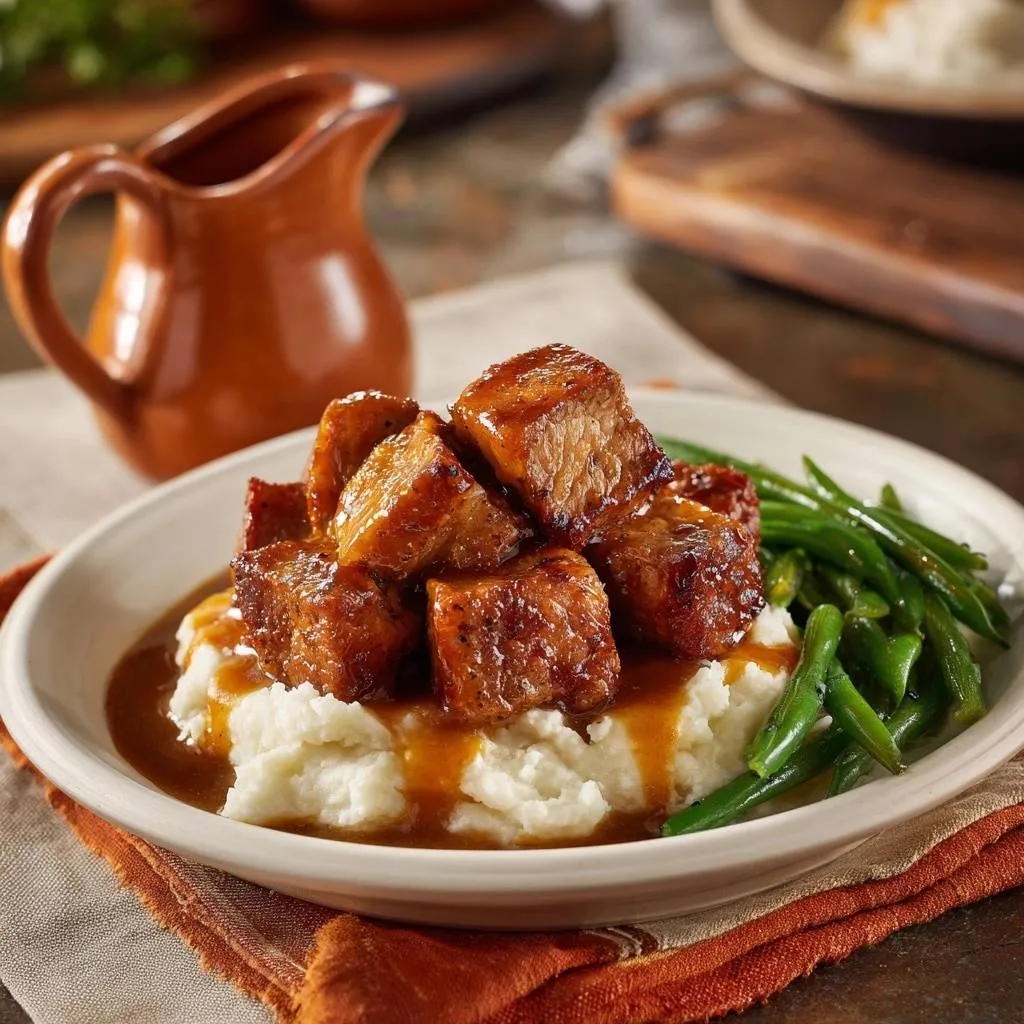
To get that professional look, use the “well” technique. Scoop a generous portion of mashed potatoes onto the plate and use the back of your spoon to create a wide indentation in the center. This “well” acts as a bowl for the beef and prevents the glaze from running off the sides. It keeps the presentation neat and ensures every bite of potato is infused with sauce.
When plating the beef, stack the cubes vertically rather than spreading them out. Building height makes the dish look more intentional and upscale. Finally, don’t just sprinkle the chives randomly. Slice them as thinly as possible using a very sharp knife to avoid bruising the delicate greens. A concentrated sprinkle right over the center of the beef provides a vibrant green contrast against the deep brown glaze, making the colors pop.
Frequently Asked Questions
Can I use frozen beef tips for this recipe?
Yes, but you must thaw them completely in the refrigerator first. Frozen meat releases a significant amount of moisture as it thaws. Once thawed, use extra paper towels to ensure the meat is bone-dry. If the beef is even slightly damp or icy, it will steam in the pan and you will lose that signature crispy crust.
What is the best substitute for soy sauce if I am avoiding gluten?
Tamari is the most common substitute and provides a very similar deep, salty flavor. You could also use coconut aminos, though they are slightly sweeter and less salty than traditional soy sauce. If using coconut aminos, you might want to slightly reduce the amount of honey in the recipe to maintain the flavor balance.
Why did my glaze turn out cloudy instead of clear?
A cloudy glaze usually happens if the sauce is boiled too violently or if there was too much excess cornstarch on the beef. To keep it clear and glossy, bring the liquid to a gentle simmer rather than a rolling boil. This allows the starches to hydrate and become translucent properly. Also, be sure to shake off any loose cornstarch before the beef hits the pan.
Can I cook this in a slow cooker instead?
While you can cook beef in a slow cooker, you will lose the specific textures that make this dish special. The “Glazed Beef Tips” rely on the contrast between the crispy seared exterior and the tender interior. A slow cooker will result in very soft, shredded-style meat without the crust or the thick, glossy glaze. It is a different style of meal entirely.
How do I prevent the honey from burning in the pan?
Honey has a high sugar content and can burn quickly at high temperatures. This is why we add the honey only after the pan has been deglazed and the heat has been lowered to medium. Never add the honey during the initial high-heat searing of the beef. The liquid from the broth and vinegar protects the honey, allowing it to reduce into a glaze without scorching.
Glazed Beef Tips
Course: Main CourseCuisine: AmericanDifficulty: easy4
servings15
minutes25
minutes580
kcal40
MinutesA foolproof method for creating crispy, glazed beef tips that are never tough. By using a cornstarch coating and high-heat searing, these beef tips achieve a perfect texture paired with a glossy, savory sauce.
Ingredients
2 pounds beef sirloin or ribeye, cut into 1-inch cubes
2 tablespoons cornstarch (for coating)
3 tablespoons vegetable oil
1/2 teaspoon salt
1/2 teaspoon black pepper
1/2 cup beef broth
2 tablespoons soy sauce
2 tablespoons honey
1 tablespoon balsamic vinegar
1 teaspoon garlic powder
4 cups prepared creamy mashed potatoes
1 pound fresh green beans, blanched
Chopped chives for garnish
Directions
- Pat the beef cubes completely dry with paper towels. This is the most important step to prevent steaming and ensure a proper sear.
- In a large bowl, toss the beef cubes with salt, pepper, and cornstarch until lightly and evenly coated. Shake off any excess.
- Heat the oil in a large heavy skillet over high heat until it is shimmering and just starting to smoke.
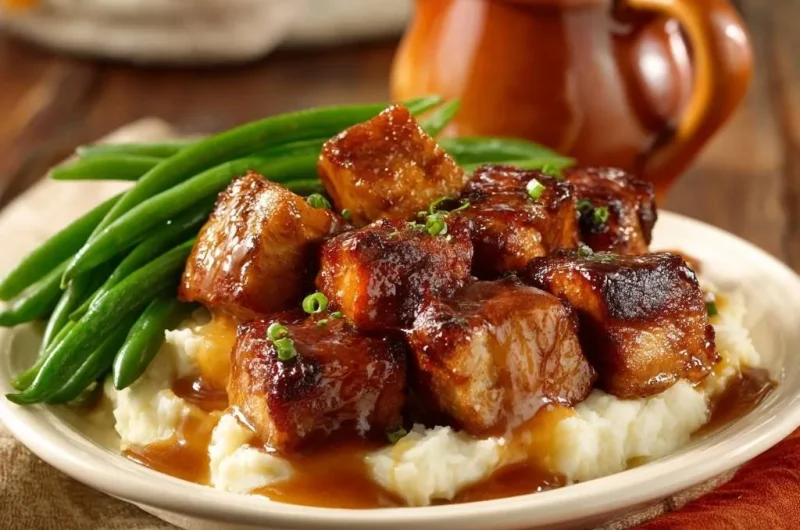
- Add the beef in a single layer, making sure not to crowd the pan. Work in batches if necessary. Sear for 2-3 minutes without moving them to develop the deep golden-brown crust shown in the image. Flip and sear for another 2 minutes until all sides are crispy.
- Remove the beef from the pan and set aside on a plate to rest. This resting period allows the fibers to relax, which is the key to solving the tough meat problem.
- Lower the heat to medium. Pour the beef broth and balsamic vinegar into the skillet, scraping the bottom to release the flavorful browned bits (deglazing).
- Stir in the soy sauce, honey, and garlic powder. Simmer for 3 to 5 minutes. The residual cornstarch from the beef will help the liquid reduce into the thick, glossy, translucent glaze seen in the image.
- Return the beef and any accumulated juices to the pan. Toss gently for 30 seconds just to coat them thoroughly in the glaze.
- Serve the glazed beef immediately over a bed of creamy mashed potatoes with a side of fresh green beans. Pour any extra glaze from the pan (or a small pitcher) over the top. Garnish with fresh chives.
Notes
- The secret to avoiding tough meat is patting the beef completely dry before searing and allowing the meat to rest after cooking to let the fibers relax.