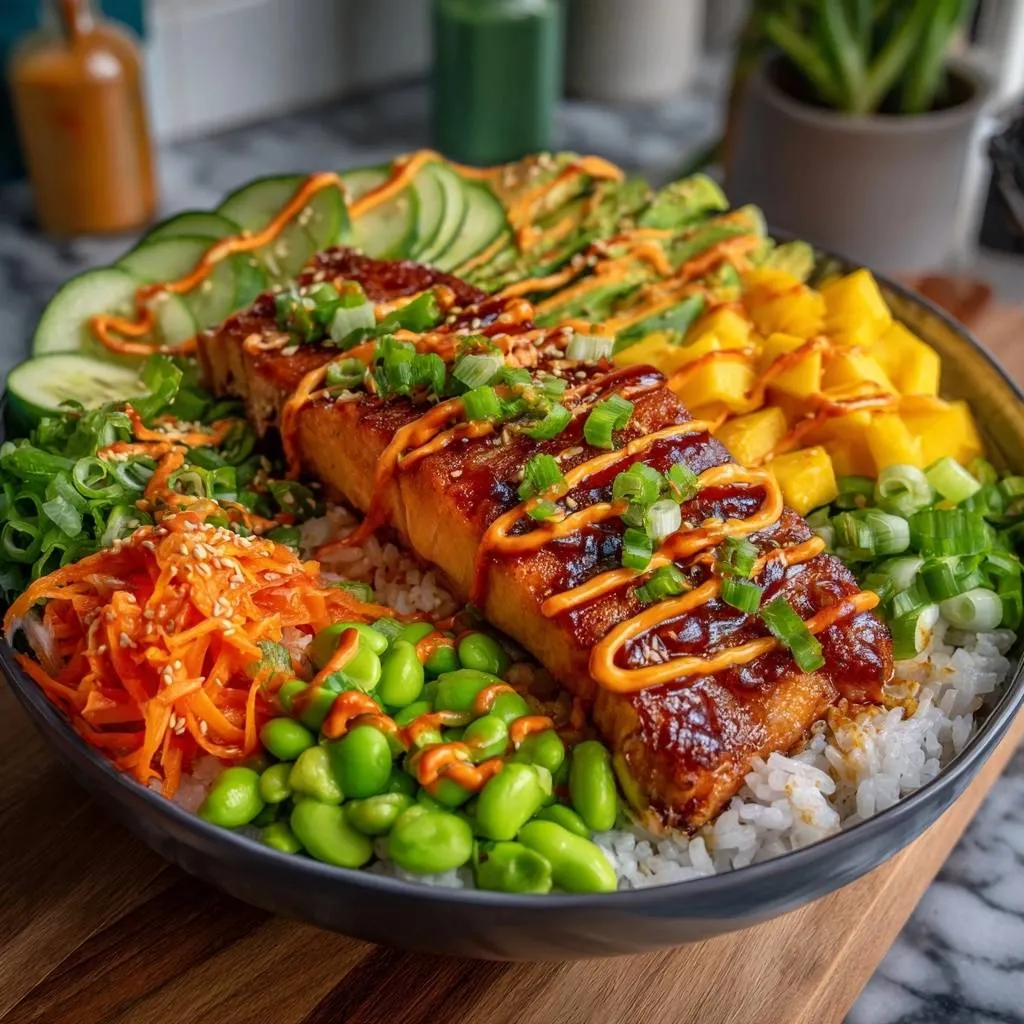
The modern poke bowl has traveled a long way from its traditional Hawaiian roots of simple, cubed raw fish and sea salt. Today, the glazed salmon variation represents a beautiful evolution, blending the fresh, crisp spirit of the islands with the savory, comforting warmth of Japanese-inspired cooking. When you bite into a perfectly constructed bowl, you experience a thrilling sensory contrast: the hot, lacquered salmon flakes apart against a backdrop of chilled, crunchy cucumbers and creamy avocado.
However, the most common heartbreak for home cooks isn’t the fish—it’s the rice. Most people end up with a gummy, wet pile of grains that turns the whole meal into a heavy mush. To get that professional-grade experience, you have to treat the rice as the foundation rather than an afterthought. By mastering the starch-removal process and the resting phase, you create a base that holds its own against the rich glaze and vibrant toppings.
The secret to this recipe’s success lies in the “carryover steam” method. Most cooks make the mistake of peeking under the lid or fluffing the rice the second the timer dings. If you want grains that are distinct, tender, and slightly chewy, you must leave that lid closed for a full ten minutes after the heat is off. This allows the moisture to redistribute perfectly, ensuring the rice is fluffy enough to soak up the spicy mayo without collapsing.
The Anatomy of a Professional Glazed Salmon Poke Bowl
A great poke bowl is a study in balance. You have the base (the rice), the protein (the salmon), the crunch (carrots and cucumbers), and the creaminess (avocado and spicy mayo). Each element serves a purpose. The thick teriyaki glaze isn’t just for sweetness; it interacts with the healthy fats in the salmon to create a savory, umami-rich coating that clings to every flake of the fish.
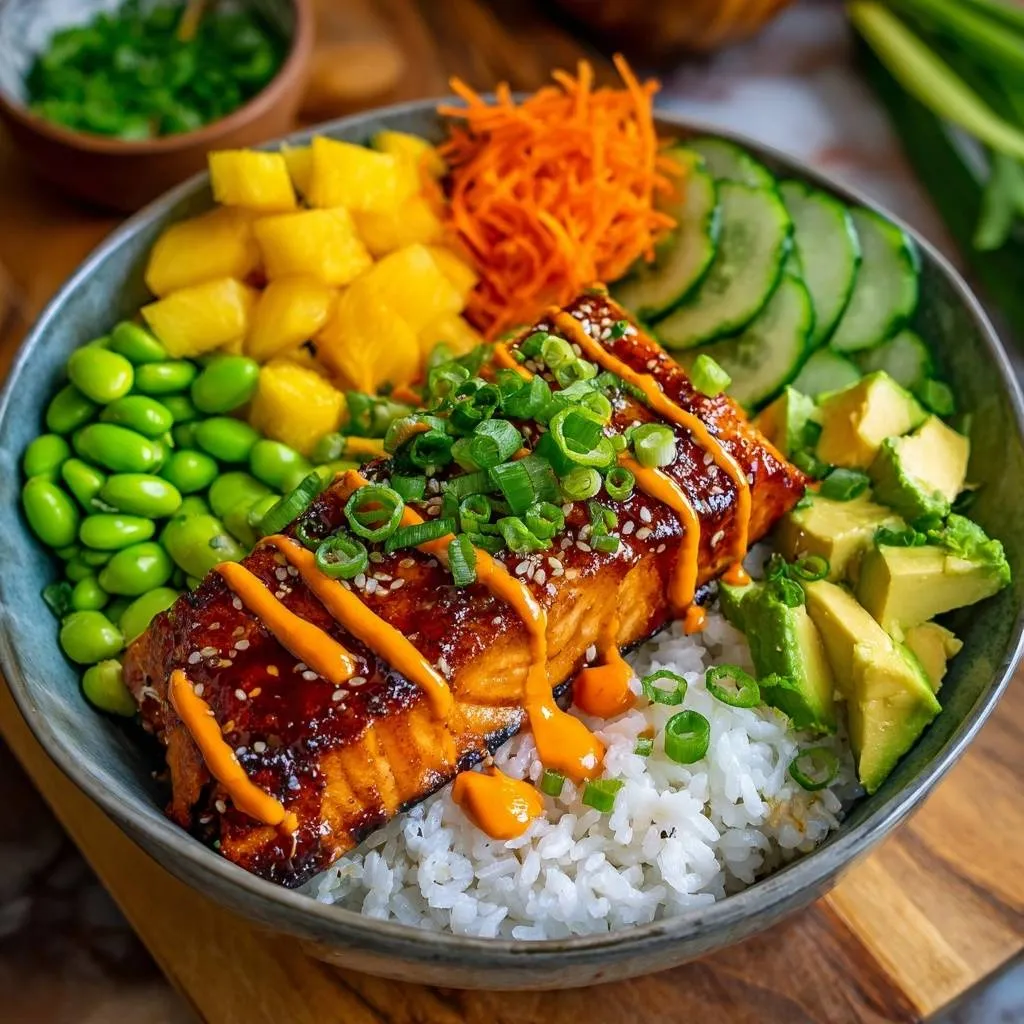
Visual appeal is just as important as flavor when you’re plating. We use color theory to make the bowl look as good as it tastes. The bright orange of the mango and the seared salmon pops beautifully against the deep greens of the edamame and avocado. When you arrange these in distinct sections, you give the diner the power to choose their own adventure with every forkful.
Why Short-Grain Sushi Rice is Non-Negotiable
If you try to use Jasmine or Basmati rice for this, the bowl will feel disconnected. Long-grain varieties are too dry and fluffy for poke. You need short-grain sushi rice because it contains higher levels of amylopectin, a type of starch that provides a sticky-but-firm “bite.” This allows the rice to clump just enough to be picked up easily while remaining individual grains.
Selecting Center-Cut Salmon for Even Searing
When you’re at the fish counter, always ask for the center-cut loin rather than the thin, tapered tail. The center-cut has a uniform thickness, which is vital for this recipe. Because the thickness is consistent, the interior of the salmon reaches a perfect medium-rare at the exact moment the sugary glaze begins to caramelize. A tail piece would overcook and turn dry before you ever got a good crust.
Eliminating Excess Starch for Distinct Rice Grains
To solve the mushy rice problem, you have to be aggressive with your rinsing. Place your dry rice in a fine-mesh strainer and run it under cold water for at least two full minutes. Use your fingers to agitate the grains, rubbing them together to scrub off the surface starch. You’ll notice the water starts out milky and opaque; keep going until it runs crystal clear.
This step is the technical heart of the recipe. That cloudy water is actually dissolved starch that, if left in the pot, would turn into a sticky paste during cooking. By removing it, you ensure that each grain of rice remains separate and distinct in the bowl. It’s the difference between a professional “individual grain” mouthfeel and a cafeteria-style scoop of mush.
The Science of the 10-Minute Carryover Steam
Once your rice has simmered for 15 minutes, the heat goes off, but the cooking isn’t done. Inside the pot, the moisture is currently concentrated on the surface of the grains, while the centers might still be slightly too firm. By letting it sit covered for 10 minutes, you allow the steam to penetrate the core of every grain. This redistributes the moisture evenly, resulting in a uniform texture throughout the pot.
I cannot stress this enough: do not peek! Every time you lift the lid to check the rice, you let out the very steam required for this transformation. Trust the process and keep the lid sealed tight. This resting period is what prevents the rice from being “wet” on the outside while remaining hard in the middle.
Searing and Glazing the Salmon Fillets
Before the salmon ever touches the pan, you must pat it completely dry with paper towels. Any moisture on the surface of the fish will turn to steam the moment it hits the oil, preventing that gorgeous golden-brown crust from forming. We want a Maillard reaction—that savory browning—which only happens in a dry, hot environment. Once the fish is dry, you’re ready for the heat.
Achieving the Golden-Brown Crust
Use a neutral oil with a high smoke point, like avocado or vegetable oil, and get the pan medium-hot. When you lay the salmon in, leave it alone! If you try to flip it too early and it sticks, the proteins haven’t finished searing yet. The fish will naturally release from the pan surface once that crust has formed. This usually takes about 4 to 5 minutes on the first side.
For perfectly seared salmon, try this Mediterranean salmon power bowl technique.
The Steam-Glaze Technique for Full Coverage
High-sugar glazes like unagi-style teriyaki burn very quickly. To get a professional lacquered finish without the bitter taste of burnt sugar, use the “splash of water” trick. In the final minute of cooking, after you’ve brushed on the glaze, add a tiny splash of water to the pan and immediately cover it with a lid. The resulting burst of steam thins the glaze just enough to coat the sides of the fillet perfectly.
For a similar sweet and savory glaze, check out this teriyaki glazed salmon quinoa bowl.
Essential Components for Texture and Balance
While the salmon is the star, the supporting cast of vegetables provides the necessary balance. I always reach for Persian cucumbers because they have thinner skins and fewer seeds than standard cucumbers. This means they stay crisp and don’t release excess water into your bowl, which would otherwise make your carefully prepared rice soggy.
Prepping the Cold Toppings
When prepping your carrots, try to julienne them into very thin matchsticks. This creates more surface area, allowing the spicy mayo and sesame seeds to cling to them. For the edamame, a quick steam is all you need. You want to remove that “raw” bean flavor while maintaining a satisfying snap that contrasts with the soft avocado and tender salmon.
The Role of the Spicy Mayo Zigzag
The spicy mayo is more than just a garnish; it’s the bridge between the sweet glaze and the fresh vegetables. If you can find it, use Kewpie mayo, which is made with only egg yolks and has a much richer, more custard-like texture than American mayo. The acidity in the Sriracha cuts right through the fatty richness of the salmon, brightening every single bite.
Step-by-Step: Constructing the Glazed Salmon Poke Bowl
Start by fluffing your rested rice gently. Use a rice paddle or a fork and a “folding” motion rather than a stirring motion. You want to introduce air into the rice without breaking the grains. Divide the rice into two deep bowls, creating a flat surface for your toppings. This is the foundation of your presentation.
Place the glazed salmon fillet directly in the center. Now, work your way around the fish, placing the mango, edamame, cucumber, carrots, and avocado in their own distinct sections. This “deconstructed” look is what defines high-end poke shops. Finally, garnish with the green onions and sesame seeds, and apply the spicy mayo in a tight, fast zigzag pattern for that final professional touch.
Troubleshooting Common Poke Bowl Pitfalls
If you find your rice is still a bit too firm after the resting period, don’t panic. Sprinkle a tablespoon of water over the rice, put the lid back on, and heat it on the lowest possible setting for two minutes. This extra hit of moisture usually does the trick. If your glaze starts to smoke or smell like it’s burning before the fish is done, pull the pan off the heat immediately and add that splash of water to cool the pan down.
Salmon sticking to the pan is usually a sign of two things: either the pan wasn’t hot enough when you started, or you didn’t pat the fish dry. If it’s stuck, don’t force it. Turn the heat down slightly and wait another minute; often the fish will “self-release” as the crust hardens. If all else fails, a thin metal spatula is your best friend for getting under that crust without breaking the fillet.
Flavor Variations and Ingredient Swaps
You can easily customize these bowls based on what’s in your pantry. If you don’t have mango, fresh pineapple chunks provide a similar tropical acidity. For those who want a bit more heat, adding sliced fresh jalapeños or a scoop of kimchi can add a wonderful fermented funk to the bowl. If you’re out of teriyaki glaze, a quick mix of honey and soy sauce works in a pinch, though it will be thinner.
Adding Heat and Umami Boosters
To take the flavor even deeper, look for furikake at the grocery store. This Japanese seasoning blend of seaweed, sesame seeds, and dried fish adds a massive umami punch. Pickled ginger is another great addition; the sharp, vinegary bite cleanses your palate between the rich mouthfuls of glazed salmon and avocado.
Expert Tips for Meal Prep and Storage
Poke bowls are definitely best when assembled fresh, but you can prep the components ahead of time. You can julienne the carrots and slice the cucumbers up to two days in advance. However, keep the avocado whole until the very last second to prevent browning. The salmon is best cooked right before eating so the glaze stays glossy and the crust stays crisp.
Completing Your Meal
Round out your glazed salmon poke bowls with these complementary dishes.
- For a fresh starter that complements the salmon, consider these Sesame Beef Spring Rolls, featuring a simple rolling method.
- If you’re craving more glazed seafood, try the Sticky Garlic Salmon for another take on a satisfying glaze.
If you have leftover rice, store it in an airtight container in the fridge. To reheat it without it turning into a hard brick, place a damp paper towel over the bowl before microwaving. This creates a mini-steamer effect that restores the moisture to the grains. Never freeze cooked sushi rice, as the texture becomes grainy and unpleasant once thawed.
Frequently Asked Questions
Can I use frozen salmon for these bowls?
Yes, you absolutely can. In fact, most “fresh” fish in the US has been previously frozen to kill parasites. The key is to thaw it slowly in the refrigerator overnight. Once thawed, it is vital to pat the fillets extremely dry with paper towels. Frozen fish tends to release more moisture than fresh, so if you don’t dry it thoroughly, it will boil in the pan rather than sear.
How do I prevent the avocado from browning?
The best way to keep avocado green is to limit its exposure to oxygen. If you must prep it early, squeeze a little lime or lemon juice over the slices; the citric acid slows down the oxidation process. You can also press a piece of plastic wrap directly onto the surface of the avocado so there is no air gap. However, for the best flavor and color, I recommend slicing it right as you are about to serve.
What is the best substitute for Kewpie mayo?
If you can’t find the yellow squeeze bottle of Kewpie, you can make a close approximation at home. Mix a half-cup of standard heavy-duty mayonnaise with one teaspoon of rice vinegar and a half-teaspoon of sugar. This mimics the slightly sweeter, more acidic profile of the Japanese version. It won’t be quite as rich because standard mayo uses whole eggs while Kewpie uses only yolks, but it will still taste great.
Is there a way to make this bowl low-carb?
To reduce the carb count, you can swap the sushi rice for a bed of cauliflower rice or even finely shredded green cabbage. If you use cabbage, toss it with a little rice vinegar and sesame oil first to give it some flavor. For the glaze, look for a sugar-free teriyaki or make your own using a brown sugar substitute to keep the carb count low while maintaining that signature sticky texture.
Why is my teriyaki glaze burning in the pan?
Teriyaki glaze has a very high sugar content, which means it hits its burning point quickly. This usually happens if the pan is too hot when the glaze is added or if it’s left in the pan for too long. Always wait until the salmon is flipped and almost finished cooking before brushing on the glaze. Using the “steam-glaze” trick—adding a splash of water and covering the pan—is the best way to prevent burning while still getting a thick, glossy coating.
Glazed Salmon
Course: Main CourseCuisine: Japanese-American FusionDifficulty: easy2
servings20
minutes15
minutes650
kcal45
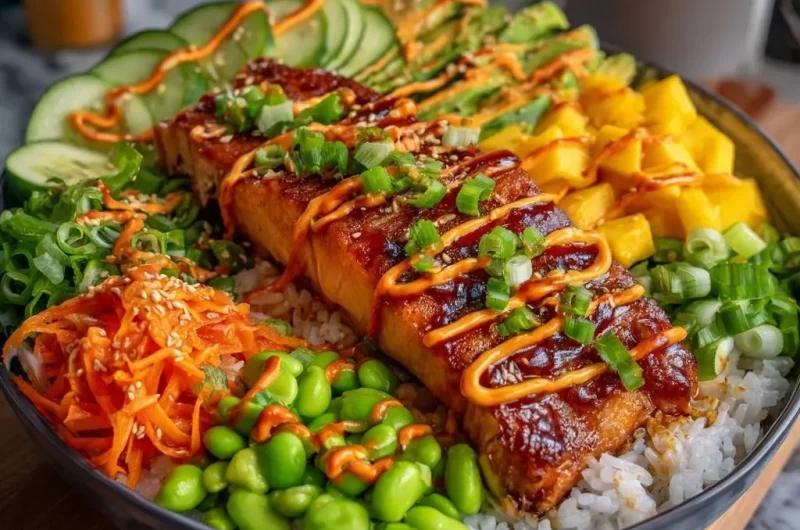
MinutesA vibrant and healthy bowl featuring seared teriyaki-glazed salmon served over meticulously prepared sushi rice, accompanied by fresh mango, edamame, cucumber, and avocado.
Ingredients
1 cup sushi rice (short-grain white rice)
1.25 cups water
2 salmon fillets (center-cut for the rectangular shape shown)
1/4 cup thick teriyaki glaze (unagi sauce style)
1 tablespoon neutral oil (avocado or vegetable oil)
1 ripe mango, cubed
1 cup edamame, shelled and steamed
1 Persian cucumber, thinly sliced into rounds
1 large carrot, shredded or julienned
1 avocado, thinly sliced
3 green onions, finely chopped
1 tablespoon toasted sesame seeds
Spicy mayo (Sriracha and Kewpie mayo blend) for drizzling
Directions
- To solve the mushy rice problem, place the dry rice in a fine mesh strainer and rinse under cold water for at least 2 minutes, agitating the grains with your fingers until the water runs completely clear. This removes the excess surface starch that causes sticking.
- Place the rinsed rice and 1.25 cups of water in a small pot. Bring to a boil, then immediately reduce heat to the lowest setting. Cover with a tight-fitting lid and simmer for 15 minutes.
- Crucial Step: Once the timer goes off, do not open the lid. Remove the pot from the heat and let it sit, covered, for 10 minutes. This allows the steam to finish cooking the grains evenly so they stay firm and separate rather than collapsing into a paste.
- While the rice rests, prepare the salmon. Pat the fillets completely dry with paper towels. Heat oil in a non-stick skillet over medium-high heat. Place salmon in the pan and sear for 4-5 minutes until a golden-brown crust forms.
- Flip the salmon. Immediately brush a thick layer of teriyaki glaze over the seared top. Cook for another 3-4 minutes. In the final 60 seconds, add a splash of water to the pan and cover with a lid to create a steam-glaze that coats the sides of the fish without burning the sugars.
- Fluff the rested rice gently with a rice paddle or fork using a folding motion to keep grains intact. Divide the rice into two deep bowls.
- Place the glazed salmon fillet directly in the center of the bowl.
- Arrange the mango, edamame, cucumber, shredded carrots, and avocado in distinct sections around the salmon to match the visual presentation.
- Garnish heavily with chopped green onions and toasted sesame seeds. Finish by drizzling the spicy mayo in a tight zigzag pattern across the entire bowl, ensuring it hits both the salmon and the vegetables.
Notes
- The secret to the rice texture is rinsing for 2 minutes and letting it rest covered for 10 minutes after cooking. Do not skip the resting phase or the rice will be gummy.